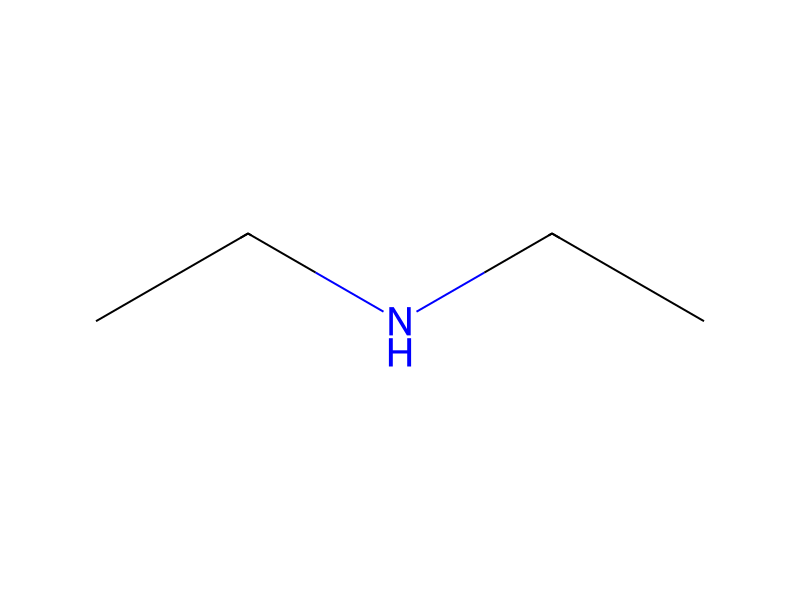
[N:1]1[CH:6]=[CH:5]C=[CH:3][CH:2]=1.Cl[C:8]1[CH:13]=[CH:12][C:11]([N+:14]([O-:16])=[O:15])=[CH:10][N:9]=1.C(NCC)C>O>[CH2:2]([N:1]([CH2:6][CH3:5])[C:8]1[CH:13]=[CH:12][C:11]([N+:14]([O-:16])=[O:15])=[CH:10][N:9]=1)[CH3:3]The pyridine derivative of the present invention is represented by the general formula A or B. For example, 50 g of 2-chloro--5-nitropyridine and 150 ml of diethylamine were placed in a sealed tube and heated at 120° C. for 7 hr. Pure water was added to the precipitated crystal, and the crystal was collected by filtration and recrystallized from 300 ml of methanol to give 53 g of 2-diethylamino-5-nitropyridine (yield: 86%, melting point: 75° to 76° C.).