2-Hydroxyisobutyric acid → Pyrrolo[1,2-b]pyridazine-3-carboxamide
HRID 877754
反応式

Br[C:2]1[CH:3]=[C:4]2[C:9](N[C@@H]3CCNC[C@H]3CC)=[C:8]([C:19]([NH2:21])=[O:20])[CH:7]=[N:6][N:5]2[CH:22]=1.OC(C)(C)C(O)=O.CCN(C(C)C)C(C)C.CN(C(ON1N=NC2C=CC=NC1=2)=[N+](C)C)C.F[P-](F)(F)(F)(F)F>ClCCl>[N:6]1[N:5]2[CH:22]=[CH:2][CH:3]=[C:4]2[CH:9]=[C:8]([C:19]([NH2:21])=[O:20])[CH:7]=1参加物
6
反応物 4
 HCID 116712-Hydroxyisobutyric acid
 HCID 81531Diisopropylethylamine
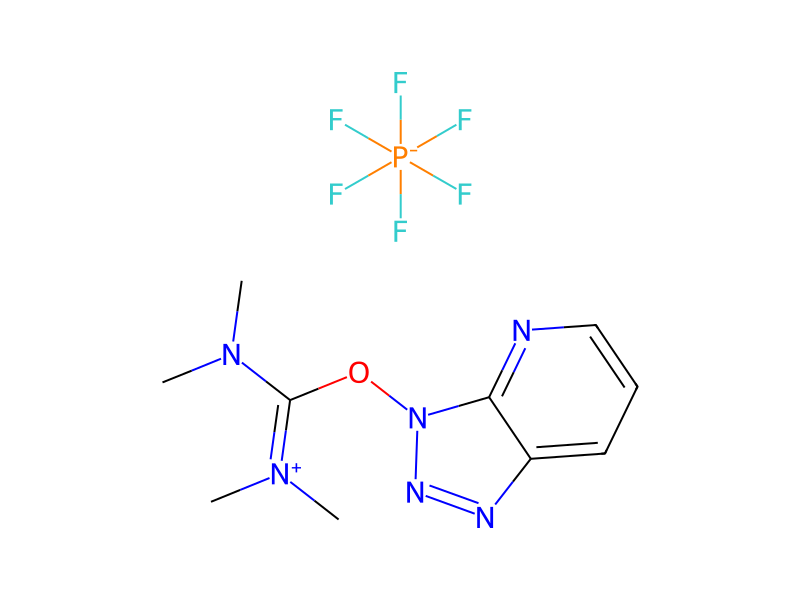 HCID 9886157Methanaminium, N-((dimethylamino)(3H-1,2,3-triazolo(4,5-b)pyridin-3-yloxy)methylene)-N-methyl-, hexafluorophosphate(1-) (1:1)
 HCID 682916696-bromo-4-(((3R,4R)-3-ethylpiperidin-4-yl)amino)pyrrolo[1,2-b]pyridazine-3-carboxamide

