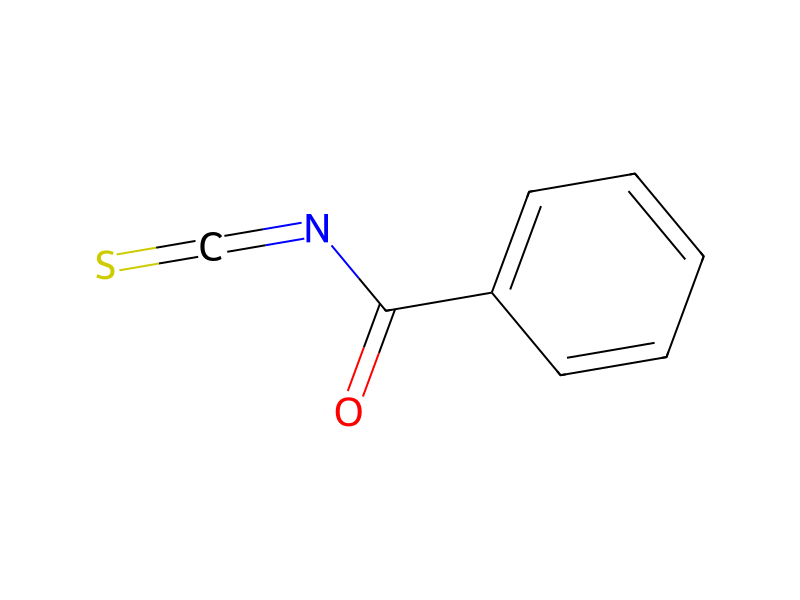
[NH:1]1[C:5]2[CH:6]=[CH:7][CH:8]=[CH:9][C:4]=2[N:3]=[C:2]1[CH2:10][CH2:11][NH2:12].C1(N)C(F)=C(F)C(F)=C(N)C=1F.Cl.Cl.CCN(C(C)C)C(C)C.C([N:44]=[C:45]=[S:46])(=O)C1C=CC=CC=1>ClCCl>[NH:1]1[C:5]2[CH:6]=[CH:7][CH:8]=[CH:9][C:4]=2[N:3]=[C:2]1[CH2:10][CH2:11][NH:12][C:45]([NH2:44])=[S:46]{2-(1H-Benzimidazol-2-yl)ethylamine was made as the dihydrochloride salt according to a procedure described by Nicolaou et al. Bioorg. Med. Chem., 1998, 6, 1185-1208 and pretreated with DIPEA (2.07 mL, 11.86 mmol) for 5 minutes.} To a suspension of 2-(1H-benzimidazol-2-yl)ethylamine (1.39 g, 5.93 mmol) in dichloromethane (20 mL) was added benzoyl isothiocyanate (0.88 mL, 6.52 mmol). After 1 h, the reaction mixture was concentrated in vacuo. Ammonia in methanol (7N, 30 mL) was then added and the reaction stirred another 4 h. The excess ammonia and methanol were removed in vacuo and dichloromethane (15 mL) was added. The solid was removed by filtration and the filtrate concentrated in vacuo and purified by flash chromatography (methanol/dichloromethane, 5% then 10%) to give the title compound as a solid (1.12 g, 86% yield).