Toluene → 1-(4-Aminobenzoyl)azepan-2-one
反応式

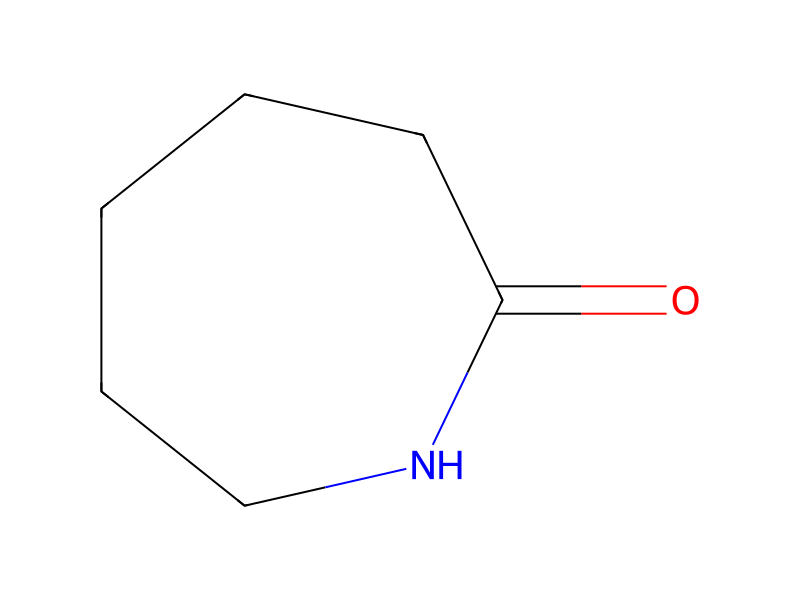
[C:1]1(=[O:8])[NH:7][CH2:6][CH2:5][CH2:4][CH2:3][CH2:2]1.C1(C)C=CC=CC=1.S(=[N:18][C:19]1[CH:27]=[CH:26][C:22]([C:23](Cl)=[O:24])=[CH:21][CH:20]=1)=O>N1C=CC=CC=1>[NH2:18][C:19]1[CH:27]=[CH:26][C:22]([C:23]([N:7]2[CH2:6][CH2:5][CH2:4][CH2:3][CH2:2][C:1]2=[O:8])=[O:24])=[CH:21][CH:20]=1参加物




反応条件
- 温度
- 0 °C
実験手順
A three liter-volume three-necked flask was charged with 144 g (1.27 mol) of caprolactam, 2 liters of toluene and 1 liter of pyridine, and the content was stirred at 0° C. under a nitrogen gas atmosphere. Then 256.5 g (1.27 mol) of p-sulfinylaminobenzoyl chloride, synthesized in Synthesis Example 1, was added into the flask, and the mixture was gently stirred until the temperature reached room temperature. Thereafter the content was stirred for 14 hours to conduct a reaction. Pyridine hydrochloride, thus precipitated, was filtered and the filtrate was washed twice with aqueous 5% sodium hydrogencarbonate. The solvent was distilled off under a reduced pressure from the organic phase to afford a white residue. The white residue was twice recrystallized from ethyl acetate to give N-(p-aminobenzoyl)caprolactam having a melting point of 156°-158° C. in a yield of 68%.
後処理
- additionwas added into the flask
- stirringthe mixture was gently stirred until the temperature
- customreached room temperature
- stirringThereafter the content was stirred for 14 hours
- customa reaction
- customPyridine hydrochloride, thus precipitated
- filtrationwas filtered
- washthe filtrate was washed twice with aqueous 5% sodium hydrogencarbonate
- distillationThe solvent was distilled off under a reduced pressure from the organic phase
- customto afford a white residue
- customThe white residue was twice recrystallized from ethyl acetate
出典と根拠
- ORDレコード
- ord-001a39d52d914a51ac2d309f21122036
- 出典データセット
- uspto-grants-1998_06
- 特許番号
- US05760143
反応ノート
読み込み中…