
3-Butene-1,2-diol
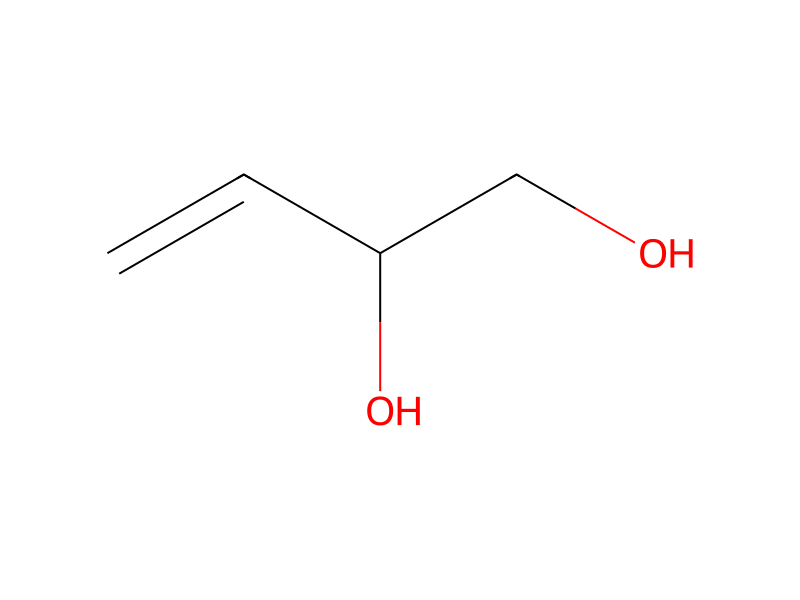
기본 정보
- CAS
497-06-3- 표준 SMILES
C=CC(O)CO- InChIKey
ITMIAZBRRZANGB-UHFFFAOYSA-N- 분자식
- C4H8O2
- 평균 분자량
- 88.11 g/mol
- 단동위원소 질량
- 88.0524295
개요
major industrial chemical; structure given in first source
이름 및 식별자
- 우선 이름
- 3-Butene-1,2-diol
- IUPAC
- but-3-ene-1,2-diol
- 영어명
- 3-Butene-1,2-diol
- 분자식
- C4H8O2
- 분자량
- 88.11
이름 및 동의어
3-BUTENE-1,2-DIOL497-06-33,4-Dihydroxy-1-butene1,2-Dihydroxy-3-butenePP8001HM3TRefChem:499468207-835-1but-3-ene-1,2-diol1-Butene-3,4-diolMFCD0023941086161-40-23,4-Dihydroxy-1-butene; Erythrol;
이름 더 보기
ErythrolEPB(TM) DIOL3-buten-1,2-diolR,S-3-BUTENE-1,2-DIOL(±)-3-Butene-1,2-Diol
EINECS 207-835-1Butene glycolAI3-07552CCRIS 9376( inverted exclamation markA)-3-Butene-1,2-diolUNII-PP8001HM3TSCHEMBL93405SCHEMBL4634738
데이터베이스 식별자
- CAS
497-06-3、86161-40-2- PubChem CID
- 10338
- DTXSID
DTXSID60870564- UNII
- PP8001HM3T
- EC Number
- 207-835-1
- Nikkaji
- J25.059G
물성
구조 계산 물성
- XLogP
- -0.5
- 극성 표면적
- 40.5 Ų
- 수소 결합 공여자 수
- 2
- 수소 결합 수용자 수
- 2
- 회전 가능 결합 수
- 2
- 무거운 원자 수
- 6
- 형식 전하
- 0
- 복잡도
- 42.8
실험 및 물리화학적 성질
PolymersPlastics & Rubber -> Other Monomers
Vapor Pressure0.24 [mmHg]
Physical DescriptionClear colorless liquid with a mild odor of alcohol; [Acros Organics MSDS]
물리화학적 성질
- 녹는점
- 15.1 °C · 15.1°C (estimate)
- 끓는 점
- 195 °C/733 · 195 °C/733 mmHg (lit.)
- 밀도
- 1.047 g/mL · 1.047 g/mL at 25 °C (lit.)
- 굴절률
- 20 · n20/D 1.462
- 인화점
- 222 °F · 222 °F
- 저장 조건
- -20 °C · Amber Vial, -20°C Freezer, Under inert atmosphere
- 용해도
- 클로로포름(약간 용해됨), 메탄올(약간 용해됨)
- 물리적 상태
- 기름
- 산도 계수 (pKa)
- 13.68 · 13.68±0.20(Predicted)
- Specific Gravity
- 1.047 · 1.047
- 색상
- 무색의
- BRN
- 1633578 · 1633578
- Henry's Law Constant
- 7.8 · 7.8×102 mol/(m3Pa) at 25℃, Wang et al. (2017)
- InChI
- InChI=1S/C4H8O2/c1-2-4(6)3-5/h2,4-6H,1,3H2
- InChIKey
- ITMIAZBRRZANGB-UHFFFAOYSA-N
- SMILES
- C(O)C(O)C=C
화학적 성질
clear colorless liquid
안전 및 규제
안전 정보는 참고용이며, 공급업체의 물질안전보건자료(SDS), 관련 법규 및 전문가 평가를 대체하지 않습니다.
GHS 분류
GHS Classification
Warning
H302 (100%): Harmful if swallowed [Warning Acute toxicity, oral]
P261, P264, P270, P271, P280, P301+P317, P302+P352, P304+P340, P317, P321, P330, P362+P364, and P501 (click each P-code to see the statement)
Aggregated GHS information provided per 39 reports by companies from 2 notifications to the ECHA C&L Inventory. Each notification may be associated with multiple companies.
유해성 정보
Hazards Summary
Causes changes in urine in 4-week inhalation studies of rats and mice; Causes other liver changes and hypoglycemia in acute intraperitoneal studies of mice; Intraperitoneal LD50 (rat) = 250 mg/kg; [RTECS] A reactive monomer that gradually polymerizes at room temperature; An irritant; [Acros Organics MSDS] See 1,4-Dihydroxy-2-butene and 3-Buten-2-ol.
Hazard Classes and CategoriesAcute Tox. 4 (100%)
안전 데이터
- wgk
- 3
- risk_code
- 36/37/38-20/21/22
- hazard_code
- Xn
- safety_code
- 36
- 기존화학 물질
- KE-04079
- F 고인화성물질
- 10
- Hazard Classifications
- Acute Tox. 4 DermalAcute Tox. 4 InhalationAcute Tox. 4 Oral
- 스토리지 클래스
- 10 - Combustible liquids
화학 및 산업
용도 및 제조
UsesMajor industrial chemical. [ChemIDplus]
응용 분야
용도Decomposition product of Erythritol.
일반 설명3,4-Dihydroxy-1-butene, also known as 3-butene-1,2-diol (BDdiol), is a metabolite of 1,3-butadiene. It forms the precursor for synthesizing different chiral building blocks. BDdiol can undergo oxidation to form hydroxymethylvinyl ketone (HMVK). 1,2-epoxy-3-butene (EB) on hydrolysis in the presence of epoxide hydrolases (EH) forms BDdiol.
상·하류 제품 정보
하류 제품
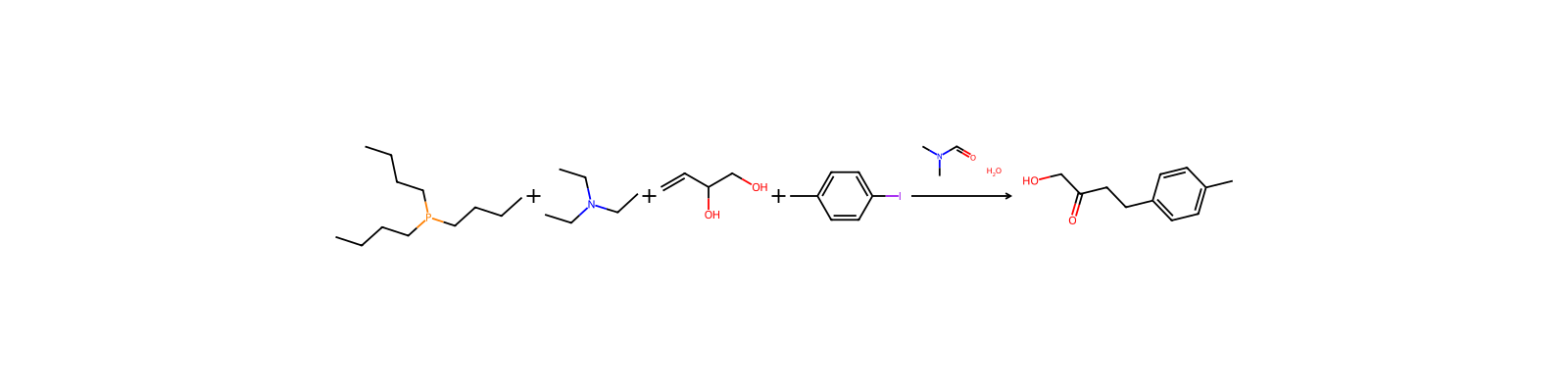
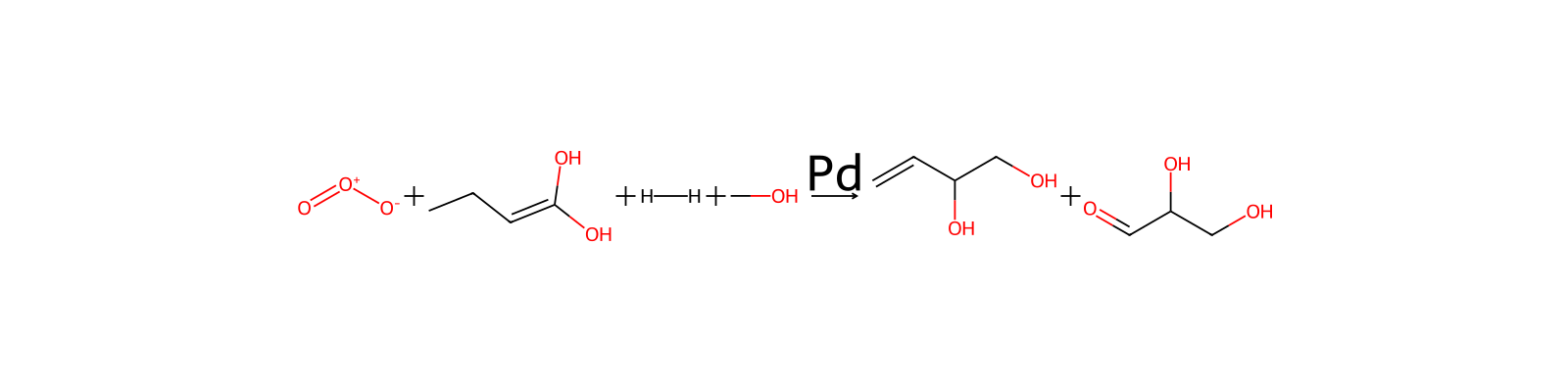
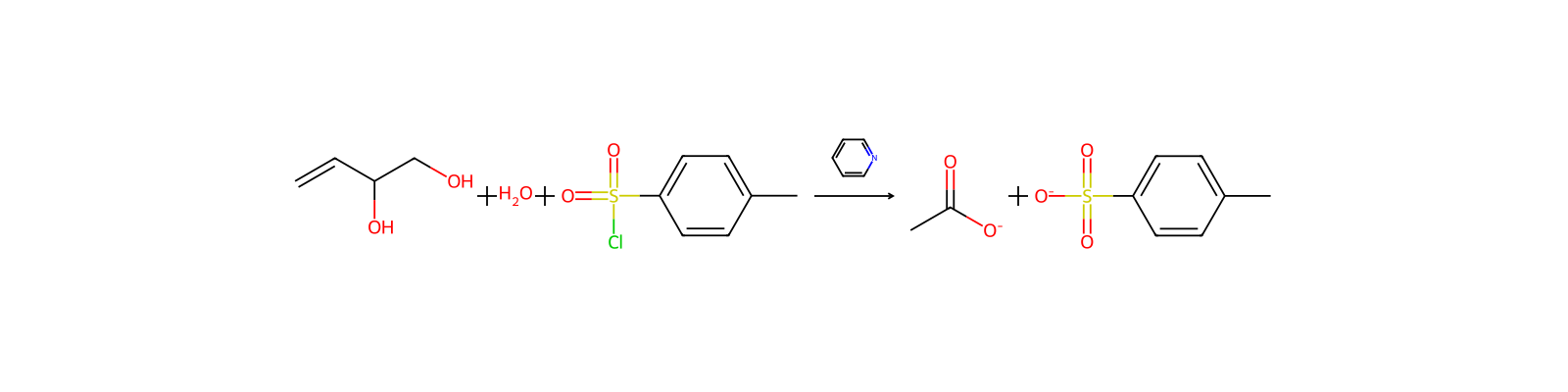
관련 반응
18건




화합물 노트
불러오는 중…