Methanol → Glyceraldehyde
반응식
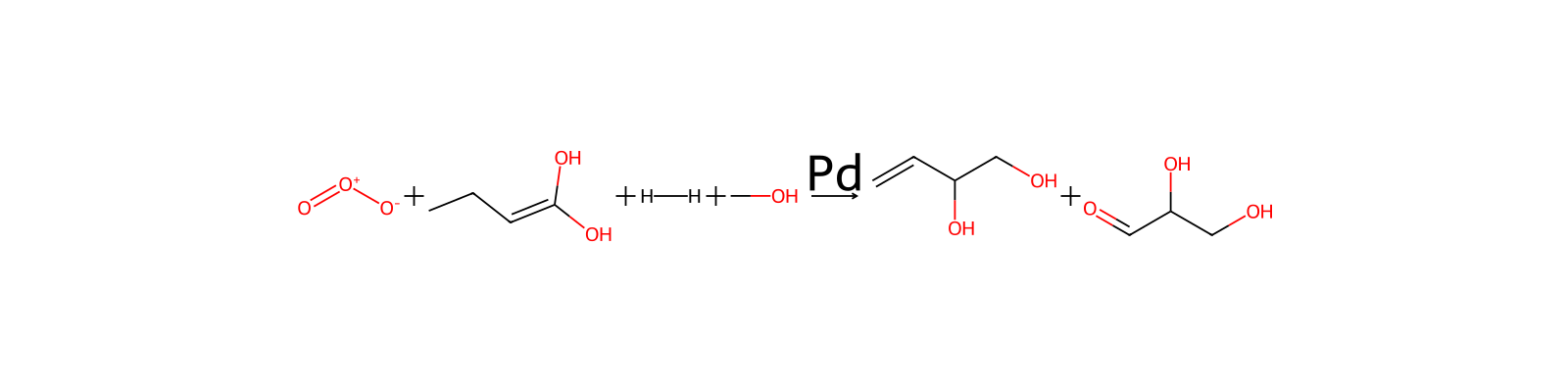
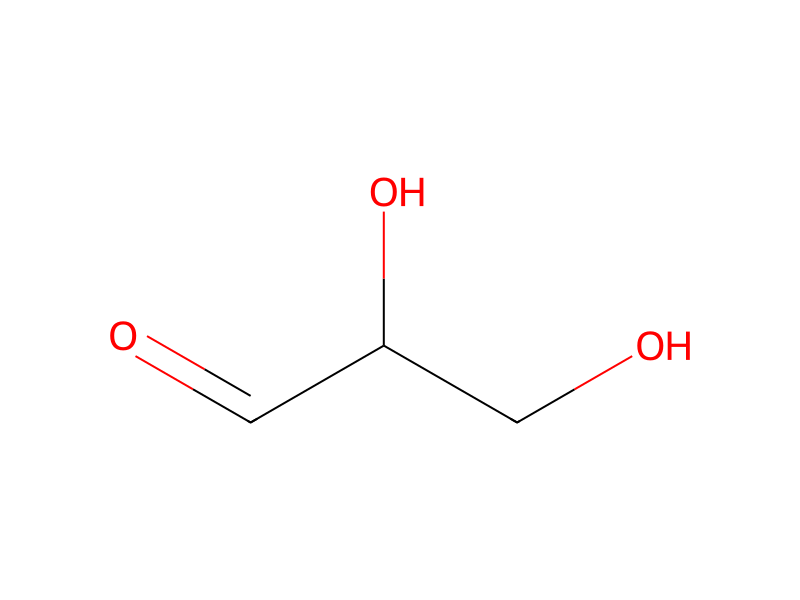
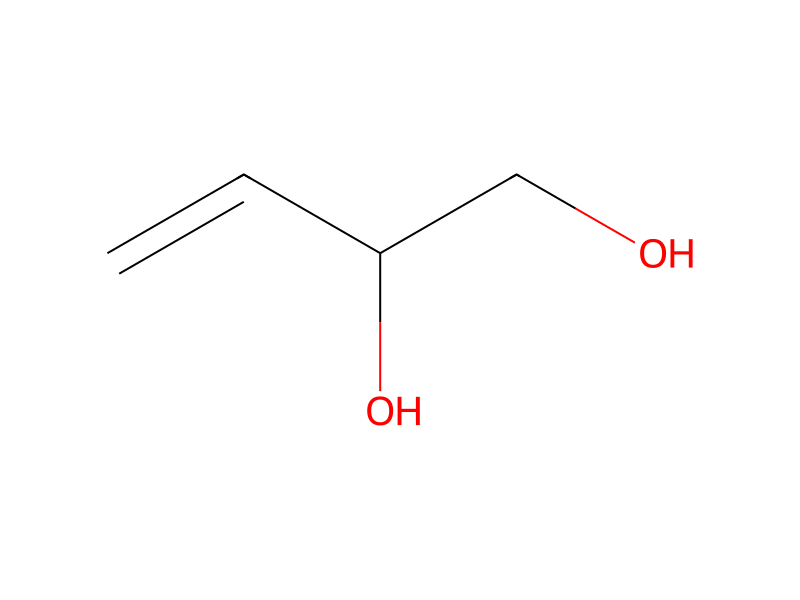
[O:1]=[O+][O-].[OH:4][C:5]([OH:9])=[CH:6][CH2:7][CH3:8].[H][H].[CH3:12][OH:13]>[Pd]>[CH2:5]([OH:4])[CH:6]([OH:13])[CH:7]=[CH2:8].[O:13]=[CH:12][CH:6]([CH2:5][OH:9])[OH:1][O:1]=[O+][O-].[OH:4][C:5]([OH:9])=[CH:6][CH2:7][CH3:8].[H][H].[CH3:12][OH:13]>[Pd]>[CH2:5]([OH:4])[CH:6]([OH:13])[CH:7]=[CH2:8].[O:13]=[CH:12][CH:6]([CH2:5][OH:9])[OH:1]A 1 M methanolic solution of 3-butene-1,2-diol (ex Eastman) was prepared in a volumetric 1-l flask. From this flask, 1.10 ml/min of the solution were continuously fed to the ozonolysis reactor, which was the same as in Example 1. Ozone and the dihydroxybutene solution were dosed to the bottom of the tube and conducted through the reactor in a co-current operation. The temperature of the jacket cooler was adjusted to −1° C., at which the temperature of the first compartment did not rise above 12° C. From the top of the reactor, the readily ozonized solution was led to a reservoir, in which a stationary volume of a few milliliters was freed of ozone traces by nitrogen stripping. From this reservoir, the solution was continuously pumped into the glass autoclave with 20 g of a methanol suspension of 5% palladium type 39 catalyst (ex Johnson Matthey) on active carbon support, and the gas turbine was adjusted to 1,000 rpm. The reactor was adjusted to a constant hydrogen pressure of 2 bar and ambient temperature. After 342 min the dosing was stopped and the reduction was continued for another 20 min. Subsequently, the reaction mixture was removed from the catalyst by filtration over a sintered metal filter placed in the bottom of the autoclave. The solvent was removed from the reaction mixture and 300 ml of water were added to the crude reaction product. In order to remove traces of methanol together with the water, freeze-drying was applied to the reaction mixture. Subsequently, twice times 150 g of water were added and distilled off in order to destroy the hemiacetal and remove the methanol released. Finally, the product was again isolated via freeze-drying after another 300 ml of water had been added. 26.17 g (77%) of glyceraldehyde were isolated as a highly viscous syrup which slowly crystallized.
불러오는 중…