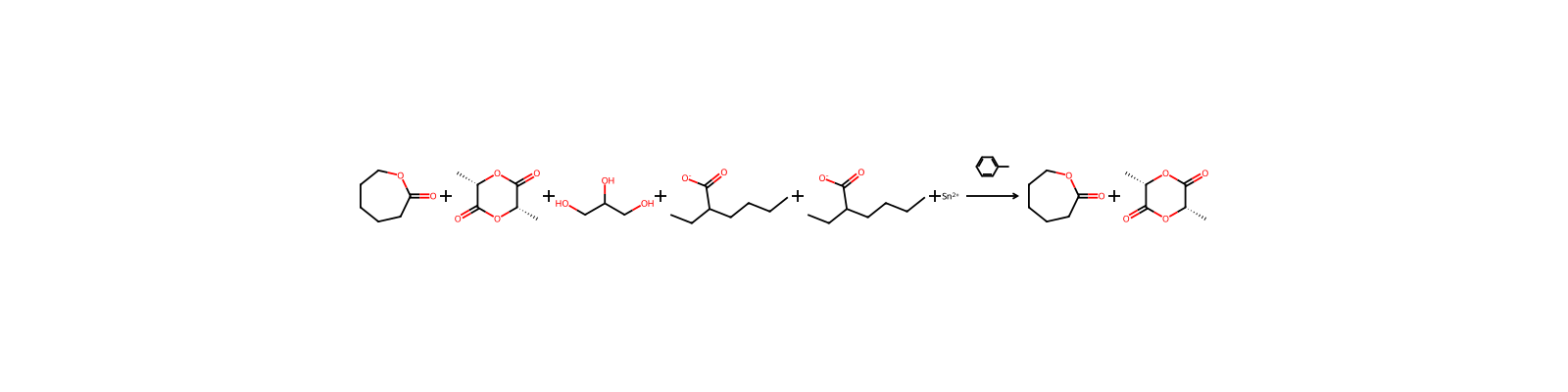
카프로락톤
epsilon-CAPROLACTONE
데이터를 보충하는 중입니다. 잠시 후 페이지를 새로 고치면 최신 내용을 볼 수 있습니다
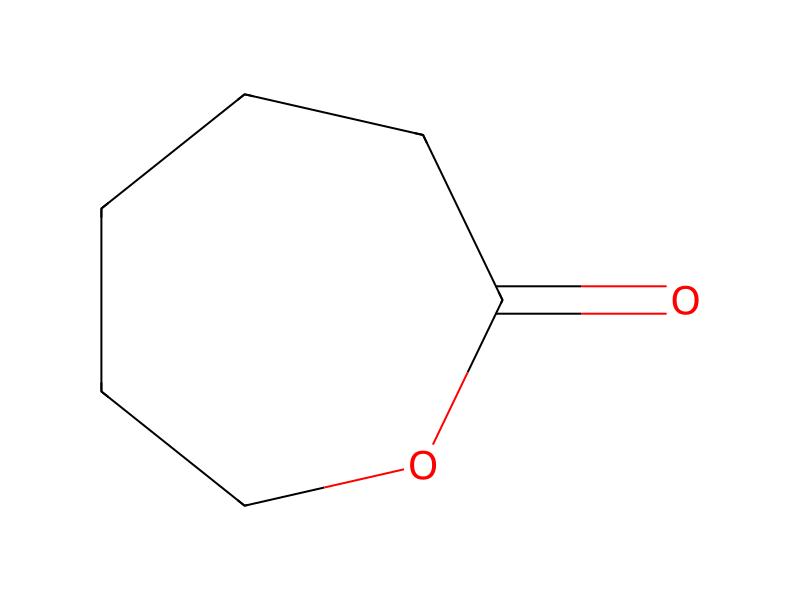
기본 정보
- CAS
502-44-3- 표준 SMILES
O=C1CCCCCO1- InChIKey
PAPBSGBWRJIAAV-UHFFFAOYSA-N- 분자식
- C6H10O2
- 평균 분자량
- 114.14 g/mol
- 단동위원소 질량
- 114.06807956
개요
Hexano-6-lactone is a -lactone that is oxepane substituted by an oxo group at position 2.
이름 및 식별자
- 우선 이름
- epsilon-CAPROLACTONE
- IUPAC
- oxepan-2-one
- 현지명
- 카프로락톤
- 영어명
- ε-Caprolactone
- 분자식
- C6H10O2
- 분자량
- 114.14
이름 및 동의어
Epsilon-caprolactoneCAPROLACTONE502-44-36-Hexanolactone2-Oxepanonehexano-6-lactone6-Hexanolide1,6-Hexanolide1-Oxa-2-oxocycloheptanePlaccel M6-Hydroxyhexanoic acid lactoneHexanoic acid, epsilon-lactone
이름 더 보기
카프로락톤카프롤락톤엡실론-카프롤락톤카프롤락톤2-옥세파논6-헥산올락톤6-하이드록시헥산오익산락톤1,6-헥산올리드6-하이드록시헥산오익 산 락톤헥산-6-오리드헥산오익 산, 엡실론-락톤oxepan-2-oneOxepanoneE-CAPROLACTONEPolycaprolactone Polyol6-CAPROLACTONE6-Hydroxyhexan-6-olide
Hexamethylene oxide, 2-oxo-epsilon-KaprolaktonDTXSID4027159epsilon caprolactoneCHEBI:17915TONE ECEQHexanoic acid, 6-hydroxy-, epsilon-lactone56RE988L1R
데이터베이스 식별자
- CAS
502-44-3- PubChem CID
- 10401
- DTXSID
DTXSID4027159- ChEMBL
CHEMBL373123- ChEBI
CHEBI:17915- UNII
- 56RE988L1R
- EC Number
- 207-938-1
- Nikkaji
- J1.566K
물성
구조 계산 물성보충 중
- XLogP
- 0
- 극성 표면적
- 26.3 Ų
- 수소 결합 공여자 수
- 0
- 수소 결합 수용자 수
- 2
- 회전 가능 결합 수
- 0
- 무거운 원자 수
- 8
- 형식 전하
- 0
- 복잡도
- 88.5
실험 및 물리화학적 성질
Chemical ClassesOther Classes -> Lactones
SpringerMaterials PropertiesCoriolis coupling
LogP
log Kow= 1.215 (calc)
0.68
Density
1.07 g/cm³
Relative density of the vapour/air-mixture at 20 °C (air = 1): 1.00
1.0761 @ 20°C
SolubilitySolubility in water: miscible
Flash Point127 °C o.c.
Boiling Point
237 °C
215 °C @760 [mm Hg]
Melting Point
-1.5 °C
-1 °C
Vapor DensityRelative vapor density (air = 1): 3.9
Vapor Pressure
0.13 [mmHg]
1.35X10⁻¹ mm Hg at 25 °C
Vapor pressure, Pa at 25 °C: 0.8
0.01 [mm Hg] @20 °C
Food Contact SubstancesFCS -> FDA Cumulative Estimated Daily Intake (CEDI)
Physical Description
CBI; Liquid
Colorless liquid; Miscible in water; [eChemPortal: SIDSUNEP] Colorless liquid; [MSDSonline]
COLOURLESS HYGROSCOPIC LIQUID WITH CHARACTERISTIC ODOUR.
물리화학적 성질
- 녹는점
- -1 °C · -1 °C
- 끓는 점
- 96 · 96-97.5 °C10 mm Hg(lit.)
- 밀도
- 1.03 g/mL · 1.03 g/mL at 25 °C(lit.)
- 증기 밀도
- 3.9 · 3.9 (vs air)
- 증기압
- 0.01 mm · 0.01 mm Hg ( 20 °C)
- 굴절률
- 20 · n20/D 1.463(lit.)
- 인화점
- 229 °F · 229 °F
- 저장 조건
- 30 °C · Store below +30°C.
- 용해도
- 클로로포름, 에틸아세테이트에 용해됨
- 물리적 상태
- 액체
- 색상
- 투명 무색, 숙성시 황변
- 폭발한계
- 1.2 · 1.2-9%(V)
- 수용성
- 1000 mg/L · >1000 mg/L(20℃)
- BRN
- 106919 · 106919
- Henry's Law Constant
- 5.5 · 5.5×10-2 mol/(m3Pa) at 25℃, HSDB (2015)
- InChI
- 1S/C6H10O2/c7-6-4-2-1-3-5-8-6/h1-5H2
- InChIKey
- PAPBSGBWRJIAAV-UHFFFAOYSA-N
- SMILES
- O=C1CCCCCO1
- LogP
- 0.32 at · 0.32 at 20℃
- NIST
- 2 · 2-Oxepanone(502-44-3)
- EPA
- 2 · 2-Oxepanone (502-44-3)
화학적 성질
Clear colorless liquid, yellowing on ageing
안전 및 규제
안전 정보는 참고용이며, 공급업체의 물질안전보건자료(SDS), 관련 법규 및 전문가 평가를 대체하지 않습니다.
GHS 분류
GHS Classification
This chemical does not meet GHS hazard criteria for 34.5% (266 of 770) of reports.
Warning
H319 (60.1%): Causes serious eye irritation [Warning Serious eye damage/eye irritation]
P264+P265, P280, P305+P351+P338, and P337+P317 (click each P-code to see the statement)
Aggregated GHS information provided per 770 reports by companies from 8 notifications to the ECHA C&L Inventory.
유해성 정보
Regulatory Information
Chemical: 2-Oxepanone
Council Directive (EEC) No 109/1989 (Repealed by Reg. EC No 1935/2004 (amended))
2-Oxepanone is listed on the EPA's Chemical Data Reporting (CDR) system. Manufacturers and importers of 2-Oxepanone are required to report information about their production and use of this chemical to the EPA under the Toxic Substances Control Act (TSCA). (40 eCFR Part 711)
Status: Active Update: 07-04-2022 https://echa.europa.eu/registration-dossier/-/registered-dossier/14740
Caprolactone: Does not have an individual approval but may be used under an appropriate group standard
Fire HazardsCombustible.
Hazards Summary
Emergency treatment: irritants; [HSDB] Rapidly hydrolyzed in the body to 6-hydroxyhexanoic acid and rapidly excreted in urine; Irritating to eyes; No adverse effects in a 9-day inhalation study at 45 ppm; No evidence of reproductive effects; [ToxPlanet: UNEP: SIDS] An irritant; [MSDSonline]
Chemical DangersReacts with strong bases, strong acids and strong oxidants.
Hazard Classes and CategoriesEye Irrit. 2A (60.1%)
Explosive Limits and PotentialExplosive limits , vol% in air: 1.2-9
안전 및 보호
Fire FightingUse powder, alcohol-resistant foam, water spray, carbon dioxide. In case of fire: keep drums, etc., cool by spraying with water.
First Aid Measures
Fresh air, rest.
Rinse skin with plenty of water or shower.
Rinse with plenty of water (remove contact lenses if easily possible). Refer for medical attention.
Rinse mouth.
Safe StorageSeparated from strong bases, strong acids and strong oxidants. Dry. Well closed.
Spillage DisposalPersonal protection: safety goggles. Collect leaking liquid in covered containers. Absorb remaining liquid in sand or inert absorbent. Then store and dispose of according to local regulations.
Eye PreventionWear safety goggles.
Fire PreventionNO open flames.
Inhalation RiskEvaporation at 20 °C is negligible; a nuisance-causing concentration of airborne particles can, however, be reached quickly on spraying.
Skin PreventionProtective gloves.
Ingestion PreventionDo not eat, drink, or smoke during work.
Inhalation PreventionUse ventilation.
Effects of Short Term ExposureThe substance is irritating to the eyes.
Protective Action Criteria (PAC)
13 [mg/m3]
140 [mg/m3]
850 [mg/m3]
독성 정보
Environmental Fate
TERRESTRIAL FATE: There are no biodegradation studies in soil to indicate whether biodegradation of caprolactone may be significant. An estimated Koc value of 109.1(1) suggests high mobility in soil(2,SRC).
AQUATIC FATE: Volatilization half-lives for caprolactone of 0.35 and 3.9 days have been estimated for a model river (one meter deep) and a model environmental pond, respectively(1-2). An estimated Koc of 109.1 and BCF of 4.94 for caprolactone indicate that adsorption to sediment and bioconcentration in aquatic organisms are not important fate processes(1). No information on biodegradation of caprolactone was available(SRC).
ATMOSPHERIC FATE: Based on a measured vapor pressure of 1.35X10⁻¹ mm Hg at 25 °C(1), caprolactone can be expected to exist almost entirely in the vapor-phase in the ambient atmosphere(SRC). Vapor-phase caprolactone is degraded slowly in the ambient atmosphere by reaction with photochemically formed hydroxyl radicals; the half-life for this reaction in air can be estimated to be about 2.76 days(2,SRC).
Signs and SymptomsRedness. Pain.
Effluent ConcentrationsCaprolactone was qualitatively identified in advanced waste water treatment concentrates from Pomona, CA(1-2).
Soil Adsorption/MobilityBased on a calculated log Kow of 1.215(1), the Koc for caprolactone can be estimated to be approximately 109.1(2,SRC). This Koc value indicates that caprolactone has high mobility in soil(3).
Human Toxicity Excerpts
The efficacy, safety and patient acceptance of a subcutaneous implant of levonorgestrel contained in a biodegradable capsule of poly (E-caprolactone) wax are reported in 48 women, aged 18-40 yr, 32 of whom were given an implant containing a 21.6 mg dose of levonorgestrel, and 16 were initially given an implant containing 12 mg of levonorgestrel; patients were followed up for one yr. Ovulation occurred in all cycles in patients given the 12 mg dose, and in 26.3% of cycles in the group given 21.6 mg. Levonorgestrel blood levels were significantly lower in those given 12 mg. All patients initially given 12 mg were given a second implant of the same dose. Bleeding patterns were regular in most women who ovulated and irregular in most remaining subjects. It was assumed that changes in cervical mucus and the endometrium contributed to effective contraception despite the frequency of ovulation.
Artificial Pollution SourcesAs a reaction product of peracetic acid and cyclohexanone(1) and during its use as an intermediate or diluent(1), caprolactone may be released to the environment as emissions or in waste streams(SRC).
Environmental Bioconcentration
Based on a calculated log Kow of 1.215(1), the BCF for caprolactone can be estimated to be 4.94 using a recommended regression derived equation(2,SRC). This BCF value indicates that bioconcentration of caprolactone in aquatic organisms is not significant(SRC).
Volatilization from Water/Soil
The Henry's Law constant for caprolactone can be estimated to be 1.809X10⁻⁴ atm-cu m/mole at 25 °C(1,SRC). Using this value of Henry's Law constant, one estimates that the volatilization half-life of caprolactone from a model river 1 m deep flowing 1 m/sec with a wind velocity of 3 m/sec has been estimated to be approximately 0.35 days(2,SRC). The volatilization half-life of caprolactone from a model environmental pond can be estimated to be approximately 3.9 days(3,SRC).
Non-Human Toxicity Excerpts
THE MUTAGENIC ACTIVITES OF 79 CARCINOGENS, NONCARCINOGENS, & STRUCTURALLY RELATED CMPD TOWARD SALMONELLA TYPHIMURIUM & SACCHAROMYCES CEREVISIAE D3 STRAINS WERE INVESTIGATED IN THE IP HOST-MEDIATED ASSAY. EPSILON-CAPROLACTONE WAS NOT MUTAGENIC TOWARD SALMONELLA TYPHIMURIUM STRAINS TA1530 OR TA1535 IN THE HOST-MEDIATED ASSAY, AND DID NOT INCREASE MITOTIC RECOMBINATION IN SACCHAROMYCES CEREVISIAE D3.
OF 13 DIRECT-ACTING ALKYLATING AGENTS, ONLY ONE NONCARCINOGEN, EPSILON-CAPROLACTONE, WAS TESTED IN THE SYRIAN HAMSTER EMBRYO CELL TRANSFORMATION SYSTEM, & IT YIELDED NEGATIVE RESULTS IN BOTH IN VITRO SYSTEMS.
Environmental Abiotic Degradation
The rate constant for the vapor-phase reaction of caprolactone with photochemically produced hydroxyl radicals has been estimated to be 5.81X10⁻¹² cu cm/molecule-sec at 25 °C(1) which corresponds to an atmospheric half-life of about 2.76 days at an atmospheric concentration of 5X10+5 hydroxyl radicals per cu cm(1,SRC).
Probable Routes of Human ExposureIn occupational settings, exposure to caprolactone may occur through inhalation of vapors and through eye and skin contact. (SRC)
Environmental Fate/Exposure Summary
Caprolactone may be released to the environment during its use as an intermediate in the manufacture of caprolactam, adhesives, urethane coatings and elastomers, solvents, synthetic fibers, as a diluent for epoxy resins, during organic synthesis, and as a reaction product of peracetic acid and cyclohexanone. If released to the atmosphere, caprolactone is degraded slowly by reaction with photochemically produced hydroxyl radicals (estimated half-life of 2.76 days in air). A calculated Koc value of 109.1 suggests a high mobility of caprolactone in soil. A calculated BCF of 4.94 for caprolactone indicates that its bioconcentration in aquatic organisms should not be important. Based on a calculated Henry's Law constant of 1.809X10⁻⁴ atm cu-m/mole at 25 °C, and half-lives of 3.9 and 0.35 days from a model environmental pond and a model river, respectively, caprolactone is expected to volatilize rapidly from water. In occupational settings, exposure to caprolactone may occur through inhalation of vapors and through eye and skin contact. (SRC)
안전 데이터
- wgk
- 2
- tsca
- TSCA listed
- rtecs
- MO8400000
- 독성
- LD50 orally in Rabbit: > 2000 mg/kg LD50 dermal Rabbit 5990 mg/kg
- HS 번호
- 29322090
- risk_code
- 37/38-41-36/38
- hazard_code
- Xi
- safety_code
- 26-39-37/39
- 기존화학 물질
- KE-27460
- 자연 발화 온도
- 204 °C
- Hazard Classifications
- Eye Irrit. 2
- 스토리지 클래스
- 10 - Combustible liquids
- 유해 물질 데이터
- 502-44-3(Hazardous Substances Data)
화학 및 산업
약리 정보
Mechanism of ActionCAPROLACTONE INHIBITED PROTEOLYTIC & FIBRINOLYTIC ACTIVITIES OF HUMAN PLASMIN. IN VERY LOW CONCN, IT ALSO INHIBITED ACTIVATION OF PLASMINOGEN THROUGH PLASMIN-STREPTOKINASE ACTIVATOR & HUMAN UROKINASE.
용도 및 제조
Uses
Used as a solvent, a diluent for epoxy resins, and an intermediate in adhesives, urethane coatings, and elastomers; [Hawley] Used in the production of polymers (polycaprolactones); [eChemPortal: SIDSUNEP]
Plastic Composites Manufacturing [Category: Industry]
INTERMEDIATE IN ADHESIVES, URETHANE COATINGS & ELASTOMERS; SOLVENT; DILUENT FOR EPOXY RESINS; SYNTHETIC FIBERS; IN ORG SYNTHESIS
U.S. Imports(1983) 4.30X10+8 g /4-Caprolactone/
U.S. Production2023: 10,000,000 - <25,000,000 lb
Industry UsesMonomers
Methods of ManufacturingREACTION PRODUCT OF PERACETIC ACID & CYCLOHEXANONE; AN INTERMEDIATE PRODUCT IN MFR OF CAPROLACTAM.
General Manufacturing Information
Paint and Coating Manufacturing
2-Oxepanone: ACTIVE
응용 분야
용도ε-Caprolactone is widely used as a monomer in the manufacturing of highly specialized polymers. It is mainly utilized as a precursor to caprolactam. It finds an application in the synthesis of polyglecaprone, which is used as a suture material in surgery.
일반 설명ε-caprolactone is a cyclic ester. Ring opening polymerization of ε-caprolactone initiated by, tributylin n butoxide, ethyl magnesium bromide, or samarium acetate or heteropolyacid, leads to the formation of poly caprolactone (PCL).
상·하류 제품 정보
상류 원료
하류 제품
추가 설명
정의ChEBI: A epsilon-lactone that is oxepane substituted by an oxo group at position 2.
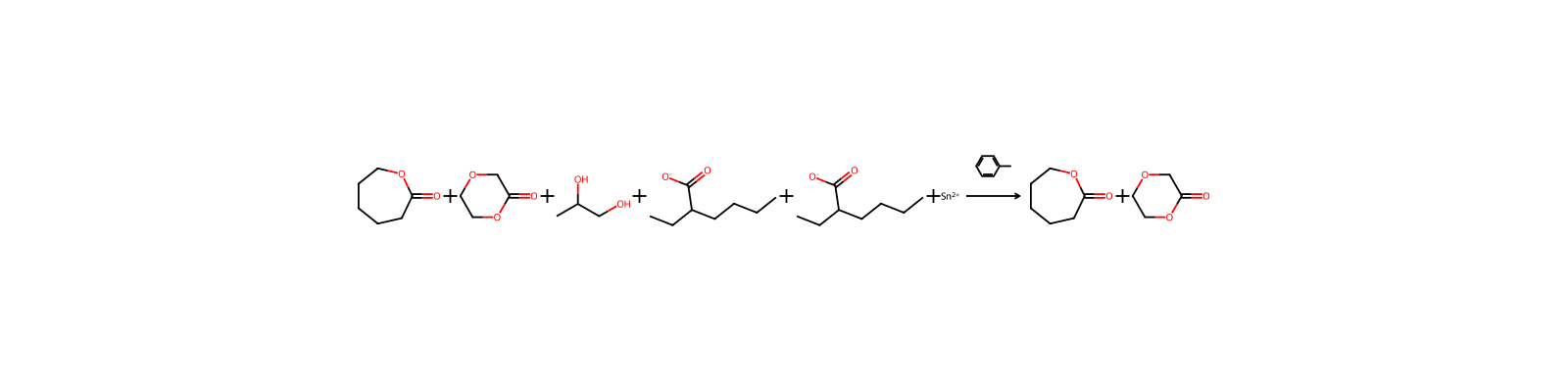
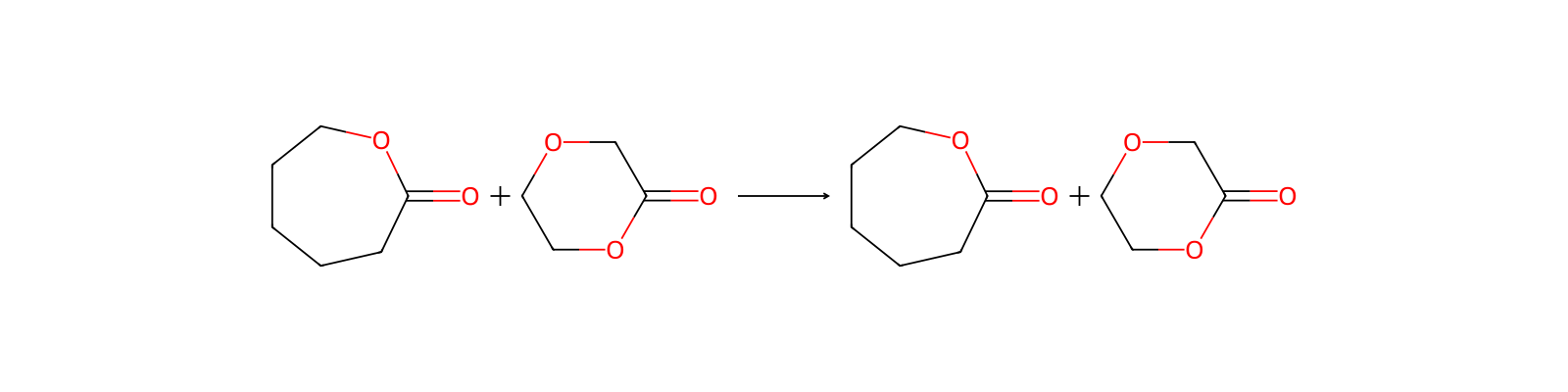
관련 반응
212건




화합물 노트
불러오는 중…