홈MCP워크벤치Skills
홈워크벤치알림마이페이지
llms.txt · MCP 가이드개인정보처리방침 · 이용약관 · 지원v1.8.0
  1. 홈
  2. /화합물

비스 (클로로메틸) 케톤

1,3-Dichloroacetone
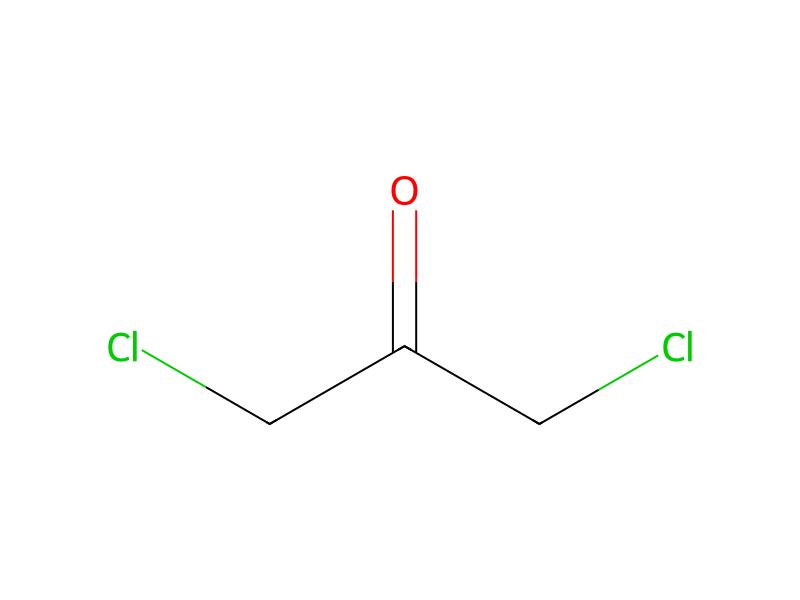
HCID 10793
새 노트새 반응견적 요청하기
인쇄 미리보기
기본 정보개요이름 및 식별자물성안전 및 규제화학 및 산업관련 반응화합물 노트
부분 구조 검색유사 구조 찾기

기본 정보

CAS
534-07-6
표준 SMILES
O=C(CCl)CCl
InChIKey
SUNMBRGCANLOEG-UHFFFAOYSA-N
분자식
C3H4Cl2O
평균 분자량
126.97 g/mol
단동위원소 질량
125.96392011

개요

1,3-dichloroacetone appears as a crystalline solid. Denser than water and insoluble in water. Inhalation of dust or powder may cause adverse health reactions.

이름 및 식별자

우선 이름
1,3-Dichloroacetone
IUPAC
1,3-dichloropropan-2-one
현지명
비스 (클로로메틸) 케톤
영어명
1,3-Dichloroacetone
분자식
C3H4Cl2O
분자량
126.97

이름 및 동의어

1,3-Dichloroacetone534-07-61,3-Dichloro-2-propanone1,3-Dichloropropanonesym-Dichloroacetone2-Propanone, 1,3-dichloro-BISCHLOROMETHYL KETONEAcetone, 1,3-dichloroalpha,gamma-Dichloroacetone1,3-DichloroacetonaDichloro-1,3 acetoneDTXSID2021577
이름 더 보기
비스(클로로메틸)케톤비스(클로로메틸)케톤1,3-디클로로-2-프로판온DCAdichloroacetone1,3-dichloro-propan-2-one1,3-DCANSC 8745s-Dichloroacetone,-Dichloroacetone
UFH8559WS5NSC-8745alpha,alpha'-DichloroacetoneDTXCID001577CHEBI:156485RefChem:72632208-585-61,3-dichloropropan-2-one

데이터베이스 식별자

CAS
534-07-6
PubChem CID
10793
DTXSID
DTXSID2021577
ChEMBL
CHEMBL1231783
ChEBI
CHEBI:156485
UNII
UFH8559WS5
EC Number
208-585-6
Nikkaji
J1.590C

물성

구조 계산 물성

XLogP
1.2
극성 표면적
17.1 Ų
수소 결합 공여자 수
0
수소 결합 수용자 수
1
회전 가능 결합 수
2
무거운 원자 수
6
형식 전하
0
복잡도
46.8

실험 및 물리화학적 성질

Chemical ClassesFlammable agents - 2nd degree
SpringerMaterials PropertiesSchoenflies notation
Density · 3건

1.3826 at 114.8 °F (EPA, 1998) - Denser than water; will sink

1.3826 at 46 °C/4 °C

1.3826 @ 46°C

Color/Form · 2건

Prisms or needles

Plates, needles on distillation

Solubility · 3건

> 10% in water

> 10% in ethanol

> 10% in ether

Boiling Point · 3건

343 °F at 760 mmHg (EPA, 1998)

173.4 °C

173 °C @760 [mm Hg]

Melting Point · 3건

113 °F (EPA, 1998)

45 °C

45 °C

Vapor Density4.38 (EPA, 1998) - Heavier than air; will sink (Relative to Air)
Refractive IndexIndex of refraction: 1.4716 at 40 °C
Physical Description1,3-dichloroacetone appears as a crystalline solid. Denser than water and insoluble in water. Inhalation of dust or powder may cause adverse health reactions.

안전 및 규제

안전 정보는 참고용이며, 공급업체의 물질안전보건자료(SDS), 관련 법규 및 전문가 평가를 대체하지 않습니다.

GHS 분류

GHS Classification · 4건

Danger

H300 (100%): Fatal if swallowed [Danger Acute toxicity, oral]

P203, P260, P262, P264, P264+P265, P270, P271, P273, P280, P284, P301+P316, P301+P330+P331, P302+P352, P302+P361+P354, P304+P340, P305+P354+P338, P316, P317, P318, P320, P321, P330, P361+P364, P363, P391, P403+P233, P405, and P501 (click each P-code to see the statement)

Aggregated GHS information provided per 82 reports by companies from 9 notifications to the ECHA C&L Inventory. Each notification may be associated with multiple companies.

유해성 정보

Regulatory Information · 4건

Chemical: 2-Propanone, 1,3-dichloro-

Status: Active Update: 15-02-2023 https://echa.europa.eu/registration-dossier/-/registered-dossier/17083

1,3-Dichloroacetone: Does not have an individual approval but may be used under an appropriate group standard

The New Jersey Worker and Community Right to Know Act requires public and private employers to provide information about hazardous substances at their workplaces. (N.J.S.A. 34:5A-1 et. seq.)

DOT LabelPoison
Fire Hazards · 2건

When heated to decomposition, it emits highly toxic fumes of chlorides. This material may burn but does not ignite readily. Container may explode in heat of fire. (EPA, 1998)

· Combustible material: may burn but does not ignite readily.

Health Hazards · 2건

It may be fatal if inhaled, swallowed or absorbed through skin. Contact may cause burns to skin and eyes. Fire may produce irritating or poisonous gases. Runoff from fire control water may give off poisonous gases. Runoff from fire control or dilution water may cause pollution. (EPA, 1998)

· TOXIC and/or CORROSIVE; inhalation, ingestion or skin contact with material may cause severe injury or death.

Hazards Summary

화학 및 산업

약리 정보

Absorption, Distribution and Excretion... Readily absorbed through the intact skin of rats and humans.

용도 및 제조

Uses · 2건

Vesicant

Synthesis of citric acid based on the reaction of glycerol derived 1,3-dichloroacetone with cyanide.

Methods of ManufacturingPrepd by the oxidation of dichlorohydrin with sodium dichromate.
General Manufacturing Information2-Propanone, 1,3-dichloro-: ACTIVE

응용 분야

용도1,3-Dichloroacetone was used as acceptor substrate in the cross-aldol reaction with donor substrates such as acetone, cyclopentanone and cyclohexanon

일반 설명A crystalline solid. Denser than water and insoluble in water. Inhalation of dust or powder may cause adverse health reactions.

상·하류 제품 정보

상류 원료

중크롬산나트륨디클로로(1,3-)-2-프로판올에피클로로하이드린

하류 제품

(2-(Trifluoromethyl)thiazol-4-yl)methanamine2-(4-(클로로메탄)THIAZOL-2-YL)구아닌

관련 반응

547건
반응 기록 만들기
HRID 4398 반응식
HRID 4398반응물로uspto-grants-1988_02
HRID 4723 반응식
HRID 4723반응물로uspto-grants-1988_02
HRID 10760 반응식
HRID 10760반응물로uspto-grants-2006_08
HRID 17782 반응식
HRID 17782반응물로uspto-grants-2010_06
HRID 22451 반응식
HRID 22451반응물로uspto-grants-1995_06
HRID 36432 반응식
HRID 36432반응물로uspto-grants-1995_05
HRID 42792 반응식
HRID 42792반응물로uspto-grants-2013_09
HRID 52689 반응식
HRID 52689반응물로uspto-grants-1997_04
1 / 69 페이지

화합물 노트

불러오는 중…

이 페이지에서기본 정보개요이름 및 식별자물성안전 및 규제화학 및 산업관련 반응화합물 노트
더보기
새 노트새 반응견적 요청하기
Other Experimental PropertiesUV: 1-10 (Organic Electronic Spectral Data, Phillips et al, John Wiley & Sons, New York) /1,1-Dichloroacetone/

물리화학적 성질

녹는점
43 °C · 43 °C
끓는 점
73 °C733.4 · 73 °C733.4 mm Hg(lit.)
밀도
1.383 g/mL · 1.383 g/mL at 25 °C(lit.)
증기 밀도
4.38 · 4.38 (vs air)
증기압
0.1 mm · <0.1 mm Hg ( 20 °C)
굴절률
1.44 · 1.4400
인화점
193 °F · 193 °F
저장 조건
Refrigerator (+4°C) + Poison room
용해도
알코올: 매우 용해됨
물리적 상태
크리스탈
색상
흰색 또는 무색
Specific Gravity
1.383 · 1.383
수소이온지수(pH)
4.2 · 4.2 (10g/l, H2O, 20℃)
수용성
27.9 g/L · 27.9g/L(20℃)
Merck
14 · 14,3052
BRN
605456 · 605456
Dielectric constant
14 · 14.0(20℃)
InChI
1S/C3H4Cl2O/c4-1-3(6)2-5/h1-2H2
InChIKey
SUNMBRGCANLOEG-UHFFFAOYSA-N
SMILES
ClCC(=O)CCl
NIST
1 · 1,3-Dichloro-2-propanone(534-07-6)
EPA
Bis(chloromethyl) ketone (534-07-6)

화학적 성질

White or colorless crystals

· 1건

The major hazards encountered in the use and handling of bischloromethyl ketone stem from its toxicologic properties. Toxic by all routes (ie, inhalation, ingestion, and dermal absorption), exposure to this crystalline substance may occur from its use as vesicant or in the synthesis of citric acid. Effects from exposure may include contact burns to the skin and eyes, and even death with sufficiently high concentrations. In activities or situations where over exposure may occur, wear a self-contained breathing apparatus and chemical protective clothing which is specifically recommended by the shipper or producer. If contact should occur. immediately flush affected skin or eyes with running water for at least 15 minutes, and remove contaminated clothing and shoes at the site. While bischloromethyl ketone does not ignite easily, it may burn with the production of irritating and poisonous gases. Also, containers may explode violently in the heat of a fire. Fires involving bischloromethyl ketone may be extinguished with dry chemical, CO2, Halon, water spray, fog, or standard foam. Fight the fire from as far a distance as possible, and dike runoff from fire control water. Containers for international shipment by air and water must bear the labels, "Corrosive" and "Poison", respectively. Small spills of bischloromethyl ketone may be taken up and placed into containers for later disposal (liquid solutions are first absorbed by sand or other noncombustible material). Large liquid spills should be diked far ahead of the spill area for later disposal. Prior to implementing land disposal of bischloromethyl ketone, consult with environmental regulatory agencies for guidance.

DOT ID and Guide2649 153
Reactive GroupHalogenated Organic Compounds
Reactivity Profile · 1건

A halogenated ketone. Ketones are reactive with many acids and bases liberating heat and flammable gases (e.g., H2). The amount of heat may be sufficient to start a fire in the unreacted portion of the ketone. Ketones react with reducing agents such as hydrides, alkali metals, and nitrides to produce flammable gas (H2) and heat. Ketones are incompatible with isocyanates, aldehydes, cyanides, peroxides, and anhydrides. They react violently with aldehydes, HNO3, HNO3 + H2O2, and HClO4.

DOT Emergency Guidelines · 5건

/GUIDE 153: SUBSTANCES - TOXIC and/or CORROSIVE (Combustible)/ Fire or Explosion: Combustible material: may burn but does not ignite readily. When heated, vapors may form explosive mixtures with air: indoors, outdoors and sewers explosion hazards. Those substances designated with a (P) may polymerize explosively when heated or involved in a fire. Contact with metals may evolve flammable hydrogen gas. Containers may explode when heated. Runoff may pollute waterways. Substance may be transported in a molten form.

/GUIDE 153: SUBSTANCES - TOXIC and/or CORROSIVE (Combustible)/ Health: TOXIC; inhalation, ingestion or skin contact with material may cause severe injury or death. Contact with molten substance may cause severe burns to skin and eyes. Avoid any skin contact. Effects of contact or inhalation may be delayed. Fire may produce irritating, corrosive and/or toxic gases. Runoff from fire control or dilution water may be corrosive and/or toxic and cause pollution.

/GUIDE 153: SUBSTANCES - TOXIC and/or CORROSIVE (Combustible)/ Public Safety: CALL Emergency Response Telephone Number on Shipping Paper first. If Shipping Paper not available or no answer, refer to appropriate telephone number listed on the inside back cover. As an immediate precautionary measure, isolate spill or leak area in all directions for at least 50 meters (150 feet) for liquids and at least 25 meters (75 feet) for solids. Keep unauthorized personnel away. Stay upwind. Keep out of low areas. Ventilate enclosed areas.

/GUIDE 153: SUBSTANCES - TOXIC and/or CORROSIVE (Combustible)/ Protective Clothing: Wear positive pressure self-contained breathing apparatus (SCBA). Wear chemical protective clothing that is specifically recommended by the manufacturer. It may provide little or no thermal protection. Structural firefighters' protective clothing provides limited protection in fire situations ONLY; it is not effective in spill situations where direct contact with the substance is possible.

For more DOT Emergency Guidelines (Complete) data for BISCHLOROMETHYL KETONE (8 total), please visit the HSDB record page.

DOT Hazard Classification · 4건

1,3-Dichloroacetone

UN2649

Div 6.1 Poisonous materials (49 eCFR § 173.132)

PG II: the degree of danger presented by the material is medium

Air and Water ReactionsInsoluble in water.
CERCLA Reportable Quantities · 1건

Releases of CERCLA hazardous substances are subject to the release reporting requirement of CERCLA section 103, codified at 40 CFR part 302, in addition to the requirements of 40 CFR part 355. Bis(chloromethyl) ketone is an extremely hazardous substance (EHS) subject to reporting requirements when stored in amounts in excess of its threshold planning quantity (TPQ) of 10/10,000 lbs.

안전 및 보호

Fire Fighting · 1건

Keep unnecessary people away; isolate hazard area and deny entry. Stay upwind; keep out of low areas. Ventilate closed spaces before entering them. Wear positive pressure breathing apparatus and special protective clothing. Remove and isolate contaminated clothing at the site. If water pollution occurs, notify appropriate authorities.

Accidental Release Measures · 2건

· CALL 911. Then call emergency response telephone number on shipping paper. If shipping paper not available or no answer, refer to appropriate telephone number listed on the inside back cover.

· ELIMINATE all ignition sources (no smoking, flares, sparks or flames) from immediate area.

First Aid · 2건

Warning: Bis(chloromethyl) ketone may be fatal if inhaled, swallowed, or absorbed through skin.

General First Aid:

Exposure Control and Personal Protection· Wear positive pressure self-contained breathing apparatus (SCBA).
Nonfire Spill ResponseExcerpt from ERG Guide 153 [Substances - Toxic and/or Corrosive (Combustible)]:
Disposal Methods · 1건

SRP: At the time of review, criteria for land treatment or burial (sanitary landfill) disposal practices are subject to significant revision. Prior to implementing land disposal of waste residue (including waste sludge), consult with environmental regulatory agencies for guidance on acceptable disposal practices.

Isolation and Evacuation · 2건

Excerpt from ERG Guide 153 [Substances - Toxic and/or Corrosive (Combustible)]:

Immediate precautionary measure

Protective Action Criteria (PAC) · 3건

0.025 [mg/m3]

0.27 [mg/m3]

1.0 [mg/m3]

Personal Protective Equipment (PPE) · 1건

For emergency situations, wear a positive pressure, pressure-demand, full facepiece self-contained breathing apparatus (SCBA) or pressure- demand supplied air respirator with escape SCBA and a fully-encapsulating, chemical resistant suit. (EPA, 1998)

Emergency Response Planning GuidelinesSmall Fire

독성 정보

Human Toxicity ExcerptsLacrimator ...
Non-Human Toxicity Excerpts... 1,3-Dichloro-2-propanone is strongly mutagenic without activation.
Probable Routes of Human Exposure... skin ...

규제 정보

CERCLA Reportable Quantities · 1건

Releases of CERCLA hazardous substances are subject to the release reporting requirement of CERCLA section 103, codified at 40 CFR part 302, in addition to the requirements of 40 CFR part 355. Bis(chloromethyl) ketone is an extremely hazardous substance (EHS) subject to reporting requirements when stored in amounts in excess of its threshold planning quantity (TPQ) of 10/10,000 lbs.

안전 데이터

wgk
3
tsca
TSCA listed
rtecs
UC1430000
ridadr
UN 2649
독성
mmo-sat 1250 ng/plate MUREAV 157,111,85
HS 번호
29147090
risk_code
24-26/28-34-68-36/37/38-11
hazard_code
T+,F
safety_code
26-36/37/39-45-28A-1-28-16
포장분류
II
위험 등급
6.1
기존화학 물질
KE-10204
F 고인화성물질
19
Hazard Classifications
Acute Tox. 1 InhalationAcute Tox. 2 DermalAcute Tox. 2 OralMuta. 2Skin Corr. 1B
스토리지 클래스
6.1A - Combustible acute toxic Cat. 1 and 2very toxic hazardous materials
유해 물질 데이터
534-07-6(Hazardous Substances Data)
(S)-((2-구아니디노-4-티아졸릴)메틸이소티오우레아이염산염
플루코나졸
3-(2-구아니디노-티아졸-4-일-메틸티오)-프로피오니트릴
FAMOTI디NE
5-Chloro-4-(chloromethyl)-1,2,3-thiadiazole, 97%, 97
NIZA티딘
4-(클로로메틸)-1,3-티아졸
디클로로아세톤
4-클로로메틸-2-페닐-옥사졸
4-클로로메틸-2-메틸티아졸염산염
디클로로(2,3-)-1-프로판올