
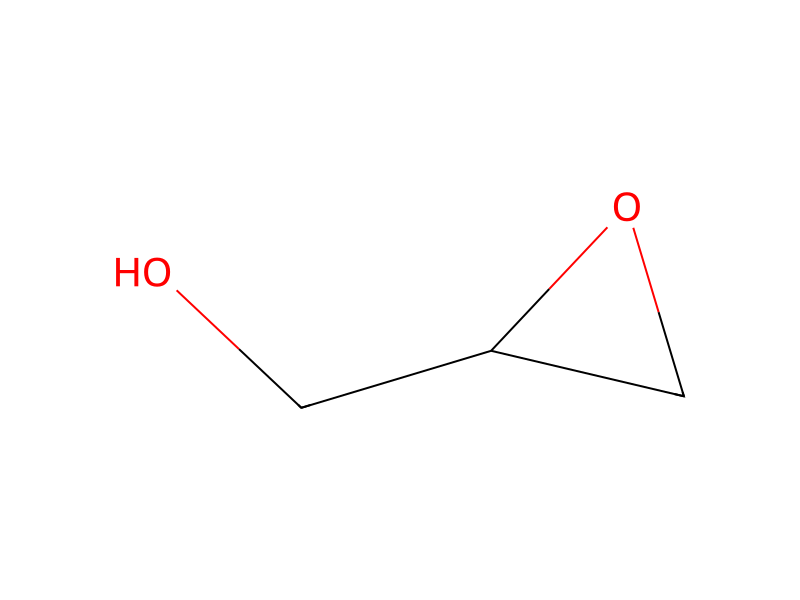
기본 정보
- 표준 SMILES
OCC1CO1- InChIKey
CTKINSOISVBQLD-UHFFFAOYSA-N- 분자식
- C3H6O2
- 평균 분자량
- 74.08 g/mol
- 단동위원소 질량
- 74.03677943
개요
Glycidol can cause cancer according to The National Toxicology Program.
이름 및 식별자
- 우선 이름
- Glycidol
- IUPAC
- oxiran-2-ylmethanol
- 현지명
- 글리시돌
- 영어명
- Glycidol
- 분자식
- C3H6O2
- 분자량
- 74.08
이름 및 동의어
GLYCIDOL556-52-5oxiran-2-ylmethanolOxiranemethanol2,3-Epoxy-1-propanolGlycide1-Propanol, 2,3-epoxy-Epihydrin alcoholOxiranylmethanol2-(Hydroxymethyl)oxiraneGlycidyl alcohol2,3-Epoxypropanol
이름 더 보기
2,3-에폭시-1-프로판올글리시돌2,3-에폭시프로판-1-올oxiranyl-methanolGLYCEROLGLYCIDE(±)-GlycidolGLYCEROGLYCIDE(+/-)-GLYCIDOLOXYRANYL METHANOL
3-Hydroxypropylene oxide2-OxiranemethanolEpoxypropyl alcoholAllyl alcohol oxideMonoepoxide glycidolMethanol, oxiranyl-2,3-Epoxypropan-1-ol3-Hydroxy-1,2-epoxypropane
데이터베이스 식별자
- CAS
556-52-5、57044-25-4、60456-23-7- PubChem CID
- 11164
- DTXSID
DTXSID4020666- ChEMBL
CHEMBL1530150- ChEBI
CHEBI:30966- UNII
- S54CF1DV9A
- EC Number
- 209-128-3
- Nikkaji
- J2.660C
물성
구조 계산 물성
- XLogP
- -0.9
- 극성 표면적
- 32.8 Ų
- 수소 결합 공여자 수
- 1
- 수소 결합 수용자 수
- 2
- 회전 가능 결합 수
- 1
- 무거운 원자 수
- 5
- 형식 전하
- 0
- 복잡도
- 35.9
실험 및 물리화학적 성질
Chemical ClassesCarcinogens
PolymersPlastics & Rubber -> Epoxides
LogP
log Kow = -0.95
-0.95
-0.95
Density
1.1143 at 77 °F (NTP, 1992) - Denser than water; will sink
1.143 g/cu cm at 25 °C
Relative density (water = 1): 1.1
1.12
1.115 @ 20°C
1.12
Color/Form
Colorless, slightly viscous liquid
Colorless liquid
Solubility
greater than or equal to 100 mg/mL at 64 °F (NTP, 1992)
Soluble in water, alcohol, and ether
Miscible with water /1.0X10+6 mg/L/
Solubility in water: miscible
Miscible
Flash Point
162 °F (NTP, 1992)
162 °F
73 °C (closed cup)
72 °C c.c.
162 °F
162 °F
Endocrine DisruptorsPotential endocrine disrupting compound
Boiling Point
333 °F at 760 mmHg (with decomposition) (NTP, 1992)
167 °C decomposes; 66 °C at 2.5 mm Hg
320 °F (decomposes)
320 °F (Decomposes)
Decomposition
When heated to decomposition it emits acrid smoke and fumes.
166 °C
Melting Point
-49 °F (NTP, 1992)
-45 °C
-49 °F
-49 °F
Vapor Density
2.15 (NTP, 1992) - Heavier than air; will sink (Relative to Air)
2.15 (Air = 1)
Relative vapor density (air = 1): 2.15
2.15
물리화학적 성질
- 녹는점
- -54 °C · -54 °C
- 끓는 점
- 61 · 61-62 °C/15 mmHg (lit.)
- 밀도
- 1.117 g/mL · 1.117 g/mL at 25 °C (lit.)
- 증기 밀도
- 2.15 · 2.15 (vs air)
- 증기압
- 0.9 mm · 0.9 mm Hg ( 25 °C)
- 굴절률
- 20 · n20/D 1.433(lit.)
- 인화점
- 178 °F · 178 °F
- 저장 조건
- -20 °C · -20°C
- 용해도
- 아세톤, 알코올, 벤젠, 클로로포름 및 에테르에 용해됨(Weast, 1986)
- 산도 계수 (pKa)
- 14.62 · 14.62±0.10(Predicted)
- 물리적 상태
- 분말, 결정 또는 덩어리
- 색상
- 흰색에서 밝은 노란색-베이지색
- 수용성
- 녹는
- Merck
- 13 · 13,4503
- BRN
- 383562 · 383562
- Henry's Law Constant
- 1.7 · 1.7×103 mol/(m3Pa) at 25℃, HSDB (2015)
- 안정성
- 안정성 안정적이지만 강산, 강염기, 중금속, 중금속 염과 접촉하면 폭발할 수 있습니다. 물이나 습한 공기에 노출되면 분해될 수 있습니다.
- InChI
- 1S/C3H6O2/c4-1-3-2-5-3/h3-4H,1-2H2
- InChIKey
- CTKINSOISVBQLD-UHFFFAOYSA-N
- SMILES
- OCC1CO1
- LogP
- -0.95 at · -0.95 at 25℃
- NIST
- Glycidol(556-52-5)
- EPA
- Glycidol (556-52-5)
화학적 성질
Glycidol is a colorless liquid.
안전 및 규제
GHS 분류
GHS Classification
Danger
H302: Harmful if swallowed [Warning Acute toxicity, oral]
P203, P261, P264, P264+P265, P270, P271, P280, P301+P317, P302+P352, P304+P340, P305+P351+P338, P316, P317, P318, P319, P321, P330, P332+P317, P337+P317, P362+P364, P403+P233, P405, and P501 (click each P-code to see the statement)
Danger
H302 (99.6%): Harmful if swallowed [Warning Acute toxicity, oral]
P203, P260, P261, P264, P264+P265, P270, P271, P280, P301+P317, P302+P352, P304+P340, P305+P351+P338, P316, P317, P318, P319, P321, P330, P332+P317, P337+P317, P362+P364, P403+P233, P405, and P501 (click each P-code to see the statement)
유해성 정보
Regulatory Information
Chemical: Oxiranemethanol
Hazard Traits - Carcinogenicity; Reproductive Toxicity
Regulation (EC) No 178/2002 (amended)
TP - indicates a substance that is the subject of a proposed TSCA section 4 test rule.
Status: Active Update: 15-01-2021 https://echa.europa.eu/registration-dossier/-/registered-dossier/11100
Glycidol: HSNO Approval: HSR004486 Approved with controls
Other Safety InformationIMAP assessments - Oxiranemethanol: Environment tier I assessment
DOT LabelPoison
Fire Hazards
This chemical is combustible. (NTP, 1992)
Combustible. Above 72 °C explosive vapour/air mixtures may be formed.
Health HazardsExcerpt from NIOSH Pocket Guide for Glycidol:
Hazards Summary
Mice and rats exposed to high concentrations develop pneumonitis and emphysema; Rabbits show skin irritation and reversible corneal burns after skin and eye exposure; [ACGIH] In lethal inhalation studies of rodents, pulmonary edema was usually the cause of death; There is no experimental data, but glycidol, an epoxide, should be considered a potential skin and respiratory sensitizer; [HSDB]
Reactive GroupAlcohols and Polyols
EC ClassificationSymbol: T; R: 45-60-21/22-23-36/37/38-68; S: 53-45
UN ClassificationUN Hazard Class: 6.1; UN Pack Group: III
Special Reports
DHHS/NTP; Toxicology & Carcinogenesis Studies of Glycidol in F344/N Rats and B6C3F1 Mice(Gavage Studies) Technical Report Series No. 374 (1990) NIH Publication No. 90-2829
IARC. Monographs on the Evaluation of the Carcinogenic Risk of Chemicals to Man. Geneva: World Health Organization, International Agency for Research on Cancer, vol 77, p. 477 (2000).. IARC Monographs provide critical reviews of data on carcinogenicity for agents to which humans are known to be exposed and on specific exposure situations.[Available at: http://monographs.iarc.fr/index.php]
National Toxicology Program. Eleventh Report on Carcinogens (2005). The Report on Carcinogens is an informational scientific and public health document that identifies and discusses substances (including agents, mixtures, or exposure circumstances) that may pose a carcinogenic hazard to human health. Glycidol (556-52-5) is listed as reasonably anticipated to be a human carcinogen.[Available from, as of July 31, 2009: http://ntp.niehs.nih.gov/ntp/roc/eleventh/profiles/s092glyc.pdf]
TSCA Requirements
Pursuant to section 8(d) of TSCA, EPA promulgated a model Health and Safety Data Reporting Rule. The section 8(d) model rule requires manufacturers, importers, and processors of listed chemical substances and mixtures to submit to EPA copies and lists of unpublished health and safety studies. Glycidol (oxiranemethanol) and its derivatives are included on this list. Effective date 10/4/82; Sunset date: 10/4/92. /Glycidol (oxiranemethanol) and its derivatives/
Reactivity AlertsPolymerizable
안전 및 보호
Fire Fighting
Fires involving this material can be controlled with a dry chemical, carbon dioxide or Halon extinguisher. A water spray may also be used. (NTP, 1992)
Use water spray, powder, alcohol-resistant foam, carbon dioxide. In case of fire: keep drums, etc., cool by spraying with water.
First Aid Measures
Fresh air, rest. Refer for medical attention.
Remove contaminated clothes. Rinse skin with plenty of water or shower.
First rinse with plenty of water for several minutes (remove contact lenses if easily possible), then refer for medical attention.
Rinse mouth. Do NOT induce vomiting. Give one or two glasses of water to drink. Refer for medical attention .
First Aid
EYES: First check the victim for contact lenses and remove if present. Flush victim's eyes with water or normal saline solution for 20 to 30 minutes while simultaneously calling a hospital or poison control center. Do not put any ointments, oils, or medication in the victim's eyes without specific instructions from a physician. IMMEDIATELY transport the victim after flushing eyes to a hospital even if no symptoms (such as redness or irritation) develop.
(General first aid procedures)
Safe StorageStore only if stabilized. Cool. Dry. Well closed. Ventilation along the floor. Separated from strong bases, strong acids and food and feedstuffs.
Fire Fighting Procedures
Suitable extinguishing media. For small (incipient) fires, use media such as "alcohol" foam, dry chemical, or carbon dioxide. For large fires, apply water from as far as possible. Use very large quantities (flooding) of water applied as a mist or spray; solid streams of water may be ineffective. Cool all affected containers with flooding quantities of water. Special protective equipment for fire-fighters: Wear self contained breathing apparatus for fire fighting if necessary. Further information: Use water spray to cool unopened containers.
Use dry chemical, carbon dioxide, alcohol foam, or polymer foam extinguishers. Vapors are heavier than air and will collect in low areas. Vapors may travel long distances to ignition sources and flashback. Vapors in confined areas may explode when exposed to fire. Containers may explode in fire. Storage containers and parts of containers may rocket great distances, in many directions. If material or contaminated runoff enters waterways, notify downstream users or potentially contaminated waters. Notify local health and fire officials and pollution control agencies. From a secure, explosion-proof location use water spray to cool exposed containers. If cooling streams are ineffective (venting sound increases in volume and pitch, tank discolors or shows any signs of deforming), withdraw immediately to a secure position ... The only respirators recommended for fire fighting are self-contained breathing apparatuses that have full facepieces and are operated in a pressure-demand or other positive-pressure mode.
Storage Conditions
Keep container tightly closed in a dry and well-ventilated place. Containers which are opened must be carefully resealed and kept upright to prevent leakage. Recommended storage temperature: 2 - 8 °C Moisture sensitive. Handle and store under inert gas.
Glycidol must be stored to avoid contact with strong oxidizers (such as perchlorates, peroxides, permanganates, chlorates, and nitrates). Store in tightly closed containers in a cool, well-ventilated area away from heat. Metal containers involving the transfer of this chemical should be grounded and bonded. Where possible, automatically pump liquid from drums or other storage containers to process containers. Drums must be equipped with self-closing valves, pressure vacuum bungs, and flame arresters. Use only non-sparking tools and equipment, especially when opening and closing containers of this chemical. Sources of igntion, such as smoking and open flames, are prohibited where this chemical is used, handled, or stored in a manner that could create a potential fire hazard. Wherever this chemical is used, handled, manufactured, or stored, use explosion-proof electrical equipment and fittings.
Store only if stabilized. Cool. Dry. Well closed. Ventilation along the floor. Separated from strong bases, strong acids, food and feedstuffs.
PRECAUTIONS FOR "CARCINOGENS": Storage site should be as close as practical to lab in which carcinogens are to be used, so that only small quantities required for ... expt need to be carried. Carcinogens should be kept in only one section of cupboard, an explosion-proof refrigerator or freezer (depending on chemicophysical properties ...) that bears appropriate label. An inventory ... should be kept, showing quantity of carcinogen & date it was acquired ... Facilities for dispensing ... should be contiguous to storage area. /Chemical Carcinogens/
Cleanup Methods
ACCIDENTAL RELEASE MEASURES. Personal precautions: Wear respiratory protection. Avoid breathing vapors, mist or gas. Ensure adequate ventilation. Remove all sources of ignition. Evacuate personnel to safe areas. Beware of vapors accumulating to form explosive concentrations. Vapors can accumulate in low areas. Environmental precautions: Prevent further leakage or spillage if safe to do so. Do not let product enter drains. Methods and materials for containment and cleaning up: Contain spillage, and then collect with an electrically protected vacuum cleaner or by wet-brushing and place in container for disposal according to local regulations. Keep in suitable, closed containers for disposal.
Evacuate and restrict persons not wearing protective equipment from area of spill or leak until cleanup is complete. Remove all ignition sources. Ventilate area of spill or leak. Absorb liquids in vermiculite, dry sand, earth, peat, carbon, or a similar material and deposit in sealed containers. Keep this chemical out of a confined space, such as a sewer, because of the possibility of an explosion, unless the sewer is designed to prevent the build-up of explosive concentrations. It may be necessary to contain and dispose of this chemical as a hazardous waste. If material or contaminated runoff enters waterways, notify downstream users of potentially contaminated waters. Contact your Department of Environmental Protection or your regional office of the federal EPA for specific recommendations.
1. Remove all ignition sources. 2. Ventilate area of spill or leak. 3. For small quantities, absorb on paper towels. Evaporate in safe place (such as fume hood) ... Burn paper in suitable location away from combustible materials. Large quantities can be collected and atomized in suitable combustion chamber, or absorbed in vermiculite, dry sand, earth, or similar material and disposed in a sanitary landfill.
PRECAUTIONS FOR "CARCINOGENS": A high-efficiency particulate arrestor (HEPA) or charcoal filters can be used to minimize amt of carcinogen in exhausted air ventilated safety cabinets, lab hoods, glove boxes or animal rooms ... Filter housing that is designed so that used filters can be transferred into plastic bag without contaminating maintenance staff is avail commercially. Filters should be placed in plastic bags immediately after removal ... The plastic bag should be sealed immediately ... The sealed bag should be labelled properly ... Waste liquids ... should be placed or collected in proper containers for disposal. The lid should be secured & the bottles properly labelled. Once filled, bottles should be placed in plastic bag, so that outer surface ... is not contaminated ... The plastic bag should also be sealed & labelled. ... Broken glassware ... should be decontaminated by solvent extraction, by chemical destruction, or in specially designed incinerators. /Chemical Carcinogens/
Nonfire Spill Response
SMALL SPILLS AND LEAKAGE: If you should spill this chemical, use absorbent paper to pick up all liquid spill material. Seal the absorbent paper, as well as any of your clothing which may be contaminated, in a vapor-tight plastic bag for eventual disposal. Wash any surfaces you may have contaminated with a soap and water solution. Do not reenter the contaminated area until the Safety Officer (or other responsible person) has verified that the area has been properly cleaned.
Disposal Methods
This combustible material may be burned in a chemical incinerator equipped with an afterburner and scrubber. Offer surplus and non-recyclable solutions to a licensed disposal company. Contact a licensed professional waste disposal service to dispose of this material.
SRP: The most favorable course of action is to use an alternative chemical product with less inherent propensity for occupational harm/injury/toxicity or environmental contamination. Recycle any unused portion of the material for its approved use or return it to the manufacturer or supplier. Ultimate disposal of the chemical must consider: the material's impact on air quality; potential migration in soil or water; effects on animal and plant life; and conformance with environmental and public health regulations.
PRECAUTIONS FOR "CARCINOGENS": There is no universal method of disposal that has been proved satisfactory for all carcinogenic compounds & specific methods of chem destruction ... published have not been tested on all kinds of carcinogen-containing waste. ... summary of avail methods & recommendations ... /given/ must be treated as guide only. /Chemical Carcinogens/
PRECAUTIONS FOR "CARCINOGENS": ... Incineration may be only feasible method for disposal of contaminated laboratory waste from biological expt. However, not all incinerators are suitable for this purpose. The most efficient type ... is probably the gas-fired type, in which a first-stage combustion with a less than stoichiometric air:fuel ratio is followed by a second stage with excess air. Some ... are designed to accept ... aqueous & organic-solvent solutions, otherwise it is necessary ... to absorb soln onto suitable combustible material, such as sawdust. Alternatively, chem destruction may be used, esp when small quantities ... are to be destroyed in laboratory. /Chemical Carcinogens/
For more Disposal Methods (Complete) data for Glycidol (7 total), please visit the HSDB record page.
Spillage Disposal
Personal protection: chemical protection suit including self-contained breathing apparatus. Collect leaking and spilled liquid in sealable glass or mild steel containers as far as possible. Absorb remaining liquid in dry sand or inert absorbent. Then store and dispose of according to local regulations.
Preventive Measures
Obtain special instructions before use.
Avoid contact with skin and eyes. Avoid inhalation of vapour or mist. Keep away from sources of ignition - No smoking. Take measures to prevent the build up of electrostatic charge.
If inhaled ... , move person into fresh air. If not breathing, give artificial respiration. Consult a physician. In case of skin contact, wash off with soap and plenty of water. Take victim immediately to hospital. Consult a physician. In case of eye contact, rinse thoroughly with plenty of water for at least 15 minutes and consult a physician. If swallowed Do NOT induce vomiting. Never give anything by mouth to an unconscious person. Rinse mouth with water. Consult a physician.
Avoid contact with skin, eyes and clothing. Wash hands before breaks and immediately after handling the product.
For more Preventive Measures (Complete) data for Glycidol (20 total), please visit the HSDB record page.
Isolation and EvacuationExcerpt from ERG Guide 153 [Substances - Toxic and/or Corrosive (Combustible)]:
독성 정보
Interactions
In rats pretreated with 278 mg of 2,3-epoxypropan-1-ol the acute LD50 of 1,2-dichloroethylene was decreased /by a factor of 5 (to less than 40 mg/kg/ & doses of 1,1-dichloroethylene as low as 12.5 mg/kg increased aspartate transaminase levels.
Target OrgansEyes, skin, respiratory system, central nervous system
Environmental Fate
TERRESTRIAL FATE: Based on a classification scheme(1), an estimated Koc value of 1(SRC), determined from a log Kow of -0.95(2) and a regression-derived equation(3), indicates that glycidol is expected to have very high mobility in soil(SRC). Volatilization of glycidol from moist soil surfaces is not expected to be an important fate process(SRC) given an estimated Henry's Law constant of 5.8X10⁻⁹ atm-cu m/mole(SRC), using a fragment constant estimation method(4). Glycidol is not expected to volatilize from dry soil surfaces(SRC) based upon an estimated vapor pressure of 5.6 mm Hg at 25 °C(SRC), determined from a fragment constant method(5). Utilizing the Japanese MITI test, 85% of the Theoretical BOD was reached in 4 weeks(6) indicating that biodegradation is an important environmental fate process in soil(SRC). Hydrolysis in moist soil may be an important environmental fate process based upon reported hydrolysis half-lives ranging from 12 hours to 4 days at pH 7 in water(7,8).
AQUATIC FATE: Based on a classification scheme(1), an estimated Koc value of 1(SRC), determined from a log Kow of -0.95(2) and a regression-derived equation(3), indicates that glycidol is not expected to adsorb to suspended solids and sediment(SRC). Volatilization from water surfaces is not expected(4) based upon an estimated Henry's Law constant of 5.8X10⁻⁹ atm-cu m/mole(SRC), developed using a fragment constant estimation method(5). According to a classification scheme(6), an estimated BCF of 3(SRC), from its log Kow(2) and a regression-derived equation(3), suggests the potential for bioconcentration in aquatic organisms is low(SRC). Utilizing the Japanese MITI test, 85% of the Theoretical BOD was reached in 4 weeks(7) indicating that biodegradation is an important environmental fate process in water(SRC). The hydrolysis half-lives of glycidol range from 12 hours(8) to 4 days(9) at pH 7.
ATMOSPHERIC FATE: According to a model of gas/particle partitioning of semivolatile organic compounds in the atmosphere(1), glycidol, which has an estimated vapor pressure of 5.6 mm Hg at 25 °C(SRC), determined from a fragment constant method(2), is expected to exist solely as a vapor in the ambient atmosphere. Vapor-phase glycidol is degraded in the atmosphere by reaction with photochemically-produced hydroxyl radicals(SRC); the half-life for this reaction in air is estimated to be 3 days(SRC), calculated from its rate constant of 4.7X10⁻¹² cu cm/molecule-sec at 25 °C(SRC) that was derived using a structure estimation method(3). Glycidol does not contain chromophores that absorb at wavelengths >290 nm(4), and therefore is not expected to be susceptible to direct photolysis by sunlight(SRC).
Adverse EffectsDermatotoxin - Skin burns.
Exposure Routes
The substance can be absorbed into the body by inhalation of its vapour, through the skin and by ingestion.
inhalation, ingestion, skin and/or eye contact
Ecotoxicity Excerpts
/AQUATIC SPECIES/ The 14 day LC50 value of glycidol to the guppy (Poecilia reticulata) was determined, and investigated through the construction of a quantitative structure activity relationship (QSAR). Both hydrophobicity and alkylating potency of the compound were found to be necessary parameters for the satisfactory description of the LC50 data. The log LC50 experimental data for glycidol was 2.83 umol/L as compared to the calculated QSAR value of 3.00 umol/L.
Signs and Symptoms
Cough. Sore throat. Dizziness. Drowsiness.
MAY BE ABSORBED! Redness.
Redness. Pain.
Abdominal pain. Diarrhoea. Nausea. Vomiting.
irritation eyes, skin, nose, throat; narcosis
Ongoing Test Status
The following link will take the user to the National Toxicology Program (NTP) Test Agent Search Results page, which tabulates all of the "Standard Toxicology & Carcinogenesis Studies", "Developmental Studies", and "Genetic Toxicity Studies" performed with this chemical. Clicking on the "Testing Status" link will take the user to the status (i.e., in review, in progress, in preparation, on test, completed, etc.) and results of all the studies that the NTP has done on this chemical.[Available from: http://ntp-apps.niehs.nih.gov/ntp_tox/index.cfm?fuseaction=ntpsearch.searchresults&searchterm=556-52-5]
ICSC Environmental DataEnvironmental effects from the substance have not been investigated adequately.
Soil Adsorption/Mobility
The Koc of glycidol is estimated as 1(SRC), using a log Kow of -0.95(1) and a regression-derived equation(2). According to a classification scheme(3), this estimated Koc value suggests that glycidol is expected to have very high mobility in soil.
TSCA Test Submissions
The mutagenicity of 2-hydroxymethyloxirane was evaluated in Salmonella tester strains TA98, TA100, TA1535, TA1537 and TA1538 (Ames Test), both in the presence and absence of added metabolic activation by Aroclor-induced rat liver S9 fraction. Based on preliminary toxicity determinations, 2-hydroxymethyloxirane, diluted in DMSO, was tested at concentrations up to 8mg/plate using the plate incorporation technique. 2-Hydroxymethyloxirane caused a positive response in tester strains TA1535 and TA100 with and without metabolic activation.
Human Toxicity Excerpts
/SIGNS AND SYMPTOMS/ Short Term Exposure: Glycidol affects you when breathed in and by passing through your skin. Irritates the eyes, skin, and respiratory tract. Vapor exposure can damage vision. Exposure can irritate the eyes, nose, throat, and lungs. Higher exposures can cause pulmonary edema, a medical emergency that can be delayed for several hours. This can cause death. High levels can cause you to feel dizzy, lightheaded, confused, excited, to pass out , and even die. May affect the central nervous system. Long Term Exposure: Repeated or prolonged contact may cause skin sensitization. It can irritate the lungs; bronchitis may develop. May cause personality changes, depression, anxiety, or irritability. Possibly carcinogenic to humans. Because this is a mutagen, handle it as a possible carcinogen, with extreme caution. May cause sterility in males. Based on animal tests, this substance may have toxic effects on human reproduction.
/SIGNS AND SYMPTOMS/ Potential symptoms of overexposure are irritation of eyes, nose, throat, and skin; ... /CNS depression/.
/SIGNS AND SYMPTOMS/ Slightly toxic after ingestion or percutaneous absorption. Moderately toxic upon inhalation. Moderately irritating to surface tissues. Stimulant & depressant of nervous system.
/SIGNS AND SYMPTOMS/ Short-term Exposure: Overexposure to glycidol may cause irritation of the eyes, nose, and throat. Long-term Exposure: Prolonged overexposure might produce irritation of the skin.
For more Human Toxicity Excerpts (Complete) data for Glycidol (10 total), please visit the HSDB record page.
규제 정보
TSCA Requirements
Pursuant to section 8(d) of TSCA, EPA promulgated a model Health and Safety Data Reporting Rule. The section 8(d) model rule requires manufacturers, importers, and processors of listed chemical substances and mixtures to submit to EPA copies and lists of unpublished health and safety studies. Glycidol (oxiranemethanol) and its derivatives are included on this list. Effective date 10/4/82; Sunset date: 10/4/92. /Glycidol (oxiranemethanol) and its derivatives/
안전 데이터
- OEB
- A
- OEL
- TWA: 25 ppm (75 mg/m3)
- wgk
- 3
- IDLA
- 150 ppm
- tsca
- TSCA listed
- rtecs
- UB4375000
- ridadr
- UN 2810 6.1/PG 3
- 독성
- Acute oral LD50 for mice 431 mg/kg, rats 420 mg/kg (quoted, RTECS, 1985).
- HS 번호
- 29109000
- risk_code
- 45-60-21/22-23-36/37/38-68
- hazard_code
- T
- safety_code
- 53-45-36/37-26
- 포장분류
- III
- 위험 등급
- 6.1(b)
- 기존화학 물질
- KE-27538
- F 고인화성물질
- 10-21
- 위험 참고 사항
- Toxic
- 자연 발화 온도
- 780 °F
- Hazard Classifications
- Acute Tox. 2 InhalationAcute Tox. 4 DermalAcute Tox. 4 OralCarc. 1BEye Irrit. 2Muta. 2Repr. 1BSkin Irrit. 2STOT SE 3
- 스토리지 클래스
- 6.1A - Combustible acute toxic Cat. 1 and 2very toxic hazardous materials
- 유해 물질 데이터
- 556-52-5(Hazardous Substances Data)
- 함량 및 규제정보
- 물질구분: 유독물질; 혼합물(제품)함량정보: 글리시돌 및 이를 0.1% 이상 함유한 혼합물
- 유해화학물질 필터링
- 2013-1-660
- 중점관리물질 필터링
- 별표1-88
- 암, 돌연변이성물질 필터링
- 49
화학 및 산업
약리 정보
Metabolism/Metabolites
Glycidol is rapidly hydrolyzed to glycerol (97.2%) and alpha-chlorohydrin (3-chloro-1,2-propanediol, 2.8%) in 0.1 M hydrochloric acid, with a half-life of 10 min. At pH 7 or 8, glycidol readily reacts with glutathione to form S-(2,3-dihydroxypropyl)glutathione.
S-(2,3-Dihydroxypropyl)glutathione, S-(2,3-dihydroxypropyl)cysteine and beta-chlorolactic acid are the major metabolites isolated from rat urine after intraperitoneal administration of glycidol. The generation of beta-chlorolactic acid is presumably a result of initial formation of alpha-chlorohydrin, with subsequent oxidation by alcohol and aldehyde dehydrogenases. Glycidol is hydrolyzed to glycerol by rat liver microsomal preparations.
Liver epoxide hydrase converted glycidol to glycerol. Glycidol was a substrate for lung and liver cytosolic glutathione S-transferases.
... The DNA damaging effects of 3-MCPD and its metabolites, glycidol and beta-chlorolactic acid, /were also studied/ in the in vitro comet assay on CHO cells. /The/ results show the absence of genotoxic potential of 3-MCPD in vivo in the target as well as in the non-target organs. Glycidol, the epoxide metabolite, induced DNA damages in CHO cells. beta-Chlorolactic acid, the main metabolite of 3-MCPD in rats, was shown to be devoid of DNA-damaging effects in vitro in mammalian cells.
MeSH Pharmacological ClassificationSubstances that increase the risk of NEOPLASMS in humans or animals. Both genotoxic chemicals, which affect DNA directly, and nongenotoxic chemicals, which induce neoplasms by other mechanism, are included.
Absorption, Distribution and Excretion
The comparative disposition of glycidol was investigated in rats following oral (po) or intravenous (iv) administration at doses of 37.5 and 75 mg/kg. These were the doses used in the National Toxicology Program (NTP) oncogenicity study with glycidol. Approximately 87-92% of the dose was absorbed from the gastrointestinal tract of the rat. (14)C-Glycidol equivalents were eliminated in urine (40-48% of dose in 72 hr), feces (5-12%), and exhaled as CO2 (26-32%). At both doses, 9-12% and 7-8% (estimated) of the dose remained in tissues at 24 and 72 hr following dosing, respectively. In general, the concentrations of glycidol equivalents in tissues were proportional to the dose. The highest concentrations of radioactivity were observed in blood cells, thyroid, liver, kidney, and spleen, and the lowest in adipose tissue, skeletal muscle, and plasma. The pattern of distribution of radioactivity in tissues was similar for both the iv and po routes. The total recovery of radioactivity ranged from 87 to 91% of dose. Urinary radioactivity was resolved by high-performance liquid chromatography (HPLC) analysis into 15 metabolites. There were one major (14-21% of the dose) and four lesser metabolites (each representing 2-8%); the others were minor, each representing 1% or less of the dose. In general, the urinary metabolic profile was similar following either iv or po administration at the two doses studied. Previous studies by other investigators suggested that alpha-chlorohydrin, which was presumably formed from glycidol by the HCl in the stomach, was metabolized and excreted in urine as beta-chlorolactic acid. The results of the present study show that very little, if any, urinary radioactivity coeluted with authentic beta-chlorolactic acid following either iv or po administration. Therefore, it is concluded that the conversion of glycidol to alpha-chlorohydrin is quantitatively insignificant. However, it may be significant with regard to glycidol reproductive toxicity. Also, the NTP oncogenicity study with glycidol was carried out within the dose range in which its disposition characteristics were linear.
Absorbed through skin.
Approximately 87-92% of 37.5 or 75 mg/kg body weight (bw) orally administered glycidol is absorbed from the gastrointestinal tract of male Fischer 344 rats. Seven to eight per cent of the dose remained in tissues 72 hr following administration. The highest concentrations of radioactivity were observed in blood cells, thyroid, liver, kidney and spleen.
용도 및 제조
Uses
Used primarily as a stabilizer of vinyl polymers; [ACGIH]
Plastic Composites Manufacturing [Category: Industry]
Alkylating agent
CHEM INT FOR PHARMACEUTICALS, COSMETICS, GLYCERIN, SURFACTANTS & POLYMERS
Stabilizer in manuf of vinyl polymers; intermediate in synthesis of glycerol, glycidyl ethers, and amines; additive for oil and synthetic hydraulic fluids; epoxy resin diluent.
... Suggested for use in preparation of glycerol and glycidyl ethers, esters, and amines, in the pharmaceutical industry, and in sanitation chemicals.
U.S. Production
(1976) PROBABLY GREATER THAN 2.27X10+6 GRAMS
(1978) PROBABLY GREATER THAN 2.27X10+6 GRAMS
Production volumes for non-confidential chemicals reported under the Inventory Update Rule. [Table#3666]
Production volume for non-confidential chemicals reported under the 2006 Inventory Update Rule. Chemical: 2-Oxiranemethanol. Aggregated National Production Volume: <500,000 lbs.
Methods of ManufacturingTreatment of monochlorohydrin with bases; reaction product of allyl alcohol and perbenzoic acid.
General Manufacturing Information2-Oxiranemethanol: ACTIVE
응용 분야
개요Glycidol is a chiral molecule with epoxide and primary alcohol functional groups. It is racemic mixture and exists in the dextrorotatory and the levorotatory enantiomeric forms. Several synthetic methods are available for preparation of glycidol. However, it is commercially prepared from the epoxidation of allyl alcohol with hydrogen peroxide and a catalyst (tungsten or vanadium), or from the reaction of epichlorohydrin with caustic. Glycidol has been used in the industrial synthesis of pharmaceutical products since the 1970s. However, its use for research purposes has been reported since 1956. Available information indicates that glycidol is manufactured by several companies in Japan, Germany, and the United States.
용도Glycidol is a Stabilizer in the manufacture of vinyl polymers; chemical intermediate in preparation of glycerol, glycidyl ethers, esters, and amines; in pharmaceuticals; in sanitary chemicals.
일반 설명Odorless clear colorless liquid.
상·하류 제품 정보
상류 원료
하류 제품
공급사50 곳
上海利卡斯实业有限公司19821976800 · [email protected]
上海阿拉丁生化科技股份有限公司400-6206333 13167063860 · [email protected]
河北创海生物科技有限公司+86-86-13131129325 · [email protected]
Hebei Yanxi Chemical Co., Ltd.+86-17531190177 · [email protected]
科瑞迪化学400-821-5857 021-64326257 · [email protected]
广东百科试剂有限公司13532366769 13686183698 · [email protected]
Syntechem Co.,Ltd[email protected]
北京颖诺凯胜科技有限公司010-56541685 13070143590 · [email protected]
上海迈瑞尔生化科技有限公司4006356688 18621169109 · [email protected]
安耐吉化学&3A(安徽泽升科技股份有限公司)400-0056266 · [email protected]
上海瀚鸿科技股份有限公司021-54306202 13764082696 · [email protected]
上海柯维化学技术有限公司021-64609169 18901607656 · [email protected]
上海景颜化工科技有限公司13817811078 · [email protected]
武汉丰泰威远科技有限公司+86-27-8746-5837 +86-18627785180 · [email protected]
上海比阳实业有限公司+86-15021878111 · [email protected]
武汉丰泰威远科技有限公司027-87465837 19945049750 · [email protected]
杰达维(上海)医药科技发展有限公司/J & W PharmLab021-64340559 · [email protected]
广东谦进化学试剂有限公司0751-2818792 13435114148 · [email protected]
山东西亚化学有限公司13355009207 13355009207 · [email protected]
玛雅试剂+86 (573) 82222445 (0)18006601000 452520369 · [email protected]
四川库利南科技有限公司400-1166-196 18981987031 · [email protected]
天津希恩思生化科技有限公司400 638 7771 · [email protected]
南京维奥化工有限公司Please Send Email 18652950785 · [email protected]
斯百全化学(上海)有限公司021-021-021-67601398-809-809-809 15221380277 · [email protected]
上海思域化工科技有限公司86-21-34053660 · [email protected]
赛默飞世尔科技(中国)有限公司800-810-5118 · [email protected]
北京伊诺凯科技有限公司400-810-7969 010-59572699 · [email protected]
上海健超生物科技有限公司150-2103-5486 18017383231 · [email protected]
无锡中坤生化科技有限公司+86 0510-85629785
北京环宇世纪化学科技有限公司hysj_bj.com
上海将来实业股份有限公司021-61552785 · [email protected]
HBCChem, Inc.+1-510-219-6317 · [email protected]
成都迈斯克医药科技有限公司028-84552636 18084815636 · [email protected]
重庆星灿医药科技有限公司13594048950 19923294409 · [email protected]
成都零六生物科技有限公司400-1166-196 13458535857 · [email protected]
雷丁试剂0510-85629785 18013409632 · [email protected]
上海御略医药科技有限公司021-60345187 13671753212 · [email protected]
上海麦克林生化科技股份有限公司15221275939 15221275939 · [email protected]
杭州杰恒化工有限公司0571-87396432 · [email protected]
上海嵩爰化工科技有限公司010-1234567 18521000990 · [email protected]
上海有朋化工有限公司021-69005955 13701776567 · [email protected]
江苏艾康生物医药研发有限公司025-66028182 17714375163 · [email protected]
上海凯赛化工有限公司021-33516722 13701817765 · [email protected]
上海彤源化工有限公司021-021-69182866 13701855675 · [email protected]
上海兴鲁化工科技有限公司02120970332 · [email protected]
凯试(上海)科技有限公司021-50135380 · [email protected]
上海容立化学科技有限公司021-69992220 13701886816 · [email protected]
上海康拓化工有限公司021-69185552 13701777608 · [email protected]
池州凯隆进出口贸易有限公司[email protected]
Sigma-Aldrich西格玛奥德里奇(上海)贸易有限公司021-61415566 800-8193336 · [email protected]
추가 설명
정의an epoxide
관련 반응
308건





연결된 노트
불러오는 중…