홈MCP워크벤치Skills
홈워크벤치알림마이페이지
llms.txt · MCP 가이드개인정보처리방침 · 이용약관 · 지원v1.8.0
  1. 홈
  2. /화합물

Tetraethyltin

HCID 11704
새 노트새 반응견적 요청하기
인쇄 미리보기

데이터를 보충하는 중입니다. 잠시 후 페이지를 새로 고치면 최신 내용을 볼 수 있습니다

기본 정보개요이름 및 식별자물성안전 및 규제화학 및 산업관련 반응화합물 노트
부분 구조 검색유사 구조 찾기

기본 정보

CAS
597-64-8
표준 SMILES
C[CH2][Sn]([CH2]C)([CH2]C)[CH2]C
InChIKey
RWWNQEOPUOCKGR-UHFFFAOYSA-N
분자식
C8H20Sn
평균 분자량
234.95 g/mol
단동위원소 질량
236.05869534

개요

Tetraethyltin is a colorless liquid. Used as biocides, bactericides, fungicides and insecticides; preservatives for wood, textile, paper, and leather. Not registered as a pesticide in the U.S. (EPA, 1998)

이름 및 식별자

우선 이름
Tetraethyltin
IUPAC
tetraethylstannane

이름 및 동의어

TetraethyltinTetraethylstannane597-64-8Stannane, tetraethyl-TETRAETHYL TIN31RE6NA75ONSC-22315DTXSID9022073TIN, TETRAETHYLRefChem:896988DTXCID502073209-906-2
이름 더 보기
Tin, tetraethyl-Et4SnHSDB 6398Tetraethylstannane; NSC 22315; TetraethyltinEINECS 209-906-2NSC 22315BRN 3600335UNII-31RE6NA75O

데이터베이스 식별자

CAS
597-64-8
PubChem CID
11704
DTXSID
DTXSID9022073
UNII
31RE6NA75O
EC Number
209-906-2
Nikkaji
J35.341H

물성

구조 계산 물성보충 중

극성 표면적
0 Ų
수소 결합 공여자 수
0
수소 결합 수용자 수
0
회전 가능 결합 수
4
무거운 원자 수
9
형식 전하
0
복잡도
47.5

실험 및 물리화학적 성질

Chemical Classes · 2건

Metals -> Tin Compounds, Organic

Flammable agents - 2nd degree

Density · 4건

1.187 at 73.4 °F (EPA, 1998) - Denser than water; will sink

1.199 at 20 °C/4 °C

1.187

1.187 @ 23°C

Color/FormColorless liquid
Solubility · 3건

Insol in water; soluble in ether

Sol in alcohol

Soluble in organic solvents.

Endocrine DisruptorsPotential endocrine disrupting compound
Boiling Point · 4건

358 °F at 760 mmHg (EPA, 1998)

181 °C at 760 mm Hg

358 °F

181 °C @760 [mm Hg]

DecompositionWhen heated to decomposition it emits acrid smoke and irritating fumes.
Melting Point · 4건

-170 °F (EPA, 1998)

-112 °C

-170 °F

-112 °C

Vapor Pressure · 3건

1.2 [mmHg]

1.2 mm Hg @ 20 °C

2 [mm Hg] @25 °C

안전 및 규제

안전 정보는 참고용이며, 공급업체의 물질안전보건자료(SDS), 관련 법규 및 전문가 평가를 대체하지 않습니다.

GHS 분류

GHS Classification · 4건

Danger

H226 (90.9%): Flammable liquid and vapor [Warning Flammable liquids]

P210, P233, P240, P241, P242, P243, P260, P262, P264, P270, P271, P273, P280, P284, P301+P316, P302+P352, P303+P361+P353, P304+P340, P316, P320, P321, P330, P361+P364, P370+P378, P391, P403+P233, P403+P235, P405, and P501 (click each P-code to see the statement)

Aggregated GHS information provided per 44 reports by companies from 3 notifications to the ECHA C&L Inventory. Each notification may be associated with multiple companies.

유해성 정보

Regulatory Information · 2건

Tetraethyltin: HSNO Approval: HSR006108 Approved with controls

The New Jersey Worker and Community Right to Know Act requires public and private employers to provide information about hazardous substances at their workplaces. (N.J.S.A. 34:5A-1 et. seq.)

DOT LabelPoison Inhalation Hazard Flammable Liquid
Fire HazardsWhen heated to decomposition, it emits acrid smoke and fumes. (Non-Specific -- Organic Tin Compounds) Avoid strong oxidizers. (EPA, 1998)
Fire Potential... /Tetraethyltin/ tends to ignite in air.
Health HazardsToxic hazard rating is high for oral, intravenous, intraperitoneal administration. This material causes swelling of the brain and spinal cord. (EPA, 1998)
Hazards Summary · 1건

May ignite in air; A skin and eye irritant--may cause burns; A potent neurotoxin; Also toxic to the liver and immune system; Oral LD50 (rat) = 9-16 mg/kg; [HSDB] Tendency to ignite on reaction with air; Causes swelling of brain and spinal cord; [CAMEO] An irritant; Can be absorbed through skin; [MSDSonline] See ORGANOMETALS. See Tin, organic compounds.

화학 및 산업

약리 정보

Metabolism/Metabolites · 6건

The dealkylation of tetraethyltin to triethyltin ... is fast. ...

The metabolism of tetraethyltin to triethyltin assures that the relative distribution and chemical forms of tin are similar after treatment with tetraethyl- or triethyltin.

Tetraethyltin was rapidly metabolized by isolated rat liver microsome preparations, and in rats after iv injection, to form triethyltin derivatives. Also, the triethyltin products were shown to be metabolized further to diethyltin derivatives in an in vitro system.

The reduced form of nicotinamide-adenine dinucleotide phosphate and oxygen dependent microsomal metabolism of the di-, tri- and tetra-ethyl-substituted derivatives of germanium, tin, and lead gave rise to ethylene as a major product and ethane as a minor product in rats. These reactions were catalyzed by liver microsomal cytochrome p450-dependent monooxygenase. Since formation of ethane and ethylene was differentially inhibited by anaerobiosis, results suggested that a large portion of the ethane produced was derived by a reductive mechanism. Triethyltin bromide in the absence and presence of the reduced form of nicotinamide-adenine dinucleotide phosphate converted cytochrome p450 into cytochrome p420 and affected the function of monooxygenase in vitro. Tetraethyltin caused the reduced form of nicotinamide-adenine dinucleotide phosphate and the time-dependent formation of cytochrome p420, suggesting that tetraethyltin was converted into triethyltin salts in significant concentrations. The order of potency in formation of cytochrome p420 was closely paralleled by the ability of tin derivatives to induce microsomal lipid peroxidation in vitro.

The metabolism and toxicity of some ethyl-substituted organotin compounds in isolated rat hepatocytes were studied. Tetra- and triethyltin derivatives were metabolized by isolated rat hepatocytes to yield ethane and ethylene. Hydrocarbon formation from tetraethyltin was larger than that obtained with triethyltin bromide and ethylene was the major product (95%) of tetraethyltin metabolism. At a triethyltin salt concentration of 100 uM, the major product formed by cells from untreated rats was ethane. Pretreatment in vivo by phenobarbital resulted in a marked increase in the overall rate of hydrocarbon production and a change in ethylene ratio; ethylene was the predominant metabolite produced. 5,6-Benzoflavone pretreatment in vivo resulted in a small depression in overall hydrocarbon production. No metabolites of diethyltin dichloride (100 uM) by isolated rat heptocytes was detected. Triethyltin bromide (100 uM) was a potent inhibitor of phase 1 (oxidation) and phase 2 (conjugation) metabolism of biphenyl in isolated hepatocytes from phenobarbital-pretreated rats: diethyltin dichloride affected particularly the phase 1 metabolism of the aromatic hydrocarbon. Triethyl- and diethyltin salts reduced O2 consumption and ATP levels in these cells. The triethyl derivative was more effective. Tetraethyltin was not apparently toxic to hepatocytes. Trypan blue dye exclusion and lactate dehydrogenase loss by the cell isolated from phenobarbital-pretreated rats indicated that triethyltin bromide was more toxic than diethyltin dichloride. The diethyl derivative was more potent in stimulating lipid peroxidation as indicated by the formation of thiobarbituric acid-reactive products than triethyltin.

관련 반응

57건
반응 기록 만들기
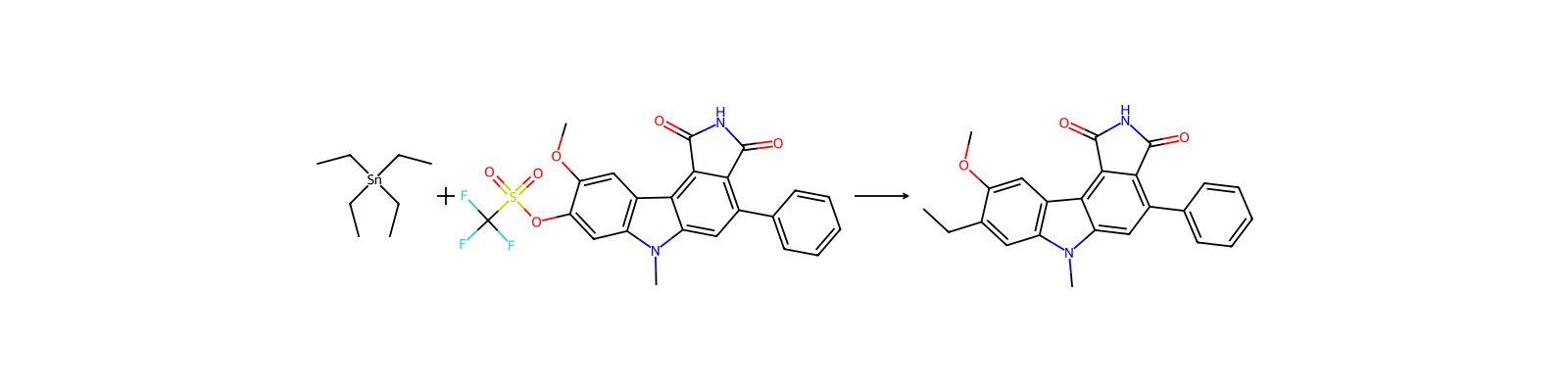
HRID 11167 반응식
HRID 11167반응물로uspto-grants-2006_08
HRID 47435 반응식
HRID 47435반응물로uspto-grants-2004_03
HRID 47441 반응식
HRID 47441반응물로uspto-grants-2004_03
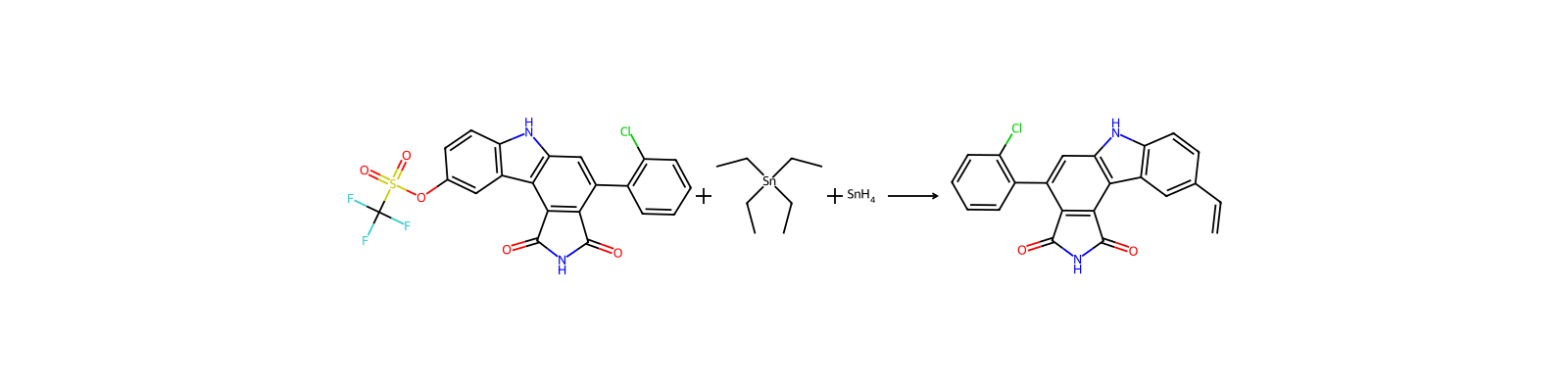
HRID 94529 반응식
HRID 94529반응물로Training data from https://doi.org/10.1039/C8SC04228D (2/10)
HRID 144324 반응식
HRID 144324반응물로Training data from https://doi.org/10.1039/C8SC04228D (9/10)
HRID 282994 반응식
HRID 282994반응물로Training data from https://doi.org/10.1039/C8SC04228D (8/10)
HRID 380620 반응식
HRID 380620반응물로uspto-grants-2001_10
HRID 429582 반응식
HRID 429582반응물로uspto-grants-2001_11
1 / 8 페이지

화합물 노트

불러오는 중…

이 페이지에서기본 정보개요이름 및 식별자물성안전 및 규제화학 및 산업관련 반응화합물 노트
더보기
새 노트새 반응견적 요청하기
Heat of Vaporization42.4 kJ/mol
Physical Description · 3건

Tetraethyltin is a colorless liquid. Used as biocides, bactericides, fungicides and insecticides; preservatives for wood, textile, paper, and leather. Not registered as a pesticide in the U.S. (EPA, 1998)

Colorless liquid; [Hawley]

Colorless liquid.

Other Experimental Properties... /Tetraethyltin/ tends to ignite in air.
Reactive GroupOrganometallics
Reactivity ProfileWhen heated to decomposition, TETRAETHYLTIN emits acrid smoke and fumes. (nonspecific -- Organic Tin Compounds) Avoid strong oxidizers. [EPA, 1998].
Air and Water ReactionsIt may ignite in air.
Toxic Combustion ProductsWhen heated to decompositon it emits acrid smoke and fumes.
CERCLA Reportable Quantities · 1건

Releases of CERCLA hazardous substances are subject to the release reporting requirement of CERCLA section 103, codified at 40 CFR part 302, in addition to the requirements of 40 CFR part 355. Tetraethyl tin is an extremely hazardous substance (EHS) subject to reporting requirements when stored in amounts in excess of its threshold planning quantity (TPQ) of 100 lbs. Extremely hazardous substances that are solids are subject to either of two threshold planning quantities ... The lower quantity applies only if the solid exists in powdered for and has a particle size less than 100 microns; or is handled in solution or in molten form; or meets the criteria for a National Fire Protection Association (NFPA) rating of 2, 3 or 4 for reactivity. If the solid does not meet any of these criteria, it is subject to the upper ... threshold planning quantity ... .

Hazard Classes and Categories · 2건

Flam. Liq. 3 (90.9%)

Flammable agents - 2nd degree

안전 및 보호

Fire FightingThis is a liquid organotin pesticide. Fight fire from maximum distance. Dike fire control water for later disposal; do not scatter the material.
First Aid · 1건

Signs and Symptoms of Tetraethyltin Exposure: Signs and symptoms of acute exposure to tetraethyltin may include nausea, vomiting, cramping, pneumoconiosis, occasionally bronchitis, liver failure, peritonitis (inflammation of the abdominal lining) and biliary tract damage. Other symptoms may include headache, visual defects, skin burns or dermatitis, unsteadiness, and swelling of the brain and spinal cord.

Exposure Control and Personal Protection0.1 [mg/m3], inhalable fraction, as Sn[German Research Foundation (DFG)]
Nonfire Spill ResponseThis is a liquid organotin pesticide. Do not touch spilled material; stop leak if you can do so without risk. Use water spray to reduce vapors.
Disposal Methods · 1건

SRP: At the time of review, criteria for land treatment or burial (sanitary landfill) disposal practices are subject to significant revision. Prior to implementing land disposal of waste residue (including waste sludge), consult with environmental regulatory agencies for guidance on acceptable disposal practices.

Preventive Measures · 1건

SRP: The scientific literature for the use of contact lenses in industry is conflicting. The benefit or detrimental effects of wearing contact lenses depend not only upon the substance, but also on factors including the form of the substance, characteristics and duration of the exposure, the uses of other eye protection equipment, and the hygiene of the lenses. However, there may be individual substances whose irritating or corrosive properties are such that the wearing of contact lenses would be harmful to the eye. In those specific cases, contact lenses should not be worn. In any event, the usual eye protection equipment should be worn even when contact lenses are in place.

Isolation and EvacuationExcerpt from ERG Guide 131 [Flammable Liquids - Toxic]:
Threshold Limit Values (TLV) · 5건

0.1 [mg/m3], as Sn

0.2 [mg/m3], as Sn

8 hr Time Weighted Avg (TWA): 0.1 mg/cu m; 15 min Short Term Exposure Limit (STEL): 0.2 mg/cu m. Skin. /Tin, organic compounds, as Sn/

A4; Not classifiable as a human carcinogen. /Tin, organic compounds, as Sn/

0.1 mg/m³

Permissible Exposure Limit (PEL) · 2건

0.1 [mg/m3], as Sn

0.1 mg/m³

Protective Action Criteria (PAC) · 3건

0.019 [mg/m3]

0.21 [mg/m3]

1.2 [mg/m3]

Recommended Exposure Limit (REL)0.1 mg/m³
Personal Protective Equipment (PPE) · 1건

For emergency situations, wear a positive pressure, pressure-demand, full facepiece self-contained breathing apparatus (SCBA) or pressure- demand supplied air respirator with escape SCBA and a fully-encapsulating, chemical resistant suit. (EPA, 1998)

독성 정보

Health EffectsBreathing or swallowing, or skin contact with organotins, can interfere with the way the brain and nervous system work, causing death in severe cases. Organic tin compounds may also damage the immune and reproductive system. (L307, L308)
Ecotoxicity Values · 2건

LC50 Pimephales promelas (fathead minnow) 11.0 mg/l/96 hr (confidence limit 9.58 - 12.5 mg/l), flow-through bioassay with measured concentrations, 25.2 °C, dissolved oxygen 6.2 mg/l, hardness 43.7 mg/l calcium carbonate, alkalinity 41.6 mg/l calcium carbonate, and pH 7.5.

EC50 Pimephales promelas (fathead minnow) 7.19 ug/l/96 hr (confidence limit not reliable), flow-through bioassay with measured concentrations, 25.2 °C, dissolved oxygen 6.2 mg/l, hardness 43.7 mg/l calcium carbonate, alkalinity 41.6 mg/l calcium carbonate, and pH 7.5. Effect: loss of equilibrium.

Environmental Fate · 3건

TERRESTRIAL FATE: Based on a classification scheme(1), an estimated Koc value of 760(SRC), determined from a structure estimation method(2), indicates that tetraethyl tin is expected to have low mobility in soil(SRC). Volatilization of tetraethyl tin from moist soil surfaces is expected to be an important fate process(SRC) given an estimated Henry's Law constant of 0.63 atm-cu m/mole(SRC), using a fragment constant estimation method(3). The potential for volatilization of tetraethyl tin from dry soil surfaces may exist(SRC) based upon a vapor pressure of 1.2 mm Hg(4). However, adsorption to soil is expected to attenuate volatilization(SRC). Tetraethyl tin may be susceptible to biodegradation in soil based upon possible biodegradability of butyltin compounds such as tri-, di- and monobutyltin species(5).

AQUATIC FATE: Based on a classification scheme(1), an estimated Koc value of 760(SRC), determined from a structure estimation method(2), indicates that tetraethyl tin is expected to adsorb to suspended solids and sediment(SRC). Volatilization from water surfaces is expected(3) based upon an estimated Henry's Law constant of 0.63 atm-cu m/mole(SRC), developed using a fragment constant estimation method(4). Using this Henry's Law constant and an estimation method(3), volatilization half-lives for a model river and model lake are 2 hrs and 6 days, respectively(SRC). According to a classification scheme(6), an estimated BCF of 77,000(SRC), from an estimated log Kow of 5.4(7) and a regression-derived equation(8), suggests the potential for bioconcentration in aquatic organisms is very high(SRC). Tetraethyl tin may be susceptible to biodegradation in water based upon possible biodegradability of butyltin compounds such as tri-, di- and monobutyltin species(5).

ATMOSPHERIC FATE: According to a model of gas/particle partitioning of semivolatile organic compounds in the atmosphere(1), tetraethyl tin, which has a vapor pressure of 1.2 mm Hg at 20 °C(2), is expected to exist solely as a vapor in the ambient atmosphere. Vapor-phase tetraethyl tin is degraded in the atmosphere by reaction with photochemically-produced hydroxyl radicals(SRC); the half-life for this reaction in air is estimated to be 10 hrs(SRC), calculated from its estimated rate constant of 3.8X10⁻¹¹ cu cm/molecule-sec at 25 °C(SRC) determined using a structure estimation method(3). Tetraethyl tin may absorb ultraviolet light >290 nm and may be susceptible to direct photolysis based upon the absorption behavior of tri-, di-, and monobutyltin compounds(4).

Adverse EffectsNeurotoxin - Other CNS neurotoxin
Exposure RoutesOral (L308) ; inhalation (L308) ; dermal (L308)
Toxicity Summary · 1건

Organotin compounds produce neurotoxic and immunotoxic effects. Organotins may directly activate glial cells contributing to neuronal cell degeneration by local release of pro-inflammatory cytokines, tumor necrosis factor-_, and/or interleukins. They may also induce apoptosis by direct action on neuronal cells. Organotin compounds stimulate the neuronal release of and/or decrease of neuronal cell uptake of neurotransmitters in brain tissue, including aspartate, GABA, glutamate, norepinephrine, and serotonin. This may be either a contributing factor to or result of the neuronal cell loss. The immunotoxic effects of organotins are characterized by thymic atrophy caused by the suppression of proliferation of immature thymocytes and apoptosis of mature thymocytes. Organotin compounds are believed to exert these effects by suppressing DNA and protein synthesis, inducing the expression of genes involved in apoptosis (such as nur77), and disrupting the regulation of intracellular calcium levels, giving rise to the uncontrolled production of reactive oxygen species, release of cytochrome c to the cytosol, and the proteolytic and nucleolytic cascade of apoptosis. The suppression of proliferation of immature thymocytes further results in the suppression of T-cell-mediated immune responses. Organotins are also endocrine disruptors and are believed to contribute to obesity by inappropriate receptor activation, leading to adipocyte differentiation. Inorganic tin triggers eryptosis, contributing to tin-induced anemia. (L308, A182, A184)

Signs and SymptomsInorganic or organic tin compounds placed on the skin or in the eyes can produce skin and eye irritation. (L308)
Soil Adsorption/Mobility · 1건

Using a structure estimation method based on molecular connectivity indices(1), the Koc for tetraethyl tin can be estimated to be 760(SRC). According to a classification scheme(2), this estimated Koc value suggests that tetraethyl tin is expected to have low mobility in soil.

Artificial Pollution SourcesTetraethyl tin's production and use as one of the tetraorganotin chemical intermediates for the tri-, di-, and monoorganotin compounds(1) may result in its release to the environment through various waste streams(SRC).
Environmental Biodegradation · 1건

Tetraethyl tin may be susceptible to biodegradation in water based upon possible biodegradability of butyltin compounds such as tri-, di- and monobutyltin species(1), although no data concerning biodegradation of tetraethyl tin were located(SRC).

Carcinogen ClassificationNo indication of carcinogenicity to humans (not listed by IARC).
Environmental Bioconcentration · 1건

An estimated BCF of 77,000 was calculated for tetraethyl tin(SRC), using an estimated log Kow of 5.44(1) and a regression-derived equation(2). According to a classification scheme(3), this BCF suggests the potential for bioconcentration in aquatic organisms is very high(SRC).

규제 정보

CERCLA Reportable Quantities · 1건

Releases of CERCLA hazardous substances are subject to the release reporting requirement of CERCLA section 103, codified at 40 CFR part 302, in addition to the requirements of 40 CFR part 355. Tetraethyl tin is an extremely hazardous substance (EHS) subject to reporting requirements when stored in amounts in excess of its threshold planning quantity (TPQ) of 100 lbs. Extremely hazardous substances that are solids are subject to either of two threshold planning quantities ... The lower quantity applies only if the solid exists in powdered for and has a particle size less than 100 microns; or is handled in solution or in molten form; or meets the criteria for a National Fire Protection Association (NFPA) rating of 2, 3 or 4 for reactivity. If the solid does not meet any of these criteria, it is subject to the upper ... threshold planning quantity ... .

State Drinking Water Guidelines(MN) MINNESOTA 4000 ug/l /Tin/

Though tin metal is very poorly absorbed, tin compounds may be absorbed via oral, inhalation, or dermal routes, with organotin compounds being much more readily absorbed than inorganic tin compounds. Tin may enter the bloodstream and bind to hemoglobin, where it is distributed and accumulates mainly in the kidney, liver, lung, and bone. Organotin compounds may undergo dealkylation, hydroxylation, dearylation, and oxidation catalyzed by cytochrome P-450 enzymes in the liver. The alkyl products of dealkylation are conjugated with glutathione and further metabolized to mercapturic acid derivatives. Tin and its metabolites are excreted mainly in the urine and feces. (L308)

용도 및 제조

Uses · 4건

Used as catalyst for olefin polymerization and to produce other organotin compounds; [HSDB] Used as biocide, bactericide, fungicide, and insecticide; Also used as a preservative for wood, textiles, paper, and leather; Not registered with the EPA for use as a pesticide in the US; [CAMEO]

Pulp and Paper Processing [Category: Industry]

Catalyst for olefin polymerization

The main use for tetraorganotin compounds is captive use as intermediates for the tri-, di-, and monoorganotin compounds. /Tetraorganotin cmpd/

General Manufacturing InformationStannane, tetraethyl-: ACTIVE