홈MCP워크벤치Skills
홈워크벤치알림마이페이지
llms.txt · MCP 가이드개인정보처리방침 · 이용약관 · 지원v1.8.0
  1. 홈
  2. /화합물

모노클로로프로피온산

2-Chloropropionic acid

HCID 11734
새 노트새 반응견적 요청하기
인쇄 미리보기

데이터를 보충하는 중입니다. 잠시 후 페이지를 새로 고치면 최신 내용을 볼 수 있습니다

기본 정보개요이름 및 식별자물성안전 및 규제화학 및 산업관련 반응화합물 노트
부분 구조 검색유사 구조 찾기

기본 정보

CAS
28554-00-9
표준 SMILES
CC(Cl)C(=O)O
InChIKey
GAWAYYRQGQZKCR-UHFFFAOYSA-N
분자식
C3H5ClO2
평균 분자량
108.52 g/mol
단동위원소 질량
107.99780708

개요

2-Chloropropionic Acid can cause male reproductive toxicity according to an independent committee of scientific and health experts.

이름 및 식별자

우선 이름
2-Chloropropionic acid
IUPAC
2-chloropropanoic acid
현지명
모노클로로프로피온산
영어명
2-Chloropropionic acid
분자식
C3H5ClO2
분자량
108.52

이름 및 동의어

2-Chloropropionic acid2-CHLOROPROPANOIC ACID598-78-7Propanoic acid, 2-chloro-Propionic acid, 2-chloro-alpha-Chloropropionic acidDTXSID0021545alpha-Monochloropropionic acidPropionic acid, alpha-chloro-ADV1WUE1NBNSC-173DTXCID301545
이름 더 보기
모노클로로프로피온산클로로(2-)프로피온산2-클로로프로판산2-chloropropionic2-Chloropropionoic acid2-chloroproprionic acidNSC-4018062-ChlorpropionsureRARECHEM AL BO 12402-Chloropropionic ac-Chloropropanoicacid2-chloro-propanoicaci
(RS)-2-CHLOROPROPIONIC ACIDRefChem:86533209-952-3R(+)-2-Chloropropionic acid.alpha.-Chloropropionic acidPropionic acid, .alpha.-chloro-Propanoic acid, chloro-.alpha.-Monochloropropionic acid

데이터베이스 식별자

CAS
28554-00-9、598-78-7
PubChem CID
11734
DTXSID
DTXSID0021545
ChEMBL
CHEMBL1743205
UNII
ADV1WUE1NB
EC Number
209-952-3
Nikkaji
J481B、J5.220E

물성

구조 계산 물성보충 중

XLogP
0.8
극성 표면적
37.3 Ų
수소 결합 공여자 수
1
수소 결합 수용자 수
2
회전 가능 결합 수
1
무거운 원자 수
6
형식 전하
0
복잡도
61.8

실험 및 물리화학적 성질

Chemical Classes · 2건

Other Classes -> Organic Acids

Corrosives

LogP0.76
OdorPungent
Density · 5건

1.2585 at 68 °F (USCG, 1999) - Denser than water; will sink

1.2585 @ 20 °C/4 °C

1.3 g/cm³

Relative density of the vapour/air-mixture at 20 °C (air = 1): 1.001

1.2585

Color/FormCRYSTALS
Solubility · 2건

SOL IN ALL PROP IN WATER, ALC, ETHER; SOL IN ACETONE

Solubility in water: miscible

Flash Point · 4건

225 °F (USCG, 1999)

225 °F (107 °C) (CLOSED CUP)

106 °C c.c.

225 °F

Boiling Point · 5건

366 °F at 760 mmHg (USCG, 1999)

187 °C

186 °C

186 °C

366 °F

Melting Point · 2건

-12.1 °C

-12 °C

안전 및 규제

안전 정보는 참고용이며, 공급업체의 물질안전보건자료(SDS), 관련 법규 및 전문가 평가를 대체하지 않습니다.

GHS 분류

GHS Classification · 6건

Danger

H302: Harmful if swallowed [Warning Acute toxicity, oral]

P260, P264, P270, P280, P301+P317, P301+P330+P331, P302+P361+P354, P304+P340, P305+P354+P338, P316, P321, P330, P363, P405, and P501 (click each P-code to see the statement)

Danger

H302 (100%): Harmful if swallowed [Warning Acute toxicity, oral]

P260, P264, P270, P280, P301+P317, P301+P330+P331, P302+P361+P354, P304+P340, P305+P354+P338, P316, P321, P330, P363, P405, and P501 (click each P-code to see the statement)

유해성 정보

Regulatory Information · 5건

Chemical: Propanoic acid, 2-chloro-

Hazard Traits - Reproductive Toxicity

Status: Active Update: 28-04-2021 https://echa.europa.eu/registration-dossier/-/registered-dossier/5225

2-Chloropropionic acid: Does not have an individual approval but may be used under an appropriate group standard

The New Jersey Worker and Community Right to Know Act requires public and private employers to provide information about hazardous substances at their workplaces. (N.J.S.A. 34:5A-1 et. seq.)

Other Safety InformationIMAP assessments - Propanoic acid, 2-chloro-: Human health tier I assessment
DOT Label · 2건

Corrosive

Corrosive

Fire Hazards · 4건

Excerpt from ERG Guide 153 [Substances - Toxic and/or Corrosive (Combustible)]:

Special Hazards of Combustion Products: May contain hydrogen chloride and phosgene.

· Combustible material: may burn but does not ignite readily.

Combustible. Gives off irritating or toxic fumes (or gases) in a fire.

Health Hazards · 3건

Excerpt from ERG Guide 153 [Substances - Toxic and/or Corrosive (Combustible)]:

화학 및 산업

용도 및 제조

Uses · 4건

Used as an intermediate in agricultural, chemical, and pharmaceutical production; [ACGIH]

INTERMEDIATE FOR WEED KILLERS

CHEM INT FOR DALAPON, SILVEX & MECOPROP HERBICIDES

CHEM INT FOR DICHLORPROP & BENZOYLPROP-ETHYL HERBICIDES

U.S. Production(1981) PROBABLY GREATER THAN 2.27X10+6 G
Methods of ManufacturingREACTION OF PROPANOIC ACID WITH CHLORINE
Household ProductsCosmetics product ingredient: 2-Chloropropionic acid
General Manufacturing InformationPropanoic acid, 2-chloro-: ACTIVE
응용 분야 · 2건

용도2-Chloropropionic acid is used in the preparation of propargyl 2-chloropropionate (PCP), an atom transfer radical polymerization (ATRP) initiator, by the esterification of propargyl alcohol.It can be employed in the synthesis of a biologically active chitin derivative, (1-carboxyethyl) chitosan.It can be treated with o-phenylenediamine phosphate to synthesize benzimidazole derivatives.

일반 설명A pale liquid with a slight odor. Sinks in and mixes with water. Only aluminum, stainless steel or steel covered with a protective lining or coating may contact the liquid or vapor.

상·하류 제품 정보

상류 원료

프로피온산염소(기체)2-클로로-1-프로판올α-Chloroethyl Phenyl Sulfoxide

관련 반응

101건
반응 기록 만들기
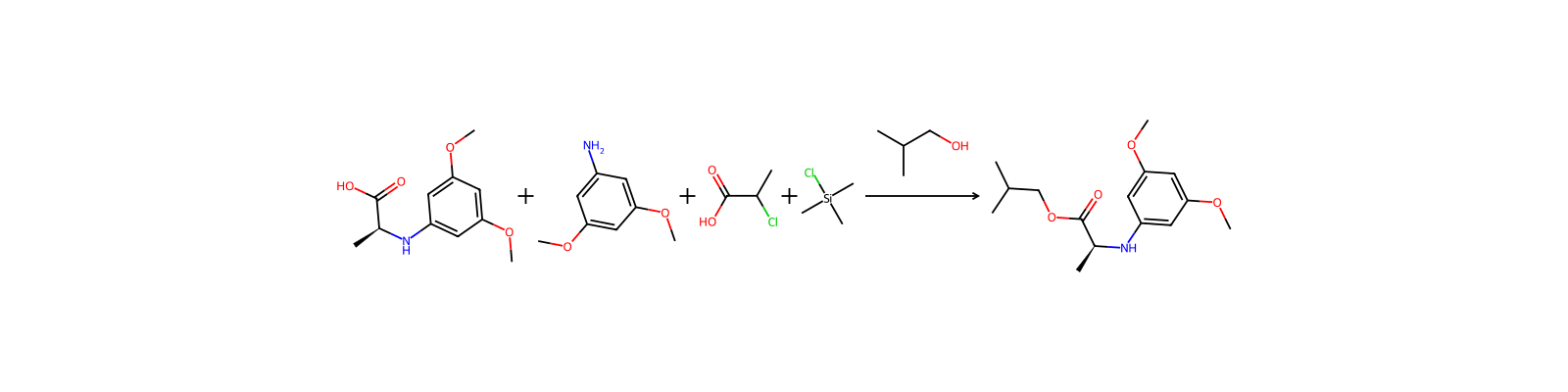
HRID 6573 반응식
HRID 6573반응물로uspto-grants-2006_08
HRID 23013 반응식
HRID 23013반응물로uspto-grants-2005_02
HRID 23019 반응식
HRID 23019반응물로uspto-grants-2005_02
HRID 23020 반응식
HRID 23020반응물로uspto-grants-2005_02
HRID 23057 반응식
HRID 23057반응물로uspto-grants-2005_02
HRID 65191 반응식
HRID 65191반응물로uspto-grants-1986_09
HRID 66268 반응식
HRID 66268반응물로uspto-grants-1978_12
HRID 133200 반응식
HRID 133200반응물로uspto-grants-2008_06
1 / 13 페이지

화합물 노트

불러오는 중…

이 페이지에서기본 정보개요이름 및 식별자물성안전 및 규제화학 및 산업관련 반응화합물 노트
더보기
새 노트새 반응견적 요청하기
Vapor Density
Relative vapor density (air = 1): 3.75
Vapor Pressure · 3건

1.06 [mmHg]

0.13 torr @ 20 °C

Vapor pressure, kPa at 20 °C: 0.10

Refractive IndexINDEX OF REFRACTION: 1.4380 @ 20 °C/D

물리화학적 성질

녹는점
-12 · -12--14 °C
끓는 점
170 · 170-190 °C(lit.)
밀도
1.182 g/mL · 1.182 g/mL at 25 °C(lit.)
증기압
4 mm · 4 mm Hg ( 20 °C)
굴절률
20 · n20/D 1.4345(lit.)
인화점
215 °F · 215 °F
저장 조건
30 °C · Store below +30°C.
용해도
2 O: · H2O: 용해성
산도 계수 (pKa)
2.96 · 2.96±0.10(Predicted)
물리적 상태
투명한 액체
색상
무색 내지 거의 무색
수소이온지수(pH)
1 · <1 (200g/l, H2O, 20℃)
수용성
자유롭게 용해되는
BRN
1720259 · 1720259
Henry's Law Constant
3.8 · 3.8×101 mol/(m3Pa) at 25℃, HSDB (2015)
안정성
안정적인. 강한 산화제, 강한 염기와 호환되지 않습니다.
InChI
1S/C3H5ClO2/c1-2(4)3(5)6/h2H,1H3,(H,5,6)
InChIKey
GAWAYYRQGQZKCR-UHFFFAOYSA-N
SMILES
CC(Cl)C(O)=O
LogP
0.82 at · 0.82 at 20.5℃
NIST
2 · Propanoic acid, 2-chloro-(598-78-7)
EPA
2 · 2-Chloropropionic acid (598-78-7)

화학적 성질

colourless liquid

Harmful if inhaled. Irritating to throat. May cause severe skin and eye burns. Harmful if absorbed through skin. (USCG, 1999)

· TOXIC and/or CORROSIVE; inhalation, ingestion or skin contact with material may cause severe injury or death.

Hazards SummaryCauses testicular atrophy in rats after high-dose feeding; Corrosive to the skin and eyes; [ACGIH]
DOT ID and Guide2511 153
Reactive Group · 2건

Acids, Carboxylic

Acids, Carboxylic

EC ClassificationSymbol: C; R: 22-35; S: (1/2)-23-26-28-36-45
UN ClassificationUN Hazard Class: 8; UN Pack Group: III
Reactivity Profile · 2건

A halogenated organic acid. Carboxylic acids donate hydrogen ions if a base is present to accept them. They react in this way with all bases, both organic (for example, the amines) and inorganic. Their reactions with bases, called "neutralizations", are accompanied by the evolution of substantial amounts of heat. Neutralization between an acid and a base produces water plus a salt. Carboxylic acids with six or fewer carbon atoms are freely or moderately soluble in water; those with more than six carbons are slightly soluble in water. Soluble carboxylic acid dissociate to an extent in water to yield hydrogen ions. The pH of solutions of carboxylic acids is therefore less than 7.0. Many insoluble carboxylic acids react rapidly with aqueous solutions containing a chemical base and dissolve as the neutralization generates a soluble salt. Carboxylic acids in aqueous solution and liquid or molten carboxylic acids can react with active metals to form gaseous hydrogen and a metal salt. Such reactions occur in principle for solid carboxylic acids as well, but are slow if the solid acid remains dry. Even "insoluble" carboxylic acids may absorb enough water from the air and dissolve sufficiently in it to corrode or dissolve iron, steel, and aluminum parts and containers. Carboxylic acids, like other acids, react with cyanide salts to generate gaseous hydrogen cyanide. The reaction is slower for dry, solid carboxylic acids. Insoluble carboxylic acids react with solutions of cyanides to cause the release of gaseous hydrogen cyanide. Flammable and/or toxic gases and heat are generated by the reaction of carboxylic acids with diazo compounds, dithiocarbamates, isocyanates, mercaptans, nitrides, and sulfides. Carboxylic acids, especially in aqueous solution, also react with sulfites, nitrites, thiosulfates (to give H2S and SO3), dithionites (SO2), to generate flammable and/or toxic gases and heat. Their reaction with carbonates and bicarbonates generates a harmless gas (carbon dioxide) but still heat. Like other organic compounds, carboxylic acids can be oxidized by strong oxidizing agents and reduced by strong reducing agents. These reactions generate heat. A wide variety of products is possible. Like other acids, carboxylic acids may initiate polymerization reactions; like other acids, they often catalyze (increase the rate of) chemical reactions.

2-CHLOROPROPIONIC ACID is neutralized in exothermic reactions by all bases. Reacts with aqueous solutions containing a chemical base and dissolves if neutralization generates a soluble salt. May react with active metals to form gaseous hydrogen and a metal salt. May corrode or dissolve iron, steel, and aluminum parts and containers. Reacts with cyanide salts to generate gaseous hydrogen cyanide. Reacts with diazo compounds, dithiocarbamates, isocyanates, mercaptans, nitrides, and sulfides to generate flammable and/or toxic gases and heat. Reacts with sulfites, nitrites, thiosulfates (to give H2S and SO3), dithionites (SO2), to generate flammable and/or toxic gases and heat. Reacts with carbonates and bicarbonates to generate a harmless gas (carbon dioxide) but some heat. Can be oxidized by strong oxidizing agents and reduced by strong reducing agents. These reactions generate heat. A wide variety of products is possible. May initiate polymerization reactions or catalyze other chemical reactions. Fire produces highly toxic chloride fumes (USCG, 1999).

Chemical Dangers · 1건

Decomposes on heating. This produces toxic and corrosive fumes including hydrogen chloride. Reacts violently with strong bases and strong oxidants. The substance is a medium strong acid. Attacks many metals. This produces flammable/explosive gas (hydrogen - see ICSC 0001).

안전 및 보호

Fire Fighting · 3건

Excerpt from ERG Guide 153 [Substances - Toxic and/or Corrosive (Combustible)]:

Fire Extinguishing Agents: Small fires: dry chemical, CO2, water spray or foam; large fires: water spray, fog or foam. Water or foam may cause frothing. (USCG, 1999)

Use water spray, powder, foam, carbon dioxide.

First Aid Measures · 4건

Fresh air, rest. Refer for medical attention.

Remove contaminated clothes. Rinse skin with plenty of water or shower. Refer immediately for medical attention.

First rinse with plenty of water for several minutes (remove contact lenses if easily possible), then refer for medical attention.

Rinse mouth. Do NOT induce vomiting. Give one or two glasses of water to drink. Refer for medical attention .

Accidental Release Measures · 2건

· CALL 911. Then call emergency response telephone number on shipping paper. If shipping paper not available or no answer, refer to appropriate telephone number listed on the inside back cover.

· ELIMINATE all ignition sources (no smoking, flares, sparks or flames) from immediate area.

First Aid · 3건

Excerpt from ERG Guide 153 [Substances - Toxic and/or Corrosive (Combustible)]:

INHALATION: Move to fresh air. If not breathing, give artificial respiration. If breathing is difficult, give oxygen.

General First Aid:

Safe StorageSeparated from strong bases, strong oxidants and food and feedstuffs.
Exposure Control and Personal Protection· Wear positive pressure self-contained breathing apparatus (SCBA).
Nonfire Spill Response · 2건

Excerpt from ERG Guide 153 [Substances - Toxic and/or Corrosive (Combustible)]:

Excerpt from ERG Guide 153 [Substances - Toxic and/or Corrosive (Combustible)]:

Spillage Disposal · 1건

Personal protection: chemical protection suit including self-contained breathing apparatus. Collect leaking and spilled liquid in sealable plastic containers as far as possible. Absorb remaining liquid in sand or inert absorbent. Then store and dispose of according to local regulations.

Isolation and Evacuation · 3건

Excerpt from ERG Guide 153 [Substances - Toxic and/or Corrosive (Combustible)]:

Excerpt from ERG Guide 153 [Substances - Toxic and/or Corrosive (Combustible)]:

Immediate precautionary measure

Eye PreventionWear face shield or eye protection in combination with breathing protection.
Fire PreventionNO open flames.
Inhalation RiskA harmful contamination of the air will be reached quickly on evaporation of this substance at 20 °C.

독성 정보

Environmental Fate · 3건

TERRESTRIAL FATE: If released to soil, 2-chloropropanoic acid is expected to degrade under both aerobic(1-3) and anaerobic conditions(3). An estimated soil adsorption coefficient 62(4,SRC) obtained from an estimated log octanol/water partition coefficient of 0.76(5) indicates that 2-chloropropanoic acid will display high mobility in soil(6). Its pKa, 2.80(7), indicates that it is essentially completely ionized under environmentally significant pHs of 5-9 and, therefore, adsorption to soil as a result of hydrophobic interactions will only be significant under highly acidic conditions(SRC). Based on an estimated Henry's Law constant of 2.6X10⁻⁷ atm-cu m/mole at 25 °C(8) and vapor pressure of 2.1 mm Hg at 25 deg(9), 2-chloropropanoic acid is no expected to volatilize from either moist or dry soil to the atmosphere(SRC).

AQUATIC FATE: If released to water, 2-chloropropanoic acid is expected to degrade under both aerobic(1-3) and anaerobic conditions(3). An estimated bioconcentration factor of 2(4,SRC) obtained from an estimated log octanol/water partition coefficient of 0.76(5) indicates that 2-chloropropanoic acid will not significantly bioconcentrate in fish and aquatic organisms. An estimated soil adsorption coefficient 62(4,5,SRC) indicates that it will not significantly adsorb to sediment and suspended organic matter. Its pKa, 2.80(6), indicates that it is essentially completely ionized under environmentally significant pHs of 5-9. Based on an estimated Henry's Law constant of 2.6X10⁻⁷ atm-cu m/mole at 25 °C using a group contribution approach(7), the rate of volatilization of 2-chloropropanoic acid to the atmosphere will be slower then water itself(4).

ATMOSPHERIC FATE: If released to the atmosphere, 2-chloropropanoic acid may undergo oxidation by a gas-phase reaction with photochemically produced hydroxyl radicals. An estimated rate constant for this reaction of 1.06X10⁻¹² cu-cm/molec-sec at 25 °C(1) translates to an atmospheric half-life of 8.3 hrs(SRC) using an average atmospheric hydroxyl radical concn of 5X10+5 molec/cu-cm(2). Its relatively high estimated water solubility of 3 g/L(3) obtained from an estimated log octanol/water partition coefficient of 0.76(4) indicates that 2-chloropropanoic acid may also undergo atmospheric removal by wet deposition process(SRC).

Adverse Effects · 1건

Reproductive Toxin - A chemical that is toxic to the reproductive system, including defects in the progeny and injury to male or female reproductive function. Reproductive toxicity includes developmental effects. See Guidelines for Reproductive Toxicity Risk Assessment.

Exposure RoutesThe substance can be absorbed into the body by ingestion.
Signs and Symptoms · 4건

Sore throat. Cough. Burning sensation. Laboured breathing. Shortness of breath.

Redness. Pain. Serious skin burns.

Redness. Pain. Severe deep burns.

Abdominal pain. Burning sensation. Shock or collapse.

Effluent Concentrations2-Chloropropanoic acid was identified but not quantified in the spent chlorination liquor from wood pulp bleaching(1).
Soil Adsorption/Mobility · 1건

Based on an estimated log octanol/water partition coefficient of 0.76(1), the soil adsorption coefficient for 2-chloropropanoic acid can be estimated to be 62(SRC) using a regression-derived equation(2). The magnitude of this value indicates that it will display high mobility in soil(3). The chemical structure of chlorinated aliphatic acids was described as one that suggests little or no adsorption to a soil colloid(4).

Natural Pollution Sources2-Chloropropanoic acid is of anthropogenic origin, and it is not known to be produced by natural sources. (SRC)
Human Toxicity Excerpts · 1건

TOXICITY STUDIES INDICATE IT TO BE CORROSIVE TO THE EYE AND SKIN. MILD TO MODERATE SKIN BURNS HAVE BEEN OBSERVED IN WORKERS WITH ACUTE EXPOSURES TO THE LIQ. NO IRRITATION WAS NOTED IN EMPLOYEES EXPOSED TO THE VAPOR AT TWA CONCN UP TO 0.35 PPM, WITH EXCURSIONS TO 1.95 PPM.

Artificial Pollution Sources2-Chloropropanoic acid is used as a synthetic intermediate in the production of weed killers(1). It may be released to the environment as a fugitive emission during its production and use(SRC).
Environmental Biodegradation · 2건

When 2-chloropropanoic acid was incubated with sewage, 10% degradation (expressed as chlorine released) was observed after 2 days; when the sewage was acclimated to sucrose, 36% degradation occurred in 2 days(1). Using a sewage sludge inocula, 2- chloropropanoic acid underwent essentially complete removal within 30 days under aerobic conditions; under anaerobic conditions 75% removal was observed(2). It was degraded by digester sewage sludge inocula raised on fatty acids(3).

2-Chloropropanoic acid was found to support growth of bacteria isolated from soil (Rhizobium)(1). Pure cultures of Pseudomonas alcaligenes, Agrobacterium, Pseudomonas sp, Nocardia sp, Bacillus sp, as well as fungi and actinomycetes, have been found to degrade 2-chloropropanoic acid(2-8). The major metabolite in the degradation of 2-chloropropanoic acid is glycolate(8).

Environmental Bioconcentration · 1건

Based on an estimated log octanol/water partition coefficient of 0.76(1), the bioconcentration factor for 2-chloropropanoic acid can be estimated to be 2(SRC) using a regression-derived equation(2). The magnitude of this value indicates that bioconcentration in fish and aquatic organisms will not be a significant process(SRC).

Volatilization from Water/Soil · 1건

Based on an estimated Henry's Law constant of 2.6X10⁻⁷ atm-cu m/mole at 25 °C(1), 2-chloropropanoic acid is not expected to volatilize from water or moist soil to the atmosphere. Volatilization from water will be slower than water itself(2,SRC). An estimated vapor pressure for 2-chloropropanoic acid of 2.1 mm Hg at 25 °C(3) indicates that it may rapidly volatilize from dry soil to the atmosphere(SRC). The pKa of 2-chloropropanoic acid, 2.80(4), indicates that it will be essentially completely ionized under environmentally significant pHs of 5-9(SRC). The ionized form of 2-chloropropanoic acid will not significantly volatilize to the atmosphere(SRC).

안전 데이터

wgk
1
tsca
TSCA listed
rtecs
UE8575000
ridadr
UN 2511
HS 번호
29159080
risk_code
22-35-21/22
hazard_code
C
safety_code
23-26-28-36-45-36/37/39-28A
포장분류
III
위험 등급
8
기존화학 물질
KE-05874
자연 발화 온도
550°C
Hazard Classifications
Acute Tox. 4 OralSkin Corr. 1A
스토리지 클래스
8A - Combustible corrosive hazardous materials
유해 물질 데이터
598-78-7(Hazardous Substances Data)
2-클로로아크릴산
클로로프로판알
L-(+)-젖 산

하류 제품

이부프로펜L-알라닌N,N-Diethyl-2-chloropropionamide디클로프롭나프로아닐리드DL-알라닌나프로P아마이드2-클로로-N-(2-메틸페닐)프로파나미드