
HRID 27837반응물로

613-90-1N#CC(=O)c1ccccc1GJQBHOAJJGIPRH-UHFFFAOYSA-NBenzoyl cyanide is an alpha-ketonitrile and an aromatic ketone. It is functionally related to a benzoic acid.
613-90-1DTXSID2060626CHEBI:51853안전 정보는 참고용이며, 공급업체의 물질안전보건자료(SDS), 관련 법규 및 전문가 평가를 대체하지 않습니다.
Danger
H300 (100%): Fatal if swallowed [Danger Acute toxicity, oral]
P264, P270, P301+P316, P321, P330, P405, and P501 (click each P-code to see the statement)
Aggregated GHS information provided per 41 reports by companies from 3 notifications to the ECHA C&L Inventory.
용도Using benzoyl cyanide as an electrophile also gives selective acylation of the 3-position, as does levulinic acid in the presence of DCC. Benzoyl cyanide is used to study the mechanism of reduction of benzoyl cyanide in acetonitrile, N,N-dimethylformamide and acetonitrile. It undergoes hydrolysis by Rhodococcus sp. CCZU10-1 to form benzoylformic acid. Reagent for selective acylation of amino compounds.
일반 설명Benzoyl cyanide is used to study the mechanism of reduction of benzoyl cyanide in acetonitrile, N,N-dimethylformamide and acetonitrile. It undergoes hydrolysis by Rhodococcus sp. CCZU10-1 to form benzoylformic acid.
Benzoyl cyanide is prepared by treatment of benzoyl chloride with sodium cyanide under phase-transfer catalytic conditions. This process is also used to convert 4-methyl, 4-methoxy, and 4-chlorobenzoyl chlorides into the corresponding benzoyl cyanides, and similarly cinnamoyl chloride into cinnamoyl cyanide (98%).


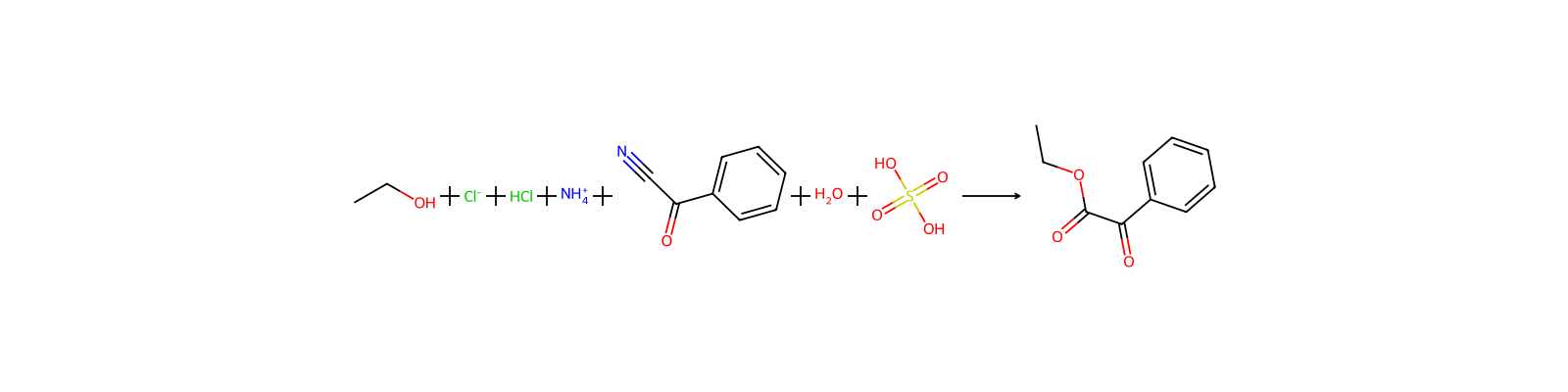


yellow to brown low melting mass. Phenylglyoxylonitrile [613-90-1], benzoyl cyanide, Mr 131.13, mp 34℃, bp 206 – 208℃ (101.3 kPa), bp 96℃ (2 kPa), bp 82℃ (1.2 kPa), n26D 1.5303, can be used for selective reactions at the carbonyl and cyano groups. It is produced from the reaction of benzoyl chloride or benzoic anhydride with sodium cyanide (or hydrogen cyanide in the presence of alkali cyanide) in practically quantitative yield with copper (I) cyanide as catalyst. Benzoyl cyanide is used as an intermediate in the synthesis of plant protection agents.