홈MCP워크벤치Skills
홈워크벤치알림마이페이지
llms.txt · MCP 가이드개인정보처리방침 · 이용약관 · 지원v1.8.0
  1. 홈
  2. /화합물

페닐포스핀

Phenylphosphine

HCID 12519
새 노트새 반응견적 요청하기
인쇄 미리보기
기본 정보개요이름 및 식별자물성안전 및 규제화학 및 산업관련 반응화합물 노트
부분 구조 검색유사 구조 찾기

기본 정보

CAS
638-21-1
표준 SMILES
Pc1ccccc1
InChIKey
RPGWZZNNEUHDAQ-UHFFFAOYSA-N
분자식
C6H7P
평균 분자량
110.09 g/mol
단동위원소 질량
110.02853722

개요

Phenylphosphine can cause male reproductive toxicity according to an independent committee of scientific and health experts.

이름 및 식별자

우선 이름
Phenylphosphine
IUPAC
phenylphosphane
현지명
페닐포스핀
영어명
Phenylphosphine
분자식
C6H7P
분자량
110.09

이름 및 동의어

PHENYLPHOSPHINEPhenyl phosphinePhosphine, phenyl-HSDB 7199EINECS 211-325-4NSC 511703BRN 0741946Phosphine, phenyl-,UNII-856X9KP929856X9KP929NSC-511703PHENYLPHOSPHINE [HSDB]
이름 더 보기
페닐포스핀페닐포스핀페닐포스파인PHPH2PhenylpPhenylphFenylfosfinPhosphanilineAURORA KA-1101phenyl-phosphinPhenyl-phosphane
DTXSID70732244-16-00-00948 (Beilstein Handbook Reference)Phosphine, phenyl(mono)phenylphosphinePhenylphosphine (ACGIH)RefChem:173102DTXCID5044106211-325-4

데이터베이스 식별자

CAS
638-21-1
PubChem CID
12519
DTXSID
DTXSID7073224
UNII
856X9KP929
EC Number
211-325-4
Nikkaji
J34.630F

물성

구조 계산 물성

XLogP
1.8
극성 표면적
0 Ų
수소 결합 공여자 수
0
수소 결합 수용자 수
0
회전 가능 결합 수
0
무거운 원자 수
7
형식 전하
0
복잡도
46.1

실험 및 물리화학적 성질

Chemical ClassesOther Classes -> Phosphorus Compounds
SpringerMaterials Properties31P nuclear magnetic resonance spectrum
LogPlog Kow = 1.49 /Estimated/
OdorFoul odor
Density · 6건

1.001 at 59 °F (NTP, 1992) - Denser than water; will sink

Specific gravity @ 15 °C = 1.001

Relative density (water = 1): 1.00

1.001 at 59 °F

1.001 @ 16°C

(59 °F): 1.001

Color/FormClear, colorless liquid
Solubility · 5건

less than 1 mg/mL at 70 °F (NTP, 1992)

Sol in alkali; very sol in alcohol and ether

Insoluble in water

Solubility in water: none

Insoluble

Boiling Point · 5건

320 to 322 °F at 760 mmHg (NTP, 1992)

160.5 °C

160 °C

320 °F

320 °F

DecompositionThe substance decomposes on heating producing toxic fumes including phosphorous oxides and phosphine.

안전 및 규제

안전 정보는 참고용이며, 공급업체의 물질안전보건자료(SDS), 관련 법규 및 전문가 평가를 대체하지 않습니다.

GHS 분류

GHS Classification · 6건

Danger

H250 (100%): Catches fire spontaneously if exposed to air [Danger Pyrophoric liquids]

P210, P222, P231, P233, P261, P262, P264, P264+P265, P270, P271, P280, P301+P316, P302+P335+P334, P302+P352, P304+P340, P305+P351+P338, P316, P319, P321, P330, P332+P317, P337+P317, P361+P364, P362+P364, P370+P378, P403+P233, P405, and P501 (click each P-code to see the statement)

Aggregated GHS information provided per 43 reports by companies from 3 notifications to the ECHA C&L Inventory. Each notification may be associated with multiple companies.

Danger

H227: Combustible liquid [Warning Flammable liquids]

유해성 정보

Regulatory Information · 2건

Hazard Traits - Reproductive Toxicity

Phenylphosphine: Does not have an individual approval but may be used as a component in a product covered by a group standard. It is not approved for use as a chemical in its own right.

DOT LabelFlammable Liquid Corrosive
Fire Hazards · 2건

Flash point data are not available for this chemical, but it is probably combustible. (NTP, 1992)

Combustible. Gives off irritating or toxic fumes (or gases) in a fire.

Fire Potential · 2건

High concentration of the substance may ignite spontaneously on contact with air.

It is pyrophoric in air.

Health HazardsExcerpt from NIOSH Pocket Guide for Phenylphosphine:
Hazards Summary · 1건

A respiratory irritant with a repulsive odor; Phenylphosphine causes anemia and severe testicular degeneration in rats inhaling 2.2 ppm for 90 days. The acute toxicity of inhaled phenylphosphine is about 1/4 that of phosphine. Animals exposed to 2.2 ppm for 4 weeks have reversible hemolytic anemia. [ACGIH] A skin, eye, and respiratory tract irritant; [ICSC]

화학 및 산업

약리 정보

Absorption, Distribution and ExcretionThe substance can be absorbed into the body by inhalation.

용도 및 제조

Uses · 2건

Used as chemical intermediates; produced when phenylphosphinates are heated above 200 degrees C. [ACGIH]

Phenylphosphine may be used as an intermediate or a chemical reagent.

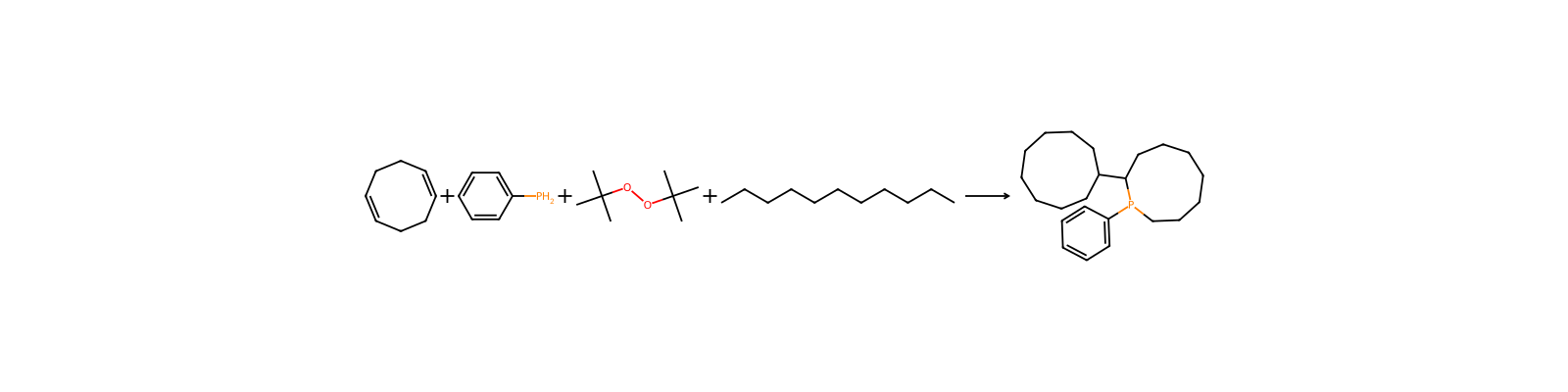
Methods of ManufacturingPrimary phosphines are produced selectively, though only in moderate yield, by the acid-catalyzed reaction of phosphine with alkenes. /Primary phosphines/

응용 분야

용도suzuki reaction

일반 설명Clear colorless liquid.

제조 방법 · 2건

일차 수소화인류는 선택적으로 생산되나 수소화인과 알켄류의 산-촉매 반응에 의해 보통의 양이 얻어짐

Phenylphosphine can be produced by reducing dichlorophenylphosphine with lithium aluminum hydride in ether: LiAlH4 + 2C6H5PCl2 → 2C6H5PH2 + Li+ + Al3+ + 4Cl− This reaction is performed under a nitrogen atmosphere to prevent side reactions involving oxygen.

상·하류 제품 정보

상류 원료

Phosphinic acid, phenyl-, ethyl ester, (R)- (9CI)디페닐아연Diethyl phenylphosphonate디 페닐 포스 핀

관련 반응

13건
반응 기록 만들기
HRID 5640 반응식
HRID 5640반응물로uspto-grants-1993_09
HRID 329829 반응식
HRID 329829생성물로uspto-grants-1990_01
HRID 412839 반응식
HRID 412839생성물로uspto-grants-2003_05
HRID 580363 반응식
HRID 580363반응물로uspto-grants-1988_06
HRID 733451 반응식
HRID 733451반응물로uspto-grants-2009_09
HRID 901340 반응식
HRID 901340반응물로uspto-grants-2008_04
HRID 1129546 반응식
HRID 1129546반응물로Training data from https://doi.org/10.1039/C8SC04228D (7/10)
HRID 1195617 반응식
HRID 1195617반응물로uspto-grants-1992_05
1 / 2 페이지

화합물 노트

불러오는 중…

이 페이지에서기본 정보개요이름 및 식별자물성안전 및 규제화학 및 산업관련 반응화합물 노트
더보기
새 노트새 반응견적 요청하기
Vapor Density · 3건

3.79 (NTP, 1992) - Heavier than air; will sink (Relative to Air)

Relative vapor density (air = 1): 3.8

3.79

Odor ThresholdConcentrations of 0.57 ppm (2.6 mg/cu m) were readily detected by an odor panel; the odor was experienced as obnoxious. As lower concentration were not evaluated, an odor threshold was not established.
Vapor Pressure2.45 [mmHg]

물리화학적 성질

녹는점
148 · 148-151 °C
끓는 점
160 °C · 160 °C (320 °F; 433 K)
밀도
1.001 g/cm3 · 1.001 g/cm3
증기 밀도
3.79 · 3.79 (vs air)
증기압
760 mmHg · 760 mmHg ( 160 °C)
굴절률
1.578 · 1.578
인화점
-20 °F · -20°F
저장 조건
-20 °C · -20°C
물리적 상태
liquid
색상
Colorless
냄새
Foul odor
수용성
물에 불용성.
BRN
741946 · 741946
InChIKey
RPGWZZNNEUHDAQ-UHFFFAOYSA-N
NIST
Phenylphosphine(638-21-1)
EPA
Phenylphosphine (638-21-1)

화학적 성질

Phenylphosphine is a clear, colorless liquid. Foul odor.

Reactive GroupAmines, Phosphines, and Pyridines
Reactivity AlertsStrong Reducing Agent
Reactivity Profile · 1건

PHENYL PHOSPHINE is a reducing agent. They slowly generate flammable or noxious gases in contact with water. Phosphides react quickly upon contact with moisture or acids to give the very toxic gas phosphine; phosphides also can react vigorously with oxidizing materials. In general, materials in this group are incompatible with oxidizers such as atmospheric oxygen. They are violently incompatible with acids, particularly oxidizing acids.

Chemical DangersDecomposes on heating. This produces toxic fumes including phosphorus oxides and phosphine. The substance at high concentrations may ignite spontaneously on contact with air.
Flammable LimitsCombustible Liquid
Air and Water ReactionsPyrophoric in air. Insoluble in water. Slowly generates flammable or noxious gases in contact with water.

안전 및 보호

Fire Fighting · 2건

Fires involving this compound should be controlled with a dry chemical, carbon dioxide or Halon extinguisher. (NTP, 1992)

Use foam, dry powder.

First Aid Measures · 4건

Fresh air, rest. Refer for medical attention.

Rinse and then wash skin with water and soap.

First rinse with plenty of water for several minutes (remove contact lenses if easily possible), then refer for medical attention.

Refer for medical attention .

First Aid · 2건

EYES: First check the victim for contact lenses and remove if present. Flush victim's eyes with water or normal saline solution for 20 to 30 minutes while simultaneously calling a hospital or poison control center. Do not put any ointments, oils, or medication in the victim's eyes without specific instructions from a physician. IMMEDIATELY transport the victim after flushing eyes to a hospital even if no symptoms (such as redness or irritation) develop.

(General first aid procedures)

Safe StorageFireproof. Well closed. Keep in a well-ventilated room.
Fire Fighting ProceduresFire fighters should wear complete protective clothing including self-contained breathing apparatus. /Use/ foam, dry powder.
Storage ConditionsFireproof. Well closed. Keep in a well-ventilated room.
Cleanup Methods · 1건

Evacuate danger area! Consult an expert! Chemical protection suit including self-contained breathing apparatus. Remove all ignition sources. Ventilation. Collect leaking liquid in sealable containers. Absorb remaining liquid in sand or inert absorbent and remove to safe place.

Nonfire Spill Response · 1건

SMALL SPILLS AND LEAKAGE: If you spill this chemical, FIRST REMOVE ALL SOURCES OF IGNITION. Then, use absorbent paper to pick up all liquid spill material. Your contaminated clothing and absorbent paper should be sealed in a vapor-tight plastic bag for eventual disposal. Solvent wash all contaminated surfaces with 60-70% ethanol followed by washing with a soap and water solution. Do not reenter the contaminated area until the Safety Officer (or other responsible person) has verified that the area has been properly cleaned.

Disposal Methods · 1건

SRP: The most favorable course of action is to use an alternative chemical product with less inherent propensity for occupational exposure or environmental contamination. Recycle any unused portion of the material for its approved use or return it to the manufacturer or supplier. Ultimate disposal of the chemical must consider: the material's impact on air quality; potential migration in soil or water; effects on animal, aquatic, and plant life; and conformance with environmental and public health regulations.

Spillage Disposal · 1건

Evacuate danger area! Consult an expert! Personal protection: chemical protection suit including self-contained breathing apparatus. Remove all ignition sources. Ventilation. Collect leaking and spilled liquid in sealable containers as far as possible. Absorb remaining liquid in sand or inert absorbent. Then store and dispose of according to local regulations.

Preventive Measures · 4건

SRP: Contaminated protective clothing should be segregated in such a manner so that there is no direct personal contact by personnel who handle, dispose, or clean the clothing. Quality assurance to ascertain the completeness of the cleaning procedures should be implemented before the decontaminated protective clothing is returned for reuse by the workers. Contaminated clothing should not be taken home at end of shift, but should remain at employee's place of work for cleaning.

SRP: The scientific literature for the use of contact lenses in industry is conflicting. The benefit or detrimental effects of wearing contact lenses depend not only upon the substance, but also on factors including the form of the substance, characteristics and duration of the exposure, the uses of other eye protection equipment, and the hygiene of the lenses. However, there may be individual substances whose irritating or corrosive properties are such that the wearing of contact lenses would be harmful to the eye. In those specific cases, contact lenses should not be worn. In any event, the usual eye protection equipment should be worn even when contact lenses are in place.

The worker should wash daily at the end of each work shift.

Work clothing that becomes wet or significantly contaminated should be removed and replaced.

Isolation and EvacuationExcerpt from ERG Guide 132 [Flammable Liquids - Corrosive]:

독성 정보

Target OrgansBlood, central nervous system, skin, reproductive system
Adverse EffectsHemolytic anemia - Decreased hemoglobin or number of red blood cells.
Exposure Routes · 2건

The substance can be absorbed into the body by inhalation.

inhalation, ingestion, skin and/or eye contact

Signs and Symptoms · 4건

Cough. Shortness of breath. Sore throat.

Redness. Pain.

Redness. Pain.

In Animals: blood changes, anemia, testicular degeneration; loss of appetite, diarrhea, lacrimation (discharge of tears), hind leg tremor; dermatitis

Human Toxicity Excerpts · 1건

/SIGNS AND SYMPTOMS/ Symptoms of phosphine intoxication in the adults /after an accidental exposure aboard a ship/ included shortness of breath, cough, and pulmonary irritation, nausea, headache, jaundice, and fatigue. The highest concentrations of phosphine (20-30 ppm) were measured in a void space on the main deck near the air intake for the ship's ventilation system. In some of the living quarters, /phosphine/ levels of 0.5 ppm were detected. /Phosphine/

Non-Human Toxicity Excerpts · 4건

/LABORATORY ANIMALS: Acute Exposure/ A 4-hour LC50 of phenylphosphine for rats was reported as 38 ppm. The signs of intoxication include hyperemia of the ears, excessive salivation, lacrimation, face-pawing, and dyspnea. No effects attributable to phenylphosphine were found in any of the tissues examined. The acute toxicity of inhaled phenylphosphine was one-quarter as potent on a molar basis as compared with phosphine gas.

/LABORATORY ANIMALS: Subchronic or Prechronic Exposure/ Groups of rats were exposed 4-hours per day, five days per week for 10 exposures at 0 or 7.6 ppm. Decreased weight gain was observed in the phenylphosphine-exposed rats; weight gain returned to normal during a 14-day recovery period. The exposed rats showed signs of mild respiratory irritation similar to those observed in the acute studies. Histopathological examination showed increased hematopoiesis in extramedullary portions of the spleen. A transient dermatitis around the mouth and the feet appeared after conculsion of the phenylphosphine exposure.

/LABORATORY ANIMALS: Subchronic or Prechronic Exposure/ In a 90-day inhalation study, rats (male and female) and beagle dogs were exposed to phenylphosphine 6-hours a day, 5 days per week at approximate average concentration of 0, 0.6, or 2.2 ppm. After 1 month, signs of intoxication in rats recorded at 0.6ppm were hypersensitivity to sound and touch and mild hyperemia; there was no decrease in body weight gain compared to controls at this time or during any other period of the entire 90-day exposure. Mild dermatitis occurred near the end of exposure. ... anemia, reduced hemoglobulin, and hematocrit appeared to develop upon exposure to 2.2 ppm. These changes were completely reversed 4 weeks after termination of exposure...

/LABORATORY ANIMALS: Developmental or Reproductive Toxicity/ Rats that inhaled 2.2 ppm phenylphosphine for 90 days developed severe testicular degeneration. The testicular degeneration did not return to to normal during a 69-day post-exposure observation period. Dogs that inhaled 2.2 ppm developed mild testicular degeneration compared with that observed in the rats. The testicular degeneration induced in dogs by inhaled phenylphosphine was reversible (unlike that in rats).

Antidote and Emergency Treatment · 3건

Basic treatment: Establish a patent airway. Suction if necessary. Watch for signs of respiratory insufficiency and assist ventilations if necessary. Administer oxygen by nonrebreather mask at 10 to 15 L/min. Monitor for pulmonary edema and treat if necessary ... . Monitor for shock and treat if necessary ... . Anticipate seizures and treat if necessary ... . /Phosphine and Related Compounds/

Advanced treatment: Consider orotracheal or nasotracheal intubation for airway control in the patient who is unconscious or in respiratory arrest. Positive pressure ventilation techniques with a bag valve mask device may be beneficial. Monitor cardiac rhythm and treat arrhythmias if necessary ... . Start an IV with D5W /SRP: "To keep open", minimal flow rate/. Use lactated Ringer's if signs of hypovolemia are present. Watch for signs of fluid overload. Consider drug therapy for pulmonary edema ... . For hypotension with signs of hypovolemia, administer fluid cautiously. Consider vasopressors for hypotension with a normal fluid volume. Watch for signs of fluid overload ... . Treat seizures with diazepam ... . Use proparacaine hydrochloride to assist eye irrigation ... . /Phosphine and Related Compounds/

Maintain open airway and assist ventilation if necessary. Administer supplemental oxygen, and treat noncardiogenic pulmonary edema if it occurs. treat seizures and hypotension if they occur. Patients with a history of of significant phosphine inhalation or phosphine ingestion should be admitted and observed for 48 to 72 hours for delayed onset of pulmonary edema. Intravenous magnesium has been used to treat cardiac arrhythmias otherwise unresponsive to treatment. In severe poisoning adrenal function may be compromised and intravenous hydrocortisone should be considered, especially if hypotension dose not respond to iv fluids and vasopressors.

Toxicity DataLC50 (rat) = 38 ppm/4h
Non-Human Toxicity ValuesLC50 Rat (male) inhalation 38 ppm/4 hr (175 mg/cu m) (95% confidence interval: 31-47 ppm)

안전 데이터

OEL
Ceiling: 0.05 ppm (0.25 mg/m3)
wgk
3
rtecs
SZ2100000
ridadr
2924
HS 번호
2931900090
risk_code
11-17-23/24/25-36/37/38-48/20-51/53-62-65-67-38-20/21/22
hazard_code
F;T;N,N,T,F,Xn
safety_code
16-26-36/37/39-45-62-61-36/37
포장분류
I
위험 등급
4.2
기존화학 물질
KE-05-1009
유해 물질 데이터
638-21-1(Hazardous Substances Data)
벤젠포스포너스디클로라이드
아이오도벤젠
브로모벤젠

하류 제품

4-플로로아닐린디메틸게르만디에틸게르만트리페닐포스핀Bis(hydroxymethyl)phenylphosphineBis(2-diphenylphosphinoethyl)phenylphosphine