
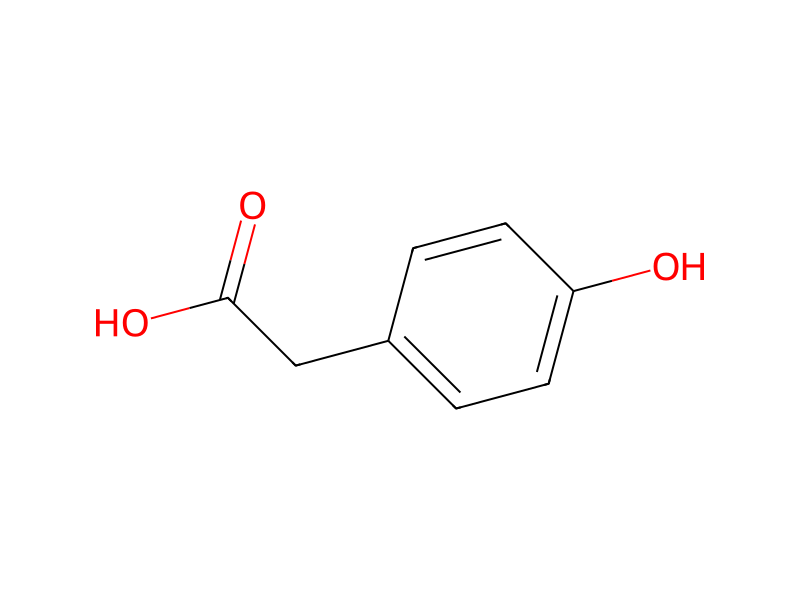
기본 정보
- 표준 SMILES
O=C(O)Cc1ccc(O)cc1- InChIKey
XQXPVVBIMDBYFF-UHFFFAOYSA-N- 분자식
- C8H8O3
- 평균 분자량
- 152.15 g/mol
- 단동위원소 질량
- 152.04734412
개요
4-hydroxyphenylacetic acid is a monocarboxylic acid that is acetic acid in which one of the methyl hydrogens is substituted by a 4-hydroxyphenyl group. It has a role as a mouse metabolite, a plant metabolite, a fungal metabolite and a human metabolite. It is a monocarboxylic acid and a member of phenols. It is functionally related to an acetic acid. It is a conjugate acid of a 4-hydroxyphenylacetate.
이름 및 식별자
- 우선 이름
- Hydroxyphenylacetic acid
- IUPAC
- 2-(4-hydroxyphenyl)acetic acid
- 현지명
- 4-히드록시페닐아세트산
- 영어명
- 4-Hydroxyphenylacetic acid
- 분자식
- C8H8O3
- 분자량
- 152.15
이름 및 동의어
4-hydroxyphenylacetic acid156-38-7p-hydroxyphenylacetic acid(4-Hydroxyphenyl)acetic acid4-Hydroxybenzeneacetic acidbenzeneacetic acid, 4-hydroxy-(p-Hydroxyphenyl)acetic acid4-CarboxymethylphenolParahydroxy phenylacetic acidAcetic acid, (p-hydroxyphenyl)-3J9SHG0RCNNSC-25066
이름 더 보기
4-하이드록시페닐아세트산4-히드록시페닐아세트산2-(4-hydroxyphenyl)acetic acidPHPA4-Hydroxyphenylacetic4-hydrophenylacetic acid4-hydroxybenzeneaceticacidNSC 27460
NSC-27460DTXSID5059745CHEBI:18101para-hydroxyphenylacetic acidRefChem:524062DTXCID6035023205-851-3Hydroxyphenylacetic acid
데이터베이스 식별자
- CAS
156-38-7- PubChem CID
- 127
- DTXSID
DTXSID5059745- ChEMBL
CHEMBL1772- ChEBI
CHEBI:18101- UNII
- 3J9SHG0RCN
- EC Number
- 205-851-3
- Nikkaji
- J5.873D
물성
구조 계산 물성
- XLogP
- 0.8
- 극성 표면적
- 57.5 Ų
- 수소 결합 공여자 수
- 2
- 수소 결합 수용자 수
- 3
- 회전 가능 결합 수
- 2
- 무거운 원자 수
- 11
- 형식 전하
- 0
- 복잡도
- 136
실험 및 물리화학적 성질
Chemical ClassesOther Classes -> Other Aromatic Compounds
SpringerMaterials PropertiesFusion temperature
LogP
0.75
1.26
Solubility60.7 mg/mL
Melting Point148 - 150 °C
Vapor Pressure0.0000555 [mmHg]
Physical Description
Off-white crystalline powder; [Alfa Aesar MSDS]
Solid
Collision Cross Section
126.65 Ų [M-H]- [CCS Type: DT; Method: single field calibrated with Agilent tune mix (Agilent)]
135.22 Ų [M-H]- [CCS Type: DT; Method: stepped-field]
128.6 Ų [M-H]- [CCS Type: DT; Method: single field calibrated with ESI Low Concentration Tuning Mix (Agilent)]
128.9 Ų [M-H]-
물리화학적 성질
- 녹는점
- 148 · 148-151 °C(lit.)
- 끓는 점
- 234.6 °C · 234.6°C (rough estimate)
- 밀도
- 1.2143 · 1.2143 (rough estimate)
- 증기압
- 0.007 Pa · 0.007Pa at 25℃
- 굴절률
- 1.4945 · 1.4945 (estimate)
- 저장 조건
- Inert atmosphere,Room Temperature
- 용해도
- 50 g/L · 50g/L
- 산도 계수 (pKa)
- 4.5 · 4.50±0.10(Predicted)
- 물리적 상태
- 결정성 분말
- 색상
- 흰색에서 크림색 또는 밝은 황갈색
- 수소이온지수(pH)
- 2 · 2.0-2.4 (30g/l, H2O, 20℃)
- 수용성
- 디메틸설폭사이드와 메탄올에 용해됩니다. 물에 약간 용해됩니다.
- BRN
- 1448766 · 1448766
- InChI
- 1S/C8H8O3/c9-7-3-1-6(2-4-7)5-8(10)11/h1-4,9H,5H2,(H,10,11)
- InChIKey
- XQXPVVBIMDBYFF-UHFFFAOYSA-N
- SMILES
- OC(=O)Cc1ccc(O)cc1
- LogP
- 0.75 at · 0.75 at 25℃
- NIST
- 4 · Benzeneacetic acid, 4-hydroxy-(156-38-7)
- EPA
- 4 · Benzeneacetic acid, 4-hydroxy- (156-38-7)
화학적 성질
4-Hydroxyphenylacetic acid is a white to cream or light tan crystalline powder. sublimation. Insoluble in cold water, soluble in hot water, ether, ethanol, ethyl acetate. In the case of ferric chloride, it is a purple-green precipitate. It is used as a pharmaceutical raw material for the synthesis of cephalosporin antibiotics, antipyretic analgesics.
안전 및 규제
GHS 분류
GHS Classification
Warning
H315 (97%): Causes skin irritation [Warning Skin corrosion/irritation]
P261, P264, P264+P265, P271, P280, P302+P352, P304+P340, P305+P351+P338, P319, P321, P332+P317, P337+P317, P362+P364, P403+P233, P405, and P501 (click each P-code to see the statement)
Aggregated GHS information provided per 233 reports by companies from 12 notifications to the ECHA C&L Inventory. Each notification may be associated with multiple companies.
유해성 정보
Regulatory Information
Chemical: Benzeneacetic acid, 4-hydroxy-
Status: Cease Manufacture Update: 01-03-2018 https://echa.europa.eu/registration-dossier/-/registered-dossier/22446
(4-Hydroxyphenyl)-acetic acid: Does not have an individual approval but may be used under an appropriate group standard
Other Safety InformationEvaluation - Chemicals that are unlikely to require further regulation to manage risks to environment
Hazards SummaryIntraperitoneal LD50 (mouse) = 3,500 mg/kg; [RTECS] An irritant; [Alfa Aesar MSDS] See Phenylacetic acid.
Hazard Classes and CategoriesSkin Irrit. 2 (97%)
안전 데이터
- wgk
- 3
- tsca
- TSCA listed
- rtecs
- AI2680000
- HS 번호
- 29182990
- risk_code
- 36/37/38
- hazard_code
- Xi
- safety_code
- 26-36-24/25
- 위험 참고 사항
- Irritant
- Hazard Classifications
- Eye Irrit. 2Skin Irrit. 2STOT SE 3
- 스토리지 클래스
- 11 - Combustible Solids
화학 및 산업
약리 정보
Metabolism/Metabolites4-hydroxyphenylacetic acid has known human metabolites that include 2-Phenylacetic acid.
MeSH Pharmacological ClassificationSubstances that increase the risk of NEOPLASMS in humans or animals. Both genotoxic chemicals, which affect DNA directly, and nongenotoxic chemicals, which induce neoplasms by other mechanism, are included.
Tissue LocationsBladder
Cellular LocationsCytoplasm
Metabolite PathwaysAlkaptonuria
용도 및 제조
General Manufacturing InformationBenzeneacetic acid, 4-hydroxy-: ACTIVE
응용 분야
용도A compound present in olive oil. An important fine chemical intermediate with broad prospects for application development.
제조 방법
4-Hydroxyphenylacetic acid is synthesized by diazotization and hydrolysis of 4-aminophenylacetic acid. 4-aminophenylacetic acid and alkali solution are prepared into sodium salt, and then sulfuric acid is added. Cool to 0°C, control the temperature at 0-5°C, and add sodium nitrate solution dropwise, and the reaction is completed for 0.5h. The obtained diazonium was added dropwise to dilute sulfuric acid at 90-95°C for about 1 hour, and the reaction was continued for 1 hour. The reaction solution was decolorized and filtered, cooled and extracted with ethyl acetate, and the extract was recovered with ethyl acetate to obtain 4-Hydroxyphenylacetic acid. The yield is about 85%.
상·하류 제품 정보
상류 원료
하류 제품
공급사50 곳
梯希爱(上海)化成工业发展有限公司021-67121386 · [email protected]
衢州润东化工有限公司0570-8789886 18892685668 · [email protected]
上海阿拉丁生化科技股份有限公司400-6206333 13167063860 · [email protected]
T&W GROUP021-61551611 13296011611 · [email protected]
爱斯特(成都)生物制药股份有限公司+86-28-85122536 85324413 · [email protected]
韶远科技(上海)有限公司021-50795510 4000665055 · [email protected]
科瑞迪化学400-821-5857 021-64326257 · [email protected]
Syntechem Co.,Ltd[email protected]
上海迈瑞尔生化科技有限公司4006356688 18621169109 · [email protected]
阿法埃莎(中国)化学有限公司400-6106006 · [email protected]
太原市瑞和丰科贸有限公司+86 351 7031519 · [email protected]
安耐吉化学&3A(安徽泽升科技股份有限公司)400-0056266 · [email protected]
上海瀚鸿科技股份有限公司021-54306202 13764082696 · [email protected]
济南德信佳生物科技有限公司0531-82375886 13001715031 · [email protected]
嘉兴市艾森化工有限公司0573-85285100 18627885956 · [email protected]
Pure Chemistry Scientific Inc.001-857-928-2050 or 1-888-588-9418 · [email protected]
孝感深远化工有限公司15527621225; 15527621225 · [email protected]
云南西力生物技术股份有限公司0871-65217109 · [email protected]
泰州市苏宁化工有限公司13641586663
山东西亚化学有限公司13355009207 13355009207 · [email protected]
玛雅试剂+86 (573) 82222445 (0)18006601000 452520369 · [email protected]
四川库利南科技有限公司400-1166-196 18981987031 · [email protected]
天津希恩思生化科技有限公司400 638 7771 · [email protected]
南京维奥化工有限公司Please Send Email 18652950785 · [email protected]
河南多贝化工有限公司0370-2785118 17550508557 · [email protected]
上海源叶生物科技有限公司13636370518 · [email protected]
艾科试剂4008-755-333 18080918076 · [email protected]
上海思域化工科技有限公司86-21-34053660 · [email protected]
北京世纪裕立化学有限公司010-64446226 13146983882 · [email protected]
赛默飞世尔科技(中国)有限公司800-810-5118 · [email protected]
北京伊诺凯科技有限公司400-810-7969 010-59572699 · [email protected]
南京诺利斯医药科技有限公司13901585132 · [email protected]
上海健超生物科技有限公司150-2103-5486 18017383231 · [email protected]
TCI AMERICA800-4238616 · [email protected]
TOKYO CHEMICAL INDUSTRY CO., LTD.03-36680489 · [email protected]
TCI Europe320-37350700 · [email protected]
上海贤鼎生物科技有限公司4009209199 · [email protected]
深圳振强药物研发有限公司0755-66853366 13670046396 · [email protected]
深圳康特腾科技有限公司86-0755-86635001 · [email protected]
越林试剂021-62960152 · [email protected]
上海睿升化工科技有限公司+86-021-50935922
南京杜莱生物技术有限公司025-84699383-8003;025-846993838003-8003 18013301590 · [email protected]
湖南复瑞生物医药技术有限责任公司15901640172,19275032510 15901640172 · [email protected]
无锡中坤生化科技有限公司+86 0510-85629785
上海陶素生化科技有限公司021-33632979 · [email protected]
苏州爱玛特生物科技有限公司0512-56316828 4008675858 · [email protected]
北京环宇世纪化学科技有限公司hysj_bj.com
上海湄水化工科技有限公司021-60549325 18616193163
上海将来实业股份有限公司400-0066400 13621662912 · [email protected]
上海将来实业股份有限公司021-61552785 · [email protected]
추가 설명
정의ChEBI: 4-hydroxyphenylacetic acid is a monocarboxylic acid that is acetic acid in which one of the methyl hydrogens is substituted by a 4-hydroxyphenyl group. It has a role as a plant metabolite, a fungal metabolite, a human metabolite and a mouse metabolite. It is a monocarboxylic acid and a member of phenols. It derives from an acetic acid. It is a conjugate acid of a 4-hydroxyphenylacetate.
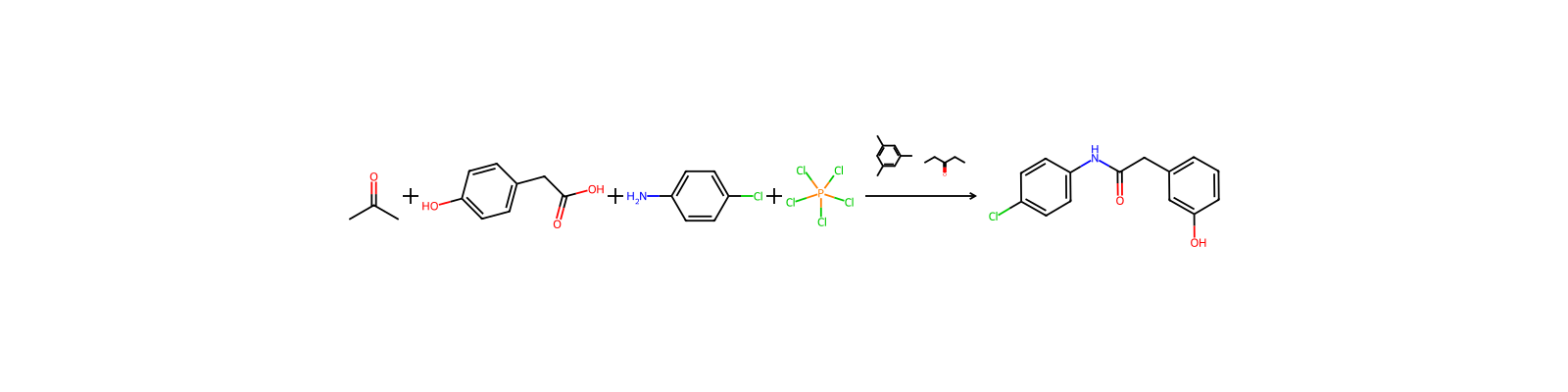
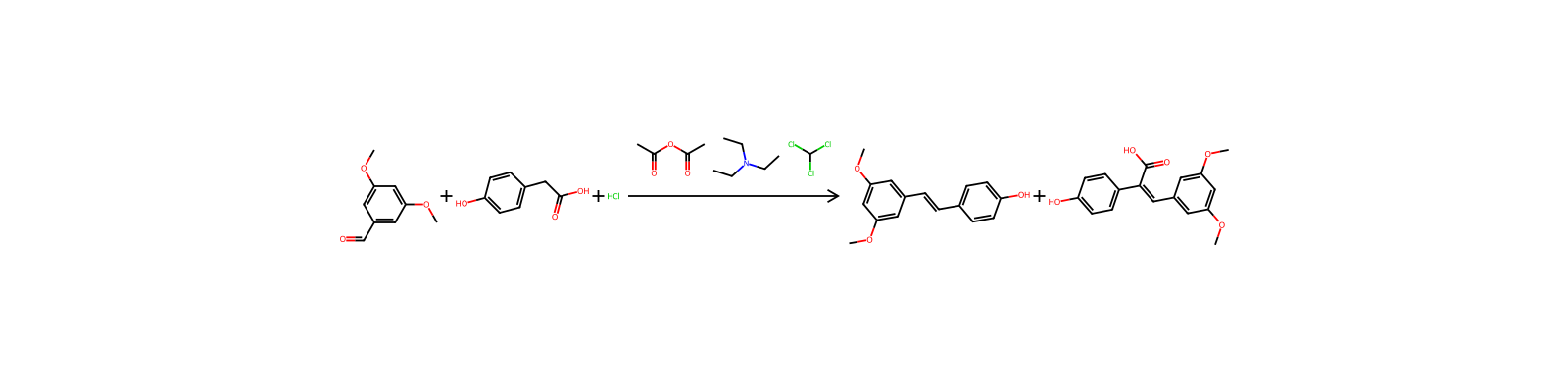
관련 반응
274건




연결된 노트
불러오는 중…