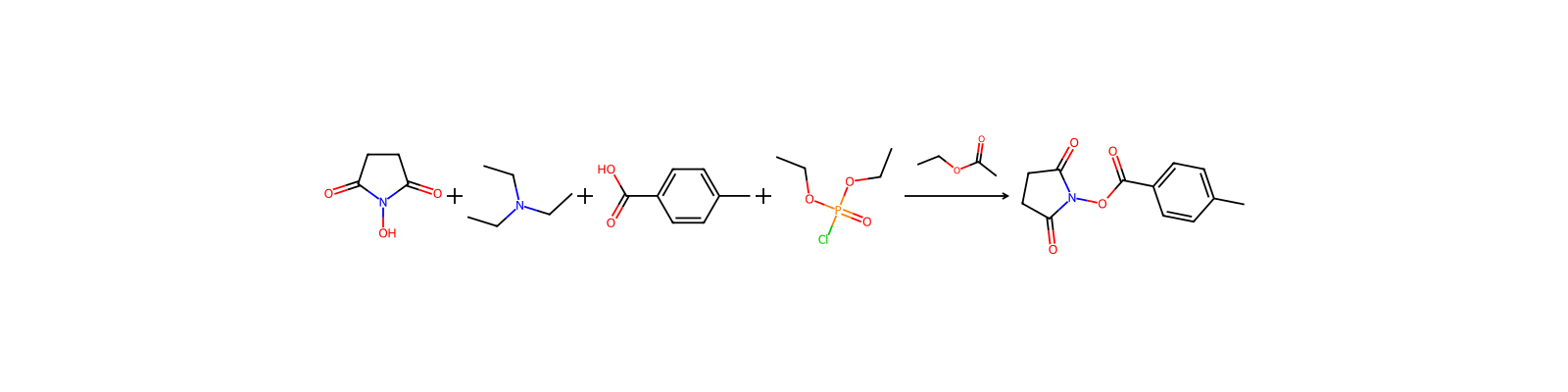
클로로인산디에틸에스테르
Diethyl chlorophosphate
HCID 13139

기본 정보
- CAS
814-49-3- 표준 SMILES
CCOP(=O)(Cl)OCC- InChIKey
LGTLXDJOAJDFLR-UHFFFAOYSA-N- 분자식
- C4H10ClO3P
- 평균 분자량
- 172.55 g/mol
- 단동위원소 질량
- 172.0056089
개요
Diethyl chlorophosphate is a clear liquid. This material is used as an intermediate in organic synthesis. (EPA, 1998)
이름 및 식별자
- 우선 이름
- Diethyl chlorophosphate
- IUPAC
- 1-[chloro(ethoxy)phosphoryl]oxyethane
- 현지명
- 클로로인산디에틸에스테르
- 영어명
- Diethyl chlorophosphate
- 분자식
- C4H10ClO3P
- 분자량
- 172.55
이름 및 동의어
DIETHYL CHLOROPHOSPHATE814-49-3Diethyl phosphorochloridateDiethyl chlorophosphonateDiethoxyphosphoryl chlorideDiethyl phosphorochlorideO,O-Diethyl chlorophosphateDiethoxyphosphorus oxychlorideO,O-Diethyl chloridophosphateDiethylchlorfosfatO,O-Diethyl chlorophosphonatePhosphorochloridic acid, diethyl ester
이름 더 보기
디에틸에스테르클로로인산클로로인산디에틸에스테르디에틸에스테르클로로인산다이에틸 클로로포스페이트O,O-다이에틸 클로로포스페이트다이에톡시포스포러스 옥시클로라이드다이에틸 클로로포스포네이트디에틸에스테르 클로로인산에틸 포스포로클로리데이트염화 다이에톡시포스포릴인산 염화물 다이에틸 에스터클로로다이에톡시포스핀 산화물클로로다이에틸포스페이트포스포로클로리드산, 다이에틸 에스터ChlorodiethylphosphateCHLOROPHOSPHORIC ACID DIETHYL ESTERai3-18557[qr]AURORA KA-1634Diethyl chlorophosphe
DIETHYLCHLOROPHOSPHATEDiethylphosphoric acid chlorideO,O-Diethylphosphoryl chlorideO,O-Diethyl phosphorochloridate1-[chloro(ethoxy)phosphoryl]oxyethaneChlorophosphoric acid, diethyl esterEthyl phosphorochloridate (EtO)2ClPOEthyl phosphorochloridate (Cl(EtO)2PO)
데이터베이스 식별자
- CAS
814-49-3- PubChem CID
- 13139
- DTXSID
DTXSID4052556- ChEMBL
CHEMBL4083009- UNII
- F1NZC04LRU
- EC Number
- 212-396-4
- Nikkaji
- J50.408D
물성
구조 계산 물성
- XLogP
- 1
- 극성 표면적
- 35.5 Ų
- 수소 결합 공여자 수
- 0
- 수소 결합 수용자 수
- 3
- 회전 가능 결합 수
- 4
- 무거운 원자 수
- 9
- 형식 전하
- 0
- 복잡도
- 106
실험 및 물리화학적 성질
Chemical ClassesOther Classes -> Organophosphates, Other
SpringerMaterials PropertiesNuclear quadrupole resonance spectroscopy
Density
1.1915 at 77 °F (EPA, 1998) - Denser than water; will sink
1.1915 @ 25 °C
1.21 @ 20°C
Color/FormWater-white liquid
SolubilitySol in alcohols
Boiling Point
140 °F at 2 mmHg (EPA, 1998)
60 °C @ 2 mm Hg
DecompositionWhen heated to decomposition it emits ... very toxic fumes of /hydrogen chloride and phosphorous oxides/.
Vapor Density
5.94 (EPA, 1998) - Heavier than air; will sink (Relative to Air)
5.94
Refractive IndexIndex of refraction: 1.4153 @ 25 °C
Physical Description
Diethyl chlorophosphate is a clear liquid. This material is used as an intermediate in organic synthesis. (EPA, 1998)
안전 및 규제
안전 정보는 참고용이며, 공급업체의 물질안전보건자료(SDS), 관련 법규 및 전문가 평가를 대체하지 않습니다.
GHS 분류
GHS Classification
Danger
H300+H310+H330 (74.5%): Fatal if swallowed, in contact with skin or if inhaled [Danger Acute toxicity, oral; acute toxicity, dermal; acute toxicity, inhalation]
P260, P261, P262, P264, P270, P271, P280, P284, P301+P316, P302+P352, P304+P340, P316, P320, P321, P330, P361+P364, P403+P233, P405, and P501 (click each P-code to see the statement)
Aggregated GHS information provided per 51 reports by companies from 5 notifications to the ECHA C&L Inventory. Each notification may be associated with multiple companies.
유해성 정보
Regulatory Information
REACH registered substance: Diethyl phosphorochloridate (EC: 212-396-4)
Phosphorochloridic acid, diethyl ester: Does not have an individual approval but may be used under an appropriate group standard
The New Jersey Worker and Community Right to Know Act requires public and private employers to provide information about hazardous substances at their workplaces. (N.J.S.A. 34:5A-1 et. seq.)
DOT LabelPoison
Fire HazardsEmits very toxic fumes of chloride and phosphorus oxides when heated to decomposition. (EPA, 1998)
Fire PotentialCombustible
Health HazardsThis material is a cholinesterase inhibitor. It has high oral and very high dermal toxicity. It is a skin irritant. It is also toxic by inhalation. (EPA, 1998)
Hazards Summary
A cholinesterase inhibitor; [Hawley] A cholinesterase inhibitor and skin irritant; Highly toxic by ingestion and skin absorption; [CAMEO] A mild skin irritant; Somnolence and convulsions observed in lethal-dose feeding studies of mice; [RTECS]
화학 및 산업
약리 정보
Mechanism of ActionCholinesterase inhibitor
Absorption, Distribution and ExcretionSkin absorption.
용도 및 제조
Uses
Used as intermediate in organic synthesis; [Hawley]
Intermediate in organic synthesis
Impurities95% minimum purity grade
Formulations/PreparationsGrade: Technical
General Manufacturing Information
Phosphorochloridic acid, diethyl ester: ACTIVE
Available in 55 gallon drums
응용 분야
용도A phosphorous halide used for biochemical research. Also used as an intermediate in organic synthesis.
일반 설명Clear liquid. Diethyl chlorophosphate is used as an intermediate in organic synthesis.
상·하류 제품 정보
상류 원료
하류 제품
관련 반응
531건


