홈MCP워크벤치Skills
홈워크벤치알림마이페이지
llms.txt · MCP 가이드개인정보처리방침 · 이용약관 · 지원v1.8.0
  1. 홈
  2. /화합물

데센

1-Decene

HCID 13381
새 노트새 반응견적 요청하기
인쇄 미리보기

데이터를 보충하는 중입니다. 잠시 후 페이지를 새로 고치면 최신 내용을 볼 수 있습니다

기본 정보개요이름 및 식별자물성안전 및 규제화학 및 산업관련 반응화합물 노트
부분 구조 검색유사 구조 찾기

기본 정보

CAS
25189-70-2
표준 SMILES
C=CCCCCCCCC
InChIKey
AFFLGGQVNFXPEV-UHFFFAOYSA-N
분자식
C10H20
평균 분자량
140.27 g/mol
단동위원소 질량
140.15650064

개요

1-decene is a colorless watery liquid with a pleasant odor. Floats on water. (USCG, 1999)

이름 및 식별자

우선 이름
1-Decene
IUPAC
dec-1-ene
현지명
데센
영어명
1-Decene
분자식
C10H20
분자량
140.27

이름 및 동의어

1-DECENEDec-1-ene872-05-9Decylenen-1-Decenealpha-Decene1-n-Decenen-DecyleneGulftene 10Dialene 10NSC 62122CCRIS 5718
이름 더 보기
1-데센데센deceneDecenDECENE-1n-decene1-C10H20dialene10
DTXSID8027329HSDB 1073EINECS 212-819-2DECENE, 1-UNII-7O4U4C718P7O4U4C718PNSC-62122DTXCID507329

데이터베이스 식별자

CAS
25189-70-2、672-05-9、68037-01-4、68855-58-3、872-05-9
PubChem CID
13381
DTXSID
DTXSID8027329
ChEMBL
CHEMBL3187990
ChEBI
CHEBI:87315
UNII
7O4U4C718P
EC Number
212-819-2、682-116-7
Nikkaji
J43.300D

물성

구조 계산 물성보충 중

XLogP
5.7
극성 표면적
0 Ų
수소 결합 공여자 수
0
수소 결합 수용자 수
0
회전 가능 결합 수
7
무거운 원자 수
10
형식 전하
0
복잡도
64.4

실험 및 물리화학적 성질

Chemical ClassesOther Classes -> Aliphatics, Unsaturated
LipidsFatty Acyls [FA] -> Hydrocarbons [FA11]
SpringerMaterials PropertiesBoiling point
LogP · 2건

log Kow= 5.70

8

OdorPLEASANT
Density · 3건

0.741 at 68 °F (USCG, 1999) - Less dense than water; will float

0.7408 @ 20 °C/4 °C

Relative density (water = 1): 0.74

Viscosity · 2건

1.09 sq mm/sec @ 20 °C

1.1 mm²/s at 20 °C

Color/FormColorless liquid
Solubility · 3건

Miscible in ethanol and ethyl ether

In water, 0.115 mg/l @ 25 °C

Solubility in water, g/100ml: (very poor)

Flash Point · 4건

128 °F (USCG, 1999)

53 °C

LESS THAN 131 °F (LESS THAN 55 °C) (CLOSED CUP)

안전 및 규제

안전 정보는 참고용이며, 공급업체의 물질안전보건자료(SDS), 관련 법규 및 전문가 평가를 대체하지 않습니다.

GHS 분류

GHS Classification · 6건

This chemical does not meet GHS hazard criteria for 1.4% (13 of 905) of reports.

Danger

H226 (97%): Flammable liquid and vapor [Warning Flammable liquids]

P210, P233, P240, P241, P242, P243, P273, P280, P301+P316, P303+P361+P353, P331, P370+P378, P391, P403+P235, P405, and P501 (click each P-code to see the statement)

Aggregated GHS information provided per 905 reports by companies from 27 notifications to the ECHA C&L Inventory. Each notification may be associated with multiple companies.

Not Classified

유해성 정보

Regulatory Information · 4건

Chemical: 1-Decene

1-Decene is listed on the EPA's Chemical Data Reporting (CDR) system. Manufacturers and importers of 1-Decene are required to report information about their production and use of this chemical to the EPA under the Toxic Substances Control Act (TSCA). (40 eCFR Part 711)

REACH registered substance: Dec-1-ene (EC: 212-819-2)

1-Decene: Does not have an individual approval but may be used under an appropriate group standard

DOT LabelFlammable Liquid
Fire Hazards · 2건

Excerpt from ERG Guide 128 [Flammable Liquids (Water-Immiscible)]:

Flammable. Above 46 °C explosive vapour/air mixtures may be formed.

Health HazardsVapors may produce slight irritation of eyes and respiratory tract if present in high concentration. May also act as a slight anesthetic at high concentration. (USCG, 1999)
Hazards Summary · 1건

An eye and respiratory tract irritant; Inhalation of high concentrations can cause CNS depression; [HSDB] A moderate to severe skin irritant; [CHEMINFO] Defats skin; [ICSC] An irritant; [MSDSonline] Caused temporary lethargy but no deaths in animals exposed to approximately 2000 ppm for 4 hours; [AIHA]

화학 및 산업

용도 및 제조

Uses · 3건

Used to make flavors, perfumes, pharmaceuticals, dyes, oils, and resins; Also used as a monomer for polyalpha-olefin synthetic lubricants; [HSDB]

MONOMER FOR POLYALPHA-OLEFIN SYNTHETIC LUBRICANTS; IN LINEAR ALPHA-OLEFIN MIXT FOR PRODN OF PRIMARY ALCOHOLS; CHEM INT FOR OXO-PROCESS N-UNDECYL ALCOHOL

Organic synthesis of flavors, perfumes, pharmaceuticals, dyes, oils, resins

ImpuritiesAlpha-olefins of C4, C6-C15 and >C20 are by-products of oligomerization reactions.
U.S. Exports · 2건

(1974) 3.4X10+10 G (ALL C6-C20 ALPHA-OLEFINS)

(1975) 2.27X10+10 G (EST-LINEAR ALPHA-OLEFINS)

U.S. Production · 3건

2023: 700,000,000 - <850,000,000 lb

(1972) 1.6X10+11 G (ALL C6-C20 ALPHA-OLEFINS)

(1975) 1.7X10+11 G (EST-LINEAR ALPHA-OLEFINS)

Consumption PatternsAN ESTIMATED 4.5X10+9 GRAMS OF LINEAR ALPHA-OLEFINS (PROBABLY MOSTLY 1-DECENE) WERE USED FOR PRODUCTION OF POLYALPHA-OLEFIN SYNTHETIC LUBRICANTS (1975)
Consumer UsesIntermediate
Industry UsesViscosity modifiers
Methods of Manufacturing · 2건

OLIGOMERIZATION OF ETHYLENE USING TRIETHYLALUMINUM CATALYST AND FRACTIONAL DISTILLATION OF THE RESULTING ALPHA-OLEFIN MIXTURE

High purity ethylene contacts a nickel catalyst in a butanediol reaction medium. The alpha-olefins produced separate from the solvent because they are insoluble in the polar medium.

Formulations/PreparationsGrades: technical; high purity
General Manufacturing Information · 2건

All Other Chemical Product and Preparation Manufacturing

관련 반응

92건
반응 기록 만들기
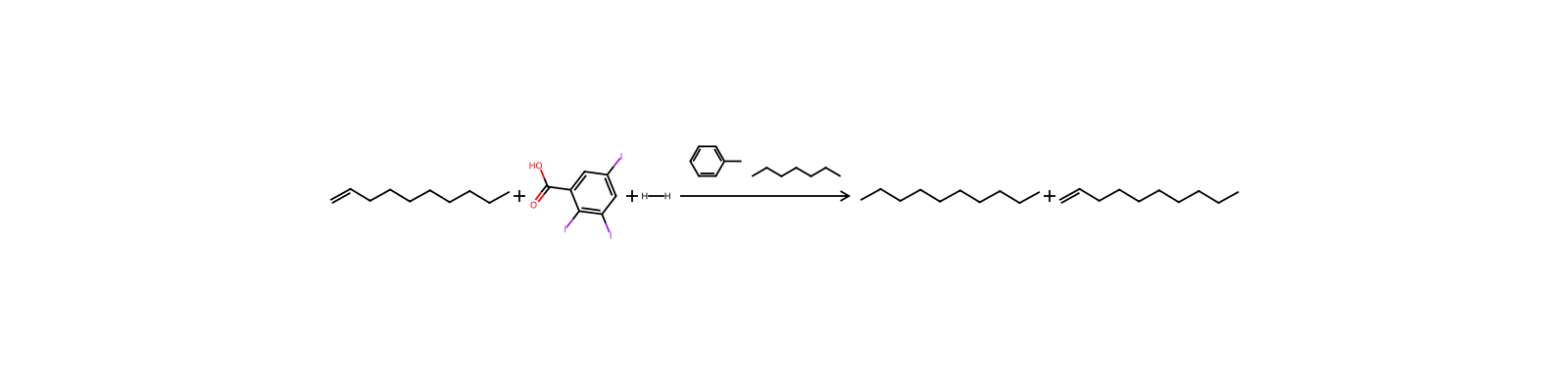
HRID 4186 반응식
HRID 4186용매로uspto-grants-1988_02
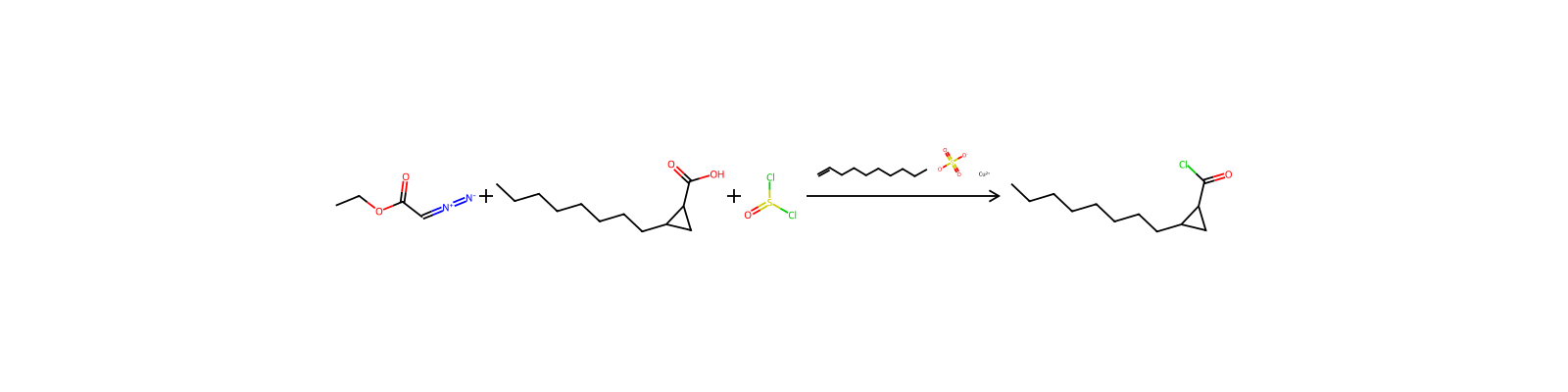
HRID 34747 반응식
HRID 34747용매로uspto-grants-1988_08
HRID 41779 반응식
HRID 41779생성물로반응물로uspto-grants-2013_09
HRID 116685 반응식
HRID 116685반응물로Training data from https://doi.org/10.1039/C8SC04228D (2/10)
HRID 117819 반응식
HRID 117819반응물로Training data from https://doi.org/10.1039/C8SC04228D (2/10)
HRID 123739 반응식
HRID 123739반응물로Training data from https://doi.org/10.1039/C8SC04228D (2/10)
HRID 170352 반응식
HRID 170352반응물로Training data from https://doi.org/10.1039/C8SC04228D (9/10)
HRID 188982 반응식
HRID 188982반응물로Training data from https://doi.org/10.1039/C8SC04228D (6/10)
1 / 12 페이지

화합물 노트

불러오는 중…

이 페이지에서기본 정보개요이름 및 식별자물성안전 및 규제화학 및 산업관련 반응화합물 노트
더보기
새 노트새 반응견적 요청하기

46 °C c.c.

Boiling Point · 3건

339.1 °F at 760 mmHg (USCG, 1999)

170.56 °C @ 760 mm Hg

172 °C

Melting Point · 3건

-87.3 °F (USCG, 1999)

-66.3 °C

-66 °C

물리화학적 성질

녹는점
-66.3 °C · -66.3 °C
끓는 점
169 °C · 169 °C
밀도
0.741 g/mL · 0.741 g/mL at 25 °C(lit.)
증기 밀도
4.84 · 4.84 (vs air)
증기압
1.6 mm · 1.6 mm Hg ( 23.8 °C)
굴절률
20 · n20/D 1.421(lit.)
인화점
118 °F · 118 °F
저장 조건
30 °C · Store below +30°C.
용해도
클로로포름(적게), 에틸아세테이트(약간)에 용해됨
물리적 상태
액체
색상
무색의
Specific Gravity
0.741 · 0.741
냄새
부드럽고 편안한 냄새
폭발한계
0.7 · 0.7-5.9%(V)
수용성
불용성
비열
2.14 J/ · Cp(liquid): 2.14 J/(g·K), at 25℃
BRN
1737236 · 1737236
Henry's Law Constant
8.6 · 8.6×10-6 mol/(m3Pa) at 25℃, Brockbank (2013)
Dielectric constant
2.7 · 2.7(17℃)
안정성
안정적인. 강한 산화제와 호환되지 않습니다. 가연성.
주요 응용
청소용품화장품환경음식 및 음료개인 위생 관리석유
화장품 원료 기능
용제점도 조절
InChI
1S/C10H20/c1-3-5-7-9-10-8-6-4-2/h3H,1,4-10H2,2H3
InChIKey
AFFLGGQVNFXPEV-UHFFFAOYSA-N
SMILES
CCCCCCCCC=C
LogP
5.12 at · 5.12 at 20℃
NIST
1 · 1-Decene(872-05-9)
EPA
1 · 1-Decene (872-05-9)

화학적 성질

colourless liquid

Reactive GroupHydrocarbons, Aliphatic Unsaturated
UN ClassificationUN Hazard Class: 3; UN Pack Group: III
Reactivity Profile · 1건

1-DECENE may react vigorously with strong oxidizing agents. May react exothermically with reducing agents to release hydrogen gas. In the presence of various catalysts (such as acids) or initiators, may undergo exothermic addition polymerization reactions. Will attack some forms of plastics (USCG, 1999).

Chemical DangersAttacks plastics and rubber.
Physical DangersAs a result of flow, agitation, etc., electrostatic charges can be generated.
Air and Water ReactionsInsoluble in water.
NFPA Hazard Classification · 3건

0 - Materials that, under emergency conditions, would offer no hazard beyond that of ordinary combustible materials.

2 - Materials that must be moderately heated or exposed to relatively high ambient temperatures before ignition can occur. Materials would not under normal conditions form hazardous atmospheres with air, but under high ambient temperatures or under moderate heating could release vapor in sufficient quantities to produce hazardous atmospheres with air.

0 - Materials that in themselves are normally stable, even under fire conditions.

안전 및 보호

Fire Fighting · 2건

Fire Extinguishing Agents: Foam, dry chemical, or carbon dioxide (USCG, 1999)

Use powder, alcohol-resistant foam, water spray, carbon dioxide. In case of fire: keep drums, etc., cool by spraying with water.

First Aid Measures · 4건

Fresh air, rest.

Rinse skin with plenty of water or shower.

First rinse with plenty of water for several minutes (remove contact lenses if easily possible), then refer for medical attention.

Rinse mouth. Do NOT induce vomiting.

First AidCONTACT WITH EYES OR SKIN: splashes in the eye should be removed by thorough flushing with water. Skin areas should be washed with soap and water. Contaminated clothing should be laundered before reuse. (USCG, 1999)
Safe StorageFireproof. Provision to contain effluent from fire extinguishing. Store in an area without drain or sewer access.
Fire Fighting ProceduresEXTINGUISH WITH DRY CHEMICAL, FOAM OR CARBON DIOXIDE.
Nonfire Spill ResponseExcerpt from ERG Guide 128 [Flammable Liquids (Water-Immiscible)]:
Disposal Methods · 1건

SRP: At the time of review, criteria for land treatment or burial (sanitary landfill) disposal practices are subject to significant revision. Prior to implementing land disposal of waste residue (including waste sludge), consult with environmental regulatory agencies for guidance on acceptable disposal practices.

Spillage Disposal · 1건

Remove all ignition sources. Personal protection: filter respirator for organic gases and particulates adapted to the airborne concentration of the substance. Do NOT let this chemical enter the environment. Collect leaking liquid in covered containers. Absorb remaining liquid in sand or inert absorbent. Then store and dispose of according to local regulations.

Preventive Measures · 1건

SRP: The scientific literature for the use of contact lenses in industry is conflicting. The benefit or detrimental effects of wearing contact lenses depend not only upon the substance, but also on factors including the form of the substance, characteristics and duration of the exposure, the uses of other eye protection equipment, and the hygiene of the lenses. However, there may be individual substances whose irritating or corrosive properties are such that the wearing of contact lenses would be harmful to the eye. In those specific cases, contact lenses should not be worn. In any event, the usual eye protection equipment should be worn even when contact lenses are in place.

Isolation and EvacuationExcerpt from ERG Guide 128 [Flammable Liquids (Water-Immiscible)]:
Eye PreventionWear safety spectacles.
Fire PreventionNO open flames, NO sparks and NO smoking. Above 46 °C use a closed system, ventilation and explosion-proof electrical equipment. Prevent build-up of electrostatic charges (e.g., by grounding).

독성 정보

Environmental Fate · 3건

TERRESTRIAL FATE: Based on a classification scheme(1), an estimated Koc value of 1720(SRC), determined from a structure estimation method(2), indicates that 1-decene is expected to have low mobility in soil(SRC). Volatilization of 1-decene from moist soil surfaces is expected to be an important fate process(SRC) given an estimated Henry's Law constant of 2.68 atm-cu m/mole(SRC), from its vapor pressure of 1.67(3) and a water solubility of 0.115(4). The potential for volatilization of 1-decene from dry soil surfaces may exist(SRC) based upon its vapor pressure(3). However, adsorption to soil is expected to attenuate volatilization(SRC). 1-Decene's linear hydrocarbon structure would suggest that biodegradation is an important process in soil(5).

AQUATIC FATE: Based on a classification scheme(1), an estimated Koc value of 1720(SRC), determined from a structure estimation method(2), indicates that 1-decene is expected to adsorb to sediment and suspended solids in water(SRC). Volatilization from water surfaces is expected(3) based upon an estimated Henry's Law constant of 2.68 atm-cu m/mole(SRC), developed from a vapor pressure of 1.67(4) and a water solubility of 0.115(5). Using this Henry's Law constant and an estimation method(3), volatilization half-lives for a model river and model lake are 1.2 hrs and 5 days, respectively(SRC). However, this model underestimates the volatilization half-life of 1-decene since it does not take into account the effects of adsorption. This is apparent from the results of two EXAMS model runs, one in which the effect of adsorption was considered (half-life = 11 days in a model pond) and one in which adsorption was ignored (half-life = 40 hrs in a model pond)(6). 1-Decene's linear hydrocarbon structure would suggest that biodegradation is an important process in water(7). According to a classification scheme(8), an estimated BCF of 488(SRC), from a log Kow(9) and a regression-derived equation(10), suggests the potential for bioconcentration in aquatic organisms is high. 1-Decene is degraded in water by reaction with hydroxyl radicals(SRC); the half-life for this reaction in water is estimated to be 111 days(SRC), calculated from its rate constant of 7.22X10+9/M sec at 25 °C(11,12).

ATMOSPHERIC FATE: According to a model of gas/particle partitioning of semivolatile organic compounds in the atmosphere(1), 1-decene, which has a vapor pressure of 1.67 mm Hg at 25 °C(2), is expected to exist solely as a vapor in the ambient atmosphere. Vapor-phase 1-decene is degraded in the atmosphere by reaction with photochemically-produced hydroxyl radicals(SRC); the half-life for this reaction in air is estimated to be 11 hrs(SRC), calculated from its rate constant of 3.5X10⁻¹¹ cu cm/molecule-sec at 25 °C(3). Vapor-phase 1-decene is degraded by ozone in the atmosphere; the half-life for this reaction in air is estimated to be 25 hrs(SRC), calculated from its rate constant of 1.08X10⁻¹⁷ cu m/molecule-sec(4). 1-Decene is also degraded by nitrate in the ambient atmosphere; the half-life for this reaction in air is estimated to be 1 day, calculated from its rate constant of 3.24X10⁻¹⁴ cu cm/molecule sec(3,5).

Food Survey Values · 1건

The volatile vapor fraction emitted during the heating of four oils (rapeseed, Canola, peanut and soybean) was analyzed to determine the concentrations of various volatile organic compounds. 1-Decene was detected, concentration not specified, in all four heated oils(1). In another study specifically of peanut oil, 1-decene was detected in head space air samples when peanut oil was heated from 50-200 °C(2). The highest concentration of 1-decene occurred at 200 °C.

Adverse EffectsNeurotoxin - Acute solvent syndrome
Exposure RoutesThe substance can be absorbed into the body by inhalation of its aerosol.
Plant Concentrations · 1건

1-Decene was detected, concentration not specified, as one of many volatile organic compounds emitted from woodland vegetation located across the United States(1). The emission rate for 1-decene from woodland vegetation is estimated to range from 0.5-5 ug/g hr(1).The emission of various hydrocarbons was studied from over 30 dominant plant types found in California's Central Valley(2). 1-Decene was detected, concentration not specified, in the volatile organic fraction of these plant emissions(2).

Signs and SymptomsDry skin.
Effluent Concentrations · 1건

The hydrocarbon content of the exhaust of two different turbojet engines operated at simulated supersonic flight conditions was determined. During the experiment, jet engine model YJ93-GE-3 contained 1-decene in its exhaust ranging from 0.33-42.3 ppm while jet engine model J85-GE-5B contained 1-decene in its exhaust ranging from 0.31-1.25 ppm(1). The use of various types of plastic films for mulch purposes (ground moisture and weed control) on farmlands can lead to the release of 1-decene into the ambient environment through its disposal. Typically, these plastic films are burned either in situ in the crop row or gathered into large piles and incinerated. In one controlled study, 1-decene was detected (concn not specified) in the gas released during the burning of this type of plastic(2). Landfill gas from eight different sites in the United Kingdom was analyzed for trace compounds, including 1-decene. In one crude municipal landfill located in a stone quarry, with an age of 5-6 years, 1-decene was detected at 62 mg/cu m, 3m below the surface of the landfill and at 29.9 mg/cu m, 15 cm above the landfill(3). At another landfill comprised of municipal, industrial and liquid waste in a clay pit, with an age greater than 15 months, 1-decene was detected at 42 mg/cu m 4 meters below the surface of the landfill(3). 1-Decene has been reported to be a constituent of exhaust gas from diesel engines(4). Grab samples of 63 effluent were collected and analyzed from several chemical manufacturers located across the United States(5). These locations included Ohio, West Virginia, Pennsylvania, New Jersey, New York, Louisiana, Kentucky, Delaware, and Texas. 1-Decene was detected, concentration not specified, in 2 out of the 63 effluent grab samples taken from September 30, 1976 to November 30, 1978(5).

ICSC Environmental Data · 1건

The substance is very toxic to aquatic organisms. Bioaccumulation of this chemical may occur in aquatic organisms. The substance may cause long-term effects in the aquatic environment. It is strongly advised not to let the chemical enter into the environment.

Soil Adsorption/Mobility · 1건

Using a structure estimation method based on molecular connectivity indices(1), the Koc for 1-decene can be estimated to be about 1720(SRC). According to a classification scheme(2), this estimated Koc value suggests that 1-decene is expected to have low mobility in soil.

Natural Pollution Sources · 1건

1-Decene is found as a naturally occurring compound emitted by various plant types in California's Central Valley(1) and woodland vegetation located across the United States(2). 1-Decene is also a naturally occurring compound found as part of the volatile organic compounds emitted during the heating of soybean, rapeseed, peanut and Canola oil(3).

Atmospheric Concentrations · 1건

URBAN/SUBURBAN: 1-Decene was detected, concentration not specified, in five urban air analyses carried out in Leningrad, U.S.S.R. from July-October 1976(1). In another urban air study, 1-decene was detected, concentration not specified, in urban air samples from Leningrad, Tashkent, Baku, Tbilisi, Kemerovo, and Murmansk U.S.S.R. in 1977(2).

Human Toxicity Excerpts · 2건

/1-Decene/ is irritating to the eyes and respiratory tract and has CNS depressant properties. Decene ... may present an aspiration hazard when ingested.

SYMPTOMS FOLLOWING EXPOSURE: VAPORS MAY PRODUCE SLIGHT IRRITATION OF EYES & RESPIRATORY TRACT IF PRESENT IN HIGH CONCN. MAY ALSO ACT AS A SLIGHT ANESTHETIC @ HIGH CONCN.

안전 데이터

wgk
1
tsca
TSCA listed
rtecs
HE2071401
ridadr
UN 3295 3/PG 3
HS 번호
29012980
risk_code
10-38-53-65-66-50/53
hazard_code
Xi,F,Xn,N
safety_code
36/37-51-62-37-16-61-60
포장분류
III
위험 등급
3
기존화학 물질
KE-09498
F 고인화성물질
10-23
자연 발화 온도
455 °F
Hazard Classifications
Aquatic Acute 1Aquatic Chronic 1Asp. Tox. 1Flam. Liq. 3
스토리지 클래스
3 - Flammable liquids
유해 물질 데이터
872-05-9(Hazardous Substances Data)

1-Decene: ACTIVE

응용 분야 · 2건

용도1-Decene is the only isomer of industrial importance. it is used as a monomer in copolymers and is an intermediate in the production of epoxides, amines, oxo alcohols, synthetic lubricants, synthetic fatty acids, and alkylated aromatics. 1-Decene has been isolated from the leaves and rhizome of the plant Farfugium japonicum and has been detected as the initial product in the microbial degradation of n-decane.

일반 설명Colorless watery liquid with a pleasant odor. Floats on water.

상·하류 제품 정보

상류 원료

9-Octadecenedioic acid, dimethyl ester9-데센산,메틸에스테르팜애씨드

하류 제품

시스쟈스몬fluorocarbon sulfactant 62012-데카놀에폭시데칸(1.2-)2-HEXYLDECAN-1-OL (2-핵실데칸-1-올)데실알데히드언데킬 알코올cis-octadec-9-ene1-Undecanol, 3-methyl-5-XNUMX-엔(E)-9-옥타데센

추가 설명

정의ChEBI: An alkene that is octadecane containing one double bond at position 1.