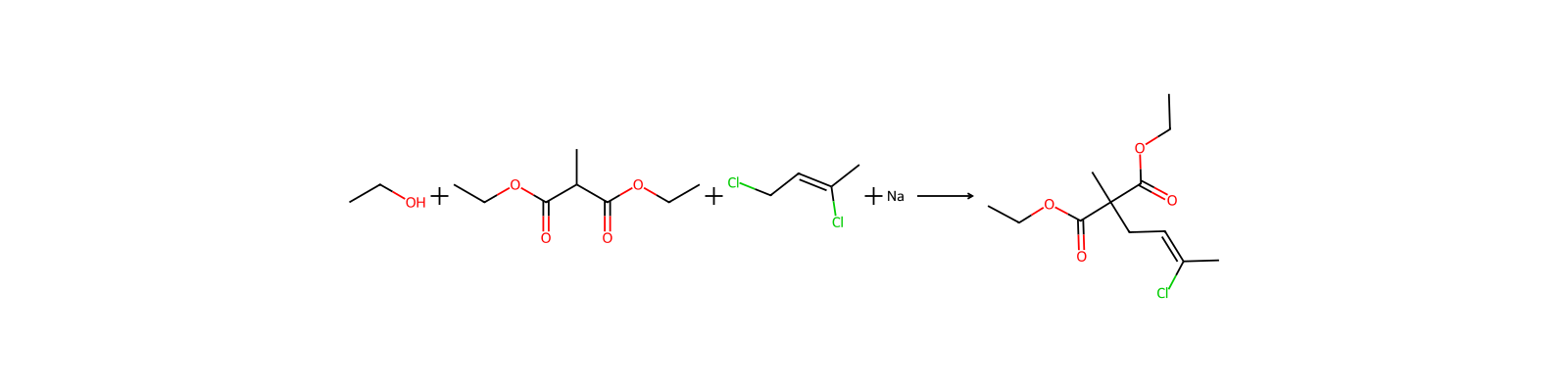
HRID 165574반응물로
1,3-Dichloro-2-butene

926-57-8CC(Cl)=CCClWLIADPFXSACYLS-UHFFFAOYSA-Nstructure
926-57-8DTXSID7027338Other Classes -> Halogenated Aliphatics, Unsaturated
Flammable agents - 3rd degree
1.161
Relative density (water = 1): 1.2
INSOL IN WATER; SOL IN MOST COMMON ORGANIC SOLVENTS
Soluble in acetone, benzene, ether and ethanol
Solubility in water: reaction
27 °C
80 °F (CLOSED CUP)
27 °C c.c.
131 °C
126 °C
4.31 (Air = 1)
Relative vapor density (air = 1): 4.3
안전 정보는 참고용이며, 공급업체의 물질안전보건자료(SDS), 관련 법규 및 전문가 평가를 대체하지 않습니다.
Danger
H226 (100%): Flammable liquid and vapor [Warning Flammable liquids]
P210, P233, P240, P241, P242, P243, P261, P264, P264+P265, P270, P271, P280, P301+P316, P301+P317, P302+P352, P303+P361+P353, P304+P340, P305+P351+P338, P316, P317, P319, P321, P330, P332+P317, P337+P317, P362+P364, P370+P378, P403+P233, P403+P235, P405, and P501 (click each P-code to see the statement)
Aggregated GHS information provided per 45 reports by companies from 5 notifications to the ECHA C&L Inventory. Each notification may be associated with multiple companies.
REACH registered substance: 1,3-dichlorobut-2-ene (EC: 213-138-3)
The New Jersey Worker and Community Right to Know Act requires public and private employers to provide information about hazardous substances at their workplaces. (N.J.S.A. 34:5A-1 et. seq.)
A skin, eye, and respiratory tract irritant; Exposure to high vapor concentrations can cause severe respiratory distress, lacrimation, and possibly coma; Inhalation of low concentrations may cause CNS depression; May cause kidney, liver, and heart injury; Emergency medical treatment: chlorinated hydrocarbon insecticides; [HSDB] Corrosive to rabbit skin; Occupational exposures demonstrate irritation and corrosive injuries to skin, with the vapor causes eye and respiratory tract irritation; A possible carcinogen based on the structural analog 1,3-Dichloropropene (DCP) CAS # 542-75-6, which has an IARC classification of possible human carcinogen; No evidence of reproductive or developmental toxicity in rats or rabbits; [SIDS UNEP]
Used in the pesticide DDB and as an intermediate in organic synthesis; [HSDB] Commercially manufactured and consumed solely as on-site intermediate in the production of 2,3-dichloro-1,3-butadiene (comonomer for polychloroprene synthetic rubber); [SIDS UNEP]
Farming (Pesticides) [Category: Industry]
IN THE PESTICIDE, DDB
Intermediate in production of 19-nortestosterone steroids for use as synthetic sex hormones
A significant amount of 1,3-dichloro-2-butene is purified /from collection from high boilers and still heels in chloroprene production/ and converted to 2,3-dichlorobutadiene for use as a comonomer in chloroprene polymerization
Used as an intermediate in the synthesis of 2,3-dichloro-1,3-butadiene
2-Butene, 1,3-dichloro-: ACTIVE
Occurs in high boilers and still heels from chloroprene refining
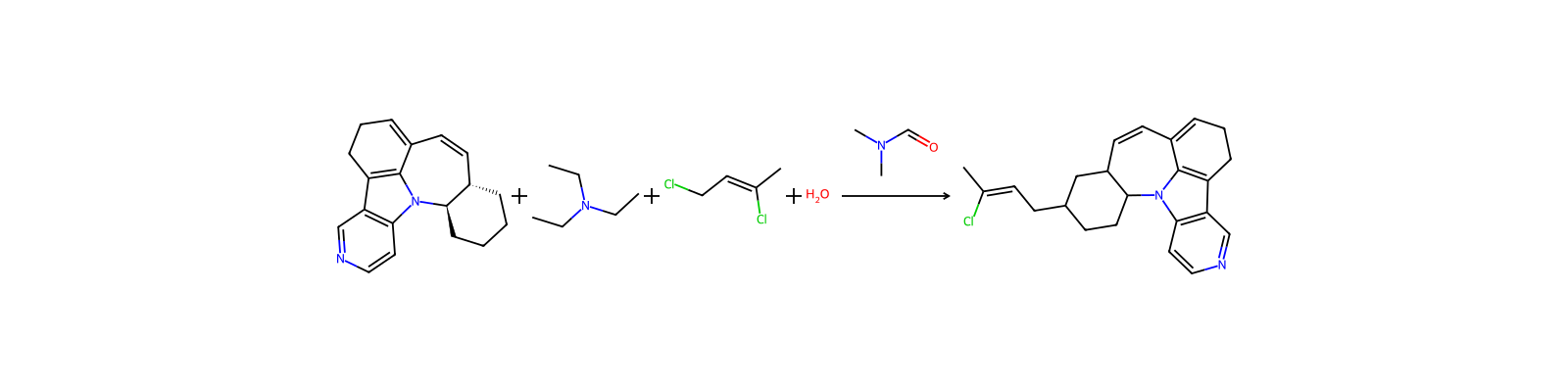


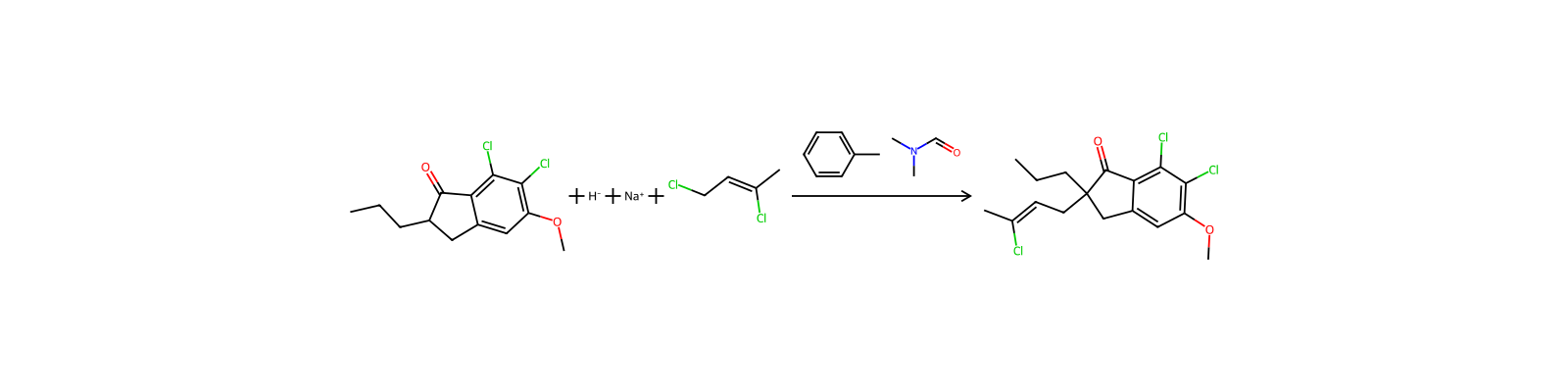

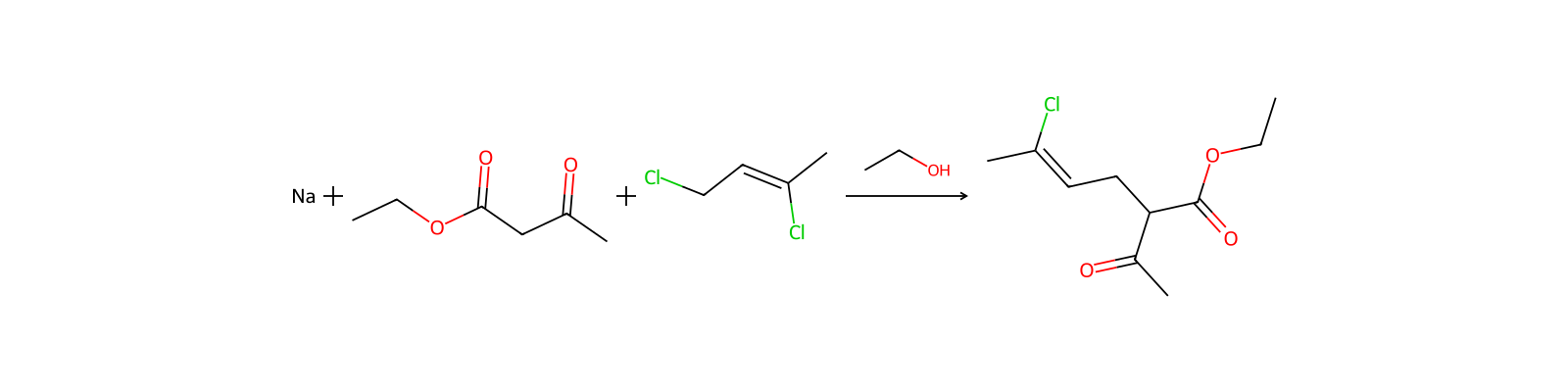
12.6 [mmHg]
Vapor pressure, kPa at 25 °C: 1.33
clear yellow to brown liquid
2 - Materials that, under emergency conditions, can cause temporary incapacitation or residual injury.
3 - Liquids and solids that can be ignited under almost all ambient temperature conditions. Materials produce hazardous atmospheres with air under almost all ambient temperatures or, though unaffected by ambient temperatures, are readily ignited under almost all conditions.
0 - Materials that in themselves are normally stable, even under fire conditions.
Flam. Liq. 3 (100%)
Flammable agents - 3rd degree, Reactive agents - 2nd degree
Fresh air, rest. Refer for medical attention.
Remove contaminated clothes. Rinse skin with plenty of water or shower. Refer immediately for medical attention.
Rinse with plenty of water (remove contact lenses if easily possible). Refer immediately for medical attention.
Rinse mouth. Do NOT induce vomiting. Give one or two glasses of water to drink. Refer immediately for medical attention.
FOAM, CARBON DIOXIDE, DRY CHEMICAL...
If material on fire or involved in fire: Use water in flooding quantities as fog. Cool all affected containers with flooding quantities of water. Apply water from as far a distance as possible. Solid streams of water may be ineffective. Use foam, dry chemical, or carbon dioxide. Use water spray to knock-down vapors. /Dichlorobutene/
SRP: At the time of review, criteria for land treatment or burial (sanitary landfill) disposal practices are subject to significant revision. Prior to implementing land disposal of waste residue (including waste sludge), consult with environmental regulatory agencies for guidance on acceptable disposal practices.
Personal protection: complete protective clothing including self-contained breathing apparatus. Do NOT let this chemical enter the environment. Collect leaking liquid in sealable containers. Absorb remaining liquid in sand or inert absorbent. Then store and dispose of according to local regulations.
SRP: Local exhaust ventilation should be applied wherever there is an incidence of point source emissions or dispersion of regulated contaminants in the work area. Ventilation control of the contaminant as close to its point of generation is both the most economical and safest method to minimize personnel exposure to airborne contaminants.
If material not on fire and not involved in fire: Keep sparks, flames, and other sources of ignition away. Keep material out of water sources and sewers. Build dikes to contain flow as necessary. Use water spray to knock-down vapors. /Dichlorobutene/
Personnel protection: Avoid breathing vapors. Keep upwind. Avoid bodily contact with the material. ... Do not handle broken packages unless wearing appropriate personal protective equipment. Wash away any material which may have contacted the body with copious amounts of water or soap and water. Wear positive pressure self-contained breathing apparatus when fighting fires involving this material. If contact with the material anticipated, wear appropriate chemical protective clothing. /Dichlorobutene/
TERRESTRIAL FATE: Based on a classification scheme(1), an estimated Koc value of 125(SRC), determined from a structure estimation method(2), indicates that 1,3-dichloro-2-butene is expected to have high mobility in soil(SRC). Volatilization of 1,3-dichloro-2-butene from moist soil surfaces is expected to be an important fate process(SRC) given an estimated Henry's Law constant of 3.8X10⁻² atm-cu m/mole(SRC), using a fragment constant estimation method(3). The potential for volatilization of 1,3-dichloro-2-butene from dry soil surfaces may exist(SRC) based upon an estimated vapor pressure of 12.6 mm Hg(SRC), determined from a fragment constant method(4). The neutral hydrolysis half-life of a structurally similar compound, 1,4-dichloro-2-butene has been measured as 3.2 days(5). This suggests that 1,3-dichloro-2-butene may also undergo hydrolysis in moist soil(SRC).
AQUATIC FATE: Based on a classification scheme(1), an estimated Koc value of 125(SRC), determined from a structure estimation method(2), indicates that 1,3-dichloro-2-butene is not expected to adsorb to suspended solids and sediment(SRC). Volatilization from water surfaces is expected(3) based upon an estimated Henry's Law constant of 3.8X10⁻² atm-cu m/mole(SRC), developed using a fragment constant estimation method(4). Using this Henry's Law constant and an estimation method(3), volatilization half-lives for a model river and model lake are 1 hour and 4.4 days, respectively(SRC). According to a classification scheme(5), an estimated BCF of 30(SRC), from an estimated log Kow of 2.84(6) and a regression-derived equation(7), suggests the potential for bioconcentration in aquatic organisms is low. The neutral hydrolysis half-life of a structurally similar compound, 1,4-dichloro-2-butene has been measured as 3.2 days(8). This suggests that 1,3-dichloro-2-butene may also undergo hydrolysis in water(SRC).
ATMOSPHERIC FATE: According to a model of gas/particle partitioning of semivolatile organic compounds in the atmosphere(1), 1,3-dichloro-2-butene, which has an estimated vapor pressure of 12.6 mm Hg at 25 °C(SRC), determined from a fragment constant method(2), is expected to exist solely as a vapor in the ambient atmosphere. Vapor-phase 1,3-dichloro-2-butene is degraded in the atmosphere by reaction with photochemically-produced hydroxyl radicals and ozone(SRC). The half-life for the reaction in air with hydroxyl radicals is estimated to be 27 hours(SRC), calculated from its rate constant of 1.4X10⁻¹¹ cu cm/molecule-sec at 25 °C(SRC) that was derived using a structure estimation method(3). The half-life for the reaction in air with ozone is estimated to be 8 days(SRC), calculated from its rate constants of 1.4X10⁻¹⁸ cu cm/molecule-sec at 25 °C(SRC) that was derived using a structure estimation method(3).
Cough. Sore throat.
Redness. Pain. Skin burns.
Redness. Pain.
Cough. Burning sensation in the throat and chest.
Using a structure estimation method based on molecular connectivity indices(1), the Koc for 1,3-dichloro-2-butene can be estimated to be 125(SRC). According to a classification scheme(2), this estimated Koc value suggests that 1,3-dichloro-2-butene is expected to have high mobility in soil.
Symptomatology: 1A) Inhalation, high vapor concn: gasping, refusal to breathe, coughing, substernal pain, & extreme respiratory distress at vapor concn over 1500 ppm. Irritation of eyes & upper respiratory mucosa appears promptly after exposure to concentrated vapors. Lacrimation & headache are prominent. Coma may occur rapidly. B) Inhalation, low vapor concn: central nervous depression & moderate irritation of respiratory system. Headache is frequent. 2) Dermal: severe skin irritation with marked inflammatory response of epidermis & underlying tissues. 3) Oral: acute gastrointestinal distress with pulmonary congestion & edema. Central nervous depression, perhaps even in the absence of impaired oxygen uptake. 4) By any route, possible late injuries to liver, kidneys & heart. 5) After inhalation exposures, malaise, headache, chest & abdominal discomfort & irritability have been reported to persist for several weeks & perhaps for several years.
An estimated BCF of 30 was calculated for 1,3-dichloro-2-butene(SRC), using an estimated log Kow of 2.84(1) and a regression-derived equation(2). According to a classification scheme(3), this BCF suggests the potential for bioconcentration in aquatic organisms is low.
The Henry's Law constant for 1,3-dichloro-2-butene is estimated as 3.8X10⁻² atm-cu m/mole(SRC) using a fragment constant estimation method(1). This Henry's Law constant indicates that 1,3-dichloro-2-butene is expected to volatilize rapidly from water surfaces(2). Based on this Henry's Law constant, the volatilization half-life from a model river (1 m deep, flowing 1 m/sec, wind velocity of 3 m/sec)(2) is estimated as 1 hour(SRC). The volatilization half-life from a model lake (1 m deep, flowing 0.05 m/sec, wind velocity of 0.5 m/sec)(2) is estimated as 4.4 days(SRC). 1,3-Dichloro-2-butene's Henry's Law constant(1) indicates that volatilization from moist soil surfaces may occur(SRC). The potential for volatilization of 1,3-dichloro-2-butene from dry soil surfaces may exist(SRC) based upon an estimated vapor pressure of 12.6 mm Hg(SRC), determined from a fragment constant method(3).
Toxicity of chlorinated butenes depended on the number of Cl atoms and their positions. Dichlorobutenes, for example, were more toxic than the trichlorobutenes. ... Among 3 dichlorobutenes, 1,4-dichloro-2-butene with Cl atoms both on the terminal C and in allylic position was most toxic. In 1,3-dichloro-2-butene, the same Cl is both terminal and allylic and is moderately toxic; 3,4-dichloro-1-butene was the least toxic. The toxicity may be increased by oxidation of the double bond and migration of Cl to the terminal C atom or by forming a chloroanhydride group.