
기본 정보
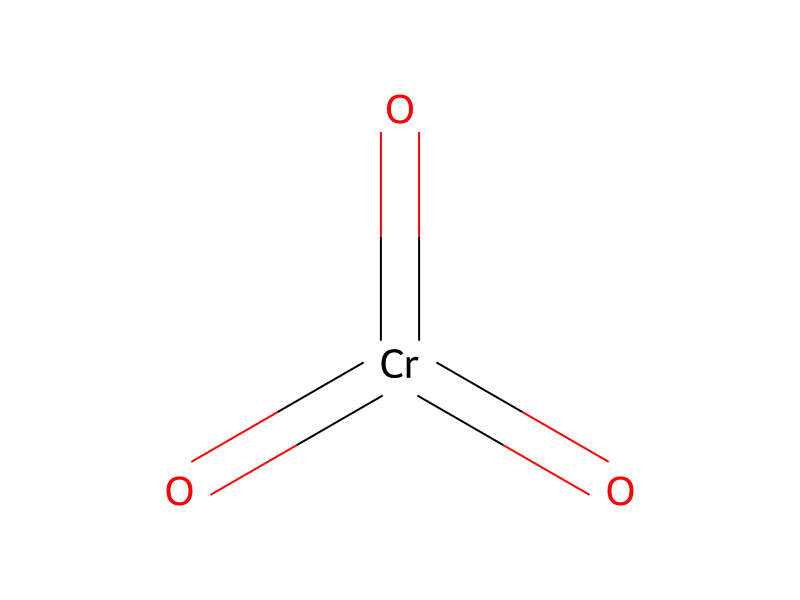
- 표준 SMILES
[O]=[Cr](=[O])=[O]- InChIKey
WGLPBDUCMAPZCE-UHFFFAOYSA-N- 분자식
- CrO3
- 평균 분자량
- 99.994 g/mol
- 단동위원소 질량
- 99.92525136
개요
Chromium trioxide, anhydrous appears as a dark purplish red solid. Under prolonged exposure to fire or heat the containers may explode. Highly toxic. A confirmed human carcinogen.
이름 및 식별자
- 우선 이름
- Chromium Trioxide
- IUPAC
- trioxochromium
- 영어명
- EDTA methidiumpropylamide
- 분자식
- CrO3
- 분자량
- 198.07
이름 및 동의어
Chromium trioxideChromic anhydrideChromium(VI) oxidetrioxochromiumCrO3ChromtrioxidMonochromium trioxideCHROMIC TRIOXIDEChromsaeureanhydridAnhydride chromiqueChromium(6+) oxideChromia (CrO3)
이름 더 보기
Jone′s reagentJones reagent, 1.90 - 2.20 MJone's reagent ~2% CrO3 basisSulfuric acid-chromium trioxide mixtureChromium trioxide solution in sulfuric acidSulfuric acid, mixt. with chromium oxide (CrO3)
ChroomtrioxydeChromium(6+) trioxideAnidride cromicaSintered chromium trioxideChroomzuuranhydridePuratronic chromium trioxideChromium oxide (Cr4O12)Cromo(triossido di)
데이터베이스 식별자
- CAS
1333-82-0、65272-70-0- PubChem CID
- 14915
- DTXSID
DTXSID0040125- ChEBI
CHEBI:48240- EC Number
- 215-607-8、863-656-4
- Nikkaji
- J43.775A
물성
구조 계산 물성
- 극성 표면적
- 51.2 Ų
- 수소 결합 공여자 수
- 0
- 수소 결합 수용자 수
- 3
- 회전 가능 결합 수
- 0
- 무거운 원자 수
- 4
- 형식 전하
- 0
- 복잡도
- 61.8
실험 및 물리화학적 성질
Chemical Classes
Metals -> Chromium Compounds, Inorganic
Carcinogens
pHDissolves in water to form a weak acid
OdorOdorless
Density
2.7 (NTP, 1992) - Denser than water; will sink
2.70
2.7 g/cm³
2.70 @25 °C
2.70 (CrO3)
Color/Form
Dark red, bipyramidal prismatic crystals, flakes or granular powder
Brown solid
Flake, ground powder form
Dark-red ... flakes or powder [Note: Often used in an aqueous solution (H2CrO4)]
Solubility
Very soluble (NTP, 1992)
Solubility in water, 61.7 g/100 cc solution at 0 °C; 67.45 g/100 cc solution at 100 °C
In water, 169 g/100 g water at 25 °C
In water, 1667 g/L (EU Method A.6 (Water Solubility))
In water, 167.299 lb/100 lb water at 70 °F
Soluble in ethyl alcohol, ethyl ether, sulfuric and nitric acids
Boiling Point
482 °F at 760 mmHg (decomposes) (NTP, 1992)
Approximately 250 °C decomposes
482 °F (Decomposes)
Decomposition
Decomposes when heated to 250 °C, liberating oxygen to support combustion.
Decomposes at 250 °C to chromic oxide and oxygen
Decomposes at 250 °C with release of oxygen
250 °C
Melting Point
385 °F (NTP, 1992)
197 °C
197 °C
197 °C
197 °C
387 °F (Decomposes)
Vapor Pressure
Very low (NIOSH, 2024)
Very low
Very low
Physical Description
Chromium trioxide, anhydrous appears as a dark purplish red solid. Under prolonged exposure to fire or heat the containers may explode. Highly toxic. A confirmed human carcinogen.
Liquid; Other Solid; Liquid; Other Solid; Dry Powder; Large Crystals
Dark red to brown crystals, flakes, or powder; [HSDB] Soluble in water; [ACGIH]
ODOURLESS DARK RED DELIQUESCENT CRYSTALS, FLAKES OR GRANULAR POWDER.
CrO3: Dark-red, odorless flakes or powder. [Note: Often used in an aqueous solution (H2CrO4).]
Stability/Shelf Life
Stable under recommended storage conditions.
Trivalent chromium is the most stable oxidation state and hexavalent chromium is the second most stable state. /Trivalent and hexavalent chromium/
물리화학적 성질
- 밀도
- 1.298 g/mL · 1.298 g/mL at 25 °C
- 저장 조건
- -20 °C · -20°C
- 물리적 상태
- liquid
- InChI
- 1S/Cr.H2O4S.3O/c;1-5(2,3)4;;;/h;(H2,1,2,3,4);;;
- InChIKey
- HNPXHFOTGAXAJY-UHFFFAOYSA-N
- SMILES
- O=[Cr](=O)=O.OS(O)(=O)=O
안전 및 규제
GHS 분류
GHS Classification
Danger
H271 (100%): May cause fire or explosion; strong Oxidizer [Danger Oxidizing liquids; Oxidizing solids]
P203, P210, P220, P233, P260, P261, P262, P264, P264+P265, P270, P271, P272, P273, P280, P283, P284, P301+P316, P301+P330+P331, P302+P352, P302+P361+P354, P304+P340, P305+P354+P338, P306+P360, P316, P317, P318, P319, P320, P321, P330, P333+P317, P342+P316, P361+P364, P362+P364, P363, P370+P378, P371+P380+P375, P391, P403, P403+P233, P405, P420, and P501 (click each P-code to see the statement)
Aggregated GHS information provided per 638 reports by companies from 40 notifications to the ECHA C&L Inventory. Each notification may be associated with multiple companies.
Danger
H271 (100%): May cause fire or explosion; strong Oxidizer [Danger Oxidizing liquids; Oxidizing solids]
유해성 정보
Regulatory Information
Chemical: Chromium oxide (CrO3)
Hazard Traits - Carcinogenicity; Genotoxicity; Respiratory Toxicity
Chromium oxide (CrO3) is listed on the EPA's Chemical Data Reporting (CDR) system. Manufacturers and importers of Chromium oxide (CrO3) are required to report information about their production and use of this chemical to the EPA under the Toxic Substances Control Act (TSCA). (40 eCFR Part 711)
R - indicates a substance that is the subject of a TSCA section 6 risk management rule.
Status: Active Update: 25-10-2022 https://echa.europa.eu/registration-dossier/-/registered-dossier/15927
Substance: Chromium trioxide
Other Safety InformationIMAP assessments - Chromium trioxide and related compounds: Human health tier II assessment
DOT LabelOxidizer Poison Corrosive
Fire Hazards
Behavior in Fire: Containers may explode (USCG, 1999)
· These substances will accelerate burning when involved in a fire.
Not combustible but enhances combustion of other substances. Many reactions may cause fire or explosion.
Fire Potential
Powerful oxidizer ... contact with combustible material may cause fire.
Ignites on contact with alcohols, acetic anhydride + tetrahydronaphthalene, acetone, butanol, chromium(II) sulfide, cyclohexanol, dimethyl formamide, ethanol, ethylene glycol, methanol, 2-propanol, pyridine.
Health Hazards
Very irritating to eyes and respiratory tract. Ingestion causes severe gastrointestinal symptoms. Contact with eyes or skin causes burns; prolonged contact produces dermatitis ("chrome sores"). (USCG, 1999)
· Toxic by ingestion.
Hazards Summary
CrVI compounds are irritants, sensitizers, and may be corrosive to the skin. CrVI compounds are respiratory tract irritants and may cause pulmonary sensitization. CrVI may cause acute tubular necrosis and liver injury. [ATSDR Case Studies] Highly corrosive to skin; [Quick CPC] Chromium trioxide (chromic acid) is a water-soluble hexavalent chromium compounds. A corrosive substance that can cause injury to the skin, eyes, and respiratory tract; May cause skin sensitization, kidney injury, and asthma after prolonged contact; [ICSC] See Chromium and linked occupational diseases.
DOT ID and Guide
1463 141
1755 154(acid solution)
1463 141(acid, solid)
Reactive GroupAnhydrides
EC ClassificationSymbol: O, T+, N; R: 45-46-9-24/25-26-35-42/43-48/23-62-50/53; S: 53-45-60-61; Note: E
UN ClassificationUN Hazard Class: 5.1; UN Subsidiary Risks: 6.1 and 8; UN Pack Group: II
Special ReportsDHHS/ATSDR; Toxicological profile for chromium (September 2012).[DHHS/ATSDR; Toxicological profile for chromium (September 2012); Available from, as of February 8, 2016: ww.atsdr.cdc.gov/toxprofiles/tp7.pdf]
안전 및 보호
Fire Fighting
Excerpt from ERG Guide 141 [Oxidizers - Toxic]:
NO water. In case of fire in the surroundings, use appropriate extinguishing media.
First Aid Measures
Fresh air, rest. Half-upright position. Artificial respiration may be needed. Refer for medical attention.
Remove contaminated clothes. First rinse with plenty of water for at least 15 minutes, then remove contaminated clothes and rinse again. Refer for medical attention .
First rinse with plenty of water for several minutes (remove contact lenses if easily possible), then refer for medical attention.
Rinse mouth. Give one or two glasses of water to drink. Do NOT induce vomiting. Refer immediately for medical attention.
Accidental Release Measures
· CALL 911. Then call emergency response telephone number on shipping paper. If shipping paper not available or no answer, refer to appropriate telephone number listed on the inside back cover.
· Keep combustibles (wood, paper, oil, etc.) away from spilled material.
First Aid
EYES: First check the victim for contact lenses and remove if present. Flush victim's eyes with water or normal saline solution for 20 to 30 minutes while simultaneously calling a hospital or poison control center. Do not put any ointments, oils, or medication in the victim's eyes without specific instructions from a physician. IMMEDIATELY transport the victim after flushing eyes to a hospital even if no symptoms (such as redness or irritation) develop.
General First Aid:
(General first aid procedures)
Safe StorageProvision to contain effluent from fire extinguishing. Separated from combustible substances, reducing agents, bases and food and feedstuffs. Well closed. Store in an area without drain or sewer access.
Firefighting Hazards... If involved in a fire decomposes to produce chromium fumes.
Exposure Control and Personal Protection
· Wear positive pressure self-contained breathing apparatus (SCBA).
TIH (Toxic Inhalation Hazard) - Term used to describe gases and volatile liquids that are toxic when inhaled. Some are TIH materials themselves, e.g., chlorine, and some release TIH gases when spilled in water, e.g., chlorosilanes. [ERG 2016].
Fire Fighting Procedures
Suitable extinguishing media: Use water spray, alcohol-resistant foam, dry chemical or carbon dioxide.
Advice for firefighters: Wear self-contained breathing apparatus for firefighting if necessary.
Use water spray to cool unopened containers.
Small fire: Use water. Do not use dry chemicals or foams. CO2 or Halon may provide limited control. Large fire: Flood fire area with water from a distance. Do not move cargo or vehicle if cargo has been exposed to heat. Move containers from fire area if you can do it without risk. Fire involving tanks or car/trailer loads: Fight fire from maximum distance or use unmanned hose holders or monitor nozzles. Cool containers with flooding quantities of water until well after fire is out. ALWAYS stay away from tanks engulfed in fire. For massive fire, use unmanned hose holders or monitor nozzles; if this is impossible, withdraw from area and let fire burn.
/When fire fighting wear/ self-contained breathing apparatus, with a full facepiece, operated in pressure-demand or other positive pressure mode. /Chromic acid & chromates/
Storage Conditions
Keep container tightly closed in a dry and well-ventilated place. Hygroscopic. Heat sensitive. Storage class (TRGS 510): Strongly oxidizing hazardous materials
Storage recommendations: Store in a cool, dry, well-ventilated location. Separate from combustible materials, halogens, sulfides, metals.
Cleanup Methods
ACCIDENTAL RELEASE MEASURES: Personal precautions, protective equipment and emergency procedures: Wear respiratory protection. Avoid dust formation. Avoid breathing vapors, mist or gas. Ensure adequate ventilation. Evacuate personnel to safe areas. Avoid breathing dust; Environmental precautions: Prevent further leakage or spillage if safe to do so. Do not let product enter drains. Discharge into the environment must be avoided; Methods and materials for containment and cleaning up: Sweep up and shovel. Contain spillage, and then collect with an electrically protected vacuum cleaner or by wetbrushing and place in container for disposal according to local regulations. Keep in suitable, closed containers for disposal.
Isolation and Evacuation: As an immediate precautionary measure, isolate spill or leak area in all directions for at least 50 meters (150 feet) for liquids and at least 25 meters (75 feet) for solids. Large spill: Consider initial downwind evacuation for at least 100 meters (330 feet). Fire: If tank, rail car or tank truck is involved in a fire, ISOLATE for 800 meters (1/2 mile) in all directions; also, consider initial evacuation for 800 meters (1/2 mile) in all directions.
Cr(VI) cmpd in waste sludge are completely removed by redn by carbon at 600 °C. /Chromium VI/
Persons not wearing protective equipment and clothing should be restricted from areas of spills until cleanup has been completed. If chromic acid or chromates are spilled, the following steps should be taken: 1. Ventilate area of spill. 2. Collect spilled material in the most convenient and safe manner and deposit in sealed containers for reclamation or for disposal in a secured sanitary landfill. Liquid containing chromic acid or chromates should be absorbed in vermiculite, dry sand, earth, or a similar material. /Chromic acid and chromates/
Nonfire Spill ResponseExcerpt from ERG Guide 141 [Oxidizers - Toxic]:
Disposal Methods
Generators of waste (equal to or greater than 100 kg/mo) containing this contaminant, EPA hazardous waste number D007, must conform with USEPA regulations in storage, transportation, treatment and disposal of waste. /Chromium/
Product: Burn in a chemical incinerator equipped with an afterburner and scrubber but exert extra care in igniting as this material is highly flammable. Offer surplus and non-recyclable solutions to a licensed disposal company. Contact a licensed professional waste disposal service to dispose of this material. Dissolve or mix the material with a combustible solvent and burn in a chemical incinerator equipped with an afterburner and scrubber; Contaminated packaging: Dispose of as unused product.
Chemical reduction of concentrated materials to Cr (III) and precipitation by pH adjustment. Precipitates are normally disposed in a chemical waste landfill. Recovery and recycle is a viable alternative to disposal for chromium in plating wastes, tannery wastes, cooling tower blowdown and chemical plant wastes. Recommendable methods: Reduction and precipitation. Not recommendable method: Landfill. Peer-review: Cr (VI) can be removed from solution of low acidity by ion exchange. This can allow recovery of Cr (VI), or the resin can be solidified and disposed of to a landfill. Do not landfill chromium trioxide. Contact with combustible material may cause fire. (Peer-review conclusions of an IRPTC expert consultation (May 1985))
Wastewater treatment sludge from the production of chrome green pigments is a poor candidate for incineration. /Chrome green pigments/
For more Disposal Methods (Complete) data for CHROMIC TRIOXIDE (12 total), please visit the HSDB record page.
독성 정보
TreatmentThere is no known antidote for chromium poisoning. Exposure is usually handled with symptomatic treatment. (L16)
Cancer Sites[lung cancer]
Interactions
Renal structural and functional alterations following an exposure to a heterogeneous chemical mixture (HCM) of phthalic acid di butyl ester, 1, 2-dichlorobenzene, cadmium chloride and chromium trioxide, administered /to rats/ through oral gavage in low doses (1/100 and 1/1000 of LD50 value of individual chemical) for 60 days, followed by withdrawal /until/ 120 days resulted in significant rise in kidney lipid peroxidation and fall in the activities of enzymatic antioxidants. However, withdrawal of HCM treatment restored most of these altered parameters. Degenerative changes in the kidney included proximal convoluted tubules devoid of brush boarder with cytoplasmic blebbing, dissolution and sloughing of nuclei. Cortical glomeruli were also affected with epithelial disintegration, pyknosis of podocyte nuclei and mesengial cell hyperplasia. The morphological alterations recovered fully in the low dose compared to the high dose treatment group.
This study was conducted to investigate the modulating effects of (-)-epigallocatechin-3-gallate (EGCG), quercetin, and rutin on the genotoxic damage induced by Cr(VI) in polychromatic erythrocytes of CD-1 mice. The animals were divided into the following groups: (i) vehicle only; (ii) flavonoids (10 mg/kg EGCG, 100 mg/kg quercetin, 625 mg/kg rutin, or 100-625 mg/kg quercetin-rutin); (iii) Cr(VI) (20 mg/kg of CrO3); and (iv) flavonoids concomitantly with Cr(VI). All of the treatments were administered intraperitoneally (i.p.). The genotoxic damage was evaluated based on the number of micronucleated polychromatic erythrocytes (MN-PCE) obtained from the caudal vein 0, 24, 48, and 72 hr after treatment. Groups treated with EGCG and quercetin exhibited no significant statistical changes in induction of MN-PCE. However, CrO3 treatment significantly increased MN-PCE induction 24 and 48 hr after injection. Treatment with flavonoids prior to CrO3 exposure decreased MN-PCE induction compared with CrO3 only. The magnitudes of the potency of flavonoids were in the following order: rutin (82%) > quercetin (64%) > quercetin-rutin (59%) and EGCG (44%). The group treated with rutin significantly reduced genotoxic damage in mice treated with Cr(VI) (antioxidant effect). However rutin exerted a marginal genotoxic effect when administered alone (pro-oxidant effect). Our findings suggest protective effects of EGCG, quercetin, and rutin against genotoxic damage induced by Cr(VI).
The mutagenic effects of microwaves and chromium trioxide (CrO(3)) on Vicia faba root tip were studied. Micronucleus assay and chromosomal aberration assay were used to determine the mitotic index, the micronucleus frequency and chromosomal aberration frequency of Vicia faba root tip cells induced by microwaves and CrO(3). The results showed that the micronucleus frequency decreased, and that the mitotic index and chromosomal aberration frequency showed linear dose responses to CrO(3), in treatment of microwaves for 5 s. In microwave of 25 s, the mitotic index decreased, the micronucleus frequency and chromosomal aberration frequency increased with increase of CrO(3) concentration. We concluded that microwaves and CrO(3) had antagonistic effect on the mitotic index of Vicia faba root tip cells, but had synergetic effect on micronucleus frequency and chromosomal aberration frequency of Vicia faba root tip cells.
Target OrgansBlood, respiratory system, liver, kidneys, eyes, skin
Health EffectsHexavalent chromium is a known carcinogen. Chronic inhalation especially has been linked to lung cancer. Hexavalent chromium has also been known to cause reproductive and developmental defects. (A12)
Ecotoxicity Values
EC50; Species: /Oncorhynchus mykiss/ (rainbow trout) embryo larva; Concentration: 190 ug/L as chromium for 28 days, with a water hardness of 101 mg/L as calcium carbonate; Effect: death and deformity /Conditions of bioassay not specified/
EC50; Species: Carassius auratus (goldfish) embryo larva; Concentration: 660 ug/L as chromium for 7 days, with a water hardness of 195 mg/L as calcium carbonate; Effect: death and deformity /Conditions of bioassay not specified/
LC50; Species: Ophryotrocha diadema (polychaete worm); Conditions: static; Concentration: 7,500 ug/L as chromium and Ctendrilus seratus (polychaete worm) 4,300 ug/L as chromium.
LC50; Species: Capitella captata (polychaete worm); Conditions: static; Concentration: 8,000 ug/L as chromium (larval) and 5,000 ug/L as chromium (adult); unmeasured method
For more Ecotoxicity Values (Complete) data for CHROMIC TRIOXIDE (34 total), please visit the HSDB record page.
Adverse EffectsOccupational hepatotoxin - Secondary hepatotoxins: the potential for toxic effect in the occupational setting is based on cases of poisoning by human ingestion or animal experimentation.
Exposure Routes
The substance can be absorbed into the body by inhalation, through the skin and by ingestion.
inhalation, ingestion, skin and/or eye contact
Oral (L16) ; inhalation (L16) ; dermal (L16)
Toxicity Summary
IDENTIFICATION AND USE: Chromic trioxide is a brown solid. It is used Chromium plating, copper stripping, aluminum anodizing, corrosion inhibitor, photography, purifying oil and acetylene, hardening microscopical preparations, oxidizing agent in organic chemistry. It is also has been used as a veterinary medication. HUMAN EXPOSURE AND TOXICITY: Chronic industrial exposures have led to severe liver damage, CNS involvement and perhaps lung cancer. Allergic reactions are common. If ingested, is characterized by fulminant gastroenteritis, shock, and toxic nephritis. Chromium trioxide causes local burns. Levels of Cr VI in the form of chromium trioxide were capable of giving rise to nasal irritation at concentrations as low as 0.06 mg/cu m. In an otorhinolaryngological examination survey of 77 workers from 8 chromium-plating factories ... workers were exposed to a hexavalent chromium trioxide aerosol at levels ranging from 23-681 ug/cu m. Sixteen papillomas of the upper respiratory tract were found in 14 of the 77 workers. The authors compared this prevalence of papillomas of the oral cavity with that of other workers surveyed (10/208) and with that of clinical patients (1/40). Ulcers in 4 of 9 workers exposed to chromic trioxide mist varying from 0.18 to 1.4 mg/cu m in breathing zone have been described. In one of the cases, perforation occurred after one month of exposure. Chromosome aberration rate was significantly increased in cultured human leukocytes treated with (2 & 4 ug/mL) of chromium trioxide hexahydrate (400 & 600 ug/mL). ANIMAL STUDIES: Sarcomas (spindle-cell sarcomas and fibrosarcomas) at the implantation site were seen after 1 year in 15/35 rats implanted im with pellets of 25 mg sintered chromium trioxide. No implantation site tumors were obtained in 35 controls. A group of 43 female mice was exposed by inhalation to chromium trioxide mist (85% of particles > 5 um) generated by a miniaturized electroplating system at a chromium concentration of 1.81 mg/cu m for 120 min twice a week for 12 months, at which time 23 mice were killed. The remaining 20 were killed six months after the last exposure. Nasal perforation was seen in 3/23 and 3/20 mice killed at 12 and 18 months, respectively; 0/23 and 6/20 nasal papillomas occurred in these groups. A single lung adenoma was reported in the group killed at 18 months. No nasal inflammatory change or lung tumor was seen in a group of 20 untreated control mice. Golden hamsters received chromium(VI) trioxide iv on day 8 of pregnancy as either 5, 7.5, 10, or 15 mg/kg body weight. The dose of 15 mg/kg body weight proved to be lethal to 3/4 mother animals. The rate of resorptions increased with the higher doses (29% with 7.5 mg/kg body weight; 41% with 10 mg/kg body weight; 2% in controls), as did the rate of malformations (cleft palate, 85% at 7.5 and 10 mg/kg body weight). With the higher doses, 31% (7.5 mg/kg body weight) and 49% (10 mg/kg body weight) of the fetuses were retarded. Chromic trioxide induced high levels of chromosomal aberrations in mammalian cells. ECOTOXICITY STUDIES: Chromic trioxide inhibited kiwifruit growth and development.
Hexavalent chromium's carcinogenic effects are caused by its metabolites, pentavalent and trivalent chromium. The DNA damage may be caused by hydroxyl radicals produced during reoxidation of pentavalent chromium by hydrogen peroxide molecules present in the cell. Trivalent chromium may also form complexes with peptides, proteins, and DNA, resulting in DNA-protein crosslinks, DNA strand breaks, DNA-DNA interstrand crosslinks, chromium-DNA adducts, chromosomal aberrations and alterations in cellular signaling pathways. It has been shown to induce carcinogenesis by overstimulating cellular regulatory pathways and increasing peroxide levels by activating certain mitogen-activated protein kinases. It can also cause transcriptional repression by cross-linking histone deacetylase 1-DNA methyltransferase 1 complexes to CYP1A1 promoter chromatin, inhibiting histone modification. Chromium may increase its own toxicity by modifying metal regulatory transcription factor 1, causing the inhibition of zinc-induced metallothionein transcription. (A12, L16, A34, A35, A36)
Ecotoxicity Excerpts
/PLANTS/ Due to its widespread industrial use, chromium is considered a dangerous environmental pollutant. It is known to inhibit plant growth and development. The present study provides ...evidence of the toxicity of this metal on the male haploid generation of a higher plant. Both Cr(III) and Cr(VI) species, supplied as CrCl(3) and CrO(3), respectively, exerted a strong dose-dependent inhibitory effect on kiwifruit pollen tube emergence and growth. Cr(III) resulted more effective than Cr(VI) in the 16-75 uM interval; moreover, complete inhibition of germination was attained at much lower doses than Cr(VI). Also tube morphology was affected. While the plasma membrane was still undamaged in the large majority of the treated pollen grains, dramatic ultrastructural alterations were induced by chromium including chromatin condensation, swelling of mitochondria, cytoplasmic vacuolization, and perturbed arrangement of endoplasmic reticulum cisternae. Thus, it seems that the impact of the two chromium species on kiwifruit pollen may result in severe compromission of both essential structures and functions of the male gametophyte.
Signs and Symptoms
Burning sensation. Sore throat. Cough. Wheezing. Laboured breathing.
Redness. Pain. Skin burns.
Redness. Pain. Blurred vision. Severe burns.
Nausea. Vomiting. Abdominal pain. Burning sensation. Diarrhoea. Shock or collapse.
irritation respiratory system; nasal septum perforation; liver, kidney damage; leukocytosis (increased blood leukocytes), leukopenia (reduced blood leukocytes), eosinophilia; eye injury, conjunctivitis; skin ulcer, sensitization dermatitis; [potential occupational carcinogen]
Breathing hexavalent chromium can cause irritation to the lining of the nose, nose ulcers, runny nose, and breathing problems, such as asthma, cough, shortness of breath, or wheezing. Ingestion of hexavalent chromium causes irritation and ulcers in the stomach and small intestine, as well as anemia. Skin contact can cause skin ulcers. (L16)
ICSC Environmental DataThe substance is very toxic to aquatic organisms. The substance may cause long-term effects in the aquatic environment. It is strongly advised not to let the chemical enter into the environment.
규제 정보
RCRA Requirements
D007; A solid waste containing chromium may or may not become characterized as a hazardous waste when subjected to the Toxicity Characteristic Leaching Procedure listed in 40 CFR 261.24, and if so characterized, must be managed as a hazardous waste. /Chromium/
Atmospheric Standards
... Substances for which a Federal Register notice has been published that included consideration of the serious health effects, including cancer, from ambient air exposure to the substance. Chromium is included on this list. /Chromium/
Listed as a hazardous air pollutant (HAP) generally known or suspected to cause serious health problems. The Clean Air Act, as amended in 1990, directs EPA to set standards requiring major sources to sharply reduce routine emissions of toxic pollutants. EPA is required to establish and phase in specific performance based standards for all air emission sources that emit one or more of the listed pollutants. Chromium compounds is included on this list. /Chromium compounds/
Clean Water Act RequirementsToxic pollutant designated pursuant to section 307(a)(1) of the Federal Water Pollution Control Act and is subject to effluent limitations. /Chromium and compounds/
State Drinking Water Standards(CA) CALIFORNIA 10 ug/L /Hexavalent Chromium/
State Drinking Water Guidelines(ME) MAINE 35 ug/L /Cr VI)
Federal Drinking Water StandardsMaximum contaminant level for inorganic contaminants: Contaminant: Chromium; MCL 0.1 mg/L. /Chromium/
Federal Drinking Water GuidelinesMaximum contaminant level goal for inorganic contaminants: Contaminant: Chromium; MCLG 0.1 mg/L. /Chromium/
안전 데이터
- wgk
- 3
- ridadr
- UN 3098 5.1(8) / PGII
- risk_code
- 36/37/38-51/53-48/20-42/43-35-23/24-61-60-46-45-62-50/53-48/23-26-21/22-9
- hazard_code
- Xi,N,T,T+,O
- safety_code
- 26-36-61-45-36/37/39-23-53-28
- 위험 등급
- 5.1, 8
- Hazard Classifications
- Acute Tox. 2 InhalationAcute Tox. 3 OralAcute Tox. 4 DermalAquatic Acute 1Aquatic Chronic 1Carc. 1AEye Dam. 1Met. Corr. 1Muta. 1BOx. Liq. 1Repr. 2Resp. Sens. 1Skin Corr. 1ASkin Sens. 1STOT RE 1 InhalationSTOT SE 3
화학 및 산업
약리 정보
Metabolism/Metabolites
Chromium is absorbed from oral, inhalation, or dermal exposure and distributes to nearly all tissues, with the highest concentrations found in kidney and liver. Bone is also a major storage site and may contribute to long-term retention. Hexavalent chromium's similarity to sulfate and chromate allow it to be transported into cells via sulfate transport mechanisms. Inside the cell, hexavalent chromium is reduced first to pentavalent chromium, then to trivalent chromium by many substances including ascorbate, glutathione, and nicotinamide adenine dinucleotide. Chromium is almost entirely excreted with the urine. (A12, L16)
MeSH Pharmacological Classification
Substances used for the detection, identification, analysis, etc. of chemical, biological, or pathologic processes or conditions. Indicators are substances that change in physical appearance, e.g., color, at or approaching the endpoint of a chemical titration, e.g., on the passage between acidity and alkalinity. Reagents are substances used for the detection or determination of another substance by chemical or microscopical means, especially analysis. Types of reagents are precipitants, solvents, oxidizers, reducers, fluxes, and colorimetric reagents. (From Grant & Hackh's Chemical Dictionary, 5th ed, p301, p499)
용도 및 제조
Uses
Used in chromium plating, copper stripping, and aluminum anodizing; also used to inhibit corrosion, to develop photographs, to purify oil and acetylene, to harden microscopic preparations, and to oxidize organic chemicals; [HSDB] Used in sulfuric acid as a photoresist stripper; [CSH, p. 49] Also used as a wood preservative; [ACGIH]
Aluminum Producing [Category: Industry]
Applying metallic patinas [Category: Hobbies]
A major use of chromium trioxide has been in chromium plating, particularly in the production of automobiles. Uses in other metal-finishing operations include aluminium anodizing, particularly on military aircraft; chemical conversion coatings, which provide both decoration and corrosion protection; and the production of phosphate films on galvanized iron or steel. Other uses of chromium trioxide are as a wood preservative, as a corrosion inhibitor for ferrous alloys in recirculating water systems, as an oxidant in organic synthesis and in catalyst manufacture. Small amounts are used to modify the properties of basic magnesite refractories.
Chromium plating; copper stripping; aluminum anodizing; corrosion inhibitor; photography; purifying oil and acetylene; hardening microscopical preparations; oxidizing agent in organic chemistry.
Use in calcium purification
Impurities
USA government specifications for chromium trioxide are as follows: purity, 99.5% minimum; chloride, 0.10% maximum; sulfate, 0.20% maximum; water insoluble materials, 0.10% maximum; particle size, 10% minimum passes through -30 mesh (less than 590 um US sieve).
U.S. Exports
(1977) 4.1X10+9 G
(1981) 2.4X10+9 G
U.S. Imports
(1977) 2.0X10+8 G
(1981) 9.0X10+8 G
U.S. Production
2023: 40,000,000 - <55,000,000 lb
(1977) 3.3X10+10 G
(1981) 2.9X10+10 G
Non-confidential 2012 Chemical Data Reporting (CDR) information on the production and use of chemicals manufactured or imported into the United States. Chemical: Chromium oxide (CrO3). National Production Volume: 50,000,000 - 100,000,000 lb/yr.
Consumption Patterns
METAL FINISHING, 73%; WOOD PRESERVATIVES, 24%; OTHER (EG, CHEM INTERMED FOR CHROMIUM DIOXIDE), 3% (1981)
CHEMICAL PROFILE: Chromic acid. Wood preserving, 63%; metal finishing, 22%; other, including water treatment, magnetic particles and catalysts, 7%; exports, 8%.
CHEMICAL PROFILE: Chromic acid. Demand: 1987: 57,500 tons; 1988: 62,500 tons; 1992 /projected/: 78,800 tons (Includes exports but not imports, which totaled 2,870 tons in 1987.)
Consumer UsesCatalyst
Industry UsesSurface modifier
Methods of Manufacturing
Chromium(VI) oxide is made by the reaction of sodium dichromate with sulfuric acid. The reaction can be carried out with solid sodium dichromate or with solutions or suspensions. Both methods are in use industrially. The reaction proceeds rapidly and completely after the components have been mixed, with heat being evolved. Isolation of chromium(VI) oxide from the reaction mixture or purification of the crude product obtained from the aqueous solution is difficult. Quantitative separation of sodium hydrogen sulfate is possible only if the chromium(VI) oxide is melted, but at this temperature the product begins to decompose. The melting process must therefore be controlled very precisely.
Produced commercially by the action of concentrated sulfuric acid on a solution of chromate or dichromate.
Formulations/Preparations
Chromium trioxide is available commercially at a purity of 99.9%.
Crystal grade, high purity, less dust
General Manufacturing Information
Pesticide, Fertilizer, and Other Agricultural Chemical Manufacturing
Chromium oxide (CrO3): ACTIVE
/Chromic acid:/ This important acid is known also as chromium trioxide. The technical grade is obtainable from primary producers in an anhydrous form as small dark red flakes containing 99% CrO3. Like all chromates and dichromates, its chromium is in the hexavalent state. It is very soluble and strongly reactive both as an acid and as an oxidizing agent ... .
... Sometimes referred to as chromic acid although true chromic acid cannot be isolated from soln.
응용 분야
개요Jones Reagent (EDTA methidiumpropylamide) is mixture of chromium trioxide in sulfuric acid which is used for Jones oxidation, typically with acetone as the solvent. Jones oxidation reactions are not commonly used anymore due to the toxicity of chromium (VI) reagents.
공급사20 곳
上海阿拉丁生化科技股份有限公司400-6206333 13167063860 · [email protected]
上海毕合生物化学技术有限公司13816464724 · [email protected]
武汉布林科技有限公司3456065315 13260619011 · [email protected]
广东大小化工有限公司1866-171603 18666171603 · [email protected]
上海健超生物科技有限公司15021035486 18081542813 · [email protected]
普善实业(陕西)有限公司029-81310890 18165209495 · [email protected]
Sigma-Aldrich西格玛奥德里奇(上海)贸易有限公司021-61415566 800-8193336 · [email protected]
Alfa Chemistry1-516-6625404 · [email protected]
成都艾娜华化学制剂有限公司028-86612776; 13699069380 · [email protected]
Shanghai Acmec Biochemical Technology Co., Ltd.+86-18621343501 · [email protected]
毕升化学(上海)有限公司19852830193 19852830193 · [email protected]
嘉兴市德亿化工有限公司86-0573-85866609 18367600069 · [email protected]
江苏艾康生物医药研发有限公司025-58859352 19370895928 · [email protected]
上海易恩化学技术有限公司400-400-1332688 18019345275 · [email protected]
SHANGHAI KEAN TECHNOLOGY CO., LTD.+8613817748580 · [email protected]
南京一览生物科技有限公司13851808754 · [email protected]
北京偶合科技有限公司13552068683 13522913783 · [email protected]
广东翁江化学试剂有限公司0751-2815983 13927872582 · [email protected]
南京沃格尼化工有限公司15996452985 · [email protected]
上海科醚化学科技有限公司021-58690851 15690882017 · [email protected]
관련 반응
191건


연결된 노트
불러오는 중…