
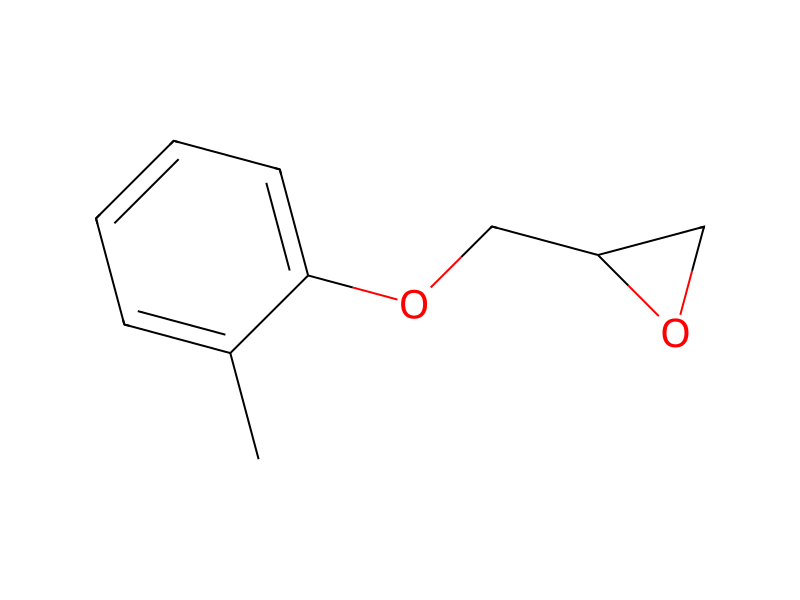
기본 정보
- 표준 SMILES
Cc1ccccc1OCC1CO1- InChIKey
KFUSXMDYOPXKKT-UHFFFAOYSA-N- 분자식
- C10H12O2
- 평균 분자량
- 164.2 g/mol
- 단동위원소 질량
- 164.08372962
개요
O-cresyl glycidyl ether is a clear light yellow liquid. (NTP, 1992)
이름 및 식별자
- 우선 이름
- o-CRESYL GLYCIDYL ETHER
- IUPAC
- 2-[(2-methylphenoxy)methyl]oxirane
- 현지명
- O-크레실 글리시딜 에테르
- 영어명
- 2-[(2-Methylphenoxy)methyl]oxirane
- 분자식
- C10H12O2
- 분자량
- 164.2
이름 및 동의어
2210-79-9O-CRESYL GLYCIDYL ETHERGlycidyl 2-methylphenyl etherGlycidyl o-tolyl ether2-Methylphenyl glycidyl etherAraldite DY 0231,2-Epoxy-3-(2-methylphenoxy)propane1-(2-Methylphenoxy)-2,3-epoxypropaneDTXSID80248621-(o-Methylphenoxy)-2,3-epoxypropane((2-Methylphenoxy)methyl)oxirane1,2-Epoxy-3-(o-tolyloxy)propane
이름 더 보기
O-크레실글리시딜에테르O-크레실글리시딜에테르(O-CRESYLGLYCIDYLETHER)2,3-에폭시프로필-오-톨일에터2-[(2-메틸페녹시)메틸]옥시란DY 023Nsc11571o-cresylHeloxy 62Epodil 742aralditedy0232-((o-Tolyloxy)o-Cresolglycidylethero-Kresol-glycidaether
Glycidyl o-methylphenyl etherPropane, 1,2-epoxy-3-(o-tolyloxy)-Oxirane, ((2-methylphenoxy)methyl)-(2-Methylphenoxymethyl)oxirane2,3-Epoxypropyl o-tolyl etherNSC-11571NSC-20291Oxirane, [(2-methylphenoxy)methyl]-
데이터베이스 식별자
- CAS
2210-79-9- PubChem CID
- 16640
- DTXSID
DTXSID8024862- ChEMBL
CHEMBL1445408- UNII
- 8Z744RD471
- EC Number
- 218-645-3
- Nikkaji
- J475.256B、J59.926C
물성
구조 계산 물성
- XLogP
- 2.4
- 극성 표면적
- 21.8 Ų
- 수소 결합 공여자 수
- 0
- 수소 결합 수용자 수
- 2
- 회전 가능 결합 수
- 3
- 무거운 원자 수
- 12
- 형식 전하
- 0
- 복잡도
- 147
실험 및 물리화학적 성질
PolymersPlastics & Rubber -> Glycidyl Ethers
Density
1.09 at 68 °F (NTP, 1992) - Denser than water; will sink
Relative density (water = 1): 1.08
Solubility
less than 1 mg/mL at 72 °F (NTP, 1992)
Solubility in water: none
Flash Point
200 °F (NTP, 1992)
200 °F
113 °C c.c.
Boiling Point
498 °F at 760 mmHg (NTP, 1992)
at 0.533kPa: 109-111 °C
Vapor DensityRelative vapor density (air = 1): 5.7
Physical Description
O-cresyl glycidyl ether is a clear light yellow liquid. (NTP, 1992)
Liquid
Clear light yellow liquid; [CAMEO]
COLOURLESS LIQUID.
물리화학적 성질
- 끓는 점
- 109 · 109-111 °C/4 mmHg (lit.)
- 밀도
- 1.079 g/mL · 1.079 g/mL at 25 °C (lit.)
- 증기 밀도
- 1 · >1 (vs air)
- 증기압
- 0.514 Pa · 0.514Pa at 20℃
- 굴절률
- 20 · n20/D 1.529(lit.)
- 인화점
- 230 °F · >230 °F
- 물리적 상태
- liquid
- 수용성
- 840 mg/L · 840mg/L at 21℃
- BRN
- 4585 · 4585
- InChI
- InChI=1S/C10H12O2/c1-8-4-2-3-5-10(8)12-7-9-6-11-9/h2-5,9H,6-7H2,1H3
- InChIKey
- KFUSXMDYOPXKKT-UHFFFAOYSA-N
- SMILES
- O1CC1COC1=CC=CC=C1C
- LogP
- 2.5 at · 2.5 at 21℃
- NIST
- Oxirane, [(2-methylphenoxy)methyl]-(2210-79-9)
- EPA
- o-Cresyl glycidyl ether (2210-79-9)
안전 및 규제
GHS 분류
GHS Classification
Warning
H315: Causes skin irritation [Warning Skin corrosion/irritation]
P203, P261, P264, P272, P273, P280, P302+P352, P318, P321, P332+P317, P333+P317, P362+P364, P391, P405, and P501 (click each P-code to see the statement)
Warning
H315 (100%): Causes skin irritation [Warning Skin corrosion/irritation]
P203, P261, P264, P272, P273, P280, P302+P352, P318, P321, P332+P317, P333+P317, P362+P364, P391, P405, and P501 (click each P-code to see the statement)
유해성 정보
Regulatory Information
Chemical: Oxirane, [(2-methylphenoxy)methyl]-
Oxirane, 2-[(2-methylphenoxy)methyl]- is listed on the EPA's Chemical Data Reporting (CDR) system. Manufacturers and importers of Oxirane, 2-[(2-methylphenoxy)methyl]- are required to report information about their production and use of this chemical to the EPA under the Toxic Substances Control Act (TSCA). (40 eCFR Part 711)
TP - indicates a substance that is the subject of a proposed TSCA section 4 test rule.
Status: Active Update: 05-04-2023 https://echa.europa.eu/registration-dossier/-/registered-dossier/14553
Oxirane, [(2-methylphenoxy)methyl]-: Does not have an individual approval but may be used under an appropriate group standard
Other Safety InformationIMAP assessments - Oxirane, [(2-methylphenoxy)methyl]-: Environment tier I assessment
DOT LabelClass 9
Fire Hazards
This chemical is combustible. (NTP, 1992)
Combustible.
Health HazardsSYMPTOMS: Symptoms of exposure to this compound may include irritation of the skin and eyes, and allergic dermatitis.
Hazards SummaryMay cause skin sensitization; [ICSC] Danger of skin sensitization; [MAK]
Reactive GroupEthers
EC ClassificationSymbol: Xn, N; R: 38-43-68-51/53; S: (2)-36/37-61; Note: C
Reactivity ProfileO-CRESYL GLYCIDYL ETHER may attack some forms of plastics. (NTP, 1992)
Chemical DangersThe substance can presumably form explosive peroxides. Reacts with acids, amines, bases and strong oxidants.
Air and Water ReactionsInsoluble in water.
Hazard Classes and Categories
Skin Irrit. 2 (100%)
Skin irritation - category 2
Serious eye damage/eye irritation - Category 2B
Skin sensitization - Category 1A
Skin corrosion/irritation - Category 2
Muta. 2
안전 및 보호
Fire Fighting
Fires involving this material can be controlled with a dry chemical, carbon dioxide or Halon extinguisher. (NTP, 1992)
Use water spray, foam, powder, carbon dioxide.
First Aid Measures
Fresh air, rest.
Remove contaminated clothes. Rinse and then wash skin with water and soap.
First rinse with plenty of water for several minutes (remove contact lenses if easily possible), then refer for medical attention.
Rinse mouth.
First Aid
EYES: First check the victim for contact lenses and remove if present. Flush victim's eyes with water or normal saline solution for 20 to 30 minutes while simultaneously calling a hospital or poison control center. Do not put any ointments, oils, or medication in the victim's eyes without specific instructions from a physician. IMMEDIATELY transport the victim after flushing eyes to a hospital even if no symptoms (such as redness or irritation) develop.
Safe StorageSeparated from strong oxidants, strong bases, strong acids and amines. Cool. Keep in the dark.
Nonfire Spill Response
SMALL SPILLS AND LEAKAGE: If you spill this chemical, FIRST REMOVE ALL SOURCES OF IGNITION. Then, use absorbent paper to pick up all liquid spill material. Your contaminated clothing and absorbent paper should be sealed in a vapor-tight plastic bag for eventual disposal. Solvent wash all contaminated surfaces with ethanol followed by washing with a soap and water solution. Do not reenter the contaminated area until the Safety Officer (or other responsible person) has verified that the area has been properly cleaned.
Spillage Disposal
Personal protection: particulate filter respirator adapted to the airborne concentration of the substance. Collect leaking and spilled liquid in covered containers as far as possible. Absorb remaining liquid in sand or inert absorbent. Then store and dispose of according to local regulations.
Isolation and EvacuationExcerpt from ERG Guide 171 [Substances (Low to Moderate Hazard)]:
Eye PreventionWear safety goggles or eye protection in combination with breathing protection.
Fire PreventionNO open flames.
Inhalation RiskNo indication can be given about the rate at which a harmful concentration of this substance in the air is reached on evaporation at 20 °C.
Skin PreventionProtective gloves. Protective clothing.
Exposure PreventionAVOID ALL CONTACT!
독성 정보
Adverse EffectsSkin Sensitizer - An agent that can induce an allergic reaction in the skin.
Signs and Symptoms
Cough. Sore throat.
Redness. Pain.
Redness.
Toxicity DataLC50 (rat) = 6,090 mg/m3/4h
안전 데이터
- wgk
- 2
- tsca
- TSCA listed
- rtecs
- TZ3700000
- ridadr
- UN 3082 9/PG 3
- HS 번호
- 29109000
- risk_code
- 36/37/38-68-51/53-43-38
- hazard_code
- Xi,N,Xn
- safety_code
- 26-37/39-61-36/37
- 포장분류
- III
- 위험 등급
- 9
- 기존화학 물질
- KE-24799
- Hazard Classifications
- Aquatic Chronic 2Muta. 2Skin Irrit. 2Skin Sens. 1A
- 스토리지 클래스
- 10 - Combustible liquids
화학 및 산업
용도 및 제조
Uses
Glycidyl ethers are used as reactive diluents in epoxy resins. [LaDou, p. 550]
Plastic Composites Manufacturing [Category: Industry]
U.S. Production2023: 250,000 - <400,000 lb
Consumer UsesViscosity modifiers
Industry UsesDiluent
Household ProductsInformation on 3 consumer products that contain O-Cresyl glycidyl ether in the following categories is provided:
General Manufacturing Information
Custom Compounding of Purchased Resins
Oxirane, 2-[(2-methylphenoxy)methyl]-: ACTIVE
응용 분야
일반 설명Clear light yellow liquid.
공급사50 곳
常州市弘裕化工有限公司0519-89996110 13813691203 · [email protected]
上海阿拉丁生化科技股份有限公司400-6206333 13167063860 · [email protected]
上海麦克林生化科技股份有限公司021-50706066 15221275939 · [email protected]
湖北鑫杰成化工科技有限公司13554075426 · [email protected]
武汉欣扬瑞和化学科技有限公司153-07155313 15307155313 · [email protected]
上海腾准生物科技有限公司19821570922 · [email protected]
上海毕得医药科技股份有限公司400-1647117 13681763483 · [email protected]
Dayang Chem (Hangzhou) Co.,Ltd.+86-0571-88938639 17705817739 · [email protected]
武汉绿景丰华生物科技有限公司19972070065 · [email protected]
毕佳索(上海毕得医药科技股份有限公司)400-6005915 · [email protected]
上海迈瑞尔生化科技有限公司4006356688 18621169109 · [email protected]
武汉市聚舜化工有限公司027-02783261126 18971318572 · [email protected]
阿法埃莎(中国)化学有限公司400-6106006 · [email protected]
安耐吉化学&3A(安徽泽升科技股份有限公司)400-0056266 · [email protected]
武汉卡诺斯科技有限公司027-83238443 15327105076 · [email protected]
湖北兴琰新材料科技有限公司13129948835 · [email protected]
湖北长耀生物科技有限公司17683887209 17683887209 · [email protected]
广东云星生物技术有限公司0751-18902340975/189023400307 18902340307 · [email protected]
上海瀚鸿科技股份有限公司021-54306202 13764082696 · [email protected]
广东方信生物科技有限公司0751-2838688 13376594225 · [email protected]
上海泰坦科技股份有限公司400-6009262 15618770481 · [email protected]
武汉丰泰威远科技有限公司+86-27-8746-5837 +86-18627785180 · [email protected]
武汉丰泰威远科技有限公司027-87465837 19945049750 · [email protected]
武汉贝乐叶生物医药科技有限公司15871353653 18086118076 · [email protected]
山东西亚化学有限公司13355009207 13355009207 · [email protected]
天津希恩思生化科技有限公司400 638 7771 · [email protected]
武汉卡诺斯科技有限公司153-37111468 15337111468 · [email protected]
武汉普洛夫生物科技有限公司17612776928 · [email protected]
康迪斯化工(湖北)有限公司13125172151 · [email protected]
武汉贝乐叶生物医药科技有限公司18086118078 · [email protected]
池州凯隆进出口贸易有限公司[email protected]
Sigma-Aldrich西格玛奥德里奇(上海)贸易有限公司021-61415566 800-8193336 · [email protected]
天津荣燊化工有限公司18317763565; 18317763565 · [email protected]
康迪斯化工(湖北)有限公司13343438265 · [email protected]
中山市迪欣化工有限公司19849939632; 19849939632 · [email protected]
湖北军瑞生物科技有限公司13971166412 · [email protected]
武汉鑫儒化工有限公司15927387915 15337108568
厦门志信化学有限公司+86-5922680277 +86-13806087780 · [email protected]
荆州市尹杰化工有限公司18008658728 · [email protected]
上海玻尔化学试剂有限公司19102157732 · [email protected]
泰安市江舟生物科技有限公司1385-13854830759 13854830759 · [email protected]
武汉匠信生物科技有限公司19272768272 18007157445 · [email protected]
陕西缔都医药化工有限公司029-029-81120477 17792793610 · [email protected]
河南沃咖斯生物科技有限公司18537671377 · [email protected]
北京华威锐科化工科技有限公司89508211 18501085097 · [email protected]
上海炎泽化工有限公司15345144255 19901447308 · [email protected]
上海源叶生物科技有限公司13636370518 · [email protected]
上海西格生物科技有限公司021-57810052 18930344717 · [email protected]
湖北阡陌生物科技有限公司0711-3812399 18062309155 · [email protected]
湖北鑫杰成化工科技有限公司18008658050 18008658050 · [email protected]
관련 반응
20건


연결된 노트
불러오는 중…