
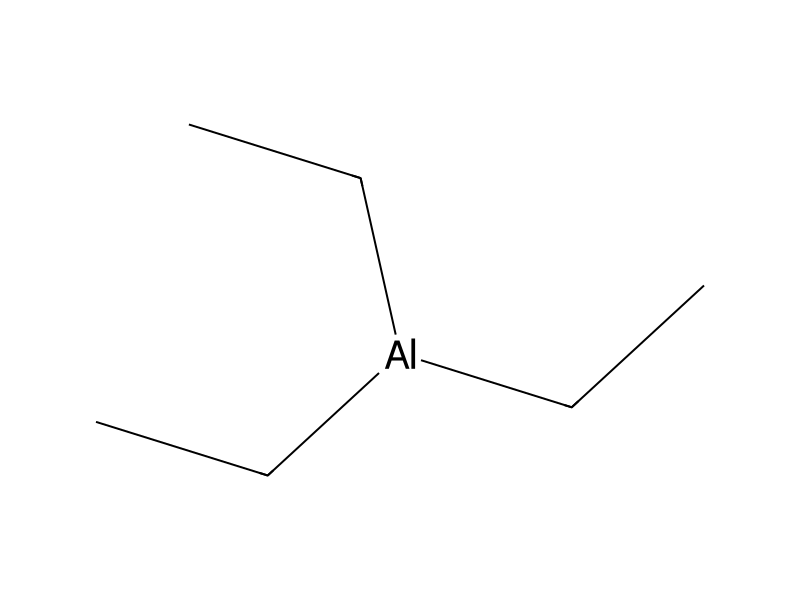
기본 정보
- 표준 SMILES
C[CH2][Al]([CH2]C)[CH2]C- InChIKey
VOITXYVAKOUIBA-UHFFFAOYSA-N- 분자식
- C6H15Al
- 평균 분자량
- 114.16 g/mol
- 단동위원소 질량
- 114.09891411
개요
Aluminum triethyl appears as a colorless liquid. Flammable gas is produced on contact with water. (USCG, 1999)
이름 및 식별자
- 우선 이름
- Triethylaluminum
- IUPAC
- triethylalumane
- 현지명
- 트리에틸알루미늄
- 영어명
- Triethylaluminum
- 분자식
- C6H15Al
- 분자량
- 114.16
이름 및 동의어
TRIETHYLALUMINUM97-93-8TriethylaluminiumtriethylalumaneAluminum, triethyl-Triethylalanetriethyl aluminumH426E9H3TTDTXSID6026616RefChem:191518DTXCID506616202-619-3
이름 더 보기
트리에틸알루미늄트리에틸알루미늄트라이에틸알루미늄알루미늄, 트라이에틸알루미늄, 트라이에틸-트라이에틸알레인Triethylaluminum,95%,LIQUIDuminumtriethyl-alaneTriethylaluminetriethyl-aluminualuminiumtriethyl
triethyl-aluminumAluminumtriethanideMFCD00009015UNII-H426E9H3TTHSDB 4016EINECS 202-619-3BRN 3587229triethyl aluminium
데이터베이스 식별자
- CAS
97-93-8- PubChem CID
- 16682930
- DTXSID
DTXSID6026616- UNII
- H426E9H3TT
- EC Number
- 202-619-3
- Nikkaji
- J9.911B
물성
구조 계산 물성
- 극성 표면적
- 0 Ų
- 수소 결합 공여자 수
- 0
- 수소 결합 수용자 수
- 0
- 회전 가능 결합 수
- 3
- 무거운 원자 수
- 7
- 형식 전하
- 0
- 복잡도
- 25.7
실험 및 물리화학적 성질
Chemical Classes
Metals -> Metals, Organic Compounds
Flammable agents - 4th degree
Density
0.836 at 68 °F (USCG, 1999) - Less dense than water; will float
0.832 @ 25 °C
0.837 @ 20°C
Viscosity2.6 mPa.s (millipascal second) at 25 °C
Color/FormColorless liquid
SolubilityMiscible with saturated hydrocarbons
Flash Point
-63 °F (NFPA, 2010)
-63 °F (-53 °C)
Boiling Point
367.9 °F at 760 mmHg (USCG, 1999)
194 °C
194 °C @760 [mm Hg]
Decomposition
DECOMP TO AL(OH)3 + C2H6
When heated to decomposition, it emits acrid smoke and irritating fumes.
Melting Point
-51 °F (USCG, 1999)
-52.5 °C (freezing point)
-52.5 °C
Vapor Pressure
0.02 [mmHg]
2.6X10⁻² mm Hg @ 25 °C /Extrapolated/
4 [mm Hg] @83 °C
Refractive IndexINDEX OF REFRACTION: 1.480 @ 6.5 °C/D
Heat of Combustion-18364 BTU/lb= -10202 cal/g = -426.85 E5 J/kg.
물리화학적 성질
- 녹는점
- -50 °C · -50°C
- 끓는 점
- 128 · 128-130°C (50 mmHg)
- 밀도
- 0.85 g/mL · 0.85 g/mL at 20 °C
- 증기압
- 1 mmHg · 1 mmHg ( 62.2 °C)
- 인화점
- 1 °F · −1 °F
- 저장 조건
- 0 · 0-6°C
- 물리적 상태
- 액체
- 색상
- 무색의
- 수용성
- 물과 반응
- BRN
- 3587229 · 3587229
- Dielectric constant
- 6.4 · 6.4(20℃)
- InChI
- 1S/3C2H5.Al/c3*1-2;/h3*1H2,2H3;
- InChIKey
- VOITXYVAKOUIBA-UHFFFAOYSA-N
- SMILES
- CC[Al](CC)CC
- NIST
- Triethylaluminum(97-93-8)
- EPA
- Triethylaluminum (97-93-8)
화학적 성질
Colorless liquid. Miscible with saturated hydrocarbons.
안전 및 규제
GHS 분류
GHS Classification
Danger
H250 (100%): Catches fire spontaneously if exposed to air [Danger Pyrophoric liquids]
P210, P222, P223, P231, P231+P232, P233, P260, P264, P264+P265, P280, P301+P330+P331, P302+P335+P334, P302+P361+P354, P304+P340, P305+P354+P338, P316, P317, P321, P363, P370+P378, P402+P404, P405, and P501 (click each P-code to see the statement)
Aggregated GHS information provided per 351 reports by companies from 12 notifications to the ECHA C&L Inventory. Each notification may be associated with multiple companies.
Danger
H225: Highly Flammable liquid and vapor [Danger Flammable liquids]
유해성 정보
Regulatory Information
Chemical: Aluminium, triethyl-
Aluminum, triethyl- is listed on the EPA's Chemical Data Reporting (CDR) system. Manufacturers and importers of Aluminum, triethyl- are required to report information about their production and use of this chemical to the EPA under the Toxic Substances Control Act (TSCA). (40 eCFR Part 711)
Status: Active Update: 13-03-2023 https://echa.europa.eu/registration-dossier/-/registered-dossier/11479
Triethylaluminum: HSNO Approval: HSR006341 Approved with controls
The New Jersey Worker and Community Right to Know Act requires public and private employers to provide information about hazardous substances at their workplaces. (N.J.S.A. 34:5A-1 et. seq.)
Other Safety InformationIMAP assessments - Aluminium, triethyl-: Human health tier I assessment
DOT LabelSpontaneously Combustible Dangerous When Wet
Fire HazardsSpecial Hazards of Combustion Products: Intense smoke may cause metal-fume fever.
Fire Potential
Flammable, dangerous fire risk; ignites spontaneously in air ...
Certain polymerization catalysts, such as aluminum alkyls, react & burn violently on contact with water. /Aluminum alkyls/
Aluminum alkyls are organic aluminum compounds that are highly reactive and dangerous because of spontaneous burning in air. /Aluminum alkyls/
Prophoric material in flammable solvent. Vapors are heavier than air & may travel to a source of ignition & flash back. /Aluminum alkyls/
Health HazardsExposure to smoke from fire causes metal-fume fever (flu-like symptoms). Since liquid ignites spontaneously, contact with eyes or skin causes severe burns. (USCG, 1999)
Hazards Summary
Liquid may cause second or third degree burns after brief skin contact. [CHRIS] Inhalation may induce acute pulmonary edema; [CHEMINFO MSDS] Pulmonary irritant and corrosive to the skin; [Sullivan, p. 981] Organoaluminum compounds are corrosive; Harmful if absorbed through the skin or inhaled; The butyl alkyls and below are pyrophoric; Aluminum alkyls are eye irritants; [HSDB] Organic aluminum compounds can cause irritation or burns, depending upon concentration; [Ullmann] TLV withdrawn for aluminum alkyls because of inadequate toxicological data; [ACGIH] See Aluminum. See ORGANOMETALS.
Reactive GroupMetal Hydrides, Metal Alkyls, Metal Aryls, and Silanes
Special Reports
Anon; Information profiles on Potential Occupaional Hazards: Aluminum & Compounds, 2nd Draft (Revised); GRA & I Issue 21 NTIS/PB89-216238 (1989)> TD3: Information profiles are working papers used by the National Institute for Occupational Safety and Health to assist the Institute in establishing priorities. The proile summarizes data on organic and inorganic substances containing aluminum as the only metal. Each summary presents data on known and suspected health effects, the extent of worker exposure, physical and chemical properties and the industrial importance of the following aluminum compounds: aluminum metal, aluminum ammonium sulfate, aluminum chlorhydrate, aluminum chloride anhydrous, aluminum chloride hydrous, aluminum distearate, aluminum ethoxide, aluminum fluoride, aluminum hydride, aluminum hydroxide, aluminum nitrate, aluminum oxide, aluminum ortho-phosphate, aluminum potassium sulfate, aluminum silicate, aluminum sodium sulfate, aluminum sulfate, calcium aluminum silicate, diethylaluminum chloride, sodium aluminate, tri-n-butylaluminum, triethylaluminum, tri-n-hexylaluminum, triisobutylaluminum, tri-n-octylaluminum. Detailed literature searches are conducted to identify information to be used in the profile sumaries. Sponsored by National Inst. for Occupational Safety and Health, Rockville, MD.
RCRA RequirementsD003; A solid waste containing Triethylaluminum may become characterized as a hazardous waste when subjected to testing for reactivity as stipulated in 40 CFR 261.23, and if so characterized, must be managed as a hazardous waste.
Reactivity AlertsStrong Reducing Agent
OSHA StandardsVacated 1989 OSHA PEL TWA 2 mg/cu m is still enforced in some states. /Aluminum, soluble salts and alkyls, as Al/
안전 및 보호
Fire FightingFire Extinguishing Agents Not to Be Used: Water, foam, halogenated extinguishing agents.
First AidINHALATION: only fumes from fire need be considered; metal-fume fever is not critical, lasting less than 36 hrs.
Fire Fighting Procedures
Stop flow of liquid before extinguishing fire. Fight fire from protected location or maximum possible distance. DO NOT use water as straight stream directly on spilled material. Violent reaction may result. Water fog can be used to control fires. Use graphite powder, soda ash, or powdered sodium chloride to extinguish fire. On solvent-based materials use dry chemical or carbon dioxide. Use water spray cautiously to keep fire-exposed containers cool.
CO2, dry sand, dry chemical. ... Do not use water, foam or halogenated fire-fighting agents.
Stop flow of liquid before extinguishing fire. Use dry chemical or carbon dioxide. DO NOT use water as straight stream directly on spilled material. Water fog can be used to control fire. DO NOT use halogenated extinguishing agents on spilled material. Violent reaction may result. Use water spray to keep fire-exposed containers cool. Fight fire from protected location or maximum possible distance. /Aluminum Alkyls/
Storage Conditions
Separate from oxidizing materials, acids, alcohols, air, and water. Store in a cool, dry, well-ventilated location. Must be stored in a dry location. Outside or detached storage is preferred. Inside storage should be in a standard flammable liquids storage warehouse, room or cabinet.
Extremely reactive with air, moisture and compounds containing active hydrogen and therefore must be kept under a blanket of inert gas. /Aluminum alkyls/
In general, materials ... toxic as stored or which can decompose into toxic components ... Should be stored in cool ... ventilated place, out of ... sun, away from ... fire hazard ... be periodically inspected and monitored. Incompatible materials should be isolated ...
All possibility of contact with water must be avoided. Solution containing not more than 20% of these compounds in non-reactive solvents, however, can be handled without risk of spontaneous ignition. /Aluminum alkyls/
For more Storage Conditions (Complete) data for TRIETHYLALUMINUM (6 total), please visit the HSDB record page.
Cleanup Methods
Approach release from upwind. Keep water away from release. Do not use foam to blanket release and suppress vapors. Stop or control the leak, if this can be done without undue risk. Spills may ignite spontaneously if solvent evaporates. Control runoff and isolate discharged material for proper disposal.
Nonfire Spill ResponseExcerpt from ERG Guide 135 [Substances - Spontaneously Combustible]:
Disposal Methods
Aluminum compounds are treated under anhydrous conditions to prevent violent reactions, recover solvent, and form Al compounds suitable for landfill by reaction with anhydrous hydrolysis agent, eg calcium hydroxide. /Aluminum compounds/
SRP: The most favorable course of action is to use an alternative chemical product with less inherent propensity for occupational exposure or environmental contamination. Recycle any unused portion of the material for its approved use or return it to the manufacturer or supplier. Ultimate disposal of the chemical must consider: the material's impact on air quality; potential migration in soil or water; effects on animal, aquatic, and plant life; and conformance with environmental and public health regulations.
Preventive Measures
Irrigate eyes with water. Wash contaminated areas of body with soap and water.
SRP: The scientific literature for the use of contact lenses in industry is conflicting. The benefit or detrimental effects of wearing contact lenses depend not only upon the substance, but also on factors including the form of the substance, characteristics and duration of the exposure, the uses of other eye protection equipment, and the hygiene of the lenses. However, there may be individual substances whose irritating or corrosive properties are such that the wearing of contact lenses would be harmful to the eye. In those specific cases, contact lenses should not be worn. In any event, the usual eye protection equipment should be worn even when contact lenses are in place.
Work clothing that becomes wet or significantly contaminated should be removed and replaced. /Aluminum (soluble salts and alkyls, as Al)/
Workers whose clothing may have become contaminated should change into uncontaminated clothing before leaving the work premises. /Aluminum (soluble salts and alkyls, as Al)/
For more Preventive Measures (Complete) data for TRIETHYLALUMINUM (6 total), please visit the HSDB record page.
Isolation and EvacuationExcerpt from ERG Guide 135 [Substances - Spontaneously Combustible]:
Minimum Risk LevelIntermediate Oral: 1.0 mg/kg/day (L134)
Chronic Oral: 1.0 mg/kg/day (L134)
Threshold Limit Values (TLV)
8 hr Time Weighted Avg (TWA): 1 mg/cu m (respirable fraction). /Aluminum metal and insoluble compounds/
Excursion Limit Recommendation: Excursions in worker exposure levels may exceed 3 times the TLV-TWA for no more than a total of 30 minutes during a work day, and under no circumstances should they exceed 5 times the TLV-TWA, provided that the TLV-TWA is not exceeded. /Aluminum metal and insoluble compounds/
A4: Not classifiable as a human carcinogen. /Aluminum metal and insoluble compounds/
Protective Action Criteria (PAC)
1.1 [mg/m3]
12 [mg/m3]
69 [mg/m3]
독성 정보
Health Effects
Aluminum targets the nervous system and causes decreased nervous system performance and is associated with altered function of the blood-brain barrier. The accumulation of aluminum in the body may cause bone or brain diseases. High levels of aluminum have been linked to Alzheimer's disease. A small percentage of people are allergic to aluminium and experience contact dermatitis, digestive disorders, vomiting or other symptoms upon contact or ingestion of products containing aluminium. (L739, L740)
Adverse EffectsDermatotoxin - Skin burns.
Exposure RoutesOral (L739) ; inhalation (L739)
Toxicity Summary
The main target organs of aluminum are the central nervous system and bone. Aluminum binds with dietary phosphorus and impairs gastrointestinal absorption of phosphorus. The decreased phosphate body burden results in osteomalacia (softening of the bones due to defective bone mineralization) and rickets. Aluminum's neurotoxicity is believed to involve several mechanisms. Changes in cytoskeletal protein functions as a results of altered phosphorylation, proteolysis, transport, and synthesis are believed to be one cause. Aluminum may induce neurobehavioral effects by affecting permeability of the blood-brain barrier, cholinergic activity, signal transduction pathways, lipid peroxidation, and impair neuronal glutamate nitric oxide-cyclic GMP pathway, as well as interfere with metabolism of essential trace elements because of similar coordination chemistries and consequent competitive interactions. It has been suggested that aluminum's interaction with estrogen receptors increases the expression of estrogen-related genes and thereby contributes to the progression of breast cancer (A235), but studies have not been able to establish a clear link between aluminum and increased risk of breast cancer (A15468). Certain aluminum salts induce immune responses by activating inflammasomes. (L739, A235, A236)
Signs and Symptoms
Inhalating aluminum dust causes coughing and abnormal chest X-rays. A small percentage of people are allergic to aluminium and experience contact dermatitis, digestive disorders, vomiting or other symptoms upon contact or ingestion of products containing aluminium. (L739, L740)
Human Toxicity Excerpts
/SIGNS AND SYMPTOMS/ Irritating to skin, eyes, and respiratory system.
/OTHER TOXICITY INFORMATION/ Vapors of the pyrophoric alkyls (butyls and below) are nontoxic because they are completely consumed, but inhalation of the metallic oxide smoke (Al2O3) at 15 mg/cu m or greater can result in symptoms such as "metal fume fever." /Aluminum alkyls/
Carcinogen Classification
Not listed by IARC. IARC classified aluminum production as carcinogenic to humans (Group 1), but did not implicate aluminum itself as a human carcinogen. (L135) A link between use of aluminum-containing antiperspirants and increased risk of breast cancer has been proposed (A235), but studies have not been able to establish a clear link (A15468).
Evidence for CarcinogenicityA4: Not classifiable as a human carcinogen. /Aluminum metal and insoluble compounds/
Toxicity Data
LC50 (rat) = 10,000 mg/m3/15 min
LC50: 10 g/m3 over 15 minutes (Inhalation, Rat) (T14)
Non-Human Toxicity ValuesLC50 Rat inhalation 10 g/cu m 15 min exposure
규제 정보
RCRA RequirementsD003; A solid waste containing Triethylaluminum may become characterized as a hazardous waste when subjected to testing for reactivity as stipulated in 40 CFR 261.23, and if so characterized, must be managed as a hazardous waste.
State Drinking Water Standards(CA) CALIFORNIA 1000 ug/l /Aluminum/
State Drinking Water Guidelines
(AZ) ARIZONA 73 ug/l /Aluminum/
(CA) CALIFORNIA 200 ug/l /Aluminum/
(ME) MAINE 1430 ug/l /Aluminum/
Federal Drinking Water GuidelinesEPA 50-200 ug/l /Aluminum/
안전 데이터
- wgk
- 2
- tsca
- TSCA listed
- rtecs
- BD2050000
- ridadr
- UN 3394 4.2/PG 1
- 독성
- LC50 ihl-rat: 10 g/m3/15M 85JCAE -,1216,86
- HS 번호
- 29319090
- risk_code
- 14-17-20/21/22-34-67-65-51/53-11-63-48/20-62-14/15-23/24/25-50/53-10
- hazard_code
- F,C,N
- safety_code
- 26-45-62-6A-43A-36/37/39-24/25-16-43-61-33-46
- 포장분류
- I
- 위험 등급
- 4.3
- 기존화학 물질
- KE-34211
- F 고인화성물질
- 10-21
- 유해 물질 데이터
- 97-93-8(Hazardous Substances Data)
화학 및 산업
약리 정보
Metabolism/Metabolites
Aluminum is poorly absorbed following either oral or inhalation exposure and is essentially not absorbed dermally. The bioavailability of aluminum is strongly influenced by the aluminum compound and the presence of dietary constituents which can complex with aluminum and enhance or inhibit its absorption. Aluminum binds to various ligands in the blood and distributes to every organ, with highest concentrations found in bone and lung tissues. In living organisms, aluminum is believed to exist in four different forms: as free ions, as low-molecular-weight complexes, as physically bound macromolecular complexes, and as covalently bound macromolecular complexes. Absorbed aluminum is excreted principally in the urine and, to a lesser extent, in the bile, while unabsorbed aluminum is excreted in the faeces. (L739)
용도 및 제조
Uses
Used as a catalyst (thermoplastic polymers) and pyrophoric fuel; Used for gas plating of aluminum; [Hawley] Used in incendiary munitions; [Sullivan, p. 979] Organic aluminum compounds are some of the most important, highest volume, highest value organometallic compounds in production. [Ullmann]
Aluminum Producing [Category: Industry]
Catalyst intermediate for polymerization of olefins, expecially ethylene; pyrophoric fuels; production of alpha-olefins and long chain alcohols; gas plating of aluminum.
The addition of triethylaluminum to liquid rocket propellants and to flame-thrower fuels /makes/ them hypergolic, ie, ignite spontaneously.
Catalyst; with compounds of early transition metals as Ziegler-Natta polymerization catalysts; intermediates in organic syntheses. /Aluminum alkyls/
Intermediates in organic phosphate insecticides, silicones, special saturated hydrocarbons, terpene alcohols, and organic acids. /Aluminum alkyls/
U.S. Production
2023: 25,000,000 - <40,000,000 lb
(1975) PROBABLY GREATER THAN 9.08X10+5 GRAMS
(1977) PROBABLY GREATER THAN 4.54X10+6 GRAMS
Industry UsesNot Known or Reasonably Ascertainable
Methods of Manufacturing
Aluminum powder is added to recycled triethylaluminum and the slurry reacts first with hydrogen ... to produce diethylaluminum hydride, which ... reacts with ethylene ... to produce triethylaluminum.
By introduction of ethylene and hydrogen into an autoclave containing aluminum. The reaction proceeds at moderate temperature and varying pressures.
The trialkylaluminums are prepared from aluminum, hydrogen and olefins; this improved "direct synthesis" was developed by Ziegler and co-workers. /Trialkylaluminums/
Formulations/PreparationsGRADES: 88-94%
General Manufacturing Information
Not Known or Reasonably Ascertainable
Aluminum, triethyl-: ACTIVE
... Aluminum triethyl ... used to initiate at normal temp and pressures certain polymerization reactions which had previously to be conducted at very high pressures. ... induce regular arrangement of atomic groups such as is found in natural polymers. By their use, synthetic rubber identical to natural rubber has been produced.
응용 분야
용도Triethylaluminum, in combination withmany transition metal complexes, is used as Ziegler-Natta polymerization and hydrogenationcatalyst. Also, it is used as intermediatein organic syntheses.
일반 설명A colorless liquid. Flammable gas is produced on contact with water.
제조 방법
생산 방법In a typical example, a slurry is prepared containing 7 wt % aluminum powder (0.1 wt% zirconium catalyst content) and 45 wt% recycled triethylaluminum in a paraffin hydrocarbon fraction, boiling range 177 – 260 ℃. The slurry is pumped into the reactor at a rate of 1.5 m3/h, at a reactor temperature of 132 ℃, while hydrogen is introduced at the bottom to maintain a partial pressure of 10 MPa. Excess hydrogen is removed in flash drum, wherein pressure is decreased to 3 MPa and temperature is lowered to prevent thermal reversal of the reaction. In the ethylation reactor sufficient ethylene is added to react completely with the Al – H bonds. Temperature is held at around 85 ℃ or somewhat higher. The addition rate increases with temperature, but carboalumination of ethylene also can occur to formn-butyl groups, especially at higher temperatures. Hydrogen and ethylene partial pressure is kept low in ethylation reactor to minimize hydrogenation of ethylene to ethane and to reduce excess carboalumination products. Excess ethylene and hydrogen are removed in flash drum. A portion of the triethylaluminum product solution is recycled to reactor.
상·하류 제품 정보
상류 원료
하류 제품
공급사50 곳
阿诺西(上海)生物技术有限公司400-1107768 15058188853 · [email protected]
上海源象化学有限公司17312431727 · [email protected]
南通润丰石油化工有限公司66017690 19952660367 · [email protected]
Hebei Chuanghai Biotechnology Co., Ltd+86-17732866630 · [email protected]
江西核研院新材料有限公司18901398682 18901398682 · [email protected]
上海泰矶林实业有限公司02150630626 17717886015 · [email protected]
江苏星科元信息科技有限公司400-605-7200 15335295587
上海仲因实业有限公司2537653158 16621191650 · [email protected]
Dayang Chem (Hangzhou) Co.,Ltd.+86-0571-88938639 17705817739 · [email protected]
武汉绿景丰华生物科技有限公司19972070065 · [email protected]
河北枫嘉新材料科技有限公司+86-0311-87836622 +86-18712993135 · [email protected]
科瑞迪化学400-821-5857 021-64326257 · [email protected]
TEKA-FAST LIMITED+8618601192704 · [email protected]
江苏普乐司生物科技有限公司0513-66017706 18551496367 · [email protected]
武汉市聚舜化工有限公司027-02783261126 18971318572 · [email protected]
Nantong Honglong Chemical Co., Ltd+86-86-13078814179 +8619052560825 · [email protected]
阿法埃莎(中国)化学有限公司400-6106006 · [email protected]
安耐吉化学&3A(安徽泽升科技股份有限公司)400-0056266 · [email protected]
上海瀚鸿科技股份有限公司021-54306202 13764082696 · [email protected]
尚澜气体(上海)有限公司4001882517 13323475516 · [email protected]
山东洛克化工有限公司17653113209 13065062079 · [email protected]
上海景颜化工科技有限公司13817811078 · [email protected]
合肥天健化工有限公司551-65418679 15856988503;15837135945 · [email protected]
上海瀚扬化工产品有限公司13356258271
山东西亚化学有限公司13355009207 13355009207 · [email protected]
广东大小化工有限公司1866-171603 18666171603 · [email protected]
Hunan russell chemicals technology co ltd731-88557738 13739093081 · [email protected]
常州市宣明医药科技有限公司+86-519-85525359 +86-15995072465 · [email protected]
四川库利南科技有限公司400-1166-196 18981987031 · [email protected]
艾科试剂4008-755-333 18080918076 · [email protected]
赛默飞世尔科技(中国)有限公司800-810-5118 · [email protected]
北京伊诺凯科技有限公司400-810-7969 010-59572699 · [email protected]
TOKYO CHEMICAL INDUSTRY CO., LTD.03-36680489 · [email protected]
北京京土恒盛化工科技有限公司00-13911456598 13911456598 · [email protected]
PT CHEM GROUP LIMITED+86-85511178; +86-85511178 · [email protected]
上海将来实业股份有限公司021-61552785 · [email protected]
雷丁试剂0510-85629785 18013409632 · [email protected]
上海恒岳化工科技有限公司51691706 13391095697 · [email protected]
上海麦克林生化科技股份有限公司15221275939 15221275939 · [email protected]
上海嵩爰化工科技有限公司010-1234567 18521000990 · [email protected]
Sigma-Aldrich西格玛奥德里奇(上海)贸易有限公司021-61415566 800-8193336 · [email protected]
九鼎化学(上海)科技有限公司4009209199 · [email protected]
厦门志信化学有限公司+86-5922680277 +86-13806087780 · [email protected]
山东智尚新材料有限公司+8617653113209 · [email protected]
上海阿拉丁生化科技股份有限公司6206333 13167063860 · [email protected]
启源(广东)医药化工有限公司18026564465 · [email protected]
上海伟聂化工科技有限公司15902145085 · [email protected]
成都润泽本土化工有限公司028-88469284 18000562381 · [email protected]
康幸生物科技(上海)有限公司021-61556450 15800904410
南通市苏北化工原料有限公司0513-85290972 18762756250 · [email protected]
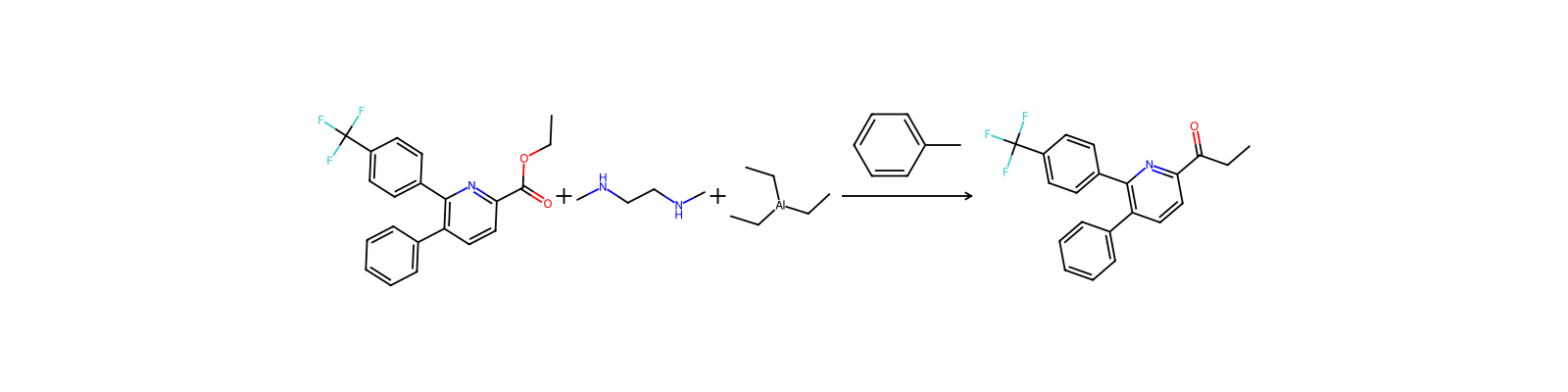
관련 반응
127건





연결된 노트
불러오는 중…