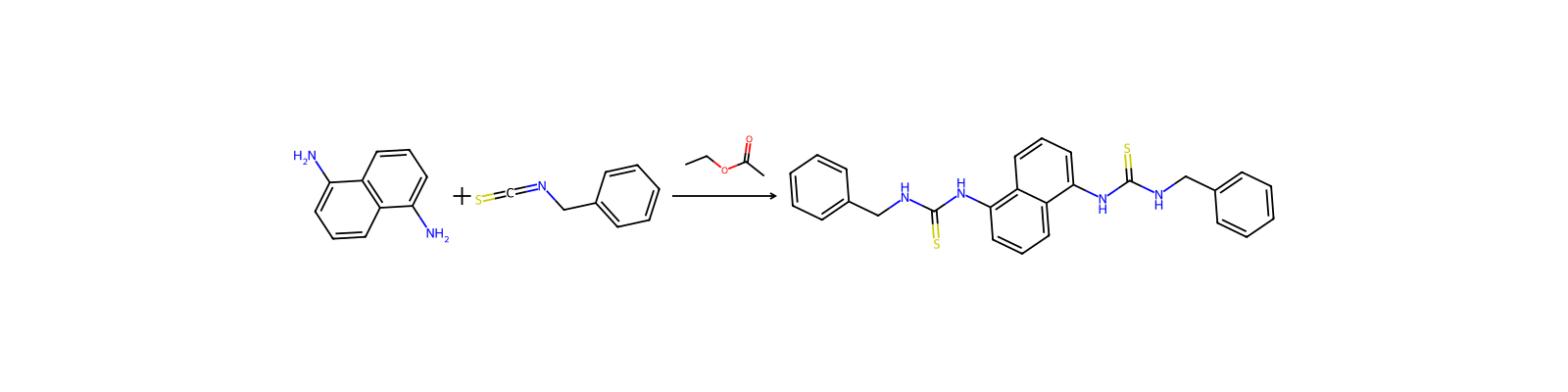
HRID 758반응물로
1,5-Diaminonaphthalene
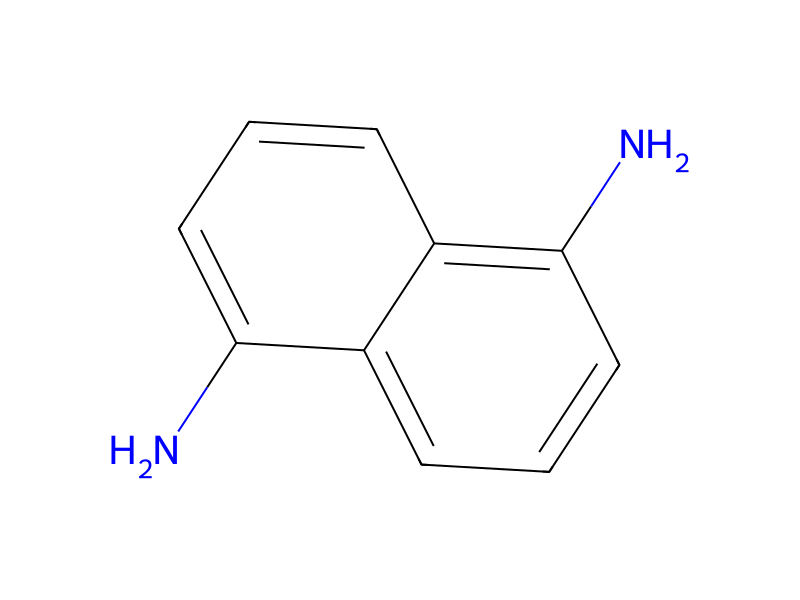
2243-62-1Nc1cccc2c(N)cccc12KQSABULTKYLFEV-UHFFFAOYSA-N1,5-naphthalenediamine appears as colorless to pale purple crystals or lavender powder. (NTP, 1992)
2243-62-1DTXSID3020916CHEMBL538965CHEBI:53003log Kow = 0.89
1.48
0.89
1.4 (NTP, 1992) - Denser than water; will sink
1.4 g/cu cm @ 25 °C
1.4 g/cm³
less than 1 mg/mL at 68.9 °F (NTP, 1992)
Soluble in benzene and ethanol
In water, 380 mg/l @ 25 °C
... It is soluble in alcohol, ether, and chloroform.
Solubility in water, g/100ml at 20 °C: 0.004
226 °C
226 °C
Sublimes (NTP, 1992)
Boiling point: sublimes
sublimes
안전 정보는 참고용이며, 공급업체의 물질안전보건자료(SDS), 관련 법규 및 전문가 평가를 대체하지 않습니다.
Warning
H351: Suspected of causing cancer [Warning Carcinogenicity]
P203, P273, P280, P318, P391, P405, and P501 (click each P-code to see the statement)
Warning
H302 (68.6%): Harmful if swallowed [Warning Acute toxicity, oral]
P203, P261, P264, P270, P272, P273, P280, P301+P317, P302+P352, P318, P321, P330, P333+P317, P362+P364, P391, P405, and P501 (click each P-code to see the statement)
Flash point data for this chemical are not available. It is probably combustible. (NTP, 1992)
Combustible. Gives off irritating or toxic fumes (or gases) in a fire.
Used to make polyurethane elastomers, dyes, and pharmaceuticals; Not commercially produced in the US; [HSDB]
ORGANIC SYNTHESIS
CHEM INT FOR 1,5-NAPHTHALENE DIISOCYANATE, FOR DYES
The major use of the compound is for the manufacture of 1,5-naphthalene diisocyanate, in the production of polyurethane elastomers. It is also used in the synthesis of dyes and pharmaceuticals.
Synthetic Polymer MALDI Matrix Compounds
(1977) No Data
(1979) No Data
(1977) No Data
(1979) 2.00X10+6 GRAMS (PRINCPL CUSTMS DISTS)
(1977) NOT PRODUCED COMMERCIALLY IN US
(1979) NOT PRODUCED COMMERCIALLY IN US
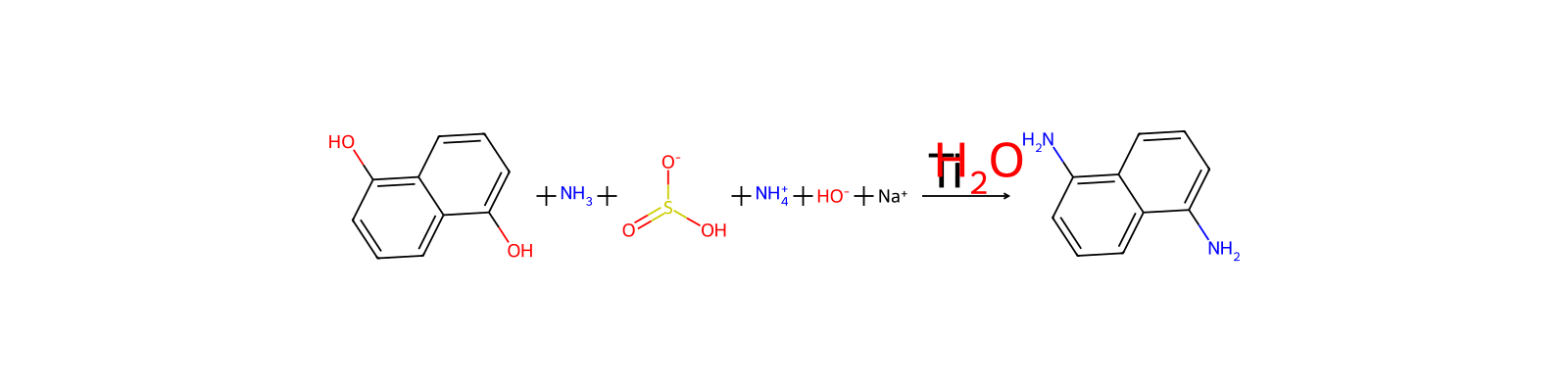
REDUCTION OF 1,5-DINITRONAPHTHALENE; AMMONOLYSIS OF 1,5-DIHYDROXYNAPHTHALENE
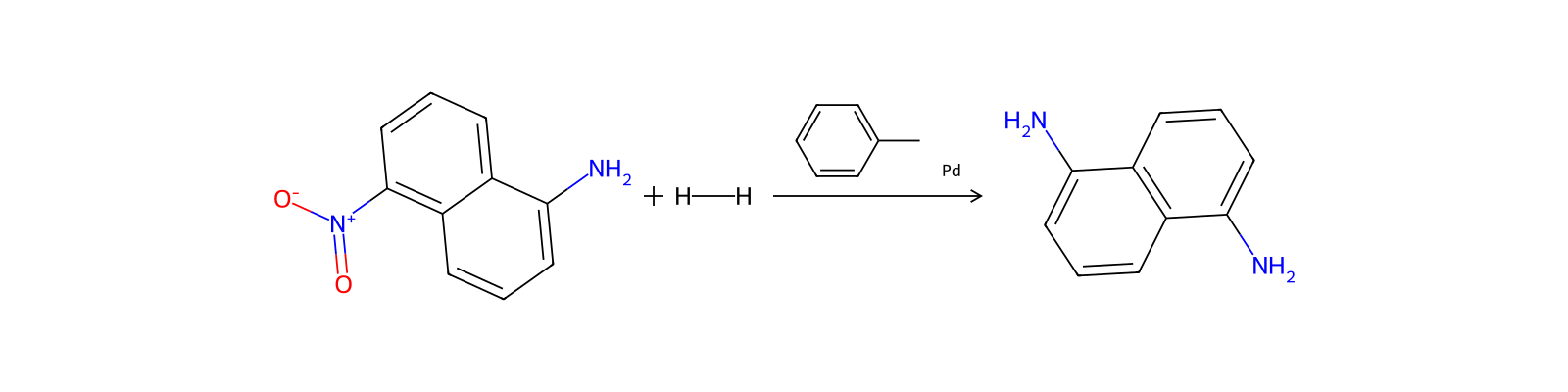
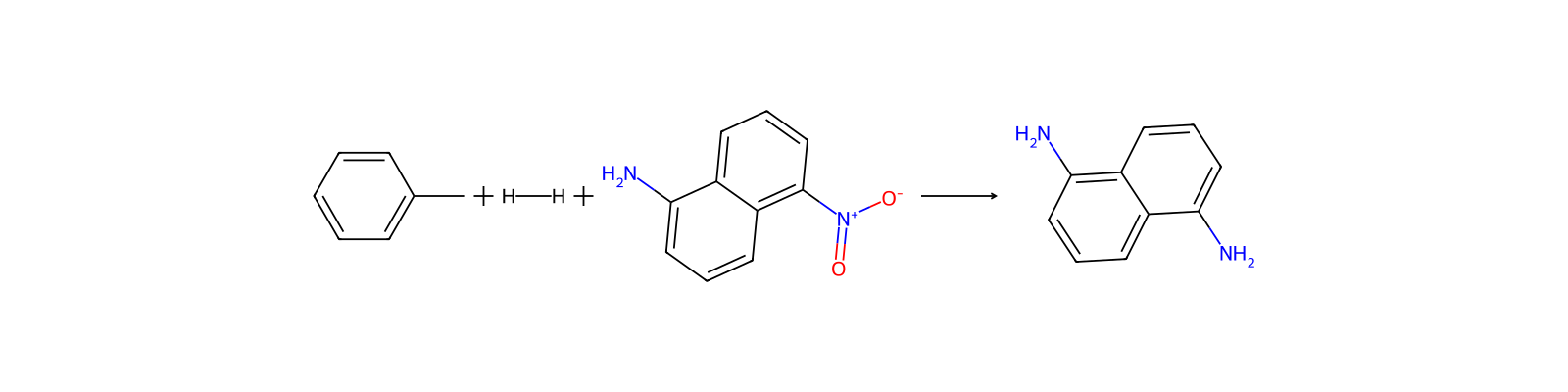
1-Nitronaphthalene can be nitrated further to give a 40:60 mixture of 1,5- and 1,8-dinitronaphthalenes. Similar results are obtained by direct nitration of naphthalene with H2SO4-HNO3 under careful control of temperature over the range 40-80 °C. Although separation of the isomers by fractional crystallization or solvent extraction is usually carried out at this stage, the mixed isomers can also be reduced and the resulting diamines separated. Reduction of the dinitronaphthalenes is achieved by treatment of a nonaqueous solution with iron or hydrogen in the presence of a catalyst.
... Amination of 1,5-dihydroxynaphthalene with ammonia and ammonium bisulfite. Although less efficient on a stage basis it offers an economical alternative to nitration and reduction if the 1,8-naphthalenediamine is not also required.
1,5-naphthalenediamine be used as intermediates for the synthesis of materials.




374 °F (NTP, 1992)
190 °C
187 °C
0.0000293 [mmHg]
Vapor pressure, Pa at 20 °C: 0.0000023
1,5-naphthalenediamine appears as colorless to pale purple crystals or lavender powder. (NTP, 1992)
Colorless to light purple solid; [ICSC] Sensitive to prolonged exposure to air; [CAMEO] Powder; [MSDSonline]
COLOURLESS-TO-LIGHT-PURPLE CRYSTALS.
GREY TO DARK BROWN POWDER. 1,5-Naphthalenediamine [2243-62-1]. 1,5-diaminonaphthalene, Alphamin, C10H10N2, Mr 158.2: oxidation of 97 with iron (III) chloride in water produces a blue-violet color. Treatment with boiling aqueous sodium bisulfite followed by addition of alkali gives a mixture of 1-amino-5-hydroxynaphthalene and 1,5-dihydroxynaphthalene. Sulfonation (5 % oleum, 100℃) gives 1,5-diaminonaphthalene2-sulfonic acid, and nitration in acetic acid produces 2,4,6,8-tetranitro-1,5-diaminonaphthalene. Coupling with diazo compounds takes place in the 2-position; reduction of the resulting azo compound with SnCl2– HCl produces 1,2,5- triaminonaphthalene.
1,5-NAPHTHALENEDIAMINE neutralizes acids in exothermic reactions to form salts plus water. May be incompatible with isocyanates, halogenated organics, peroxides, phenols (acidic), epoxides, anhydrides, and acid halides. Flammable gaseous hydrogen may be generated in combination with strong reducing agents, such as hydrides.
Acute Tox. 4 (68.6%)
Carcinogenicity - category 2
Acute toxicity (Oral) - Category 4
Hazardous to the aquatic environment (Acute) - Category 2
Carc. 2
Fires involving this material can be controlled with a dry chemical, carbon dioxide or Halon extinguisher. (NTP, 1992)
Use water spray, foam, powder, carbon dioxide.
Fresh air, rest. Refer for medical attention.
Rinse and then wash skin with water and soap. Refer for medical attention .
First rinse with plenty of water for several minutes (remove contact lenses if easily possible), then refer for medical attention.
Rest. Refer for medical attention .
EYES: First check the victim for contact lenses and remove if present. Flush victim's eyes with water or normal saline solution for 20 to 30 minutes while simultaneously calling a hospital or poison control center. Do not put any ointments, oils, or medication in the victim's eyes without specific instructions from a physician. IMMEDIATELY transport the victim after flushing eyes to a hospital even if no symptoms (such as redness or irritation) develop.
SMALL SPILLS AND LEAKAGE: If a spill of this chemical occurs, FIRST REMOVE ALL SOURCES OF IGNITION, then you should dampen the solid spill material with acetone and transfer the dampened material to a suitable container. Use absorbent paper dampened with acetone to pick up any remaining material. Seal your contaminated clothing and the absorbent paper in a vapor-tight plastic bag for eventual disposal. Solvent wash all contaminated surfaces with acetone followed by washing with a soap and water solution. Do not reenter the contaminated area until the Safety Officer (or other responsible person) has verified that the area has been properly cleaned.
SRP: The most favorable course of action is to use an alternative chemical product with less inherent propensity for occupational exposure or environmental contamination. Recycle any unused portion of the material for its approved use or return it to the manufacturer or supplier. Ultimate disposal of the chemical must consider: the material's impact on air quality; potential migration in soil or water; effects on animal, aquatic, and plant life; and conformance with environmental and public health regulations.
Personal protection: particulate filter respirator adapted to the airborne concentration of the substance. Do NOT let this chemical enter the environment. Sweep spilled substance into covered sealable containers. Carefully collect remainder. Then store and dispose of according to local regulations.
EC50 Tetrahymena pyriformis /(unicellular, ciliated freshwater protozoa)/ 45 mg/L/60 hr
EC50 Scenedesmus subspicatus /(freshwater algae)/ 0.3 mg/L/72 hr (cell multiplication inhibition test)
EC50 Daphnia magna (Straus) 15 mg/L/24 hr
LC50 Brachydanio rerio /(Zebra fish)/ 17 mg/L/96 hr /Conditions of bioassay not specified/
LC50 Oryzias latipes /(Japanese medaka)/ 31 mg/L/48 hr /Conditions of bioassay not specified/
TERRESTRIAL FATE: Based on a classification scheme(1), an estimated Koc value of 5,000(SRC), determined from a structure estimation method(2), indicates that 1,5-naphthalenediamine is expected to have slight mobility in soil(SRC). 1,5-Naphthalenediamine is a weak base with a pKa of 4.44(3) indicating it will partially exist in the protonated form under acidic conditions. Volatilization from moist surfaces is not expected to be an important fate process because cations do not volatilize and the estimated Henry's Law constant of the free base is 6.6X10⁻¹¹ atm-cu m/mole(SRC), calculated using a fragment constant estimation method(4). 1,5-Naphthalenediamine is not expected to volatilize from dry soil surfaces(SRC) based upon an estimated vapor pressure of 2.9X10⁻⁵ mm Hg(SRC), determined from a fragment constant method(5). 1,5-Naphthalenediamine was not degraded in a single screening study using an activated sludge inoculum; however, no data were located regarding the biodegradation of 1,5-naphthalenediamine in soil(6).
AQUATIC FATE: Based on a classification scheme(1), an estimated Koc value of 5,000(SRC), determined from a structure estimation method(2), indicates that 1,5-naphthalenediamine is expected to adsorb to suspended solids and sediment(SRC). 1,5-Naphthalenediamine is a weak base with a pKa of 4.44(3) indicating it will partially exist in the protonated form under acidic conditions. Volatilization from water surfaces is not expected to be an important fate process because cations do not volatilize and the estimated Henry's Law constant of the free base is 6.6X10⁻¹¹ atm-cu m/mole(SRC), calculated using a fragment constant estimation method(4). According to a classification scheme(5), a BCF of 1.5 measured in carp(6), suggests bioconcentration in aquatic organisms is low(SRC). 1,5-Naphthalenediamine was not degraded in a single screening study using an activated sludge inoculum(5); however, no data were located regarding the biodegradation of 1,5-naphthalenediamine in water(SRC).
ATMOSPHERIC FATE: According to a model of gas/particle partitioning of semivolatile organic compounds in the atmosphere(1), 1,5-naphthalenediamine, which has an estimated vapor pressure of 2.9X10⁻⁵ mm Hg at 25 °C (SRC), determined from a fragment constant method(2), is expected to exist in both the vapor and particulate phases in the ambient atmosphere. Vapor-phase 1,5-naphthalenediamine is degraded in the atmosphere by reaction with photochemically-produced hydroxyl radicals(SRC); the half-life for this reaction in air is estimated to be 2 hours(SRC), calculated from its rate constant of 2X10⁻¹⁰ cu cm/molecule-sec at 25 °C(SRC) that was derived using a structure estimation method(3). Particulate-phase 1,5-naphthalenediamine may be removed from the air by wet and dry deposition(SRC). Naphthalene and structurally related chemicals absorb light greater than 290 nm and may be susceptible to photolysis(4); however the rate of this potential reaction is not known for 1,5-naphthalenediamine(SRC).
The following link will take the user to the National Toxicology Program (NTP) Test Agent Search Results page, which tabulates all of the "Standard Toxicology & Carcinogenesis Studies", "Developmental Studies", and "Genetic Toxicity Studies" performed with this chemical. Clicking on the "Testing Status" link will take the user to the status (i.e., in review, in progress, in preparation, on test, completed, etc.) and results of all the studies that the NTP has done on this chemical. [http://ntp-apps.niehs.nih.gov/ntp_tox/index.cfm?fuseaction=ntpsearch.searchresults&searchterm=2243-62-1]
Using a structure estimation method based on molecular connectivity indices(1), the Koc for 1,5-naphthalenediamine can be estimated to be 5,000(SRC). According to a classification scheme(2), this estimated Koc value suggests that 1,5-naphthalenediamine is expected to have slight mobility in soil. The pKa of 1,5-naphthalenediamine is 4.44(3), indicating that this compound will partially exist in the protonated form in the environment under acidic conditions and cations generally adsorb to organic carbon and clay more strongly than their neutral counterparts(4). Primary and secondary aromatic amines are also susceptible to strong irreversible binding to humic material due to the high reactivity of the aromatic amino group(5).
1,5-Naphthalenediamine, present at 100 mg/l, reached 0% of its theoretical BOD in 4 weeks using an activated sludge inoculum at 30 mg/l and the Japanese MITI test(1). No biodegradation data was located for 1,5-naphthalenediamine in soil or water(SRC).
1,5-Naphthalenediamine
Group 3: Not classifiable as to its carcinogenicity to humans
Volume 27: (1982) Some Aromatic Amines, Anthraquinones and Nitroso Compounds, and Inorganic Fluorides Used in Drinking-water and Dental Preparations
1987
1987
1,5-Naphthalene-diamine
1,5-Naphthalenediamine is a weak base with a pKa of 4.44(1) indicating it will partially exist in the protonated form under acidic conditions. Volatilization from water and moist soil surfaces is not expected to be an important fate process because cations do not volatilize and the estimated Henry's Law constant of the free base is 6.6X10⁻¹¹ atm-cu m/mole(SRC), calculated using a fragment constant estimation method(2). 1,5-Naphthalenediamine is not expected to volatilize from dry soil surfaces(SRC) based upon an estimated vapor pressure of 2.9X10⁻⁵ mm Hg at 25 °C(SRC), determined from a fragment constant method(3).
일반 설명Colorless to pale purple crystals or lavender powder.
생산 방법1-Nitronaphthalene can be nitrated further to give a 40 : 60 mixture of 1,5- and 1,8-dinitronaphthalenes. Similar results are obtained by direct nitration of naphthalene with H2SO4– HNO3 under careful control of temperature over the range 40 – 80℃. Although separation of the isomers by fractional crystallization or solvent extraction is usually carried out at this stage, the mixed isomers can also be reduced and the resulting diamines separated. Reduction of the dinitronaphthalenes is achieved by treatment of a nonaqueous solution with iron or hydrogen in the presence of a catalyst. An alternative process for 1,5-naphthalenediamine involves amination of 1,5-dihydroxynaphthalene with ammonia and ammonium bisulfite. Although less efficient on a stage basis it offers an economical alternative to nitration and reduction if the 1,8-naphthalenediamine is not also required.
정의ChEBI: A naphthalenediamine compound having amino substituents in the 1- and 5-positions.