

기본 정보
- 표준 SMILES
Cc1cccc(N)c1N- InChIKey
AXNUJYHFQHQZBE-UHFFFAOYSA-N- 분자식
- C7H10N2
- 평균 분자량
- 122.17 g/mol
- 단동위원소 질량
- 122.08439832
이름 및 식별자
- 우선 이름
- 2,3-Diaminotoluene
- IUPAC
- 3-methylbenzene-1,2-diamine
- 현지명
- 2,3-다이아미노톨루엔
- 영어명
- 2,3-DIAMINOTOLUENE
- 분자식
- C7H10N2
- 분자량
- 122.17
이름 및 동의어
2,3-DIAMINOTOLUENE3-methylbenzene-1,2-diamine2687-25-43-Methyl-1,2-benzenediamine3-Methyl-o-phenylenediamine1,2-Benzenediamine, 3-methyl-3-Methyl-1,2-phenylenediamine2,3-Tolylenediamine2,3-Toluylenediamine1,2-Diamino-3-methylbenzeneDTXSID4027494Toluene, 2,3-diamino-
이름 더 보기
2,3-다이아미노톨루엔3-메틸-1,2-벤젠디아민1,2-다이아미노-3-메틸벤젠2,3-디아미노톨루엔2,3-톨루엔다이아민2,3-톨릴렌다이아민2-아미노-3-메틸아닐린3-메틸-1,2-벤젠다이아민톨루엔-2,3-다이아민톨루엔-2,3-디아민2,3-DAT25KGS/DRUM2.3-DiaMinotol2,3-Dhamphetamine2,3-Diaminotoluone2,3-Diaminetoluene2,3-TOLUENEDIAMINE
1-Methyl-2,3-phenylenediamineSR8WC7LLQ2DTXCID807494RefChem:441961220-248-5Toluene-2,3-diamine2,3-Diaminotoluene-d32-Amino-3-methylphenylamine
데이터베이스 식별자
- CAS
2687-25-4- PubChem CID
- 17593
- DTXSID
DTXSID4027494- ChEMBL
CHEMBL3183504- UNII
- SR8WC7LLQ2
- EC Number
- 220-248-5
- Nikkaji
- J7.647C
물성
구조 계산 물성
- XLogP
- 0.9
- 극성 표면적
- 52 Ų
- 수소 결합 공여자 수
- 2
- 수소 결합 수용자 수
- 2
- 회전 가능 결합 수
- 0
- 무거운 원자 수
- 9
- 형식 전하
- 0
- 복잡도
- 92.9
실험 및 물리화학적 성질
Chemical ClassesNitrogen Compounds -> Amines, Aromatic
Color/FormCrystals
SolubilityVery soluble in acetone, benzene, ethanol
Boiling Point255 °C
DecompositionWhen heated to decomposition it emits toxic vapors of /nitrogen oxides/.
Melting Point63.5 °C
Vapor Pressure
0.000553 [mmHg]
1.20 kPa at 150 °C /0.000553 mm Hg at 25 °C/ (extrapolated)
Physical Description
Liquid; CBI; Other Solid
Solid; [HSDB] Brown powder; [MSDSonline]
물리화학적 성질
- 녹는점
- 59 · 59-65 °C (lit.)
- 끓는 점
- 225 °C · 225°C
- 밀도
- 1.0343 · 1.0343 (rough estimate)
- 굴절률
- 1.5103 · 1.5103 (estimate)
- 인화점
- 225 °C · 225°C
- 저장 조건
- Keep in dark place,Inert atmosphere,Room temperature
- 용해도
- 디클로로메탄 에 용해됨
- 산도 계수 (pKa)
- 4.28 · 4.28±0.10(Predicted)
- 물리적 상태
- 분말 또는 결정
- 색상
- 갈색에서 진한 갈색까지
- BRN
- 907184 · 907184
- Henry's Law Constant
- 1 · 1.0×104 mol/(m3Pa) at 25℃, HSDB (2015)
- InChI
- InChI=1S/C7H10N2/c1-5-3-2-4-6(8)7(5)9/h2-4H,8-9H2,1H3
- InChIKey
- AXNUJYHFQHQZBE-UHFFFAOYSA-N
- SMILES
- C1(N)=CC=CC(C)=C1N
- EPA
- 1 · 1,2-Benzenediamine, 3-methyl- (2687-25-4)
화학적 성질
brown powder
안전 및 규제
GHS 분류
GHS Classification
Danger
H301 (45.5%): Toxic if swallowed [Danger Acute toxicity, oral]
P203, P260, P261, P262, P264, P264+P265, P270, P271, P272, P273, P280, P301+P316, P301+P317, P302+P352, P304+P340, P305+P351+P338, P316, P317, P318, P319, P321, P330, P332+P317, P333+P317, P337+P317, P361+P364, P362+P364, P391, P403+P233, P405, and P501 (click each P-code to see the statement)
Aggregated GHS information provided per 264 reports by companies from 9 notifications to the ECHA C&L Inventory. Each notification may be associated with multiple companies.
Warning
H302: Harmful if swallowed [Warning Acute toxicity, oral]
유해성 정보
Regulatory Information
Chemical: 1,2-Benzenediamine, 3-methyl-
1,2-Benzenediamine, 3-methyl- is listed on the EPA's Chemical Data Reporting (CDR) system. Manufacturers and importers of 1,2-Benzenediamine, 3-methyl- are required to report information about their production and use of this chemical to the EPA under the Toxic Substances Control Act (TSCA). (40 eCFR Part 711)
Status: Cease Manufacture Update: 06-05-2018 https://echa.europa.eu/registration-dossier/-/registered-dossier/24442
Other Safety InformationIMAP assessments - Ortho-toluenediamines: Human health tier II assessment
Hazards Summary
External application to rabbit eyes scored 7 on a scale of 1-10 (10 being most severe) for degree of injury (2,3/3,4 mixture); Emergency treatment: Methemoglobinemia; [HSDB] Commercial mixture (2,3/3,4-TDA[40/60]): Oral LD50 (rat) = 660 mg/kg; Dermal LD50 (rabbit) => 5750 mg/kg; A mild skin and eye irritant; Toxic to reproduction and development, likely to be genotoxic, and possesses carcinogenic potential; [OECD SIDS] Ortho-TDA (mixture of 3,4 [50%], 2,3 [45%], and 2,4 [1%] TDA isomers): Causes male reproductive toxicity (decreased body weights and number of spermatids/g testes) and couple/developmental toxicity (decreased number of implantation sites and delivered pups and increased post-implantation loss and pup mortality) in gavage study of rats at 250 mg/kg/day; [EPA TSCA] See 2,4-Diaminotoluene.
The major hazards encountered in the use and handling of 2,3-diaminotoluene stem from its toxicologic properties. Toxic by inhalation and ingestion, exposure to this crystalline substance may occur from its use as a chemical intermediate for corrosion inhibitors, and antioxidants (eg, benzimidazolethiol derivatives). In activities and situations where over-exposure may occur, wear protective clothing and a self-contained breathing apparatus. If contact should occur, irrigate exposed eyes with copious amounts of tepid water for at least 15 minutes, and wash expsosed skin thoroughly with soap and water. Remove contaminated clothing and shoes at the site. While 2,3-diaminotoluene does not ignite easily, it may burn with the production of irritating or poisonous gases. Runoff from fire control water may cause pollution. For fires involving this substance, extinguish with dry chemical, CO2, Halon, water spray, fog, or standard foam. Small spills of 2,3-diaminotoluene should be placed in a clean, dry, covered container (if in solution, take up with sand or other noncombustible absorbent) for later disposal. For large spills of 2,3-diaminotoluene solution, dike far ahead of the spill for later disposal.
Special ReportsAnon; Diaminotoluenes, World Health Organization, 1211 Gen'eve 27, p. 1-67 (1987)
RCRA Requirements
U221; As stipulated in 40 CFR 261.33, when 2,3-Diaminotoluene as a commercial chemical product or manufacturing chemical intermediate or an off-specification commercial chemical product or a manufacturing chemical intermediate, becomes a waste, it must be managed according to Federal and/or State hazardous waste regulations. Also defined as a hazardous waste is any residue, contaminated soil, water, or other debris resulting from the cleanup of a spill, into water or on dry land, of this waste. Generators of small quantities of this waste may qualify for partial exclusion from hazardous waste regulations (40 CFR 261.5).
TSCA Requirements
Pursuant to section 8(d) of TSCA, EPA promulgated a model Health and Safety Data Reporting Rule. The section 8(d) model rule requires manufacturers, importers, and processors of listed chemical substances and mixtures to submit to EPA copies and lists of unpublished health and safety studies. 1,2-Benzenediamine, 3-methyl is included on this list. Effective date: 4/29/83; Sunset date: 4/29/93.
DOT Emergency Guidelines
/GUIDE 151: SUBSTANCES - TOXIC (NON-COMBUSTIBLE)/ Health: Highly toxic, may be fatal if inhaled, swallowed or absorbed through skin. Avoid any skin contact. Effects of contact or inhalation may be delayed. Fire may produce irritating, corrosive and/or toxic gases. Runoff from fire control or dilution water may be corrosive and/or toxic and cause pollution. /2,4-Toluenediamine; 2,4-Toluylenediamine; 2,4-Toluylenediamine, solid; 2,4-Toluylenediamine, solution/
/GUIDE 151: SUBSTANCES - TOXIC (NON-COMBUSTIBLE)/ Fire or Explosion: Non-combustible, substance itself does not burn but may decompose upon heating to produce corrosive and/or toxic fumes. Containers may explode when heated. Runoff may pollute waterways. /2,4-Toluenediamine; 2,4-Toluylenediamine; 2,4-Toluylenediamine, solid; 2,4-Toluylenediamine, solution/
/GUIDE 151: SUBSTANCES - TOXIC (NON-COMBUSTIBLE)/ Public Safety: CALL Emergency Response Telephone Number ... As an immediate precautionary measure, isolate spill or leak area in all directions for at least 50 meters (150 feet) for liquids and at lease 25 meters (75 feet) for solids. Keep unauthorized personnel away. Stay upwind. Keep out of low areas. /2,4-Toluenediamine; 2,4-Toluylenediamine; 2,4-Toluylenediamine, solid; 2,4-Toluylenediamine, solution/
/GUIDE 151: SUBSTANCES - TOXIC (NON-COMBUSTIBLE)/ Protective Clothing: Wear positive pressure self-contained breathing apparatus (SCBA). Wear chemical protective clothing that is specifically recommended by the manufacturer. It may provide little or no thermal protection. Structural firefighters' protective clothing provides limited protection in fire situations ONLY; it is not effective in spill situations where direct contact with the substance is possible. /2,4-Toluenediamine; 2,4-Toluylenediamine; 2,4-Toluylenediamine, solid; 2,4-Toluylenediamine, solution/
For more DOT Emergency Guidelines (Complete) data for 2,3-DIAMINOTOLUENE (8 total), please visit the HSDB record page.
EPA Hazardous Waste NumberU221; A toxic waste when a discarded commercial chemical product or manufacturing chemical intermediate or an off-specification commercial chemical product or manufacturing chemical intermediate.
NIOSH RecommendationsNIOSH considers toluenediamine be a potential occupational carcinogen. NIOSH usually recommends that occupational exposures to carcinogens be limited to the lowest feasible concentration. /Toluenediamine/
Hazard Classes and Categories
Acute Tox. 3 (45.5%)
Acute toxicity - category 4
안전 및 보호
Disposal Methods
SRP: The most favorable course of action is to use an alternative chemical product with less inherent propensity for occupational harm/injury/toxicity or environmental contamination. Recycle any unused portion of the material for its approved use or return it to the manufacturer or supplier. Ultimate disposal of the chemical must consider: the material's impact on air quality; potential migration in soil or water; effects on animal and plant life; and conformance with environmental and public health regulations.
SRP: Wastewater from contaminant suppression, cleaning of protective clothing/equipment, or contaminated sites should be contained and evaluated for subject chemical or decomposition product concentrations. Concentrations shall be lower than applicable environmental discharge or disposal criteria. Alternatively, pretreatment and/or discharge to a permitted wastewater treatment facility is acceptable only after review by the governing authority and assurance that "pass through" violations will not occur. Due consideration shall be given to remediation worker exposure (inhalation, dermal and ingestion) as well as fate during treatment, transfer and disposal. If it is not practicable to manage the chemical in this fashion, it must be evaluated in accordance with EPA 40 CFR Part 261, specifically Subpart B, in order to determine the appropriate local, state and federal requirements for disposal.
Preventive Measures
The worker should immediately wash the skin when it becomes contaminated. /Toluenediamine/
The worker should wash daily at the end of each work shift, and prior to eating, drinking, smoking, etc. /Toluenediamine/
Work clothing that becomes wet or significantly contaminated should be removed or replaced. /Toluenediamine/
Workers whose clothing may have become contaminated should change into uncontaminated clothing before leaving the work premises. /Toluenediamine/
SRP: Contaminated protective clothing should be segregated in such a manner so that there is no direct personal contact by personnel who handle, dispose, or clean the clothing. The completeness of the cleaning procedures should be considered before the decontaminated protective clothing is returned for reuse by the workers. Contaminated clothing should not be taken home at the end of shift, but should remain at employee's place of work for cleaning.
Personal Protective Equipment (PPE)
Wear appropriate personal protective clothing to prevent skin contact. /Toluenediamine/
Wear appropriate eye protection to prevent eye contact. /Toluenediamine/
Eyewash fountains should be provided in areas where there is any possbility that workers could be exposed to the substance; this is irrespective of the recommendation involving the wearing of eye protection. /Toluenediamine/
Facilities for quickly drenching the body should be provided within the immediate work area for emergency use where there is a possibility of exposure. [Note: It is intended that these facilities provide a sufficient quantity or flow of water to quickly remove the substance from any body areas likely to be exposed. The actual determination of what constitutes an adequate quick drench facility depends on the specific circumstances. In certain instances, a deluge shower should be readily available, whereas in others, the availability of water from a sink or hose could be considered adequate.] /Toluenediamine/
For more Personal Protective Equipment (PPE) (Complete) data for 2,3-DIAMINOTOLUENE (6 total), please visit the HSDB record page.
Immediately Dangerous to Life or Health (IDLH)NIOSH considers toluenediamine to be a potential occupational carcinogen. /Toluenediamine/
독성 정보
Environmental Fate
TERRESTRIAL FATE: Based on a classification scheme(1), an estimated Koc value of 56(SRC), determined from a structure estimation method(2), indicates that 2,3-diaminotoluene is expected to have high mobility in soil(SRC). However, aromatic amines are expected to bind strongly to humus or organic matter in soils due to the high reactivity of the aromatic amino group(3,4), suggesting that mobility may be much lower in some soils. Volatilization of 2,3-diaminotoluene from moist soil surfaces is not expected to be an important fate process(SRC) given an estimated Henry's Law constant of 9.5X10-010 atm-cu m/mole(SRC), using a fragment constant estimation method(5). 2,3-Diaminotoluene is not expected to volatilize from dry soil surfaces(SRC) based upon a vapor pressure of 5.53X10⁻⁴ mm Hg at 25 °C(6). Biodegradation data in soil were not available(SRC, 2012).
AQUATIC FATE: Based on a classification scheme(1), an estimated Koc value of 56(SRC), determined from a structure estimation method(2), indicates that 2,3-diaminotoluene is not expected to adsorb to suspended solids and sediment(SRC). Volatilization from water surfaces is not expected(3) based upon an estimated Henry's Law constant of 9.5X10⁻¹⁰ atm-cu m/mole(SRC), developed using a fragment constant estimation method(4). According to a classification scheme(5), an estimated BCF of 3(SRC), from an estimated log Kow of 0.71(6) and a regression-derived equation(7), suggests the potential for bioconcentration in aquatic organisms is low(SRC). Biodegradation data in water were not available(SRC, 2012).
ATMOSPHERIC FATE: According to a model of gas/particle partitioning of semivolatile organic compounds in the atmosphere(1), 2,3-diaminotoluene, which has a vapor pressure of 5.53X10⁻⁴ mm Hg at 25 °C(2), will exist in both the vapor and particulate phases in the ambient atmosphere. Vapor-phase 2,3-diaminotoluene is degraded in the atmosphere by reaction with photochemically-produced hydroxyl radicals(SRC); the half-life for this reaction in air is estimated to be 1.2 hours(SRC), calculated from its rate constant of 2.0X10⁻¹⁰ cu cm/molecule-sec at 25 °C(SRC) that was derived using a structure estimation method(3). Particulate-phase 2,3-diaminotoluene will be removed from the atmosphere by wet and dry deposition. By analogy to toluene-2,4-diamine which absorbs light at wavelengths >294 nm(4), 2,3-diaminotoluene may be susceptible to direct photolysis by sunlight(SRC).
Adverse EffectsOccupational hepatotoxin - Secondary hepatotoxins: the potential for toxic effect in the occupational setting is based on cases of poisoning by human ingestion or animal experimentation.
Soil Adsorption/Mobility
Using a structure estimation method based on molecular connectivity indices(1), the Koc of 2,3-diaminotoluene can be estimated to be 56(SRC). According to a classification scheme(2), this estimated Koc value suggests that 2,3-diaminotoluene is expected to have high mobility in soil. However, aromatic amines are expected to bind strongly to humus or organic matter in soils due to the high reactivity of the aromatic amino group(3,4), suggesting that mobility may be much lower in some soils(SRC). Aromatic amines (such as the toluidine isomers) have been observed to undergo rapid and reversible covalent bonding with humic materials in aqueous solution; the initial bonding reaction is followed by a slower and much less reversible reaction believed to represent the addition of the amine to quinoidal structures followed by oxidation of the product to give an amino-substituted quinone; these processes represent pathways by which aromatic amines may be converted to latent forms in the biosphere(5). The estimated pKa of 2,3-diaminotoluene is 4.91(6), indicating that this compound will exist partially in the cation form in the environment and cations generally adsorb more strongly to soils containing organic carbon and clay than their neutral counterparts(7).
Artificial Pollution Sources2,3-Diaminotoluene's formation as a minor by-product during the industrial manufacture of other diaminotoluene isomers(1) may result in its release to the environment through various waste streams(SRC).
Environmental Bioconcentration
An estimated BCF of 3 was calculated in fish for 2,3-diaminotoluene(SRC), using an estimated log Kow of 0.71(1) and a regression-derived equation(2). According to a classification scheme(3), this BCF suggests the potential for bioconcentration in aquatic organisms is low(SRC).
Volatilization from Water/Soil
The Henry's Law constant for 2,3-diaminotoluene is estimated as 9.5X10⁻¹⁰ atm-cu m/mole(SRC) using a fragment constant estimation method(1). This Henry's Law constant indicates that 2,3-diaminotoluene is expected to be essentially nonvolatile from water and moist soil surfaces(2). 2,3-Diaminotoluene is not expected to volatilize from dry soil surfaces(SRC) based upon a vapor pressure of 5.53X10⁻⁴ mm Hg(3).
Non-Human Toxicity Excerpts
/LABORATORY ANIMALS: Acute Exposure/ The toluenediamines appear not to be primary irritants, according to tests on rabbit eyes in which 0.02 M solutions of each of the isomers all at pH 6.5 were tested by dropping on rabbit eyes for ten minutes after mechanical removal of the corneal epithelium to permit penetration. The eyes healed and returned to normal within two to four days without evidence of chemical of injury. /Toluenediamines/
/LABORATORY ANIMALS: Developmental or Reproductive Toxicity/ The teratogenic effects of o-toluenediamine (TD) were evaluated in rats and rabbits. Female Sprague-Dawley-rats received 10, 30, 100, or 300 milligrams per kilogram (mg/kg) in corn-oil by mouth on days 6 through 15 of gestation. Female Dutch-Belted-rabbits were administered 3, 10, 30, or 100mg/kg in corn-oil by mouth on days 6 through 18 of gestation. On gestation day 20 (rats) or 29 (rabbits), animals were killed and uterine contents were examined. Aspirin (rats) and 6-aminonicotinamide (AN) (rabbits) were given as positive controls; corn-oil as a negative control. Rats showed decreased maternal weight gain only at 300mg/kg. There were no significant differences in the number of live fetuses, implantation sites, or resorption sites of treated dams in comparison to controls. No skeletal or soft tissue malformations which could be related to treatment were noted; however, the incidence of missing sternebrae at the high dose and of incomplete ossification of vertebrae at the middle and high dose was significantly increased in comparison to controls. Aspirin produced 2 fetuses with missing skulls, 2 with encephalomeningocele, 1 with gastroschisis, 4 with spina bifida, 20 missing sternebrae, 39 extra ribs, and 56 cases of incomplete ossification of vertebrae. Body weights of rabbits receiving the high dose of TD or AN showed decreased weight gain. No significant differences were seen in the number of implantation sites in rabbits treated with TD; however, the number of live fetuses per dam (control, 4.3; 100mg/kg TD, 3.6) and mean body weight of high dose fetuses (control, 41.9 grams; 100mg/kg TD, 32.5 grams) were significantly decreased. AN produced fetuses with scoliosis, tail defects, under developed eyes, crossed hind legs, and clubbed feet. The authors conclude that TD is not teratogenic in Sprague-Dawley-rats or Dutch-Belted-rabbits. Effects on the fetus are only seen at doses which are toxic to the dam.
/GENOTOXICITY/ While 2,3-DAT is inactive in S. typhimurium (Florin et al., 1980), its homologue 3,4-DAT showed a marginal response in strains TA98 and TA1538 ...
/GENOTOXICITY/ 2,3-TDA did not induce chromosomal damage when injected into mice.
/ALTERNATIVE and IN VITRO TESTS/ The present study was undertaken to provide a rationale for the marked difference in carcinogenic potential among isomeric diaminotoluenes, in relation to their ability to induce their own bioactivation through CYP1A induction, their genotoxic potential, and their ability to bind to the cytosolic aromatic hydrocarbon (Ah) receptor. Of the four possible diaminotoluenes only the 2,3- and, to a lesser extent, the 2,4-isomer induced CYP1A activity. Similarly, only these two isomers could displace [3H]T-CDD from the hepatic cytosolic Ah receptor. ...
Environmental Abiotic Degradation
The rate constant for the vapor-phase reaction of 2,3-diaminotoluene with photochemically-produced hydroxyl radicals has been estimated as 2.0X10⁻¹⁰ cu cm/molecule-sec at 25 °C(SRC) using a structure estimation method(1). This corresponds to an atmospheric half-life of about 1.2 hours at an atmospheric concentration of 5X10+5 hydroxyl radicals per cu cm(1). 2,3-Diaminotoluene is not expected to undergo hydrolysis in the environment due to the lack of functional groups that hydrolyze under environmental conditions(2). By analogy to toluene-2,4-diamine which absorbs light at wavelengths >294 nm(3), 2,3-diaminotoluene may be susceptible to direct photolysis by sunlight(SRC).
Probable Routes of Human Exposure
According to the 2006 TSCA Inventory Update Reporting data, the number of persons reasonably likely to be exposed in the industrial manufacturing, processing, and use of 2,3-diaminotoluene is 1 to 99; the data may be greatly underestimated(1).
Occupational exposure to 2,3-diaminotoluene may occur through inhalation and dermal contact with this compound at workplaces where 2,3-diaminotoluene is produced or used. 2,3-Diaminotoluene is formed as a minor by-product during the industrial manufacture of other diaminotoluene isomers(1). The greatest potential for dermal and inhalation exposure to 2,3-diaminotoluene is expected at the manufacturing site and to a lesser extent during activities at the consumer site(SRC).
Environmental Water Concentrations
GROUNDWATER: 2,3-Diaminotoluene was detected in 1 of 3 groundwater samples collected from beneath a former munitions plant Elsnig, Saxony, Germany at a concentration of 1.4 ug/L. It was not detected at 5-7 meters nor 16-18 m depth but was detected at 25-27 meters(1).
Environmental Fate/Exposure Summary
2,3-Diaminotoluene's formation as a minor by-product during the industrial manufacture of other diaminotoluene isomers may result in its release to the environment through various waste streams. If released to air, a vapor pressure of 5.53X10⁻⁴ mm Hg at 25 °C indicates 2,3-diaminotoluene will exist in both the vapor and particulate phases in the atmosphere. Vapor-phase 2,3-diaminotoluene will be degraded in the atmosphere by reaction with photochemically-produced hydroxyl radicals; the half-life for this reaction in air is estimated to be 1.2 hours. Particulate-phase 2,3-diaminotoluene will be removed from the atmosphere by wet and dry deposition. By analogy to toluene-2,4-diamine which absorbs light at wavelengths >294 nm, 2,3-diaminotoluene may be susceptible to direct photolysis by sunlight. If released to soil, 2,3-Diaminotoluene is expected to have high mobility based upon an estimated Koc of 56. However, aromatic amines are expected to bind strongly to humus or organic matter in soils due to the high reactivity of the aromatic amino group, suggesting that mobility may be much lower in some soils. Volatilization from moist soil surfaces is not expected to be an important fate process based upon an estimated Henry's Law constant of 9.5X10⁻¹⁰ atm-cu m/mole. 2,3-Diaminotoluene may not volatilize from dry soil surfaces based upon its vapor pressure. Biodegradation data in soil or water were not available. If released into water, 2,3-diaminotoluene is not expected to adsorb to suspended solids and sediment based upon the estimated Koc. Volatilization from water surfaces is not expected to be an important fate process based upon this compound's estimated Henry's Law constant. An estimated BCF of 3 suggests the potential for bioconcentration in aquatic organisms is low. Hydrolysis is not expected to be an important environmental fate process since this compound lacks functional groups that hydrolyze under environmental conditions (pH 5 to 9). Occupational exposure to 2,3-diaminotoluene may occur through inhalation and dermal contact with this compound at workplaces where 2,3-diaminotoluene is produced or used. (SRC)
Antidote and Emergency Treatment
/SRP:/ Immediate first aid: Ensure that adequate decontamination has been carried out. If patient is not breathing, start artificial respiration, preferably with a demand valve resuscitator, bag-valve-mask device, or pocket mask, as trained. Perform CPR if necessary. Immediately flush contaminated eyes with gently flowing water. Do not induce vomiting. If vomiting occurs, lean patient forward or place on the left side (head-down position, if possible) to maintain an open airway and prevent aspiration. Keep patient quiet and maintain normal body temperature. Obtain medical attention. /Organic bases/Amines and related compounds/
/SRP:/ Basic treatment: Establish a patent airway (oropharyngeal or nasopharyngeal airway, if needed). Suction if necessary. Watch for signs of respiratory insufficiency and assist ventilations if necessary. Administer oxygen by nonrebreather mask at 10 to 15 L/min. Monitor for pulmonary edema and treat if necessary ... . Monitor for shock and treat if necessary ... . Anticipate seizures and treat if necessary ... . For eye contamination, flush eyes immediately with water. Irrigate each eye continuously with 0.9% saline (NS) during transport ... . Do not use emetics. For ingestion, rinse mouth and administer 5 mL/kg up to 200 mL of water for dilution if the patent can swallow, has a strong gag reflex, and does not drool. Administer activated charcoal ... . Cover skin burns with dry sterile dressings after decontamination ... . /Organic bases/Amines and related compounds/
/SRP:/ Advanced treatment: Consider orotracheal or nasotracheal intubation for airway control in the patient who is unconscious, has severe pulmonary edema, or is in severe respiratory distress. Positive-pressure ventilation techniques with a bag-valve-mask device may be beneficial. Consider drug therapy for pulmonary edema ... . Monitor cardiac rhythm and treat arrhythmias as necessary ... . Start IV administration of D5W /SRP: "To keep open", minimal flow rate/. Use 0.9% saline (NS) or lactated Ringer's (LR) if signs of hypovolemia are present. For hypotension with signs of hypovolemia, administer fluid cautiously. If patient is unresponsive to these measures, vasopressors may be helpful. Watch for signs of fluid overload ... . Administer 1% solution methylene blue if patient is symptomatic with severe hypoxia, cyanosis, and cardiac compromise not responding to oxygen. ... . Treat seizures with diazepam or lorazepam ... . Use proparacaine hydrochloride to assist eye irrigation ... . /Organic bases/Amines and related compounds/
규제 정보
RCRA Requirements
U221; As stipulated in 40 CFR 261.33, when 2,3-Diaminotoluene as a commercial chemical product or manufacturing chemical intermediate or an off-specification commercial chemical product or a manufacturing chemical intermediate, becomes a waste, it must be managed according to Federal and/or State hazardous waste regulations. Also defined as a hazardous waste is any residue, contaminated soil, water, or other debris resulting from the cleanup of a spill, into water or on dry land, of this waste. Generators of small quantities of this waste may qualify for partial exclusion from hazardous waste regulations (40 CFR 261.5).
TSCA Requirements
Pursuant to section 8(d) of TSCA, EPA promulgated a model Health and Safety Data Reporting Rule. The section 8(d) model rule requires manufacturers, importers, and processors of listed chemical substances and mixtures to submit to EPA copies and lists of unpublished health and safety studies. 1,2-Benzenediamine, 3-methyl is included on this list. Effective date: 4/29/83; Sunset date: 4/29/93.
안전 데이터
- wgk
- 3
- tsca
- TSCA listed
- rtecs
- XS9550000
- ridadr
- 2811
- 독성
- mouse,LD50,intraperitoneal,286mg/kg (286mg/kg),Genetica Polonica. Vol. 26, Pg. 109, 1985.
- HS 번호
- 29214990
- risk_code
- 20/21/22-36/37/38
- hazard_code
- Xn,Xi
- safety_code
- 26-36-36/37/39
- 포장분류
- III
- 위험 등급
- 6.1(b)
- 기존화학 물질
- KE-23454
- 위험 참고 사항
- Harmful/Irritant
- Hazard Classifications
- Acute Tox. 4 DermalAcute Tox. 4 InhalationAcute Tox. 4 OralEye Irrit. 2Skin Irrit. 2STOT SE 3
- 스토리지 클래스
- 11 - Combustible Solids
- 유해 물질 데이터
- 2687-25-4(Hazardous Substances Data)
- 함량 및 규제정보
- 물질구분: 유독물질; 혼합물(제품)함량정보: 톨루엔디아민과 그 염류 및 그 중 하나를 25% 이상 함유한 혼합물. 다만, 톨루엔-2,4-디아민(Toluene-2,4-diamine)과 이것의 황산염(Toluene-2,4-diamine sulfate)의 경우 이를 0.1% 이상 함유한 혼합물
- 유해화학물질 필터링
- 97-1-299
화학 및 산업
약리 정보
Metabolism/Metabolites
The acetylation of amino groups, oxidation of methyl groups, and ring hydroxylation appear to be the major metabolic steps. Phenolic metabolites and trace amounts of unchanged diaminotoluenes are excreted in the urine of experimental animals.
용도 및 제조
Uses
Used as a chemical intermediate for tolyltriazole (corrosion inhibitor); Manufactured by two US companies as 65:35 mixture of 3,4- and 2,3-diaminotoluenes; Also found as minor impurity in production of other diaminotoluene isomers; [HSDB] Only commercially available as 40:60 mixture of the ortho (2,3- and 3,4) isomers used as co-reactants or raw materials in the production of dyes, corrosion inhibitors, urethane products, and rubber antioxidants; Also used to lesser extent to make mercaptotoluimidazole and its zinc salt (specialty antioxidants in nitrile rubber elastomers) and as substitute for o-phenylenediamine in epoxy resin curing, polymer initiating, cross-linking, chain extending, and capping; The commercial mixture may be represented by CAS #'s 25376-45-8 and 26966-75-6 (although these CAS #'s may also be used for other isomeric mixtures); [OECD SIDS]
CHEM INT FOR TOLYLTRIAZOLE USED AS A CORROSION INHIBITOR; CHEM INT FOR ANTIOXIDANTS, EG, BENZIMIDAZOLETHIOL DERIVS
Commercial mixtures of 2,3- and 3,4- isomers, as well as the 2,4- and 2,6-isomers, are used as co- reactants or as raw materials in the manufacture of urethane products, dyes, corrosion inhibitors, and rubber antioxidants. Diaminotoluene isomers have relatively limited use as epoxy curing agents and as photographic developers. The most commonly marketed isomers and isomer mixtures are ... Ortho-DAT (3,4-, 2,3-isomers, as 60:40 mixture)...
Used mainly in the manufacture of dyes and dye intermediates /Toluenediamines/
U.S. Production
2023: 2,500,000 - <4,000,000 lb
(1977) AT LEAST 1.45X10+9 GRAMS
(1982) MORE THAN 2.27X10+6 G-AS ISOMERIC MIXT
1,2-Benzenediamine, 3-methyl- is listed as a High Production Volume (HPV) chemical (65FR81686). Chemicals listed as HPV were produced in or imported into the U.S. in >1 million pounds in 1990 and/or 1994. The HPV list is based on the 1990 Inventory Update Rule. (IUR) (40 CFR part 710 subpart B; 51FR21438).
Production volumes for non-confidential chemicals reported under the Inventory Update Rule.[Table#5689]
Production volume for non-confidential chemicals reported under the 2006 Inventory Update Rule. Chemical: 1,2-Benzenediamine, 3-methyl-. Aggregated National Production Volume: 1 to < 10 million pounds.
Industry UsesPolymerization promoter
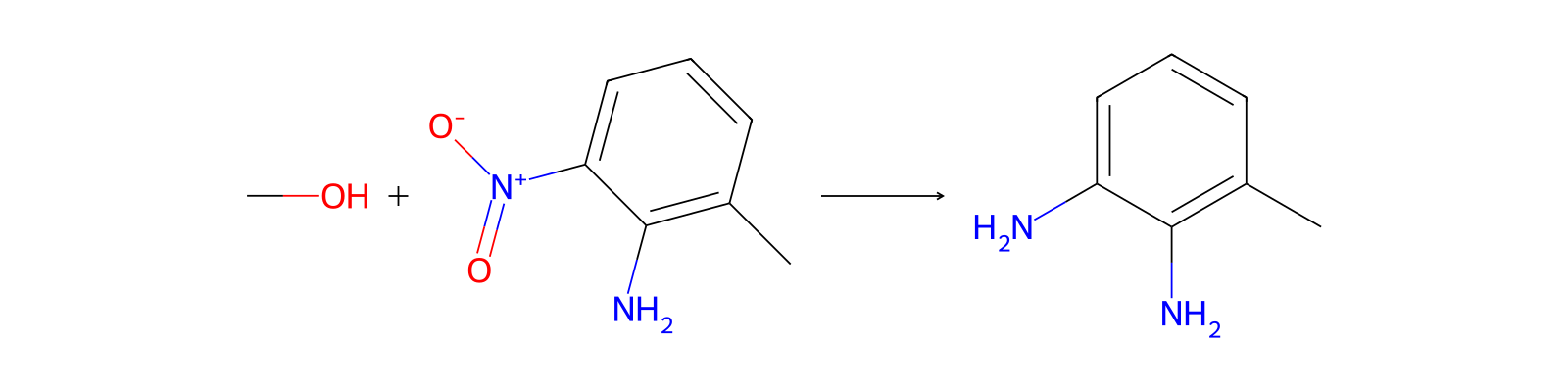
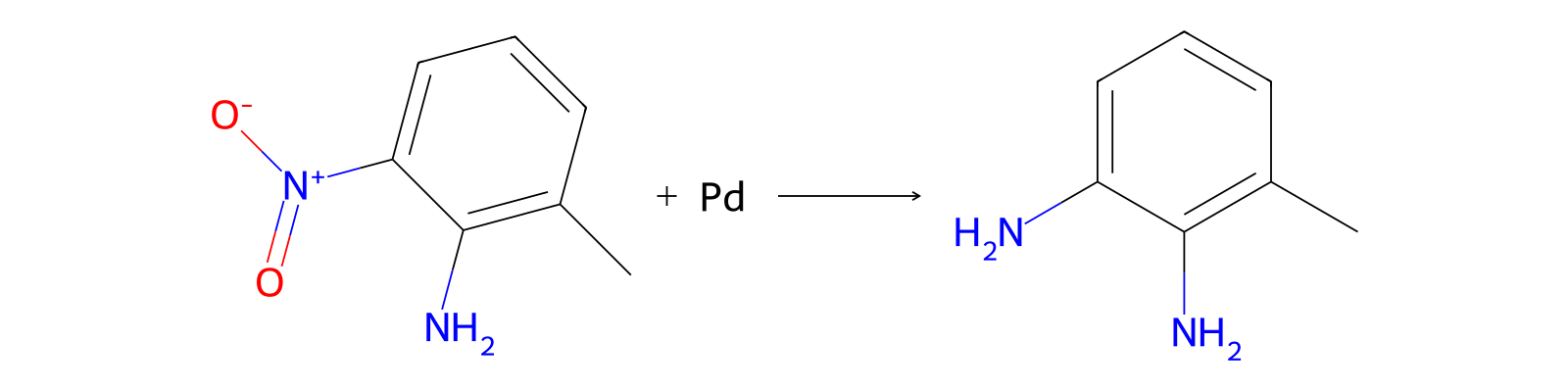
Methods of ManufacturingNITRATION OF M-NITROTOLUENE FOLLOWED BY CATALYTIC HYDROGENATION; BYPRODUCT IN THE MFR OF 2,4- & 2,6-TOLUENEDIAMINE (CHEM INTS FOR TOLUENE DIISOCYANATE)
General Manufacturing Information
All Other Basic Organic Chemical Manufacturing
1,2-Benzenediamine, 3-methyl-: ACTIVE
Formed as a minor by-product during the industrial manufacture of other diaminotoluene isomers
응용 분야
용도Inducer of CYP1A activity, and possible mutagenic carcinogen.
일반 설명The antitumour activity of Pd(II) and Pt(II) new complexes with 2,3-diaminotoluene was studied. 2,3-Diaminotoluene induced CYP1A activity.
상·하류 제품 정보
상류 원료
하류 제품
공급사50 곳
梯希爱(上海)化成工业发展有限公司021-67121386 · [email protected]
衢州润东化工有限公司0570-8789886 18892685668 · [email protected]
上海阿拉丁生化科技股份有限公司400-6206333 13167063860 · [email protected]
苏州启航生物科技有限公司18151111370 · [email protected]
武汉欣扬瑞和化学科技有限公司153-07155313 15307155313 · [email protected]
温州共赢化学有限公司+86-0086-577-64498589 +86-15355981851 · [email protected]
南京科朗科技有限公司025-58748998 18951874644 · [email protected]
上海赫文斯化工有限公司15721252604 17321035817 · [email protected]
Dayang Chem (Hangzhou) Co.,Ltd.+86-0571-88938639 17705817739 · [email protected]
科瑞迪化学400-821-5857 021-64326257 · [email protected]
Syntechem Co.,Ltd[email protected]
上海辅欣医药科技有限公司+86-021-021-50872116 · [email protected]
阿法埃莎(中国)化学有限公司400-6106006 · [email protected]
安耐吉化学&3A(安徽泽升科技股份有限公司)400-0056266 · [email protected]
常州安轩化工有限公司13912302692 · [email protected]
上海瀚鸿科技股份有限公司021-54306202 13764082696 · [email protected]
上海相辉医药科技有限公司13761987713 · [email protected]
上海隆盛化工有限公司58099637 13585536065 · [email protected]
郑州研德生物科技有限公司0371-63682289 15538176268 · [email protected]
杭州东帆化学有限公司86-0571-85151182
山东西亚化学有限公司13355009207 13355009207 · [email protected]
上海乔木化学科技有限公司021-60451683 15021268886 · [email protected]
赛默飞世尔科技(中国)有限公司800-810-5118 · [email protected]
北京伊诺凯科技有限公司400-810-7969 010-59572699 · [email protected]
江苏艾康生物医药研发有限公司025-66113011 13913916777 · [email protected]
上海健超生物科技有限公司150-2103-5486 18017383231 · [email protected]
TCI AMERICA800-4238616 · [email protected]
TOKYO CHEMICAL INDUSTRY CO., LTD.03-36680489 · [email protected]
TCI Europe320-37350700 · [email protected]
上海贤鼎生物科技有限公司4009209199 · [email protected]
HBCChem, Inc.+1-510-219-6317 · [email protected]
重庆星灿医药科技有限公司13594048950 19923294409 · [email protected]
天津安浩生物科技有限公司[email protected]
常州天瑞医药科技有限公司0519-85386832 13382812559 · [email protected]
凯试(上海)科技有限公司021-50135380 · [email protected]
湖北巨胜科技有限公司027-59599241 18871490274 · [email protected]
Sigma-Aldrich西格玛奥德里奇(上海)贸易有限公司021-61415566 800-8193336 · [email protected]
石家庄通洋进出口有限公司[email protected]
诺尔凯立科技有限公司86-(0)21-31261262 373522135 · [email protected]
北京禾兴源科技有限公司18511709189 · [email protected]
Henan Alfa Chemical Co., Ltd+8618339805032 · [email protected]
Alfa Chemistry+1-5166625404 · [email protected]
sgtlifesciences pvt ltd+91-8790379245 · [email protected]
上海指月生物科技有限公司13918644899 · [email protected]
杭州氟药药业有限公司0571-85586753 13336034509 · [email protected]
北京华威锐科化工科技有限公司89508211 18501085097 · [email protected]
石家庄斯迪亚诺精细化工有限公司0311-89250318 031166536426 · [email protected]
Guangzhou Yuheng Pharmaceutical Technology Co., Ltd+8613580539051 · [email protected]
上海西陇生化科技有限公司021-52907766-8042
上海源叶生物科技有限公司13636370518 · [email protected]
관련 반응
88건





연결된 노트
불러오는 중…