
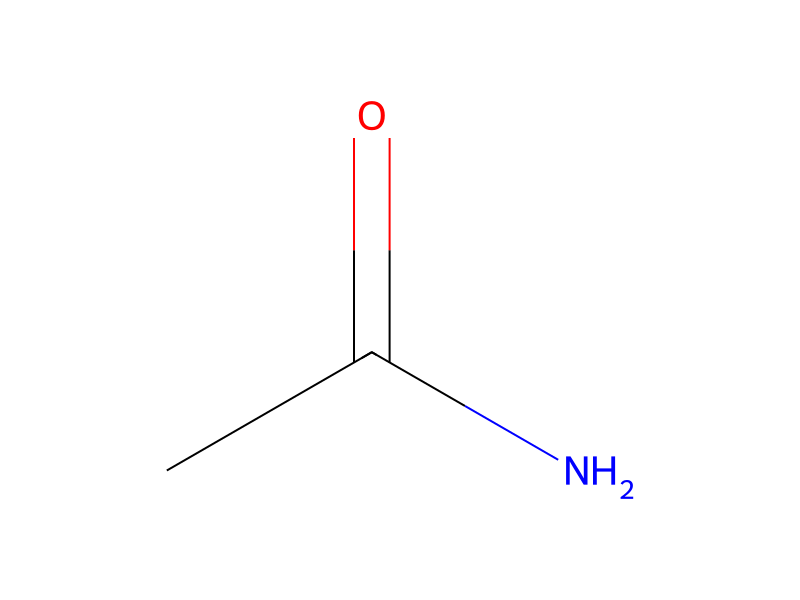
기본 정보
- 표준 SMILES
CC(N)=O- InChIKey
DLFVBJFMPXGRIB-UHFFFAOYSA-N- 분자식
- C2H5NO
- 평균 분자량
- 59.07 g/mol
- 단동위원소 질량
- 59.03711378
개요
Acetamide can cause cancer according to The World Health Organization's International Agency for Research on Cancer (IARC).
이름 및 식별자
- 우선 이름
- Acetamide
- IUPAC
- acetamide
- 현지명
- 아세트아마이드
- 영어명
- Acetamide
- 분자식
- C2H5NO
- 분자량
- 59.07
이름 및 동의어
acetamide60-35-5EthanamideAcetic acid amideMethanecarboxamideAcetimidic acidEthanimidic acidAmid kyseliny octoveNCI-C02108CH3CONH2DTXSID7020005AI3-02060
이름 더 보기
아세트아마이드아세트아미드아세트산아미드에탄아미드메탄카르복스아미드아세타마이드에타나미드AcetamidAMIDE C2ActamideAcetamidumAcetoamideAcetylamide
8XOE1JSO29NSC 25945NSC-25945DTXCID505FEMA NO. 4251CHEBI:27856CHEBI:49028acetamido
데이터베이스 식별자
- CAS
60-35-5- PubChem CID
- 178
- DTXSID
DTXSID7020005- ChEMBL
CHEMBL16081- ChEBI
CHEBI:27856- UNII
- 8XOE1JSO29
- EC Number
- 200-473-5
- Nikkaji
- J2.339F
물성
구조 계산 물성
- XLogP
- -0.9
- 극성 표면적
- 43.1 Ų
- 수소 결합 공여자 수
- 1
- 수소 결합 수용자 수
- 1
- 회전 가능 결합 수
- 0
- 무거운 원자 수
- 4
- 형식 전하
- 0
- 복잡도
- 33
실험 및 물리화학적 성질
Chemical Classes
Hazardous Air Pollutants (HAPs)
Nitrogen Compounds -> Other Nitrogen Compounds
Carcinogens
DrugsPharmaceuticals -> Listed in ZINC15
SpringerMaterials Properties15N nuclear magnetic resonance spectrum
LogP
log Kow = -1.26
-1.26
-1.26
-1.05
OdorOdorless when pure, but frequently has a mousy odor
TastePure acetamide has a bitter taste
Food AdditivesFLAVORING AGENT OR ADJUVANT -> FDA Substance added to food
Density
1.159 at 68 °F (NTP, 1992) - Denser than water; will sink
1.159 at 20 °C/4 °C
1.16 g/cm³
1.159
1.159 @ 20°C
Viscosity2.182 centipose (91.1 °C); 1.461 centipose (111.8 °C); 1.056 centipose (131.7 °C)
Color/Form
Deliquescent hexagonal crystals
Trigonal monoclinic crystals from alcohol and ether
Solubility
Very soluble (greater than or equal to 100 mg/mL at 72 °F) (NTP, 1992)
In water, 7.05X10+5 mg/L at 24.5 °C
One gram dissolves in 0.5 mL water, 2 mL alcohol, 6 mL pyridine
Soluble in chloroform, glycerol, hot benzene
Slightly soluble in ether
Boiling Point
430 °F at 760 mmHg (NTP, 1992)
222 °C at 760 mm Hg
221.00 to 222.00 °C. @ 760.00 mm Hg
222 °C
430 °F
물리화학적 성질
- 녹는점
- 78 · 78-80 °C(lit.)
- 끓는 점
- 221 °C · 221 °C(lit.)
- 밀도
- 1.159 · 1.159
- 증기압
- 1 mm · 1 mm Hg ( 65 °C)
- 굴절률
- 1.4274 · 1.4274
- 인화점
- 220 · 220-222°C
- 저장 조건
- 30 °C · Store below +30°C.
- 용해도
- 2 O: · H2O: 0.5 g/mL, Hazen≤50
- 산도 계수 (pKa)
- 0.63 · 0.63(at 25℃)
- 물리적 상태
- 크리스탈
- 색상
- 하얀색
- 냄새
- 퀴퀴한 냄새
- 생물학적 소스
- synthetic
- 수용성
- 2000 g/L · 2000g/L(20℃)
- Merck
- 14 · 14,43
- JECFA Number
- 1592 · 1592
- BRN
- 1071207 · 1071207
- Henry's Law Constant
- 5.3 · 5.3×103 mol/(m3Pa) at 25℃, Wolfenden (1976)
- Dielectric constant
- 41 · 41.0(20℃)
- 안정성
- 안정적인. 강산, 강산화제, 강염기와 호환되지 않습니다.
- InChI
- 1S/C2H5NO/c1-2(3)4/h1H3,(H2,3,4)
- InChIKey
- DLFVBJFMPXGRIB-UHFFFAOYSA-N
- SMILES
- CC(N)=O
- LogP
- -1.26 · -1.26
- NIST
- Acetamide(60-35-5)
- EPA
- Acetamide (60-35-5)
화학적 성질
Acetamide occurs as hexagonal colourless deliquescent crystals with a musty odour. It is incompatible with strong acids, strong oxidising agents, strong bases, and triboluminescent materials. Acetamide is used primarily as a solvent, a plasticiser, and a wetting and penetrating agent. Workplace exposures to acetamide are associated with the plastic and chemical industries.
안전 및 규제
GHS 분류
GHS Classification
Warning
H351: Suspected of causing cancer [Warning Carcinogenicity]
P203, P280, P318, P405, and P501 (click each P-code to see the statement)
Warning
H351 (100%): Suspected of causing cancer [Warning Carcinogenicity]
P203, P280, P318, P405, and P501 (click each P-code to see the statement)
유해성 정보
Regulatory Information
Chemical: Acetamide
Hazard Traits - Carcinogenicity; Dermatotoxicity
Status: Active Update: 26-04-2018 https://echa.europa.eu/registration-dossier/-/registered-dossier/17464
Acetamide: Does not have an individual approval but may be used under an appropriate group standard
The New Jersey Worker and Community Right to Know Act requires public and private employers to provide information about hazardous substances at their workplaces. (N.J.S.A. 34:5A-1 et. seq.)
Other Safety InformationIMAP assessments - Acetamide: Environment tier I assessment
Fire Hazards
The flash point of this chemical has not been determined, but it is probably combustible. (NTP, 1992)
Combustible. Gives off irritating or toxic fumes (or gases) in a fire.
Fire PotentialThis substance is a combustible solid.
Health HazardsSYMPTOMS: Exposure to this compound may cause irritation to the eyes, skin and mucous membranes.
Hazards Summary
Acetamide is used primarily as a solvent and a plasticizer. Workers may be exposed in the plastics and chemical industries. It causes mild skin irritation from acute (short-term) exposure. No information is available on the chronic (long-term), reproductive/developmental, or carcinogenic effects of acetamide in humans. EPA has not classified acetamide for carcinogenicity.
There are no human data, but long-term feeding studies in rats using high doses of acetamide (up to 5% in diet) produced liver damage and hepatocellular carcinomas. . . . high doses producing maternal toxicity may cause developmental toxicity. The acute toxicity after ingestion is relatively low: an LD50 of 1000-7000 mg/kg in rats and mice; [ACGIH] A skin and eye irritant; [ICSC]
Reactive GroupAmides and Imides
EC ClassificationSymbol: Xn; R: 40; S: (2)-36/37
Reactivity Profile
ACETAMIDE may react with azo and diazo compounds to generate toxic gases. May form flammable gases with strong reducing agents. Reacts as a weak bases (weaker than water). Mixing with dehydrating agents such as P2O5 or SOCl2 generates acetonitrile Burns to give toxic mixed oxides of nitrogen (NOx).
Atmospheric Standards
This action promulgates standards of performance for equipment leaks of Volatile Organic Compounds (VOC) in the Synthetic Organic Chemical Manufacturing Industry (SOCMI). The intended effect of these standards is to require all newly constructed, modified, and reconstructed SOCMI process units to use the best demonstrated system of continuous emission reduction for equipment leaks of VOC, considering costs, non air quality health and environmental impact and energy requirements. Acetamide is produced, as an intermediate or a final product, by process units covered under this subpart.
Listed as a hazardous air pollutant (HAP) generally known or suspected to cause serious health problems. The Clean Air Act, as amended in 1990, directs EPA to set standards requiring major sources to sharply reduce routine emissions of toxic pollutants. EPA is required to establish and phase in specific performance based standards for all air emission sources that emit one or more of the listed pollutants. Acetamide is included on this list.
Chemical DangersDecomposes on burning. This produces toxic fumes including nitrogen oxides. Reacts with acids and strong oxidants.
Air and Water ReactionsDeliquescent. Very soluble in water.
안전 및 보호
Fire Fighting
Fires involving this material can be controlled with a dry chemical, carbon dioxide or Halon extinguisher. (NTP, 1992)
Use water spray, powder.
First Aid Measures
Fresh air, rest.
Remove contaminated clothes. Rinse skin with plenty of water or shower.
First rinse with plenty of water for several minutes (remove contact lenses if easily possible), then refer for medical attention.
Rinse mouth. Refer for medical attention .
First Aid
EYES: First check the victim for contact lenses and remove if present. Flush victim's eyes with water or normal saline solution for 20 to 30 minutes while simultaneously calling a hospital or poison control center. Do not put any ointments, oils, or medication in the victim's eyes without specific instructions from a physician. IMMEDIATELY transport the victim after flushing eyes to a hospital even if no symptoms (such as redness or irritation) develop.
Safe StorageDry. Well closed.
Fire Fighting Procedures
Suitable extinguishing media: Use water spray, alcohol-resistant foam, dry chemical, or carbon dioxide.
Advice for firefighters: Wear self-contained breathing apparatus for firefighting if necessary.
Use dry chemical, carbon dioxide, water spray, or alcohol foam extinguishers. ... If material or contaminated runoff enters waterways, notify downstream users of potentially contaminated waters. Notify local health and fire officials and pollution control agencies. From a secure, explosion-proof location, use water spray to cool exposed containers. If cooling streams are ineffective (venting sound increases in volume and pitch, tank discolors, or shows any signs of deforming), withdraw immediately to a secure position.
The only respirators recommended for firefighting are self-contained breathing apparatuses that have full face-pieces and are operated in a pressure-demand or other positive-pressure mode.
Storage Conditions
Keep container tightly closed in a dry and well-ventilated place. Moisture sensitive.
Appropriate engineering controls: Handle in accordance with good industrial hygiene and safety practice. Wash hands before breaks and at the end of workday.
Gloves must be inspected prior to use. Use proper glove removal technique (without touching glove's outer surface) to avoid skin contact with this product. Dispose of contaminated gloves after use in accordance with applicable laws and good laboratory practices. Wash and dry hands.
Should be stored in a cool, well-ventilated area. Store in a dry area away from water because of deliquescent properties. Sources of ignition, such as smoking and open flames, are prohibited where this chemical is used, handled, or stored in a manner that could create a potential fire explosion hazard.
PRECAUTIONS FOR "CARCINOGENS": Storage site should be as close as practical to lab in which carcinogens are to be used, so that only small quantities required for ... expt need to be carried. Carcinogens should be kept in only one section of cupboard, an explosion-proof refrigerator or freezer (depending on chemicophysical properties ...) that bears appropriate label. An inventory ... should be kept, showing quantity of carcinogen & date it was acquired ... Facilities for dispensing ... should be contiguous to storage area. /Chemical Carcinogens/
Cleanup Methods
ACCIDENTAL RELEASE MEASURES: Personal precautions, protective equipment and emergency procedures: Use personal protective equipment. Avoid dust formation. Avoid breathing vapors, mist or gas. Ensure adequate ventilation. Evacuate personnel to safe areas. Avoid breathing dust. Environmental precautions: Prevent further leakage or spillage if safe to do so. Do not let product enter drains. Methods and materials for containment and cleaning up: Pick up and arrange disposal without creating dust. Sweep up and shovel. Keep in suitable, closed containers for disposal.
Evacuate persons not wearing protective equipment from area of spill or leak until cleanup is complete. Remove all ignition sources. Collect powdered material in the most convenient and safe manner and deposit in sealed containers. Ventilate area after cleanup is complete. Material is very water soluble and hydrolyzes slowly to ammonia and acetate salts. May be removed from alkaline solutions with adsorbent carbon. It may be necessary to contain and dispose of this chemical as a hazardous waste. If material or contaminated runoff enters waterways, notify downstream users of potentially contaminated waters.
PRECAUTIONS FOR "CARCINOGENS": A high-efficiency particulate arrestor (HEPA) or charcoal filters can be used to minimize amt of carcinogen in exhausted air ventilated safety cabinets, lab hoods, glove boxes or animal rooms ... Filter housing that is designed so that used filters can be transferred into plastic bag without contaminating maintenance staff is avail commercially. Filters should be placed in plastic bags immediately after removal ... The plastic bag should be sealed immediately ... The sealed bag should be labelled properly ... Waste liquids ... should be placed or collected in proper containers for disposal. The lid should be secured & the bottles properly labelled. Once filled, bottles should be placed in plastic bag, so that outer surface ... is not contaminated ... The plastic bag should also be sealed & labelled. ... Broken glassware ... should be decontaminated by solvent extraction, by chemical destruction, or in specially designed incinerators. /Chemical Carcinogens/
Nonfire Spill Response
SMALL SPILLS AND LEAKAGE: If you spill this chemical, you should dampen the solid spill material with water, then transfer the dampened material to a suitable container. Use absorbent paper dampened with water to pick up any remaining material. Seal your contaminated clothing and the absorbent paper in a vapor-tight plastic bag for eventual disposal. Wash all contaminated surfaces with a strong soap and water solution. Do not reenter the contaminated area until the Safety Officer (or other responsible person) has verified that the area has been properly cleaned.
Disposal Methods
SRP: Recycle any unused portion of the material for its approved use or return it to the manufacturer or supplier. Ultimate disposal of the chemical must consider: the material's impact on air quality; potential migration in air, soil or water; effects on animal, aquatic and plant life; and conformance with environmental and public health regulations. If it is possible or reasonable use an alternative chemical product with less inherent propensity for occupational harm/injury/toxicity or environmental contamination.
SRP: Wastewater from contaminant suppression, cleaning of protective clothing/equipment, or contaminated sites should be contained and evaluated for subject chemical or decomposition product concentrations. Concentrations shall be lower than applicable environmental discharge or disposal criteria. Alternatively, pretreatment and/or discharge to a permitted wastewater treatment facility is acceptable only after review by the governing authority and assurance that "pass through" violations will not occur. Due consideration shall be given to remediation worker exposure (inhalation, dermal and ingestion) as well as fate during treatment, transfer and disposal. If it is not practicable to manage the chemical in this fashion, it must be evaluated in accordance with EPA 40 CFR Part 261, specifically Subpart B, in order to determine the appropriate local, state and federal requirements for disposal.
Product: Offer surplus and non-recyclable solutions to a licensed disposal company. Contact a licensed professional waste disposal service to dispose of this material. Dissolve or mix the material with a combustible solvent and burn in a chemical incinerator equipped with an afterburner and scrubber; Contaminated packaging: Dispose of as unused product.
PRECAUTIONS FOR "CARCINOGENS": There is no universal method of disposal that has been proved satisfactory for all carcinogenic compounds & specific methods of chem destruction ... published have not been tested on all kinds of carcinogen-containing waste. ... summary of avail methods & recommendations ... /given/ must be treated as guide only. /Chemical Carcinogens/
For more Disposal Methods (Complete) data for ACETAMIDE (8 total), please visit the HSDB record page.
Spillage Disposal
Personal protection: P2 filter respirator for harmful particles. Sweep spilled substance into covered containers. If appropriate, moisten first to prevent dusting. Carefully collect remainder. Then store and dispose of according to local regulations.
Preventive Measures
ACCIDENTAL RELEASE MEASURES: Personal precautions, protective equipment and emergency procedures: Use personal protective equipment. Avoid dust formation. Avoid breathing vapors, mist or gas. Ensure adequate ventilation. Evacuate personnel to safe areas. Avoid breathing dust. Environmental precautions: Prevent further leakage or spillage if safe to do so. Do not let product enter drains.
Precautions for safe handling: Avoid contact with skin and eyes. Avoid formation of dust and aerosols. Provide appropriate exhaust ventilation at places where dust is formed.
PRECAUTIONS FOR "CARCINOGENS": Smoking, drinking, eating, storage of food or of food & beverage containers or utensils, & the application of cosmetics should be prohibited in any laboratory. All personnel should remove gloves, if worn, after completion of procedures in which carcinogens have been used. They should ... wash ... hands, preferably using dispensers of liq detergent, & rinse ... thoroughly. Consideration should be given to appropriate methods for cleaning the skin, depending on nature of the contaminant. No standard procedure can be recommended, but the use of organic solvents should be avoided. Safety pipettes should be used for all pipetting. /Chemical Carcinogens/
PRECAUTIONS FOR "CARCINOGENS": In animal laboratory, personnel should remove their outdoor clothes & wear protective suits (preferably disposable, one-piece & close-fitting at ankles & wrists), gloves, hair covering & overshoes. ... clothing should be changed daily but ... discarded immediately if obvious contamination occurs ... /also,/ workers should shower immediately. In chemical laboratory, gloves & gowns should always be worn ... however, gloves should not be assumed to provide full protection. Carefully fitted masks or respirators may be necessary when working with particulates or gases, & disposable plastic aprons might provide addnl protection. If gowns are of distinctive color, this is a reminder that they should not be worn outside of lab. /Chemical Carcinogens/
For more Preventive Measures (Complete) data for ACETAMIDE (14 total), please visit the HSDB record page.
Eye PreventionWear safety spectacles.
독성 정보
Interactions
Two groups of 40 male wistar rats were fed diets containing 2.5% acetamide or 2.5% acetamide + 5.6 l-arginine, & 2 groups of 15 males were fed diet containing 5.6% arginine glutamate or a control diet for 1 yr. In 2/8 rats fed acetamide ... hepatomas ... were observed; 7/16 rats fed acetamide for 1 yr and maintained on control diet for further 3 MO developed liver tumors. In contrast, 1/11 rats that received acetamide + arginine glutamate for 1 yr and control diet for 3 MO had hyperplastic liver nodules. No liver tumors occurred in control group nor in rats fed 5.6% arginine glutamate alone.
Environmental Fate
TERRESTRIAL FATE: Based on a classification scheme(1), a Koc value of 5(SRC) indicates that acetamide is expected to have very high mobility in soil(SRC). Volatilization of acetamide from moist soil surfaces is not expected to be an important fate process(SRC) given an estimated Henry's Law constant of 2.0X10⁻⁹ atm-cu m/mole(SRC), derived from its vapor pressure, 0.0182 mm Hg(3), and water solubility, 7.05X10+5 mg/L(4). Acetamide is not expected to volatilize from dry soil surfaces(SRC) based upon its vapor pressure. A 69% of theoretical BOD in 2 weeks using activated sludge in the Japanese MITI test(5) and a 69% of theoretical degradation in a 10-day window of an OECD 301D Closed Bottle test(3) indicates that biodegradation is an important environmental fate process in soil(SRC).
AQUATIC FATE: Based on a classification scheme(1), a Koc value of 5(2) indicates that acetamide is not expected to adsorb to suspended solids and sediment(SRC). Volatilization from water surfaces is not expected(3) based upon an estimated Henry's Law constant of 2.0X10⁻⁹ atm-cu m/mole(SRC), derived from its vapor pressure, 0.0182 mm Hg(3), and water solubility, 7.05X10+5 mg/L(4). According to a classification scheme(5), an estimated BCF of 3(SRC), from its log Kow of -1.26(6) and a regression-derived equation(7), suggests the potential for bioconcentration in aquatic organisms is low(SRC). A 69% of theoretical BOD in 2 weeks using activated sludge in the Japanese MITI test(8) and a 69% of theoretical degradation in a 10-day window of an OECD 301D Closed Bottle test(3) indicates that biodegradation is an important environmental fate process in water(SRC). Results of hydrolysis studies indicate the hydrolysis half-life of acetamide at 25 °C and pH 7 is 3,440 to 3,950 years(9,10).
ATMOSPHERIC FATE: According to a model of gas/particle partitioning of semivolatile organic compounds in the atmosphere(1), acetamide, which has a vapor pressure of 0.0182 mm Hg at 25 °C(2), is expected to exist solely as a vapor in the ambient atmosphere(SRC). Vapor-phase acetamide is degraded in the atmosphere by reaction with photochemically-produced hydroxyl radicals(SRC); the half-life for this reaction in air is estimated to be 7.6 days(SRC), calculated from its rate constant of 2.1X10⁻¹² cu cm/molecule-sec at 25 °C(SRC) determined using a structure estimation method(3). Acetamide does not absorb at wavelengths >290 nm(4) and, therefore, is not expected to be susceptible to direct photolysis by sunlight(SRC).
Food Survey ValuesOver-oxidized wine can contain acetamide.
Adverse EffectsOccupational hepatotoxin - Secondary hepatotoxins: the potential for toxic effect in the occupational setting is based on cases of poisoning by human ingestion or animal experimentation.
Exposure RoutesThe substance can be absorbed into the body by inhalation of its aerosol.
Toxicity Summary
IDENTIFICATION AND USE: Acetamide is a solid. It is used as a solvent and stabilizer, accelerator in the estimation of bilirubin, antidote against monofluoroacetamide poisoning, and humectant for paper. HUMAN EXPOSURE AND TOXICITY: There are no data available. ANIMAL STUDIES: When acetamide was administered at a concentration of 5% in the diet to 99 male rats, with 2 rats returned to a control diet each week, liver tumors were found after treatment for 14-40 weeks in 22/81 rats. Acetamide-treated rats developed neoplastic nodules and hepatocellular carcinomas. The incidence, speed of onset, and frequency of metastases were greater in males than in females. Acetamide had the least toxic effects in regards to teratogenicity and embryotoxicity, compared to its derivatives. Acetamide produced morphological transformation in Syrian hamster embryo cells without metabolic activation. ECOTOXICITY STUDIES: Acetamide exhibited a selective damaging action on Entosiphon sulcatum.
Ecotoxicity Excerpts
/AQUATIC SPECIES/ ... In rainbow trout, increase in sperm motility parameters (VAP and MOT) were observed in the presence of acetamide, an inhibitor for beta-N-Acetylglucosaminidase (beta-NAGase). In contrast, sperm motility parameters (VCL, VSL, VAP, MOT, and PRG) were reduced on the Siberian sturgeon in the presence of acetamide. The inhibition of the activity of beta-NAGase in rainbow trout spermatozoa was led to a reduction in the number of fertilized eggs from 79% to 40%, whereas in sturgeon no change was observed in fertilization. Moreover, inhibition of beta-NAGase in both spermatozoa and eggs of trout and sturgeon resulted in significant decrease in fertilization rate from 79% to 1% in rainbow trout and from 84% to 12% in Siberian sturgeon. ...
/AQUATIC SPECIES/ The toxicity threshold using the cell multiplication inhibition test was determined for pseudomonas putida (bacteria), scendesmus quadricauda (green algae) and entosiphon sulcatum (protozoa). Test based on principle that dissolved toxic water ingredients will inhibit multiplication of test organisms as compared to culture free from such influence. Acetamide exhibited a selective damaging action on entosiphon sulcatum.
Plant ConcentrationsAcetamide was detected, not quantified in the root of sugar beet, also called beet, beetroot, or garden beet (Beta vulgaris, Chenopodiaceae)(1).
Signs and Symptoms
Redness. Pain.
Redness. Pain.
Ongoing Test Status
EPA has released the Interactive Chemical Safety for Sustainability (iCSS) Dashboard. The iCSS Dashboard provides an interactive tool to explore rapid, automated (or in vitro high-throughput) chemical screening data generated by the Toxicity Forecaster (ToxCast) project and the federal Toxicity Testing in the 21st century (Tox21) collaboration. /The title compound was tested by ToxCast and/or Tox21 assays/[USEPA; ICSS Dashboard Application; Available from, as of September 8, 2016: http://actor.epa.gov/dashboard/]
The following link will take the user to the National Toxicology Program (NTP) Test Agent Search Results page for acetamide, which tabulates all of the "Genetic Toxicology Studies" performed with this chemical. Clicking on the "Testing Status" link will take the user to the status (i.e., in review, in progress, in preparation, on test, completed, etc.) and results of all the studies that the NTP has done on this chemical.[Available from: http://ntp.niehs.nih.gov/testing/status/agents/ts-10375-a.html]
Effluent Concentrations
Acetamide was detected at concentrations of 2.4 and 28.6 ug/L in distillate and residue, respectively, in leachate from a landfill for municipal wastes in Japan(1). Acetamide was detected in condensate and process oil-shale retort water at concentrations of 0.6 mg/L and 23.2 mg/L, respectively(2).
Medical Surveillance
PRECAUTIONS FOR "CARCINOGENS": Whenever medical surveillance is indicated, in particular when exposure to a carcinogen has occurred, ad hoc decisions should be taken concerning ... /cytogenetic and/or other/ tests that might become useful or mandatory. /Chemical Carcinogens/
규제 정보
Atmospheric Standards
This action promulgates standards of performance for equipment leaks of Volatile Organic Compounds (VOC) in the Synthetic Organic Chemical Manufacturing Industry (SOCMI). The intended effect of these standards is to require all newly constructed, modified, and reconstructed SOCMI process units to use the best demonstrated system of continuous emission reduction for equipment leaks of VOC, considering costs, non air quality health and environmental impact and energy requirements. Acetamide is produced, as an intermediate or a final product, by process units covered under this subpart.
Listed as a hazardous air pollutant (HAP) generally known or suspected to cause serious health problems. The Clean Air Act, as amended in 1990, directs EPA to set standards requiring major sources to sharply reduce routine emissions of toxic pollutants. EPA is required to establish and phase in specific performance based standards for all air emission sources that emit one or more of the listed pollutants. Acetamide is included on this list.
CERCLA Reportable Quantities
Persons in charge of vessels or facilities are required to notify the National Response Center (NRC) immediately, when there is a release of this designated hazardous substance, in an amount equal to or greater than its reportable quantity of 100 lb or 45.4 kg. The toll free number of the NRC is (800) 424-8802. The rule for determining when notification is required is stated in 40 CFR 302.4 (section IV.D.3.b).
안전 데이터
- wgk
- 1
- tsca
- TSCA listed
- rtecs
- AB4025000
- ridadr
- UN 3077 9/PG 3
- 독성
- LD50 orally in Rabbit: 7000 mg/kg
- HS 번호
- 29241900
- risk_code
- 40
- hazard_code
- Xn
- safety_code
- 36/37
- 위험 등급
- 9
- 기존화학 물질
- KE-00004
- F 고인화성물질
- 3
- 자연 발화 온도
- 560°C
- Hazard Classifications
- Carc. 2
- 스토리지 클래스
- 11 - Combustible Solids
- 유해 물질 데이터
- 60-35-5(Hazardous Substances Data)
화학 및 산업
약리 정보
Biological Half-LifeThe half life of radioactivity in blood after intravenous dosing of (14)C acetamide to rats averaged 20.6 + or - 0.3 hr after a 10 mg/kg bw dose and 16.1 + or - 1.6 hr after a 50 mg/kg bw dose.
Metabolism/Metabolites
Acetamide ... was found in small amt in human urine as metabolite of metronidazole.
Metabolism of metronidazole to acetamide was apparently mediated by intestinal flora.
Acetamide is carcinogenic in rats and mice. To clarify the mechanism of carcinogenesis by acetamide, we investigated DNA damage by andacetamide metabolite, acetohydroxamic acid (AHA), using 32P-5'-end-labeled DNA fragments. AHA treated with amidase induced DNA damage in the presence of Cu(II) and displayed a similar DNA cleavage pattern of hydroxylamine. DNA damage was inhibited by both catalase and bathocuproine, suggesting that H2O2 and Cu(I) are involved. Carboxy-PTIO, a specific scavenger of nitric oxide (NO), partially inhibited DNA damage. The amount of 8-oxo-7,8-dihydro-2'-deoxyguanosine (8-oxodG) by amidase-treated AHA was similar to that by hydroxylamine. ESR spectrometry revealed that amidase-treated AHA as well as hydroxylamine generated NO in the presence of Cu(II). From these results, it has been suggested that AHA might be converted into hydroxylamine by amidase. These results suggest that metal-mediated DNA damage mediated by amidase-catalyzed hydroxylamine generation plays an important role in the carcinogenicity of acetamide.
Absorption, Distribution and Excretion
The volume of distribution was about 1 mL/g, total body clearance was 0.27 mL/min and renal clearance was 0.19 mL/min. Approximately 64 72% of (14)C acetamide was excreted in the urine, while only 0.5 0.8% appeared in exhaled air during the first 6 hr after dosing. Thus, approximately 30% of the administered dose was not recovered and it was suggested that metabolized acetamide enters the acetate pool.
Less than 0.07% of the recovered urinary radioactivity in rats given 100 or 1000 mg/kg bw (14)C acetamide coeluted upon high performance liquid chromatography with an N-hydroxyacetamide standard and this hydroxamic acid could not be detected after incubation of acetamide with rat liver microsomes and NADPH or in primary cultures of rat hepatocytes. (14)C Acetamide does not bind covalently to proteins in the presence of rat liver microsomes and NADPH or cytosolic fraction, whereas hepatocyte cultures contained non extractable radioactivity. This association was inhibited by cycloheximide to the same extent as (14)C acetate incorporation into cellular proteins.
Cellular LocationsCytoplasm
용도 및 제조
Uses
Acetamide is used as a solvent, plasticizer, and a wetting and penetrating agent.
Used as a solvent, plasticizer, stabilizer, humectant for paper, hygroscopic agent, wetting agent, penetrating agent, and denaturant of alcohol; Also used in lacquers, explosives, and soldering fluxes; [HSDB] Used as a solvent in the following applications: plasticizers, lacquers, explosives, soldering flux, wetting agents, and synthesis of other agents; [ACGIH]
Soldering [Category: Heat or Machine]
Solvent; molten acetamide is an excellent solvent for many organic and inorganic compounds. Solubilizer; renders sparingly soluble substances more soluble in water by mere addition or by fusion. Plasticizer; stabilizer. Manufacture of methylamine, denaturing alcohol. In organic synthesis.
Organic synthesis (reactant, solvent, peroxide stabilizer), general solvent, lacquers, explosives, soldering flux, hygroscopic agent, wetting agent, penetrating agent.
It suppresses acid buildup in printing inks, lacquers, explosives, and perfumes. It is a mild moisturizer and is used as a softener for leather, textiles, paper, and certain plastics. ... Acetamide and substituted acetamide-containing thiourea can be used for treatment of herpes viruses. Derivatives can also be used as feeding behavior modifiers.
Methods of Manufacturing
Prepared by fractional distillation of ammonium acetate.
Interaction of ethyl acetate and ammonium hydroxide.
Acetamide can be produced by several methods. Ammonia reacts vigorously with acetyl halides or acetic anhydride to produce acetamide. Alkyl acetates also react with ammonia to yield acetamide. Dehydration of ammonium acetate is the standard procedure for preparation of acetamide. Finally, acetonitrile is hydrolyzed to yield acetamide in the presence of an acid or base catalyst.
Formulations/Preparations
In 1963 ... available in USA as technical grade (99% minimum acetamide and 0.3% maximum free acid) and as chemically pure, odorless grade (99.5-99.9% acetamide and trace of free acid).
Grades: Technical; CP /chemically pure: a grade designation signifying a minimum of impurities, but not 100% purity/ (odorless); intermediate; reagent.
Use ClassificationFlavouring Agent -> FLAVOURING_AGENT -> JECFA Functional Classes
General Manufacturing InformationAcetamide: ACTIVE
응용 분야
개요아세트 아미드는 아세트산으로부터 유도 된 아미드이다. 순수한 생성물은 실온에서 백색 결정질 고체이며, 아세트산 암모늄의 탈수에 의해 수득 될 수있다. 그것은 가소제 및 유기 합성의 중요한 원료로 사용됩니다.
용도"1. 용융 아세트 아미드는 다양한 유기 및 무기 물질을위한 우수한 용매입니다. 섬유 산업에서 염료로 사용되는 용제 및 용해제와 같이 수용성이 낮은 물질을 물에 용해시킬 때 용해 보조제로 사용할 수 있습니다. 또한 가소제의 안정제, 화장품 산업의 제산제, 제지 산업의 습윤제 및 chloramphenicol과 같은 항생제 합성 용제로 널리 사용됩니다. 2. 분석 시약, 용제, 안정제, 가소제로 사용됩니다. 또한 유기 합성, 제약 산업, 염료 제조에도 사용할 수 있습니다. 3. 흡습제, 윤활제 등의 제조에도 사용됩니다."
개요Acetamide (MEA or ethanamide), the amide of acetic acid, is a white crystalline solid in pure form with a mousy odor. Low toxicity. It is produced by dehydrating ammonium acetate. Acetamide is found in red beetroot. Acetamide is used primarily as a solvent, plasticizer, and a wetting and penetrating agent. it was used as an intermediate in the synthesis of methylamine, thioacetamide, hypnotics, insecticides, medicinals and various plastics, a soldering flux ingredient, a wetting agent and penetration accelerator for dyes, and as a plasticizer in leather, cloth and coatings. ethanolamine is an amide made from acetamide and monoethanolamine. It is a clear liquid. In cosmetics and personal care products, It is used in the formulation of bubble baths, hair conditioners, shampoos, wave sets, moisturizers, and other bath and hair care products.It increases the water content of the top layers of the skin by drawing moisture from the surrounding air. It also enhances the appearance and feel of hair, by increasing hair body, suppleness, or sheen, or by improving the texture of hair that has been damaged physically or by chemical treatment.
용도Acetamide is often used as plasticizer and as industrial solvent. molten acetamide is an excellent solvent for many organic and inorganic compounds. Solubilizer. renders sparingly soluble substances more soluble in water by mere addition or by fusion. stabilizer. manufacture of methylamine, denaturing alcohol. In organic syntheses. Acetamide is used as a co-monomer in the production of polymeric materials such as polyvinyl acetamide, a polymeric product used as an absorbent. It can be used for the transamidation of carbxamides in 1,4-dioxane in the absence of a catalyst.
일반 설명Colorless crystals with a mousy odor (NTP, 1999). Low toxicity.
상·하류 제품 정보
상류 원료
하류 제품
공급사50 곳
国药集团化学试剂有限公司86-21-63210123 · [email protected]
北京华美互利生物化工010-56205725 · [email protected]
梯希爱(上海)化成工业发展有限公司021-67121386 · [email protected]
衢州润东化工有限公司0570-8789886 18892685668 · [email protected]
上海阿拉丁生化科技股份有限公司400-6206333 13167063860 · [email protected]
爱斯特(成都)生物制药股份有限公司+86-28-85122536 85324413 · [email protected]
上海如吉生物科技发展有限公司+86-21-65211385-8001 36031160 · [email protected]
韶远科技(上海)有限公司021-50795510 4000665055 · [email protected]
科瑞迪化学400-821-5857 021-64326257 · [email protected]
山东信恒化工有限公司15269160602 15269160602
Syntechem Co.,Ltd[email protected]
上海迈瑞尔生化科技有限公司4006356688 18621169109 · [email protected]
武汉易泰科技有限公司上海分公司18930552037 · [email protected]
阿法埃莎(中国)化学有限公司400-6106006 · [email protected]
安耐吉化学&3A(安徽泽升科技股份有限公司)400-0056266 · [email protected]
北京绿百草科技发展有限公司010-61136123 · [email protected]
上海瀚鸿科技股份有限公司021-54306202 13764082696 · [email protected]
南京欣丰康生物科技有限公司025-84683399 13952017251 · [email protected]
嘉兴市艾森化工有限公司0573-85285100 18627885956 · [email protected]
池州捷峰生物科技有限公司0566-8928158 · [email protected]
武汉诺必果生物科技有限公司15972140806 15972140806 · [email protected]
云南西力生物技术股份有限公司0871-65217109 · [email protected]
山东西亚化学有限公司13355009207 13355009207 · [email protected]
玛雅试剂+86 (573) 82222445 (0)18006601000 452520369 · [email protected]
四川库利南科技有限公司400-1166-196 18981987031 · [email protected]
天津希恩思生化科技有限公司400 638 7771 · [email protected]
湖南汇百侍生物科技有限公司0731-85526065 13308475853 · [email protected]
斯百全化学(上海)有限公司021-021-021-67601398-809-809-809 15221380277 · [email protected]
艾科试剂4008-755-333 18080918076 · [email protected]
上海思域化工科技有限公司86-21-34053660 · [email protected]
赛默飞世尔科技(中国)有限公司800-810-5118 · [email protected]
北京伊诺凯科技有限公司400-810-7969 010-59572699 · [email protected]
上海健超生物科技有限公司150-2103-5486 18017383231 · [email protected]
TCI AMERICA800-4238616 · [email protected]
TOKYO CHEMICAL INDUSTRY CO., LTD.03-36680489 · [email protected]
TCI Europe320-37350700 · [email protected]
深圳振强药物研发有限公司0755-66853366 13670046396 · [email protected]
湖北威德利化学试剂有限公司186-02735115 18602735115 · [email protected]
北京环宇世纪化学科技有限公司hysj_bj.com
上海将来实业股份有限公司021-61552785 · [email protected]
HBCChem, Inc.+1-510-219-6317 · [email protected]
日照力德士化工有限公司010-51268198 · [email protected]
美岚实业(上海)有限公司021-58958189 · [email protected]
上海爱蝶实业有限公司021-58957966 18930537195 · [email protected]
成都零六生物科技有限公司400-1166-196 13458535857 · [email protected]
雷丁试剂0510-85629785 18013409632 · [email protected]
湖南华腾制药有限公司400-8592883 · [email protected]
上海麦克林生化科技股份有限公司15221275939 15221275939 · [email protected]
杭州杰恒化工有限公司0571-87396432 · [email protected]
上海永叶生物科技有限公司86-021-61559134 15921386130 · [email protected]
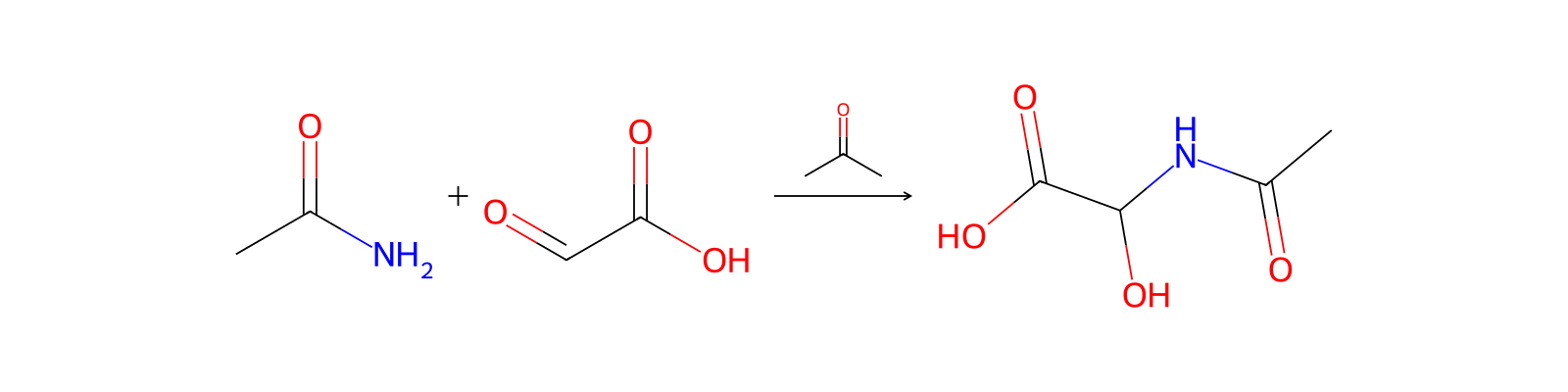
관련 반응
439건


연결된 노트
불러오는 중…