
HRID 885413반응물로
Baclofen
데이터를 보충하는 중입니다. 잠시 후 페이지를 새로 고치면 최신 내용을 볼 수 있습니다
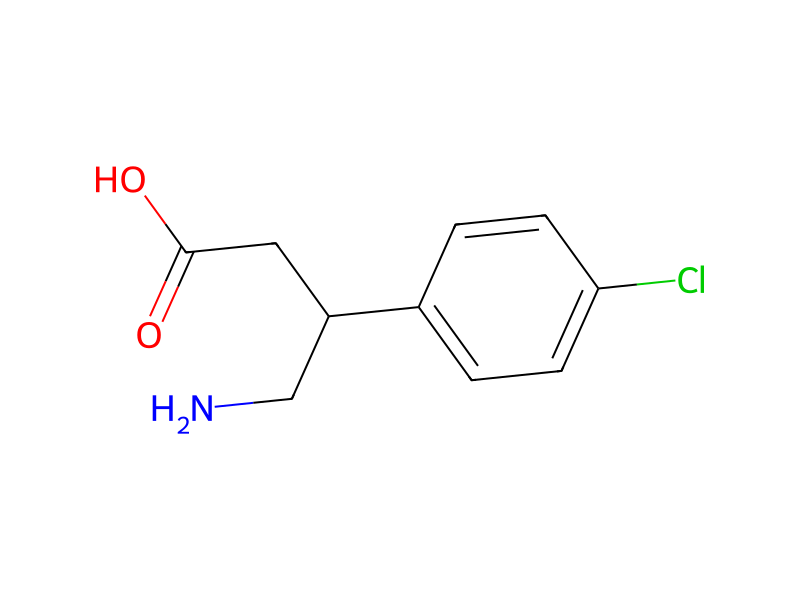
1134-47-0NCC(CC(=O)O)c1ccc(Cl)cc1KPYSYYIEGFHWSV-UHFFFAOYSA-NBaclofen appears as odorless or practically odorless white to off-white crystalline powder. (NTP, 1992)
1134-47-0DTXSID5022641CHEMBL701CHEBI:2972less than 1 mg/mL at 64 °F (NTP, 1992)
7.12e-01 g/L
Breast Feeding; Lactation; Milk, Human; GABA Agonists; Muscle Relaxants, Central
FDA approved drugs -> Active ingredient
FDA approved drugs -> Active ingredient
Pharmaceuticals
Medicines for cerebral palsy
372 to 376 °F (NTP, 1992)
206 - 208 °C
Baclofen appears as odorless or practically odorless white to off-white crystalline powder. (NTP, 1992)
Solid
143 Ų [M+H-H2O]+ [CCS Type: TW; Method: calibrated with polyalanine and drug standards]
149.2 Ų [M+H]+ [CCS Type: TW; Method: Major Mix IMS/Tof Calibration Kit (Waters)]
안전 정보는 참고용이며, 공급업체의 물질안전보건자료(SDS), 관련 법규 및 전문가 평가를 대체하지 않습니다.
Danger
H301 (93.1%): Toxic if swallowed [Danger Acute toxicity, oral]
P203, P233, P260, P261, P264, P264+P265, P270, P271, P272, P280, P284, P301+P316, P302+P352, P304+P340, P305+P351+P338, P318, P319, P321, P330, P332+P317, P333+P317, P337+P317, P342+P316, P362+P364, P403, P403+P233, P405, and P501 (click each P-code to see the statement)
Aggregated GHS information provided per 58 reports by companies from 10 notifications to the ECHA C&L Inventory. Each notification may be associated with multiple companies.
SYMPTOMS: Symptoms of exposure to this compound via ingestion may include drowsiness, insomnia, dizziness, weakness, mental confusion, nausea, constipation, anorexia, urinary retention, impotence, nystagmus, diplopia and incoordination. Ingestion may lead to cholinergic effects and lassitude. It may also lead to ataxia. Other symptoms due to ingestion may include impaired renal function, fatigue, headache, hypotension, urinary frequency, rash, pruritis, ankle edema, excessive perspiration, weight gain, nasal congestion, and rarely, euphoria, excitement, depression, hallucinations, paresthesia, muscle pain, tinnitus, slurred speech, tremor, rigidity, dystonia, blurred vision, strabismus, miosis, mydriasis, dysarthia, epileptic seizure, dyspnea, palpitation, chest pain, syncope, dryness of the mouth, taste disorder, abdominal pain, vomiting, diarrhea, blood in the stools, enuresis, dysuria, inability to ejaculate, nocturia and hematuria. Overexposure through ingestion may result in seizures, and coma with respiratory depression. Aspiration pneumonia is a frequent complication of coma with respiratory depression. Other symptoms due to overdosage may include vomiting, muscular hypotonia, drowsiness, and accommodation disorders. Cyanosis has been reported. Chronic ingestion may result in drowsiness, depression, weakness, anxiety, ataxia, headaches, blurred vision, gastric upset and pruritic skin rashes characterized by urticaria or erythematous macular eruptions. Sudden withdrawal after chronic ingestion may cause auditory and visual hallucinations, anxiety and tachycardia. Seizures may also occur after sudden withdrawal. Abuse may lead to drug dependence. (NTP, 1992)
M03BX01
M - Musculo-skeletal system
QM - Musculo-skeletal system
M03BX01
Baclofen is an antispasmodic agent that induces muscle relaxation. It reduces the release of excitatory neurotransmitters in the pre-synaptic neurons and stimulates inhibitory neuronal signals in the post-synaptic neurons. Oral formulations of baclofen are the most commonly used form of the drug. In one cross-section study, intrathecal baclofen was more effective than oral baclofen in relieving spasticity directly at the level of the spinal cord. Baclofen has CNS depression properties and can cause sedation with tolerance, somnolence, ataxia, and respiratory and cardiovascular depression. Baclofen also mediates some antinociceptive effects and stimulates gastric acid secretion. Baclofen exhibits anti-inflammatory and neuroprotective activities: it inhibits the release of pro-inflammatory cytokines from microglia and astrocytes, and decreases oxidative stress in rats.
The exact mechanism of action of baclofen is unclear. Baclofen is an agonist at the beta subunit of gamma-aminobutyric acid (GABA) receptors expressed on pre- and post-synaptic neurons. Upon binding to GABA<sub>B</sub> receptors, baclofen causes an influx of potassium into the neuron, leading to hyperpolarization of the neuronal membrane and decreased calcium influx at presynaptic nerve terminals. This results in a decreased rate of action potential threshold being reached by presynaptic neurons and reduced action potential of postsynaptic motor neurons that innervate the muscle spindles. Baclofen thereby inhibits the transmission of both mono- and polysynaptic reflexes at the spinal cord, relaxing spasticity. Baclofen may act on some voltage-gated calcium channels; however, the clinical significance of this is unclear.

Off-White Solid
BACLOFEN is an amine. Amines are chemical bases. They neutralize acids to form salts plus water. These acid-base reactions are exothermic. The amount of heat that is evolved per mole of amine in a neutralization is largely independent of the strength of the amine as a base. Amines may be incompatible with isocyanates, halogenated organics, peroxides, phenols (acidic), epoxides, anhydrides, and acid halides. Flammable gaseous hydrogen is generated by amines in combination with strong reducing agents, such as hydrides.
EYES: First check the victim for contact lenses and remove if present. Flush victim's eyes with water or normal saline solution for 20 to 30 minutes while simultaneously calling a hospital or poison control center. Do not put any ointments, oils, or medication in the victim's eyes without specific instructions from a physician. IMMEDIATELY transport the victim after flushing eyes to a hospital even if no symptoms (such as redness or irritation) develop.
SMALL SPILLS AND LEAKAGE: If you spill this chemical, you should dampen the solid spill material with water, then transfer the dampened material to a suitable container. Use absorbent paper dampened with water to pick up any remaining material. Seal your contaminated clothing and the absorbent paper in a vapor-tight plastic bag for eventual disposal. Wash all contaminated surfaces with a soap and water solution. Do not reenter the contaminated area until the Safety Officer (or other responsible person) has verified that the area has been properly cleaned.
RECOMMENDED RESPIRATOR: Where the neat test chemical is weighed and diluted, wear a NIOSH-approved half face respirator equipped with an organic vapor/acid gas cartridge (specific for organic vapors, HCl, acid gas and SO2) with a dust/mist filter. (NTP, 1992)
Health effects include hypertonia, hyperthermia, formal thought disorder, psychosis, mania, mood disturbances, restlessness, and behavioral disturbances, tachycardia, seizures, tremors, autonomic dysfunction, hyperpyrexia, extreme muscle rigidity resembling neuroleptic malignant syndrome and rebound spasticity (L1098).
Limited data are available on the potential hepatotoxicity of baclofen. Among the many clinical trials evaluating the safety and efficacy of baclofen, none mentioned hepatic toxicity or rates of serum ALT elevations occurring during chronic therapy. The product insert starts that 5% of treated patients develop mild serum aminotransferase elevations, but little documentation is available on the significance, severity or duration of these abnormalities. A single case of mild and self-limited hepatitis attirbuted to baclofen has been published. The latency to onset was 3 months, the pattern of injury was hepatocellular, and recovery was rapid and complete, all laboratory tests being normal within a few weeks of stopping.
Signs and Symptoms of Overdose
Baclofen is a direct agonist at GABAB receptors. The precise mechanism of action of Baclofen is not fully known. It is capable of inhibiting both monosynaptic and polysynaptic reflexes at the spinal level, possibly by hyperpolarization of afferent terminals, although actions at supraspinal sites may also occur and contribute to its clinical effect.
Drug Induced Liver Injury Rank (DILIrank 2.0)
Baclofen
vLess-DILI-concern
3
Adverse reactions
DOI:10.1016/j.drudis.2016.02.015
◉ Summary of Use during Lactation
◈ What is baclofen?
Baclofen
0.9
3.9
Start therapy at a low dosage and increase gradually until optimum effect is achieved (usually between 40-80 mg daily).
Data used to generate the benchmarks include the following: Lowest Daily Dose (LDD): 40 mg/day, Lowest Therapeutic Dose (LTD): 0.5 mg/kg-day, and Screening Dose: 0.0002 mg/kg-day.
30-Mar-07
Approximately 15% of the oral dose is metabolized in the liver, mainly by deamination. Deamination yields the main metabolite, β-(p-chlorophenyl)-4-hydroxybutyric acid, which is pharmacologically inactive.
~ 15% of the dose is metabolized in the liver, primarily by deamination. 70-80% of the dose is excreted unchanged or as metabolites in urine and the remainder is excreted in feces. Oral Baclofen is readily absorbed from the gastrointestinal tract. After oral administration, baclofen appears in the blodd within half an our. It is fairly distributed in most organs and body tissues. After oral administration of baclofen, about 85% is excreted unchanged in the urine and feces and the remainder is oxidatively dearninated in the liver to produce beta-(p-chlorophenyl)-gamma-hydroxybutyric acid as a major metabolite. (L1322). Route of Elimination: In a study using radiolabeled baclofen, approximately 85% of the dose was excreted unchanged in the urine and feces. Baclofen is excreted primarily by the kidney as unchanged drug; 70 - 80% of a dose appears in the urine as unchanged drug. The remainder is excreted as unchanged drug in the feces or as metabolites in the urine and feces. Half Life: 2.5-4 hours
H789N3FKE8
BACLOFEN
Mechanisms of Action [MoA] - GABA A Agonists
Mechanisms of Action [MoA] - GABA B Agonists
Established Pharmacologic Class [EPC] - gamma-Aminobutyric Acid-ergic Agonist
Baclofen is a gamma-Aminobutyric Acid-ergic Agonist. The mechanism of action of baclofen is as a GABA A Agonist and GABA B Agonist.
A heterogeneous group of drugs used to produce muscle relaxation, excepting the neuromuscular blocking agents. They have their primary clinical and therapeutic uses in the treatment of muscle spasm and immobility associated with strains, sprains, and injuries of the back and, to a lesser degree, injuries to the neck. They have been used also for the treatment of a variety of clinical conditions that have in common only the presence of skeletal muscle hyperactivity, for example, the muscle spasms that can occur in MULTIPLE SCLEROSIS. (From Smith and Reynard, Textbook of Pharmacology, 1991, p358)
Endogenous compounds and drugs that bind to and activate GABA-B RECEPTORS.
Baclofen has an oral bioavailability of 70% to 85%. Following oral administration, it is rapidly absorbed through the gastrointestinal tract with peak plasma concentrations being reached two to three hours after ingestion. Peak effect is observed about four hours after intrathecal administration. The absorption is dose-dependent and increases with higher doses. There is intersubject variation in absorption. Administration of oral baclofen suspension with a high-fat meal resulted in 9% decrease in AUC and 33% decrease in Cmax compared to the fasted state.
About 70-80% of baclofen is eliminated in an unchanged form by renal excretion within 72 hours of administration. About 5% of the dose is excreted via the kidneys as metabolites. There is intersubject variation in elimination.
The volume of distribution of baclofen is 0.7 L/kg. As baclofen is mainly water-soluble, it does not readily cross the blood-brain barrier. Drug concentrations of baclofen in the cerebrospinal fluid are approximately 8.5 times lower than in the plasma.
The systemic clearance (CL/F) was 180 mL/min and the renal clearance was 103 mL/min following oral administration.
Use (kg; approx.) in Germany (2009): ?1000
For the alleviation of signs and symptoms of spasticity resulting from multiple sclerosis, particularly for the relief of flexor spasms and concomitant pain, clonus, and muscular rigidity.
용도Baclofen may be used as a pharmaceutical secondary reference standard for the determination of the analyte in plasma samples by liquid chromatography tandem mass spectrometry and tablet formulations by UV spectroscopy, respectively.
일반 설명Odorless or practically odorless white to off-white crystalline powder.
정의ChEBI: A monocarboxylic acid that is butanoic acid substituted by an amino group at position 4 and a 4-chlorophenyl group at position 3. It acts as a central nervous system depressant, GABA agonist and muscle relaxant.