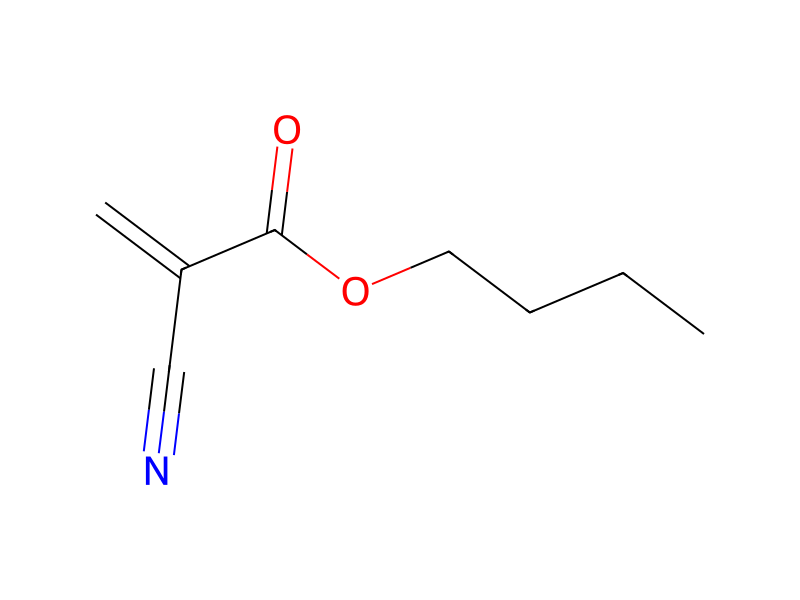
기본 정보
- 표준 SMILES
C=C(C#N)C(=O)OCCCC- InChIKey
JJJFUHOGVZWXNQ-UHFFFAOYSA-N- 분자식
- C8H11NO2
- 평균 분자량
- 153.18 g/mol
- 단동위원소 질량
- 153.07897859
개요
Enbucrilate is a nitrile and an alpha,beta-unsaturated monocarboxylic acid.
이름 및 식별자
- 우선 이름
- Butyl cyanoacrylate
- IUPAC
- butyl 2-cyanoprop-2-enoate
- 현지명
- 뷰틸 시아노아크릴산 염
- 영어명
- enbucrilate
- 분자식
- C8H11NO2
- 분자량
- 153.18
이름 및 동의어
이름 더 보기
데이터베이스 식별자
- CAS
25154-80-7、6606-65-1- PubChem CID
- 23087
- DTXSID
DTXSID5064417- ChEMBL
CHEMBL2104251- ChEBI
CHEBI:134778- UNII
- F8CEP82QNP
- EC Number
- 229-552-2
- Nikkaji
- J8.426C
물성
구조 계산 물성
- XLogP
- 2.4
- 극성 표면적
- 50.1 Ų
- 수소 결합 공여자 수
- 0
- 수소 결합 수용자 수
- 3
- 회전 가능 결합 수
- 5
- 무거운 원자 수
- 11
- 형식 전하
- 0
- 복잡도
- 199
실험 및 물리화학적 성질
Drugs
Pharmaceuticals -> Listed in ZINC15
Pharmaceuticals
물리화학적 성질
- 끓는 점
- 1.8 · bp1.8 68°
- 밀도
- 20 · d20 0.989
- 증기압
- 1.3 hPa · 1.3hPa at 20℃
- 굴절률
- 20 D · n20D 1.4424; nD25 1.4410
- 인화점
- 176 °F · closed cup: >176°F (>80°C)
- 저장 조건
- 2 · under inert gas (nitrogen or Argon) at 2-8°C
- 용해도
- 클로로포름(적게), 에틸아세테이트(약간)에 용해됨
- 물리적 상태
- 기름
- 색상
- 무색
- InChI
- InChI=1S/C8H11NO2/c1-3-4-5-11-8(10)7(2)6-9/h2-5H2,1H3
- InChIKey
- JJJFUHOGVZWXNQ-UHFFFAOYSA-N
- SMILES
- C(OCCCC)(=O)C(C#N)=C
- LogP
- 1.29 at · 1.29 at 25℃ and pH7
- 표면장력
- 34.28 mN/m · 34.28mN/m at 1g/L and 20℃
- EPA
- 2 · Butyl 2-cyanoacrylate (6606-65-1)
안전 및 규제
GHS 분류
GHS Classification
This chemical does not meet GHS hazard criteria for 100% (19 of 19) of all reports.
Not Classified
Aggregated GHS information provided per 19 reports by companies from 2 notifications to the ECHA C&L Inventory.
유해성 정보
Regulatory Information
Chemical: 2-Propenoic acid, 2-cyano-, butyl ester
REACH registered substance: Enbucrilate (EC: 229-552-2)
n-Butyl cyanoacrylate: Does not have an individual approval but may be used as a component in a product covered by a group standard. It is not approved for use as a chemical in its own right.
독성 정보
Treatment
Antidotes to cyanide poisoning include hydroxocobalamin and sodium nitrite, which release the cyanide from the cytochrome system, and rhodanase, which is an enzyme occurring naturally in mammals that combines serum cyanide with thiosulfate, producing comparatively harmless thiocyanate. Oxygen therapy can also be administered. (L97)
Health Effects
Exposure to high levels of cyanide for a short time harms the brain and heart and can even cause coma, seizures, apnea, cardiac arrest and death. Chronic inhalation of cyanide causes breathing difficulties, chest pain, vomiting, blood changes, headaches, and enlargement of the thyroid gland. Skin contact with cyanide salts can irritate and produce sores. (L96, L97)
Toxicity Summary
Organic nitriles decompose into cyanide ions both in vivo and in vitro. Consequently the primary mechanism of toxicity for organic nitriles is their production of toxic cyanide ions or hydrogen cyanide. Cyanide is an inhibitor of cytochrome c oxidase in the fourth complex of the electron transport chain (found in the membrane of the mitochondria of eukaryotic cells). It complexes with the ferric iron atom in this enzyme. The binding of cyanide to this cytochrome prevents transport of electrons from cytochrome c oxidase to oxygen. As a result, the electron transport chain is disrupted and the cell can no longer aerobically produce ATP for energy. Tissues that mainly depend on aerobic respiration, such as the central nervous system and the heart, are particularly affected. Cyanide is also known produce some of its toxic effects by binding to catalase, glutathione peroxidase, methemoglobin, hydroxocobalamin, phosphatase, tyrosinase, ascorbic acid oxidase, xanthine oxidase, succinic dehydrogenase, and Cu/Zn superoxide dismutase. Cyanide binds to the ferric ion of methemoglobin to form inactive cyanmethemoglobin. (L97)
안전 데이터
- tsca
- TSCA listed
- 기존화학 물질
- KE-09115
화학 및 산업
약리 정보
Metabolism/Metabolites
Organic nitriles are converted into cyanide ions through the action of cytochrome P450 enzymes in the liver. Cyanide is rapidly absorbed and distributed throughout the body. Cyanide is mainly metabolized into thiocyanate by either rhodanese or 3-mercaptopyruvate sulfur transferase. Cyanide metabolites are excreted in the urine. (L96)
용도 및 제조
Uses
Use (kg; approx.) in Germany (2009): >10
Butyl cyanoacrylate is the main component of medical cyanoacrylate glues, which are used as adhesives for lacerations of the skin, and in the treatment of bleeding from vascular structures. (L595)
응용 분야
용도Enbucrilate is bacteriostatic and its use is usually painless. It is used as an adhesive for lacerations of the skin, and in the treatment of bleeding from vascular structures.
상·하류 제품 정보
상류 원료
공급사50 곳
관련 반응
현재 필터 조건에 해당하는 반응 기록이 없습니다.
연결된 노트
불러오는 중…