홈MCP워크벤치Skills
홈워크벤치알림마이페이지
llms.txt · MCP 가이드개인정보처리방침 · 이용약관 · 지원v1.8.1
  1. 홈
  2. /화합물

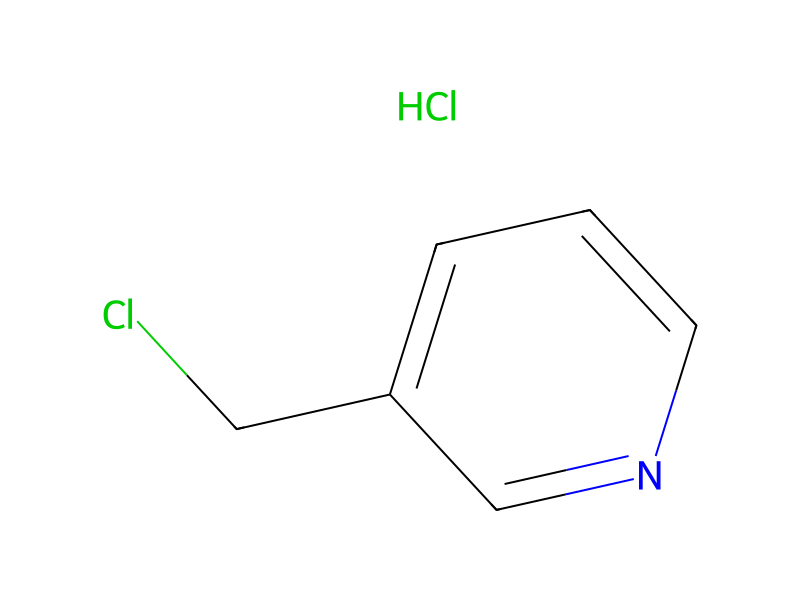
3-(Chloromethyl)pyridine hydrochloride

HCID 23394
새 반응
인쇄
기본 정보개요이름 및 식별자물성안전 및 규제화학 및 산업관련 반응화합물 노트
부분 구조 검색유사 구조 찾기

기본 정보

CAS
6959-48-4
표준 SMILES
Cl.ClCc1cccnc1
InChIKey
UZGLOGCJCWBBIV-UHFFFAOYSA-N
분자식
C6H6ClN.ClH
평균 분자량
164.03 g/mol
단동위원소 질량
162.99555458

개요

3-(chloromethyl)pyridine hydrochloride appears as yellow powder or yellow-tan solid with an irritating odor. (NTP, 1992)

이름 및 식별자

우선 이름
3-(Chloromethyl)pyridine hydrochloride
IUPAC
3-(chloromethyl)pyridine;hydrochloride
영어명
3-Picolyl chloride hydrochloride
분자식
C6H7Cl2N
분자량
164.03

이름 및 동의어

3-(CHLOROMETHYL)PYRIDINE HYDROCHLORIDE6959-48-43-Picolyl chloride hydrochloride3-Chloromethylpyridine hydrochloride3-Pyridylmethyl chloride hydrochloridePyridine, 3-(chloromethyl)-, hydrochlorideNCI-C038383-(Chloromethyl)pyridinium chlorideBQA8FYP4YNDTXSID60203093-(Chloromethyl) pyridine, hydrochlorideNSC-66482
이름 더 보기
3-pyridine. HClWLN: T6NJ C1G &GH3-PicolylChlorideHcl3-Picolyl chloride hPicolyl Chloride HclRupatadine impurity 10Rupatadine Impurity 7 HClRupatadine Impurity 4 HCl
Pyridine, 3-chloromethyl-, hydrochlorideDTXCID003093-(CHLOROMETHYL)PYRIDINE MONOHYDROCHLORIDERefChem:494696230-150-43-(Chloromethyl)pyridine HCl3-(Chloromethyl)pyridine.HCl3-(chloromethyl)pyridine;hydrochloride

데이터베이스 식별자

CAS
6959-48-4
PubChem CID
23394
DTXSID
DTXSID6020309
ChEMBL
CHEMBL3182495
UNII
BQA8FYP4YN
EC Number
230-150-4

물성

구조 계산 물성

극성 표면적
12.9 Ų
수소 결합 공여자 수
1
수소 결합 수용자 수
1
회전 가능 결합 수
1
무거운 원자 수
9
형식 전하
0
복잡도
65.5

실험 및 물리화학적 성질

Chemical ClassesNitrogen Compounds -> Pyridines
Solubilitygreater than or equal to 100 mg/mL at 66 °F (NTP, 1992)
DecompositionWhen heated to decomposition it emits toxic fumes of /nitrogen oxides/ and /chlorides/.
Melting Point · 2건

286 to 291 °F (NTP, 1992)

137-143 °C

Physical Description · 2건

3-(chloromethyl)pyridine hydrochloride appears as yellow powder or yellow-tan solid with an irritating odor. (NTP, 1992)

Yellow or tannish-yellow solid with an irritating odor; Hygroscopic; [CAMEO] Off-white powder; [MSDSonline]

물리화학적 성질

녹는점
137 · 137-143 °C(lit.)
저장 조건
2 · Inert atmosphere,2-8°C
물리적 상태
결정화된 바늘 또는 분말
색상
흰색에서 베이지색
수용성
19 · 19&C에서 >=10g/100mL
BRN
3689156 · 3689156
InChI
InChI=1S/C6H6ClN.ClH/c7-4-6-2-1-3-8-5-6;/h1-3,5H,4H2;1H
InChIKey

안전 및 규제

안전 정보는 참고용이며, 공급업체의 물질안전보건자료(SDS), 관련 법규 및 전문가 평가를 대체하지 않습니다.

GHS 분류

GHS Classification · 4건

Danger

H302 (100%): Harmful if swallowed [Warning Acute toxicity, oral]

P260, P264, P270, P280, P301+P317, P301+P330+P331, P302+P361+P354, P304+P340, P305+P354+P338, P316, P321, P330, P363, P405, and P501 (click each P-code to see the statement)

Aggregated GHS information provided per 51 reports by companies from 6 notifications to the ECHA C&L Inventory. Each notification may be associated with multiple companies.

유해성 정보

Regulatory Information3-(Chloromethyl)pyridinium chloride: Does not have an individual approval but may be used under an appropriate group standard
DOT LabelPoison
Fire HazardsFlash point data for this chemical are not available; however, it is probably combustible. (NTP, 1992)
Health Hazards · 1건

SYMPTOMS: Symptoms of exposure to this compound include irritation of the skin, eyes, mucous membranes and upper respiratory tract. Symptoms of exposure to a similar compound include a burning sensation, coughing, wheezing, laryngitis shortness of breath, headache, nausea and vomiting.

Hazards Summary · 1건

Emergency treatment: Pyridine; Pyridine is an irritant that causes CNS depression after ingestion of 1/2 cup or inhalation of 6-12 ppm; It can cause liver and kidney injury; [HSDB] A skin, eye, and respiratory tract irritant; [CAMEO] A corrosive substance that can cause injury to the skin, eyes, and respiratory tract; May cause skin sensitization; Inhalation may cause chemical pneumonitis; [Alfa Aesar MSDS] See Pyridine.

Reactive GroupAmines, Phosphines, and Pyridines
Special Reports

화학 및 산업

용도 및 제조

Uses · 2건

Used as a research chemical; Not commercially produced in the US; [HSDB]

RESEARCH CHEMICAL

U.S. Production · 2건

(1977) NOT PRODUCED COMMERCIALLY IN USA

(1979) NOT PRODUCED COMMERCIALLY IN USA

응용 분야

일반 설명Yellow powder or yellow-tan solid with an irritating odor.

상·하류 제품 정보

상류 원료

3-피리딘메탄올β-피콜린3-알데히드피리딘니코틴산

하류 제품

3-Pyridineethaneamine1-피리딘-3-일메틸-피페라진3-Pyridylacetic acid3-[(Methylamino)methyl]pyridine3-(메톡시메틸)피리딘3-ChloroMethyl-pyridine 1-oxide1,1-bis(pyridin-3-ylmethyl)-2,2-bisimidazole

관련 반응

267건
반응 기록 만들기
HRID 15889 반응식
HRID 15889반응물로uspto-grants-2010_06
HRID 17499 반응식
HRID 17499반응물로uspto-grants-2010_06
HRID 21319 반응식
HRID 21319반응물로uspto-grants-2010_06
HRID 51438 반응식
HRID 51438반응물로uspto-grants-2004_03
HRID 52168 반응식
HRID 52168반응물로uspto-grants-1997_04
HRID 61501 반응식
HRID 61501반응물로uspto-grants-2016_09
HRID 218713 반응식
HRID 218713반응물로uspto-grants-2012_06
HRID 230278 반응식
HRID 230278반응물로uspto-grants-2009_07
이전1 / 34 페이지

화합물 노트

이 페이지에서기본 정보개요이름 및 식별자물성안전 및 규제화학 및 산업관련 반응화합물 노트
UZGLOGCJCWBBIV-UHFFFAOYSA-N
SMILES
C1(CCl)C=NC=CC=1.Cl
EPA
3 · 3-(Chloromethyl)pyridine hydrochloride (6959-48-4)

화학적 성질

White to pale brown solid

Bioassay of 3-(Chloromethyl)pyridine hydrochloride for Possible Carcinogenicity (1978) Technical Rpt Series No. 95 DHEW Pub No. (NIH) 78-1345, U.S. Department of Health Education and Welfare, National Cancer Institute, Bethesda, MD 20014
Reactivity Profile3-(CHLOROMETHYL)PYRIDINE HYDROCHLORIDE is incompatible with strong oxidizing agents and strong bases. (NTP, 1992)
Air and Water ReactionsHygroscopic. Water soluble.
Hazard Classes and CategoriesAcute Tox. 4 (100%)
Skin, Eye, and Respiratory IrritationsPyridine and its derivatives cause local irritation on contact with the skin, mucous membranes and cornea. /Pyridine and its derivatives/

안전 및 보호

Fire FightingFires involving this material can be controlled with a dry chemical, carbon dioxide or Halon extinguisher. (NTP, 1992)
First Aid · 1건

EYES: First check the victim for contact lenses and remove if present. Flush victim's eyes with water or normal saline solution for 20 to 30 minutes while simultaneously calling a hospital or poison control center. Do not put any ointments, oils, or medication in the victim's eyes without specific instructions from a physician. IMMEDIATELY transport the victim after flushing eyes to a hospital even if no symptoms (such as redness or irritation) develop.

Nonfire Spill Response · 1건

SMALL SPILLS AND LEAKAGE: If you spill this chemical, you should dampen the solid spill material with water, then transfer the dampened material to a suitable container. Use absorbent paper dampened with water to pick up any remaining material. Seal your contaminated clothing and the absorbent paper in a vapor-tight plastic bag for eventual disposal. Wash all contaminated surfaces with a soap and water solution. Do not reenter the contaminated area until the Safety Officer (or other responsible person) has verified that the area has been properly cleaned.

Disposal Methods · 1건

SRP: At the time of review, criteria for land treatment or burial (sanitary landfill) disposal practices are subject to significant revision. Prior to implementing land disposal of waste residue (including waste sludge), consult with environmental regulatory agencies for guidance on acceptable disposal practices.

Preventive Measures · 1건

SRP: The scientific literature for the use of contact lenses in industry is conflicting. The benefit or detrimental effects of wearing contact lenses depend not only upon the substance, but also on factors including the form of the substance, characteristics and duration of the exposure, the uses of other eye protection equipment, and the hygiene of the lenses. However, there may be individual substances whose irritating or corrosive properties are such that the wearing of contact lenses would be harmful to the eye. In those specific cases, contact lenses should not be worn. In any event, the usual eye protection equipment should be worn even when contact lenses are in place.

Isolation and EvacuationExcerpt from ERG Guide 154 [Substances - Toxic and/or Corrosive (Non-Combustible)]:
Personal Protective Equipment (PPE) · 2건

RECOMMENDED RESPIRATOR: Where the neat test chemical is weighed and diluted, wear a NIOSH-approved half face respirator equipped with a combination filter cartridge, i.e. organic vapor/acid gas/HEPA (specific for organic vapors, HCl, acid gas, SO2 and a high efficiency particulate filter). (NTP, 1992)

Depending on the extent of possible contact, workers should be provided with personal protective equipment. A charcoal gas mask canister respirator has been found to be effective against a 2% pyridine concentration at 30 l/min for 1 hr. Rubber and plastic gloves should not be relied upon to prevent skin contact because pyridine and many of its derivatives penetrate these materials ... . /Pyridine, homologs, and derivatives/

독성 정보

Adverse EffectsNeurotoxin - Other CNS neurotoxin
Ongoing Test Status · 1건

The following link will take the user to the National Toxicology Program (NTP) Test Agent Search Results page, which tabulates all of the "Standard Toxicology & Carcinogenesis Studies", "Developmental Studies", and "Genetic Toxicity Studies" performed with this chemical. Clicking on the "Testing Status" link will take the user to the status (i.e., in review, in progress, in preparation, on test, completed, etc.) and results of all the studies that the NTP has done on this chemical. [http://ntp-apps.niehs.nih.gov/ntp_tox/index.cfm?fuseaction=ntpsearch.searchresults&searchterm=6959-48-4]

Carcinogen Classification · 6건

3-Chloromethyl- pyridine hydrochloride

TR-095: Bioassay of 3-(Chloromethyl)pyridine Hydrochloride for Possible Carcinogenicity (CASRN 6959-48-4) (1978 )

10/25/78

Clear Evidence

Equivocal Evidence

Clear Evidence

Non-Human Toxicity Excerpts · 5건

MALE & FEMALE FISCHER 344 RATS GIVEN BY GAVAGE 75 OR 150 MG/KG 3 TIMES/WK FOR 103 & 83 WK. SQUAMOUS-CELL LESIONS OCCURRED IN STOMACH OF MALES & FEMALES. EARLY DEATHS IN HIGH-DOSE LEVELS. 20 CONTROLS OF EACH SEX IN EACH GROUP.

FIFTY MALE & 50 FEMALE B6C3F1 MICE GIVEN 100 OR 200 MG/KG BY GAVAGE 3 TIMES/WK FOR 81 & 102 WK. IT PRODUCED PAPILLOMAS & CARCINOMAS OF STOMACH. EARLY DEATHS OCCURRED IN HIGH-DOSE GROUPS. (CONTROLS IN EACH GROUP 20 MICE OF EACH SEX)

3-(Chloromethyl)pyridine hydrochloride was evaluated for its mutagenic potential in the L5178Y TK+/TK- mouse lymphoma forward mutation assay using established procedures. Two experiments were conducted in the absence of an exogenous metabolic activation system. The dose levels tested in these experiments ranged from 0-50 ug/ml. Significant mutagenic responses were obtained in both experiments, and the lowest effective dose tested was 5 ug/ml.

3-(Chloromethyl)pyridine hydrochloride was evaluated for the induction of sex-linked recessive lethal mutations in Drosophila melanogaster by the National Toxicology Program. Canton-S wild-type males were treated with concentrations of 3-(chloromethyl)pyridine that result in approximately 30% mortality. Following treatment, males were mated individually to 3 harems of Basc virgin females to produce 3 broods for analysis. The concentrations of 3-(chloromethyl)pyridine tested by injection (1000 ppm) and feeding (10, 20, and 30 ppm) were negative in this assay.

The mutagenicity of halogenated pyridines was evaluated in vitro using the Salmonella typhimurium mammalian microsome test. The purpose of the study to establish an initial data base for structure/activity relationship studies. Sixteen pyridines consisting of seven chlorinated pyridines, three fluorinated pyridines, three methylated pyridines, and three chloromethyl pyridines were tested in Salmonella typhimurium (TA-97, TA-98, TA-100, and TA-102) with or without metabolic activation with rat liver S9 mix. Among the tested compounds, four were clearly mutagenic, three gave equivocal results, and nine were nonmutagenic. 2-Chloropyridine, 2,3-dichloropyridine, 2-chloromethylpyridine, and 3-chloromethylpyridine showed definite mutagenicity in at least one strain. Only 2-chloropyridine was mutagenic in all four bacterial strains. All positive compounds except 2-chloropyridine showed signs of toxicity. Two chlorinated and one fluorinated pyridine derivatives yielded equivocal results. ... The four positive compounds contain a halogen atom in at least the 2 position or a chloromethyl group in the 2 or 3 position. These data suggest that halogenated pyridines, especially those with halogens at the 2 position and singly on a methyl subtitutent, have mutagenic activity in the Ames-Salmonella assay.

Antidote and Emergency Treatment · 2건

/SRP:/ Basic treatment: Establish a patent airway. Suction if necessary. Watch for signs of respiratory insufficiency and assist ventilations if necessary. Administer oxygen by nonrebreather mask at 10 to 15 L/min. Monitor for pulmonary edema and treat if necessary ... . Monitor for shock and treat if necessary ... . For eye contamination, flush eyes immediately with water. Irrigate each eye continuously with normal saline during transport ... . Do not use emetics. For ingestion, rinse mouth and administer 5 ml/kg up to 200 ml of water for dilution if the patient can swallow, has a strong gag reflex, and does not drool. Administer activated charcoal ... . /Aromatic hydrocarbons and related compounds/

/SRP:/ Advanced treatment: Consider orotracheal or nasotracheal intubation for airway control in the patient who is unconscious or in respiratory arrest. Positive pressure ventilation techniques with a bag valve mask device may be beneficial. Monitor cardiac rhythm and treat arrhythmias if necessary ... Start an IV with D5W /SRP: "To keep open", minimal flow rate/. Use lactated Ringer's if signs of hypovolemia are present. Watch for signs of fluid overload. Consider drug therapy for pulmonary edema ... . Treat seizures with diazepam (Valium) ... . Use proparacaine hydrochloride to assist eye irrigation ... . /Aromatic hydrocarbons and related compounds/

National Toxicology Program Studies · 1건

A bioassay of 3-(chloromethyl)pyridine hydrochloride for possible carcinogenicity was conducted by administering the test chemical by gavage to Fischer 344 rats and B6C3F1 mice. Groups of 50 rats and 50 mice of each sex were administered 3-(chloromethyl)pyridine hydrochloride in a vehicle of distilled water three times/wk at one of the following doses, either 75 or 150 mg/kg body weight for the rats and either 100 or 200 mg/kg body weight for the mice. The low dose rats were dosed for 103 wk and the low dose mice for 102 wk. Because of early deaths in the high dose animals, the high dose rats were dosed for only 83 wk and the high dose mice for only 81 wk. Controls consisted of groups of 20 rats and 20 mice of each sex which were administered the vehicle only for 104 wk. All surviving rats and mice were /sacrificed/ at 104 wk. ... Under the conditions of this bioassay, 3-(chloromethyl)pyridine hydrochloride was carcinogenic in male Fischer 344 rats and B6C3F1 mice of both sexes, producing papillomas and carcinomas at the site of topical application, the stomach. Levels of Evidence of Carcinogenicity: Male Rats: Positive; Female Rats: Equivocal; Male Mice: Positive; Female Mice: Positive.

Non-Human Toxicity Values · 2건

LD50 Rat oral 316 mg/kg

LD50 Mouse oral 316 mg/kg

안전 데이터

wgk
3
rtecs
US7000000
ridadr
2811
HS 번호
29333999
risk_code
22-36/37/38-45-20/21/22-34
hazard_code
Xn,C,T
safety_code
26-36-53-45-36/37/39
포장분류
III
위험 등급
8
F 고인화성물질
3-10
위험 참고 사항
Corrosive
Hazard Classifications
Acute Tox. 4 OralEye Dam. 1Muta. 2Skin Corr. 1B
스토리지 클래스
8A - Combustible corrosive hazardous materials
유해 물질 데이터
6959-48-4(Hazardous Substances Data)