

기본 정보
- 표준 SMILES
[Na+].[O]=[Mn](=[O])(=[O])[O-]- InChIKey
WPWYHBSOACXYBB-UHFFFAOYSA-N- 분자식
- NaMnO4
- 평균 분자량
- 141.925 g/mol
- 단동위원소 질량
- 141.90747286
개요
Sodium permanganate appears as a purplish colored crystalline solid. Noncombustible but accelerates the burning of combustible material. If the combustible material is finely divided the mixture may be explosive. May spontaneously ignite in contact with liquid combustible materials. Contact with sulfuric acid may cause fires or explosions. Used in medicine, as a disinfectant, and for many other uses.
이름 및 식별자
- 우선 이름
- Sodium Permanganate
- IUPAC
- sodium permanganate
이름 및 동의어
SODIUM PERMANGANATE10101-50-5Permanganato sodicoPermanganate de sodiumSodium permanganate (NaMnO4)Permanganic acid, sodium saltPermanganic acid (HMnO4), sodium saltIZ5356R281DTXSID2051504trioxo(sodiooxy)manganeseRefChem:184066DTXCID3030052
이름 더 보기
233-251-1sodium;permanganateSodium permangatePermanganato sodico [Spanish]HSDB 762Permanganate de sodium [French]Sodium permanganate(VII)EINECS 233-251-1
데이터베이스 식별자
- CAS
10101-50-5、79048-36-5- PubChem CID
- 23673458
- DTXSID
DTXSID2051504- UNII
- IZ5356R281
- EC Number
- 233-251-1、684-874-4
- Nikkaji
- J44.074D
물성
구조 계산 물성
- 극성 표면적
- 74.3 Ų
- 수소 결합 공여자 수
- 0
- 수소 결합 수용자 수
- 4
- 회전 가능 결합 수
- 0
- 무거운 원자 수
- 6
- 형식 전하
- 0
- 복잡도
- 118
실험 및 물리화학적 성질
Chemical ClassesMetals -> Manganese Compounds, Inorganic
DrugsPharmaceuticals -> Synthetic Cannabinoids or Psychoactive Compounds
Density
1.972 g/cu cm
Red-black hydroscopic crystals; MW 195.972; decompose @ 170 °C; very soluble in water; density 2.47g/cu cm; reacts with ethanol /Trihydrate/
1.972 @25 °C
Color/FormRed crystals
SolubilityReadily soluble in water (900 g/l at ambient temperature)
Melting PointDecomposes
Physical Description
Sodium permanganate appears as a purplish colored crystalline solid. Noncombustible but accelerates the burning of combustible material. If the combustible material is finely divided the mixture may be explosive. May spontaneously ignite in contact with liquid combustible materials. Contact with sulfuric acid may cause fires or explosions. Used in medicine, as a disinfectant, and for many other uses.
Large Crystals; Liquid
Trihydrate: Reddish-black solid; Very hygroscopic; [Merck Index] Red solid; [HSDB] Purplish solid; [CAMEO] Black-brown crystals; [MSDSonline]
Other Experimental PropertiesPurple to reddish-black crystals or powder /Trihydrate/
안전 및 규제
GHS 분류
GHS Classification
This chemical does not meet GHS hazard criteria for 1.4% (3 of 220) of reports.
Danger
H272 (97.7%): May intensify fire; oxidizer [Danger Oxidizing liquids; Oxidizing solids]
P210, P220, P260, P264, P264+P265, P270, P273, P280, P301+P317, P301+P330+P331, P302+P361+P354, P304+P340, P305+P354+P338, P316, P317, P319, P321, P330, P363, P370+P378, P391, P405, and P501 (click each P-code to see the statement)
Aggregated GHS information provided per 220 reports by companies from 14 notifications to the ECHA C&L Inventory. Each notification may be associated with multiple companies.
Danger
유해성 정보
Regulatory Information
Chemical: Permanganic acid (HMnO4), sodium salt
List II Chemical: A chemical, other than a List I chemical, specified by regulation that, in addition to legitimate uses, is used in manufacturing a controlled substance in violation of the Act. (21 eCFR 1310.02)
Permanganic acid (HMnO4), sodium salt is listed on the EPA's Chemical Data Reporting (CDR) system. Manufacturers and importers of Permanganic acid (HMnO4), sodium salt are required to report information about their production and use of this chemical to the EPA under the Toxic Substances Control Act (TSCA). (40 eCFR Part 711)
REACH registered substance: Sodium permanganate (EC: 233-251-1)
Permanganic acid, sodium salt: HSNO Approval: HSR001354 Approved with controls
DOT LabelOxidizer
Fire Hazards
Excerpt from ERG Guide 140 [Oxidizers]:
CAUTION: Ammonium nitrate products may explode if involved in fire or contaminated with hydrocarbons (fuels), organic matter, other contaminants or when hot molten and contained. Treat as an explosive (GUIDE 112).
Fire PotentialMODERATE, BY CHEMICAL REACTION; STRONG OXIDIZER.
Health Hazards
Excerpt from ERG Guide 140 [Oxidizers]:
· Inhalation, ingestion or contact (skin, eyes) with vapors or substance may cause severe injury, burns or death.
Hazards Summary
A strong oxidizing agent; Fire hazard on contact with organic substances; [Hawley] A strong oxidizing agent; May ignite combustible substances; [CAMEO] Corrosive to skin and eyes; [eChemPortal: ERMA] Potassium permanganate crystals and concentrated solutions (greater than1:5000 strength) are corrosive (release potassium hydroxide when contact water); Permanganates can induce methemoglobinemia after ingestion; [Olson, p. 133] May cause fire on contact with combustible materials; A severe skin and eye irritant; [MSDSonline] See Manganese and linked occupational diseases.
DOT ID and Guide1503 140
Reactive GroupOxidizing Agents, Strong
Special Reports
USEPA; Locating and Estimating Air Emissions from Sources of Manganese (1985) EPA-450/4-84-007h
USEPA; Health Assessment Document: Manganese (1984) EPA-600/8-83-013F
WHO; Environ Health Criteria: Manganese (1981)
WHO; Environ Health Criteria: Manganese-Executive Summary (1981)
Reactivity AlertsStrong Oxidizing Agent
OSHA StandardsPermissible Exposure Limit: Table Z-1 Ceiling value: 5 mg/cu m. /Manganese cmpd (as Mn)/
Reactivity Profile
Acetic acid or acetic anhydride can explode with permanganates if not kept cold [Von Schwartz 1918 p. 34]. Explosions can occur when permanganates that have been treated with sulfuric acid come in contact with benzene, carbon disulfide, diethyl ether, ethyl alcohol, petroleum, or organic matter.
안전 및 보호
Fire FightingExcerpt from ERG Guide 140 [Oxidizers]:
Accidental Release Measures
· CALL 911. Then call emergency response telephone number on shipping paper. If shipping paper not available or no answer, refer to appropriate telephone number listed on the inside back cover.
· Keep combustibles (wood, paper, oil, etc.) away from spilled material.
First Aid
Excerpt from ERG Guide 140 [Oxidizers]:
General First Aid:
Exposure Control and Personal Protection
· Wear positive pressure self-contained breathing apparatus (SCBA).
0.2 [mg/m3], as Mn (inhalable fraction), 0.02 mg/m3, as Mn (respirable fraction)[German Research Foundation (DFG)]
Fire Fighting Procedures
If material on fire or involved in fire: Flood with water. Cool all affected containers with flooding quantities of water. Apply water from as far a distance as possible.
Evacuation: If fire becomes uncontrollable - consider evacuation of one-half (1/2) mile radius.
Nonfire Spill ResponseExcerpt from ERG Guide 140 [Oxidizers]:
Disposal Methods
SRP: At the time of review, criteria for land treatment or burial (sanitary landfill) disposal practices are subject to significant revision. Prior to implementing land disposal of waste residue (including waste sludge), consult with environmental regulatory agencies for guidance on acceptable disposal practices.
Preventive Measures
SRP: Local exhaust ventilation should be applied wherever there is an incidence of point source emissions or dispersion of regulated contaminants in the work area. Ventilation control of the contaminant as close to its point of generation is both the most economical and safest method to minimize personnel exposure to airborne contaminants.
If material not on fire and not involved in fire: Keep sparks, flames, and other sources of ignition away. Keep material out of water sources and sewers.
Personnel protection: ... Do not handle broken packages unless wearing appropriate personal protective equipment. Wash away any material which may have contacted the body with copious amounts of water or soap and water. ...
Isolation and Evacuation
Excerpt from ERG Guide 140 [Oxidizers]:
Immediate precautionary measure
Minimum Risk LevelChronic Inhalation: 0.0003 mg/m3 (L134)
Threshold Limit Values (TLV)
0.02 [mg/m3], as Mn (respirable fraction), 0.1 mg/m3, as Mn (inhalable fraction)
8 hr Time Weighted Avg: 0.2 mg/cu m /Manganese and inorganic compounds, as Mn/
Excursion Limit Recommendation: Excursions in worker exposure levels may exceed 3 times the TLV-TWA for no more than a total of 30 minutes during a work day, and under no circumstances should they exceed 5 times the TLV-TWA, provided that the TLV-TWA is not exceeded. /Manganese and inorganic compounds, as Mn/
Protective Action Criteria (PAC)
0.12 [mg/m3]
1.3 [mg/m3]
63 [mg/m3]
독성 정보
Treatment
EYES: irrigate opened eyes for several minutes under running water. INGESTION: do not induce vomiting. Rinse mouth with water (never give anything by mouth to an unconscious person). Seek immediate medical advice. SKIN: should be treated immediately by rinsing the affected parts in cold running water for at least 15 minutes, followed by thorough washing with soap and water. If necessary, the person should shower and change contaminated clothing and shoes, and then must seek medical attention. INHALATION: supply fresh air. If required provide artificial respiration.
Health Effects
Manganese mainly affects the nervous system and may cause behavioral changes and other nervous system effects, which include movements that may become slow and clumsy. This combination of symptoms when sufficiently severe is referred to as “manganism”. (L228)
Adverse EffectsNeurotoxin - Parkinsonism
Exposure RoutesOral (L228) ; inhalation (L228)
Toxicity Summary
Manganese is a cellular toxicant that can impair transport systems, enzyme activities, and receptor functions. It primarily targets the central nervous system, particularily the globus pallidus of the basal ganglia. It is believed that the manganese ion, Mn(II), enhances the autoxidation or turnover of various intracellular catecholamines, leading to increased production of free radicals, reactive oxygen species, and other cytotoxic metabolites, along with a depletion of cellular antioxidant defense mechanisms, leading to oxidative damage and selective destruction of dopaminergic neurons. In addition to dopamine, manganese is thought to perturbations other neurotransmitters, such as GABA and glutamate. In order to produce oxidative damage, manganese must first overwhelm the antioxidant enzyme manganese superoxide dismutase. The neurotoxicity of Mn(II) has also been linked to its ability to substitute for Ca(II) under physiological conditions. It can enter mitochondria via the calcium uniporter and inhibit mitochondrial oxidative phosphorylation. It may also inhibit the efflux of Ca(II), which can result in a loss of mitochondrial membrane integrity. Mn(II) has been shown to inhibit mitochondrial aconitase activity to a significant level, altering amino acid metabolism and cellular iron homeostasis. (L228)
Signs and Symptoms
Manganese mainly affects the nervous system and may cause behavioral changes and other nervous system effects, which include movements that may become slow and clumsy. This combination of symptoms when sufficiently severe is referred to as “manganism”. (L228)
Carcinogen ClassificationNo indication of carcinogenicity to humans (not listed by IARC).
Non-Human Toxicity Excerpts
PERMANGANATE ... OXIDIZES GASTRIC MUCOSAL CELLS. /PERMANGANATE/
MOST BACTERIA ARE KILLED WITHIN 1 HR BY PERMANGANATES IN DILUTION OF 1:10,000, BUT SOME MICROORGANISMS SURVIVE EXPOSURE TO MUCH HIGHER CONCN. GERMICIDAL EFFICIENCY ... IS GREATLY REDUCED IN PRESENCE OF ORG MATTER. /PERMANGANATES/
Antidote and Emergency Treatment
Basic treatment: Establish a patent airway. Suction if necessary. Watch for signs of respiratory insufficiency and assist ventilations if necessary. Administer oxygen by nonrebreather mask at 10 to 15 L/min. Monitor for pulmonary edema and treat if necessary ... . Monitor for shock and treat if necessary ... . For eye contamination, flush eyes immediately with water. Irrigate each eye continuously with normal saline during transport ... . Do not use emetics. For ingestion, rinse mouth and administer 5 ml/kg up to 200 ml of water for dilution if the patient can swallow, has a strong gag reflex, and does not drool ... . /Manganese and related compounds/
Advanced treatment: Consider orotracheal or nasotracheal intubation for airway control in the patient who is unconscious or in severe respiratory distress. Monitor cardiac rhythm and treat arrhythmias if necessary ... . Start an IV with D5W /SRP: "To keep open", minimal flow rate/. Use lactated Ringer's if signs of hypovolemia are present. Consider drug therapy for pulmonary edema ... . For hypotension with signs of hypovolemia, administer fluid cautiously. Consider vasopressors for hypotension with a normal fluid volume. Watch for signs of fluid overload ... . Use proparacaine hydrochloride to assist eye irrigation ... . /Manganese and related compounds/
규제 정보
Atmospheric Standards
Listed as a hazardous air pollutant (HAP) generally known or suspected to cause serious health problems. The Clean Air Act, as amended in 1990, directs EPA to set standards requiring major sources to sharply reduce routine emissions of toxic pollutants. EPA is required to establish and phase in specific performance based standards for all air emission sources that emit one or more of the listed pollutants. Sodium permanganate is included on this list.
... Substances for which a Federal Register notice has been published that included consideration of the serious health effects, including cancer, form ambient air exposure to the substance. Manganese (50 FR 32627; Aug. 13, 1985) is included on this list. /Manganese/
State Drinking Water Guidelines(MN) MINNESOTA 300 ug/L /Manganese/
화학 및 산업
약리 정보
Metabolism/Metabolites
Manganese is absorbed mainly via ingestion, but can also be inhaled. It binds to alpha-2-macroglobulin, albumin, or transferrin in the plasma and is distributed to the brain and all other mammalian tissues, though it tends to accumulate more in the liver, pancreas, and kidney. Manganese is capable of existing in a number of oxidation states and is believed to undergo changes in oxidation state within the body. Manganese oxidation state can influence tissue toxicokinetic behavior, and possibly toxicity. Manganese is excreted primarily in the faeces. (L228)
용도 및 제조
Uses
Used as an oxidizing agent, disinfectant , bactericide, and antidote (poisoning by morphine, curare, or phosphorus); [Hawley] Used to etch plastic parts in printed circuit boards; Formerly used as an astringent in the treatment of urethritis; [HSDB]
Oxidizing agent; disinfectant; bactericide; manufacture of saccharin; antidote for poisoning by morphine, curare, and phosphorus. /Trihydrate/
Etching of plastic parts such as printed circuit boards, as well as some special organic oxidation reactions, particularly if the presence of potassium ion is undesirable.
Aqueous solutions of sodium permanganate are used as etchants in printed circuitry. (L243)
U.S. Production2023: 17,081,522 lb
Consumer UsesBleaching agent
Industry UsesNot Known or Reasonably Ascertainable
Methods of Manufacturing
Sodium manganate is dissolved in water and chlorine or ozone passed in. The solution is concentrated and crystallized. /Trihydrate/
Made by anodic oxidation of ferromanganese in sodium carbonate solution, via aluminum permanganate, or from potassium permanganate by the hexafluorosilicate method. /Monohydrate/
Formulations/Preparations
Grades: technical; sold commercially in solution. /Trihydrate/
Crystals and 40% solution /available/
DEA Listed Chemicals
Sodium Permanganate
A chemical, other than a List I chemical, specified by regulation that, in addition to legitimate uses, is used in manufacturing a controlled substance in violation of the Act. (21 eCFR 1310.02)
General Manufacturing Information
Utilities
Permanganic acid (HMnO4), sodium salt: ACTIVE
관련 반응
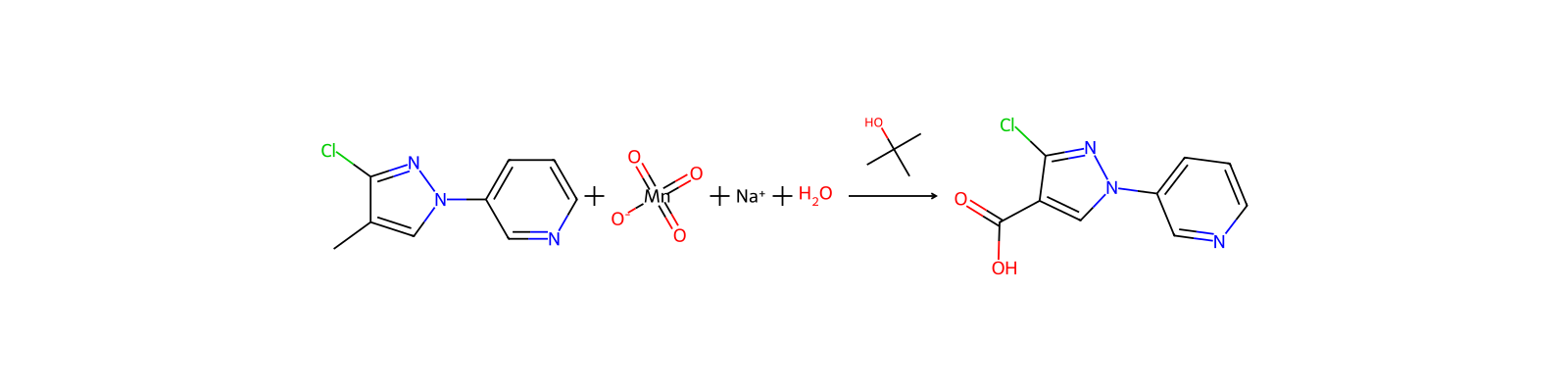
11건




연결된 노트
불러오는 중…