홈MCP워크벤치Skills
홈워크벤치알림마이페이지
llms.txt · MCP 가이드개인정보처리방침 · 이용약관 · 지원v1.8.0
  1. 홈
  2. /화합물

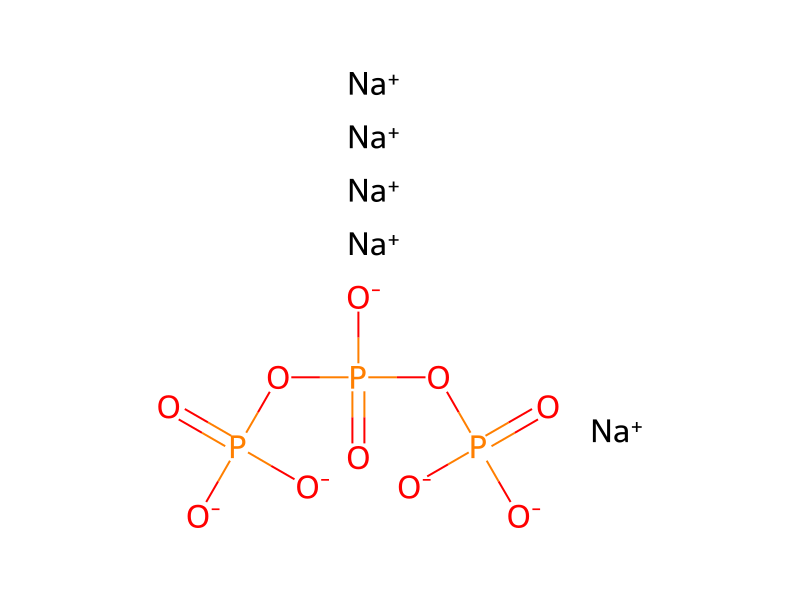
트리폴리인산나트륨

Sodium Tripolyphosphate

HCID 24455
새 노트새 반응견적 요청하기
인쇄 미리보기

데이터를 보충하는 중입니다. 잠시 후 페이지를 새로 고치면 최신 내용을 볼 수 있습니다
기본 정보개요이름 및 식별자물성안전 및 규제화학 및 산업관련 반응화합물 노트
부분 구조 검색유사 구조 찾기

기본 정보

CAS
7758-29-4
표준 SMILES
O=P([O-])([O-])OP(=O)([O-])OP(=O)([O-])[O-].[Na+].[Na+].[Na+].[Na+].[Na+]
InChIKey
HWGNBUXHKFFFIH-UHFFFAOYSA-I
분자식
Na5P3O10
평균 분자량
367.86 g/mol
단동위원소 질량
367.81927749

개요

The CIR Expert Panel concluded that the following 31 ingredients are safe in the present practices of use and concentration in cosmetics as described in this safety assessment, when formulated to be non-irritating...Pentasodium Triphosphate...

이름 및 식별자

우선 이름
Sodium Tripolyphosphate
IUPAC
pentasodium;[oxido(phosphonatooxy)phosphoryl] phosphate
현지명
트리폴리인산나트륨
영어명
Sodium tripolyphosphate
분자식
Na5O10P3
분자량
367.86

이름 및 동의어

7758-29-4Pentasodium triphosphateSTPPArmofosThermphosRhodiaphos LVThermphos NTriphosphoric acid, pentasodium saltThermphos SPRThermphos L 50Sodium phosphate (Na5P3O10)Sodium triphosphate (Na5P3O10)
이름 더 보기
나트륨트리인산염나트륨폴리인산염삼폴리인산나트륨트리인산,펜타나트륨염트리폴리인산나트륨펜타나트륨트리인산염펜타나트륨트리폴리인산염삼인산오나트륨펜타소듐트라이포스페이트삼폴리인산나트륨소디움 트라이폴리포스페이트펜타소디움 트라이포스페이트폴리곤polySTPtripolyphosphateSODIUM TRIPHOSPHATEPENTASODIUM TRIPOLYPHOSPHATEFood Grade Sodium Tripolyphosphates400PDpTSM
9SW4PFD2FZS 400DTXSID9036307RefChem:1714745HK03SA80JDTXCID7016307SODIUM TRIPOLYPHOSPHATE, UNSPECIFIED231-838-7

물성

구조 계산 물성보충 중

극성 표면적
185 Ų
수소 결합 공여자 수
0
수소 결합 수용자 수
10
회전 가능 결합 수
2
무거운 원자 수
18
형식 전하
0
복잡도
241

실험 및 물리화학적 성질

Chemical ClassesMetals -> Phosphates, Metallic Salts
Cosmetics · 2건

Cosmetic ingredients (Pentasodium Triphosphate) -> CIR (Cosmetic Ingredient Review)

Chelating; Buffering

pH · 2건

Between 9,1 and 10,2 (1 % solution)

1% soln @ 25 °C = 9.7-9.8

Food AdditivesANTICAKING AGENT OR FREE-FLOW AGENT, ANTIOXIDANT, DRYING AGENT, EMULSIFIER OR EMULSIFIER SALT, HUMECTANT, PH CONTROL AGENT, SEQUESTRANT, STABILIZER OR THICKENER, TEXTURIZER -> FDA Substance added to food
Density2.52 g/cm³
Color/Form · 2건

White powder

Two crystalline forms of anhydrous salt (transition point 417 °C)

Solubility · 3건

Freely soluble in water. Insoluble in ethanol

Sol in water (g/100 ml) at 25 °C: 20; at 100 °C: 86.5

Solubility in water, g/100ml at 25 °C: 14.5

Melting Point · 3건

622 °C

622 °C

622 °C

Physical Description · 4건

안전 및 규제

안전 정보는 참고용이며, 공급업체의 물질안전보건자료(SDS), 관련 법규 및 전문가 평가를 대체하지 않습니다.

GHS 분류

GHS Classification · 5건

This chemical does not meet GHS hazard criteria for 36% (1266 of 3517) of reports.

Warning

H315 (62.2%): Causes skin irritation [Warning Skin corrosion/irritation]

P261, P264, P264+P265, P271, P280, P302+P352, P304+P340, P305+P351+P338, P319, P321, P332+P317, P337+P317, P362+P364, P403+P233, P405, and P501 (click each P-code to see the statement)

Aggregated GHS information provided per 3517 reports by companies from 19 notifications to the ECHA C&L Inventory. Each notification may be associated with multiple companies.

유해성 정보

Regulatory Information · 4건

Chemical: Triphosphoric acid, pentasodium salt

Triphosphoric acid, sodium salt (1:5) is listed on the EPA's Chemical Data Reporting (CDR) system. Manufacturers and importers of Triphosphoric acid, sodium salt (1:5) are required to report information about their production and use of this chemical to the EPA under the Toxic Substances Control Act (TSCA). (40 eCFR Part 711)

Status: Active Update: 01-12-2021 https://echa.europa.eu/registration-dossier/-/registered-dossier/15386

Pentasodium tripolyphosphate: Does not have an individual approval but may be used under an appropriate group standard

Other Safety InformationIMAP assessments - Triphosphoric acid, pentasodium salt: Human health tier I assessment
Fire HazardsNot combustible. Gives off irritating or toxic fumes (or gases) in a fire.
Hazards Summary · 1건

A moderate skin and mucous membrane irritant; [Merck Index] Emergency treatment: Irritants; [HSDB] Aerosol is a mild skin, eye, and respiratory tract irritant; [ICSC] A skin, eye, and respiratory tract irritant; [CAMEO] May cause eye, nose, and throat irritation; Effects in high-dose ingestion animal studies include kidney damage; [CHEMINFO] An irritant; [MSDSonline]

화학 및 산업

약리 정보

Mechanism of Action · 1건

The effects of condensed phosphate ( ... sodium tripolyphosphate ... ) on the growth of Streptococcus mutans, sugar metabolism in vitro, and S mutans-induced caries of hamsters were studied. All condensed phosphates depressed the growth of S mutans. This growth inhibition was reversed by divalent metal ions. Thus, the chelating capacity of condensed phosphate is responsible for their antibacterial actions. Condensed phosphates depressed lactate production from glucose and sucrose by the S mutans.

Metabolism/Metabolites · 2건

THOUGHT TO BE HYDROLYZED TO (ORTHO)PHOSPHATES BEFORE ABSORPTION. /TRIPOLYPHOSPHATE/

In the body, phosphorus is converted to phosphates. /Phosphorus/

Absorption, Distribution and Excretion · 1건

If ingested in large amounts nausea, vomiting and diarrhea are probable. Thought to be hydrolyzed to (ortho)phosphates before absorption. If appreciable amounts of the intact polymer are absorbed from the alimentary tract, hypocalcemic tetany may be a danger due to the binding (chelation) of ionized calcium. Hypocalcemic tetany apparently occurred in one ingestion episode. /Tripolyphosphate/

용도 및 제조

Uses · 6건

CIR ingredient: Pentasodium Triphosphate

Used in water softening, heavy-duty fabric washing, automatic dish washing, drilling fluid cleaning, and liquid cattle feed supplements; Also used as a peptizing, emulsifying, and dispersing agent; a preservative, sequestrant, and texture-modifier in foods; a sealant for leaking farm ponds; and a calcium and magnesium chelating agent; [HSDB] Used in paper pulping, paper coatings, clay and textile processing, and ore flotation; Also used as a hydrogen peroxide solution stabilizer and to make rubber and paint; [CHEMINFO]

Petroleum Production and Refining [Category: Industry]

The active ingredient is no longer contained in any registered pesticide products ... "cancelled."

TO SEAL LEAKING FARM PONDS BY MIXING WITH SOIL FLOOR

Used as a hydrogen peroxide stabilizer. /phosphates/

관련 반응

25건
반응 기록 만들기
HRID 10156 반응식
HRID 10156반응물로uspto-grants-2006_08
HRID 23315 반응식
HRID 23315반응물로uspto-grants-2005_02
HRID 249209 반응식
HRID 249209반응물로uspto-grants-1993_05
HRID 269706 반응식
HRID 269706반응물로uspto-grants-2008_11
HRID 456370 반응식
HRID 456370반응물로uspto-grants-2007_03
HRID 458509 반응식
HRID 458509반응물로uspto-grants-2007_03
HRID 617668 반응식
HRID 617668반응물로uspto-grants-1999_09
HRID 622066 반응식
HRID 622066반응물로uspto-grants-1988_09
1 / 4 페이지

화합물 노트

불러오는 중…

이 페이지에서기본 정보개요이름 및 식별자물성안전 및 규제화학 및 산업관련 반응화합물 노트
더보기
새 노트새 반응견적 요청하기

데이터베이스 식별자

CAS
7758-29-4、9010-08-6
PubChem CID
24455
DTXSID
DTXSID9036307
UNII
9SW4PFD2FZ
EC Number
231-838-7、618-452-8
Nikkaji
J44.053A

Large Crystals; CBI; Dry Powder; Other Solid; Dry Powder; Liquid; Liquid; Liquid; Other Solid

White, slightly hygroscopic granules or powder

Slightly hygroscopic solid; [Merck Index] White granules; [MSDSonline]

WHITE CRYSTALS OR POWDER.

Stability/Shelf LifeMORE STABLE THAN THE HIGHER (IE, META-) PHOSPHATES, BUT LESS STABLE THAN TETRASODIUM PYROPHOSPHATE
Other Experimental Properties · 5건

With prolonged heating of sodium tripolyphosphate soln, it tends to revert to the orthophosphate.

Hygroscopic

Its properties are between those of tetrasodium pyrophosphate & sodium metaphosphate.

TRIPOLYPHOSPHATE @ 20 MG/L DOES NOT AFFECT SMELL, TASTE & ACTIVE REACTION (PH) OF WATER. LIMITING PROPERTY IS TURBIDITY AT 5 MG/L ON HEATING.

Forms stable hydrates.

물리화학적 성질

녹는점
622 °C · 622 °C
밀도
2.52 g/cm3 · 2.52 g/cm3 (20℃)
증기압
0.1 hPa · <0.1 hPa (20 °C)
굴절률
1.658 · 1.658
저장 조건
Storage temperature: no restrictions.
용해도
2 O: · H2O: 투명하거나 약간 흐릿할 수 있음
물리적 상태
분말/고체
색상
하얀색
냄새
냄새 없는
수소이온지수(pH)
9 · 9.0-10.0 (25℃, 1% in H2O)
수용성
20 g/100mL · 20g/100mL(20℃)
Merck
14 · 14,8697
안정성
안정적인. 강한 산화제, 강산과 호환되지 않습니다. 흡습성.
화장품 원료 기능
킬레이팅버퍼링
InChI
1S/5Na.H5O10P3/c;;;;;1-11(2,3)9-13(7,8)10-12(4,5)6/h;;;;;(H,7,8)(H2,1,2,3)(H2,4,5,6)/q5*+1;/p-5
InChIKey
HWGNBUXHKFFFIH-UHFFFAOYSA-I
SMILES
[Na+].[Na+].[Na+].[Na+].[Na+].[O-]P([O-])(=O)OP([O-])(=O)OP([O-])([O-])=O
LogP
-4.691 · -4.691 (est)
EPA
Sodium tripolyphosphate (7758-29-4)

화학적 성질

white or colourless crystals, granules or powder

FDA Requirements · 5건

Sodium tripolyphosphate used as a multiple purpose food substance in food for human consumption is generally recognized as safe when used in accordance with good manufacturing practice.

Sodium tripolyphosphate used as a sequestrant in food for human consumption is generally recognized as safe when used in accordance with good manufacturing practice.

Sodium tripolyphosphate used as a general purpose food additive in animal drugs, feeds, and related products is generally recognized as safe when used in accordance with good manufacturing or feeding practice.

Sodium tripolyphosphate used as a sequestrant in animal drugs, feeds, and related products is generally recognized as safe when used in accordance with good manufacturing or feeding practice.

Sodium tripolyphosphate is a food additive permitted for direct addition to food for human consumption, as long as 1) the quantity of the substance added to food does not exceed the amount reasonably required to accomplish its intended physical, nutritive, or other technical effect in food, and 2) any substance intended for use in or on food is of appropriate food grade and is prepared and handled as a food ingredient.

EPA Safer ChemicalChemical: Sodium tripolyphosphate
FIFRA Requirements · 2건

Residues of sodium tripolyphosphate are exempted from the requirement of a tolerance when used as a buffer, surfactant, suspending agent, dispersing agent, anticaking agent or conditioning agent in accordance with good agricultural practices as inert (or occasionally active) ingredients in pesticide formulations applied to growing crops or to raw agricultural commodities after harvest.

As the federal pesticide law FIFRA directs, EPA is conducting a comprehensive review of older pesticides to consider their health and environmental effects and make decisions about their future use. Under this pesticide reregistration program, EPA examines health and safety data for pesticide active ingredients initially registered before November 1, 1984, and determines whether they are eligible for reregistration. In addition, all pesticides must meet the new safety standard of the Food Quality Protection Act of 1996. Pesticides for which EPA had not issued Registration Standards prior to the effective date of FIFRA, as amended in 1988, were divided into three lists based upon their potential for human exposure and other factors, with List B containing pesticides of greater concern and List D pesticides of less concern. Sodium tripolyphosphate is found on List D. Case No: 4053; Pesticide type: fungicide, herbicide, and antimicrobial; Case Status: None of the active ingredients in the case are being supported for reregistration by their registrants. All are unsupported, or some are unsupported and some are cancelled. Cases described as "unsupported" generally are being processed for cancellation.; Active ingredient (AI): sodium tripolyphosphate; AI Status: The active ingredient is no longer contained in any registered pesticide products ... "cancelled."

Chemical DangersDecomposes on heating. This produces toxic fumes including phosphorus oxides.
Toxic Combustion ProductsWHEN HEATED TO DECOMP, CAN EMIT HIGHLY TOXIC FUMES OF PO(X). /PHOSPHATES/
CERCLA Reportable Quantities · 1건

Persons in charge of vessels or facilities are required to notify the National Response Center (NRC) immediately, when there is a release of this designated hazardous substance, in an amount equal to or greater than its reportable quantity of 5000 lb or 2270 kg. The toll free number of the NRC is (800) 424-8802; In the Washington D.C. metropolitan area (202) 426-2675. The rule for determining when notification is required is stated in 40 CFR 302.4 (section IV. D.3.b).

Hazard Classes and CategoriesSkin Irrit. 2 (62.2%)
Skin, Eye, and Respiratory Irritations · 1건

EYE CONTACT WITH CONCENTRATED ALKALI CAUSES CONJUNCTIVAL EDEMA & CORNEAL DESTRUCTION. A. ALKALIES PENETRATE SKIN SLOWLY. EXTENT OF DAMAGE THEREFORE DEPENDS ON DURATION OF CONTACT. B. CHRONIC POISONING (FROM SKIN CONTACT). CHRONIC DERMATITIS MAY FOLLOW REPEATED CONTACT ... . /ALKALIES/

안전 및 보호

Fire FightingIn case of fire in the surroundings, use appropriate extinguishing media.
First Aid Measures · 4건

Fresh air, rest. Refer for medical attention.

Rinse skin with plenty of water or shower.

First rinse with plenty of water for several minutes (remove contact lenses if easily possible), then refer for medical attention.

Rinse mouth. Give one or two glasses of water to drink.

Safe StorageDry. Well closed.
Firefighting HazardsBehavior in fire: May melt with loss of steam. /Sodium Phosphates/
Disposal Methods · 1건

SRP: At the time of review, criteria for land treatment or burial (sanitary landfill) disposal practices are subject to significant revision. Prior to implementing land disposal of waste residue (including waste sludge), consult with environmental regulatory agencies for guidance on acceptable disposal practices.

Spillage Disposal · 1건

Personal protection: particulate filter respirator adapted to the airborne concentration of the substance. Sweep spilled substance into covered containers. Carefully collect remainder. Then store and dispose of according to local regulations.

Eye PreventionWear safety spectacles or eye protection in combination with breathing protection if powder.
Inhalation RiskA nuisance-causing concentration of airborne particles can be reached quickly, especially if powdered.
Skin PreventionProtective gloves.
Allowable Tolerances · 1건

Residues of sodium tripolyphosphate are exempted from the requirement of a tolerance when used as a buffer, surfactant, suspending agent, dispersing agent, anticaking agent or conditioning agent in accordance with good agricultural practices as inert (or occasionally active) ingredients in pesticide formulations applied to growing crops or to raw agricultural commodities after harvest.

Ingestion PreventionDo not eat, drink, or smoke during work.
Inhalation PreventionUse ventilation (not if powder).

독성 정보

Interactions · 2건

The mechanism by which sodium tripolyphosphate increases cadmium toxicity after sc administration was investigated in mice after a dose of cadmium (30 umol/kg), alone or with sodium tripolyphosphate (90 umol/kg). ... Histological ... changes in the liver were not observed during the first 12 hr after injection of cadmium, but already 6-8 hr after injection of cadmium plus sodium tripolyphosphate early centrilobular necroses and blood stasis appeared. At 12 hr more advanced necroses were present. Sodium tripolyphosphate administered alone was nontoxic and did not change the liver morphology, when compared to animals killed immediately after injection. During the first 12 hr after cadmium administration with sodium tripolyphosphate, there was a much faster transport of cadmium, giving rise to higher liver and kidney concn of cadmium and partial inhibition of cadmium-metallothionein binding, as compared with animals receiving the same dose of cadmium without sodium tripolyphosphate.

The adjuvant effect of di-sodium DL-alpha-glycerophosphate on the rectal absorption of cefoxitin (as the sodium salt) was greatly augmented by the presence of ... sodium tripolyphosphate. ... Coadjuvants only slightly enhanced cefoxitin rectal absorption when administered alone.

Exposure RoutesThe substance can be absorbed into the body by inhalation of its aerosol.
Toxicity Summary · 3건

The CIR Expert Panel concluded that the following 31 ingredients are safe in the present practices of use and concentration in cosmetics as described in this safety assessment, when formulated to be non-irritating...Pentasodium Triphosphate...

Safe for use in cosmetics, with qualifications

IDENTIFICATION AND USE: Pentasodium tripolyphosphate is a white powder which is soluble in water.r It is used as a hydrogen peroxide stabilizer. This chemical is one of the most widely used and most effective builder in heavy duty fabric washing compositions. Because of its high sequestration power, it also finds extensive application in automatic dish washing detergents. It forms stable hydrates and aids in the manufacture of crisp spray dried laundry powders. It is used in dairy substitute products: milk based pudding, whipped topping, sour cream, and cheese. It is used in water softening and as a peptizing agent; emulsifier and dispersing agent, it is an ingredient of cleansers in drilling fluids to control mud viscosity in oil fields; as preservative, sequestrant, and as a texturizer in foods. The active ingredient is no longer contained in any registered pesticide products used in the United States. HUMAN EXPOSURE AND TOXICITY: If ingested in large amounts this chemical can cause nausea, vomiting, and diarrhea. It has produced vesiculation when applied to intact and abraded skin of humans. Sodium and potassium hexametaphosphates, polyphosphates, tripolyphosphates, pyrophosphates, and other phosphates used as water softeners form complexes with calcium and, after ingestion, are capable of seriously reducing the serum level of ionic calcium. They have less corrosive effect on mucous membranes than sodium or potassium hydroxide. Eye contact with concentrated material can cause conjunctival edema and corneal destruction. Chronic dermatitis may follow repeated contact of the chemical that migrates to food from packaging materials. Occupational exposure involves acetyl cellulose makers, bronze alloy makers, munitions workers, smoke bomb and incendiary makers, pesticide rat poison worker, fertilizer makers, electroluminescent-coating makers, and semiconductor workers. ANIMAL STUDIES: This chemical induced emesis in dogs. Dietary administration in animals has caused decrease iron content in bone, liver, and spleen, and bone depletion of calcium.

Signs and Symptoms · 3건

Cough. Sore throat.

Redness. Pain.

Redness. Pain.

Human Toxicity Excerpts · 5건

IF INGESTED IN LARGE AMT NAUSEA, VOMITING, & DIARRHEA ARE PROBABLE. ... IF APPRECIABLE AMT OF INTACT POLYMER ARE ABSORBED FROM ALIMENTARY TRACT, HYPOCALCEMIC TETANY MAY BE A DANGER DUE TO BINDING (CHELATION) OF IONIZED CALCIUM. HYPOCALCEMIC TETANY ALSO OCCURRED IN ONE INGESTION EPISODE. /TRIPOLYPHOSPHATE/

CMPD APPLIED TO INTACT & ABRADED SKIN OF HUMANS FOR 4 HR: SKIN RESPONSES GRADED 4, 24 & 48 HR AFTER. SODIUM TRIPOLYPHOSPHATE PRODUCED VESICULATION @ ABRADED SITES OF 1 OF 6 HUMANS.

A 1% AQ SOLN HAS A PH OF 9.8, & PH OF CONCENTRATED SOLN (SLURRIES) IS ABOUT 10.5, SO THAT THERE IS NO SIGNIFICANT DANGER OF CORROSIVE INJURIES TO THE EYES OR ESOPHAGUS AS IN LYE POISONING ... WITH PH'S ABOVE 11 OR EVEN 12. /TRIPOLYPHOSPHATE/

ACUTE POISONING BY INJESTION: ... EVEN THOUGH PATIENTS RECOVER FROM IMMEDIATE DAMAGE, ESOPHAGEAL STRICTURE CAN OCCUR WK, MO, OR YR LATER TO MAKE SWALLOWING DIFFICULT. INGESTION OF TRIPOLYPHOSPHATE ... IN ... DETERGENTS OR LAXATIVES CAUSE SHOCK-LIKE STATE, FALL OF BLOOD PRESSURE, SLOW PULSE, CYANOSIS COMA & SOMETIMES TETANY AS RESULT OF REDN IN IONIC CALCIUM. /ALKALIES/

For more Human Toxicity Excerpts (Complete) data for PENTASODIUM TRIPOLYPHOSPHATE (7 total), please visit the HSDB record page.

Non-Human Toxicity Excerpts · 3건

IN BEAGLE DOGS, SODIUM TRIPOLYPHOSPHATE INDUCED EMESIS. EMESIS PROBABLY RESULTS FROM A DIRECT ACTION UPON THE GI MUCOSA.

DIETARY ADMIN OF TRIPOLYPHOSPHATE DECR BONE, LIVER & SPLEEN CONTENTS OF IRON & INCR THE BONE DEPOSITION OF CALCIUM.

Gastrointestinal absorption, transport, tissue deposition, and excretion of cadmium were investigated in mice after single or repeated exposure with or without chelating agents. Male CBA-mice received a single oral 69 mg/kg dose of cadmium-109 in combination with a single 600 mg/kg dose of nitrilotriacetic acid, sodium tripolyphosphate, or 60 or 600 mg/kg ethylenediaminetetraacetic acid. Animals were observed, and blood cadmium concentrations followed, from 5 minutes to 21 days before dissection and tissue analysis. Female CBA-mice received a single oral 15 ug/kg dose of radioactive cadmium in combination with cadmium and 50 or 500 ppm of these chelating agents in their drinking water and were observed for 18 months. Acute cadmium toxicity was reduced in mice given cadmium in combination with ethylenediaminetetraacetic acid. At all times from 5 minutes to 5 hours after dosing blood cadmium concentrations were lowest in mice exposed to cadmium plus sodium tripolyphosphate. Almost all cadmium in kidneys of mice exposed to cadmium and ethylenediaminetetraacetic acid at the higher doses was bound in the cadmium ethylenediaminetetraacetic acid complex, while at the lower dose of ethylenediaminetetraacetic acid part of the cadmium was bound to high molecular weight proteins. Cadmium 24 hour elimination was increased from 20% with cadmium alone to 45% with the higher and 35% with the lower dose of ethylenediaminetetraacetic acid. Whole body retention at 21 days was 4.4% with cadmium alone, 2% with nitrilotriacetic acid and 5.5% with sodium tripolyphosphate. With repeated exposure no substantial differences in whole body or organ retention of cadmium were seen after treatment with different chelating agents. Chelating agents did not affect mortality over 18 months. /It was concluded/ that the effects of different chelating agents on acute cadmium toxicity and metabolism are produced by change in the stability of the chelate complexes and the availability of metal binding ligands in-vivo.

Probable Routes of Human Exposure · 2건

MIGRATES TO FOOD FROM PACKAGING MATERIALS ... .

Occupational exposure involves acetyl cellulose makers, bronze alloy makers, munitions workers, smoke bomb and incendiary makers, pesticide rat poison worker, fertilizer makers, electroluminescent-coating makers, and semiconductor workers. /Phosphorus/

RAIS Toxicity Values · 4건

1

PPRTV Current

4

PPRTV Current

Non-Human Toxicity Values · 3건

LD50 Mouse stomach, sc and ip 3.02, 1.26, and 0.94 g/kg, respectively.

LD50 Rat stomach, sc and ip 5.19, 2.06, and 1.78 g/kg, respectively.

LD50 Guinea pig sc 0.75 g/kg.

Hazard Quotient Level 0.1 or Cancer Risk Level 1E-06 · 6건

7.80e+04

1.20e+06

2.00e+04

1.5E+01(G)

1.00e+00

Volatile

Hazard Quotient Level 3 or Cancer Risk Level 1E-04 · 6건

2.30e+05

3.50e+06

6.00e+04

1.5E+01 (G)

1.00e+00

Volatile

규제 정보

FDA Requirements · 5건

Sodium tripolyphosphate used as a multiple purpose food substance in food for human consumption is generally recognized as safe when used in accordance with good manufacturing practice.

Sodium tripolyphosphate used as a sequestrant in food for human consumption is generally recognized as safe when used in accordance with good manufacturing practice.

Sodium tripolyphosphate used as a general purpose food additive in animal drugs, feeds, and related products is generally recognized as safe when used in accordance with good manufacturing or feeding practice.

Sodium tripolyphosphate used as a sequestrant in animal drugs, feeds, and related products is generally recognized as safe when used in accordance with good manufacturing or feeding practice.

Sodium tripolyphosphate is a food additive permitted for direct addition to food for human consumption, as long as 1) the quantity of the substance added to food does not exceed the amount reasonably required to accomplish its intended physical, nutritive, or other technical effect in food, and 2) any substance intended for use in or on food is of appropriate food grade and is prepared and handled as a food ingredient.

FIFRA Requirements · 2건

Residues of sodium tripolyphosphate are exempted from the requirement of a tolerance when used as a buffer, surfactant, suspending agent, dispersing agent, anticaking agent or conditioning agent in accordance with good agricultural practices as inert (or occasionally active) ingredients in pesticide formulations applied to growing crops or to raw agricultural commodities after harvest.

As the federal pesticide law FIFRA directs, EPA is conducting a comprehensive review of older pesticides to consider their health and environmental effects and make decisions about their future use. Under this pesticide reregistration program, EPA examines health and safety data for pesticide active ingredients initially registered before November 1, 1984, and determines whether they are eligible for reregistration. In addition, all pesticides must meet the new safety standard of the Food Quality Protection Act of 1996. Pesticides for which EPA had not issued Registration Standards prior to the effective date of FIFRA, as amended in 1988, were divided into three lists based upon their potential for human exposure and other factors, with List B containing pesticides of greater concern and List D pesticides of less concern. Sodium tripolyphosphate is found on List D. Case No: 4053; Pesticide type: fungicide, herbicide, and antimicrobial; Case Status: None of the active ingredients in the case are being supported for reregistration by their registrants. All are unsupported, or some are unsupported and some are cancelled. Cases described as "unsupported" generally are being processed for cancellation.; Active ingredient (AI): sodium tripolyphosphate; AI Status: The active ingredient is no longer contained in any registered pesticide products ... "cancelled."

CERCLA Reportable Quantities · 1건

Persons in charge of vessels or facilities are required to notify the National Response Center (NRC) immediately, when there is a release of this designated hazardous substance, in an amount equal to or greater than its reportable quantity of 5000 lb or 2270 kg. The toll free number of the NRC is (800) 424-8802; In the Washington D.C. metropolitan area (202) 426-2675. The rule for determining when notification is required is stated in 40 CFR 302.4 (section IV. D.3.b).

안전 데이터

wgk
1
tsca
TSCA listed
rtecs
YK4570000
독성
LD50 orally in rats: 6.50 g/kg (Smyth)
HS 번호
28353110
risk_code
36/37/38
hazard_code
Xi
safety_code
26-36-24/25
기존화학 물질
KE-34753
F 고인화성물질
3
스토리지 클래스
11 - Combustible Solids
유해 물질 데이터
7758-29-4(Hazardous Substances Data)
ImpuritiesMay contain up to 10% pyrophosphate & up to 5% trimetaphosphate.
U.S. Exports · 3건

(1972) 4.96X10+10 GRAMS

(1975) 8.46X10+10 GRAMS

(1984) 3.28X10+10 G.

U.S. Imports · 2건

(1972) NEGLIGIBLE

(1975) 5.44X10+9 GRAMS

U.S. Production · 6건

2023: 55,000,000 - <70,000,000 lb

(1972) 9.38X10+11 GRAMS

(1975) 6.99X10+11 GRAMS

(1979) 688 thousand metric tons

(1984) 6.12X10+11 G.

Production Capacity: 555 thousand tons/year /Sodium tripolyphosphate (STPP)/

Consumption Patterns · 3건

85% AS A PHOSPHATE BUILDER (CONDITIONER) FOR HOME LAUNDRY DETERGENTS; 8% AS A PHOSPHATE BUILDER (CONDITIONER) FOR AUTOMATIC DISHWASHING DETERGENTS; 2% AS AN ADDITIVE FOR PROCESSED MEAT, TUNA, & POULTRY; 1% AS A PHOSPHATE BUILDER (CONDITIONER) FOR SCOURING CLEANSERS; 1% AS A PHOSPHATE BUILDER (CONDITIONER) FOR LAUNDRY PRESOAKS; & 3% FOR MISC APPLICATIONS (1973).

Home laundry detergent builder, 45%; Industrial and institutional detergents, 24%; Dish washing detergents, 16%; Food uses, 3.5%; Misc, 6%; Exports, 5.5% (1984).

Industrial and institutional detergents, 45%; autodish detergents, 40%; food uses, 10%; home laundry detergent builder, 5%. /Sodium tripolyphosphate (STPP)/

Consumer UsesWetting agent (non-aqueous)
Industry UsesBinder
Methods of Manufacturing · 2건

Prepared by molecular dehydration of mono- & disodium phosphates.

Controlled calcination of sodium orthophosphate mixture from sodium carbonate & phosphoric acid.

Formulations/Preparations · 2건

Grades: Powdered & Granular, FCC /Food Chemicals Codex/.

A bath salt: ... triethanolamine salt of ethoxylated lauryl alcohol 9.0%, lauryl ammonium sulfate 2.0%, diethanolamides of coconut or rape oil fatty acids 1.0%, ethoxylated lanolin 0.500%, ethyl alcohol 2.0%, pentasodium tripolyphosphate 10.0%, sodium chloride 42.8%, tartaric acid 13.0%, anhydrous sodium sulfate 19.299%, fragrance 0.4%, and dye 0.001%.

Household ProductsInformation on 53 consumer products that contain Pentasodium tripolyphosphate in the following categories is provided:
Use Classification · 6건

EPA Safer Chemical Functional Use Classes -> Oxidants and Oxidant Stabilizers

Safer Chemical Classes -> Yellow triangle - The chemical has met Safer Choice Criteria for its functional ingredient-class, but has some hazard profile issues

Food additives

Food Additives -> SEQUESTRANT; TEXTURIZER; THICKENER -> JECFA Functional Classes

Food Additives -> SEQUESTRANT; TEXTURIZER; THICKENER -> JECFA Functional Classes

Food Additives -> SEQUESTRANT; TEXTURIZER; THICKENER -> JECFA Functional Classes

응용 분야 · 1건

용도Sodium tripolyphosphate is a binder, stabilizer, and sequestrant that is mildly alkaline, with a pH of 10, and moderately soluble in water, with a solubility of 15g in 100ml of water at 25°C. It is used to improve the whipping properties of egg-containing angel food cake mix and meringues. It reduces gelling of juices and canned ham and tenderizes canned peas and lima beans. It is a moisture binder in cured pork and protects against discoloration and reduces shrinkage in sausage products. In algin desserts, it functions as a calcium sequestrant. Sodium tripolyphosphate is also termed pentasodium tripolyphosphate and sodium triphosphate.

상·하류 제품 정보

상류 원료

Phosphate rock powder바륨 카보네이트Industrial sodium tripolyphosphate플루오로규산인산ROCK PHOSPHATE질산암모늄AgitatorDust settling pocketPentasodium triphosphate hexhydrateGRAPHITE, FUSION CRUCIBLE, DRILLPOINT, UNPURIFIED, VOLUME 7.88CCphosphoric acid by wet process수산화나트륨황린디젤 연료 1번Desulfurization인오산화 인황산탄산나트륨(경회)

하류 제품

Synthetic detergentDetergent,industrialDetergentTableware cleanerCleaning agent
추가 설명 · 3건

순도시험(1) 용상 : 이 품목의 분말 1g에 물 20mL를 가하여 가열하여 녹일 때, 그 액은 무색으로서 탁도는 약간 미탁 이하이어야 한다. (2) 염화물 : 이 품목 0.1g을 취하여 염화물시험법에 따라 시험할 때, 그 양은 0.01N 염산 0.6mL에 대응하는 양 이하이어야 한다. (3) 황산염 : 이 품목 0.5g에 물 30mL 및 묽은염산 2mL를 가하여 1분간 끓여 녹이고 식힌 다음 이를 시험용액으로 하여 황산염시험법에 따라 시험할 때, 그 양은 0.01N 황산 0.5mL에 대응하는 양 이하이어야 한다. (4) 정인산염 : 이 품목의 분말 1g에 질산은시액 2~3방울을 가할 때, 진한 황색을 나타내어서는 아니 된다. (5) 비소 : 이 품목을 비소시험법에 따라 시험할 때, 그 양은 2.0ppm 이하이어야 한다. (6) 납 : 「메타인산나트륨」의 순도시험 (2)에 따라 시험한다(4.0ppm 이하). (7) 카드뮴 : 「메타인산나트륨」의 순도시험 (3)에 따라 시험한다(1.0ppm 이하). (8) 수은 : 이 품목을 수은시험법에 따라 시험할 때, 그 양은 1.0ppm 이하이어야 한다. (9) 불소화물 : 이 품목 1g을 정밀히 달아 「구연산칼슘」의 순도시험 (8)에 따라 시험한다(10ppm 이하).

확인시험(1) 이 품목 0.1g을 물 10mL에 녹여 묽은초산으로 약산성으로 하고 질산은시액 1mL를 가하면 백색의 침전이 생긴다. (2) 이 품목의 수용액(1→20)은 확인시험법 중 나트륨염의 반응을 나타낸다.

정량법「메타인산나트륨」의 정량법에 따라 정량한다.