
홈MCP워크벤치Skills
홈워크벤치알림마이페이지
llms.txt · MCP 가이드개인정보처리방침 · 이용약관 · 지원v1.8.0
  1. 홈
  2. /화합물

Hydrazoic acid

HCID 24530
새 노트새 반응견적 요청하기
인쇄 미리보기

데이터를 보충하는 중입니다. 잠시 후 페이지를 새로 고치면 최신 내용을 볼 수 있습니다
기본 정보개요이름 및 식별자물성안전 및 규제화학 및 산업관련 반응화합물 노트
부분 구조 검색유사 구조 찾기

기본 정보

CAS
7782-79-8
표준 SMILES
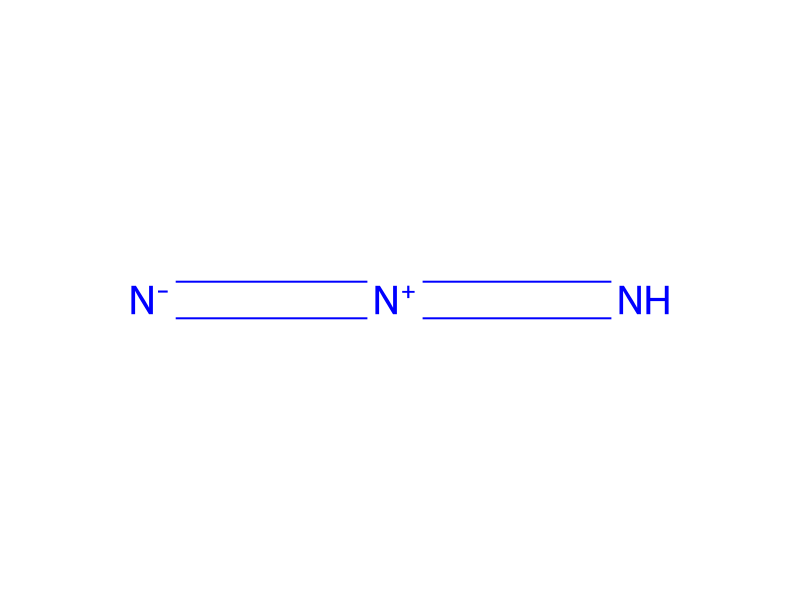
[N-]=[N+]=N
InChIKey
JUINSXZKUKVTMD-UHFFFAOYSA-N
분자식
HN3
평균 분자량
43.029 g/mol
단동위원소 질량
43.01704703

개요

Hydrogen azide is a nitrogen hydride. It is a conjugate acid of an azide anion.

이름 및 식별자

우선 이름
Hydrazoic acid
IUPAC
Triaza-1,2-dien-2-ium-1-ide
영어명
Hydrazoic acid
분자식
HN3
분자량
43.02804

이름 및 동의어

HYDRAZOIC ACIDHydrogen azideTriazoic acidAzoimideHydronitric acid7782-79-8DiazoimideStickstoffwasserstoffsaeure6P5C4D5D7IAZIDIC ACIDCHEBI:29449DTXSID20884425
이름 더 보기
1H-TriazirineAzide acidHydrazoic acid (as vapour)Hydrazoic acid ISO 9001:2015 REACH
RefChem:147036DTXCID701023866231-965-8[NNNH]CHEMBL186537N3HStickstoffwasserstoffsaeure [German]EINECS 231-965-8

데이터베이스 식별자

CAS
7782-79-8
PubChem CID
24530
DTXSID
DTXSID20884425
ChEMBL
CHEMBL186537
ChEBI
CHEBI:29449
UNII
6P5C4D5D7I
EC Number
231-965-8
Nikkaji
J2.255.096I、J59.889E

물성

구조 계산 물성보충 중

XLogP
1.7
극성 표면적
25.9 Ų
수소 결합 공여자 수
1
수소 결합 수용자 수
2
회전 가능 결합 수
0
무거운 원자 수
3
형식 전하
0
복잡도
23

실험 및 물리화학적 성질

Chemical ClassesOther Uses -> Explosives
Odor · 2건

Obnoxious odor

Intolerable pungent odor

Density · 2건

Specific gravity: 1.09 at 25 °C/4 °C

1.09

Color/FormColorless liquid
Boiling Point · 2건

35.7 °C

96.26 °F

DecompositionWhen heated to decomposition it emits toxic fumes of /nitrogen oxide/.
Melting Point · 2건

-80 °C

-112 °F

Vapor Pressure · 2건

484.0 [mmHg]

484 mmHg

Henry's Law ConstantHenry's Law constant = 8.29X10⁻⁵ atm-cu m/mol at 25 °C
Physical Description · 2건

Liquid with a pungent intolerable odor; [Merck Index]

Colorless liquid with an intolerable pungent odor.

안전 및 규제

안전 정보는 참고용이며, 공급업체의 물질안전보건자료(SDS), 관련 법규 및 전문가 평가를 대체하지 않습니다.

GHS 분류

GHS Classification · 3건

Danger

H200: (Deleted) Unstable Explosive [Danger Explosives]

P201, P202, P260, P261, P264, P264+P265, P270, P271, P280, P281, P304+P340, P305+P351+P338, P308+P316, P319, P321, P337+P317, P372, P373, P380, P401, P403+P233, P405, and P501 (click each P-code to see the statement)

유해성 정보

Regulatory InformationChemical: Hydrazoic acid
Fire PotentialDangerously explosive material.
Hazards Summary · 1건

Causes convulsions and structural or functional changes in trachea or bronchi in inhalation lethal-concentration studies of mice; Human inhalation of 300 ppb (0.3 ppm) causes changes in recordings from specific areas of the CNS, somnolence, and change in cardiac rate; [RTECS] Extremely explosive; An eye irritant; May cause cough, headache, fall in blood pressure, weakness, and collapse; Chronic exposure may cause hypotension, palpitation, and ataxia; [Merck Index] A severe skin, eye, and mucous membrane irritant; [HSDB] See Sodium azide.

Toxic Combustion ProductsPoisonous gases, including nitrogen oxides, are produced in fire.
NIOSH RecommendationsRecommended Exposure Limit: Ceiling Value: 0.1 ppm (as NH3); skin. /Sodium azide/
Hazard Classes and CategoriesExplosives - Unstable Explosive
Explosive Limits and PotentialA dangerously sensitive explosive hazard when shocked or exposed to heat.
Skin, Eye, and Respiratory IrritationsA severe irritant to skin, eyes, and mucous membranes.

화학 및 산업

용도 및 제조

Uses · 2건

Used to make heavy metal azides for shell detonators; [Merck Index] Produced from sodium azide on deployment of air bags (inflating agent) and from its use as a biocide; [HSDB]

Industrially in preparation of heavy metal azides for shell detonators

Methods of Manufacturing · 2건

Reaction of hydrazine and nitrous acid, or of nitrous oxide and sodium amide (with heat)

Produced by the action of sulfuric acid on sodium azide.

General Manufacturing InformationHydrazoic acid: ACTIVE

응용 분야

개요Hydrazoic acid or hydrogen azide is a dangerous explosion risk when shocked or heated. It is the gas-forming agent in many air bag systems in automobiles and escape chutes in airplanes.

용도Hydrazoic acid is used in making heavymetal azides for detonators. It forms readilywhen sodium azide reacts with acid orhydrazine is mixed with nitrous acid.

제조 방법 · 2건

생산 방법Hydrazoic acid is formed (1) by reaction of sodium nitrate with molten sodamide, (2) by reaction of nitrous oxide with molten sodamide, (3) by reaction of nitrous acid and hydrazinium ion (N2H5 + ), (4) by oxidation of hydrazinium salts, (5) by reaction of ethyl nitrite with NaOH solution and acidifying.

Hydrazoic acid is prepared by reacting sulfuric acid with sodium azide: H2SO4 + NaN3 → HN3 + Na2SO4 or by treating hydrazine with nitrous acid: N2H4 + HNO2 → HN3 + 2H2O or by heating sodium amide with nitrous oxide: NaNH2 + N2O → HN3 + NaOH

상·하류 제품 정보

상류 원료

수산화나트륨

관련 반응

94건
반응 기록 만들기
HRID 5556 반응식
HRID 5556반응물로uspto-grants-1993_09
HRID 22551 반응식
HRID 22551반응물로uspto-grants-1995_06
HRID 22559 반응식
HRID 22559반응물로uspto-grants-1995_06
HRID 114794 반응식
HRID 114794반응물로Training data from https://doi.org/10.1039/C8SC04228D (2/10)
HRID 118630 반응식
HRID 118630반응물로Training data from https://doi.org/10.1039/C8SC04228D (2/10)
HRID 168747 반응식
HRID 168747반응물로Training data from https://doi.org/10.1039/C8SC04228D (9/10)
HRID 172772 반응식
HRID 172772반응물로Training data from https://doi.org/10.1039/C8SC04228D (9/10)
HRID 261802 반응식
HRID 261802반응물로uspto-grants-1979_05
1 / 12 페이지

화합물 노트

불러오는 중…

이 페이지에서기본 정보개요이름 및 식별자물성안전 및 규제화학 및 산업관련 반응화합물 노트
더보기
새 노트새 반응견적 요청하기
Dissociation Constants
pKa = 4.72
Other Experimental Properties · 3건

Dangerous explosion risk when shocked or heated

Volatile

When heated to decomposition it emits toxic fumes of NOx

물리화학적 성질

녹는점
-80 ° · -80°
끓는 점
37 ° · bp 37°
밀도
1.092 · 1.092
용해도
2 O · soluble in H2O
산도 계수 (pKa)
4.72 · 4.72(at 25℃)
물리적 상태
무색의 액체
색상
colorless liquid; explodes, explosive
수소이온지수(pH)
1 · pKa1= 4.43(25℃)
수용성
2 O · 매우 잘 녹는 H2O [HAW93]
비열
1.02 J/ · Cp(gas): 1.02 J/(g·K), at 25℃
Henry's Law Constant
1.2 · 1.2×10-1 mol/(m3Pa) at 25℃, Sander et al. (2011)
안정성
불안정한. 농축되거나 순수한 상태에서는 격렬한 폭발이 일어납니다. 중금속과 쉽게 폭발성 화합물을 형성합니다. 이는 위험하고 취급하기 어려운 물질이므로 전문가가 아닌 사람이 준비하거나 취급해서는 안 됩니다.
EPA
Hydrazoic acid (7782-79-8)

화학적 성질

Colorless, volatile liquid; obnoxious odor.Soluble in water.

Hazardous Reactivities and Incompatibilities · 2건

Reacts with heavy metals to form very unstable heavy metal azides. Reacts violently with /cadmium, copper, nickel, nitric acid, fluorine/.

Forms explosive salts with carbon disulfide.

CSL Reaction Information · 6건

CSL00020

1H-Benzotriazole-1-sulfonyl azide + Hydrazoic acid + Sodium azide

acidic workup should be avoided because of the possibility that trace amounts of residual sodium azide could be converted to highly explosive hydrazoic acid

Explosive

Azide

Not Available

안전 및 보호

Exposure Control and Personal Protection0.18 [mg/m3]
Fire Fighting Procedures · 1건

Containers may explode in fire. Storage containers and parts of containers may rocket great distances, in many directions. If material or contaminated runoff enters waterways, notify downstream users or potentially contaminated waters. Notify local health and fire officials and pollution control agencies. From a secure, explosion-proof location use water spray to cool exposed containers. If cooling streams are ineffective (venting sound increases in volume and pitch, tank discolors or shows any signs of deforming), withdraw immediately to a secure position ... The only respirators recommended for fire fighting are self-contained breathing apparatuses that have full facepieces and are operated in a pressure-demand or other positive-pressure mode.

Storage ConditionsStore in tightly closed containers in a cool, well ventilated area away from incompatible materials ... Protect from heat or shock.
Cleanup Methods · 1건

Evacuate and restrict persons not wearing protective equipment from area of spill or leak until clean-up is complete. Remove all ignition sources. Ventilate area of spill or leak. Absorb liquids in vermiculite, dry sand, earth, peat, carbon, or a similar material and deposit in sealed containers. Keep the chemical out of a confined space, such as a sewer, because of the possibility of an explosion, unless the sewer is designed to prevent the build-up of explosive concentrations. It may be necessary to contain and dispose of this chemical as a hazardous waste. If material or contaminated runoff enters waterways, notify downstream users of potentially contaminated waters. Contact your Department of Environmental Protection or your regional office of the federal EPA for specific recommendations.

Disposal Methods · 2건

SRP: The most favorable course of action is to use an alternative chemical product with less inherent propensity for occupational harm/injury/toxicity or environmental contamination. Recycle any unused portion of the material for its approved use or return it to the manufacturer or supplier. Ultimate disposal of the chemical must consider: the material's impact on air quality; potential migration in soil or water; effects on animal and plant life; and conformance with environmental and public health regulations.

May be destroyed by converting hydrazoic acid to sodium azide and the reaction mixture decomposed with nitrous acid.

Preventive Measures · 3건

SRP: The scientific literature for the use of contact lenses by industrial workers is inconsistent. The benefits or detrimental effects of wearing contact lenses depend not only upon the substance, but also on factors including the form of the substance, characteristics and duration of the exposure, the uses of other eye protection equipment, and the hygiene of the lenses. However, there may be individual substances whose irritating or corrosive properties are such that the wearing of contact lenses would be harmful to the eye. In those specific cases, contact lenses should not be worn. In any event, the usual eye protection equipment should be worn even when contact lenses are in place.

SRP: Contaminated protective clothing should be segregated in such a manner so that there is no direct personal contact by personnel who handle, dispose, or clean the clothing. The completeness of the cleaning procedures should be considered before the decontaminated protective clothing is returned for reuse by the workers. Contaminated clothing should not be taken home at the end of shift, but should remain at employee's place of work for cleaning.

SRP: Wastewater from contaminant suppression, cleaning of protective clothing/equipment, or contaminated sites should be contained and evaluated for subject chemical or decomposition product concentrations. Concentrations shall be lower than applicable environmental discharge or disposal criteria. Alternatively, pretreatment and/or discharge to a permitted wastewater treatment facility is acceptable only after review by the governing authority and assurance that "pass through" violations will not occur. Due consideration shall be given to remediation worker exposure (inhalation, dermal and ingestion) as well as fate during treatment, transfer and disposal. If it is not practicable to manage the chemical in this fashion, it must be evaluated in accordance with EPA 40 CFR Part 261, specifically Subpart B, in order to determine the appropriate local, state and federal requirements for disposal.

Threshold Limit Values (TLV)0.11 ppm [1992]
Recommended Exposure Limit (REL)0.1 ppm
Personal Protective Equipment (PPE) · 2건

Wear protective gloves and clothing to prevent any reasonable probability of skin contact ... Wear splash-proof chemical goggles and faceshield unless full facepiece respiratory protection is worn.

Where there is potential for exposure to the chemical, use a NIOSH/MSHA approved supplied-air respirator with a full facepiece operated in the positive pressure mode or with a full facepiece, hood, or helmet in the continuous flow mode, or use a NIOSH/MSHA approved self-contained breathing apparatus with a full facepiece operated in pressure-demand or other positive pressure mode.

독성 정보

Environmental Fate · 3건

TERRESTRIAL FATE: Based on a classification scheme(1), an estimated Koc value of 3(SRC), determined from a structure estimation method(2), indicates that hydrazoic acid is expected to have very high mobility in soil(SRC). The pKa of hydrazoic acid is 4.72(3), indicating that this compound will exist almost entirely in anion form in the environment and anions generally do not adsorb more strongly to soils containing organic carbon and clay than their neutral counterparts(4). Volatilization from moist soil is not expected because the acid exists as an anion and anions do not volatilize(SRC). Hydrazoic acid is expected to volatilize from dry soil surfaces(SRC) based upon an estimated vapor pressure of 484 mm Hg at 25 °C(SRC), determined from a fragment constant method(5). Biodegradation data in soil were not available(SRC, 2010).

AQUATIC FATE: Based on a classification scheme(1), an estimated Koc value of 3(SRC), determined from a structure estimation method(2), indicates that hydrazoic acid is not expected to adsorb to suspended solids and sediment(SRC). A pKa of 4.72(3) indicates hydrazoic acid will exist almost entirely in the anion form at pH values of 5 to 9 and therefore volatilization from water surfaces is not expected to be an important fate process(4). According to a classification scheme(5), an estimated BCF of 3(SRC), from an estimated log Kow of 1.16(6) and a regression-derived equation(7), suggests the potential for bioconcentration in aquatic organisms is low(SRC). Biodegradation data in water were not available(SRC, 2010).

ATMOSPHERIC FATE: According to a model of gas/particle partitioning of semivolatile organic compounds in the atmosphere(1), hydrazoic acid, which has an estimated vapor pressure of 484 mm Hg at 25 °C(SRC), determined from a fragment constant method(2), is expected to exist solely as a vapor in the ambient atmosphere. Vapor-phase hydrazoic acid is degraded in the atmosphere by reaction with photochemically-produced hydroxyl radicals(SRC); the half-life for this reaction in air is estimated to be 4 to 12 days(SRC), calculated from rate constants of 3.9X10⁻¹²(3) and 1.3X10⁻¹²(4) cu cm/molecule-sec. Direct photolysis of hydrazoic acid in the gaseous phase by sunlight has a half-life of 52 hours(4).

Adverse EffectsOther Poison - Chemical Asphyxiant
Effluent ConcentrationsHydrazoic acid is released upon deployment of air bags with measured concentrations of 0.15-7.3 ppm (each gram of sodium azide generates 0.56 L nitrogen at 25 °C and 1 atmosphere)(1).
Soil Adsorption/Mobility · 1건

Using a structure estimation method based on molecular connectivity indices(1), the Koc of hydrazoic acid can be estimated to be 3(SRC). According to a classification scheme(2), this estimated Koc value suggests that hydrazoic acid is expected to have very high mobility in soil. Hydrazoic acid has been reported to be quite mobile and readily leachable in most soils(3).

Human Toxicity Excerpts · 3건

/SIGNS AND SYMPTOMS/ Short Term Exposure: Irritating to skin, eyes, and respiratory tract. Continued inhalation causes cough, headache, dizziness, weakness, fall in blood pressure, chills and fever, and collapse. Prolonged exposure to high concentration can cause fatal convulstions and death. Highly toxic. Long Term Exposure: Chronic exposure can affect the central nervous system: hypotension, palpitation, ataxia, and weakness.

/CASE REPORTS/ ... This article is a case report on two young male workers, who were unloading drums of sodium azide powder when they accidentally inhaled the powder while cleaning up the material. Hypotension, nausea, vomiting and weakness were the symptoms experienced, followed by a persistent reactive airway dysfunction syndrome. It has been postulated that both sodium azide and hydrazoic acid contributed to the observed adverse effects.

/SURVEILLANCE/ ... In 1994-1995, the National Institute for Occupational Safety and Health (NIOSH) conducted a cross-sectional study of health complaints reported by sodium azide production workers at the only continuous sodium azide production facility in the United States. The NIOSH evaluation consisted of a plant industrial hygiene survey, a symptom questionnaire, ambulatory blood pressure monitoring, and blood azide analysis. Personal breathing zone air monitoring revealed exposures to sodium azide and hydrazoic acid (a reactant product) at levels greater than the NIOSH Recommended Exposure Limits (RELs). In some cases, exposures exceeded the REL despite the use of air-supplied respirators. The questionnaire revealed that most workers reported headache (10 of 11 [91%]), episodes of low blood pressure (9 of 11 [82%]), and palpitations (8 of 11 [73%]) occurring in the production areas within the 6 months preceding the study. Mild headache (4 of 11 [36%]) was the only symptom reported during our 24-hr medical survey. Ambulatory blood pressure monitoring revealed one asymptomatic employee with a drop in blood pressure (defined as a drop in systolic [at least 20 mm Hg] and diastolic [at least 10 mm Hg] blood pressure) during a period of exposure to sodium azide at a level five times the NIOSH REL. Improvements in plant engineering controls, increased attention to employee hygiene practices, and a more comprehensive respiratory protection program were recommendations made by NIOSH to reduce exposures at the plant. All facilities handling sodium azide should be aware of the potential toxicity of sodium azide and hydrazoic acid.

Artificial Pollution Sources · 1건

Hydrazoic acid's production and use as a chemical intermediate for heavy metal azides(1) may result in its release to the environment through various waste streams(SRC). It is formed upon deployment of air bags that use sodium azide as an inflating agent and sodium azide also forms hydrazoic acid rapidly in its use as a biocide(2), resulting in its direct release to the environment(SRC).

Environmental Bioconcentration · 1건

An estimated BCF of 3 was calculated in fish for hydrazoic acid(SRC), using an estimated log Kow of 1.16(1) and a regression-derived equation(2). According to a classification scheme(3), this BCF suggests the potential for bioconcentration in aquatic organisms is low(SRC).

Volatilization from Water/Soil · 1건

A pKa of 4.72(1) indicates hydrazoic acid will exist almost entirely in the anion form at pH values of 5 to 9 and therefore volatilization from water and moist soil surfaces is not expected to be an important fate process(2). Hydrazoic acid is expected to volatilize from dry soil surfaces(SRC) based upon an estimated vapor pressure of 484 mm Hg(SRC), determined from a fragment constant method(3).

Non-Human Toxicity Excerpts · 3건

/GENOTOXICITY/ Hormone-like peptides are, almost by definition, not mutagenic. It was, therefore, unusual to find that some batches of peptides synthesized by azide coupling were mutagenic in the Ames test. One of these peptides, eledoisin, showed mutagenic activity particularly in Salmonella typhimurium TA 1535 without metabolic activation. This activity was independent of the peptide purity determined by HPLC and a dose response relationship was observed at concentrations over the solubility limit of the peptide in the assay medium ... /It was/ considered that the mutagenicity detected was due to traces of hydrazoic acid salts arising during azide formation in the coupling step. In fact only the product of the coupling reaction between the pivotal intermediates was mutagenic.

/GENOTOXICITY/ In T. paludosa, pollen mother cells of each of the buds of an inflorescence are synchronized at different meiotic stages, thus facilitating the treatment of the appropriate buds containing only, the mutagen-sensitive, prophase stage. Damage to chromosomes at early prophase can be determined by scoring the frequency of micronuclei (MCN) in tetrads 24-30 hr after treatment ... Liquid ethyl methanesulfonate (EMS), at 50 and 100 mM, absorbed through the stem, induced 13.2 and 15.2 MCN/100 tetrads, respectively, while gaseous EMS (1000 ppm) induced 17.4 MCN/100 tetrads. Liquid NaN3, at 0.2 mM induced 10.1 MCN/100 tetrads, while 136 ppm of gaseous HN3, which is the fume released from NaN3 reacted with acid, induced 21.2 MCN/100 tetrads. The control of each of the experimental groups yielded around 5 MCN/100 tetrads ...

/OTHER TOXICITY INFORMATION/ The computer-optimized molecular parametric analysis of chemical toxicity (COMPACT) procedure has been used to determine the molecular conformation and electronic structure of a series of 40 chemicals (out of a total of 44). The procedure can evaluate whether they interact with the active site of cytochrome P450 I or to the binding site of the Ah receptor, and hence to manifest carcinogenicity/toxicity. ... Correlation of COMPACT with potential genotoxicity was 25/40 (63%); COMPACT also predicted toxicity/carcinogenicity in 10 chemicals (25%) considered to be potentially non-genotoxic (naphthalene, promethazine, resorcinol, p-nitrophenol, tricresyl phosphate, bis(bromoethyl) propanediol, 3,4-dihydrocoumarin, theophylline, triamterene and chloramine), and predicted the absence of toxicity in four chemicals (10%) considered to be potentially genotoxic (methyl bromide, hydrazoic acid, 2,3-dibromo-1-propanol and 1,2,3-trichloropropane).

Environmental Abiotic Degradation · 1건

Hydrolysis may not be an important environmental fate process since this compound lacks functional groups that hydrolyze under environmental conditions(1). The rate constant for the vapor-phase reaction of hydrazoic acid with photochemically-produced hydroxyl radicals has been measured as 1.3X10⁻¹²(2) and 3.9X10⁻¹²(3) cu cm/molecule-sec. These correspond to atmospheric half-lives of about 12 and 4 days, respectively, at an atmospheric concentration of 5X10+5 hydroxyl radicals per cu cm(4). Direct photolysis of hydrazoic acid in the gaseous phase by sunlight has a half-life of 52 hours(2).

Probable Routes of Human Exposure · 1건

Occupational exposure to hydrazoic acid may occur through inhalation and dermal contact with this compound at workplaces where hydrazoic acid is produced or used. Monitoring data indicate that the general population may be exposed to hydrazoic acid via inhalation of gasses upon deployment of air bags(1).

Environmental Fate/Exposure Summary · 1건

Hydrazoic acid's production and use as a chemical intermediate for heavy metal azides may result in its release to the environment through various waste streams. It is formed upon deployment of air bags that use sodium azide as an inflating agent and sodium azide also forms hydrazoic acid rapidly in its use as a biocide, resulting in its direct release to the environment. If released to air, an estimated vapor pressure of 484 mm Hg at 25 °C indicates hydrazoic acid will exist solely as a vapor in the atmosphere. Vapor-phase hydrazoic acid will be degraded in the atmosphere by reaction with photochemically-produced hydroxyl radicals; the half-life for this reaction in air is estimated to be 4-12 days. Direct photolysis of hydrazoic acid in the gaseous phase by sunlight has a half-life of 52 hours. If released to soil, hydrazoic acid is expected to have very high mobility based upon an estimated Koc of 3. The pKa of hydrazoic acid is 4.72, indicating that this compound will exist almost entirely in anion form in the environment and anions generally do not adsorb more strongly to soils containing organic carbon and clay than their neutral counterparts. Volatilization from moist soil is not expected because the acid exists as an anion and anions do not volatilize. Hydrazoic acid may volatilize from dry soil surfaces based upon its estimated vapor pressure. Biodegradation data were not available. If released into water, hydrazoic acid is not expected to adsorb to suspended solids and sediment based upon the estimated Koc. The pKa indicates hydrazoic acid will exist almost entirely in the anion form at pH values of 5 to 9 and therefore volatilization from water surfaces is not expected to be an important fate process. Hydrolysis may not be an important environmental fate process since this compound lacks functional groups that hydrolyze under environmental conditions. An estimated BCF of 3 suggests the potential for bioconcentration in aquatic organisms is low. Occupational exposure to hydrazoic acid may occur through inhalation and dermal contact with this compound at workplaces where hydrazoic acid is produced or used. Monitoring data indicate that the general population may be exposed to hydrazoic acid via inhalation of gasses upon deployment of air bags. (SRC)

안전 데이터

tsca
TSCA listed
ridadr
0473
독성
LD50 in mice (mg/kg): 21.5 i.p. (Graham)
위험 등급
1.1A
기존화학 물질
KE-20179
유해 물질 데이터
7782-79-8(Hazardous Substances Data)
질산나트륨
황산
아산화질소
소디움 아지이드
추가 설명 · 1건

정의A colorless liquid with a nauseating smell. It is highly poisonous and explodes in the presence of oxygen and oxidizing agents. It can be made by distilling a mixture of sodium azide (NaN3) and a dilute acid. It is usually used as an aqueous solution. The salts of hydrazoic acid (azides), especially lead azide (Pb(N3)2), are used in detonators because of their ability to explode when given a mechanical shock.