
트리플루오르화 안티몬
Antimony trifluoride

기본 정보
- CAS
7783-56-4- 표준 SMILES
[F][Sb]([F])[F]- InChIKey
GUNJVIDCYZYFGV-UHFFFAOYSA-K- 분자식
- F3Sb
- 평균 분자량
- 178.755 g/mol
- 단동위원소 질량
- 177.89902536
개요
Antimony trifluoride is a white to gray crystalline solid, which is sometimes shipped as an aqueous solution. It is corrosive to tissue. It is used in ceramics and to make other chemicals.
이름 및 식별자
- 우선 이름
- Antimony trifluoride
- IUPAC
- trifluorostibane
- 현지명
- 트리플루오르화 안티몬
- 영어명
- Antimony trifluoride
- 분자식
- F3Sb
- 분자량
- 178.76
이름 및 동의어
ANTIMONY TRIFLUORIDE7783-56-4Antimony(III) fluorideTrifluorostibineAntimony fluoridetrifluorostibaneTrifluoroantimonyStibine, trifluoro-Antimoine fluorureAntimonous fluorideAntimoine fluorure [French]HSDB 438
이름 더 보기
트리플루오르화안티몬트리플루오르화안티몬안티모니 트라이플루오라이드무기안티몬트리플루오르화합물스티빈, 트라이플루오로-안티몬(III)트리플루오로스티빈트라이플루오로스티빈트라이플루오로안티모니트라이플루오르화 안티모니트리플루오로스티빈플루오르화 안티모니플루오르화 안티모니 (SbF3)플루오르화 안티모니(3+)플루오르화 안티모니(III)플루오르화안티몬안티몬(III)불화물NA 1549trifluoro-stibintrifluoro-StibineAntimonyfluoride1antimoinefluorure
Antimony(III) fluoride (1:3)UNII-VWM00O92AMEINECS 232-009-2SbF3Antimony trifluoride, solidVWM00O92AMAntimony (III) fluorideSCHEMBL81458
데이터베이스 식별자
- CAS
7783-56-4- PubChem CID
- 24554
- DTXSID
DTXSID1064827- EC Number
- 232-009-2
물성
구조 계산 물성
- 극성 표면적
- 0 Ų
- 수소 결합 공여자 수
- 0
- 수소 결합 수용자 수
- 3
- 회전 가능 결합 수
- 0
- 무거운 원자 수
- 4
- 형식 전하
- 0
- 복잡도
- 8
실험 및 물리화학적 성질
Chemical Classes
Metals -> Metalloid Compounds (Antimony)
Corrosives
Density
4.38 at 69.8 °F (USCG, 1999) - Denser than water; will sink
4.38 g/cu cm
4.379 @ 20°C
Color/Form
White orthorhombic crystals
Orthorhombic, deliquescent crystals
White to gray hygroscopic crystals
There are three known crystalline modifications.
Solubility
In water, 492 g/100 g water at 25 °C
In water, 443 g/100 mL at 20 °C; 562 g/100 mL water at 30 °C
Soluble in water
154 g/100 mL methanol; soluble in acetone
Boiling Point
376 °C
BP: 376 °C. Also reported as BP 319 °C
376 °C @760 [mm Hg]
Decomposition
Hazardous decomposition products formed under fire conditions. - Hydrogen fluoride, Antimony oxide
When heated to decomp it emits very toxic fumes of /hydrogen fluoride/ and antimony.
Melting Point
558 °F (USCG, 1999)
287 °C
292 °C
Vapor Pressure
26.34 kPa (0.26 atm) at melting point
200 [mm Hg] @292 °C
Heat of Vaporization102.8 kJ/mol at 298 K
Physical Description
Antimony trifluoride is a white to gray crystalline solid, which is sometimes shipped as an aqueous solution. It is corrosive to tissue. It is used in ceramics and to make other chemicals.
White to gray hygroscopic solid; [Hawley] White or light brown powder; [MSDSonline]
Stability/Shelf LifeStable under recommended storage conditions.
Autoignition TemperatureNot flammable (USCG, 1999)
물리화학적 성질
- 녹는점
- 292 °C · 292 °C
- 끓는 점
- 376 °C · 376 °C
- 밀도
- 4.38 g/mL · 4.38 g/mL at 25 °C(lit.)
- 증기압
- 26.34 kPa · 26.34kPa at 292℃
- 인화점
- 376 °C · 376°C
- 저장 조건
- 30 °C · Store below +30°C.
- 용해도
- 4430 g/l · 4430g/l 가수분해
- 물리적 상태
- 가루
- 색상
- 흰색에서 회색으로
- Specific Gravity
- 4.379 · 4.379
- 수용성
- 385 g/100mL · 385g/100mL(20℃)
- Merck
- 14 · 14,709
- InChI
- 1S/3FH.Sb/h3*1H;/q;;;+3/p-3
- InChIKey
- GUNJVIDCYZYFGV-UHFFFAOYSA-K
- SMILES
- F[Sb](F)F
- LogP
- 0.72 at · 0.72 at 25℃
- NIST
- Antimony trifluoride(7783-56-4)
- EPA
- Antimony trifluoride (7783-56-4)
화학적 성질
Antimony trifluoride is a noncombustible, odorless, white to gray crystalline solid.
안전 및 규제
안전 정보는 참고용이며, 공급업체의 물질안전보건자료(SDS), 관련 법규 및 전문가 평가를 대체하지 않습니다.
GHS 분류
GHS Classification
Danger
H301: Toxic if swallowed [Danger Acute toxicity, oral]
P261, P262, P264, P270, P271, P273, P280, P301+P316, P302+P352, P304+P340, P316, P321, P330, P361+P364, P391, P403+P233, P405, and P501 (click each P-code to see the statement)
Danger
H301+H311+H331 (31.9%): Toxic if swallowed, in contact with skin or if inhaled [Danger Acute toxicity, oral; acute toxicity, dermal; acute toxicity, inhalation]
P203, P261, P262, P264, P270, P271, P273, P280, P301+P316, P302+P352, P304+P340, P316, P318, P321, P330, P361+P364, P391, P403+P233, P405, and P501 (click each P-code to see the statement)
유해성 정보
Regulatory Information
Chemical: Stibine, trifluoro-
Status: Active Update: 28-03-2018 https://echa.europa.eu/registration-dossier/-/registered-dossier/23442
Antimony (III) fluoride: Does not have an individual approval but may be used under an appropriate group standard
The New Jersey Worker and Community Right to Know Act requires public and private employers to provide information about hazardous substances at their workplaces. (N.J.S.A. 34:5A-1 et. seq.)
DOT LabelPoison
Fire HazardsExcerpt from ERG Guide 157 [Substances - Toxic and/or Corrosive (Non-Combustible / Water-Sensitive)]:
Health Hazards
Resemble those of lead and arsenic poisoning. ACUTE POISONING: irritation of the mouth, nose, stomach and intestines; vomiting, purging with bloody stools; slow pulse and low blood pressure; slow, shallow breathing; coma and convulsions sometimes followed by death from cardiac and respiratory exhaustion. CHRONIC POISONING: dryness of throat; pain on swallowing; occasional vomiting and persistent nausea; susceptibility to fainting; diarrhea, loss of appetite and weight; giddiness; dermatitis, either pustular or ulcerative; anemia (USCG, 1999)
Hazards Summary
Corrosive to the skin, eyes, and respiratory tract; Antimony compounds can cause injury to the liver, heart, and lungs; [HSDB] A corrosive substance that can cause injury to the skin, eyes, and respiratory tract; Inhalation may cause chemical pneumonitis; Effects in high-dose animal studies include acute tubular necrosis; [MSDSonline] See Antimony and linked occupational diseases.
Reactive GroupAcids, Strong Non-oxidizing
Reactivity AlertsWater-Reactive
OSHA StandardsPermissible Exposure Limit: Table Z-1 8-Hour Time Weighted Avg: 0.5 mg/cu m. /Antimony and compounds (as Sb)/
Reactivity ProfileA colorless, solid compound, toxic and corrosive. When heated to decomposition, it emits very toxic fumes of fluoride and metallic antimony [Lewis, 3rd ed., 1993, p. 83].
Atmospheric Standards
Listed as a hazardous air pollutant (HAP) generally known or suspected to cause serious health problems. The Clean Air Act, as amended in 1990, directs EPA to set standards requiring major sources to sharply reduce routine emissions of toxic pollutants. EPA is required to establish and phase in specific performance based standards for all air emission sources that emit one or more of the listed pollutants. Antimony compounds are included on this list. /Antimony Componds/
DOT Emergency Guidelines
/GUIDE 157 SUBSTANCES - TOXIC and/or CORROSIVE (Non-Combustible/Water-Sensitive)/ Fire or Explosion: Non-combustible, substance itself does not burn but may decompose upon heating to produce corrosive and/or toxic fumes. For UN1796, UN1826, UN2031 at high concentrations and for UN2032, these may act as oxidizers, also consult GUIDE 140. Vapors may accumulate in confined areas (basement, tanks, hopper/tank cars, etc.). Substance may react with water (some violently), releasing corrosive and/or toxic gases and runoff. Contact with metals may evolve flammable hydrogen gas. Containers may explode when heated or if contaminated with water. /Antimony compound, inorganic, solid, n.o.s.; Antimony compound, inorganic, liquid, n.o.s./
/GUIDE 157 SUBSTANCES - TOXIC and/or CORROSIVE (Non-Combustible/Water-Sensitive)/ Health: TOXIC; inhalation, ingestion or contact (skin, eyes) with vapors, dusts or substance may cause severe injury, burns or death. Reaction with water or moist air may release toxic, corrosive or flammable gases. Reaction with water may generate much heat that will increase the concentration of fumes in the air. Fire will produce irritating, corrosive and/or toxic gases. Runoff from fire control or dilution water may be corrosive and/or toxic and cause pollution. /Antimony compound, inorganic, solid, n.o.s.; Antimony compound, inorganic, liquid, n.o.s./
/GUIDE 157 SUBSTANCES - TOXIC and/or CORROSIVE (Non-Combustible/Water-Sensitive)/ Public Safety: CALL Emergency Response Telephone Number on Shipping Paper first. If Shipping Paper not available or no answer, refer to appropriate telephone number listed on the inside back cover. As an immediate precautionary measure, isolate spill or leak area in all directions for at least 50 meters (150 feet) for liquids and at least 25 meters (75 feet) for solids. Keep unauthorized personnel away. Stay upwind, uphill and/or upstream. Ventilate enclosed areas. /Antimony compound, inorganic, solid, n.o.s.; Antimony compound, inorganic, liquid, n.o.s./
/GUIDE 157 SUBSTANCES - TOXIC and/or CORROSIVE (Non-Combustible/Water-Sensitive)/ Protective Clothing: Wear positive pressure self-contained breathing apparatus (SCBA). Wear chemical protective clothing that is specifically recommended by the manufacturer. It may provide little or no thermal protection. Structural firefighters' protective clothing provides limited protection in fire situations ONLY; it is not effective in spill situations where direct contact with the substance is possible. /Antimony compound, inorganic, solid, n.o.s.; Antimony compound, inorganic, liquid, n.o.s./
For more DOT Emergency Guidelines (Complete) data for Antimony trifluoride (8 total), please visit the HSDB record page.
Air and Water ReactionsWater slowly hydrolyzes antimony fluoride to form antimony (III) oxide. The dry powdered oxide ignites on heating in air [Mellor Vol. 9 425.1939].
안전 및 보호
Fire FightingExcerpt from ERG Guide 157 [Substances - Toxic and/or Corrosive (Non-Combustible / Water-Sensitive)]:
First AidIf any symptoms, however slight, are noticed, the affected individual should be removed from contact with the chemical and placed under the care of a physician who is versed in the treatment necessary. (USCG, 1999)
Exposure Control and Personal Protection
Biological Exposure Indices (BEI) [ACGIH] - Fluorides in urine = 2 mg/L prior to shift or 3 mg/L at end of shift; (Repeated measurements recommended.)
1.0 [mg/m3], as F, inhalable fraction[German Research Foundation (DFG)]
Fire Fighting ProceduresSuitable extinguishing media: Use water spray, alcohol-resistant foam, dry chemical or carbon dioxide. Advice for firefighters: Wear self-contained breathing apparatus for firefighting if necessary.
Storage Conditions
Keep container tightly closed in a dry and well-ventilated place. Store under inert gas. Keep in a dry place. Do not store in glass.
May be stored in glass vessels or steel drums. Keep well closed.
Cleanup Methods
ACCIDENTAL RELEASE MEASURES; Personal precautions, protective equipment and emergency procedures: Wear respiratory protection. Avoid dust formation. Avoid breathing vapors, mist or gas. Ensure adequate ventilation. Evacuate personnel to safe areas. Avoid breathing dust. Environmental precautions: Prevent further leakage or spillage if safe to do so. Do not let product enter drains. Discharge into the environment must be avoided. Methods and materials for containment and cleaning up: Pick up and arrange disposal without creating dust. Sweep up and shovel. Keep in suitable, closed containers for disposal.
Nonfire Spill ResponseExcerpt from ERG Guide 157 [Substances - Toxic and/or Corrosive (Non-Combustible / Water-Sensitive)]:
Disposal Methods
SRP: Recycle any unused portion of the material for its approved use or return it to the manufacturer or supplier. Ultimate disposal of the chemical must consider: the material's impact on air quality; potential migration in air, soil or water; effects on animal, aquatic and plant life; and conformance with environmental and public health regulations. If it is possible or reasonable use an alternative chemical product with less inherent propensity for occupational harm/injury/toxicity or environmental contamination.
Product: Offer surplus and non-recyclable solutions to a licensed disposal company. Contact a licensed professional waste disposal service to dispose of this material. Dissolve or mix the material with a combustible solvent and burn in a chemical incinerator equipped with an afterburner and scrubber. Contaminated packaging: Dispose of as unused product.
Preventive Measures
Gloves must be inspected prior to use. Use proper glove removal technique (without touching glove's outer surface) to avoid skin contact with this product. Dispose of contaminated gloves after use in accordance with applicable laws and good laboratory practices. Wash and dry hands.
Avoid contact with skin, eyes and clothing. Wash hands before breaks and immediately after handling the product.
Avoid contact with skin and eyes. Avoid formation of dust and aerosols. Provide appropriate exhaust ventilation at places where dust is formed.
ACCIDENTAL RELEASE MEASURES; Personal precautions, protective equipment and emergency procedures: Wear respiratory protection. Avoid dust formation. Avoid breathing vapors, mist or gas. Ensure adequate ventilation. Evacuate personnel to safe areas. Avoid breathing dust. Environmental precautions: Prevent further leakage or spillage if safe to do so. Do not let product enter drains. Discharge into the environment must be avoided.
For more Preventive Measures (Complete) data for Antimony trifluoride (9 total), please visit the HSDB record page.
Isolation and EvacuationExcerpt from ERG Guide 157 [Substances - Toxic and/or Corrosive (Non-Combustible / Water-Sensitive)]:
Threshold Limit Values (TLV)
0.5 [mg/m3], as Sb (2.5 mg/m3, as F)
8 hr Time Weighted Avg (TWA): 2.5 mg/cu m. /Fluorides, as F/
Peak Exposure Recommendation: Transient increases in workers' exposure levels may exceed 3 times the value of the TLV-TWA level for no more than 15 minutes at a time, on no more than 4 occasions spaced 1 hour apart during a workday, and under no circumstances should they exceed 5 times the value of the TLV-TWA level. In addition, the 8-hour TWA is not to be exceeded for an 8-hour work period. /Fluorides, as F/
A4; Not classifiable as a human carcinogen. /Fluorides, as F/
Biological Exposure Index (BEI): Determinant: fluoride in urine; Sampling Time: prior to shift; BEI: 2 mg/L. Determinant: fluoride in urine; Sampling Time: end of shift; BEI: 3 mg/L. The determinant may be present in biological specimens collected from subjects who have not been occupationally exposed, at a concentration that could affect interpretation of the result. Such background concentrations are incorporated in the BEI value. The determinant is nonspecific, since it is also observed after exposure to other chemicals. /Fluorides/
For more Threshold Limit Values (TLV) (Complete) data for Antimony trifluoride (6 total), please visit the HSDB record page.
Permissible Exposure Limit (PEL)0.5 [mg/m3], as Sb (2.5 mg/m3, as F)
독성 정보
Adverse EffectsOccupational hepatotoxin - Secondary hepatotoxins: the potential for toxic effect in the occupational setting is based on cases of poisoning by human ingestion or animal experimentation.
Toxicity Summary
IDENTIFICATION AND USE: Antimony trifluoride exists in three known crystallin modifications. It is used to catalyze fluorinations by hydrogen fluoride, manufacture of chlorofluorides, in dyeing, usually in form of double salts, manufacture of pottery and porcelains. HUMAN STUDIES: Symptoms of exposure include severe gastritis or gastroenteritis with abdominal pain, retching, and prolonged vomiting, beginning 10-60 min after ingestion. Vomitus may become bloody. Diarrhea is observed, and the feces are watery and later tarry. Dehydration becomes intense. The exposure could further progress to shock, pallor, cyanosis, and coldness, rapid, weak or imperceptible pulse, low blood pressure, rapid and shallow respirations. Sometimes breathing is deep and rapid, reflecting an accompanying metabolic acidosis. Drowsiness, hyporeflexia, dilated pupils, coma could be observed. Vasomotor instability, shock or coma, and a serum iron level in great excess of the total iron binding capacity are poor prognostic signs. Liver injury can occur, consisting of hemorrhagic necrosis which is usually reversible. Death from shock, usually in 4-5 hr. Sometimes following apparent recovery, pneumonia with fever or secondary shock may cause death 1-3 days later. Among survivors, pyloric stenosis and mild hepatic cirrhosis may be encountered as persistent sequelae, but recovery is usually complete. ANIMAL STUDIES: Intratracheal administration in rats produced death at all doses greater than 1.5 mg. Lung, adrenal, and kidney weights increased in the antimony trifluoride-treated animals. In acute fluoride poisoning, fluoride ion increases capillary permeability and also produces a coagulation defect. These actions lead to hemorrhagic gastroenteritis and hemorrhages, congestion, and edema in various organs including the brain. Clinical manifestations include excitability, muscle tremors, weakness, urination, defecation, salivation, emesis, sudden collapse, clonic convulsions, coma, and death due to respiratory and cardiac failure. Chronic manifestations of excess fluoride in cattle are dental fluorosis and osteofluorosis. Chronic inhalation of subtoxic doses of antimony salts causes interstitial pneumonitis, intraalveolar lipoid deposits, and liver and cardiac damage.
Non-Human Toxicity Excerpts
/LABORATORY ANIMALS: Acute Exposure/ Intratracheal admin in rats produced death at all doses greater than 1.5 mg ... Lung, adrenal, and kidney weights increased in the antimony trifluoride-treated animals.
/LABORATORY ANIMALS: Acute Exposure/ ... Injecting trivalent antimony cmpd slowly into veins of rabbits, noted ... the appearance of normoblasts, stippled cells, increased number of reticulocytes and myelocytes in circulation within 24 hours. /Trivalent antimony cmpd/
/OTHER TOXICITY INFORMATION/ ... Focal pulmonary hemorrhage, fatty degeneration of liver ... changes in peripheral blood ... /reported/ ... in different species of animals ... . /Trivalent antimony cmpd/
/OTHER TOXICITY INFORMATION/ Chronic inhalation of subtoxic doses of antimony salts causes interstitial pneumonitis, intraalveolar lipoid deposits, and liver and cardiac damage. /Antimony salts/
Evidence for CarcinogenicityA4; Not classifiable as a human carcinogen. /Fluorides, as F/
Antidote and Emergency Treatment
Immediate first aid: Ensure that adequate decontamination has been carried out. If patient is not breathing, start artificial respiration, preferably with a demand-valve resuscitator, bag-valve-mask device, or pocket mask, as trained. Perform CPR as necessary. Immediately flush contaminated eyes with gently flowing water. Do not induce vomiting. If vomiting occurs, lean patient forward or place on left side (head-down position, if possible) to maintain an open airway and prevent aspiration. Keep patient quiet and maintain normal body temperature. Obtain medical attention. /Fluorine and related compounds/
Basic treatment: Establish a patent airway (oropharyngeal or nasopharyngeal airway, if needed). Suction if necessary. Watch for signs of respiratory insufficiency and assist ventilations if necessary. Administer oxygen by nonrebreather mask at 10 to 15 L/min. Monitor for pulmonary edema and treat if necessary ... . Monitor for shock and treat if necessary ... . Anticipate seizures and treat if necessary ... . For eye contamination, flush eyes immediately with water. Irrigate each eye continuously with 0.9% saline (NS) during transport ... . Do not use emetics. For ingestion, rinse mouth and administer 5 mL/kg up to 200 mL of water for dilution if the patent can swallow, has a strong gag reflex, and does not drool. ... . Cover skin burns with dry sterile dressings after decontamination ... . /Fluorine and related compounds/
Advanced treatment: Consider orotracheal or nasotracheal intubation for airway control in the patient who is unconscious, has severe pulmonary edema, or is in severe respiratory distress. Positive-pressure ventilation techniques with a bag valve mask device may be beneficial. Consider drug therapy for pulmonary edema ... . Monitor cardiac rhythm and treat arrhythmias if necessary ... . Start IV administration of D5W /SRP: "To keep open", minimal flow rate/. Use 0.9% saline (NS) or lactated Ringer's (LR) if signs of hypovolemia are present. For hypotension with signs of hypovolemia, administer fluid cautiously. Consider vasopressors if patient is hypotensive with a normal fluid volume. Watch for signs of fluid overload ... . Treat seizures with diazepam or lorazepam ... . Use proparacaine hydrochloride to assist eye irrigation ... . /Fluorine and related compounds/
규제 정보
Atmospheric Standards
Listed as a hazardous air pollutant (HAP) generally known or suspected to cause serious health problems. The Clean Air Act, as amended in 1990, directs EPA to set standards requiring major sources to sharply reduce routine emissions of toxic pollutants. EPA is required to establish and phase in specific performance based standards for all air emission sources that emit one or more of the listed pollutants. Antimony compounds are included on this list. /Antimony Componds/
CERCLA Reportable Quantities
Persons in charge of vessels or facilities are required to notify the National Response Center (NRC) immediately, when there is a release of this designated hazardous substance, in an amount equal to or greater than its reportable quantity of 1000 lb or 454 kg. The toll free number of the NRC is (800) 424-8802. The rule for determining when notification is required is stated in 40 CFR 302.4 (section IV. D.3.b).
Clean Water Act Requirements
Antimony trifluoride is designated as a hazardous substance under section 311(b)(2)(A) of the Federal Water Pollution Control Act and further regulated by the Clean Water Act Amendments of 1977 and 1978. These regulations apply to discharges of this substance. This designation includes any isomers and hydrates, as well as any solutions and mixtures containing this substance.
Toxic pollutant designated pursuant to section 307(a)(1) of the Federal Water Pollution Control Act and is subject to effluent limitations. /Antimony and compounds/
안전 데이터
- wgk
- 3
- tsca
- TSCA listed
- rtecs
- CC5150000
- ridadr
- UN 3260 8/PG 2
- HS 번호
- 2826 19 90
- risk_code
- 23/24/25-51/53
- hazard_code
- T,N,C
- safety_code
- 7-26-45-61
- 포장분류
- III
- 위험 등급
- 8
- 기존화학 물질
- KE-01890
- F 고인화성물질
- 10
- 위험 참고 사항
- Corrosive/Highly Toxic
- Hazard Classifications
- Acute Tox. 3 DermalAcute Tox. 3 InhalationAcute Tox. 3 OralAquatic Chronic 2Eye Dam. 1Skin Corr. 1B
- 스토리지 클래스
- 6.1B - Non-combustible acute toxic Cat. 1 and 2very toxic hazardous materials
- 유해 물질 데이터
- 7783-56-4(Hazardous Substances Data)
- 함량 및 규제정보
- 물질구분: 유독물질; 혼합물(제품)함량정보: 무기 안티몬 화합물 및 이를 1% 이상 함유한 혼합물. 다만, 산화 안티몬(Antimony(Ⅴ) pentoxide, Antimony(Ⅳ) tetroxide), 황화안티몬(Antimony(Ⅴ) pentasulfide, Antimony(Ⅲ) trisulfide), 안티몬산(HSbO3) 염류(Antimonic(Ⅴ) acid, salts), 피그먼트 브라운 24(C.I. Pigment Brown 24), 피그먼트 옐로우 53 (C.I. Pigment Yellow 53) 및 이를 함유한 혼합물과 산화안티몬(Antimony(Ⅲ) trioxide)을 함유한 혼합물은 제외
- 유해화학물질 필터링
- 97-1-176
화학 및 산업
용도 및 제조
Uses
Used as a catalyst, intermediate, dye (usually in the form of double salts), electroplating agent, fluorinating agent, and to make pottery and porcelains; [HSDB]
Electroplating [Category: Plate]
Ceramics making [Category: Hobbies]
To catalyze fluorinations by /hydrogen fluoride/; manufacture of chlorofluorides, in dyeing, usually in form of double salts, e.g., antimony sodium fluoride or antimony fluoride and ammonium sulfate double salt; manufacture of pottery and porcelains.
Uses ... have been reported in the manufacture of fluoride glass and fluoride glass optical fiber preform and fluoride optical fiber in the preparation of transparent conductive films.
In its use as a fluorinating agent to replace nonmetal chloride with fluoride, tri- and difluoromethyl groups are readily formed from the corresponding chlorine groups but CH2Cl and CHCl groups are usually unaffected. It can also be used to effect the replacement of chlorine bonded to other elements.
Methods of Manufacturing
Prepared by dissolving /antimony trioxide/ in aqueous /hydrogen fluoride/ and evaporating the water. ... Industrial preparation from /antimony trichloride and hydrogen fluoride/.
Antimony(III) fluoride may be prepared by treating antimony trioxide or trichloride with hydrofluoric acid. Pure SbF3 is then obtained by carefully evaporating all of the water from the crude product, which is subsequently sublimed.
Formulations/PreparationsGrade: 99-100%
General Manufacturing Information
Stibine, trifluoro-: ACTIVE
Antimony can be trivalent or pentavalent in compounds. Both exist in antimony(IV) oxide, Sb2O4, and presumably in the deep violet haloantimonates (IV), such as Cs2(SbCl6). The pentavalent compounds, as well as most of the trivalent ones, are hydrolyzed by water to form antimony salts, e.g., SbOCl, and hydrated oxides. The only halides of antimony that have any industrial significance are the chlorides and fluorides. /Antimony compounds/
응용 분야
용도To catalyze fluorinations by HF, manufacture of chlorofluorides, in dyeing, usually in form of double salts, e.g., antimony sodium fluoride or antimony fluoride and ammonium sulfate double salt, manufacture of pottery and porcelains.
일반 설명Antimony trifluoride solution is the white to gray crystalline solid dissolved in water. Antimony trifluoride is corrosive to metals and tissue. Antimony trifluoride is used in ceramics and to make other chemicals.
상·하류 제품 정보
상류 원료
하류 제품
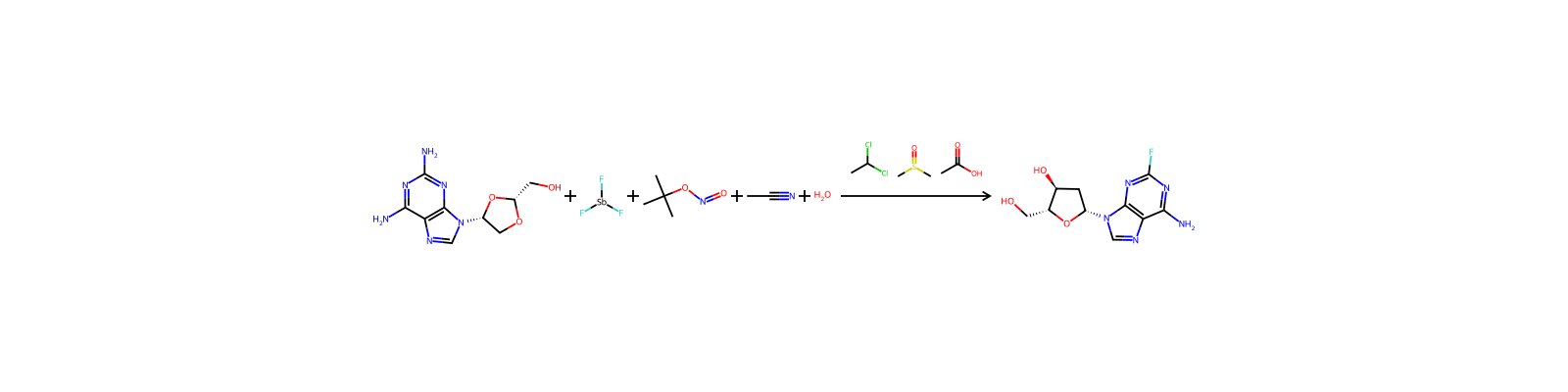
관련 반응
15건


화합물 노트
불러오는 중…