요오드 모노염화물(베타)
Iodine chloride

기본 정보
- CAS
7790-99-0- 표준 SMILES
ClI- InChIKey
QZRGKCOWNLSUDK-UHFFFAOYSA-N- 분자식
- ClI
- 평균 분자량
- 162.36 g/mol
- 단동위원소 질량
- 161.87333
개요
Iodine monochloride appears as black crystals or a reddish brown oily liquid with a pungent odor. Melting point 27 °C (alpha form) or 14 °C (beta form). Corrosive to metals and tissue.
이름 및 식별자
- 우선 이름
- Iodine chloride
- 현지명
- 요오드 모노염화물(베타)
- 영어명
- Iodine monochloride
- 분자식
- ClI
- 분자량
- 162.36
이름 및 동의어
IODINE MONOCHLORIDE7790-99-0Iodine chlorideIodochlorineWijs' chlorideIodine chloride (ICl)Chlorine iodide (ClI)Protochlorure D'iode0SMG5NLU45DTXSID1064879RefChem:148492DTXCID7048087
이름 더 보기
위이스시액,위스시액요오드모노염화물(베타)요오드모노염화물요오드클로라이드요오드모노염화물(베타)(IODINEMONOCHLORIDE(BETA))IClWIJS REAGENTWIJS SOLUTIONIodine MonochloridIODOCHLORIDEiodochloraneCHLORINE IODIDE
232-236-7ChloroiodideiodomonochlorideProtochlorure d'iode [French]HSDB 601UNII-0SMG5NLU45EINECS 232-236-7MFCD00011354
데이터베이스 식별자
- CAS
7790-99-0- PubChem CID
- 24640
- DTXSID
DTXSID1064879- UNII
- 0SMG5NLU45
- EC Number
- 232-236-7
- Nikkaji
- J95.175G
물성
구조 계산 물성
- XLogP
- 1.7
- 극성 표면적
- 0 Ų
- 수소 결합 공여자 수
- 0
- 수소 결합 수용자 수
- 0
- 회전 가능 결합 수
- 0
- 무거운 원자 수
- 2
- 형식 전하
- 0
- 복잡도
- 2
실험 및 물리화학적 성질
Chemical Classes
Other Classes -> Halogenated Aliphatics, Saturated
Corrosives
Density3.10 @ 29 °C/4 °C
Color/FormBLACK CRYSTALS OR REDDISH-BROWN LIQ
Solubility
SOL IN WATER, ALC, ETHER, CARBON DISULFIDE, ACETIC ACID
SOL IN HYDROCHLORIC ACID
Boiling Point97 °C, DECOMP
DecompositionWhen heated to decomposition, it emits highly toxic fumes of /hydrogen chloride and hydrogen iodide/ and may explode.
Melting PointALPHA 27.2; BETA 13.9 °C
Food Contact SubstancesFCS -> FDA Inventory of Food Contact Substances Listed in 21 CFR
Physical Description
Iodine monochloride appears as black crystals or a reddish brown oily liquid with a pungent odor. Melting point 27 °C (alpha form) or 14 °C (beta form). Corrosive to metals and tissue.
Black solid or reddish-brown liquid; Solid occurs as alpha (mp = 27.2 deg C) and beta (mp = 13.9 deg C) forms; Soluble in water; [Merck Index] Black crystalline solid with an acrid odor; Insoluble in water; [MSDSonline]
안전 및 규제
안전 정보는 참고용이며, 공급업체의 물질안전보건자료(SDS), 관련 법규 및 전문가 평가를 대체하지 않습니다.
GHS 분류
GHS Classification
Danger
H226 (17.8%): Flammable liquid and vapor [Warning Flammable liquids]
P210, P233, P240, P241, P242, P243, P260, P261, P262, P264, P264+P265, P270, P271, P280, P284, P301+P316, P301+P330+P331, P302+P352, P302+P361+P354, P303+P361+P353, P304+P340, P305+P354+P338, P316, P317, P319, P321, P330, P342+P316, P361+P364, P363, P370+P378, P403, P403+P233, P403+P235, P405, and P501 (click each P-code to see the statement)
Aggregated GHS information provided per 73 reports by companies from 13 notifications to the ECHA C&L Inventory. Each notification may be associated with multiple companies.
유해성 정보
Regulatory Information
Chemical: Iodine chloride (ICl)
REACH registered substance: Iodine monochloride (EC: 232-236-7)
Iodine monochloride: Does not have an individual approval but may be used under an appropriate group standard
The New Jersey Worker and Community Right to Know Act requires public and private employers to provide information about hazardous substances at their workplaces. (N.J.S.A. 34:5A-1 et. seq.)
DOT LabelCorrosive
Fire Hazards
Excerpt from ERG Guide 157 [Substances - Toxic and/or Corrosive (Non-Combustible / Water-Sensitive)]:
· Non-combustible, substance itself does not burn but may decompose upon heating to produce corrosive and/or toxic fumes.
· Non-combustible, substance itself does not burn but may decompose upon heating to produce corrosive and/or toxic fumes.
Fire PotentialALUMINUM FOIL, AFTER CONTINUED CONTACT WITH IODINE MONOCHLORIDE, IGNITES SPONTANEOUSLY & BURNS WITH BLUISH-WHITE FLAME.
Health Hazards
Excerpt from ERG Guide 157 [Substances - Toxic and/or Corrosive (Non-Combustible / Water-Sensitive)]:
화학 및 산업
약리 정보
Absorption, Distribution and ExcretionIODINE MONOCHLORIDE HAS ABILITY TO PENETRATE BACTERIAL CELL & ACCUM IN CELL WALL & PROTOPLASTS.
용도 및 제조
Uses
Used in analytical chemistry and as a topical antimicrobial agent; [Merck Index] Used in organic synthesis; [Hawley]
IN WIJS' SOLN TO DETERMINE IODINE VALUES OF FATS & OILS; TOPICAL ANTI-INFECTIVE
ANTIBACTERIAL AGENT
Methods of ManufacturingFROM THE ELEMENTS: CORNOG, KARGES, INORG SYN 1, 165 (1939); BUCKLES, BADER, IBID 9, 130 (1967).
General Manufacturing Information
Iodine chloride (ICl): ACTIVE
VET: 1% SOLN OF IODINE MONOCHLORIDE KILLS CLOSTRIDIUM PERFRINGENS TYPES C & D SPORES WITHIN 20 MIN & 0.75% SOLN...USED AS DISINFECTANT FOR...UDDERS OF DAIRY CATTLE.
VET: IODINE MONOCHLORIDE HAS ABILITY TO PENETRATE BACTERIAL CELL & ACCUM IN CELL WALL & PROTOPLASTS. BACTERIAL DEATH PRESUMED...RESULT OF MALFUNCTIONING ENZYME SYSTEMS & PROTEIN COAGULATION.
IODINE CHLORIDE IN CONCN OF 0.5% OR 1% SHOWED STRONGER BACTERICIDAL ACTIVITY AGAINST MICROFLORA ISOLATED FROM HUMAN ORAL CAVITIES THAN DID IODINE CHLORIDE IN MORE DIL CONCN.
USED AS REAGENT IN DETERMINATION OF PYRETRINS.
응용 분야
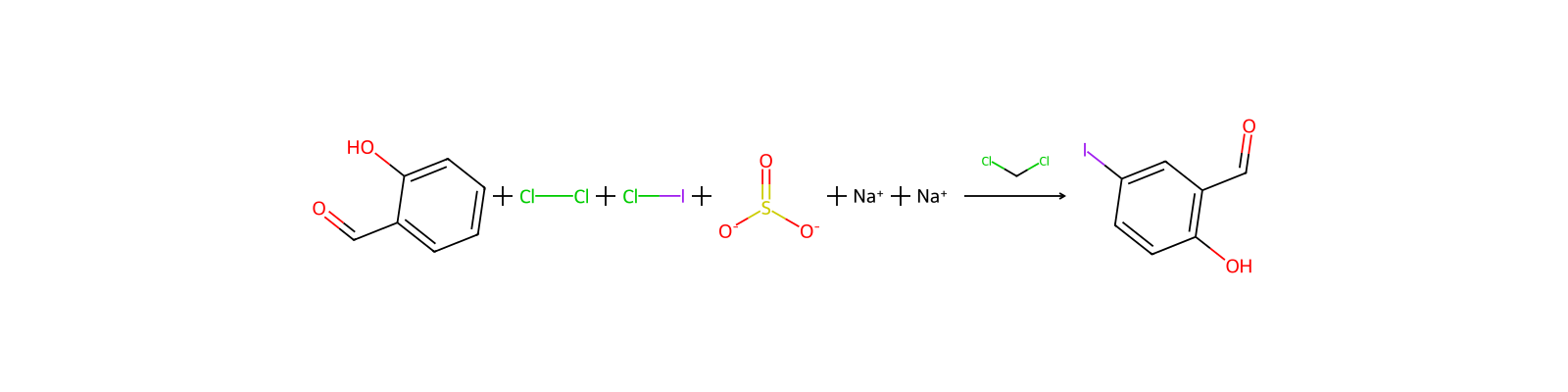
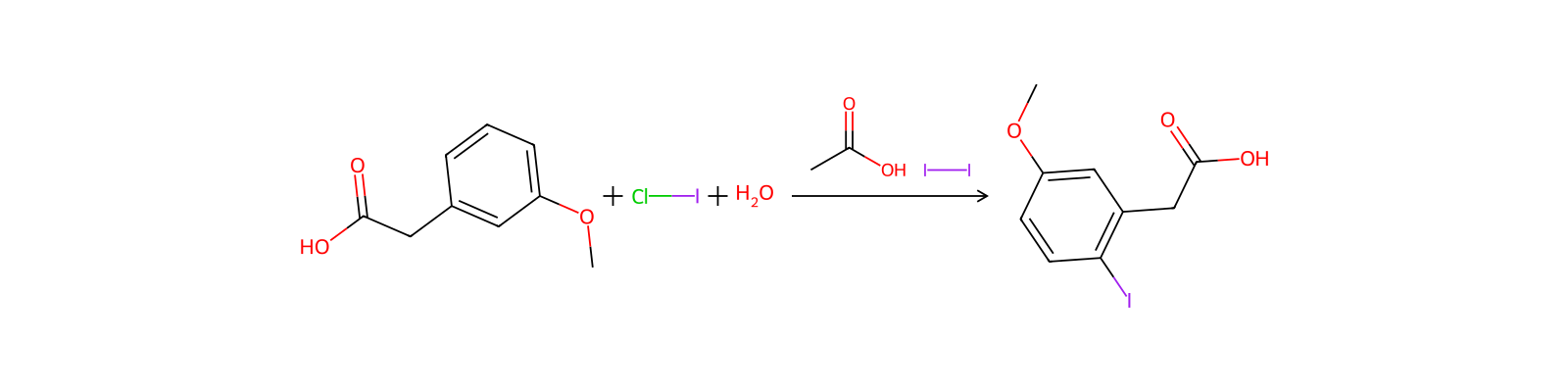
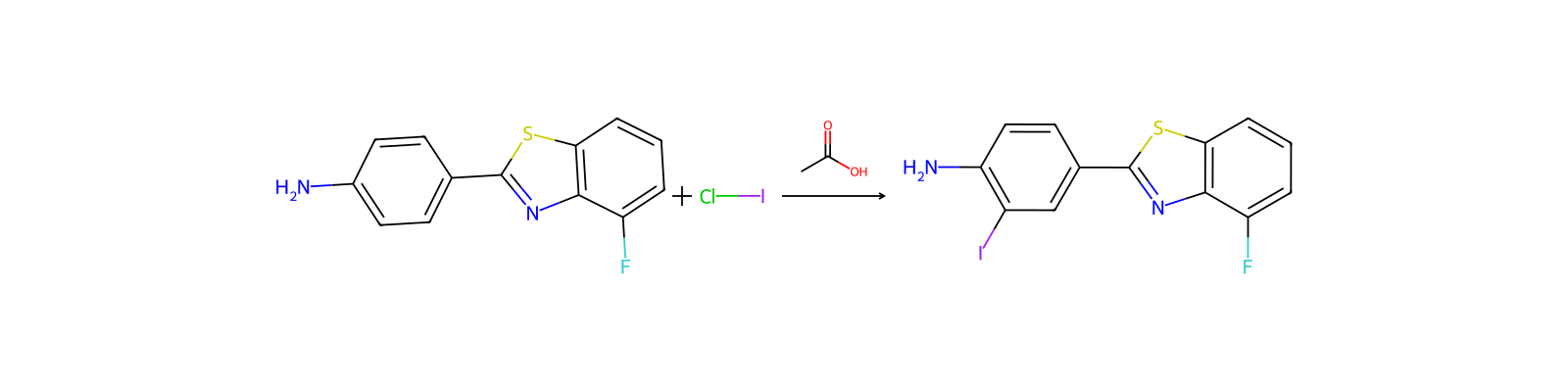
용도Iodine monochloride is used to estimate theiodine values of fats and oils and as a topicalanti-infective (Merck 1996). For determination of iodine absorption number of fats Iodine monochloride is used as a catalyst in organic synthesis. It is the source of electrophilic iodine in the synthesis of certain aromatic iodides.
제조 방법
관련 반응
789건




화합물 노트
불러오는 중…