Trichlorosilane
10025-78-2Cl[SiH](Cl)ClZDHXKXAHOVTTAH-UHFFFAOYSA-NTrichlorosilane appears as a colorless fuming liquid with a pungent odor. Flash point 7 °F. Vapor and liquid cause burns. More dense than water. Vapors are heavier than air.
10025-78-2DTXSID4029301Toxic Gases & Vapors -> Chlorosilanes
Corrosives
1.344 at 68 °F (USCG, 1999) - Denser than water; will sink
1.3417 at 20 °C/4 °C; 1.3830 at 0 °C/4 °C
Relative density (water = 1): 1.34
1.331 @25 °C
Sol in benzene, carbon disulfide, chloroform, carbon tetrachloride
Sol in ether, heptane, perchloroethylene
Solubility in water: reaction
greater than -58 °F (USCG, 1999)
[ERG 2016] -14 °C
7 °F (-14 °C) (Open cup)
-27 °C c.c.
안전 정보는 참고용이며, 공급업체의 물질안전보건자료(SDS), 관련 법규 및 전문가 평가를 대체하지 않습니다.
Danger
H224: Extremely flammable liquid and vapor [Danger Flammable liquids]
P210, P223, P231+P232, P233, P240, P241, P242, P243, P260, P261, P264, P264+P265, P270, P271, P280, P301+P317, P301+P330+P331, P302+P335+P334, P302+P361+P354, P303+P361+P353, P304+P340, P305+P354+P338, P316, P317, P321, P330, P363, P370+P378, P402+P404, P403+P233, P403+P235, P405, and P501 (click each P-code to see the statement)
Danger
H224 (100%): Extremely flammable liquid and vapor [Danger Flammable liquids]
P210, P222, P223, P231, P231+P232, P233, P240, P241, P242, P243, P260, P261, P264, P264+P265, P270, P271, P280, P301+P317, P301+P330+P331, P302+P335+P334, P302+P361+P354, P303+P361+P353, P304+P340, P305+P354+P338, P316, P317, P321, P330, P363, P370+P378, P402+P404, P403+P233, P403+P235, P405, and P501 (click each P-code to see the statement)
Chemical: Silane, trichloro-
Silane, trichloro- is listed on the EPA's Chemical Data Reporting (CDR) system. Manufacturers and importers of Silane, trichloro- are required to report information about their production and use of this chemical to the EPA under the Toxic Substances Control Act (TSCA). (40 eCFR Part 711)
REACH registered substance: Trichlorosilane (EC: 233-042-5)
REACH registered substance: TRICHLOROSILANE (EC: 419-930-7)
Trichlorosilane: HSNO Approval: HSR004738 Approved with controls
The New Jersey Worker and Community Right to Know Act requires public and private employers to provide information about hazardous substances at their workplaces. (N.J.S.A. 34:5A-1 et. seq.)
Special Hazards of Combustion Products: Toxic hydrogen chloride and phosgene gases may form in fires.
Used to make silicon for semiconductors; [HSDB] Used to make high-purity silicon and silane adhesion promoters, coupling agents, and silicon resins; [AIHA]
Semiconductor Manufacturing [Category: Industry]
In manufacture of transistors.
In organic synthesis
In the production of high purity silicon metal and as an intermediate for silane adhesion promoters, coupling agents silicon resin intermediates, and surface treatment.
The major application for trichlorosilane is as a raw material for producing high-purity polycrystalline silicon, which eventually becomes the polished silicon wafers used in semiconductor production.
2023: 1,000,000,000 - <2,500,000,000 lb
This chemical is listed as a High Production Volume (HPV) (65FR81686). Chemicals listed as HPV were produced in or imported into the U.S. in >1 million pounds in 1990 and/or 1994. The HPV list is based on the 1990 Inventory Update Rule. (IUR) (40 CFR part 710 subpart B; 51FR21438).
(1975) PROBABLY GREATER THAN 4.54X10+5 GRAMS
Production volumes for non-confidential chemicals reported under the Inventory Update Rule. [Table#2353]
REACTION OF HYDROGEN CHLORIDE GAS PASSED THROUGH SILICON OR COPPER SILICON POWDER IN FLUIDIZED BED.
Prepared from Si and HCl or from SiH4 and HCl in presence of AlCl3.
Trichlorosilane is made by passing hydrogen chloride through silicon powder at a moderate temperature (280 - 300 °C).
불러오는 중…
90 °F at 760 mmHg (USCG, 1999)
31.8 °C at 760 mm Hg, also reported as 36.5 °C /at 760 mm Hg/
31.8 °C
33 °C @760 [mm Hg]
-197 °F (USCG, 1999)
-126.5 °C
-126.5 °C
-128.2 °C
Clear liquid with acrid odor of hydrogen chloride. soluble in carbon disulfide, carbon tetrachloride, chloroform, benzene, etc.
· Produce flammable and toxic gases on contact with water.
Extremely flammable. Gives off irritating or toxic fumes (or gases) in a fire. Vapour/air mixtures are explosive.
A very dangerous fire hazard when exposed to heat, flame, or by chemical reaction.
... Trichlorosilane is highly flammable /Trichlorosilane/
The pure material is not impact-ignitable in absence of electrostatic charges, but technical material (possibly containing dichlorosilane) is.
Flammable liquid ... Low ignition energy ...
Inhalation causes severe irritation of respiratory system. Liquid causes severe burns of eyes and skin. Ingestion causes severe burns of mouth and stomach. (USCG, 1999)
· Highly toxic: contact with water produces toxic gas, may be fatal if inhaled.
Reacts with water to release HCl; Corrosive to skin and can produce pneumonitis after inhalation of high concentrations; May ignite on exposure to air; [CSH, p. 418] Highly corrosive to skin; [Quick CPC] A lachrymator; [HSDB] See the Process, Toxic Gas from Spilling Chemical in Water.
Excerpt from ERG Guide 139 [Substances - Water-Reactive (Emitting Flammable and Toxic Gases)]:
NO water. Use AFFF, powder, carbon dioxide. In case of fire: keep drums, etc., cool by spraying with water. NO direct contact with water.
Fresh air, rest. Half-upright position. Artificial respiration may be needed. Refer for medical attention.
Remove contaminated clothes. Rinse skin with plenty of water or shower. Refer for medical attention .
First rinse with plenty of water for several minutes (remove contact lenses if easily possible), then refer for medical attention.
Rinse mouth. Do NOT induce vomiting. Give nothing to drink. Refer for medical attention .
· CALL 911. Then call emergency response telephone number on shipping paper. If shipping paper not available or no answer, refer to appropriate telephone number listed on the inside back cover.
· ELIMINATE all ignition sources (no smoking, flares, sparks or flames) from immediate area.
INHALATION: remove victim from exposure; if breathing is difficult or stopped, give artificial respiration; call physician.
General First Aid:
... Corrosive ... May accumulate static electricity. Water reactive ... Hydrochloric acid is released.
Difficult to extinguish; reignition may occur. Flashback along vapor trail may occur.
The vapor is heavier than air and may travel along the ground; distant ignition possible.
Reacts violently with fire extinguishing agents such as water.
· Wear positive pressure self-contained breathing apparatus (SCBA).
TIH (Toxic Inhalation Hazard) - Term used to describe gases and volatile liquids that are toxic when inhaled. Some are TIH materials themselves, e.g., chlorine, and some release TIH gases when spilled in water, e.g., chlorosilanes. [ERG 2016].
If material on fire or involved in fire: Do not extinguish fire unless flow can be stopped. Use "alcohol" foam, dry chemical or carbon dioxide. Cool all affected containers with flooding quantities of water. Apply water from as far a distance as possible. Do not use water on material itself. If large quantities of combustibles are involved, use water in flooding quantities as spray and fog. Use water spray to knock-down vapors.
Do not use halocarbons. Dry powders and carbon dioxide may be ineffective. Approach fire from upwind to avoid hazardous vapors and toxic decomposition products. Material is reactive with water but can be extinguished with a 6% solution in water of medium expansion foam. Use water spray to keep fire exposed containers cool. For small fires use copious quantities of water as spray to react with chlorosilane.
Evacuation: If fire becomes uncontrollable or container is exposed to direct flame - consider evacuation of one-third (1/3) mile radius.
No water. Aqueous film forming foams (AFFF), powder, carbon dioxide ... Cool drums, etc, by spraying with water but avoid contact of the substance with water.
Fireproof. Separated from food and feedstuffs and incompatible materials ... Cool. Dry. Well closed. Ventilation along the floor.
Separate from water, alcohols, organic acids, peroxides, amines, and oxidizing materials. Outside or detached storage is preferred. Store away from heat, oxidizing materials, and sunlight. Must be stored in a dry location. Inside storage should be in a standard flammable liquids storage warehouse, room, or cabinet.
Evacuate danger area! Consult an expert! Ventilation. Collect leaking and spilled liquid in sealable containers as far as possible; do not use plastic containers. Absorb remaining liquid in dry sand or inert absorbent and remove to safe place. Do NOT wash away into sewer. (Extra personal protection: chemical protection suit including self-contained breathing apparatus.)
Eliminate all ignition sources. Approach release from upwind. Keep water away from release. Stop or control the leak, if this can be done without undue risk. Prompt cleanup and removal are necessary. May ignite spontaneously in insulating materials (absorbent materials) depending on size of piles. Control runoff and isolate discharged material for proper disposal.
SRP: The most favorable course of action is to use an alternative chemical product with less inherent propensity for occupational exposure or environmental contamination. Recycle any unused portion of the material for its approved use or return it to the manufacturer or supplier. Ultimate disposal of the chemical must consider: the material's impact on air quality; potential migration in soil or water; effects on animal, aquatic, and plant life; and conformance with environmental and public health regulations.
TERRESTRIAL FATE: All silicon chlorides are immediately and completely hydrolyzed by water(1); trichlorosilane has been reported to hydrolyze in water releasing hydrochloric acid(2). Due to the hydrolysis of trichlorosilane, adsorption to soil is not expected to be important fate process(SRC). Trichlorosilane is expected to volatilize from dry soil surfaces(SRC) based upon a vapor pressure of 594 mm Hg(3).
AQUATIC FATE: All silicon chlorides are immediately and completely hydrolyzed by water(1) and trichlorosilane has been reported to hydrolyze in water releasing hydrochloric acid(2). Due to the hydrolysis of trichlorosilane, volatilization, biodegradation and bioaccumulation are not expected to be important fate process(SRC).
ATMOSPHERIC FATE: According to a model of gas/particle partitioning of semivolatile organic compounds in the atmosphere(1), trichlorosilane, which has a vapor pressure of 594 mm Hg at 25 °C(2), is expected to exist solely as a vapor in the ambient atmosphere.
ATMOSPHERIC FATE: In the trophosphere, the ultimate fate of chlorosilane is probably determined by hydrolysis of the silicon-chlorine bonds in water droplets. /Chlorosilanes/
ATMOSPHERIC FATE: In arid regions, some transport of chlorosilanes to the stratosphere might occur. In the stratosphere, photolysis by short wavelength light is expected. /Chlorosilanes/
Cough. Sore throat. Burning sensation. Laboured breathing. Shortness of breath. Symptoms may be delayed.
Redness. Pain. Blisters. Skin burns.
Redness. Pain. Severe deep burns.
Burning sensation. Abdominal pain. Shock or collapse.
/SIGNS AND SYMPTOMS/ Inhalation causes severe irritation of respiratory system. Liquid causes severe burns of eyes and skin. Ingestion causes severe burns of mouth and stomach.
/SIGNS AND SYMPTOMS/ ... /Trichlorosilane/ is a lachrymator ...
/SIGNS AND SYMPTOMS/ ... Trichlorosilane/ is corrosive to the eyes, the skin and the respiratory tract. Corrosive on ingestion. Inhalation of its vapor may cause lung edema ... Inhalation ... may cause asthma-like reactions. Exposure may result in death ... The symptoms of lung edema often do not become manifest until a few hours have passed and they are aggravated by physical effort ...
/SIGNS AND SYMPTOMS/ ACUTE ... SYMPTOMS: Inhalation--Cough. Sore throat. Burning sensation. Labored breathing. Shortness of breath. Symptoms may be delayed ... Skin--Redness. Pain. Blisters. Skin burns; Eyes--Redness. Pain. Severe deep burns; Ingestion--Burning sensation. Abdominal pain. Shock or collapse.
All silicon chlorides are immediately and completely hydrolyzed by water(1) and trichlorosilane has been reported to hydrolyze in water, releasing hydrochloric acid(2). Trichlorosilane is expected to volatilize from dry soil surfaces(SRC) based upon a vapor pressure of 594 mm Hg(3).
The high volatility of /chlorosilanes/ suggests that they will move freely into the atmosphere. /Chlorosilanes/
/LABORATORY ANIMALS: Acute Exposure/ All these cmpd, even in very low doses ... caused severe burns of cornea and eyelids. ... /After/ application to the skin of the rabbit the region attacked by chlorosilanes blanches and then blisters appear ... /Chlorosilanes/[Lefaux, R. Practical Toxicology of Plastics. Cleveland: CRC Press Inc., 1968., p. 109]
/LABORATORY ANIMALS: Acute Exposure/ Tests by application of a drop to rabbit eyes have been made on tetrachlorosilane, dichloridimethyl silane, dichlorodiethylsilane, methyltrichlorosilane, & ethyl trichlorosilane. All the chlorosilanes were found to cause severe damage of the cornea & lids. More severe damage was caused by the alkylchlorosilanes than by tetrachlorosilane (silicone tetrachloride). The principal danger is from splash contamination. /Chlorosilanes/[Grant, W.M. Toxicology of the Eye. 3rd ed. Springfield, IL: Charles C. Thomas Publisher, 1986., p. 224]
/LABORATORY ANIMALS: Acute Exposure/ The acute inhalation toxicity of 10 chlorosilanes was investigated in Fischer 344 rats using a 1-hr whole-body vapor inhalation exposure and a 14-day recovery period. The median lethal concentration (LC50(1)) for each material was calculated from the nominal exposure concentrations and mortality. Experimentally derived LC50(1) values for monochlorosilanes (4257-4478 ppm) were greater than those for dichlorosilanes (1785-2092 ppm), which were greater than those for trichlorosilanes (1257-1611 ppm). Apparent was a strong structure-activity relationship (r2 = .97) between chlorine content and LC50(1) value. Estimated LC50(1) values for mono-, di-, and trichlorosilanes were determined to be 3262, 1639, and 1066 ppm, respectively, utilizing this relationship and the lower limit of the 95% prediction interval. The LC50(1) values determined in this series of studies were greater than that reported for hydrogen chloride (3124 ppm), when expressed on a chlorine equivalence basis (3570-5248 ppm), demonstrating that the acute toxicity of these chlorosilanes is similar to or less than that for hydrogen chloride.[Jean PA et al; Inhal Toxicol 18 (8): 515-22 (2006)]
/LABORATORY ANIMALS: Subchronic or Prechronic Exposure/ ... Groups of male and female Sprague-Dawley rats were exposed 6 hours/day, 5 days/week for a total of 9 exposures to concentrations of ... 0, 25, 50, or 100 ppm trichlorosilane (TCS). ... Exposure to TCS led to pneumonitis and alveolar histiocytosis in the 50 ppm and higher groups, and in the 100 ppm animals, 75% mortality. All treatment groups showed respiratory irritation, body weight reduction and increased lung weights.[EPA/OTS; Doc #89-900000005]
/GENOTOXICITY/ Ames test /in/ Salmonella typhimurium, /using trichlorosilane at/ 0.5, 5, 100, 500 uL/plate, with and without metabolic activation, /showed/ negative results.[European Chemicals Bureau; IUCLID Dataset, Trichlorosilane (10025-78-2) (2000 CD-ROM edition). Available from, as of October 16, 2006: http://esis.jrc.ec.europa.eu/]
The rate constant for the vapor-phase reaction of trichlorosilane with photochemically-produced hydroxyl radicals has been estimated as 1.5X10⁻¹³ cu cm/molecule-sec at 25 °C(SRC) using a structure estimation method(1). This corresponds to an atmospheric half-life of about 36 days at an atmospheric concentration of 5X10+5 hydroxyl radicals per cu cm(1). All silicon chlorides are immediately and completely hydrolyzed by water(2) and trichlorosilane has been reported to hydrolyze in water releasing hydrochloric acid(3). Methyl silanes are transparent to UV radiation >290 nm(4) and therefore methyltrichlorosilane is not expected to undergo direct photolytic degradation(SRC).
NIOSH (NOES Survey 1981-1983) has statistically estimated that 2,201 workers (267 of these are female) are potentially exposed to trichlorosilane in the US(1). Occupational exposure to trichlorosilane may occur through inhalation and dermal contact with this compound at workplaces where trichlorosilane is produced or used(SRC).
Trichlorosilane
1
10000
A Commercial Grade
A Placarded Amount
Flammable chemical that can be released at a facility.
All Other Basic Organic Chemical Manufacturing
Silane, trichloro-: ACTIVE
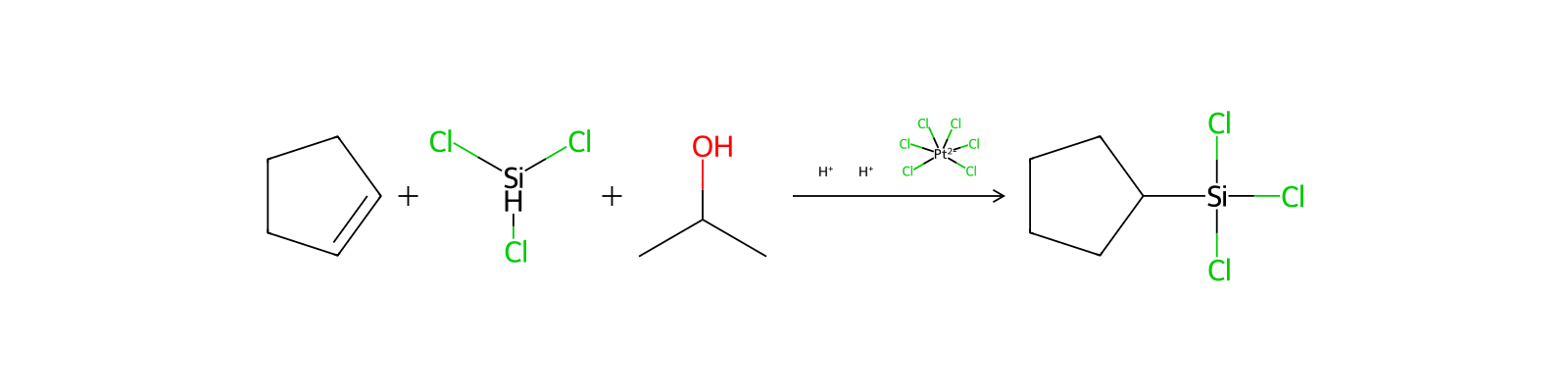
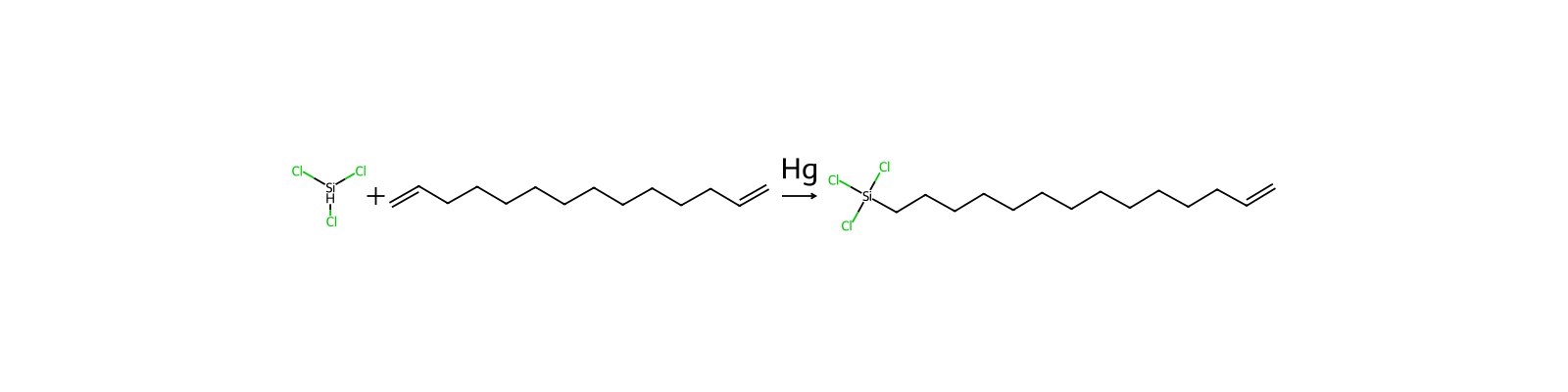
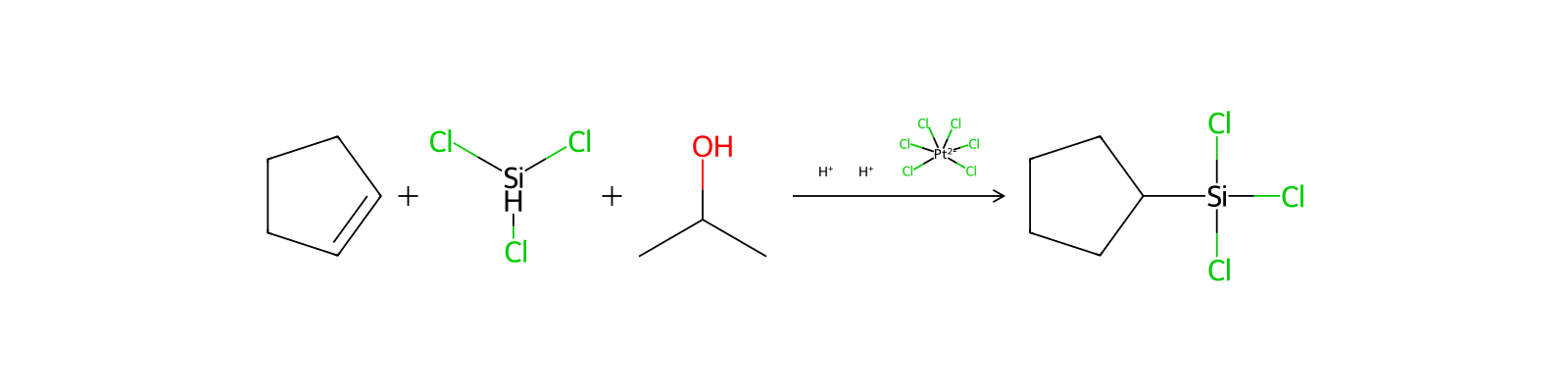
용도Trichlorosilane is used in process of hydrosilylation. It is also used for reductive hydrazination which is a high yielding method for preparation of 1,1-disubstituted hydrazines.
일반 설명A colorless fuming liquid with a pungent odor. Flash point 7°F. Vapor and liquid cause burns. More dense than water. Vapors are heavier than air.