Sodium Tetraphenylborate

기본 정보
- CAS
143-66-8- 표준 SMILES
[Na+].c1ccc([B-](c2ccccc2)(c2ccccc2)c2ccccc2)cc1- InChIKey
HFSRCEJMTLMDLI-UHFFFAOYSA-N- 분자식
- C24H20B.Na
- 평균 분자량
- 342.2 g/mol
- 단동위원소 질량
- 342.15557532
이름 및 식별자
- 우선 이름
- Sodium Tetraphenylborate
- IUPAC
- sodium tetraphenylboranuide
- 영어명
- Sodium tetraphenylborate
- 분자식
- C24H20BNa
- 분자량
- 342.21637
이름 및 동의어
Sodium tetraphenylborate143-66-8Sodium tetraphenylboronTetraphenylboron sodiumKalignostKaliborDotite KaliborKariporu KTetraphenyl sodium borateSodium tetraphenylborideBorate(1-), tetraphenyl-, sodiumTetraphenyl boron sodium salt
이름 더 보기
5A96KL5H1MBorate(1-), tetraphenyl-, sodium (1:1)DTXSID2059728NSC-203323tetraphenylborate sodium saltSodium, TetraphenylboronTetraphenylborate, SodiumRefChem:887941
데이터베이스 식별자
- CAS
143-66-8- PubChem CID
- 2723787
- DTXSID
DTXSID2059728- UNII
- 5A96KL5H1M
- EC Number
- 205-605-5
- Nikkaji
- J1.494.104E
물성
구조 계산 물성
- 극성 표면적
- 0 Ų
- 수소 결합 공여자 수
- 0
- 수소 결합 수용자 수
- 1
- 회전 가능 결합 수
- 0
- 무거운 원자 수
- 26
- 형식 전하
- 0
- 복잡도
- 308
실험 및 물리화학적 성질
Chemical ClassesMetals -> Metalloid Compounds (Boron)
Physical DescriptionSnow-white solid; [Merck Index] White, light cream-colored, or pale grey powder; [Alfa Aesar MSDS]
물리화학적 성질
- 녹는점
- 300 °C · >300 °C
- 물리적 상태
- 고체
- 색상
- 미색에서 옅은 노란색까지
- 냄새
- 냄새 없는
- 수용성
- 20 °C에서 · 20°C에서 50g/l - 용해성
안전 및 규제
안전 정보는 참고용이며, 공급업체의 물질안전보건자료(SDS), 관련 법규 및 전문가 평가를 대체하지 않습니다.
GHS 분류
GHS Classification
Danger
H301 (95.1%): Toxic if swallowed [Danger Acute toxicity, oral]
P261, P264, P264+P265, P270, P271, P280, P301+P316, P302+P352, P304+P340, P305+P351+P338, P319, P321, P330, P332+P317, P337+P317, P362+P364, P403+P233, P405, and P501 (click each P-code to see the statement)
Aggregated GHS information provided per 61 reports by companies from 9 notifications to the ECHA C&L Inventory. Each notification may be associated with multiple companies.
유해성 정보
Regulatory Information
Chemical: Borate(1-), tetraphenyl-, sodium
Sodium tetraphenyl borate: Does not have an individual approval but may be used under an appropriate group standard
Hazards Summary
Causes muscle weakness and weight loss in oral lethal-dose studies of rats; [RTECS] Uncouples oxidative phosphorylation and forms complexes with biological materials; [ChemIDplus] A skin and strong eye irritant; Toxic by ingestion; [Alfa Aesar MSDS] See Sodium tetraethylborate. See Triphenylborane.
Hazard Classes and CategoriesAcute Tox. 3 (95.1%)
안전 및 보호
Protective Action Criteria (PAC)
0.86 [mg/m3]
9.5 [mg/m3]
57 [mg/m3]
안전 데이터
- 포장분류
- III
화학 및 산업
약리 정보
MeSH Pharmacological Classification
Substances used for the detection, identification, analysis, etc. of chemical, biological, or pathologic processes or conditions. Indicators are substances that change in physical appearance, e.g., color, at or approaching the endpoint of a chemical titration, e.g., on the passage between acidity and alkalinity. Reagents are substances used for the detection or determination of another substance by chemical or microscopical means, especially analysis. Types of reagents are precipitants, solvents, oxidizers, reducers, fluxes, and colorimetric reagents. (From Grant & Hackh's Chemical Dictionary, 5th ed, p301, p499)
Chemical agents that uncouple oxidation from phosphorylation in the metabolic cycle so that ATP synthesis does not occur. Included here are those IONOPHORES that disrupt electron transfer by short-circuiting the proton gradient across mitochondrial membranes.
용도 및 제조
UsesUsed as a reagent for the determination of potassium, ammonium, rubidium, and cesium ions; [Merck Index] Used in biological assays; [ChemIDplus]
General Manufacturing InformationBorate(1-), tetraphenyl-, sodium (1:1): ACTIVE
관련 반응
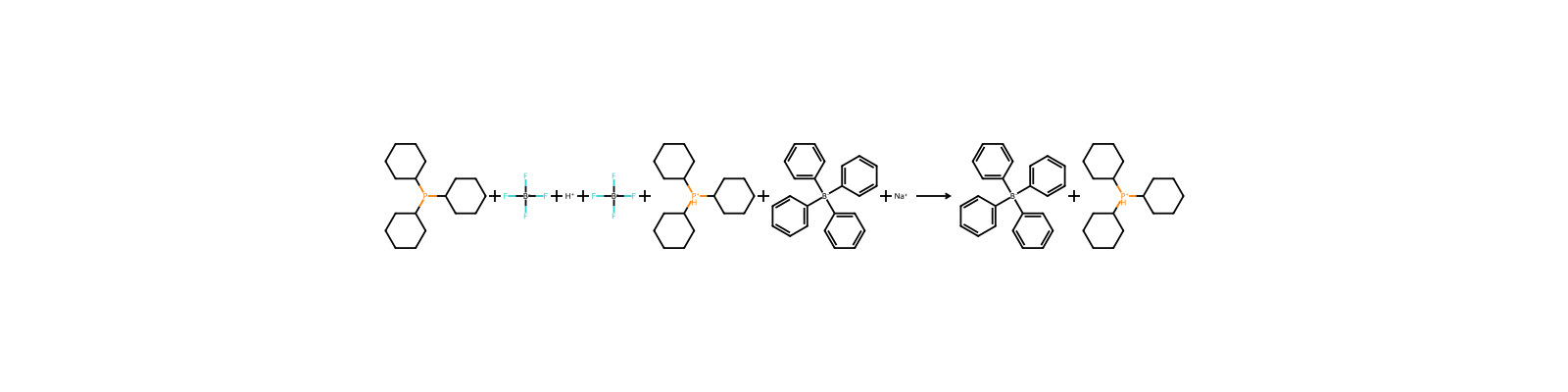
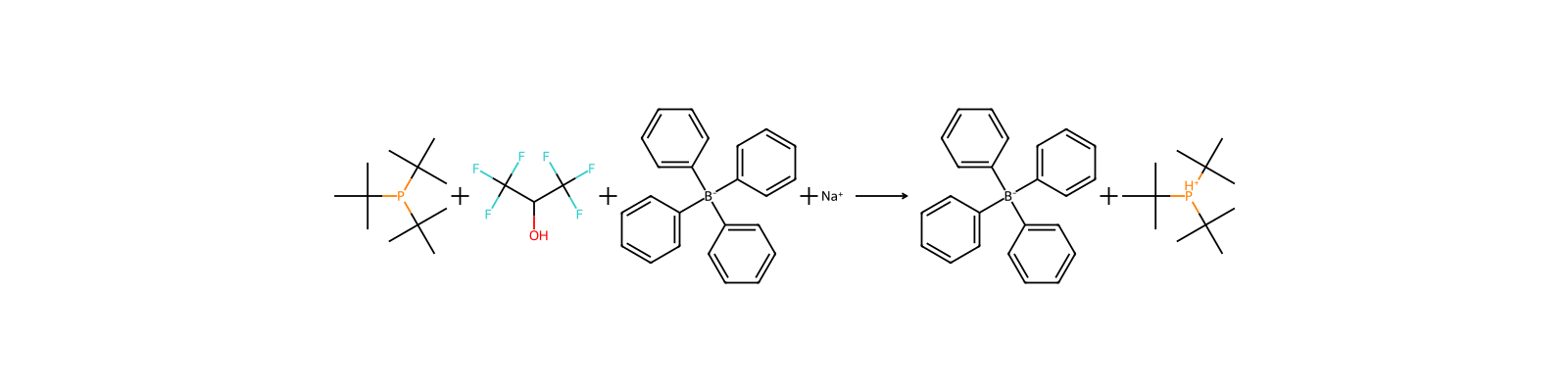
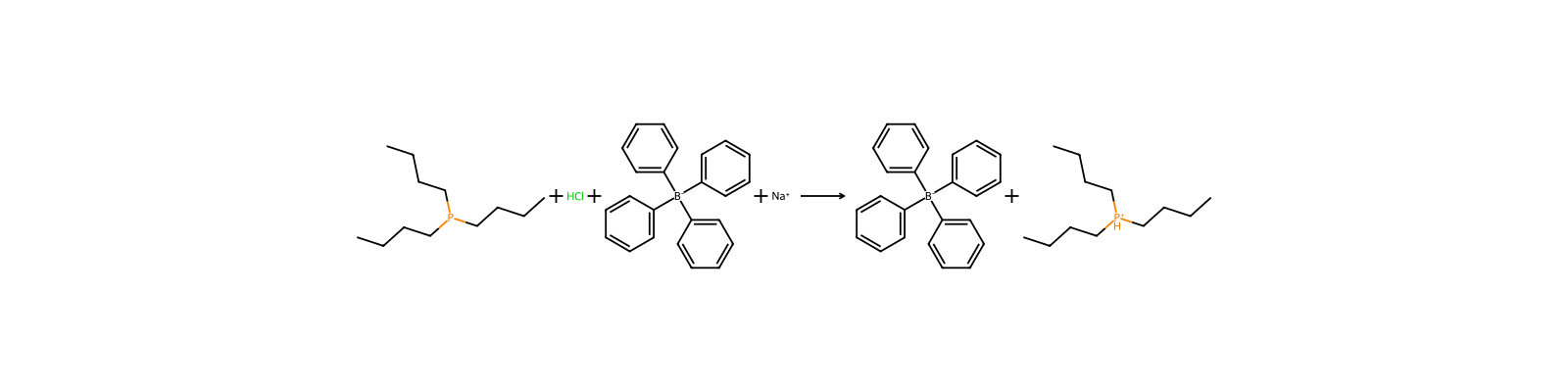
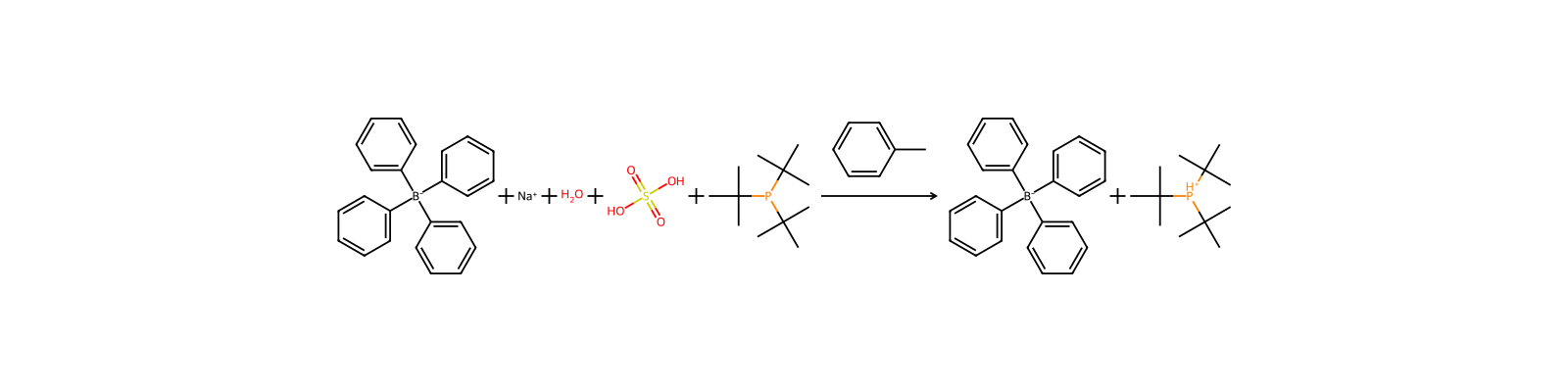
40건




화합물 노트
불러오는 중…