
HRID 15927반응물로
Thiosemicarbazide
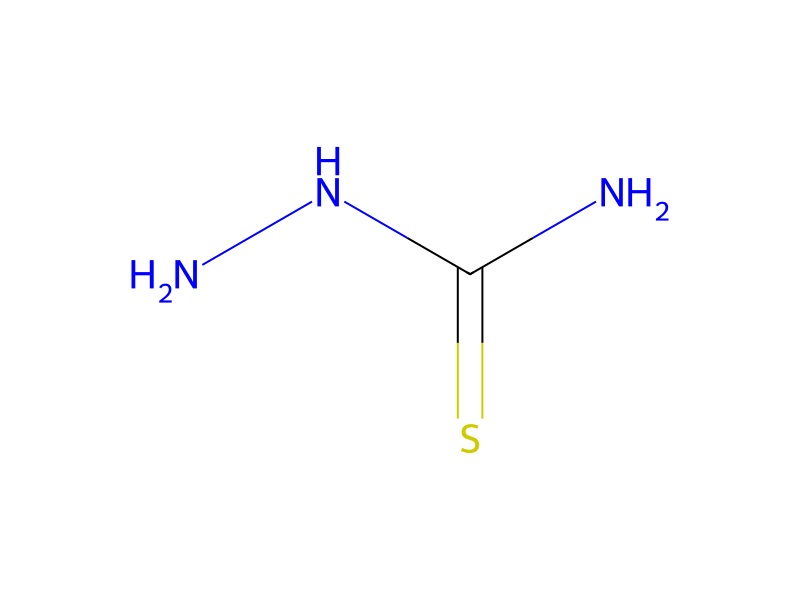
79-19-6NNC(N)=SBRWIZMBXBAOCCF-UHFFFAOYSA-NTHIOSEMICARBAZIDE is a white crystalline powder and is odorless. This material is used as a reagent for ketones and certain metals, for photography and as a rodenticide. It is also effective for control of bacterial leaf blight of rice. Not a registered pesticide in the U.S. It is a chemical intermediate for herbicides and a reagent for detection of metals. (EPA, 1998)
79-19-6DTXSID9021346CHEMBL256250CHEBI:49929White crystalline powder
Long needles from water
In water, 1./0X10+4 mg/L at 20 °C
Very soluble in water
Soluble in water or alcohol
Very soluble in ethanol
356 to 363 °F (EPA, 1998)
183 °C
183 °C
THIOSEMICARBAZIDE is a white crystalline powder and is odorless. This material is used as a reagent for ketones and certain metals, for photography and as a rodenticide. It is also effective for control of bacterial leaf blight of rice. Not a registered pesticide in the U.S. It is a chemical intermediate for herbicides and a reagent for detection of metals. (EPA, 1998)
안전 정보는 참고용이며, 공급업체의 물질안전보건자료(SDS), 관련 법규 및 전문가 평가를 대체하지 않습니다.
Danger
H300 (100%): Fatal if swallowed [Danger Acute toxicity, oral]
P264, P270, P273, P301+P316, P321, P330, P405, and P501 (click each P-code to see the statement)
Aggregated GHS information provided per 83 reports by companies from 9 notifications to the ECHA C&L Inventory. Each notification may be associated with multiple companies.
H402: Harmful to aquatic life [Hazardous to the aquatic environment, acute hazard]
P273, and P501 (click each P-code to see the statement)
Chemical: Hydrazinecarbothioamide
REACH registered substance: Thiosemicarbazide (EC: 201-184-7)
Thiosemicarbazide: HSNO Approval: HSR004724 Approved with controls
The New Jersey Worker and Community Right to Know Act requires public and private employers to provide information about hazardous substances at their workplaces. (N.J.S.A. 34:5A-1 et. seq.)
May cause irritation, goiter, bone marrow depression, hyperglycemia, CNS excitation, seizures, and pulmonary edema after ingestion; A GABA synthesis inhibitor in experimental animals; [HSDB] Causes convulsions in lethal-dose studies of guinea pigs, mice, and cats (oral, ocular, intravenous, and intraperitoneal routes); [RTECS] An irritant; [Alfa Aesar MSDS]
Substances that act in the brain stem or spinal cord to produce tonic or clonic convulsions, often by removing normal inhibitory tone. They were formerly used to stimulate respiration or as antidotes to barbiturate overdose. They are now most commonly used as experimental tools.
Compounds or agents that combine with an enzyme in such a manner as to prevent the normal substrate-enzyme combination and the catalytic reaction.
Used as a reagent for ketones and detection of metals, rodenticide, and chemical intermediate; Also used in photography; [HSDB] Effective for controlling bacterial leaf blight in rice: [CAMEO]
Not registered as a pesticide for use in the US; [CAMEO]
Photographic Processing [Category: Other]
Reagent for ketones and certain metals; photography; rodenticide.
CHEM INT FOR HERBICIDES (EG, TEBUTHIURON); REAGENT FOR DETECTION OF METALS (POSSIBLE USE).
Used as chemical intermediates.... are useful in forming 1,3,4-thiadiazoles, as a class of compounds having herbicidal activity. /Thiosemicarbazides/
... Made from CS2 and hydrazine.
From potassium thiocyanate and hydrazine salts.


White, odorless solid; [Hawley] Off-white crystalline powder; [Alfa Aesar MSDS]
Thiosemicarbazide is an odorless, white crystalline powder. It is soluble in water and ethanol; its solubility in cold water is 1%–2%, and in warm water is approximately 10%. Needle-like crystals can be obtained from aqueous solutions. It readily reacts with aldehydes and ketones to form specific crystalline products; it also readily reacts with carboxylic acids.
P116; As stipulated in 40 CFR 261.33, when hydrazinecarbothioamide, as a commercial chemical product or manufacturing chemical intermediate or an off-specification commercial chemical product or a manufacturing chemical intermediate, becomes a waste, it must be managed according to federal and/or state hazardous waste regulations. Also defined as a hazardous waste is any container or inner liner used to hold this waste or any residue, contaminated soil, water, or other debris resulting from the cleanup of a spill, into water or on dry land, of this waste. Generators of small quantities of this waste may qualify for partial exclusion from hazardous waste regulations (40 CFR 261.5(e)).
Isocyanates and thioisocyanates are incompatible with many classes of compounds, reacting exothermically to release toxic gases. Reactions with amines, aldehydes, alcohols, alkali metals, ketones, mercaptans, strong oxidizers, hydrides, phenols, and peroxides can cause vigorous releases of heat. Acids and bases initiate polymerization reactions in these materials. Some isocyanates react with water to form amines and liberate carbon dioxide. Base-catalysed reactions of isocyanates with alcohols should be carried out in inert solvents. Such reactions in the absence of solvents often occur with explosive violence, [Wischmeyer(1969)].
Releases of CERCLA hazardous substances are subject to the release reporting requirement of CERCLA section 103, codified at 40 CFR part 302, in addition to the requirements of 40 CFR part 355. Thiosemicarbazide is an extremely hazardous substance (EHS) subject to reporting requirements when stored in amounts in excess of its threshold planning quantity (TPQ) of 100 or 10,000 lbs. Extremely hazardous substances that are solids are subject to either of two threshold planning quantities ... The lower quantity applies only if the solid exists in powdered form and has a particle size less than 100 microns; or is handled in solution or in molten form; or meets the criteria for a National Fire Protection Association (NFPA) rating of 2, 3 or 4 for reactivity. If the solid does not meet any of these criteria, it is subject to the upper ... threshold planning quantity ... .
Persons in charge of vessels or facilities are required to notify the National Response Center (NRC) immediately, when there is a release of this designated hazardous substance, in an amount equal to or greater than its reportable quantity of 100 lb or 45.4 kg. The toll free number of the NRC is (800) 424-8802. The rule for determining when notification is required is stated in 40 CFR 302.4 (section IV. D.3.b).
(Non-Specific -- Poisonous, Solid, n.o.s.) Stay upwind; keep out of low areas. Wear self-contained (positive pressure if available) breathing apparatus and full protective clothing. Move container from fire area if you can do so without risk.
Suitable extinguishing media: Use water spray, alcohol-resistant foam, dry chemical or carbon dioxide.
Advice for firefighters: Wear self-contained breathing apparatus for firefighting if necessary.
Accidental Release Measures. Personal precautions, protective equipment and emergency procedures: Wear respiratory protection. Avoid dust formation. Avoid breathing vapours, mist or gas. Ensure adequate ventilation. Evacuate personnel to safe areas. Avoid breathing dust. Environmental precautions: Prevent further leakage or spillage if safe to do so. Do not let product enter drains. Discharge into the environment must be avoided. Methods and materials for containment and cleaning up: Pick up and arrange disposal without creating dust. Sweep up and shovel. Keep in suitable, closed containers for disposal.
Generators of waste (equal to or greater than 100 kg/mo) containing this contaminant, EPA hazardous waste number P116, must conform with USEPA regulations in storage, transportation, treatment and disposal of waste.
A potential candidate for rotary kiln incineration at a temperature range of 820 to 1600 °C and residence times of seconds for liquids and gases, and hours for solids. A potential candidate for fluidized bed incineration at a temperature range of 450 to 980 °C and residence times of seconds for liquids and gases, and longer for solids.
Waste treatment methods. Product: Offer surplus and non-recyclable solutions to a licensed disposal company. Contact a licensed professional waste disposal service to dispose of this material. Dissolve or mix the material with a combustible solvent and burn in a chemical incinerator equipped with an afterburner and scrubber. Contaminated packaging: Dispose of as unused product.
Precautions for safe handling: Avoid contact with skin and eyes. Avoid formation of dust and aerosols. Provide appropriate exhaust ventilation at places where dust is formed.Normal measures for preventive fire protection.
Appropriate engineering controls: Avoid contact with skin, eyes and clothing. Wash hands before breaks and immediately after handling the product.
Gloves must be inspected prior to use. Use proper glove removal technique (without touching glove's outer surface) to avoid skin contact with this product. Dispose of contaminated gloves after use in accordance with applicable laws and good laboratory practices. Wash and dry hands.
0.063 [mg/m3]
0.69 [mg/m3]
4.1 [mg/m3]
For emergency situations, wear a positive pressure, pressure-demand, full facepiece self-contained breathing apparatus (SCBA) or pressure- demand supplied air respirator with escape SCBA and a fully-encapsulating, chemical resistant suit. (EPA, 1998)
Wear rubber gloves & gas mask. /Thiourea/
Eye/face protection: Face shield and safety glasses Use equipment for eye protection tested and approved under appropriate government standards such as NIOSH (US) or EN 166(EU).
Skin protection: Handle with gloves.
Body Protection: Complete suit protecting against chemicals, The type of protective equipment must be selected according to the concentration and amount of the dangerous substance at the specific workplace.
Respiratory protection: Where risk assessment shows air-purifying respirators are appropriate use a full-face particle respirator type N100 (US) or type P3 (EN 143) respirator cartridges as a backup to engineering controls. If the respirator is the sole means of protection, use a full-face supplied air respirator. Use respirators and components tested and approved under appropriate government standards such as NIOSH (US) or CEN (EU).
The acute neurobehavioral toxicity of organochlorine pesticide, aldrin, has been studied at sublethal doses. A dose of 8.9 mg/kg (1/4 LD50) induced piloerection, tremors, convulsive excitement restlessness, augmented spontaneous motor activity and exploratory behavior in mice after 60 min, of i.p. administration indicating CNS stimulation. Blockade of specific neurotransmitter system by pretreatment with atropine (10 mg/kg), iproniazid (100 mg/kg) alpha-methyl-p-tyrosine (200 mg/kg), p-chlorophenylalanine (200 mg/kg) or thiosemicarbazide (5 mg/kg) significantly altered the neurotoxic symptoms induced by the pesticide indicating direct or indirect involvement of various neurotransmitter system in mediating CNS toxicity. Conditioned avoidance response in rats was not affected by the pesticide alone or in combination with either drug.
Female CD1 mice given the contraceptive steroids mestranol and norethynodrel (1:10) in the diet (0.0033%) for 4 months had a growth reduction of 20% when compared with mice fed a normal diet, and had lower convulsive thresholds when tested with the vitamin B6 antagonists 2,4-dimethyl-5-methyl-hydroxypyrimidine and thiosemicarbazide. In conditioned avoidance response (CAR) tests, mice fed the steroid-containing diets showed a decreased acquisition performance during all six sessions; however, mice fed the same diet supplemented with vitamin B6 (0.04%) performed as well during the last three sessions of the CAR tests as mice fed the normal diet.
Susceptibility to thiosemicarbazide was compared in 7 animal species together with the protective effect of vitamin B6 on the induction of convulsions. Susceptibility occurred generally with the phylogenetic development of the brain of vertebrates as well as invertebrates. Abnormal behavior analogous to running fits in rats and mice, which was thought to be a characteristic and activated form of locomotion, was also induced in every animal except the silkworm. Vitamin B6 arrested the induction of convulsions and abnormal behavior in guinea pigs and goldfish.
GABA-/inhibitory/ agents (thiosemicarbazide) markedly decreased the effect of morphine, hydrocodone, and the enkephaline analogs: Tyr-D-Ala-Gly-Phe-NH2 and Tyr-D-Ala-Gly-Phe (NO2) NH2 /in experimental animals/.
For more Interactions (Complete) data for 1-AMINO-2-THIOUREA (15 total), please visit the HSDB record page.
LC50; Species: Xenopus laevis /(African clawed frog)/ embryos; Concentration: 10,970 mg/L for 96 hr /Conditions of bioassay not specified in source examined/
EC50; Species: Xenopus laevis /(African clawed frog)/ embryos; Concentration: 25.5 mg/L for 96 hr; Effect: gross embryo malformation /Conditions of bioassay not specified in source examined/
LD50; Species: Wild bird oral 9100 ug/kg
TERRESTRIAL FATE: Based on a classification scheme(1), an estimated Koc value of 16(SRC), determined from a structure estimation method(2), indicates that 1-amino-2-thiourea is expected to have very high mobility in soil(SRC). Volatilization of 1-amino-2-thiourea from moist soil surfaces is not expected to be an important fate process(SRC) given an estimated Henry's Law constant of 6.6X10⁻¹⁰ atm-cu m/mole(SRC), using a fragment constant estimation method(2). 1-Amino-2-thiourea is not expected to volatilize from dry soil surfaces(SRC) based upon an estimated vapor pressure of 0.0087 mm Hg at 25 °C(SRC), determined from a fragment constant method(2). Utilizing the Japanese MITI test, 0% of the theoretical BOD was reached in 4 weeks indicating that biodegradation in soil is not an important environmental fate process(3).
AQUATIC FATE: Based on a classification scheme(1), an estimated Koc value of 16(SRC), determined from a structure estimation method(2), indicates that 1-amino-2-thiourea is not expected to adsorb to suspended solids and sediment(SRC). Volatilization from water surfaces is not expected(3) based upon an estimated Henry's Law constant of 6.6X10⁻¹⁰ atm-cu m/mole(SRC), developed using a fragment constant estimation method(2). 1-Amino-2-thiourea may undergo hydrolysis in the environment due to functional groups that hydrolyze under environmental conditions(3). According to a classification scheme(4), BCFs of 3.8-4.2 and <39 in carp (Cyprinus carpio)(5), suggest bioconcentration in aquatic organisms is low(SRC). Utilizing the Japanese MITI test, 0% of the theoretical BOD was reached in 4 weeks indicating that biodegradation in water is not an important environmental fate process(5).
ATMOSPHERIC FATE: According to a model of gas/particle partitioning of semivolatile organic compounds in the atmosphere(1), 1-amino-2-thiourea, which has an estimated vapor pressure of 0.008 mm Hg at 25 °C(SRC), determined from a fragment constant method(2), is expected to exist solely as a vapor in the ambient atmosphere. Vapor-phase 1-amino-2-thiourea is degraded in the atmosphere by reaction with photochemically-produced hydroxyl radicals(SRC); the half-life for this reaction in air is estimated to be 4 hours(SRC), calculated from its rate constant of 8.4X10⁻¹¹ cu cm/molecule-sec at 25 °C(SRC) that was derived using a structure estimation method(2). Particulate-phase 1-amino-2-thiourea may be removed from the air by wet and dry deposition(SRC). 1-Amino-2-thiourea contains chromophores that absorb at wavelengths >290 nm(3) and, therefore, may be susceptible to direct photolysis by sunlight(SRC).
IDENTIFICATION AND USE: 1-Amino-2-thiourea is an odorless white crystalline powder or long needles from water. It is an intermediate for pesticides, especially herbicides, and pharmaceuticals; used in certain photographic and dye applications and used as a reagent for the detection of metals. HUMAN EXPOSURE AND TOXICITY: Thioureas are potential sensitizing accelerators and antioxidants used in the manufacture of rubber which may cause irritant contact dermatitis. ANIMAL STUDIES: Subcutaneous injections of thiosemicarbazide into postnatal mice caused convulsions in mice when treated on the day 7 or later but not on the days 1-5. The latent period of the 1st convulsion was 115 min in mice injected on the day 7. The convulsions were inhibited by pyridoxine-HCL, but not by pyridoxal phosphate. GABAergic antagonists (1-amino-2-thiourea) enhanced aggressive behavior and decreased the social behavior of mice. 1-amino-2-thiourea was noncarcinogenic in mice and rats. The agent was teratogenic in chick embryos when applied to the vascular area on the 3rd day of incubation at 0.5 to 1 mg it produced deformities of the wing and beak, but not harelip. ECOTOXICITY STUDIES: Exposure of Rana sylvatica tadpoles to 25 mg/L or more caused a curvature of digits, abnormal limb articulations, difficulty in swimming, and death. Wood frog (Rana sylvatica) tadpoles were exposed to 50 mg thiosemicarbazide (TSC)/L water for varying lengths of time and at different developmental stages. Short exposure periods (3 and 6 hr) resulted in no visible deformities. Exposure periods of 12 or more hr caused slight to severe abnormalities, with a direct relationship between length of exposure and degree of deformity. Tadpoles exposed to TSC from posthatching Days 24-30 were more seriously affected than were tadpoles exposed at an older age.
/AQUATIC SPECIES/ The effects of exposure of Rana sylvatica tadpoles to varying concentrations (10-75 mg/L for 4 days) of thiosemicarbazide (TSC) was studied. Exposure to concentrations of 25 mg/L or more caused a curvature of digits, abnormal limb articulations, difficulty in swimming, and death. For all of these parameters, effects were dose dependent. Tadpoles exposed to 10 mg/L metamorphosed significantly slower than controls while those exposed to 50 mg/L metamorphosed significantly faster than controls. Rate of endochondral ossification in femurs and tibio-fibulas also was affected by TSC. These long bones ossified faster than in controls in both the 25- and 75-mg/L exposure groups. R. sylvatica tadpoles respond to TSC (a known osteolathyrogen) in a manner similar to that of other species. This response appears to be due in part to an acceleration of long bone ossification and speed of metamorphosis in high-concentration exposure groups. These responses are similar but not identical to those seen in Xenopus laevis, the only other amphibian studied to date.
/AQUATIC SPECIES/ Wood frog (Rana sylvatica) tadpoles were exposed to 50 mg thiosemicarbazide (TSC)/L water for varying lengths of time and at different developmental stages. Short exposure periods (3 and 6 hr) resulted in no visible deformities. Exposure periods of 12 or more hr caused slight to severe abnormalities, with a direct relationship between length of exposure and degree of deformity. Tadpoles exposed to TSC from posthatching Days 24-30 were more seriously affected than were tadpoles exposed at an older age.
The following link will take the user to the National Toxicology Program (NTP) Test Agent Search Results page, which tabulates all of the "Standard Toxicology & Carcinogenesis Studies", "Developmental Studies", and "Genetic Toxicity Studies" performed with this chemical. Clicking on the "Testing Status" link will take the user to the status (i.e., in review, in progress, in preparation, on test, completed, etc.) and results of all the studies that the NTP has done on this chemical.[Available from, as of October 20, 2014: http://ntp-apps.niehs.nih.gov/ntp_tox/index.cfm?fuseaction=ntpsearch.searchresults&searchterm=79-19-6]
Using a structure estimation method based on molecular connectivity indices(1), the Koc of 1-amino-2-thiourea can be estimated to be 16(SRC). According to a classification scheme(2), this estimated Koc value suggests that 1-amino-2-thiourea is expected to have very high mobility in soil.
Thiosemicarbazide was evaluated in range-finding study for acute oral toxicity in male CD rats administered single doses (0.5% Methocel dispersion, 10 mL/kg) of 0, 5, and 50 mg/kg by gavage. All rats of a 50 mg/kg dose were dead upon 2-hour observation, having shown no overt signs of toxicity one hour post-gavage. Terminal necropsy disclosed wet and/or tan or red-stained muzzles and darkened livers. No apparent toxicity was reported among rats of a 5 mg/kg dose and the study authors assigned an acute oral LD50 between 1 and 50 mg/kg.
Thiosemicarbazide was evaluated in range-finding study for acute dermal toxicity in male CD rats administered single occluded dermal applications (0.85% saline, 1:1) of 0, 20, and 200 mg/kg for 24 hours. Study authors reported incomplete cleansing of test substance from the application sites after treatment and possible oral exposure of treated rats by preening. Dermal exposure was associated with mortality in 5/6 high dose rats only, 4 on Day 1 of 14-day post-treatment observation and 1 on the day of treatment. Prior to death, the decedent rats unanimously exhibited convulsions, tremors, salivation, aggressiveness, and red-stained muzzle. Terminal necropsy disclosed wet and/or tan or red-stained muzzles and darkened livers. No apparent toxicity was reported among the solitary surviving rat of a 200 mg/kg application or rats of a 20 mg/kg dose, and no dermal irritation (Draize) was noted in any treated animal. The study authors assigned an acute dermal LD50 between 20 and 200 mg/kg.
Thiosemicarbazide was evaluated in range-finding study for eye irritation in 6 male New Zealand White rabbits administered single 0.1 g instillations onto the corneal surface of a single eye. Half (3/6) of the eyes were cleansed at 20-30 seconds after the exposure. No ocular irritation (Draize) of cornea, iris, or conjunctivae was reported in any animal throughout 7-day post-instillation observation.
/SURVEILLANCE/ In the manufacture of rubber, irritant contact dermatitis may occur from a variety of acids, alkalis, detergents, and solvents used in the process. Allergic contact dermatitis occurs not infrequently and is almost always due to an organic accelerator or antioxidant. While the list of potential sensitizing accelerators and antioxidants is enormous, common allergens include ... thioureas. /Thioureas/
P116; As stipulated in 40 CFR 261.33, when hydrazinecarbothioamide, as a commercial chemical product or manufacturing chemical intermediate or an off-specification commercial chemical product or a manufacturing chemical intermediate, becomes a waste, it must be managed according to federal and/or state hazardous waste regulations. Also defined as a hazardous waste is any container or inner liner used to hold this waste or any residue, contaminated soil, water, or other debris resulting from the cleanup of a spill, into water or on dry land, of this waste. Generators of small quantities of this waste may qualify for partial exclusion from hazardous waste regulations (40 CFR 261.5(e)).
Releases of CERCLA hazardous substances are subject to the release reporting requirement of CERCLA section 103, codified at 40 CFR part 302, in addition to the requirements of 40 CFR part 355. Thiosemicarbazide is an extremely hazardous substance (EHS) subject to reporting requirements when stored in amounts in excess of its threshold planning quantity (TPQ) of 100 or 10,000 lbs. Extremely hazardous substances that are solids are subject to either of two threshold planning quantities ... The lower quantity applies only if the solid exists in powdered form and has a particle size less than 100 microns; or is handled in solution or in molten form; or meets the criteria for a National Fire Protection Association (NFPA) rating of 2, 3 or 4 for reactivity. If the solid does not meet any of these criteria, it is subject to the upper ... threshold planning quantity ... .
Persons in charge of vessels or facilities are required to notify the National Response Center (NRC) immediately, when there is a release of this designated hazardous substance, in an amount equal to or greater than its reportable quantity of 100 lb or 45.4 kg. The toll free number of the NRC is (800) 424-8802. The rule for determining when notification is required is stated in 40 CFR 302.4 (section IV. D.3.b).
Hydrazinecarbothioamide: ACTIVE
Thiosemicarbazide is effective for control of bacterial leaf blight of rice when applied around rice plant roots.
용도Used in TLC to stain alpha-keto acidsThiosemicarbazide is used as a reagent for ketones as well as chemical intermediate. It is involved in the detection of metals. It is also used in photography. Further, it is effective for controlling bacterial leaf blight in rice. In addition to this, it is used to prepare 1,3,4-thiadiazoles.
일반 설명N-Aminothiourea is a white crystalline powder and is odorless. N-Aminothiourea is used as a reagent for ketones and certain metals, for photography and as a rodenticide. N-Aminothiourea is also effective for control of bacterial leaf blight of rice. Not a registered pesticide in the U.S. N-Aminothiourea is a chemical intermediate for herbicides and a reagent for detection of metals.