

기본 정보
- 표준 SMILES
C[C@H]1COc2c(N3CCN(C)CC3)c(F)cc3c(=O)c(C(=O)O)cn1c23.C[C@H]1COc2c(N3CCN(C)CC3)c(F)cc3c(=O)c(C(=O)O)cn1c23.O- InChIKey
SUIQUYDRLGGZOL-RCWTXCDDSA-N- 분자식
- C36H42F2N6O9
- 평균 분자량
- 740.7 g/mol
- 단동위원소 질량
- 740.29813326
이름 및 식별자
- 우선 이름
- Levofloxacin Hydrate
- IUPAC
- bis((2S)-7-fluoro-2-methyl-6-(4-methylpiperazin-1-yl)-10-oxo-4-oxa-1-azatricyclo[7.3.1.05,13]trideca-5(13),6,8,11-tetraene-11-carboxylic acid);hydrate
이름 및 동의어
Levofloxacin hydrateDTXSID60160533RefChem:1088440DTXCID2083024(3S)-9-Fluoro-3-methyl-10-(4-methylpiperazin-1-yl)-7-oxo-2,3-dihydro-7H-pyrido(1,2,3-de)(1,4)benzoxazine-6-carboxylic acid hemihydrate138199-71-0DynaquinMFCD07772024Levofloxacin (hydrate)(S)-9-Fluoro-3-methyl-10-(4-methylpiperazin-1-yl)-7-oxo-3,7-dihydro-2H-[1,4]oxazino[2,3,4-ij]quinoline-6-carboxylic acid hydrate(2:1)7H-Pyrido[1,2,3-de]-1,4-benzoxazine-6-carboxylic acid, 9-fluoro-2,3-dihydro-3-methyl-10-(4-methyl-1-piperazinyl)-7-oxo-, hydrate (2:1), (3S)-Levaquin (TN)
이름 더 보기
(S)-9-Fluoro-3-methyl-10-(4-methylpiperazin-1-yl)-7-oxo-2,3-dihydro-7H-[1,4]oxazino[2,3,4-ij]quinoline-6-carboxylic acid hemihydrate7H-Pyrido(1,2,3-de)-1,4-benzoxazine-6-carboxylic acid, 9-fluoro-2,3-dihydro-3-methyl-10-(4-methyl-1-piperazinyl)-7-oxo-hydrate (2:1), (S)-Levofloxacin [USAN](2S)-7-fluoro-2-methyl-6-(4-methylpiperazin-1-yl)-10-oxo-4-oxa-1-azatricyclo[7.3.1.05,13]trideca-5(13),6,8,11-tetraene-11-carboxylic acid;hydrateUNII-6GNT3Y5LMFRWJ 252137H-Pyrido[1,2,3-de]-1,4-benzoxazine-6-carboxylic acid, 9-fluoro-2,3-dihydro-3-methyl-10-(4-methyl-1-piperazinyl)-7-oxo-, hydrate (2:1), (3S)-; 7H-Pyrido[1,2,3-de]-1,4-benzoxazine-6-carboxylic acid, 9-fluoro-2,3-dihydro-3-methyl-10-(4-methyl-1-piperazinyl)-7-oxo-, hydrate (2:1), (S)-; Dynaquin; Leeflox; Levofloxacin; Levofloxacin hydrateLevofloxacin (USP)
데이터베이스 식별자
- CAS
138199-71-0- PubChem CID
- 3033924
- DTXSID
DTXSID60160533- UNII
- 6GNT3Y5LMF
- EC Number
- 604-067-2
물성
구조 계산 물성
- 극성 표면적
- 148 Ų
- 수소 결합 공여자 수
- 3
- 수소 결합 수용자 수
- 17
- 회전 가능 결합 수
- 4
- 무거운 원자 수
- 53
- 형식 전하
- 0
- 복잡도
- 634
안전 및 규제
GHS 분류
GHS Classification
Danger
H302 (99.1%): Harmful if swallowed [Warning Acute toxicity, oral];H317 (96.5%): May cause an allergic skin reaction [Warning Sensitization, Skin];H334 (96.5%): May cause allergy or asthma symptoms or breathing difficulties if inhaled [Danger Sensitization, respiratory];H361 (84.2%): Suspected of damaging fertility or the unborn child [Warning Reproductive toxicity];H362 (83.3%): May cause harm to breast-fed children [Reproductive toxicity, effects on or via lactation]
P203, P233, P260, P261, P263, P264, P270, P271, P272, P280, P284, P301+P317, P302+P352, P304+P340, P318, P321, P330, P333+P317, P342+P316, P362+P364, P403, P405, and P501 (click each P-code to see the statement)
Aggregated GHS information provided per 114 reports by companies from 14 notifications to the ECHA C&L Inventory. Each notification may be associated with multiple companies.;Information may vary between notifications depending on impurities, additives, and other factors. The percentage value in parenthesis indicates the notified classification ratio from companies that provide hazard codes. Only hazard codes with percentage values above 10% are shown. For more detailed information, please visit ECHA C&L website.
유해성 정보
Hazard Classes and CategoriesAcute Tox. 4 (99.1%);Skin Sens. 1 (96.5%);Resp. Sens. 1 (96.5%);Repr. 2 (84.2%);Lact. (83.3%)
독성 정보
TreatmentIn the event of an acute overdosage, the stomach should be emptied. The patient should be observed and appropriate hydration maintained. Levofloxacin is not efficiently removed by hemodialysis or peritoneal dialysis. (L1009)
Health Effects
Irreversible peripheral neuropathy, central nervous system toxicity, cardiovascular toxicity, tendon / articular toxicity, and hepatic toxicity. Toxic epidermal necrolysis, coagulation abnormalities and pancytopenia are other possible adverse effect of levofloxacin. Administration of commercial levofloxin (Levaquin), increased risk of tendinitis and tendon rupture in all ages. This adverse reaction most frequently involves the Achilles tendon (L1009, L1017).
Exposure RoutesIngestion; injection; skin contact (L1017).
Absorption of ofloxacin after single or multiple doses of 200 to 400 mg is predictable, and the amount of drug absorbed increases proportionately with the dose.
Toxicity Summary
Levofloxacin inhibits bacterial type II topoisomerases, topoisomerase IV and DNA gyrase. Levofloxacin, like other fluoroquinolones, inhibits the A subunits of DNA gyrase, two subunits encoded by the gyrA gene. This results in strand breakage on a bacterial chromosome, supercoiling, and resealing; DNA replication and transcription is inhibited.
Signs and SymptomsSide effects include disorientation, dizziness, drowsiness, hot and cold flashes, nausea, slurring of speech, swelling and numbness in the face.
Carcinogen ClassificationNo indication of carcinogenicity to humans (not listed by IARC).
Toxicity DataLD50: 640 mg/kg (Oral, Rat)
화학 및 산업
약리 정보
Metabolism/Metabolites
Mainly excreted as unchanged drug (87%); undergoes limited metabolism in humans. Levofloxacin is rapidly and essentially completely absorbed after oral administration. It is distributed into body tissues, especially in the skin and lung tissues. Levofloxacin is stereochemically stable in plasma and urine and does not invert metabolically to its enantiomer, D-ofloxacin. Levofloxacin undergoes limited metabolism in humans and is primarily excreted as unchanged drug in the urine. Following oral administration, approximately 87% of an administered dose was recovered as unchanged drug in urine within 48 hours, whereas less than 4% of the dose was recovered in feces in 72 hours. Less than 5% of an administered dose was recovered in the urine as the desmethyl and N-oxide metabolites, the only metabolites identified in humans. These metabolites have little relevant pharmacological activity. Levofloxacin is excreted largely as unchanged drug in the urine (L1009). Route of Elimination: Mainly excreted as unchanged drug in the urine. Half Life: 6-8 hours
용도 및 제조
Uses
For the treatment of bacterial conjunctivitis caused by susceptible strains of the following organisms: <i>Corynebacterium</i> species, <i>Staphylococus aureus</i>, <i>Staphylococcus epidermidis</i>, <i>Streptococcus pneumoniae</i>, <i>Streptococcus</i> (Groups C/F/G), Viridans group streptococci, <i>Acinetobacter lwoffii</i>, <i>Haemophilus influenzae</i>, <i>Serratia marcescens</i>. Levofloxacin is a synthetic chemotherapeutic agent used to treat severe and life threatening bacterial infection (L1009).
관련 반응
12건

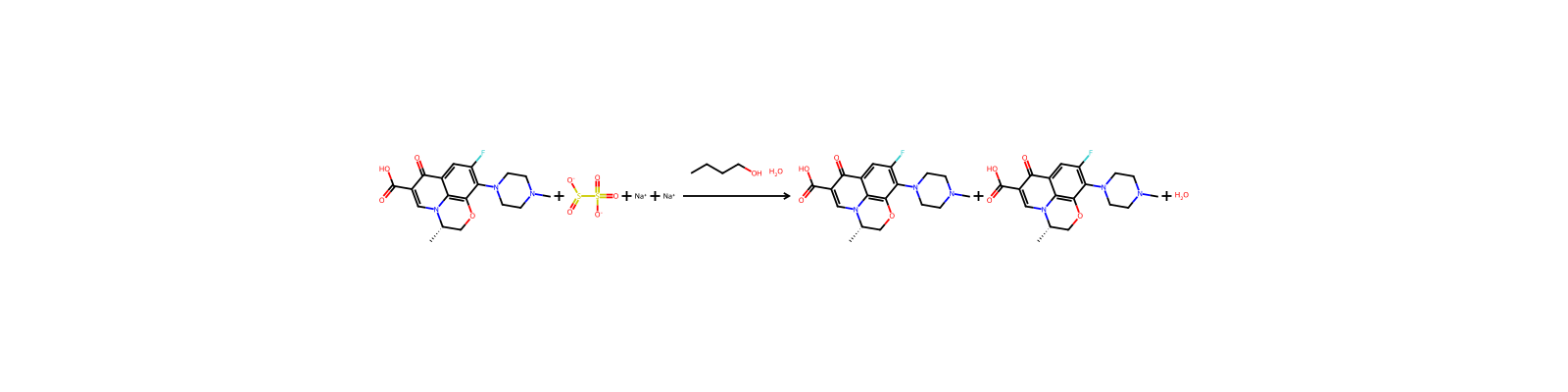


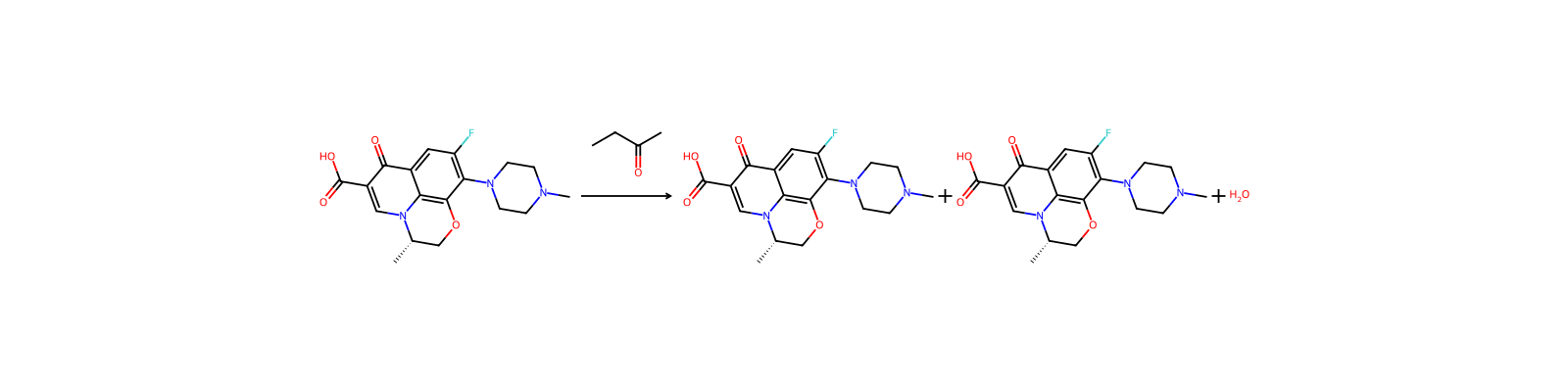


연결된 노트
불러오는 중…