Diethylenetriaminepentaacetic acid
데이터를 보충하는 중입니다. 잠시 후 페이지를 새로 고치면 최신 내용을 볼 수 있습니다
기본 정보
- CAS
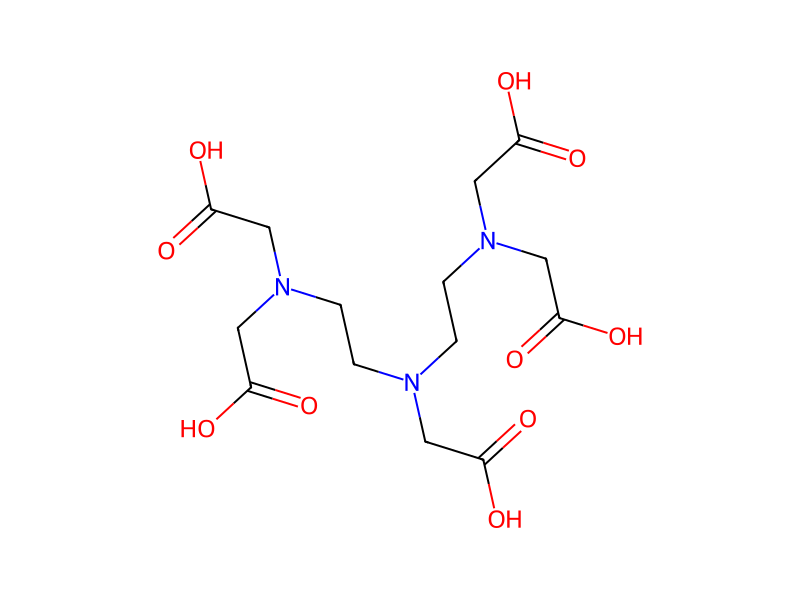
67-43-6- 표준 SMILES
O=C(O)CN(CCN(CC(=O)O)CC(=O)O)CCN(CC(=O)O)CC(=O)O- InChIKey
QPCDCPDFJACHGM-UHFFFAOYSA-N- 분자식
- C14H23N3O10
- 평균 분자량
- 393.35 g/mol
- 단동위원소 질량
- 393.13834394
개요
Pentetic acid is a pentacarboxylic acid. It has a role as a copper chelator. It is a conjugate acid of a pentetate(1-).
이름 및 식별자
- 우선 이름
- Diethylenetriaminepentaacetic acid
- IUPAC
- 2-[bis[2-[bis(carboxymethyl)amino]ethyl]amino]acetic acid
- 영어명
- DTPA
- 분자식
- C14H23N3O10
- 분자량
- 393.35
이름 및 동의어
Pentetic aciddiethylenetriaminepentaacetic acid67-43-6DTPADetapacDetarexTitriplex VMonaquest CAIPerma kleerDabeersen 503CHEL 330 acidPenthanil
이름 더 보기
Diethylenetriamine Pentaacetic AcidPenthamilChel DTPADissolvine DPentacarboxymethyldiethylenetriamineAcido penteticoAcide pentetique(Diethylenetrinitrilo)pentaacetic acid
데이터베이스 식별자
- CAS
67-43-6- PubChem CID
- 3053
- DTXSID
DTXSID2023434- ChEMBL
CHEMBL780- ChEBI
CHEBI:35739- UNII
- 7A314HQM0I
- EC Number
- 200-652-8
- Nikkaji
- J2.813D、J479.816C
물성
구조 계산 물성보충 중
- XLogP
- -8.5
- 극성 표면적
- 196 Ų
- 수소 결합 공여자 수
- 5
- 수소 결합 수용자 수
- 13
- 회전 가능 결합 수
- 16
- 무거운 원자 수
- 27
- 형식 전하
- 0
- 복잡도
- 481
실험 및 물리화학적 성질
Chemical ClassesOther Uses -> Chelating Agents
Drugs
Pharmaceuticals -> Listed in ZINC15
Pharmaceuticals
Cosmetics
Cosmetic ingredients (Pentetic Acid) -> CIR (Cosmetic Ingredient Review)
Chelating
SolubilityHighly soluble
Boiling PointDecomposes
Melting Point
219-220 ºC
219 °C
Physical Description
CBI; Dry Powder
White to off-white solid; [Acros Organics MSDS]
Dissociation Constantspentabasic (1.5-10.6)
Collision Cross Section180.2 Ų [M+H]+ [CCS Type: TW; Method: calibrated with polyalanine and drug standards]
물리화학적 성질
안전 및 규제
안전 정보는 참고용이며, 공급업체의 물질안전보건자료(SDS), 관련 법규 및 전문가 평가를 대체하지 않습니다.
GHS 분류
GHS Classification
Danger
H319: Causes serious eye irritation [Warning Serious eye damage/eye irritation]
P203, P260, P261, P264+P265, P271, P280, P304+P340, P305+P351+P338, P317, P318, P319, P337+P317, P405, and P501 (click each P-code to see the statement)
This chemical does not meet GHS hazard criteria for 1.3% (7 of 530) of reports.
Danger
H319 (98.7%): Causes serious eye irritation [Warning Serious eye damage/eye irritation]
유해성 정보
Regulatory Information
Chemical: Glycine, N,N-bis[2-[bis(carboxymethyl)amino]ethyl]-
Hazard Traits - Reproductive Toxicity
Glycine, N,N-bis[2-[bis(carboxymethyl)amino]ethyl]- is listed on the EPA's Chemical Data Reporting (CDR) system. Manufacturers and importers of Glycine, N,N-bis[2-[bis(carboxymethyl)amino]ethyl]- are required to report information about their production and use of this chemical to the EPA under the Toxic Substances Control Act (TSCA). (40 eCFR Part 711)
REACH registered substance: N-carboxymethyliminobis(ethylenenitrilo)tetra(acetic acid) (EC: 200-652-8)
Pentetic acid: Does not have an individual approval but may be used under an appropriate group standard
Hazards Summary
The calcium salt causes fetal death and teratogenic effects in mice (thought to be associated with the chelation of essential divalent cations such as zinc); [REPROTOX] Causes convulsions and chronic pulmonary edema in intraperitoneal lethal-dose studies of rats (LD50 = 587 mg/kg); [RTECS] An eye irritant; [Acros Organics MSDS] See Edetic acid.
Hazard Classes and Categories
Eye Irrit. 2 (98.7%)
Acute toxicity (inhalation) - category 4
Acute toxicity (Inhalation: Dusts and mists) - Category 4
Repr. 1B
안전 및 보호
화학 및 산업
약리 정보
Protein BindingThe fast clearance and very short half-life of pentetic acid suggest that this compound is very unlikely to become bound to serum proteins to any significant extent. It is reported that DPTA is negligibly bound to alpha1-antitrypsin.
Pharmacodynamics
There are reports in vivo of low stability of complexes of DPTA with uranium and neptunium which is being reported to cause deposition of the radionuclides into the tissues. In the case of plutonium, some preclinical studies have shown a very high urine elimination efficacy 1 hour after initial contamination. This efficacy is conserved for approximately 24 hours while the radiocontaminant is circulating. When the radionuclide is inhaled, it has been reported a DPTA-induced reduction of even 98% of the lung deposits. It is important to consider that pentetic acid can bind directly to other trace metals in the body which can cause deficiencies.
Mechanism of Action
The calcium and zinc trisodium salts of DTPA achieve the therapeutical potential by exchanging calcium and zinc cations with transuranic radionuclides to form higher affinity complexes and then promote their elimination by glomerular filtration into the urine. DTPA as an acid acts in a very similar way by sequestering ions with its eight coordinate bond forming sites.
Biological Half-LifeIn preclinical studies, DTPA has been shown to present a very short half-life of 18.5-31.8 min after intravenous administration.
Metabolism/MetabolitesPentetic acid and its derivatives present a very minimal metabolism in the body.
FDA Pharmacological Classification
7A314HQM0I
PENTETIC ACID
Mechanisms of Action [MoA] - Lead Chelating Activity
Established Pharmacologic Class [EPC] - Lead Chelator
Pentetic acid is a Lead Chelator. The mechanism of action of pentetic acid is as a Lead Chelating Activity.
KIT FOR THE PREPARATION OF TECHNETIUM TC 99M PENTETATE
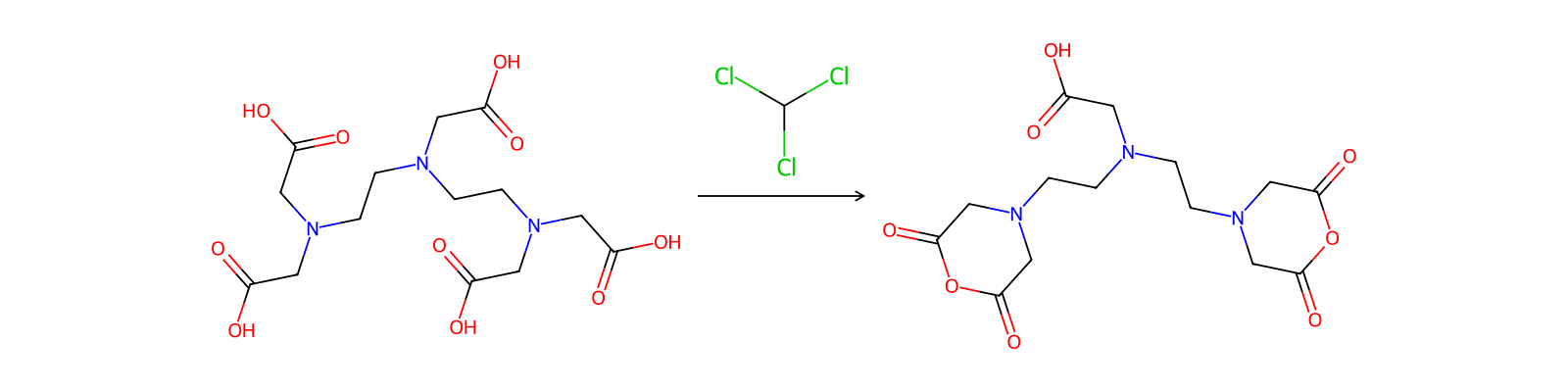
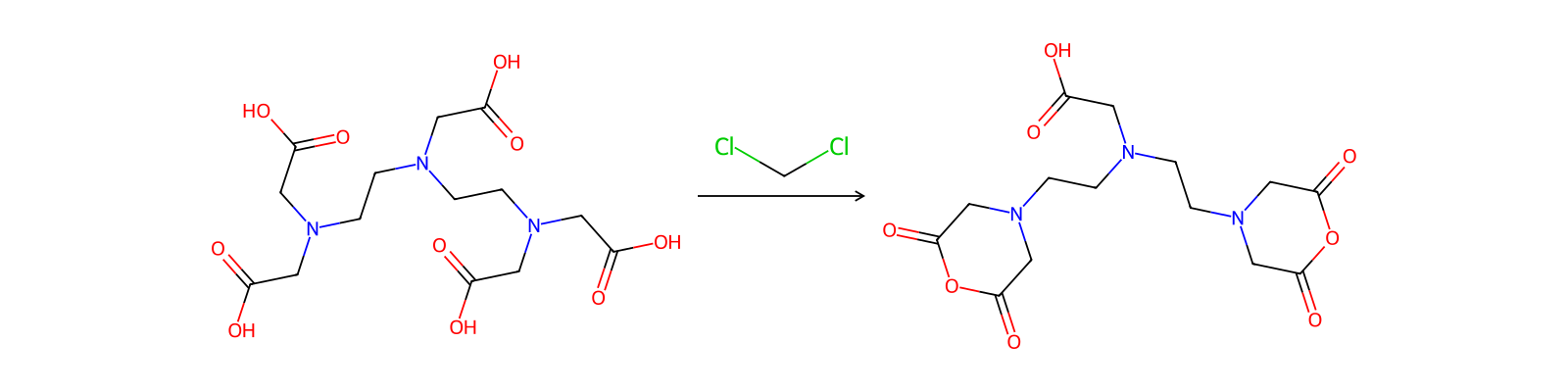
관련 반응
33건




화합물 노트
불러오는 중…