기본 정보
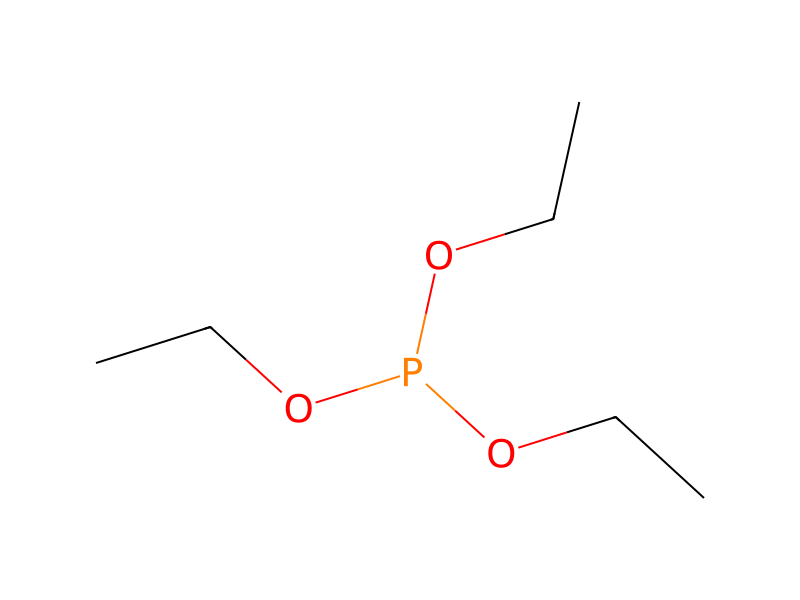
- 표준 SMILES
CCOP(OCC)OCC- InChIKey
BDZBKCUKTQZUTL-UHFFFAOYSA-N- 분자식
- C6H15O3P
- 평균 분자량
- 166.16 g/mol
- 단동위원소 질량
- 166.07588097
개요
Triethyl phosphite appears as a clear colorless liquid with a strong foul odor. Flash point 130 °F. Less dense than water and insoluble in water. Vapors heavier than air.
이름 및 식별자
- 우선 이름
- Triethyl phosphite
- IUPAC
- triethyl phosphite
- 현지명
- 트리에틸 아인산염
- 영어명
- Triethyl phosphite
- 분자식
- C6H15O3P
- 분자량
- 166.16
이름 및 동의어
TRIETHYL PHOSPHITE122-52-1TriethoxyphosphinePhosphorous acid, triethyl esterEthyl phosphite, (EtO)3PFosforyn trojetylowyDTXSID20269916B2R04S55GNSC-5284TRIS(ETHOXY)PHOSPHINEDTXCID506991RefChem:191514
이름 더 보기
트라이에틸포스파이트아인산트리에틸트리스(에톡시)포스핀트리에톡시포스핀트리에틸아인산염트리에틸포스파이트포스포로우스산,트리에틸에스테르트리에틸아인산염트라이에틸 포스파이트트라이에틸 아인산염포스포러스 산 트라이에틸 에스터triethylTriethylphosphitTRIETHYLPHOSPHILETRIETHYL PHOSPHONATETriethyl Phosphite(TEP)TRIETHYLPHOSPHITE FOR SYNTHESISP(EtO)3
204-552-5triethylphosphitePhosphorous Acid Triethyl EsterTriethoxyphosphine-d15MFCD00009084P(OEt)3(C2H5O)3PFosforyn trojetylowy [Czech]
데이터베이스 식별자
- CAS
122-52-1- PubChem CID
- 31215
- DTXSID
DTXSID2026991- ChEMBL
CHEMBL3186349- UNII
- 6B2R04S55G
- EC Number
- 204-552-5
- Nikkaji
- J2.007I
물성
구조 계산 물성
- XLogP
- 1.2
- 극성 표면적
- 27.7 Ų
- 수소 결합 공여자 수
- 0
- 수소 결합 수용자 수
- 3
- 회전 가능 결합 수
- 6
- 무거운 원자 수
- 10
- 형식 전하
- 0
- 복잡도
- 55.7
실험 및 물리화학적 성질
Chemical Classes
Other Classes -> Phosphite Compounds
Flammable agents - 2nd degree
SpringerMaterials PropertiesSchoenflies notation
Odor
Pungent odor
Characteristic, obnoxious phosphite odor
Density
0.969 (USCG, 1999) - Less dense than water; will float
0.9629 g at 20 °C
Relative density (water = 1): 0.97
1.413 @25 °C
Color/FormColorless liquid
Solubility
Soluble in alcohol, ether
Solubility in water: reaction
Flash Point
115 °F (USCG, 1999)
54 °C (129 °F) - closed cup
54 °C c.c.
Boiling Point
311 °F at 760 mmHg (USCG, 1999)
157.9 °C
157-159 °C
156 °C @760 [mm Hg]
DecompositionThe substance decomposes on heating or on burning producing toxic fumes including phosphorous oxides.
Melting Point-112 °C
Vapor Pressure1.95 mm Hg at 20 °C
Refractive IndexIndex of refraction: 1.4127 at 20 °C/D
물리화학적 성질
- 녹는점
- -112 °C · -112°C
- 끓는 점
- 65 °C · 65 °C
- 밀도
- 0.969 g/mL · 0.969 g/mL at 25 °C(lit.)
- 증기압
- 6 hPa · <6 hPa (20 °C)
- 굴절률
- 20 · n20/D 1.413(lit.)
- 인화점
- 130 °F · 130 °F
- 저장 조건
- Flammables area
- 용해도
- 클로로포름(약간 용해됨), 디클로로메탄(약간 용해됨), 메탄올(약간 용해됨)
- 물리적 상태
- 액체
- Specific Gravity
- 0.969 · 0.969
- 색상
- 무색의
- 냄새
- 특유의, 불쾌한, 인산염 냄새
- 폭발한계
- 3.75 · 3.75-42.5%(V)
- 수용성
- 약간 용해됨
- BRN
- 956578 · 956578
- Dielectric constant
- 10.9 · 10.9(65℃)
- 안정성
- 공기 민감성, 수분 민감성
- InChI
- 1S/C6H15O3P/c1-4-7-10(8-5-2)9-6-3/h4-6H2,1-3H3
- InChIKey
- BDZBKCUKTQZUTL-UHFFFAOYSA-N
- SMILES
- P(OCC)(OCC)OCC
- NIST
- Phosphorous acid, triethyl ester(122-52-1)
- EPA
- Triethyl phosphite (122-52-1)
화학적 성질
Triethyl phosphite is a clear colorless liquid with a strong foul odor. Insoluble in water; soluble in alcohol and ether. Combustible.Vapors heavier than air.
안전 및 규제
GHS 분류
GHS Classification
Warning
H226 (96.2%): Flammable liquid and vapor [Warning Flammable liquids]
P210, P233, P240, P241, P242, P243, P261, P264, P264+P265, P270, P271, P272, P273, P280, P301+P317, P302+P352, P303+P361+P353, P304+P340, P305+P351+P338, P317, P319, P321, P330, P332+P317, P333+P317, P337+P317, P362+P364, P370+P378, P403+P233, P403+P235, P405, and P501 (click each P-code to see the statement)
Aggregated GHS information provided per 291 reports by companies from 21 notifications to the ECHA C&L Inventory. Each notification may be associated with multiple companies.
Warning
H226: Flammable liquid and vapor [Warning Flammable liquids]
유해성 정보
Regulatory Information
Chemical: Phosphorous acid, triethyl ester
Phosphorous acid, triethyl ester is listed on the EPA's Chemical Data Reporting (CDR) system. Manufacturers and importers of Phosphorous acid, triethyl ester are required to report information about their production and use of this chemical to the EPA under the Toxic Substances Control Act (TSCA). (40 eCFR Part 711)
Status: Active Update: 22-03-2018 https://echa.europa.eu/registration-dossier/-/registered-dossier/13776
Phosphorous acid, triethyl ester: Does not have an individual approval but may be used under an appropriate group standard
The New Jersey Worker and Community Right to Know Act requires public and private employers to provide information about hazardous substances at their workplaces. (N.J.S.A. 34:5A-1 et. seq.)
Other Safety InformationIMAP assessments - Phosphorous acid, triethyl ester: Human health tier I assessment
DOT LabelFlammable Liquid
Fire Hazards
Special Hazards of Combustion Products: May form hazardous decomposition products. (USCG, 1999)
· HIGHLY FLAMMABLE: Will be easily ignited by heat, sparks or flames.
Flammable. Gives off irritating or toxic fumes (or gases) in a fire. Above 54 °C explosive vapour/air mixtures may be formed.
Fire PotentialFlammable.
Health Hazards
Exposure to high concentrations may cause headache, nausea, and dizziness due to reduced chlolinesterase activity. (USCG, 1999)
· May cause toxic effects if inhaled or absorbed through skin.
Hazards SummaryIf left on clothes, can cause reddening of skin; [CHRIS] A skin and eye irritant; [ICSC] An irritant; Harmful if swallowed or inhaled; [Sigma-Aldrich MSDS]
DOT ID and Guide2323 130
Reactive GroupSulfonates, Phosphonates, and Thiophosphonates, Organic
UN ClassificationUN Hazard Class: 3; UN Pack Group: III
Special Reports
OECD; Screening Information Data Set for Triethyl Phosphite, 122-52-1 (May 2003). A sunnary of exposure to the chemical and its toxicity to humans and the environment. Includes the IUCLID dataset.[Available from, as of July 25, 2016: http://www.inchem.org/documents/sids/sids/122521.pdf]
Organization for the Prohibition of Chemical Weapons; Convention on the Prohibition of the Development, Production, Stockpiling and Use of Chemical Weapons and Their Destruction. The Chemical Weapons Convention (CWC) is an international treaty which bans the development, production, stockpiling, and transfer or use of chemical weapons. The Convention mandates the destruction and prohibition of chemical weapons and related facilities and provides for restrictions on international trade in toxic chemicals and precursors.[Available from, as of May 1, 2007: http://www.opcw.org/chemical-weapons-convention/]
Reactivity AlertsHighly Flammable
안전 및 보호
Fire Fighting
Excerpt from ERG Guide 130 [Flammable Liquids (Water-Immiscible / Noxious)]:
Use powder, foam, carbon dioxide. NO hydrous agents. NO water. In case of fire: keep drums, etc., cool by spraying with water. NO direct contact with water.
First Aid Measures
Fresh air, rest.
Remove contaminated clothes. Rinse skin with plenty of water or shower. Refer for medical attention .
First rinse with plenty of water for several minutes (remove contact lenses if easily possible), then refer for medical attention.
Rinse mouth. Refer for medical attention .
Accidental Release Measures
· CALL 911. Then call emergency response telephone number on shipping paper. If shipping paper not available or no answer, refer to appropriate telephone number listed on the inside back cover.
· ELIMINATE all ignition sources (no smoking, flares, sparks or flames) from immediate area.
First Aid
INHALATION: CALL FOR MEDICAL ASSISTANCE. Remove to fresh air. Treat symptomatically. If not breathing, give artificial respiration.
General First Aid:
Safe StorageFireproof. Dry. Separated from acids and strong oxidants. See Chemical Dangers.
Exposure Control and Personal Protection· Wear positive pressure self-contained breathing apparatus (SCBA).
Fire Fighting Procedures
Suitable extinguishing media: Use water spray, alcohol-resistant foam, dry chemical, or carbon dioxide.
Advice for firefighters: Wear self-contained breathing apparatus for firefighting if necessary.
Use water spray to cool unopened containers.
In case of fire: cool drums, etc., by spraying with water but avoid contact of the substance with water.
Storage ConditionsKeep container tightly closed in a dry and well-ventilated place. Containers which are opened must be carefully resealed and kept upright to prevent leakage. Storage class (TRGS 510): Flammable liquids.
Cleanup Methods
ACCIDENTAL RELEASE MEASURES: Personal precautions, protective equipment and emergency procedures: Use personal protective equipment. Avoid breathing vapors, mist or gas. Ensure adequate ventilation. Remove all sources of ignition. Beware of vapors accumulating to form explosive concentrations. Vapors can accumulate in low areas. Environmental precautions: Prevent further leakage or spillage if safe to do so. Do not let product enter drains. Discharge into the environment must be avoided. Methods and materials for containment and cleaning up: Contain spillage, and then collect with an electrically protected vacuum cleaner or by wet-brushing and place in container for disposal according to local regulations.
Nonfire Spill ResponseExcerpt from ERG Guide 130 [Flammable Liquids (Water-Immiscible / Noxious)]:
Disposal Methods
SRP: Recycle any unused portion of the material for its approved use or return it to the manufacturer or supplier. Ultimate disposal of the chemical must consider: the material's impact on air quality; potential migration in air, soil or water; effects on animal, aquatic and plant life; and conformance with environmental and public health regulations. If it is possible or reasonable use an alternative chemical product with less inherent propensity for occupational harm/injury/toxicity or environmental contamination.
SRP: Wastewater from contaminant suppression, cleaning of protective clothing/equipment, or contaminated sites should be contained and evaluated for subject chemical or decomposition product concentrations. Concentrations shall be lower than applicable environmental discharge or disposal criteria. Alternatively, pretreatment and/or discharge to a permitted wastewater treatment facility is acceptable only after review by the governing authority and assurance that "pass through" violations will not occur. Due consideration shall be given to remediation worker exposure (inhalation, dermal and ingestion) as well as fate during treatment, transfer and disposal. If it is not practicable to manage the chemical in this fashion, it must be evaluated in accordance with EPA 40 CFR Part 261, specifically Subpart B, in order to determine the appropriate local, state and federal requirements for disposal.
Product: Burn in a chemical incinerator equipped with an afterburner and scrubber but exert extra care in igniting as this material is highly flammable. Offer surplus and non-recyclable solutions to a licensed disposal company; Contaminated packaging: Dispose of as unused product.
Spillage Disposal
Personal protection: filter respirator for organic gases and vapours adapted to the airborne concentration of the substance. Ventilation. Collect leaking and spilled liquid in sealable containers as far as possible. Absorb remaining liquid in sand or inert absorbent. Then store and dispose of according to local regulations.
독성 정보
Ecotoxicity Values
EC50; Species: Scenedesmus subspicatus (Alga); Conditions: static, 21-25 °C, pH 8-10; Concentration: >73.6 mg/L for 72 hr; Effect: decreased growth rate and biomass /purity 98.8%/ /calculated from diethyl phosphite/
LC50; Species: Daphnia magna /(water flea)/ age 6-24 hr; Conditions: static, 19.1-19.4 °C; pH 6.9-8; Concentration: 94.1 mg/L for 24 hr /calculated from diethyl phosphite/
LC50; Species: Brachydanio rerio (Fish) age 7 months, length 2.5-3.5 cm; Conditions: static, 20.9-22.6 °C; Concentration: 251.6 mg/L for 96 hr /calculated from diethyl phosphite/ /purity 98.8%/
Environmental Fate
TERRESTRIAL FATE: Triethyl phosphite hydrolyzes rapidly in the presence of water(1) and, therefore, adsorption to soil, volatilization from moist soil surfaces, and biodegradation are not expected to be important fate processes(SRC). In acid solution (pH = 4), triethyl phosphite hydrolyzes immediately forming diethyl phosphite and ethanol(1). At pH 7, triethyl phosphite hydrolyzes completely within 20 minutes; after 3 hours 89.3% diethyl phosphite and 10.7% monoethyl phosphite are formed(1). At pH 9, the half-life of triethyl phosphite in water is approximately 5.1 hours; 70% of the substance remains unhydrolyzed after 3 hours(1). Triethyl phosphite is expected to volatilize from dry soil surfaces(SRC) based upon a vapor pressure of 1.95 mm Hg(1). Results of standard biodegradation tests indicate triethyl phosphite is inherently biodegradable; however, the tests are likely measuring the biodegradability of the hydrolysis products(1,2).
AQUATIC FATE: Triethyl phosphite hydrolyzes rapidly in the presence of water(1) and, therefore, adsorption to sediment, volatilization from water surfaces, bioconcentration and biodegradation are not expected to be important fate processes(SRC). In acid solution (pH = 4), triethyl phosphite hydrolyzes immediately forming diethyl phosphite and ethanol(1). At pH 7, triethyl phosphite hydrolyzes completely within 20 minutes; after 3 hours 89.3% diethyl phosphite and 10.7% monoethyl phosphite are formed(1). At pH 9, the half-life of triethyl phosphite in water is approximately 5.1 hours; 70% of the substance remains unhydrolyzed after 3 hours(1). Results of standard biodegradation tests indicate triethyl phosphite is inherently biodegradable; however, the tests are likely measuring the biodegradability of the hydrolysis products(1,2).
ATMOSPHERIC FATE: According to a model of gas/particle partitioning of semivolatile organic compounds in the atmosphere(1), triethyl phosphite, which has a vapor pressure of 1.95 mm Hg at 20 °C(SRC), is expected to exist solely as a vapor in the ambient atmosphere. Vapor-phase triethyl phosphite is degraded in the atmosphere by reaction with photochemically-produced hydroxyl radicals(SRC); the half-life for this reaction in air is estimated to be 6.6 hours(SRC), calculated from its rate constant of 5.8X10⁻¹¹ cu cm/molecule-sec at 25 °C(SRC) that was derived using a structure estimation method(3). Triethyl phosphite does not absorb at wavelengths >290 nm(4) and therefore is not expected to be susceptible to direct photolysis by sunlight(SRC).
Exposure RoutesThe substance can be absorbed into the body by inhalation of its vapour and by ingestion.
Toxicity Summary
IDENTIFICATION AND USE: Triethyl phosphite is a colorless liquid with a characteristic, obnoxious phosphite odor. It is a chemical intermediate for vinyl phosphate insecticides, for phosphonate insecticides; sugarcane ripener. Schedule 3B precursor to dimethyl methylphosphonate, which is a sarin precursor and nerve agent simulant. HUMAN EXPOSURE AND TOXICITY: Human blood monocyte carboxylesterase is inhibited by triethyl phosphite. ANIMAL STUDIES: Triethyl phosphite showed slightly irritating effects on the eyes of 3 male rabbits. All animals showed slight or clearly visible conjunctival erythema in the treated eyes. Slight chemosis and increased secretion were recorded in two animals, each. The findings appeared within one hr and were completely reversible within 48 hr. Six rabbits revealed slightly irritating effects on the skin after 4 hr of semi-occlusive exposure to the undiluted triethyl phosphite. All animals showed slight or clearly visible erythema at the treated sites up to 48 hr after exposure. At day 7, slight erythema still persisted in 5 animals, but had resolved in all but one animal at day 10. None of the animals showed edema at any of the observations. An acute inhalation study was done with male and female rats. After an exposure period of 6 hours the calculated LC50 was 11.6 mg/L for males and 11.1 mg/L for females. A similar study in mice gave LC50 values of 6.2 and 9.2 mg/L for male and female animals, respectively. In both species, signs of toxic stress included eye and upper respiratory irritation, salivation and rapid, shallow breathing; most deaths occurred within 24 hr following treatment. In developmental study doses of 0, 10, 80, 320 and 640 mg/kg bw/day were used for oral administration (gavage) to rats. Groups of 12 male and female rats each were treated (control group: 15 males and 15 females). F0-Animals were treated from 2 weeks before mating to the end of gestation and up to 6 days of lactation. Males were killed after 36 to 37 days of treatment. Females and pups were killed on days 4 to 6 post partum. Ovaries, mammae, testes, epididymides and macroscopically altered tissues of F0 animals were examined histologically. Parameters of general toxicity and fertility, as well as pre- and post-natal development were recorded. In F1, the sex ratio, mortality and weights were not affected by treatment up to and including doses of 80 mg/kg bw/day, while evaluation was not possible at higher doses as there were no surviving pups. No externally malformed pups were observed. The in vivo micronucleus assay in mice was negative. There was no indication of a potential to induce gene mutations in the Ames test with four different strains of Salmonella typhimurium (TA98, TA100, TA1535, TA1537) both with and without metabolic activation. The test was performed including cytotoxic concentrations.
Signs and Symptoms
Redness.
Redness. Pain.
Abdominal pain.
Ongoing Test Status
EPA has released the Interactive Chemical Safety for Sustainability (iCSS) Dashboard. The iCSS Dashboard provides an interactive tool to explore rapid, automated (or in vitro high-throughput) chemical screening data generated by the Toxicity Forecaster (ToxCast) project and the federal Toxicity Testing in the 21st century (Tox21) collaboration. /The title compound was tested by ToxCast and/or Tox21 assays/[USEPA; ICSS Dashboard Application; Available from, as of July 7, 2016: http://actor.epa.gov/dashboard/]
Soil Adsorption/MobilityAdsorption to soils or suspended solids and sediment is not expected to be an important fate process(SRC) due to the rapid hydrolysis of triethyl phosphite(1).
Human Toxicity Excerpts
/ALTERNATIVE and IN VITRO TESTS/ Human blood monocyte carboxylesterase (CBE) is inhibited by a variety of organophosphorus compounds including arylphosphates and arylphosphites and some alkylphosphites. Triphenyl phosphate and triphenyl phosphite with Ki values of 8 x 10(-9) M and 4.8 x 10(-8) M, respectively, are the most potent inhibitors of this enzyme evaluated by this study. The arylphosphates vary in their capacity to inhibit carboxylesterase activity. Diphenyl phosphate with its strong negative charge is not a potent inhibitor (Ki = 1 x 10(-4) M), whereas if its negative charge is neutralized, as in diphenyl methyl phosphate, its capacity to inhibit carboxylesterase is significantly increased. Compounds with increased bulk, such as trinaphthyl phosphate, only inhibit the enzyme at concentrations of 10(-5) M or greater. Arylphosphites have inhibitory capacities similar to the arylphosphates. Alkylphosphites (tributyl phosphite/triethyl phosphite) inhibit carboxylesterase activity, whereas alkylphosphates (tributyl phosphate/triethyl phosphate) have no inhibitory effect. Arylphosphines and arylphosphine oxides do not inhibit carboxylesterase activity. This study demonstrates that organophosphates and organophosphites are relatively effective inhibitors of human monocyte CBE activity with the exception of the alkylphosphates which have no inhibitory activity. We conclude that molecular bulk and charge have a significant role in determining the potency of organophosphorus inhibitors of monocyte CBE. The observed variations in the degree of esterase inhibition by organophosphorus compounds as well as the differences in the pathological expression of neuropathic disorders associated with such chemicals suggest that different esterase enzymes derived from the family of esterase genes may mediate the different neuropathies observed with organophosphorus exposures. Such data also provide the rationale for the kinetic analyses of esterases and the design of non-toxic organophosphorus compounds with low or no monocyte CBE inhibitory capacity to reduce the potential of these commonly used chemicals for human toxicity.
Artificial Pollution Sources
Triethyl phosphite's production and use an intermediate for the production of flame retardants, optical brighteners, pesticides, antioxidants, and pharmaceuticals(1,2) may result in its release to the environment through various waste streams(SRC).
Environmental Biodegradation
AEROBIC: In 2 tests on ready biodegradation, triethyl phosphite was degraded by 49-69%, therefore, it did not reach the criteria for ready biodegradability(1). However, from the degradation curve it can be assumed that hydrolysis was the prerequisite for biodegradation(1). Using OECD Guideline 302C (Inherent Biodegradability: Modified MITI Test II) with an activated sludge inoculum, triethyl phosphite was degraded >100% based on O2 consumption and 73% based on DOC removal classifying the compound as inherently biodegradable(2); the complete disappearance of triethyl phosphite to monoethyl and diethyl phosphite and phosphorous acid in the test system is likely the result of hydrolysis followed by biodegradation(1,2). Biodegradation is not expected to be an important fate process for triethyl phosphite(SRC) due to its hydrolysis(1).
Environmental BioconcentrationBioconcentration is not expected to be an important fate process(SRC) due to the rapid hydrolysis of triethyl phosphite(SRC).
Volatilization from Water/Soil
Volatilization from water surfaces or moist soil is not expected to be an important fate process(SRC) due to the hydrolysis of triethyl phosphite(1). Triethyl phosphite is expected to volatilize from dry soil surfaces(SRC) based upon a vapor pressure of 1.95 mm at 20 °C(1).
규제 정보
DHS Chemicals of Interest (COI)
Triethyl phosphite
80
220
Chemical Weapons/Chemical Weapons Precursors chemical material that, if stolen or diverted, can be converted into weapons using simple chemistry, equipment, or techniques.
안전 데이터
- wgk
- 1
- tsca
- TSCA listed
- rtecs
- TH1130000
- ridadr
- UN 2323
- 독성
- LD50 orl-rat: 1840 mg/kg JACTDZ 1,218,92
- HS 번호
- 2920 24 00
- risk_code
- 10-22-36/37/38-20/22
- hazard_code
- Xn
- safety_code
- 16-26-36
- 포장분류
- III
- 위험 등급
- 3
- 기존화학 물질
- KE-28705
- F 고인화성물질
- 10-23
- 자연 발화 온도
- 250 °C
- Hazard Classifications
- Acute Tox. 4 OralAquatic Chronic 3Flam. Liq. 3Skin Sens. 1B
- 스토리지 클래스
- 3 - Flammable liquids
- 유해 물질 데이터
- 122-52-1(Hazardous Substances Data)
화학 및 산업
용도 및 제조
Uses
Used as a plasticizer, additive to grease and resins, sugarcane ripener, and chemical intermediate; [HSDB]
Reagent in synthetic organic chemistry.
Synthesis, plasticizers, stabilizers, lubricants and grease additives.
Plasticizer, vinyl stabilizer, grease additive, color inhibitor for resins
Schedule 3B precursor to dimethyl methylphosphonate /which is a sarin precursor and nerve agent simulant/.
Triethyl phosphite is exclusively used as an intermediate for the manufacturing of different products: flame retardants (about 60 %), optical brighteners (about 15 %), pesticides (about 15 %), antioxidants (about 5 %), and pharmaceuticals (about 5 %).
U.S. Exports
(1972) No Data
(1975) No Data
U.S. Imports
(1972) No Data
(1975) No Data
U.S. Production
2023: <50,000 lb
This chemical is listed as a High Production Volume (HPV) (65FR81686). Chemicals listed as HPV were produced in or imported into the U.S. in >1 million pounds in 1990 and/or 1994. The HPV list is based on the 1990 Inventory Update Rule. (IUR) (40 CFR part 710 subpart B; 51FR21438).
(1972) PROBABLY GREATER THAN 4.54X10+5 GRAMS
(1975) GREATER THAN 1.36X10+6 GRAMS
Production volumes for non-confidential chemicals reported under the Inventory Update Rule. [Table#2364]
Non-confidential 2012 Chemical Data Reporting (CDR) information on the production and use of chemicals manufactured or imported into the United States. Chemical: Phosphorous acid, triethyl ester. National Production Volume: Withheld.
Consumption Patterns
Triethyl phosphite is exclusively used as an intermediate for the manufacturing of different products: flame retardants (about 60 %), optical brighteners (about 15 %), pesticides (about 15 %), antioxidants (about 5 %), and pharmaceuticals (about 5 %).
Industry UsesIntermediate
Methods of Manufacturing
Triethyl phosphite is produced in a closed system by reaction of phosphorous trichloride and ethanol in the presence of an inorganic or organic base. The product is purified by distillation.
Reaction of ethyl alcohol and phosphorus trichloride in the presence of a tertiary amine.
General Manufacturing Information
All Other Basic Organic Chemical Manufacturing
Phosphorous acid, triethyl ester: ACTIVE
Certain phosphorous compounds such as tri-ethyl phosphite are used as sugarcane ripeners.
Triethyl phosphite is a Schedule 3B precursor.
응용 분야
용도인(P)이 포함된 화학무기(신경가스)의 원료- 난연제, 농약, 의약품, 산화방지제등.
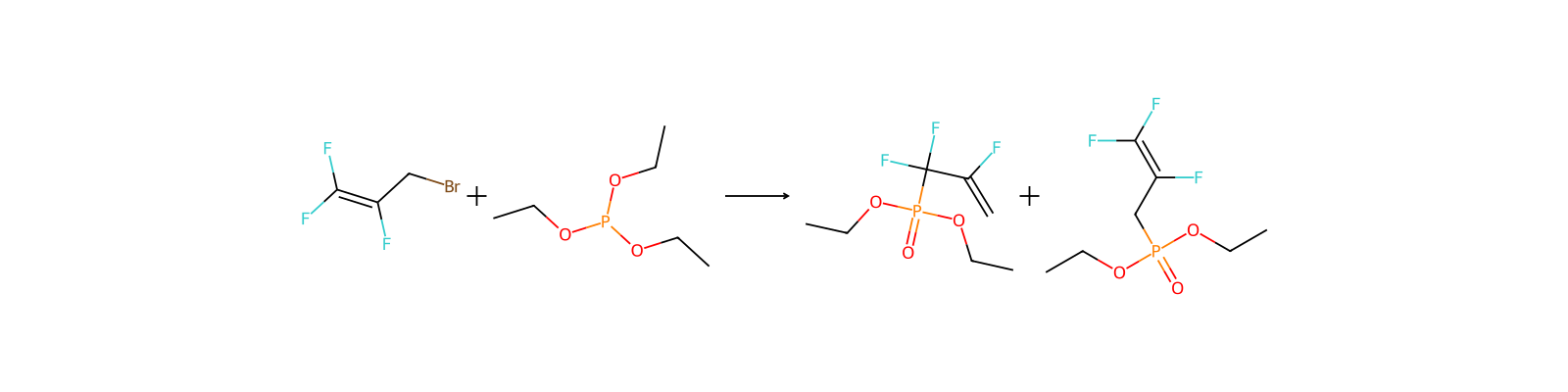
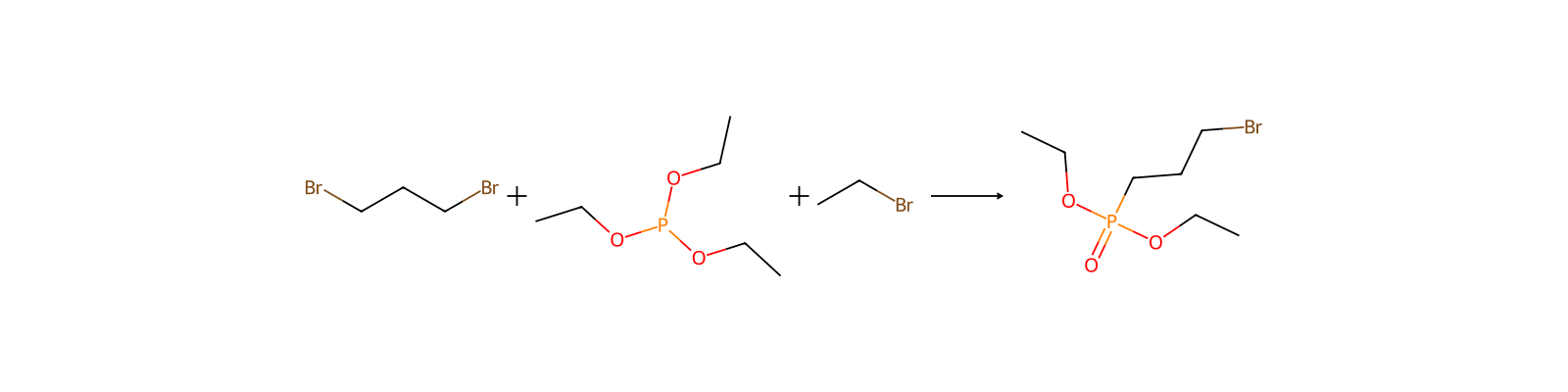
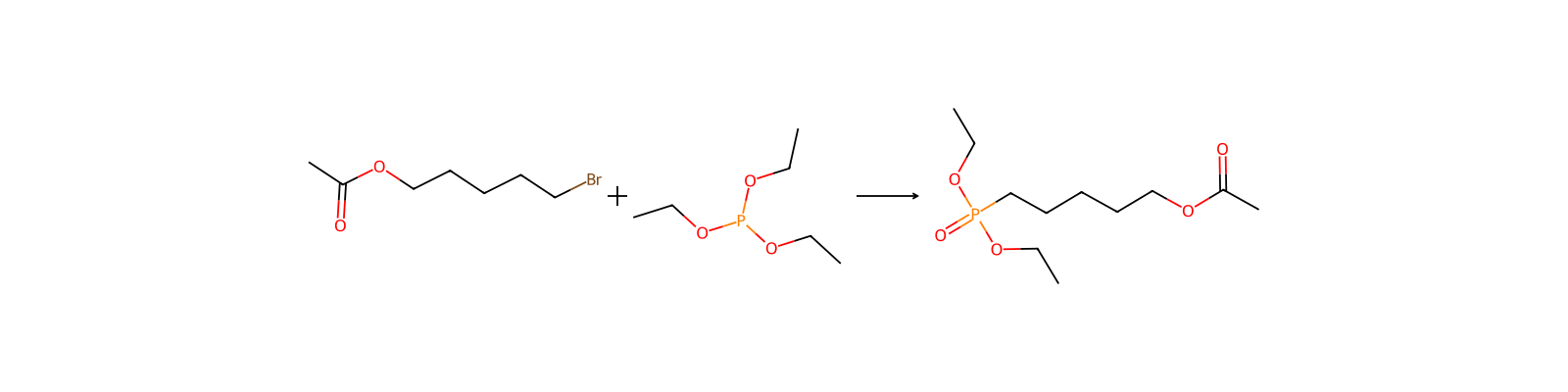
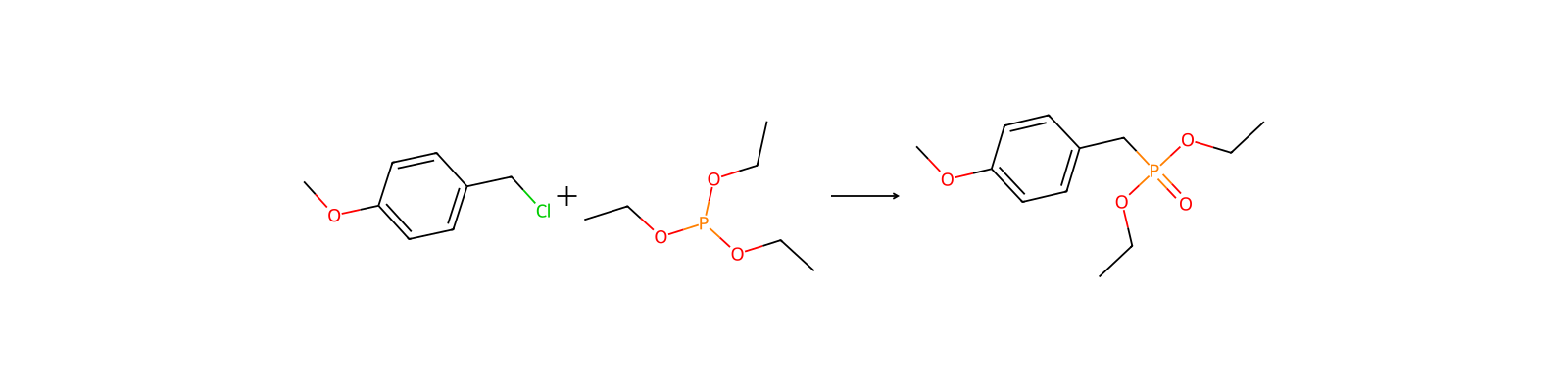
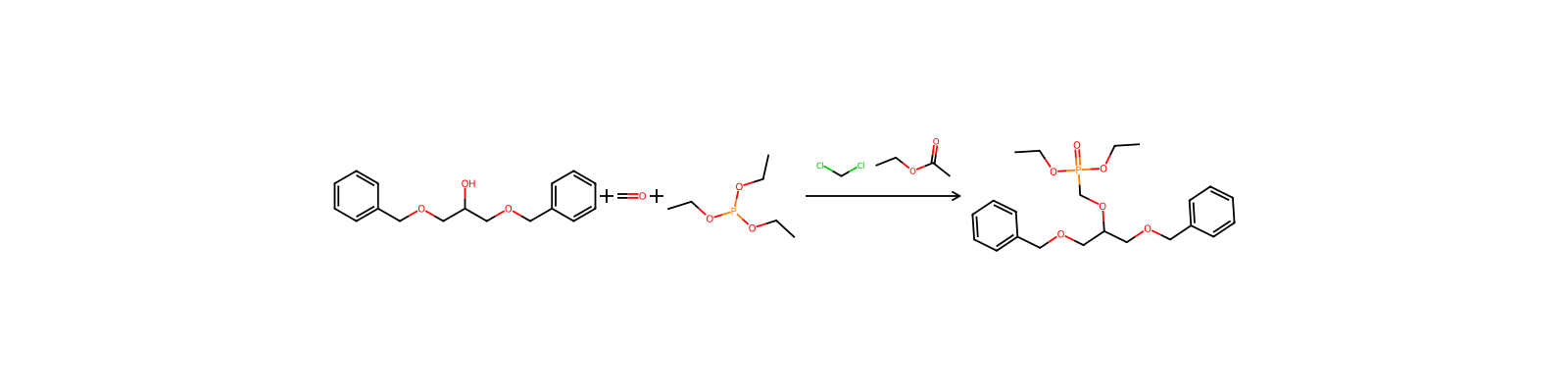
용도Triethyl phosphite is an organophosphorus compound. It is used as a reducing agent; can react with electrophiles to form phosphonates or phosphates; forms a stable complex with copper(I) iodide. Triethyl phosphite is a very good nucleophile. The carbon adjacent to the bromine is the most electrophilic position, and phosphorus is the only nucleophile. Triethyl phosphite displaces the bromine in an SN2-like process, and back attack by the bromide which is released generates a phosphonate product, in which the α-protons are strongly acidic.
제조 방법
Triethyl phosphite is produced in a closed system by reaction of phosphorous trichlorid and ethanol in the presence of an inorganic or organic base. The product is purified by distillation (Bayer AG, 2002a). Triethyl phosphite is exclusively used as an intermediate for the manufacturing of different products: flame retardants (about 60 %), optical brighteners (about 15 %), pesticides (about 15 %), antioxidants (about 5 %), and pharmaceuticals (about 5 %).
상·하류 제품 정보
상류 원료
하류 제품
공급사50 곳
国药集团化学试剂有限公司86-21-63210123 · [email protected]
衢州润东化工有限公司0570-8789886 18892685668 · [email protected]
上海阿拉丁生化科技股份有限公司400-6206333 13167063860 · [email protected]
南通润丰石油化工有限公司66017690 19952660367 · [email protected]
Career Henan Chemica Co+86-0371-86658258 +86-13203830695 · [email protected]
上海康朗生物科技有限公司021-61998208 18217752821 · [email protected]
武汉欣扬瑞和化学科技有限公司153-07155313 15307155313 · [email protected]
武汉问津化学科技有限公司13517196568 · [email protected]
T&W GROUP021-61551611 13296011611 · [email protected]
爱斯特(成都)生物制药股份有限公司+86-28-85122536 85324413 · [email protected]
Baoji Guokang Healthchem co.,ltd+8615604608665 15604608665 · [email protected]
武汉科美沃化工有限公司+86-2785736489 +8618171418573 · [email protected]
山东前元高分子材料有限公司18678041314 18765609661 · [email protected]
科瑞迪化学400-821-5857 021-64326257 · [email protected]
Syntechem Co.,Ltd[email protected]
上海迈瑞尔生化科技有限公司4006356688 18621169109 · [email protected]
北京东华力拓科技发展有限公司010-88425576 · [email protected]
阿法埃莎(中国)化学有限公司400-6106006 · [email protected]
上海德默医药科技有限公司400-021-7337 2355568890 · [email protected]
安耐吉化学&3A(安徽泽升科技股份有限公司)400-0056266 · [email protected]
武汉卡诺斯科技有限公司027-83238443 15327105076 · [email protected]
上海瀚鸿科技股份有限公司021-54306202 13764082696 · [email protected]
上海合勒化学科技有限公司16621266837 · [email protected]
上海沃化化工有限公司021-57681602-802 17302146015 · [email protected]
上海景颜化工科技有限公司13817811078 · [email protected]
嘉兴市艾森化工有限公司0573-85285100 18627885956 · [email protected]
山东西亚化学有限公司13355009207 13355009207 · [email protected]
玛雅试剂+86 (573) 82222445 (0)18006601000 452520369 · [email protected]
四川库利南科技有限公司400-1166-196 18981987031 · [email protected]
武汉科美沃化工有限公司027-85736489 · [email protected]
南京维奥化工有限公司Please Send Email 18652950785 · [email protected]
艾科试剂4008-755-333 18080918076 · [email protected]
上海思域化工科技有限公司86-21-34053660 · [email protected]
赛默飞世尔科技(中国)有限公司800-810-5118 · [email protected]
上海遐瑞医药科技有限公司+86 21 61551611
TOKYO CHEMICAL INDUSTRY CO., LTD.03-36680489 · [email protected]
深圳康特腾科技有限公司86-0755-86635001 · [email protected]
无锡中坤生化科技有限公司+86 0510-85629785
北京环宇世纪化学科技有限公司hysj_bj.com
HBCChem, Inc.+1-510-219-6317 · [email protected]
日照力德士化工有限公司010-51268198 · [email protected]
美岚实业(上海)有限公司021-58958189 · [email protected]
上海石洋化工有限公司021-56795766 · [email protected]
上海爱蝶实业有限公司021-58957966 18930537195 · [email protected]
成都零六生物科技有限公司400-1166-196 13458535857 · [email protected]
广拓化学(上海)有限公司021-60899189-8001 18918189673 · [email protected]
上海麦克林生化科技股份有限公司15221275939 15221275939 · [email protected]
上海嵩爰化工科技有限公司010-1234567 18521000990 · [email protected]
凯试(上海)科技有限公司021-50135380 · [email protected]
池州凯隆进出口贸易有限公司[email protected]
관련 반응
1,069건



연결된 노트
불러오는 중…