홈MCP워크벤치Skills
홈워크벤치알림마이페이지
llms.txt · MCP 가이드개인정보처리방침 · 이용약관 · 지원v1.8.0
  1. 홈
  2. /화합물

1-클로로-2-프로탄올

1-Chloro-2-propanol

HCID 31370
새 노트새 반응견적 요청하기
인쇄 미리보기

데이터를 보충하는 중입니다. 잠시 후 페이지를 새로 고치면 최신 내용을 볼 수 있습니다

기본 정보개요이름 및 식별자물성안전 및 규제화학 및 산업관련 반응화합물 노트
부분 구조 검색유사 구조 찾기

기본 정보

CAS
127-00-4
표준 SMILES
CC(O)CCl
InChIKey
YYTSGNJTASLUOY-UHFFFAOYSA-N
분자식
C3H7ClO
평균 분자량
94.54 g/mol
단동위원소 질량
94.01854252

개요

1-chloro-2-propanol is a clear colorless to light amber liquid with a mild non residual odor. (NTP, 1992)

이름 및 식별자

우선 이름
1-Chloro-2-propanol
IUPAC
1-chloropropan-2-ol
현지명
1-클로로-2-프로탄올
영어명
1-Chloro-2-propanol
분자식
C3H7ClO
분자량
94.54

이름 및 동의어

1-Chloro-2-propanol1-Chloropropan-2-ol127-00-4Chloroisopropyl alcohol2-PROPANOL, 1-CHLORO-Propene chlorohydrin1-Chloroisopropyl alcoholsec-Propylene chlorohydrin1-Chloro-2-hydroxypropaneZL0FUS96WWNSC-77373DTXSID5020285
이름 더 보기
1-클로로-2-프로탄올1-클로로-2-프로판올2-프로판올, 1-클로로-PROPYLENE CHLOROHYDRINCHLOROPROPANOLPROPYLENE CHLOROHYDRINEChloro-2-propa1-CHLOROPROPANOLMONOCHLORPROPANOL1-chloro-2-propanoCHLOROHYDROXYPROPANE
CHEBI:76260alpha-Propylene chlorohydrinRefChem:75367DTXCID30285204-819-63-chloro-2-propanol.alpha.-Propylene chlorohydrinNSC 77373

데이터베이스 식별자

CAS
127-00-4、68081-94-7、68187-16-6、68187-18-8、68187-19-9
PubChem CID
31370
DTXSID
DTXSID5020285
ChEMBL
CHEMBL1361129
ChEBI
CHEBI:76260
UNII
ZL0FUS96WW
EC Number
204-819-6
Nikkaji
J2.936J

물성

구조 계산 물성보충 중

XLogP
0.6
극성 표면적
20.2 Ų
수소 결합 공여자 수
1
수소 결합 수용자 수
1
회전 가능 결합 수
1
무거운 원자 수
5
형식 전하
0
복잡도
22.9

실험 및 물리화학적 성질

Chemical Classes · 2건

Other Classes -> Halogenated Alcohols

Mutagens

Density · 2건

1.115 at 68 °F (NTP, 1992) - Denser than water; will sink

1.115 @ 20 °C

Color/FormCOLORLESS LIQUID
Solubility · 3건

greater than or equal to 100 mg/mL at 73 °F (NTP, 1992)

SOL IN WATER, ALC

SOL IN ETHANOL, ETHER, CARBON TETRACHLORIDE

Flash Point · 2건

125 °F (NTP, 1992)

125 °F

Boiling Point · 2건

259 to 261 °F at 760 mmHg (NTP, 1992)

126-127 °C

DecompositionWHEN HEATED TO DECOMP, IT EMITS HIGHLY TOXIC FUMES OF /HYDROGEN CHLORIDE/.
Vapor Density · 2건

3.3 (NTP, 1992) - Heavier than air; will sink (Relative to Air)

3.3 (air=1)

Vapor Pressure · 3건

4.9 mmHg at 68 °F (NTP, 1992)

4.9 [mmHg]

4.9 mm Hg @ 20 °C

안전 및 규제

안전 정보는 참고용이며, 공급업체의 물질안전보건자료(SDS), 관련 법규 및 전문가 평가를 대체하지 않습니다.

GHS 분류

GHS Classification · 6건

Danger

H226 (100%): Flammable liquid and vapor [Warning Flammable liquids]

P210, P233, P240, P241, P242, P243, P261, P262, P264, P264+P265, P270, P271, P280, P301+P316, P301+P317, P302+P352, P303+P361+P353, P304+P340, P305+P351+P338, P305+P354+P338, P316, P317, P319, P321, P330, P332+P317, P337+P317, P361+P364, P362+P364, P370+P378, P403+P233, P403+P235, P405, and P501 (click each P-code to see the statement)

Aggregated GHS information provided per 173 reports by companies from 7 notifications to the ECHA C&L Inventory. Each notification may be associated with multiple companies.

Danger

H226: Flammable liquid and vapor [Warning Flammable liquids]

유해성 정보

Regulatory Information · 3건

Chemical: 2-Propanol, 1-chloro-

2-Propanol, 1-chloro-: Does not have an individual approval but may be used as a component in a product covered by a group standard. It is not approved for use as a chemical in its own right.

The New Jersey Worker and Community Right to Know Act requires public and private employers to provide information about hazardous substances at their workplaces. (N.J.S.A. 34:5A-1 et. seq.)

DOT LabelPoison Flammable Liquid
Fire HazardsThis chemical is combustible. (NTP, 1992)
Fire PotentialMODERATE, WHEN EXPOSED TO HEAT OR FLAME.
Health Hazards · 1건

SYMPTOMS: This compound causes skin and eye irritation. It may also be irritating to the mucous membranes and upper respiratory tract. Other symptoms include nasal irritation, nausea, vomiting, giddiness, dizziness, incoordination, visual disturbances and coma. It may also cause hemolysis, central nervous system effects and liver and kidney damage. Coughing, confusion and unconsciousness have also been reported.

화학 및 산업

약리 정보

Absorption, Distribution and ExcretionPropylene chlorohydrin is absorbed, widely distributed, and rapidly metabolized and eliminated.

용도 및 제조

Uses · 3건

Used as a chemical intermediate; A residue in foods that have been fumigated or cold sterilized with propylene oxide; [ACGIH]

Chemical intermediate

CHEM INT FOR PROPYLENE OXIDE & OTHER ORG COMPDS

U.S. Imports(1976) 1.76X10+5 G (INCL 2-CHLORO-1-PROPANOL)
Consumption PatternsESSENTIALLY 100% AS CHEMICAL INTERMEDIATE
Methods of ManufacturingACID-CATALYZED REACTION OF ALLYL CHLORIDE WITH WATER; CHLOROHYDRINATION OF PROPYLENE (PRODUCING THE 2-CHLORO-1-PROPANOL ISOMER ALSO)
General Manufacturing Information2-Propanol, 1-chloro-: ACTIVE
응용 분야 · 2건

용도1-Chloro-2-propanol has been used as:chemical intermediate for the manufacture of propylene oxide, a starting material for production of polyurethane polyols and propylene glycolas α,β-halohydrin standard during the enzymatic synthesis of α,β-halohydrins from gaseous alkenes

일반 설명Clear colorless to light amber liquid with a mild non residual odor.

상·하류 제품 정보

상류 원료

클로로아세톤나트륨 붕소수화물

관련 반응

36건
반응 기록 만들기
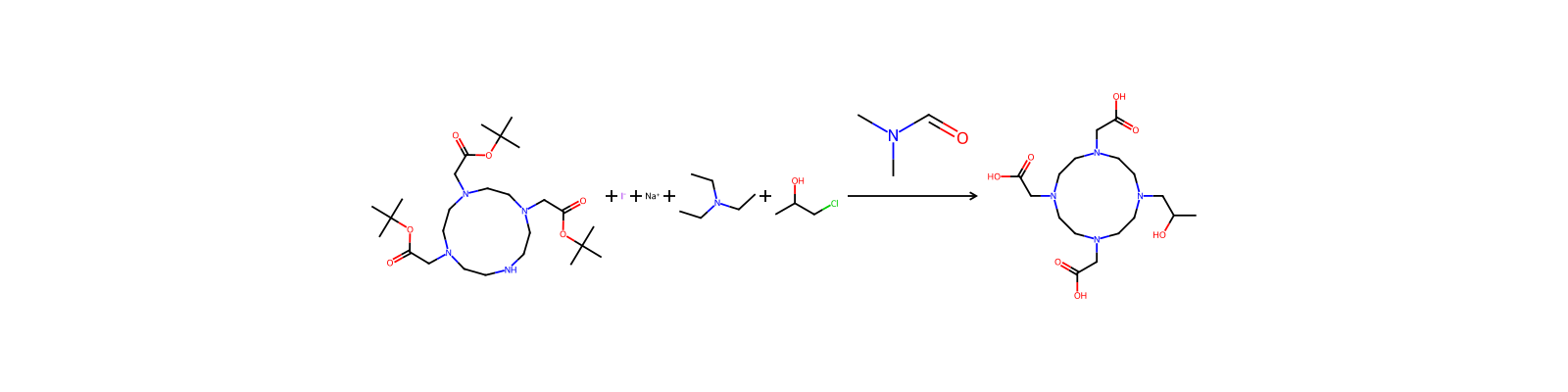
HRID 37051 반응식
HRID 37051반응물로uspto-grants-1995_05
HRID 66647 반응식
HRID 66647반응물로uspto-grants-1982_08
HRID 92235 반응식
HRID 92235반응물로Training data from https://doi.org/10.1039/C8SC04228D (2/10)
HRID 108029 반응식
HRID 108029반응물로Training data from https://doi.org/10.1039/C8SC04228D (2/10)
HRID 136733 반응식
HRID 136733반응물로Training data from https://doi.org/10.1039/C8SC04228D (9/10)
HRID 167557 반응식
HRID 167557반응물로Training data from https://doi.org/10.1039/C8SC04228D (9/10)
HRID 289074 반응식
HRID 289074반응물로Training data from https://doi.org/10.1039/C8SC04228D (8/10)
HRID 296300 반응식
HRID 296300반응물로Training data from https://doi.org/10.1039/C8SC04228D (8/10)
1 / 5 페이지

화합물 노트

불러오는 중…

이 페이지에서기본 정보개요이름 및 식별자물성안전 및 규제화학 및 산업관련 반응화합물 노트
더보기
새 노트새 반응견적 요청하기
Refractive IndexINDEX OF REFRACTION: 1.4392 @ 20 °C/D
Physical Description · 2건

1-chloro-2-propanol is a clear colorless to light amber liquid with a mild non residual odor. (NTP, 1992)

Colorless liquid with a faintly ethereal odor; [ACGIH]

물리화학적 성질

끓는 점
126 · 126-127 °C(lit.)
밀도
1.111 g/mL · 1.111 g/mL at 25 °C(lit.)
굴절률
20 · n20/D 1.439(lit.)
인화점
125 °F · 125 °F
저장 조건
Flammables area
수용성
물에 용해됨
용해도
클로로포름, 메탄올(약간)에 용해됨
물리적 상태
투명한 액체
산도 계수 (pKa)
14.09 · 14.09±0.20(Predicted)
색상
무색~연황색
Merck
14 · 14,7851
BRN
773653 · 773653
Henry's Law Constant
5.8 · 5.8×100 mol/(m3Pa) at 25℃, HSDB (2015)
안정성
안정적인. 가연성. 강한 산화제와 호환되지 않습니다.
InChI
1S/C3H7ClO/c1-3(5)2-4/h3,5H,2H2,1H3
InChIKey
YYTSGNJTASLUOY-UHFFFAOYSA-N
SMILES
CC(O)CCl
EPA
1 · 1-Chloro-2-propanol (127-00-4)

화학적 성질

colourless to light yellow liquid

Hazards Summary · 1건

Causes damage to the liver and other organs in animal feeding studies; Critical Effects: reproductive; genotoxic; [ACGIH] No adverse effects on fertility in a chronic feeding study of rats; Increased testis weights and sperm abnormalities--possible evidence of slight reproductive toxicity; [NTP] General anesthetic effect in lethal dose feeding studies of guinea pigs; [RTECS] An irritant of the skin, eyes, and respiratory tract; [CAMEO] See 2-Chloro-1-propanol.

Reactive GroupAlcohols and Polyols
Special Reports · 1건

Toxicology & Carcinogenesis Studies of 1-Chloro-2-propanol (Technical Grade) in F344/N Rats and B6C3F1 Mice (Drinking Water Studies) p.6 Technical Report Series No. 477 (1998) NIH Publication No. 98-3967 U.S. Department of Health and Human Services, National Toxicology Program, National Institute of Environmental Health Sciences, Research Triangle Park, NC 27709

Reactivity ProfileMay be sensitive to prolonged exposure to light. Incompatible with strong oxidizing agents. (NTP, 1992)
Air and Water ReactionsSoluble in water.
NFPA Hazard Classification · 3건

2 - Materials that, under emergency conditions, can cause temporary incapacitation or residual injury.

2 - Materials that must be moderately heated or exposed to relatively high ambient temperatures before ignition can occur. Materials would not under normal conditions form hazardous atmospheres with air, but under high ambient temperatures or under moderate heating could release vapor in sufficient quantities to produce hazardous atmospheres with air.

0 - Materials that in themselves are normally stable, even under fire conditions.

Hazard Classes and Categories · 3건

Flam. Liq. 3 (100%)

Flammable liquids - Category 3

Mutagens, Flammable agents - 2nd degree

안전 및 보호

Fire FightingFires involving this material can be controlled with a dry chemical, carbon dioxide or Halon extinguisher. (NTP, 1992)
First Aid · 1건

EYES: First check the victim for contact lenses and remove if present. Flush victim's eyes with water or normal saline solution for 20 to 30 minutes while simultaneously calling a hospital or poison control center. Do not put any ointments, oils, or medication in the victim's eyes without specific instructions from a physician. IMMEDIATELY transport the victim after flushing eyes to a hospital even if no symptoms (such as redness or irritation) develop.

Fire Fighting ProceduresALC FOAM, SPRAY, MIST, DRY CHEM.
Storage ConditionsSHOULD BE STORED IN COOL, WELL-VENTILATED PLACE, OUT OF DIRECT RAYS OF SUN, AWAY FROM AREAS OF HIGH FIRE HAZARD, &...PERIODICALLY INSPECTED & MONITORED. INCOMPATIBLE MATERIALS SHOULD BE ISOLATED FROM EACH OTHER.
Nonfire Spill Response · 1건

SMALL SPILLS AND LEAKAGE: If you should spill this chemical, use absorbent paper to pick up all liquid spill material. Seal the absorbent paper, as well as any of your clothing which may be contaminated, in a vapor-tight plastic bag for eventual disposal. Wash any surfaces you may have contaminated with a soap and water solution. Do not reenter the contaminated area until the Safety Officer (or other responsible person) has verified that the area has been properly cleaned.

Disposal Methods · 1건

SRP: At the time of review, criteria for land treatment or burial (sanitary landfill) disposal practices are subject to significant revision. Prior to implementing land disposal of waste residue (including waste sludge), consult with environmental regulatory agencies for guidance on acceptable disposal practices.

Isolation and EvacuationExcerpt from ERG Guide 131 [Flammable Liquids - Toxic]:
Threshold Limit Values (TLV)1.0 [ppm]
Personal Protective Equipment (PPE) · 1건

RECOMMENDED RESPIRATOR: Where the neat test chemical is weighed and diluted, wear a NIOSH-approved half face respirator equipped with an organic vapor/acid gas cartridge (specific for organic vapors, HCl, acid gas and SO2) with a dust/mist filter.

독성 정보

Environmental Fate · 3건

TERRESTRIAL FATE: Based on a classification scheme(1), an estimated Koc value of 2(SRC), determined from a structure estimation method(2), indicates that 1-chloro-2-propanol is expected to have very high mobility in soil(SRC). Volatilization of 1-chloro-2-propanol from moist soil surfaces is not expected to be an important fate process(SRC) given an estimated Henry's Law constant of 1.7X10⁻⁶ atm-cu m/mole(SRC), obtained using a fragment constant estimation method(3). The potential for volatilization of 1-chloro-2-propanol from dry soil surfaces may exist(SRC) based upon a vapor pressure of 4.9 mm Hg(4). The importance of biodegradation of 1-chloro-2-propanol in soil is unknown(SRC).

AQUATIC FATE: Based on a classification scheme(1), an estimated Koc value of 2(SRC), determined from a structure estimation method(2), indicates that 1-chloro-2-propanol is not expected to adsorb to suspended solids and sediment in water(SRC). Volatilization from water surfaces is not expected(3) based upon an estimated Henry's Law constant of 1.7X10⁻⁶ atm-cu m/mole(SRC), developed using a fragment constant estimation method(4). Volatilization half-lives for a model river and model lake are 150 days and 3 years, respectively(SRC), using an estimation method(3). According to a classification scheme(5), an estimated BCF of 3(3,SRC), from an estimated log Kow(6,SRC), suggests the potential for bioconcentration in aquatic organisms is low(SRC). A neutral first-order hydrolysis rate constant of 1.1X10⁻⁸ 1/s for 1-chloro-2-propanol corresponds to a half-life of 2 years a pH 7(7), the half-life for hydrolysis at pH 8 is expected to be approximately 1 month by analogy to 1,3-dichloro-2-propanol(SRC). The importance of biodegradation of 1-chloro-2-propanol in water is unknown(SRC).

ATMOSPHERIC FATE: According to a model of gas/particle partitioning of semivolatile organic compounds in the atmosphere(1), 1-chloro-2-propanol, which has a vapor pressure of 4.9 mm Hg at 25 °C(2), is expected to exist solely as a vapor in the ambient atmosphere. Vapor-phase 1-chloro-2-propanol is degraded in the atmosphere by reaction with photochemically-produced hydroxyl radicals(SRC); the half-life for this reaction in air is estimated to be 5 days(SRC) from its estimated rate constant of 3.19X10⁻¹² cu cm/molecule-sec at 25 °C(3).

Food Survey Values · 1건

1-chloro-2-propanol was qualitatively detected as a volatile component of meat(1). 1-Chloro-2-propanol may be formed in foods (e.g., flour, pepper, cocoa, walnut meat, tapioca starch, glazed cherries, glazed citron, and dehydrated potato granules) fumigated with propylene oxide(2).

Adverse EffectsNeurotoxin - Acute solvent syndrome
Ongoing Test Status · 1건

The following link will take the user to the National Toxicology Program (NTP) Test Agent Search Results page, which tabulates all of the "Standard Toxicology & Carcinogenesis Studies", "Developmental Studies", and "Genetic Toxicity Studies" performed with this chemical. Clicking on the "Testing Status" link will take the user to the status (i.e., in review, in progress, in preparation, on test, completed, etc.) and results of all the studies that the NTP has done on this chemical. [http://ntp-apps.niehs.nih.gov/ntp_tox/index.cfm?fuseaction=ntpsearch.searchresults&searchterm=127-00-4]

Soil Adsorption/Mobility · 1건

Using a structure estimation method based on molecular connectivity indices(1), the Koc for 1-chloro-2-propanol can be estimated to be about 2(SRC). According to a classification scheme(2), this estimated Koc value suggests that 1-chloro-2-propanol is expected to have very high mobility in soil.

Artificial Pollution Sources1-Chloro-2-propanol's production and use as a chemical intermediate(1) may result in its release to the environment through various waste streams.
Carcinogen Classification · 6건

1-Chloro-2-propanol,Technical

TR-477: Toxicology and Carcinogenesis Studies of 1-Chloro-2-Propanol (Technical Grade) (CASRN 127-00-4) in F344/N Rats and B6C3F1 Mice (Drinking Water Studies) (1998 )

12/10/97

No Evidence

No Evidence

No Evidence

Environmental Bioconcentration · 1건

An estimated BCF of 3 was calculated for 1-chloro-2-propanol(SRC), using an estimated log Kow of 0.53(1,SRC) and a regression-derived equation(2). According to a classification scheme(3), this BCF suggests the potential for bioconcentration in aquatic organisms is low.

Volatilization from Water/Soil · 1건

The Henry's Law constant for 1-chloro-2-propanol is estimated as 1.7X10⁻⁶ atm-cu m/mole(SRC) using a fragment constant estimation method(1). This Henry's Law constant indicates that 1-chloro-2-propanol is expected to volatilize from water surfaces(2). Based on this Henry's Law constant, the volatilization half-life from a model river (1 m deep, flowing 1 m/sec, wind velocity of 3 m/sec)(2) is estimated as approximately 150 days(SRC). The volatilization half-life from a model lake (1 m deep, flowing 0.05 m/sec, wind velocity of 0.5 m/sec)(2) is estimated as approximately 3 years(SRC). 1-Chloro-2-propanol's Henry's Law constant(1) indicates that volatilization from moist soil surfaces may occur(SRC). The potential for volatilization of 1-chloro-2-propanol from dry soil surfaces may exist(SRC) based upon a vapor pressure of 4.9 mm Hg(3).

Non-Human Toxicity Excerpts · 5건

PROPYLENE CHLOROHYDRIN RATED 7 ON RABBIT EYES, ...TESTED EXTERNALLY ON EYES OF RABBITS &...RATED NUMERICALLY ON SCALE OF 1-10 ACCORDING TO DEGREE OF INJURY... AFTER 24 HR /OBSERVATION/, PAYING PARTICULAR ATTENTION TO CONDITION OF CORNEA. MOST SEVERE INJURIES HAVE BEEN RATED 10. /PROPYLENE CHLOROHYDRIN/

MUTAGENICITY FOR SALMONELLA OF SOME MONO- & DI-HALOPROPANOLS STUDIED REVEALED THAT 1-CHLORO-2-PROPANOL WAS AMONG THOSE MUTAGENIC FOR SALMONELLA TYPHIMURIUM. TA1535 BUT NOT FOR TA1538. /SRP: AMES TEST/

Rats given 15 exposures by inhalation (6 hr each) of 250 ppm 1-chloro-2-propanol displayed lethargy, irregular weight gains, congestion, and perivascular edema in the lungs. At 100 ppm, the lungs were observed congested with perivascular edema; no effects were observed at 30 ppm. In a 21 day oral study, rats were dosed with either 7.6, 25.4, or 76 mg/kg/day propylene chlorohydrin ... . No systemic toxicity was observed.

In a 13 week study, Sprague-Dawley rats were dosed by oral gavage with 1, 7, and 50 mg/kg/day propylene chlorohydrin (75:25 1-chloro-2-propanol and 2-chloro-1-propanol). ... No findings of note except for histopathological changes in the acinar cells of the pancreas.

For more Non-Human Toxicity Excerpts (Complete) data for 2-PROPANOL, 1-CHLORO- (8 total), please visit the HSDB record page.

Environmental Abiotic Degradation · 1건

The rate constant for the vapor-phase reaction of 1-chloro-2-propanol with photochemically-produced hydroxyl radicals has been estimated as 3.19X10⁻¹² cu cm/molecule-sec at 25 °C(SRC) using a structure estimation method(1). This corresponds to an atmospheric half-life of about 5 days at an atmospheric concentration of 5X10+5 hydroxyl radicals per cu cm(1). A neutral first-order hydrolysis rate constant of 1.1X10⁻⁸ 1/s corresponds to a half-life of 2 years a pH 7(2). By analogy to 1,3-dichloro-2-propanol which has a base-catalyzed second-order hydrolysis rate constant of 850 L/mole-hour(3), 1-chloro-2-propanol is expected to have a half-live of approximately 1 month at pH 8(4,SRC). 1-Chloro-2-propanol is not expected to directly photolyze due to the lack of absorption in the environmental spectrum(5).

Probable Routes of Human Exposure · 1건

Occupational exposure to 1-chloro-2-propanol may occur through inhalation and dermal contact with this compound at workplaces where 1-chloro-2-propanol is produced or used(SRC). The general population may be exposed to 1-chloro-2-propanol via food fumigated with propylene oxide(1).

안전 데이터

wgk
3
tsca
TSCA listed
rtecs
UA8942000
ridadr
UN 2611
HS 번호
29055900
risk_code
10-20-36/37/38
hazard_code
Xn
safety_code
26-36/39
포장분류
II
위험 등급
6.1
기존화학 물질
KE-05876
F 고인화성물질
19
Hazard Classifications
Acute Tox. 3 InhalationAcute Tox. 3 OralEye Irrit. 2Flam. Liq. 3Skin Irrit. 2STOT SE 3
스토리지 클래스
3 - Flammable liquids
유해 물질 데이터
127-00-4(Hazardous Substances Data)
2-chloropropanol
초산에틸
염산
메틸알콜
N,N-디메틸아세트아미드
하이포클로로스애씨드
염화알릴

하류 제품

METHACHOLINE CHLORIDE1,1-Diphenylacetone프로필렌 글리콜2-클로로-1-프로판올1,3-디클로로프로판1-(4-메틸페녹시)-2-프로판올하이드록시프로필모르폴린(S)-1-클로로-2-프로판올디에틸아미노-2-프로판올(R)-1-클로로-2-프로판올3-하이드록시부티로니트릴