홈MCP워크벤치Skills
홈워크벤치알림마이페이지
llms.txt · MCP 가이드개인정보처리방침 · 이용약관 · 지원v1.8.0
  1. 홈
  2. /화합물

2-메틸-1-니트로안트라퀴논

2-Methyl-1-nitroanthraquinone

HCID 31426
새 노트새 반응견적 요청하기
인쇄 미리보기

데이터를 보충하는 중입니다. 잠시 후 페이지를 새로 고치면 최신 내용을 볼 수 있습니다

기본 정보개요이름 및 식별자물성안전 및 규제화학 및 산업관련 반응화합물 노트
부분 구조 검색유사 구조 찾기

기본 정보

CAS
129-15-7
표준 SMILES
Cc1ccc2c(c1[N+](=O)[O-])C(=O)c1ccccc1C2=O
InChIKey
FYXKXZFTZBYYNP-UHFFFAOYSA-N
분자식
C15H9NO4
평균 분자량
267.24 g/mol
단동위원소 질량
267.05315777

개요

2-Methyl-1-nitroanthraquinone (of uncertain purity) can cause cancer according to an independent committee of scientific and health experts.

이름 및 식별자

우선 이름
2-Methyl-1-nitroanthraquinone
IUPAC
2-methyl-1-nitroanthracene-9,10-dione
현지명
2-메틸-1-니트로안트라퀴논
영어명
2-methyl-1-nitroanthraquinone
분자식
C15H9NO4
분자량
267.24

이름 및 동의어

2-METHYL-1-NITROANTHRAQUINONE129-15-71-Nitro-2-methylanthraquinoneViolet Cibacet 2RAnthraquinone, 2-methyl-1-nitro-9,10-Anthracenedione, 2-methyl-1-nitro-NCI-C019231-N-2-Ma2-Methyl-1-nitro-9,10-anthracenedioneDTXSID7020847NSC-8XU83BY176P
이름 더 보기
2-메틸-1-나이트로안트라퀴논2-메틸-1-니트로안트라퀴논SKL3792-Methyl-1-Bitroanthraquinone1-Nitro-2-methyl-9,10-anthraquinone2-Methyl-1-nitro-9,10-anthraquinone2-Methyl-1-nitroanthraquinone (of uncertain purity)
DTXCID70847RefChem:88000204-932-02-methyl-1-nitroanthracene-9,10-dione2-METHYL-1-NITRO-9,10-DIHYDROANTHRACENE-9,10-DIONEMFCD00019142NSC 81-N-2-MA [Russian]

데이터베이스 식별자

CAS
129-15-7
PubChem CID
31426
DTXSID
DTXSID7020847
ChEMBL
CHEMBL1331312
ChEBI
CHEBI:82345
UNII
XU83BY176P
EC Number
204-932-0
Nikkaji
J2.521F

물성

구조 계산 물성보충 중

XLogP
3.1
극성 표면적
80 Ų
수소 결합 공여자 수
0
수소 결합 수용자 수
4
회전 가능 결합 수
0
무거운 원자 수
20
형식 전하
0
복잡도
455

실험 및 물리화학적 성질

Chemical Classes · 2건

Dyes -> Anthraquinone Dyes

Carcinogens

Color/FormPALE-YELLOW NEEDLES
Solubility · 2건

less than 0.1 mg/mL at 70 °F (NTP, 1992)

INSOL IN WATER & HOT ETHANOL; SLIGHTLY SOL IN HOT DIETHYL ETHER, HOT BENZENE, HOT ACETIC ACID & CHLOROFORM; SOL IN NITROBENZENE

Melting Point · 2건

518 to 520 °F (NTP, 1992)

270-271 °C

Physical Description · 2건

2-methyl-1-nitroanthraquinone appears as pale yellow needles or light yellow solid. (NTP, 1992)

Pale yellow solid; [HSDB]

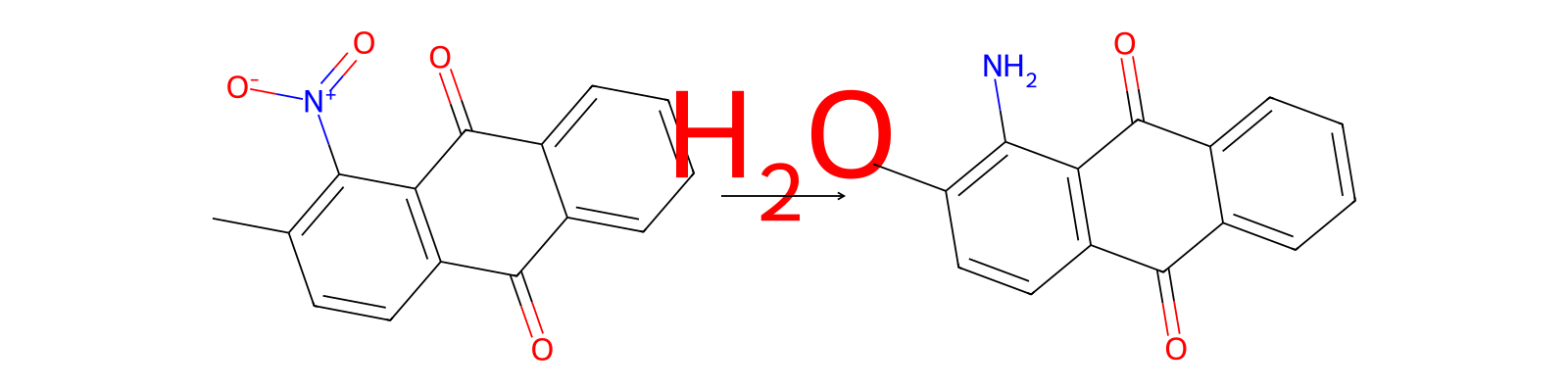
Other Experimental PropertiesNITRO GROUP MAY BE REPLACED BY A VARIETY OF SUBSTITUENTS; EASILY REDUCED TO AMINO GROUP

물리화학적 성질

녹는점
270 · 270~271℃
끓는 점
410.42 °C · 410.42°C (rough estimate)
밀도
1.2671 · 1.2671 (rough estimate)
굴절률
1.6231 · 1.6231 (estimate)

안전 및 규제

안전 정보는 참고용이며, 공급업체의 물질안전보건자료(SDS), 관련 법규 및 전문가 평가를 대체하지 않습니다.

GHS 분류

GHS Classification · 6건

Warning

H351 (100%): Suspected of causing cancer [Warning Carcinogenicity]

P203, P280, P318, P405, and P501 (click each P-code to see the statement)

Aggregated GHS information provided per 39 reports by companies from 2 notifications to the ECHA C&L Inventory.

Warning

H351: Suspected of causing cancer [Warning Carcinogenicity]

유해성 정보

Regulatory Information · 2건

Hazard Traits - Carcinogenicity

The New Jersey Worker and Community Right to Know Act requires public and private employers to provide information about hazardous substances at their workplaces. (N.J.S.A. 34:5A-1 et. seq.)

Fire HazardsFlash point data for this chemical are not available; however, it is probably combustible. (NTP, 1992)
Health HazardsACUTE/CHRONIC HAZARDS: When heated to decomposition this compound emits toxic fumes of nitrogen oxides. (NTP, 1992)
Hazards SummaryA mutagen and tumorigen; [RTECS] Anthraquinones have cathartic action after ingestion, and in severe cases, may cause kidney damage, liver enzyme elevation, GI hemorrhage, seizures, and coma;; [HSDB] May cause irritation; [MSDSonline]
FDA RequirementsNot approved for use in food, drugs or cosmetics
Reactive GroupKetones
Special Reports · 2건

Weisburger EK; Bioassay Program for Carcinogenic Hazards of Cancer Chemotherapeutic Agents; Cancer 40: 1935-49 (1977). Route: oral in feed; Species: mice.

Bioassay of 2-Methyl-1-Nitroanthraquinone for Possible Carcinogenicity (1978) Technical Rpt Series No. 29 DHEW Pub No. (NIH) 78-829 U.S. Department of Health Education and Welfare, National Cancer Institute, Bethesda, MD 20014.

화학 및 산업

약리 정보

Metabolism/MetabolitesQuinones (ie, 6,12-dione) have been shown to undergo oxidation-reduction cycles involving quinone, hydroquinone, and molecular oxygen, resulting in the formation of oxygen radicals and semiquinone radicals. /Quinones/

용도 및 제조

Uses · 4건

Used to make dyes and 1-amino-2-methylanthraquinone; Not commercially used or produced in the US; [HSDB]

DYE INTERMEDIATE; MFR 1-AMINO-2-METHYLANTHRAQUINONE

2-METHYL-1-NITROANTHRAQUINONE CAN BE OXIDIZED TO 1-NITRO-2-ANTHRAQUINONECARBOXYLIC ACID, WHICH CAN BE USED TO PREPARE 5 DYES; ONLY 2 OF THESE HAVE BEEN PRODUCED COMMERCIALLY IN US IN RECENT YR: VAT BROWN 31.28%, LAST PRODUCED BY ONE COMPANY IN 1974.

In the past, 2-methyl-1-nitroanthraquinone served as an intermediate in the manufacture of certain wool dyes of the alizarin series and of anthraquinone vat dyes such as CI Vat Red 39.

Methods of ManufacturingPREPN: ...BY NITRATION OF 2-METHYLANTHRAQUINONE WITH A MIXT OF NITRIC & SULFURIC ACIDS.
General Manufacturing Information2-Methyl-1-nitroanthraquinone is no longer used by the dye industry in the United States and has not been produced commercially in this country since 1970.

응용 분야

일반 설명Pale yellow needles or light yellow solid.

상·하류 제품 정보

하류 제품

키셀리나1-니트로안트라키논-2-카르복실로바1-아미노-2-메틸안트라퀴논

관련 반응

7건
반응 기록 만들기
HRID 119971 반응식
HRID 119971반응물로Training data from https://doi.org/10.1039/C8SC04228D (2/10)
HRID 124778 반응식
HRID 124778반응물로Training data from https://doi.org/10.1039/C8SC04228D (2/10)
HRID 464927 반응식
HRID 464927반응물로uspto-grants-1985_10
HRID 614242 반응식
HRID 614242반응물로uspto-grants-1979_03
HRID 851069 반응식
HRID 851069반응물로uspto-grants-1983_05
HRID 1709726 반응식
HRID 1709726반응물로uspto-grants-1990_08
HRID 2072298 반응식
HRID 2072298반응물로uspto-grants-1977_09

화합물 노트

불러오는 중…

이 페이지에서기본 정보개요이름 및 식별자물성안전 및 규제화학 및 산업관련 반응화합물 노트
더보기
새 노트새 반응견적 요청하기
EPA
2 · 2-Methyl-1-nitroanthraquinone (129-15-7)
Reactivity Profile2-METHYL-1-NITROANTHRAQUINONE is easily reduced. This chemical is also readily oxidized. (NTP, 1992)
Air and Water ReactionsInsoluble in water.
Hazard Classes and Categories · 4건

Carc. 2 (100%)

Carcinogenicity - Category 2

Carcinogenicity - Category 2

Carcinogens

Shipment Methods and Regulations · 2건

PRECAUTIONS FOR "CARCINOGENS": Procurement ... of unduly large amt ... should be avoided. To avoid spilling, carcinogens should be transported in securely sealed glass bottles or ampoules, which should themselves be placed inside strong screw-cap or snap-top container that will not open when dropped & will resist attack from the carcinogen. Both bottle & the outside container should be appropriately labelled. ... National post offices, railway companies, road haulage companies & airlines have regulations governing transport of hazardous materials. These authorities should be consulted before ... material is shipped. /Chemical Carcinogens/

PRECAUTIONS FOR "CARCINOGENS": When no regulations exist, the following procedure must be adopted. The carcinogen should be enclosed in a securely sealed, watertight container (primary container), which should be enclosed in a second, unbreakable, leakproof container that will withstand chem attack from the carcinogen (secondary container). The space between primary & secondary container should be filled with absorbent material, which would withstand chem attack from the carcinogen & is sufficient to absorb the entire contents of the primary container in the event of breakage or leakage. Each secondary container should then be enclosed in a strong outer box. The space between the secondary container & the outer box should be filled with an appropriate quantity of shock-absorbent material. Sender should use fastest & most secure form of transport & notify recipient of its departure. If parcel is not received when expected, carrier should be informed so that immediate effort can be made to find it. Traffic schedules should be consulted to avoid ... arrival on weekend or holiday ... /Chemical Carcinogens/

안전 및 보호

Fire FightingFires involving this material can be controlled with a dry chemical, carbon dioxide or Halon extinguisher. (NTP, 1992)
First Aid · 1건

EYES: First check the victim for contact lenses and remove if present. Flush victim's eyes with water or normal saline solution for 20 to 30 minutes while simultaneously calling a hospital or poison control center. Do not put any ointments, oils, or medication in the victim's eyes without specific instructions from a physician. IMMEDIATELY transport the victim after flushing eyes to a hospital even if no symptoms (such as redness or irritation) develop.

Storage Conditions · 1건

PRECAUTIONS FOR "CARCINOGENS": Storage site should be as close as practical to lab in which carcinogens are to be used, so that only small quantities required for ... expt need to be carried. Carcinogens should be kept in only one section of cupboard, an explosion-proof refrigerator or freezer (depending on chemicophysical properties ...) that bears appropriate label. An inventory ... should be kept, showing quantity of carcinogen & date it was acquired ... Facilities for dispensing ... should be contiguous to storage area. /Chemical Carcinogens/

Cleanup Methods · 1건

PRECAUTIONS FOR "CARCINOGENS": A high-efficiency particulate arrestor (HEPA) or charcoal filters can be used to minimize amt of carcinogen in exhausted air ventilated safety cabinets, lab hoods, glove boxes or animal rooms ... Filter housing that is designed so that used filters can be transferred into plastic bag without contaminating maintenance staff is avail commercially. Filters should be placed in plastic bags immediately after removal ... The plastic bag should be sealed immediately ... The sealed bag should be labelled properly ... Waste liquids ... should be placed or collected in proper containers for disposal. The lid should be secured & the bottles properly labelled. Once filled, bottles should be placed in plastic bag, so that outer surface ... is not contaminated ... The plastic bag should also be sealed & labelled. ... Broken glassware ... should be decontaminated by solvent extraction, by chemical destruction, or in specially designed incinerators. /Chemical Carcinogens/

Nonfire Spill Response · 1건

SMALL SPILLS AND LEAKAGE: If you spill this chemical, you should dampen the solid spill material with water, then transfer the dampened material to a suitable container. Use absorbent paper dampened with water to pick up any remaining material. Seal your contaminated clothing and the absorbent paper in a vapor-tight plastic bag for eventual disposal. Wash all contaminated surfaces with a soap and water solution. Do not reenter the contaminated area until the Safety Officer (or other responsible person) has verified that the area has been properly cleaned.

Disposal Methods · 5건

SRP: At the time of review, criteria for land treatment or burial (sanitary landfill) disposal practices are subject to significant revision. Prior to implementing land disposal of waste residue (including waste sludge), consult with environmental regulatory agencies for guidance on acceptable disposal practices.

PRECAUTIONS FOR "CARCINOGENS": There is no universal method of disposal that has been proved satisfactory for all carcinogenic compounds & specific methods of chem destruction ... published have not been tested on all kinds of carcinogen-containing waste. ... summary of avail methods & recommendations ... /given/ must be treated as guide only. /Chemical Carcinogens/

PRECAUTIONS FOR "CARCINOGENS": ... Incineration may be only feasible method for disposal of contaminated laboratory waste from biological expt. However, not all incinerators are suitable for this purpose. The most efficient type ... is probably the gas-fired type, in which a first-stage combustion with a less than stoichiometric air:fuel ratio is followed by a second stage with excess air. Some ... are designed to accept ... aqueous & organic-solvent solutions, otherwise it is necessary ... to absorb soln onto suitable combustible material, such as sawdust. Alternatively, chem destruction may be used, esp when small quantities ... are to be destroyed in laboratory. /Chemical Carcinogens/

PRECAUTIONS FOR "CARCINOGENS": HEPA (high-efficiency particulate arrestor) filters ... can be disposed of by incineration. For spent charcoal filters, the adsorbed material can be stripped off at high temp & carcinogenic wastes generated by this treatment conducted to & burned in an incinerator. ... LIQUID WASTE: ... Disposal should be carried out by incineration at temp that ... ensure complete combustion. SOLID WASTE: Carcasses of lab animals, cage litter & misc solid wastes ... should be disposed of by incineration at temp high enough to ensure destruction of chem carcinogens or their metabolites. /Chemical Carcinogens/

For more Disposal Methods (Complete) data for 2-METHYL-1-NITROANTHRAQUINONE (6 total), please visit the HSDB record page.

Preventive Measures · 5건

PRECAUTIONS FOR "CARCINOGENS": Smoking, drinking, eating, storage of food or of food & beverage containers or utensils, & the application of cosmetics should be prohibited in any laboratory. All personnel should remove gloves, if worn, after completion of procedures in which carcinogens have been used. They should ... wash ... hands, preferably using dispensers of liq detergent, & rinse ... thoroughly. Consideration should be given to appropriate methods for cleaning the skin, depending on nature of the contaminant. No standard procedure can be recommended, but the use of organic solvents should be avoided. Safety pipettes should be used for all pipetting. /Chemical Carcinogens/

PRECAUTIONS FOR "CARCINOGENS": In animal laboratory, personnel should remove their outdoor clothes & wear protective suits (preferably disposable, one-piece & close-fitting at ankles & wrists), gloves, hair covering & overshoes. ... Clothing should be changed daily but ... discarded immediately if obvious contamination occurs ... /also,/ workers should shower immediately. In chemical laboratory, gloves & gowns should always be worn ... however, gloves should not be assumed to provide full protection. Carefully fitted masks or respirators may be necessary when working with particulates or gases, & disposable plastic aprons might provide addnl protection. If gowns are of distinctive color, this is a reminder that they should not be worn outside of lab. /Chemical Carcinogens/

PRECAUTIONS FOR "CARCINOGENS": ... Operations connected with synth & purification ... should be carried out under well-ventilated hood. Analytical procedures ... should be carried out with care & vapors evolved during ... procedures should be removed. ... Expert advice should be obtained before existing fume cupboards are used ... & when new fume cupboards are installed. It is desirable that there be means for decreasing the rate of air extraction, so that carcinogenic powders can be handled without ... powder being blown around the hood. Glove boxes should be kept under negative air pressure. Air changes should be adequate, so that concn of vapors of volatile carcinogens will not occur. /Chemical Carcinogens/

PRECAUTIONS FOR "CARCINOGENS": Vertical laminar-flow biological safety cabinets may be used for containment of in vitro procedures ... provided that the exhaust air flow is sufficient to provide an inward air flow at the face opening of the cabinet, & contaminated air plenums that are under positive pressure are leak-tight. Horizontal laminar-flow hoods or safety cabinets, where filtered air is blown across the working area towards the operator, should never be used ... Each cabinet or fume cupboard to be used ... should be tested before work is begun (eg, with fume bomb) & label fixed to it, giving date of test & avg air-flow measured. This test should be repeated periodically & after any structural changes. /Chemical Carcinogens/

For more Preventive Measures (Complete) data for 2-METHYL-1-NITROANTHRAQUINONE (9 total), please visit the HSDB record page.

Personal Protective Equipment (PPE) · 2건

RECOMMENDED RESPIRATOR: Where the neat test chemical is weighed and diluted, wear a NIOSH-approved half face respirator equipped with a combination filter cartridge, i.e. organic vapor/acid gas/HEPA (specific for organic vapors, HCl, acid gas, SO2 and a high efficiency particulate filter). (NTP, 1992)

PRECAUTIONS FOR "CARCINOGENS": ... Dispensers of liq detergent /should be available./ ... Safety pipettes should be used for all pipetting. ... In animal laboratory, personnel should ... wear protective suits (preferably disposable, one-piece & close-fitting at ankles & wrists), gloves, hair covering & overshoes. ... In chemical laboratory, gloves & gowns should always be worn ... however, gloves should not be assumed to provide full protection. Carefully fitted masks or respirators may be necessary when working with particulates or gases, & disposable plastic aprons might provide addnl protection. ... Gowns ... /should be/ of distinctive color, this is a reminder that they are not to be worn outside the laboratory. /Chemical Carcinogens/

독성 정보

Adverse EffectsNeurotoxin - Other CNS neurotoxin
Ongoing Test Status · 1건

The following link will take the user to the National Toxicology Program (NTP) Test Agent Search Results page, which tabulates all of the "Standard Toxicology & Carcinogenesis Studies", "Developmental Studies", and "Genetic Toxicity Studies" performed with this chemical. Clicking on the "Testing Status" link will take the user to the status (i.e., in review, in progress, in preparation, on test, completed, etc.) and results of all the studies that the NTP has done on this chemical. [http://ntp-apps.niehs.nih.gov/ntp_tox/index.cfm?fuseaction=ntpsearch.searchresults&searchterm=129-15-7]

Medical Surveillance · 1건

PRECAUTIONS FOR "CARCINOGENS": Whenever medical surveillance is indicated, in particular when exposure to a carcinogen has occurred, ad hoc decisions should be taken concerning ... /cytogenetic and/or other/ tests that might become useful or mandatory. /Chemical Carcinogens/

Human Toxicity Excerpts · 2건

Carcinogenic determination: human indefinite

Chronic neurotoxic effects include vision disturbances. /From table; Quinones/

Carcinogen Classification · 6건

2-Methyl-1-nitroanthraquinone (uncertain purity)

Group 2B: Possibly carcinogenic to humans

Volume 27: (1982) Some Aromatic Amines, Anthraquinones and Nitroso Compounds, and Inorganic Fluorides Used in Drinking-water and Dental Preparations

1987

1987

2-Methyl-1-nitroanthraquinone

Non-Human Toxicity Excerpts · 5건

GROUPS OF 50 MALE & 50 FEMALE B6C3F1 MICE, 6 WK OF AGE, WERE FED DIETS CONTAINING 300 OR 600 MG/KG 2-METHYL-1-NITROANTHRAQUINONE (IMPURITIES UNSPECIFIED). ... NONE OF THE MICE IN EITHER OF TREATED GROUPS SURVIVED LONGER THAN 338 DAYS. SC HEMANGIOSARCOMAS DEVELOPED IN MAJORITY OF TREATED MICE AT THE TWO DOSE LEVELS (88/90 MALES & 79/82 FEMALES); FOUR OF THESE TUMORS METASTASIZED TO THE LUNG. MESENTERIC HEMANGIOSARCOMAS...OBSERVED IN 6 MALE & 8 FEMALE MICE. 1 HEMANGIOSARCOMA OF SPLEEN OCCURRED AMONG 49 MALE CONTROLS; NO HEMANGIOSARCOMA AT ANY SITE OCCURRED IN 48 FEMALE CONTROLS. (THE WORKING GROUP NOTED THAT NO ATTEMPT WAS MADE TO MEASURE PURITY OF TESTED MATERIAL OR TO CHARACTERIZE IT.)

GROUPS OF 50 MALE & 50 FEMALE FISCHER 344 RATS, 6 WK OF AGE WERE FED DIETS CONTAINING 600 OR 1200 MG/KG 2-METHYL-1-NITROANTHRAQUINONE (IMPURITIES UNSPECIFIED) FOR 78 WK &...OBSERVED FOR ADDITIONAL 31 WK. ... BY END OF STUDY, 60, 70 & 54% OF MALES & 44, 80 & 58% OF FEMALES WERE STILL ALIVE IN CONTROL, LOW-DOSE & HIGH-DOSE GROUPS, RESPECTIVELY. INCR IN INCIDENCE OF HEPATOCELLULAR CARCINOMAS WAS OBSERVED ONLY IN MALES: 1/48 CONTROLS, 5/48 LOW-DOSE & 9/49 HIGH-DOSE ANIMALS... FIBROMAS OF SC TISSUE WERE OBSERVED IN BOTH MALE & FEMALE RATS: IN MALES- 3/48 CONTROLS, 10/49 LOW-DOSE...& 34/49 HIGH-DOSE ANIMALS...IN FEMALES- 1/50, 0/50 & 13/49...RESPECTIVELY. SC HEMANGIOSARCOMAS OCCURRED IN 3 HIGH-DOSE MALE RATS. (WORKING GROUP NOTED THAT NO ATTEMPT WAS MADE TO MEASURE PURITY OF TESTED MATERIAL OR TO CHARACTERIZE IT.)

2-METHYL-1-NITROANTHRAQUINONE (PURITY UNSPECIFIED) INDUCED REVERSE MUTATION IN SALMONELLA TYPHIMURIUM STRAINS TA1537, TA1538, TA98 & TA100, WITH OR WITHOUT A LIVER ACTIVATION SYSTEM FROM AROCLOR 1254-INDUCED RATS.

IN A SIX-WK SUBCHRONIC TOXICITY FEEDING STUDY WITH UP TO 5% 2-METHYL-1-NITROANTHRAQUINONE IN THE DIET, MALE & FEMALE RATS THAT RECEIVED 0.15% SHOWED REDN IN WEIGHT GAIN OF 14% & 3%, RESPECTIVELY. IN A CHRONIC STUDY IN RATS WITH 0.06 OR 0.12% IN THE DIET, HYPERPLASIA OF THE LYMPHOID TISSUE & BASAL CELLS OF STOMACH AS WELL AS INFLAMMATORY CHANGES OF THE STOMACH WERE REPORTED.

For more Non-Human Toxicity Excerpts (Complete) data for 2-METHYL-1-NITROANTHRAQUINONE (7 total), please visit the HSDB record page.

Evidence for CarcinogenicityNo data are available in humans. Sufficient evidence of carcinogenicity in animals. OVERALL EVALUATION: Group 2B: The agent is possibly carcinogenic to humans.
Probable Routes of Human ExposureMost likely to be via dermal contact
National Toxicology Program Studies · 1건

A bioassay of 2-methyl-1-nitroanthraquinone for possible carcinogenicity was conducted using Fischer 344 rats. /The cmpd/ was administered in the feed at two concentrations to groups of 50 male and 50 female animals. The high and low dietary concentrations were 0.12 and 0.06%, respectively, for the male and female rats. After a 78 wk treatment period, observation of the rats continued for an additional 31 wk. Fifty rats of each sex were placed on test as controls. Survival in both male and female rats was adequate for a meaningful statistical analysis of late developing tumors; however, there was a significant positive association between incr dosage and elevated mortality in female rats. Hepatocellular carcinomas and neoplastic nodules of the liver occurred in both the male and female treated rats. A statistically significant association between incr dosage and elevated incidence of hepatocellular carcinomas was indicated by the Cochran-Armitage test for the males (1/48, 5/48, and 9/49 in control, low dose, and high dose, respectively); however the Fisher exact tests supported these results only for the high dose males. The incidence of neoplastic nodules was statistically significant in the male rats (0/48, 2/48, and 6/49 in control, low dose, and high dose, respectively,) as indicated by the Cochran-Armitage test and supported by the Fisher exact test fir the high dose group, When those rats having hepatocellular carcinomas or neoplastic nodules of the liver were combined and evaluated simultaneously, the Cochran-Armitage tests indicated statistically significant associations between increased dosages and elevated tumor incidences in both males and females. This was supported by the Fisher exact tests for males and not for females. The incidences of one tumor type, subcutaneous fibroma, were found to be statistically significant in both male and female rats. No other tumors occurred in treated animals in statistically significant incidences when compared to controls. Squamous cell papillomas and squamous cell carcinomas of the forestomach were observed only in high dose rats. Although the incidences of these gastric tumors were not statistically significant, historical data indicate that these tumors are rare in Fischer 344 rats. The occurrence of these tumors in high dose rats, together with the frequent occurrence of nonneoplastic proliferative lesions of the forestomach in treated rats, indicates that the occurrence of these tumors was related to admin of 2-methyl-1-nitroanthraquinone. An incr incidence of bladder tumors (papillomas, transitional cell papillomas, and sarcomas) was observed among female rats. Under the conditions of this bioassay, the results indicate that orally administered 2-methyl-1-nitroanthraquinone is carcinogenic in male Fischer 344 rats, producing hepatocellular carcinomas. Incr incidences of subcutaneous fibromas in both male and female Fischer 344 rats were also associated with the administration of the cmpd. Tumors of the forestomach and bladder in these animals may also have been related to the administration of the test chemical. MaleRats: Positive; Female Rats: Positive; Male Mice: Positive; Female Mice: Positive.

RAIS Toxicity Values · 4건

0.0012

CALEPA

4.3

CALEPA

규제 정보

FDA RequirementsNot approved for use in food, drugs or cosmetics

안전 데이터

유해 물질 데이터
129-15-7(Hazardous Substances Data)
Vat Red 39