기본 정보
- 표준 SMILES
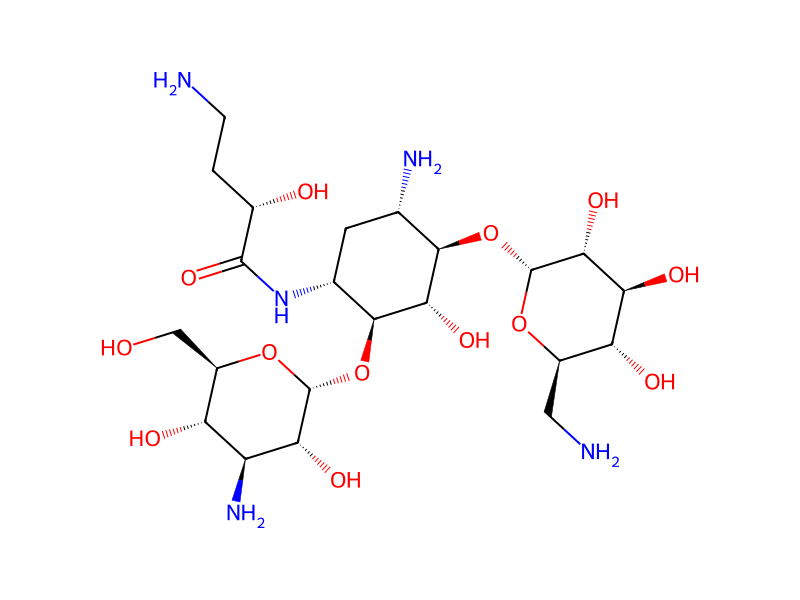
NCC[C@H](O)C(=O)N[C@@H]1C[C@H](N)[C@@H](O[C@H]2O[C@H](CN)[C@@H](O)[C@H](O)[C@H]2O)[C@H](O)[C@H]1O[C@H]1O[C@H](CO)[C@@H](O)[C@H](N)[C@H]1O- InChIKey
LKCWBDHBTVXHDL-RMDFUYIESA-N- 분자식
- C22H43N5O13
- 평균 분자량
- 585.6 g/mol
- 단동위원소 질량
- 585.28573644
이름 및 식별자
- 우선 이름
- Amikacin
- IUPAC
- (2S)-4-amino-N-[(1R,2S,3S,4R,5S)-5-amino-2-[(2S,3R,4S,5S,6R)-4-amino-3,5-dihydroxy-6-(hydroxymethyl)oxan-2-yl]oxy-4-[(2R,3R,4S,5S,6R)-6-(aminomethyl)-3,4,5-trihydroxyoxan-2-yl]oxy-3-hydroxycyclohexyl]-2-hydroxybutanamide
- 현지명
- 아미카신
- 영어명
- AMIKACIN
- 분자식
- C22H43N5O13
- 분자량
- 585.6
이름 및 동의어
amikacin37517-28-5LukadinamikacineAmikacinaAmikacinumPotentox1-N-(L(-)-gamma-Amino-alpha-hydroxybutyryl)kanamycin ADTXSID3022586BAY 41-6551CHEBI:263784319SGC3C
이름 더 보기
D-스트랩타민,O-3-아미노-3-데옥시-알파-D-글루카피레노실-(1→6)-O-[6-아미노-6-데옥시-알파-D-글루카피라노실-(1→4)]-N1-[(2S)-4-아미노-2-하이드록시-1-옥소부틸]-2-데옥시-아미카신아미카신AMKamikacin hydrateAmikacin baseamikinamicacinAmikacin CRSAndraMine-d12
(2S)-4-amino-N-[(1R,2S,3S,4R,5S)-5-amino-2-[(2S,3R,4S,5S,6R)-4-amino-3,5-dihydroxy-6-(hydroxymethyl)oxan-2-yl]oxy-4-[(2R,3R,4S,5S,6R)-6-(aminomethyl)-3,4,5-trihydroxyoxan-2-yl]oxy-3-hydroxycyclohexyl]-2-hydroxybutanamideNSC-177001DTXCID002586(2S)-4-amino-N-[(1R,2S,3S,4R,5S)-5-amino-2-{[(2S,3R,4S,5S,6R)-4-amino-3,5-dihydroxy-6-(hydroxymethyl)oxan-2-yl]oxy}-4-{[(2R,3R,4S,5S,6R)-6-(aminomethyl)-3,4,5-trihydroxyoxan-2-yl]oxy}-3-hydroxycyclohexyl]-2-hydroxybutanamideD-Streptamine, O-3-amino-3-deoxy-alpha-D-glucopyranosyl-(1->6)-O-(6-amino-6-deoxy-alpha-D-glucopyranosyl-(1->4))-N(sup 1)-(4-amino-2-hydroxy-1-oxobutyl)-2-deoxy-, (S)-D-Streptamine, O-3-amino-3-deoxy-alpha-D-glucopyranosyl-(1-6)-O-(6-amino-6-deoxy-alpha-D-glucopyranosyl-(1-4))-N1-(4-amino-2-hydroxy-1-oxobutyl)-2-deoxy-, (S)-AmiklinD-Streptamine, O-3-amino-3-deoxy-alpha-D-glucopyranosyl-(1.fwdarw.6)-O-(6-amino-6-deoxy-alpha-D-glucopyranosyl-(1.fwdarw.4))-N1-((2S)-4-amino-2-hydroxy-1-oxobutyl)-2-deoxy-
데이터베이스 식별자
- CAS
37517-28-5- PubChem CID
- 37768
- DTXSID
DTXSID3022586- ChEMBL
CHEMBL177- ChEBI
CHEBI:2637- UNII
- 84319SGC3C
- EC Number
- 253-538-5
- Nikkaji
- J19.345C
물성
구조 계산 물성
- XLogP
- -7.9
- 극성 표면적
- 332 Ų
- 수소 결합 공여자 수
- 13
- 수소 결합 수용자 수
- 17
- 회전 가능 결합 수
- 10
- 무거운 원자 수
- 40
- 형식 전하
- 0
- 복잡도
- 819
실험 및 물리화학적 성질
LogP-7.4
LogS-0.5
Color/FormWhite crystalline powder from methanol-isopropanol
Solubility
50
In water, 1.85X10+5 mg/L at 25 °C
4.97e+01 g/L
Boiling Point632.23
Decomposition
When heated to decomposition it emits toxic fumes of /nitrogen oxides/.
/Sulfate/ melts at ... about 225 °C with decomp. /Amikacin sulfate/
Melting Point
214
203-204 °C (sesquihydrate)
203 - 204 °C
Optical Rotation
Amorphous form, dec 220-230 °C,Specific optical rotation: +74.75 deg at 22 °C/D (in water), Freely soluble in water /Amikacin sulfate/
Specific optical rotation: +99 deg at 23 °C/D (c = 1.0 in water)
Physical DescriptionSolid
Dissociation Constants
8.1
pKa1 = 6.7 (primary amine); pKa2 = 8.4 (primary amine); pKa3 = 8.4 (primary amine); pKa4 = 9.7 (primary amine)
Collision Cross Section235.1 Ų [M+H]+ [CCS Type: TW; Method: calibrated with Waters Major Mix];233.7 Ų [M+Na]+ [CCS Type: TW; Method: calibrated with Waters Major Mix]
물리화학적 성질
- 녹는점
- 203 ℃ · 203℃
- 끓는 점
- 642.23 °C · 642.23°C (rough estimate)
- 밀도
- 1.3764 · 1.3764 (rough estimate)
- 굴절률
- 1.75 · 1.7500 (estimate)
- 저장 조건
- 2 · 2-8°C
- 용해도
- 2 O: · H2O: 50 mg/mL, 투명, 무색
- 산도 계수 (pKa)
- 8.1 · pKa 8.1 (Uncertain)
- 물리적 상태
- 고체
- 색상
- 흰색에서 황백색까지
- 수용성
- 물에 불용성(부분적으로).
- Merck
- 13 · 13,404
- BRN
- 1445422 · 1445422
- 안정성
- 흡습성
- 주요 응용
- 의약품(소분자)
- InChIKey
- LKCWBDHBTVXHDL-RMDFUYIESA-N
- SMILES
- N([C@H]1[C@@H]([C@H]([C@@H]([C@H](C1)N)O[C@H]3O[C@@H]([C@H]([C@@H]([C@H]3O)O)O)CN)O)O[C@H]2O[C@@H]([C@H]([C@@H]([C@H]2O)N)O)CO)C(=O)[C@@H](O)CCN
- EPA
- Amikacin (37517-28-5)
화학적 성질
white crystalline powder
안전 및 규제
GHS 분류
GHS Classification
Danger
H317 (75%): May cause an allergic skin reaction [Warning Sensitization, Skin];H318 (25%): Causes serious eye damage [Danger Serious eye damage/eye irritation];H332 (25%): Harmful if inhaled [Warning Acute toxicity, inhalation];H360 (25%): May damage fertility or the unborn child [Danger Reproductive toxicity];H372 (25%): Causes damage to organs through prolonged or repeated exposure [Danger Specific target organ toxicity, repeated exposure]
P203, P260, P261, P264, P264+P265, P270, P271, P272, P280, P302+P352, P304+P340, P305+P354+P338, P317, P318, P319, P321, P333+P317, P362+P364, P405, and P501 (click each P-code to see the statement)
Aggregated GHS information provided per 4 reports by companies from 4 notifications to the ECHA C&L Inventory. Each notification may be associated with multiple companies.;Information may vary between notifications depending on impurities, additives, and other factors. The percentage value in parenthesis indicates the notified classification ratio from companies that provide hazard codes. Only hazard codes with percentage values above 10% are shown. For more detailed information, please visit ECHA C&L website.
유해성 정보
Regulatory InformationStatus: Active Update: 15-11-2017 https://echa.europa.eu/registration-dossier/-/registered-dossier/21141
FDA Requirements
The Approved Drug Products with Therapeutic Equivalence Evaluations identifies currently marketed prescription drug products, including amikacin, approved on the basis of safety and effectiveness by FDA under sections 505 of the Federal Food, Drug, and Cosmetic Act.
The Approved Drug Products with Therapeutic Equivalence Evaluations identifies currently marketed prescription drug products, including amikacin, approved on the basis of safety and effectiveness by FDA under sections 505 of the Federal Food, Drug, and Cosmetic Act. /Amikacin sulfate/
The Generic Animal Drug and Patent Restoration act requires that each sponsor of an approved animal drug must submit to the FDA certain information regarding patents held for the animal drug or its method of use. The Act requires that this information, as well as a list of all animal drug products approved for safety and effectiveness, be made available to the public. Amikacin sulfate is included on this list. /Amikacin sulfate/
Implantation or injectable dosage form new animal drugs. Amikacin. ... Indications for use. For treatment of genitourinary tract infections (cystitis) caused by susceptible strains of Escherichia coli and Proteus spp. and skin and soft tissue infections caused by susceptible strains of Pseudomonas spp. and E. coli. ... Limitations. Do not use in horses intended for human consumption. Federal law restricts this drug to use by or on the order of a licensed veterinarian.
Certain other dosage form new animal drugs. Amikacin. ... Indications for use. For treating genital tract infections (endometritis, metritis, and pyometra) in mares caused by susceptible organisms including Escherichia coli, Pseudomonas spp., and Klebsiella spp. ... Limitations. Do not use in horses intended for human consumption. Federal law restricts this drug to use by or on the order of a licensed veterinarian.
Hazard Classes and CategoriesSkin Sens. 1 (75%);Eye Dam. 1 (25%);Repr. 1B (25%);STOT RE 1 (25%)
안전 및 보호
Storage ConditionsStore at 20 deg to 25 °C (68 deg to 77 °F); excursions permitted between 15 deg to 30 °C (59 deg to 86 °F)
Disposal Methods
SRP: Expired or waste pharmaceuticals shall carefully take into consideration applicable DEA, EPA, and FDA regulations. It is not appropriate to dispose by flushing the pharmaceutical down the toilet or discarding to trash. If possible return the pharmaceutical to the manufacturer for proper disposal being careful to properly label and securely package the material. Alternatively, the waste pharmaceutical shall be labeled, securely packaged and transported by a state licensed medical waste contractor to dispose by burial in a licensed hazardous or toxic waste landfill or incinerator.
독성 정보
Interactions
A single amikacin dose has potentiated the neuromuscular blocking effects of a single intubating dose of rocuronium.
Concomitant and/or sequential use of an aminoglycoside and other systemic, oral, or topical drugs that have neurotoxic, ototoxic, or nephrotoxic effects (e.g., other aminoglycosides, acyclovir, amphotericin B, bacitracin, capreomycin, certain cephalosporins, colistin, cisplatin, methoxyflurane, polymyxin B, vancomycin) may result in additive toxicity and should be avoided, if possible. /Aminoglycosides/
Because of the possibility of an increased risk of ototoxicity due to additive effects or altered serum and tissue aminoglycoside concentrations, aminoglycosides should not be given concomitantly with potent diuretics such as ethacrynic acid, furosemide, urea, or mannitol. It has been suggested that concomitant use of certain anti-emetics that suppress nausea and vomiting of vestibular origin and vertigo (e.g., dimenhydrinate, meclizine) may mask symptoms of aminoglycoside-associated vestibular ototoxicity. /Aminoglycosides/
Concurrent use of an aminoglycoside with general anesthetics or neuromuscular blocking agents (e.g., succinylcholine, rocuronium, tubocurarine) may potentiate neuromuscular blockade and cause respiratory paralysis. ... Aminoglycosides should be used with caution in patients receiving anesthetics or neuromuscular blocking agents, and patients should be closely observed for signs of respiratory depression. /Aminoglycosides/
For more Interactions (Complete) data for Amikacin (12 total), please visit the HSDB record page.
Hepatotoxicity
Intravenous and intramuscular therapy with amikacin has not been linked to serum alkaline phosphatase or aminotransferase elevations, and no convincing cases of symptomatic or icteric hepatotoxicity due to amikacin have been published. Other aminoglycosides have been linked to very rare cases of cholestatic hepatitis, that typically arise within 1 to 3 weeks of starting therapy, often associated with skin rash, fever and sometimes eosinophilia. Recovery typically occurs within 1 to 2 months and chronic injury has not been described. Amikacin as well as other aminoglycosides are not mentioned in large case series of drug induced liver disease and acute liver failure; thus, hepatic injury due to amikacin is very rare if it occurs at all.;Likelihood score: E (unlikely cause of clinically apparent liver injury).
Environmental Fate
TERRESTRIAL FATE: Based on a classification scheme(1), an estimated Koc value of 10(SRC), determined from a structure estimation method(2), indicates that amikacin is expected to have very high mobility in soil(SRC). However, reported pKa values of 6.7, 8.4, 8.4 and 8.9 for the amine moities(3) indicate that this compound will exist almost entirely in the cation form in the environment and cations generally adsorb more strongly to soils containing organic carbon and clay than their neutral counterparts(4). Volatilization from moist soil is not expected because the compound exists as a cation and cations do not volatilize. Amikacin is not expected to volatilize from dry soil surfaces(SRC) based upon an estimated vapor pressure of 5.8X10⁻²⁸ mm Hg at 25 °C(SRC), determined from a fragment constant method(2). Biodegradation data in soil were not available(SRC, 2017).
AQUATIC FATE: Based on a classification scheme(1), an estimated Koc value of 10(SRC), determined from a structure estimation method(2), indicates that amikacin is not expected to adsorb to suspended solids and sediment(SRC). Reported pKa values of 6.7, 8.4, 8.4 and 8.9(3) indicate amikacin will exist almost entirely in the cation form at pH values of 5 to 9 and, therefore, volatilization from water surfaces is not expected to be an important fate process(SRC). According to a classification scheme(4), an estimated BCF of 3(SRC), from an estimated log Kow of -8.78(2) and a regression-derived equation(2), suggests the potential for bioconcentration in aquatic organisms is low(SRC). Biodegradation data in water were not available(SRC, 2017).
ATMOSPHERIC FATE: According to a model of gas/particle partitioning of semivolatile organic compounds in the atmosphere(1), amikacin, which has an estimated vapor pressure of 5.8X10⁻²⁸ mm Hg at 25 °C(SRC), determined from a fragment constant method(2), is expected to exist solely in the particulate phase. Particulate-phase amikacin may be removed from the air by wet and dry deposition(SRC). Amikacin contains chromophores that absorb at wavelengths >290 nm(4) and, therefore, may be susceptible to direct photolysis by sunlight(SRC).
Adverse Effects
Major Adverse Effects;Nephrotoxicity is the most common, occurring in 1% to 10% of patients. The nephrotoxicity is reversible if detected early and the drug discontinued. Renal damage is more likely to occur in dehydrated patients, have a low glomerular filtration rate, have diabetes, sepsis, fever, or are on NSAIDs.;Ototoxicity, vestibular, and auditory (4% to 6%) can occur when using high doses. The patient may complain of loss of balance and hearing loss, which can be permanent if drug therapy continues for prolonged periods. The ototoxicity is believed to be due to oxidative free radicals, which damage the hair cells in the cochlea. Many hospitals now routinely monitor hearing before, during, and after therapy in infants.;Neuromuscular blockade is less common.;Minor Effects;Increase in BUN/Cr (5% to 25%), drug fever, and rash (less common).;Neurotoxicity may present in some patients with paresthesias, tingling, and numbness.
Toxicity Summary
IDENTIFICATION AND USE: Amikacin is an aminoglycoside anti-bacterial agent. Amikacin is used for the short-term treatment of serious infections caused by susceptible gram-negative bacteria. HUMAN EXPOSURE AND TOXICITY: Elevation of serum creatinine, albuminuria, presence of red and white cells, casts, azotemia, and oliguria have been reported. Renal function changes are usually reversible when the drug is discontinued. Reports of toxic nephropathy and acute renal failure have been received during postmarketing surveillance. Toxic effects on the eighth cranial nerve can result in hearing loss, loss of balance, or both. Amikacin primarily affects auditory function. Cochlear damage includes high frequency deafness and usually occurs before clinical hearing loss can be detected. Acute muscular paralysis and apnea can occur following treatment with aminoglycoside drugs. Aminoglycosides can cause fetal harm when administered to a pregnant woman. ANIMAL STUDIES: The cochleotoxic effects of aminoglycosides, such as amikacin, are well-established. Reduced cochlear activity compared to the pre-treatment state was described in rabbits treated with i.m. amikacin. Long term studies in animals to evaluate carcinogenic potential have not been performed, and mutagenicity has not been studied. In zebrafish, amikacin induced embryonic toxicity and reduced survival rate. Amikacin administered subcutaneously to rats did not impair male or female fertility.
No antidote for toxicity is available, only 20% dialyzable; however, this is variable based on hemodialysis filter. Avoid potentially toxic prolonged peak concentrations above 35 mcg/mL.;Drug Interactions;Clindamycin, chloramphenicol, and tetracycline can inactivate amikacin and other aminoglycosides.;High-ceiling diuretics like furosemide increase ototoxicity and have the potential to increase the concentration of amikacin, thereby worsening the ototoxicity.;Other medications that can increase amikacin concentrations in the blood include NSAIDs (especially indomethacin) and quinidine.
Ongoing Test Status
EPA has released the Interactive Chemical Safety for Sustainability (iCSS) Dashboard. The iCSS Dashboard provides an interactive tool to explore rapid, automated (or in vitro high-throughput) chemical screening data generated by the Toxicity Forecaster (ToxCast) project and the federal Toxicity Testing in the 21st century (Tox21) collaboration. /The title compound was tested by ToxCast and/or Tox21 assays/[USEPA; ICSS Dashboard Application; Available from, as of December 8, 2016: http://actor.epa.gov/dashboard/]
Soil Adsorption/Mobility
Using a structure estimation method based on molecular connectivity indices(1), the Koc of amikacin can be estimated to be 10(SRC). According to a classification scheme(2), this estimated Koc value suggests that amikacin is expected to have very high mobility in soil. The pKa values of amikacin are 6.7, 8.4, 8.4 and 8.9(3), indicating that this compound will exist almost entirely in the cation form in the environment and cations generally adsorb more strongly to soils containing organic carbon and clay than their neutral counterparts(4).
Human Toxicity Excerpts
/SIGNS AND SYMPTOMS/ Elevation of serum creatinine, albuminuria, presence of red and white cells, casts, azotemia, and oliguria have been reported. Renal function changes are usually reversible when the drug is discontinued. As would be expected with any aminoglycoside, reports of toxic nephropathy and acute renal failure have been received during postmarketing surveillance.
/SIGNS AND SYMPTOMS/ Clostridium difficile associated diarrhea (CDAD) has been reported with use of nearly all antibacterial agents, including Amikacin Sulfate Injection USP, and may range in severity from mild diarrhea to fatal colitis. Treatment with antibacterial agents alters the normal flora of the colon leading to overgrowth of C. difficile.
/SIGNS AND SYMPTOMS/ Toxic effects on the eighth cranial nerve can result in hearing loss, loss of balance, or both. Amikacin primarily affects auditory function. Cochlear damage includes high frequency deafness and usually occurs before clinical hearing loss can be detected.
/SIGNS AND SYMPTOMS/ Acute muscular paralysis and apnea can occur following treatment with aminoglycoside drugs. /Aminoglycoside/
For more Human Toxicity Excerpts (Complete) data for Amikacin (10 total), please visit the HSDB record page.
Artificial Pollution SourcesAmikacin's production and administration as a veterinary and human medication(1) may result in its release to the environment through various waste streams(SRC).
Drug Induced Liver Injury
Drug-Induced Liver Injury Severity and Toxicity (DILIst)
amikacin
DILI Negative
Intravenous
DOI:10.1016/j.drudis.2019.09.022
Environmental Bioconcentration
An estimated BCF of 3 was calculated in fish for amikacin(SRC), using an estimated log Kow of -8.78(1) and a regression-derived equation(1). According to a classification scheme(2), this BCF suggests the potential for bioconcentration in aquatic organisms is low(SRC).
Volatilization from Water/Soil
The pKa values of 6.7, 8.4, 8.4 and 8.9(1) indicate amikacin will exist almost entirely in the cation form at pH values of 5 to 9 and, therefore, volatilization from water surfaces is not expected to be an important fate process. Amikacin is not expected to volatilize from dry soil surfaces(SRC) based upon an estimated vapor pressure of 5.8X10⁻²⁸ mm Hg(SRC), determined from a fragment constant method(2).
규제 정보
Regulatory InformationStatus: Active Update: 15-11-2017 https://echa.europa.eu/registration-dossier/-/registered-dossier/21141
FDA Requirements
The Approved Drug Products with Therapeutic Equivalence Evaluations identifies currently marketed prescription drug products, including amikacin, approved on the basis of safety and effectiveness by FDA under sections 505 of the Federal Food, Drug, and Cosmetic Act.
The Approved Drug Products with Therapeutic Equivalence Evaluations identifies currently marketed prescription drug products, including amikacin, approved on the basis of safety and effectiveness by FDA under sections 505 of the Federal Food, Drug, and Cosmetic Act. /Amikacin sulfate/
The Generic Animal Drug and Patent Restoration act requires that each sponsor of an approved animal drug must submit to the FDA certain information regarding patents held for the animal drug or its method of use. The Act requires that this information, as well as a list of all animal drug products approved for safety and effectiveness, be made available to the public. Amikacin sulfate is included on this list. /Amikacin sulfate/
Implantation or injectable dosage form new animal drugs. Amikacin. ... Indications for use. For treatment of genitourinary tract infections (cystitis) caused by susceptible strains of Escherichia coli and Proteus spp. and skin and soft tissue infections caused by susceptible strains of Pseudomonas spp. and E. coli. ... Limitations. Do not use in horses intended for human consumption. Federal law restricts this drug to use by or on the order of a licensed veterinarian.
Certain other dosage form new animal drugs. Amikacin. ... Indications for use. For treating genital tract infections (endometritis, metritis, and pyometra) in mares caused by susceptible organisms including Escherichia coli, Pseudomonas spp., and Klebsiella spp. ... Limitations. Do not use in horses intended for human consumption. Federal law restricts this drug to use by or on the order of a licensed veterinarian.
안전 데이터
- wgk
- 2
- rtecs
- WK1955000
- 독성
- LD50 in mice of solns pH 6.6, pH 7.4 (mg/kg): 340, 560 i.v. (Kawaguchi)
- HS 번호
- 29419090
- risk_code
- 36/37/38
- hazard_code
- Xi
- safety_code
- 26-36-24/25
- 기존화학 물질
- KE-05-1204
- F 고인화성물질
- 10-34
- Hazard Classifications
- Skin Sens. 1
- 스토리지 클래스
- 11 - Combustible Solids
- 유해 물질 데이터
- 37517-28-5(Hazardous Substances Data)
화학 및 산업
약리 정보
ATC Code
S - Sensory organs;S01 - Ophthalmologicals;S01A - Antiinfectives;S01AA - Antibiotics;S01AA21 - Amikacin
D - Dermatologicals;D06 - Antibiotics and chemotherapeutics for dermatological use;D06A - Antibiotics for topical use;D06AX - Other antibiotics for topical use;D06AX12 - Amikacin
J - Antiinfectives for systemic use;J01 - Antibacterials for systemic use;J01G - Aminoglycoside antibacterials;J01GB - Other aminoglycosides;J01GB06 - Amikacin
QS - Sensory organs;QS01 - Ophthalmologicals;QS01A - Antiinfectives;QS01AA - Antibiotics;QS01AA21 - Amikacin
QD - Dermatologicals;QD06 - Antibiotics and chemotherapeutics for dermatological use;QD06A - Antibiotics for topical use;QD06AX - Other antibiotics for topical use;QD06AX12 - Amikacin
QJ - Antiinfectives for systemic use;QJ01 - Antibacterials for systemic use;QJ01G - Aminoglycoside antibacterials;QJ01GB - Other aminoglycosides;QJ01GB06 - Amikacin
Protein BindingThe protein binding of amikacin in serum is ≤ 10%.
Pharmacodynamics
Amikacin is an aminoglycoside antibiotic. Aminoglycosides bind to the bacteria, causing misreading of t-RNA, leaving bacteria unable to synthesize proteins vital to their growth. Aminoglycosides are useful mainly in the treatment infections involving aerobic, Gram-negative bacteria, such as Pseudomonas, Acinetobacter, and Enterobacter. In addition, some mycobacteria, including the bacteria that cause tuberculosis, are susceptible to aminoglycosides. Infections caused by Gram-positive bacteria can also be treated with aminoglycosides, however, other antibiotics may be more potent and less toxic to humans.
Mechanism of Action
The primary mechanism of action of amikacin is the same as that for all aminoglycosides. It binds to bacterial 30S ribosomal subunits and interferes with mRNA binding and tRNA acceptor sites, interfering with bacterial growth. This leads to disruption of normal protein synthesis and production of non-functional or toxic peptides. Other actions have been postulated for drugs of this class. Amikacin, as well as the rest of the aminoglycosides, are generally bacteriocidal against gram-positive and gram-negative bacteria.
Aminoglycosides are usually bactericidal in action. Although the exact mechanism of action has not been fully elucidated, the drugs appear to inhibit protein synthesis in susceptible bacteria by irreversibly binding to 30S ribosomal subunits. /Aminoglycosides/
... Aminoglycosides are aminocyclitols that kill bacteria by inhibiting protein synthesis as they bind to the 16S rRNA and by disrupting the integrity of bacterial cell membrane. Aminoglycoside resistance mechanisms include: (a) the deactivation of aminoglycosides by N-acetylation, adenylylation or O-phosphorylation, (b) the reduction of the intracellular concentration of aminoglycosides by changes in outer membrane permeability, decreased inner membrane transport, active efflux, and drug trapping, (c) the alteration of the 30S ribosomal subunit target by mutation, and (d) methylation of the aminoglycoside binding site. ... /Aminoglycosides/
Biological Half-Life
The plasma elimination half-life of amikacin is usually 2-3 hours in adults with normal renal function and is reported to range from 30-86 hours in adults with severe renal impairment.
The plasma elimination half-life of amikacin usually is 2-3 hours in adults with normal renal function and is reported to range from 28-86 hours in adults with severe renal impairment. The plasma elimination half-life of amikacin is reported to be 4-5 hours in full-term infants 7 days of age or older and 7-8 hours in low birth-weight infants 1-3 days of age. In preterm neonates, half-life is inversely related to postconceptional age and has ranged from 4.5-15.6 hours. In one study in infants and children 20 days to 6 years of age, mean plasma half-life after a single 7.5-mg/kg IM dose was about 2 hours.
Metabolism/Metabolites
Amikacin's structure has been altered to reduce the possible route of enzymatic deactivation, thus reducing bacterial resistance. Many strains of Gram-negative organisms resistant to gentamicin and tobramycin have shown to be sensitive to amikacin in vitro.
Aminoglycosides are not metabolized and are excreted unchanged in the urine primarily by glomerular filtration. /Aminoglycosides/
FDA Pharmacological Classification
84319SGC3C
AMIKACIN
Established Pharmacologic Class [EPC] - Aminoglycoside Antibacterial
Chemical Structure [CS] - Aminoglycosides
Amikacin is an Aminoglycoside Antibacterial.
AMIKACIN
MeSH Pharmacological ClassificationSubstances that inhibit the growth or reproduction of BACTERIA.
Absorption, Distribution and Excretion
Rapidly absorbed after intramuscular administration. Rapid absorption occurs from the peritoneum and pleura. Poor oral and topical absorption. Poorly absorbed from bladder irrigations and intrathecal administration. The bioavailability of this drug is expected to vary primarily from individual differences in nebulizer efficiency and airway pathology. Following IM administration of a single dose of amikacin of 7.5 mg/kg in adults with normal renal function, peak plasma amikacin concentrations of 17-25 micrograms/mL are attained within 45 minutes to 2 hours. Following IV infusion of the same dose given over 1 hour peak plasma concentrations of the drug average 38 micrograms/mL immediately following the infusion, 5.5 micrograms/mL at 4 hours, and 1.3 micrograms/mL at 8 hours.
This drug is eliminated by the kidneys. In adults with normal renal function, 94-98% of a single IM or IV dose of amikacin is excreted unchanged by glomerular filtration in the kidney within 24 hours. Amikacin can be completely recovered within approximately 10-20 days in patients with normal, healthy renal function. In patients with impaired renal function, the clearance of amikacin is found to be decreased; the more severe the impairment, the slower the clearance. The interval between doses of amikacin should be adjusted according to the level of renal impairment. Endogenous creatinine clearance rate and serum creatinine which have a high correlation with serum half-life of amikacin, may be used as a guide for dosing.
24 L (28% of body weight healthy adult subjects). Following administration of usual dosages of amikacin, amikacin has been found in bone, heart, gallbladder, and lung tissue. Amikacin is also distributed into bile, sputum, bronchial secretions, and interstitial, pleural, and synovial fluids.
The mean serum clearance rate is about 100 mL/min and the renal clearance rate is 94 mL/min in subjects with normal renal function.
Emergence of a multiply drug resistant Enterobacter cloacae during a seven-week period in 1980 caused amikacin to become the aminoglycoside of choice in the initial management of suspected sepsis in a neonatal intensive care unit. Recommended doses (7.5-10 mg/kg loading; 15 mg/kg in two divided doses IV) were given to 5 infants < or = 1,000 gm and to 13 larger babies. Trough levels 11.5 hours after a dose were 16.6 +/- 11.9 ug/mL in infants < or = 1,000 gm and 6.5 +/- 4.3 ug/mL in the larger infants (P < 0.02). Peak levels one hour postinfusion exceeded 40 ug/mL in 3 of 5 < or = 1,000-gm babies and 4 of 12 > 1,000-gm infants (P = NS). Overall, 7 of 10 peak and/or trough levels in < or = 1,000-gm infants were in the range considered toxic in adults, versus 7 of 24 in larger babies (P = 0.03). These data show that ... excessive blood levels of amikacin are likely in infants < or = 1,000 gm and may also occur in larger infants using currently recommended dosage schedules. These ... findings emphasize the need to monitor drug levels and individualize therapy in very low birthweight infants.
Amikacin is poorly absorbed from the GI tract. Amikacin is rapidly absorbed following IM administration. Following IM administration of a single 7.5-mg/kg dose of amikacin in adults with normal renal function, peak plasma amikacin concentrations are attained within about 0.5-2 hours and average 17-25 ug/mL; plasma concentrations 10 hours after the dose average 2.1 ug/mL.
Cellular LocationsCytoplasm
Metabolite PathwaysAmikacin Action Pathway
용도 및 제조
Uses
MEDICATION
MEDICATION(VET)
Anti-Bacterial Agents
Use (kg; approx.) in Germany (2009): >25;Consumption (g per capita; approx.) in Germany (2009): 0.000305;Calculated removal (%): 92.1
Methods of Manufacturing
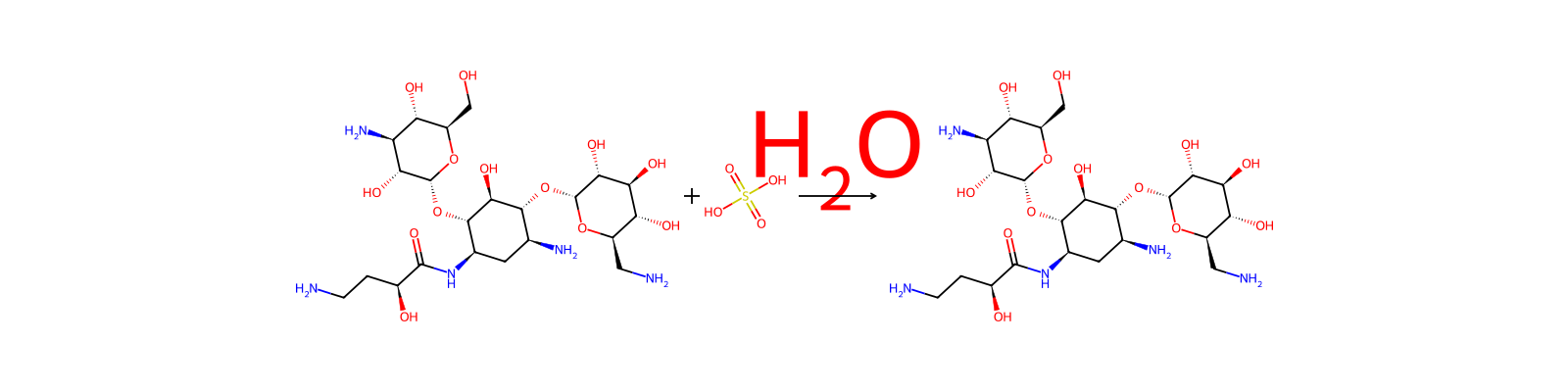
Amikacin, the 1-L-(-)-4-amino-2-hydroxybutyryl derivative of kanamycin, is obtained by acylation of the C-1 amino group of the 2-deoxystreptamine moiety of kanamycin with L-(-)-4-amino-2-hydroxybutyric acid.
Preparation: H. Kawaguchi, T. Naito, German patent 2234315; H. Kawaguchi et al., United States of America patent 3781268 (both 1973 to Bristol-Myers).
Formulations/PreparationsTable: Amikacin Sulfate Preparations [Table#4646]
응용 분야
개요Amikacin is made semisynthetically from kanamycin A. Interestingly, the L-hydroxyaminobutyryl amide (HABA) moiety attached to N-3 inhibits adenylation and phosphorylation in the distant amino sugar ring (at C-2′and C-3′), even though the HABA substituent is not where the enzymatic reaction takes place. This effect is attributed to decreased binding to the R factor–mediated enzymes.
용도Amikacin is a semi-synthetic derivative of kanamycin. It is much less sensitive to the enzymes that inactivate aminoglycoside antibiotics. The spectrum is similar to that of gentamicin. Amikacin principally finds use in the treatment of infections arising from bacteria that are resistant to gentamicin and/or tobramycin.
일반 설명Amikacin was synthesized by Kawaguchi et al. of the Bristol-Banyu Research Institute in 1970 starting with kanamycin and the acyl moiety of butirosin. Its design is based on knowledge of the mechanisms of bacterial resistance to kanamycin and related compounds in which the 3 -hydroxyl group of the antibiotic is phosphorylated enzymatically. The acyl moiety in butirosin prevents this enzymatic inactivation.
상·하류 제품 정보
상류 원료
하류 제품
공급사50 곳
国药集团化学试剂有限公司86-21-63210123 · [email protected]
北京华美互利生物化工010-56205725 · [email protected]
上海康朗生物科技有限公司021-61998208 18217752821 · [email protected]
上海优宁维生物科技股份有限公司15921930842 15921930842 · [email protected]
湖北金梭生物科技有限公司00123456789 · [email protected]
河北创海生物科技有限公司+86-86-13131129325 · [email protected]
上海如吉生物科技发展有限公司+86-21-65211385-8001 36031160 · [email protected]
上海弘顺生物科技有限公司15901914505 · [email protected]
LGM Pharma1-(800)-881-8210 · [email protected]
安耐吉化学&3A(安徽泽升科技有限公司)021-58432009 400-005-6266 · [email protected]
广州蒂嚎医药科技有限公司18602015453
南京圣亿来化工有限公司19951936396 · [email protected]
上海柯维化学技术有限公司021-64609169 18901607656 · [email protected]
凯试(上海)科技有限公司021-50135380 · [email protected]
医恩医疗系统研发(上海)有限公司021-58958002 18930822973 · [email protected]
武汉丰泰威远科技有限公司+86-27-8746-5837 +86-18627785180 · [email protected]
上海瀚香生物科技有限公司177-54423994 17754423994 · [email protected]
合肥天健化工有限公司551-65418679 15856988503;15837135945 · [email protected]
武汉丰泰威远科技有限公司027-87465837 19945049750 · [email protected]
佛山宝诺生物科技有限公司0757-85921206 18520245316 · [email protected]
贵州迪大科技有限责任公司0851-8475-2296 18096062265 · [email protected]
Hebei Qige Biological Technology Co. Ltd+86 +8618733132031
深圳振强药物研发有限公司0755-66853366 13670046396 · [email protected]
广州爱纯医药科技有限公司020-39119399 18927568969 · [email protected]
南京生利德生物科技有限公司025-57798810 18652991625 · [email protected]
上海倍卓生物科技有限公司021-61119791,13386096464 · [email protected]
南京世洲生物科技有限公司13675144456 · [email protected]
湖北威德利化学试剂有限公司186-02735115 18602735115 · [email protected]
上海喀露蓝科技有限公司18149758185 18149758185 · [email protected]
湖北鑫源顺医药化工有限公司13971561712, 13995564702, 027-50664929 · [email protected]
深圳菲斯生物科技有限公司0755-83725350 13380397412 · [email protected]
成都零六生物科技有限公司400-1166-196 13458535857 · [email protected]
上海创赛科技有限公司400-6087598 15021221957 · [email protected]
上海鑫圭生物科技有限公司15121041756 · [email protected]
杭州杰恒化工有限公司0571-87396432 · [email protected]
陕西缔都医药化工有限公司029-81024372 17792795018 · [email protected]
湖北巨胜科技有限公司027-59599241 18871490274 · [email protected]
池州凯隆进出口贸易有限公司[email protected]
珠海安哲生物科技有限公司13169972583 · [email protected]
天津阿尔塔科技有限公司022-6537-8550 15522853686 · [email protected]
TargetMol中国(陶术生物)021-021-33632979 15002134094 · [email protected]
湖北康恩化学有限公司180-64105258 18064105258
上海陶术生物科技股份有限公司+1-781-999-5354; +1-00000000000 · [email protected]
北京诺其雅盛生物科技有限公司4000-819-385 010-62329685 13718666987
BOC Sciences16314854226; +8616314854226 · [email protected]
湖北威德利化学科技有限公司027-83989310 18627915365
湖北威德利化学试剂有限公司18327179646 · [email protected]
sgtlifesciences pvt ltd+91-8790379245 · [email protected]
浙江珲达生物科技有限公司0571-89903022 18679456698 · [email protected]
湖北源梦生物科技有限公司027-68897569 18120462897 · [email protected]
추가 설명
정의ChEBI: An amino cyclitol glycoside that is kanamycin A acylated at the N-1 position by a 4-amino-2-hydroxybutyryl group.
관련 반응
11건






연결된 노트
불러오는 중…