홈MCP워크벤치Skills
홈워크벤치알림마이페이지
llms.txt · MCP 가이드개인정보처리방침 · 이용약관 · 지원v1.8.0
  1. 홈
  2. /화합물

글루코사민

D-Glucosamine

HCID 439213
새 노트새 반응견적 요청하기
인쇄 미리보기

데이터를 보충하는 중입니다. 잠시 후 페이지를 새로 고치면 최신 내용을 볼 수 있습니다

기본 정보개요이름 및 식별자물성안전 및 규제화학 및 산업관련 반응화합물 노트
부분 구조 검색유사 구조 찾기

기본 정보

CAS
3416-24-8
표준 SMILES
N[C@H]1C(O)O[C@H](CO)[C@@H](O)[C@@H]1O
InChIKey
MSWZFWKMSRAUBD-IVMDWMLBSA-N
분자식
C6H13NO5
평균 분자량
179.17 g/mol

개요

2-amino-2-deoxy-D-glucopyranose is a D-glucosamine whose structure comprises D-glucopyranose having an amino substituent at position 2. It has a role as a geroprotector, a mouse metabolite and an Escherichia coli metabolite. It is functionally related to a D-glucopyranose. It is a conjugate base of a 2-ammonio-2-deoxy-D-glucopyranose.

이름 및 식별자

우선 이름
D-Glucosamine
IUPAC
(3R,4R,5S,6R)-3-amino-6-(hydroxymethyl)oxane-2,4,5-triol
현지명
글루코사민
영어명
Glucosamine
분자식
C6H13NO5
분자량
179.17

이름 및 동의어

glucosamineD-glucosamine2-amino-2-deoxy-D-glucopyranosechitosamine(3R,4R,5S,6R)-3-amino-6-(hydroxymethyl)oxane-2,4,5-triolGlucosaminaMediflex(3R,4R,5S,6R)-3-amino-6-(hydroxymethyl)tetrahydro-2H-pyran-2,4,5-triol2-Deoxy-2-amino-D-glucoseD-GlcN2-deoxy-2-amino-d-glucopyranose2-Amino-2-deoxy-D-glucose
이름 더 보기
글루코사민aminoglucose2-amino-2-deoxy-d-glucosGlucosamine 13C6D-(+)-Glucosamine hySYNTHETICGLUCOSAMINEPropyl N-Acetyl-βGlucosamine USP/EP/BP
2-deoxy-2-amino-glucose2-amino-2-deoxy-glucopyranoseCHEBI:5417CHEMBL4932872-Deoxy-2-Amino-Glucopyranose2-amino-2-deoxy-glucopyranosideCHEBI:173152-Deoxy-2-Amino-Glucopyranoside

데이터베이스 식별자

CAS
3416-24-8
PubChem CID
439213
ChEMBL
CHEMBL493287
ChEBI
CHEBI:47977
EC Number
222-311-2
Nikkaji
J412.978D

물성

구조 계산 물성보충 중

XLogP
-2.8
극성 표면적
116 Ų
수소 결합 공여자 수
5
수소 결합 수용자 수
6
회전 가능 결합 수
1
무거운 원자 수
12
형식 전하
0
복잡도
155

실험 및 물리화학적 성질

Chemical ClassesBiological Agents -> Monosaccharides and Derivatives
Cosmetics · 2건

Cosmetic ingredients (Glucosamine) -> CIR (Cosmetic Ingredient Review)

Antistatic; Hair conditioning

Solubility330 mg/mL
Dietary IngredientsGlucosamine
Human DrugsBreast Feeding; Lactation; Complementary Therapies
Melting Point · 2건

88 °C

88 °C

Vapor Pressure0.00000009 [mmHg]
Physical Description · 2건

Alpha and beta forms are solids; [Merck Index]

Solid

Dissociation ConstantspKa = 7.58
Collision Cross Section · 6건

134.23 Ų [M+H]+ [CCS Type: TW; Method: calibrated with polyalanine and drug standards]

141.4 Ų [M+H]+ [CCS Type: DT; Method: single field calibrated with ESI Low Concentration Tuning Mix (Agilent)]

안전 및 규제

안전 정보는 참고용이며, 공급업체의 물질안전보건자료(SDS), 관련 법규 및 전문가 평가를 대체하지 않습니다.

GHS 분류

GHS Classification · 3건

This chemical does not meet GHS hazard criteria for 100% (6 of 6) of all reports.

Not Classified

Aggregated GHS information provided per 6 reports by companies from 1 notifications to the ECHA C&L Inventory.

유해성 정보

Regulatory Information · 2건

Chemical: D-Glucose, 2-amino-2-deoxy-

Glucosamine: Does not have an individual approval but may be used under an appropriate group standard

Other Safety InformationIMAP assessments - D-Glucose, 2-amino-2-deoxy-: Environment tier I assessment
Hazard Classes and CategoriesNot Classified

안전 및 보호

Disposal Methods · 1건

SRP: At the time of review, criteria for land treatment or burial (sanitary landfill) disposal practices are subject to significant revision. Prior to implementing land disposal of waste residue (including waste sludge), consult with environmental regulatory agencies for guidance on acceptable disposal practices.

독성 정보

Hepatotoxicity · 1건

In controlled trials, glucosamine and its combination with chondroitin have not been linked to serum enzyme elevations or to instances of clinically apparent liver injury. In addition, cases of clinically apparent liver injury have not been reported from prospective trials. Recently, several cases reports and small series of clinically apprent liver injury attributed to glucosamine (with or without chondroitin) have been published, but the relationship of glucosamine itself as opposed to other herbals in the implicated products or to potential contaminants, remains unclear and several cases were considered only "possibly" related to glucosamine. The time to onset is usually 1 to 4 weeks after starting the preparation and the pattern of injury is typically hepatocellular or mixed. At least one instance of acute liver failure has been reported. Immunoallergic features (rash, fever, eosinophilia) can occur, but are usually not prominent. Most patients were reported to recover within 4 to 8 weeks of stopping. There have not been instances of rechallenge with glucosamine, and the purity and concentration of glucosamine in the products used have not been reported.

화학 및 산업

약리 정보

ATC Code · 2건

M - Musculo-skeletal system

QM - Musculo-skeletal system

Pharmacodynamics · 1건

The administration of glucosamine, in theory, provides a building block towards the synthesis of glycosaminoglycans, slowing the progression of osteoarthritis and relieving symptoms of joint pain. Studies to this date examining the efficacy of glucosamine sulfate have been inconclusive. Glycosaminoglycans contribute to joint cartilage elasticity, strength, and flexibility. A systematic review of various studies and guidelines determined that modest improvements were reported for joint pain and function in patients taking glucosamine. A consistent joint space narrowing was observed, but with an unclear clinical significance.

Mechanism of Action · 2건

The mechanism of action of glucosamine in joint health is unclear, however there are several possible mechanisms that contribute to its therapeutic effects. Because glucosamine is a precursor for glycosaminoglycans, and glycosaminoglycans are a major component of joint cartilage, glucosamine supplements may help to rebuild cartilage and treat the symptoms of arthritis. Some in vitro studies show evidence that glucosamine reduces inflammation via inhibition of interferon gamma and Nuclear factor kappa B subunit 65 (NF-κB p65), improving the symptoms of arthritis and joint pain. Clinical relevance is unknown at this time.

When taken up by living cells, glucosamine reacts with ATP to form glucosamine-6-phosphate, the natural precursor of glycosaminoglycans (GAGs) that contain N-acetylglucosamine (keratan sulfate and Hyaluronan) and those that have N-acetylgalactosamine (heparan sulfate and chondroitin sulfate). These GAGs are polysaccharides composed of hexosamines and monosaccharides (e.g., galactose and glucuronic acid) arranged as a linear chain of repeating disaccharide units (such as the glucuronic acid and N-acetylgalactosamine-6-sulfate of chondroitin sulfate). With the exception of hyaluronan, GAGs do not exist alone in nature but are attached to specific "core" proteins, and the composite structures are called proteoglycans (protein-glycosaminoglycans). Both hyaluronan and many different kinds of proteoglycans (such as aggrecan, versican, and syndecan) are abundant throughout the body where they perform diverse functions.

Biological Half-Life · 3건

관련 반응

41건
반응 기록 만들기
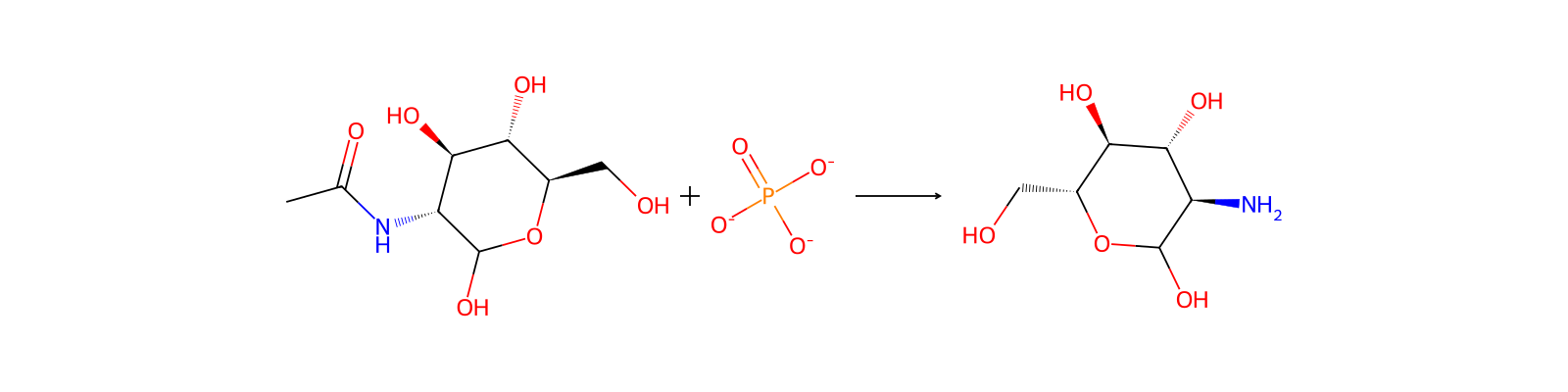
HRID 2686 반응식
HRID 2686생성물로uspto-grants-1998_03
HRID 21346 반응식
HRID 21346생성물로uspto-grants-1995_06
HRID 21347 반응식
HRID 21347생성물로uspto-grants-1995_06
HRID 27989 반응식
HRID 27989반응물로uspto-grants-1980_09
HRID 27990 반응식
HRID 27990반응물로uspto-grants-1980_09
HRID 35354 반응식
HRID 35354반응물로uspto-grants-1988_08
HRID 36002 반응식
HRID 36002반응물로uspto-grants-1995_05
HRID 41852 반응식
HRID 41852반응물로uspto-grants-2013_09
1 / 6 페이지

화합물 노트

불러오는 중…

이 페이지에서기본 정보개요이름 및 식별자물성안전 및 규제화학 및 산업관련 반응화합물 노트
더보기
새 노트새 반응견적 요청하기

132.9 Ų [M+H-H2O]+ [CCS Type: DT; Method: single field calibrated with Agilent tune mix (Agilent)]

147.19 Ų [M+Na]+ [CCS Type: DT; Method: stepped-field]

135 Ų [M+H]+ [CCS Type: TW; Method: calibrated with polyalanine]

145.2 Ų [M+H]+ [CCS Type: TW; Method: calibrated with polyalanine and drug standards]

Other Experimental Properties · 2건

Crystals, mp 88 °C; specific optical rotation +100 °Changing to +47.5 deg after 30 minutes in water at 20 °C /alpha form/

Needles from methanol, dec 110 °C, specific optical rotation +28 °Changing to +47.5 deg after 30 minutes in water at 20 °C; very soluble in water, soluble in about 38 parts boiling methanol; sparingly soluble in cold methanol or ethanol; practically insoluble in ether, chloroform /beta form/

물리화학적 성질

끓는 점
311.69 °C · 311.69°C (rough estimate)
밀도
1.3767 · 1.3767 (rough estimate)
굴절률
1.424 · 1.4240 (estimate)
저장 조건
Keep in dark place,Sealed in dry,Room Temperature
용해도
23 · DMSO:23.0(Max Conc. mg/mL);128.37(Max Conc. mM)Water:36.0(Max Conc. mg/mL);200.93(Max Conc. mM)
물리적 상태
고체
산도 계수 (pKa)
8.04 · pKa 8.04(H2O,t = 15.5,I=0.00,N2)(Approximate)
녹는점
88 °C · 88 °C
색상
흰색에서 황백색까지
Henry's Law Constant
1.3 · 1.3×1010 mol/(m3Pa) at 25℃, HSDB (2015)
화장품 원료 기능
대전방지제헤어 컨디셔닝
InChI
InChI=1S/C6H13NO5/c7-3(1-8)5(11)6(12)4(10)2-9/h1,3-6,9-12H,2,7H2/t3-,4+,5+,6+/m0/s1
InChIKey
FZHXIRIBWMQPQF-SLPGGIOYSA-N
SMILES
O=C[C@H](N)[C@H]([C@@H]([C@@H](CO)O)O)O
LogP
-2.175 · -2.175 (est)
EPA
Glucosamine (3416-24-8)

화학적 성질

(β form.) Colorless needles. Mp 110C (decomposes). Very soluble in water; slightly soluble in methanol and ethanol; insoluble in ether and chloroform.

Environmental Fate · 3건

TERRESTRIAL FATE: Based on a classification scheme(1), an estimated Koc value of 10(SRC), determined from a structure estimation method(2), indicates that glucosamine is expected to have very high mobility in soil(SRC). The pKa of glucosamine is 7.58(3), indicating that this compound will partially exist in cation form in the environment and cations generally absorb more strongly to soils containing organic carbon and clay than their neutral counterparts(4). Volatilization of the neutral form of glucosamine from moist soil surfaces is not expected to be an important fate process(SRC) given an estimated Henry's Law constant of 7.7X10⁻¹⁶ atm-cu m/mole(SRC), using a fragment constant estimation method(5). Volatilization of the cation from moist soil surfaces will not occur as ionic species do not volatilize. Glucosamine is not expected to volatilize from dry soil surfaces(SRC) based upon an estimated vapor pressure of 9.0X10⁻⁸ mm Hg(SRC), determined from a fragment constant method(6). Glucosamine is expected to biodegrade fairly rapidly in aerobic soil environments based on a grab sample study using two different soils where 36 and 56% mineralization and 65 and 70% mineralization were reported after 1 and 8 weeks, respectively(7).

AQUATIC FATE: Based on a classification scheme(1), an estimated Koc value of 10(SRC), determined from a structure estimation method(2), indicates that glucosamine is not expected to adsorb to suspended solids and sediment(SRC). However, glucosamine will exist partially in the cation form at pH values of 5 to 9 based on a pKa of 7.58(5) and cations generally adsorb more strongly to organic carbon and clay than their neutral counterparts(6). Volatilization from water surfaces is not expected(3) for the neutral species based upon an estimated Henry's Law constant of 7.7X10⁻¹⁶ atm-cu m/mole(SRC), developed using a fragment constant estimation method(4). Volatilization of the cation from water surfaces is not expected to occur as ionic species do not volatilize. According to a classification scheme(7), an estimated BCF of 3(SRC), from an estimated log Kow of -4.2(8) and a regression-derived equation(9), suggests the potential for bioconcentration in aquatic organisms is low(SRC). Glucosamine is expected to biodegrade fairly rapidly in aerobic water based on a soil grab sample study using two different soils where 36 and 56% mineralization and 65 and 70% mineralization were reported after 1 and 8 weeks, respectively(10).

ATMOSPHERIC FATE: According to a model of gas/particle partitioning of semivolatile organic compounds in the atmosphere(1), glucosamine, which has an estimated vapor pressure of 9.0X10⁻⁸ mm Hg at 25 °C(SRC), determined from a fragment constant method(2), is expected to exist solely in the particulate phase in the ambient atmosphere. Particulate-phase glucosamine may be removed from the air by wet or dry deposition(SRC). Glucosamine does not contain a chromophore that absorbs at wavelengths >290 nm and therefore is not expected to be susceptible to direct photolysis by sunlight(3).

Toxicity Summary · 2건

The Expert Panel for Cosmetic Ingredient Safety concluded that Glucosamine is safe in cosmetics in the present practices of use and concentration described in this safety assessment when formulated to be non-irritating.

Safe for use in cosmetics, with qualifications

Soil Adsorption/Mobility · 1건

Using a structure estimation method based on molecular connectivity indices(1), the Koc of glucosamine can be estimated to be 10(SRC). According to a classification scheme(2), this estimated Koc value suggests that glucosamine is expected to have very high mobility in soil. The pKa of glucosamine is 7.58(3), indicating that this compound will partially exist in cation form in the environment and cations generally adsorb more strongly to soils containing organic carbon and clay than their neutral counterparts(4). The amino sugar units in glucosamine may link, through the action of phenolase enzymes, to soil humic polymers(5).

Natural Pollution SourcesGlucosamine is an important constituent of the cell wall of most microorganisms(1), and is found in chitin, in mucoproteins, and in mucopolysaccharides(2).
Artificial Pollution SourcesGlucosamine's production and use as an antiarthritic(1) and in biochemical research(2) may result in its release to the environment through various waste streams(SRC).
Environmental Biodegradation · 1건

AEROBIC: The biodegradation of 14-C radiolabeled glucosamine was measured in an acidic Steinbeck loam (pH 5.0, organic carbon 1.48%, sand:silt:clay ratio of 45:36:19%) and a neutral Greenfield sandy loam (pH 7.0, organic carbon 1.02%, sand:silt:clay ratio of 61:26:13%). The percentage of applied activity evolved as CO2 after 1, 8, and 12 weeks was 36, 65, and 67%, respectively, in the Steinbeck soil and 56, 70, and 72% in the Greenfield soil, respectively(1). At 12 weeks, 17.6 and 12.5% of the residual glucosamine in the Steinbeck and Greenfield soils, respectively, was present in the biomass(1). Glucosamine hydrochloride had a calculated mineralization turnover time of 303.4 hours in aquifer solid samples obtained from an aerobic pristine aquifer in Lula, OK(2). These data suggest that glucosamine is expected to degrade fairly rapidly in the environment.

Sediment/Soil Concentrations · 1건

SEDIMENT: A Fanning Island (Central Pacific Ocean) lagoon carbonate mud sediment contained glucosamine at concentrations of 1.41, 1.04, 0.32, 0.19, 0.17, 0.24, and 0.20 umol/g in grain size fractions of <2, 2-6, 6-10, 10-20, 20-40, 63-125, 125-250 microns, respectively(1).

Drug Induced Liver Injury · 5건

Drug-Induced Liver Injury Severity and Toxicity (DILIst)

GLUCOSAMINE

DILI Positive

Topical

DOI:10.1016/j.drudis.2019.09.022

Environmental Bioconcentration · 1건

An estimated BCF of 3 was calculated in fish for glucosamine (SRC), using an estimated log Kow of -4.2(1) and a regression-derived equation(2). According to a classification scheme(3), this BCF suggests the potential for bioconcentration in aquatic organisms is low(SRC).

Volatilization from Water/Soil · 1건

Glucosamine has a pKa of 7.58(4) and thus will exist partially as a cation in the environment. Volatilization of the cation from moist soil and water surfaces is not expected because ionic compounds do not volatilize. The Henry's Law constant for the neutral species of glucosamine is estimated as 7.7X10⁻¹⁶ atm-cu m/mole(SRC) using a fragment constant estimation method(1). This Henry's Law constant indicates that glucosamine is expected to be essentially nonvolatile from water surfaces(2). Glucosamine's Henry's Law constant indicates that volatilization of the neutral species from moist soil surfaces will not occur(SRC). Glucosamine is not expected to volatilize from dry soil surfaces(SRC) based upon an estimated vapor pressure of 9.0X10⁻⁸ mm Hg(SRC), determined from a fragment constant method(3).

Non-Human Toxicity Excerpts · 3건

/LABORATORY ANIMALS: Acute Exposure/ Glucosamine (Glmn), a product of glucose metabolism via the hexosamine pathway, causes insulin resistance in isolated adipocytes by impairing insulin-induced GLUT 4 glucose transporter translocation to the plasma membrane. /It was/ hypothesized that Glmn causes insulin resistance in vivo by a similar mechanism in skeletal muscle. Euglycemic hyperinsulinemic clamps (12 mU/kg/min + 3H-3-glucose) /were performed/ in awake male Sprague-Dawley rats with and without Glmn infusion at rates ranging from 0.1 to 6.5 mg/kg/min. After 4h of euglycemic clamping, hindquarter muscles were quick-frozen and homogenized, and membranes were subfractionated by differential centrifugation and separated on a discontinuous sucrose gradient (25, 30, and 35% sucrose). Membrane proteins were solubilized and immunoblotted for GLUT 4. With Glmn, glucose uptake (GU) was maximally reduced by 33 +/- 1%, P < 0.001. The apparent Glmn dose to reduce maximal GU by 50% was 0.1 mg/kg/min or 1/70th the rate of GU on a molar basis. Control galactosamine and mannosamine infusions had no effect on GU. Relative to baseline, insulin caused a 2.6-fold increase in GLUT 4 in the 25% membrane fraction (f), P < 0.01, and a 40% reduction in the 35%f, P < 0.05, but had no effect on GLUT 4 in the 30% f, P= NS. Addition of Glmn to insulin caused a 41% reduction of GLUT 4 in the 25%f, P < 0.05, a 29% fall in the 30%f, and prevented the reduction of GLUT 4 in the 35% f. The 30%f membranes were subjected to a second separation with a 27 and 30% sucrose gradient. Insulin mobilized GLUT 4 away from the 30%f, P < 0.05, but not the 27% f. In contrast, Glmn reduced GLUT 4 in the 27%f, P < 0.05, but not the 30%f. Thus Glmn appears to alter translocation of an insulin-insensitive GLUT 4 pool. Coinfusion of Glmn did not alter enrichment of the sarcolemmal markers 5'-nucleotidase, Na+/K+ATPase, and phospholemman in either 25, 30, or 35% f. Thus Glmn completely blocked movement of Glut 4 induced by insulin. Glmn is a potent inducer of insulin resistance in vivo by causing (at least in part) a defect intrinsic to GLUT 4 translocation and/or trafficking. These data support a potential role for Glmn to cause glucose-induced insulin resistance (glucose toxicity).

/LABORATORY ANIMALS: Acute Exposure/ Glucose toxicity and glucosamine-induced insulin resistance have been attributed to products of glucosamine metabolism. In addition, endothelial cell nitric oxide synthase is inhibited by glucosamine. Since insulin has endothelial nitric-oxide-dependent vasodilatory effects in muscle, we hypothesise that glucosamine-induced insulin resistance in muscle in vivo is associated with impaired vascular responses including capillary recruitment. Glucosamine (6.48 mg kg(-1) min(-1) for 3 h) was infused with or without insulin (10 mU kg(-1) min(-1)) into anaesthetised rats under euglycaemic conditions. Glucosamine infusion alone increased blood glucosamine (1.9+/-0.1 mmol/l) and glucose (5.4+/-0.2 to 7.7+/-0.3 mmol/l) (p<0.05) but not insulin. Glucosamine induced both hepatic and muscle insulin resistance as evident from measures of glucose appearance and disposal as well as hind-leg glucose uptake, which was inhibited by approx. 50% (p<0.05). Insulin-mediated increases in femoral arterial blood flow and capillary recruitment were completely blocked by glucosamine. Glucosamine mediates a major impairment of insulin action in muscle vasculature associated with the insulin resistance of muscle. Further studies will be required to assess whether the impaired capillary recruitment contributes to insulin resistance.

/LABORATORY ANIMALS: Acute Exposure/ We determined the effect of infusion of glucosamine (GlcN), which bypasses the rate limiting reaction in the hexosamine pathway, on insulin-stimulated rates of glucose uptake and glycogen synthesis in vivo in rat tissues varying with respect to their glutamine:fructose-6-phosphate amidotransferase (GFA) activity. Three groups of conscious fasted rats received 6-hr infusions of either saline (BAS), insulin (18 mU/kg x min) and saline (INS), or insulin and GlcN (30 umol/ kg x min, GLCN). [3-(3)H]glucose was infused to trace whole body glucose kinetics and glycogen synthesis, and rates of tissue glucose uptake were determined using a bolus injection of [1-(14)C]2-deoxyglucose at 315 min. GlcN decreased insulin-stimulated glucose uptake (315-360 min) by 49% (P less than 0.001) at the level of the whole body, and by 31-53% (P less than 0.05 or less) in the heart, epididymal fat, submandibular gland and in soleus, abdominis and gastrocnemius muscles. GlcN completely abolished glycogen synthesis in the liver. GlcN decreased insulin-stimulated glucose uptake similarly in the submandibular gland (1.3 + or - 0.2 vs. 2.0 + or - 0.3 nmol/mg protein x min, GLCN vs. INS, P less than 0.05) and gastrocnemius muscle (1.4 + or - 0.3 vs. 3.1 + or - 0.5 nmol/mg protein x min), although the activity of the hexosamine pathway, as judged from basal GFA activity, was 10-fold higher in the submandibular gland (286 + or - 35 pmol/mg protein x min) than in gastrocnemius muscle (27 + or - 3 pmol/mg protein x min, P less than 0.001). These data raise the possibility that overactivity of the hexosamine pathway may contribute to glucose toxicity not only in skeletal muscle but also in other insulin sensitive tissues. They also imply that the magnitude of insulin resistance induced between tissues is determined by factors other than GFA.

안전 데이터

tsca
TSCA listed
유해 물질 데이터
3416-24-8(Hazardous Substances Data)

The estimated half-life for glucosamine is 15 hours after an oral dose. After a bolus intravenous injection of 1005 mg crystalline glucosamine sulfate, the parent drug has an apparent half life of 1.11 hours.

Glucosamine elimination half-life /in twelve healthy volunteers/ was only tentatively estimated to average 15 hr.

... After i.v. administration the radioactivity due to glucosamine appears in plasma and is rapidly eliminated, with an initial half life of 0.28 hr.

Metabolism/MetabolitesGlucosamine undergoes metabolism in the liver. Metabolism information for glucosamine is limited in the literature.
Absorption, Distribution and Excretion · 6건

In a pharmacokinetic study, glucosamine was 88.7% absorption by the gastrointestinal tract. Absolute oral bioavailability was 44%, likely due to the hepatic first-pass effect. In a pharmacokinetic study of 12 healthy adults receiving oral crystalline glucosamine, plasma levels increased up to 30 times the baseline levels and Cmax was 10 microM with a 1,500 mg once-daily dose. Tmax was about 3 hours. AUC was 20,216 ± 5021 after a 15,000 mg dose.

Fecal excretion of glucosamine in a pharmacokinetic study was 11.3% within 120 hours after administration. Urinary elimination was found to be 1.19% within the first 8 hours post-administration.

Results of a pharmacokinetic study of 12 healthy volunteers receiving three daily consecutive oral administrations of glucosamine sulfate soluble powder demonstrated glucosamine distribution to extravascular compartments. Human pharmacokinetic data for glucosamine is limited in the literature, however, a large animal model study of horses revealed a mean apparent volume of distribution of 15.4 L/kg. Concentrations of glucosamine ranged from 9-15 microM after an intravenous dose, and 0.3-0.7 microM after nasogastric dosing. These concentrations remained in the range of 0.1-0.7 microM in the majority of horses 12 hours after dosing, suggesting effectiveness of a once-daily dose. In rats and dogs, radioactivity from a C-14 labeled dose of glucosamine is detected in the liver, kidneys, articular cartilage, and other areas.

Information on the absorption and serum pharmacokinetics for dietary glucosamine is very limited, and in some case, the available data are contradictory. For example, in one series of studies, (14)C-glucosamine was given orally to rats, dogs, and humans, and in all cases, the radiolabel was described as "efficiently" absorbed, reaching a plasma peak after about 4 hours. A high percentage of the radiolabel (about 35%) was excreted in the urine, and a similar amount was last in expired air. On the other hand, the laboratory that conducted this experiment was unable to detect chemical amounts of glucosamine in human serum after a single oral dose at 100 mg/kg (five times the clinical dose) using a chromatographic assay with a limit of detection of about 14 uM. This suggests that the bioavailable glucosamine in human serum after the normal recommended dosage (20 mg/kg) is well below 10 uM.

About 90% of glucosamine administered orally as a glucosamine salt get absorbed from the small intestine, and from there it is transported via the portal circulation to the liver. It appears that a significant fraction of the ingested glucosamine is catabolized by first-pass metabolism in the liver. Free glucosamine is not detected in the serum after oral intake, and it si not presently known how much of an ingested dose is taken up in the joints in humans. Some uptake in the articular cartilage is seen in animal studies.

Twelve healthy volunteers received three consecutive once-daily oral administrations of glucosamine sulfate soluble powder at the doses of 750, 1,500, and 3,000 mg, in an open, randomised, cross-over fashion. Glucosamine was determined in plasma collected up to 48 hr after the last dose. ... Endogenous plasma levels of glucosamine were detected (10.4-204 ng/ml, with low intra-subject variability). Glucosamine was rapidly absorbed after oral administration and its pharmacokinetics were linear in the dose range 750-1,500 mg, but not at 3,000 mg, where the plasma concentration-time profiles were less than expected based on dose-proportionality. Plasma levels increased over 30-folds from baseline and peaked at about 10 microM with the standard 1,500 mg once-daily dosage. Glucosamine distributed to extravascular compartments and its plasma concentrations were still above baseline up to the last collection time.

Tissue LocationsCartilage
Cellular LocationsCytoplasm
Metabolite PathwaysAmino Sugar Metabolism

용도 및 제조

Uses · 6건

CIR ingredient: Glucosamine

Present in chitin, mucoproteins, and mucopolysaccharides; [Merck Index] Used as a pharmaceutic aid, antiarthritic, and in biochemical research; [HSDB]

Antiarthritic

Biochemical research

Pharmaceutic aid

Use (kg; approx.) in Germany (2009): >25000

Methods of ManufacturingFound in chitin, in mucoproteins, and in mucopolysaccharides.
Formulations/PreparationsThe three forms of glucosamine available commercially are glucosamine hydrochloride, glucosamine sulfate and N-acetyl glucosamine.
Use ClassificationCosmetics -> Antistatic; Hair conditioning
General Manufacturing InformationD-Glucose, 2-amino-2-deoxy-: ACTIVE
응용 분야 · 4건

개요그것은 당뇨병의 영양 식품으로 코티솔 대신 장염을 치료할 수 있으며 류마티스 성 관절염과 B 형 간염에 대한 치료 효과가있어 항생제의 유효성을 촉진 할 수 있습니다. 항암 효과가 있으며 메소의 독성을 조절할 수있는 합성 된 새로운 수용성 약물은 흑색 종, 폐암 및 신장 암종에 치료 효과가있다. 게다가, 그것은 cosmetic.feed 및 식품 첨가물 산업에서 사용됩니다. 따라서 그것은 국제 시장에서 매우 인기가 있습니다.

용도1. 글루코사민 설페이트는 항생제, 당뇨병을위한 영양 보충제의 역할의 효과를 증진 할 수 있습니다. 2. 그것은 신체의 점액 다당류 합성을 촉진하고 관절 윤활유의 점도를 향상시킬 수 있습니다. 3. 글루코사민 황산염은 대장염의 코티솔 치료제가 아니라 류마티스 관절염, B 형 간염 등의 치료에 사용됩니다. 4. 관절 연골의 신진 대사를 향상시켜 관절 연골 회복에 도움이되며 중한 항 염증성 진통 효과가 있습니다. 5. 항암제에 효과가 있으며, 작은 특성, 흑색 종, 폐암, 신장 암 등의 골수 독성을 억제합니다.

출처Glucosamine is found in mucopolysaccharides, chitin, and mucoproteins. Glucosamine is a naturally occurring substance; glucosamine sulfate is manufactured synthetically.

용도Glucosamine is an amino sugar that can regulate growth factor gene transcription. It is also widely touted as remedy for osteoarthritis (OA).

제조 방법

Glucosamine can be prepared from shrimp exoskeletons[1].

상·하류 제품 정보

상류 원료

키틴

하류 제품

프럭토사진
추가 설명 · 5건

순도시험(1) 비소 : 이 품목을 비소시험법에 따라 시험할 때, 그 양은 4.0ppm 이하이어야 한다. (2) 납 : 이 품목 5.0g을 취하여 원자흡광광도법 또는 유도결합플라즈마발광광도법에 따라 시험할 때, 그 양은 10.0ppm 이하이어야 한다. (3) 용상 : 이 품목 1g을 물 20mL에 녹일 때, 그 액은 무색 징명하여야 한다. (4) 액성 : 이 품목의 수용액(10→100)의 pH는 3.0~5.0이어야한다. (5) 염화물 : 이 품목 0.1g을 정밀히 달아 물 30mL에 녹이고, 크롬산칼륨용액(1→20)을 5방울 가한 다음, 액의 황색이 적갈색으로 변화는 점을 종말점으로 하여, 0.1N 질산은용액으로 적정할 때, 그 양은 16~18% 이어야 한다.0.1N 질산은용액 1mL = 3.545mg Cl (6) 세균수 : 이 품목은 「식품의 기준 및 규격」일반시험법의 미생물시험법 중 세균수(일반세균수)에 따라 시험할 때, 1g당 300 이하이어야 한다. (7) 대장균군 : 이 품목은 「식품의 기준 및 규격」일반시험법의 미생물시험법 중 대장균군에 따라 시험할 때, 음성(-)이어야 한다.

확인시험이 품목 0.2g에 안트론시액 5mL 및 물 1mL를 가하여 수욕상에서 가열할 때, 액은 청~녹색을 나타낸다.

정량법이 품목 0.02g을 정밀히 달아 물 20mL에 충분히 용해한 후 물을 가하여 100mL로 한 액을 시험용액으로 한다. 시험용액 1mL를 취하여 마개가 있는 시험관에 넣고 아세틸아세톤시액 2mL를 가해주고 혼합한 다음 96℃에서 1시간 가열하고 흐르는 물에서 냉각시킨 후 96% 에탄올 20mL를 가해주고 다시 ρ-디메틸아미노벤즈알데히드시액 2mL를 가해주고 혼합한 다음 실온에서 1시간 방치하고 파장 535nm에서 흡광도(AT)를 측정한다. 따로, D-글루코사민표준품을 100~500μg/mL 함유하도록 물을 가하여 조제한 것을 표준용액으로 한다. 이 표준용액을 1mL를 취하여 이하 시험용액과 동일 조작하여 흡광도(AS)를 측정한다. 다음 계산식에 따라 글루코사민 함량(%)을 구한다.

정의이 품목은 갑각류(게, 새우 등)의 껍질 및 연체류(오징어, 갑오징어 등)의 뼈에서 추출한 키틴 또는 키토산을 염산으로 가수분해하거나 또는 키토산을 염산에 용해시켜 키토사나아제로 가수분해한 다음 이를 분리, 정제하여 얻어지는 물질이다.

정의ChEBI: The open-chain form of D-glucosamine.