
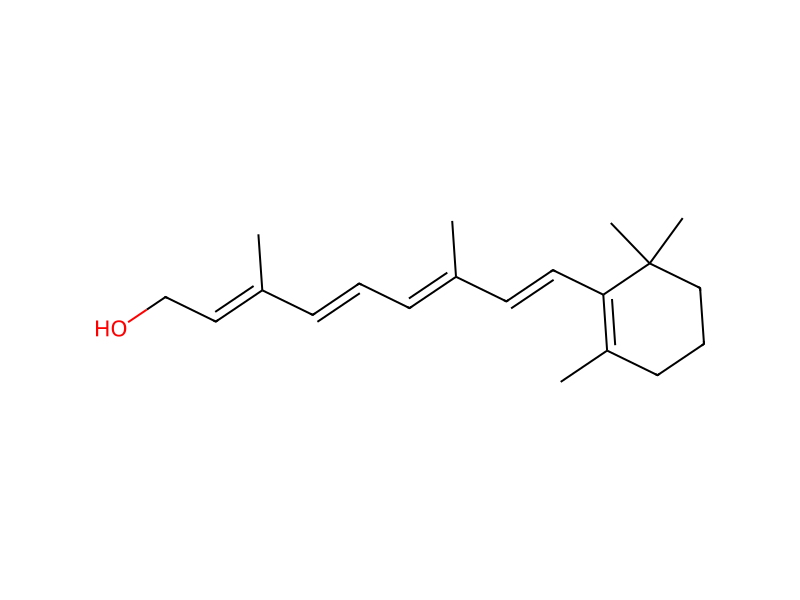
기본 정보
- 표준 SMILES
CC1=C(/C=C/C(C)=C/C=C/C(C)=C/CO)C(C)(C)CCC1- InChIKey
FPIPGXGPPPQFEQ-OVSJKPMPSA-N- 분자식
- C20H30O
- 평균 분자량
- 286.5 g/mol
- 단동위원소 질량
- 286.22966558
개요
Vitamin a appears as yellow crystals or orange solid. Practically water insoluble. (NTP, 1992)
이름 및 식별자
- 우선 이름
- Retinol
- IUPAC
- (2E,4E,6E,8E)-3,7-dimethyl-9-(2,6,6-trimethylcyclohexen-1-yl)nona-2,4,6,8-tetraen-1-ol
- 영어명
- Vitamin A
- 분자식
- C20H30O
- 분자량
- 286.46
이름 및 동의어
retinolall-trans-Retinol68-26-8Agoncaltrans-retinolVeroftalBentavit AHomagenets AoralSehkraft ATestavol Sall-trans-Vitamin AAll-trans retinol
이름 더 보기
Aquasol AVitamin A RetinolVitamin A (mixture)ROIDEXVITAMIN A 500WVitamin A USP/EP/BPTIANFU CHEM--Vitamin A_New anti-aging productsWater-soluble vitamin A3,7-Dimethyl-9-(2,6,6-trimethyl-1-cyclohexenyl)-nona-2,4,6,8-tetraen-1-ol
Super AAxerophtholumWachstumsvitaminVitaminum AVitamine ARetinoloRetinolumRetinol, all trans-
데이터베이스 식별자
- CAS
11103-57-4、68-26-8- PubChem CID
- 445354
- DTXSID
DTXSID3023556- ChEMBL
CHEMBL986- ChEBI
CHEBI:17336- UNII
- G2SH0XKK91
- EC Number
- 200-683-7、234-328-2
- Nikkaji
- J1.417F
물성
구조 계산 물성
- XLogP
- 5.7
- 극성 표면적
- 20.2 Ų
- 수소 결합 공여자 수
- 1
- 수소 결합 수용자 수
- 1
- 회전 가능 결합 수
- 5
- 무거운 원자 수
- 21
- 형식 전하
- 0
- 복잡도
- 496
실험 및 물리화학적 성질
Chemical ClassesBiological Agents -> Vitamins and Derivatives
DrugsPharmaceuticals -> Listed in ZINC15
LipidsLipids -> Prenol Lipids [PR] -> Isoprenoids [PR01] -> Retinoids [PR0109]
Cosmetics
Cosmetic ingredients (Retinol) -> CIR (Cosmetic Ingredient Review)
Skin conditioning
SpringerMaterials PropertiesAngular frequency
LogP
log Kow = 5.68
5.68
5.68
Food AdditivesNUTRIENT SUPPLEMENT -> FDA Substance added to food
Color/FormSolvated crystals from polar solvents, such as methanol or ethyl formate
Solubility
Practically insoluble (NTP, 1992)
Practically insoluble in water or glycerol; soluble in absolute alcohol, methanol, chloroform, ether, fats and oils
Sol in ethanol and acetone and benzene
Dietary IngredientsVitamin A
Human Drugs
Breast Feeding; Lactation; Milk, Human; Vitamins
FDA approved drugs -> Active ingredient
Vitamins and minerals
Boiling Point
279 to 280 °F at 1e-06 mmHg (NTP, 1992)
137-138 °C at 1X10⁻⁶ mm Hg
물리화학적 성질
- 저장 조건
- -20 °C · -20°C
- 용해도
- All retinol esters are practically insoluble in water, soluble or partly soluble in anhydrous ethanol and miscible with organic solvents. Vitamin A and its esters are very sensitive to the action of air, oxidising agents, acids, light and heat. Carry out the assay and all tests as rapidly as possible, avoiding exposure to actinic light and air, oxidising agents, oxidation catalysts (e.g. copper , iron), acids and heat; use freshly prepared solutions.
- 화장품 원료 기능
- 피부 컨디셔닝 - 기타
- InChI
- InChI=1S/C20H30O/c1-16(8-6-9-17(2)13-15-21)11-12-19-18(3)10-7-14-20(19,4)5/h6,8-9,11-13,21H,7,10,14-15H2,1-5H3/b9-6+,12-11+,16-8+,17-13+
- InChIKey
- FPIPGXGPPPQFEQ-OVSJKPMPSA-N
- SMILES
- C1(/C=C/C(/C)=C/C=C/C(/C)=C/CO)=C(C)CCCC1(C)C
- EPA
- Vitamin A (11103-57-4)
화학적 성질
Retinol acetate: pale-yellow crystals (mp: about 60 °C). Once melted retinol acetate tends to yield a supercooled melt. Retinol propionate: reddish-brown oily liquid. Retinol palmitate: a fat-like, light yellow solid or a yellow oily liquid, if melted (mp: about 26 °C).
안전 및 규제
GHS 분류
GHS Classification
This chemical does not meet GHS hazard criteria for 0.3% (1 of 311) of reports.
Danger
H302 (15.8%): Harmful if swallowed [Warning Acute toxicity, oral]
P203, P261, P264, P264+P265, P270, P272, P273, P280, P301+P317, P302+P352, P305+P351+P338, P318, P321, P330, P333+P317, P337+P317, P362+P364, P405, and P501 (click each P-code to see the statement)
Aggregated GHS information provided per 311 reports by companies from 14 notifications to the ECHA C&L Inventory. Each notification may be associated with multiple companies.
This chemical does not meet GHS hazard criteria for 1% (1 of 105) of reports.
유해성 정보
Regulatory Information
Chemical: Retinol
Chemical: Vitamin A
Status: Active Update: 13-10-2010 https://echa.europa.eu/registration-dossier/-/registered-dossier/11075
Vitamin A: Does not have an individual approval but may be used as a component in a product covered by a group standard. It is not approved for use as a chemical in its own right.
Retinol: Does not have an individual approval but may be used under an appropriate group standard
Other Safety InformationEvaluation - Chemicals that are unlikely to require further regulation to manage risks to environment
Fire HazardsFlash point data for this chemical are not available. It is probably combustible. (NTP, 1992)
Health Hazards
SYMPTOMS: Symptoms of chronic overdose include fatigue, malaise, lethargy, abdominal discomfort, anorexia and vomiting. Skeletal effects include slow growth, hard tender cortical thickening over the radius and tibia, migratory arthralgia and premature closing of the epiphysis. Central nervous system effects include irritability, headache and increased intracranial pressure as manifested by bulging fontanels, papilledema and exophthalmos. Dermatologic effects include fissures of the lips, drying and cracking of the skin, alopecia, scaling, massive desquamation and increased pigmentation. Systemic effects include hypomenorrhea, hepatosplenomegaly, jaundice, leukopenia and vitamin A plasma level over 1200 units. Other effects include painful nodular periosteal swelling, osteoporosis, itching, skin eruptions, ulcerations, drowsiness, alopecia, liver enlargement, diplopia and papilledema.
Hazards Summary
Oral administration of high doses in adults causes cirrhosis, hemorrhage, anorexia, jaundice, and dermatitis; [RTECS] Contraindicated in pregnancy at doses > FDA RDA; May be toxic if more than 25,000 IU/d consumed for longer that 2-3 weeks; Toxic effects include liver injury and increased intracranial pressure (blurred vision, headaches, and altered mental status); Serum levels may be useful in diagnosis; [Olson, p. 69, 446] An irritant; Harmful by ingestion; Teratogenic effects observed in experimental animals; [Sigma-Aldrich MSDS]
FDA Requirements
Substance added directly to human food affirmed as generally recognized as safe (GRAS).
Vitamin A used as a nutrient and/or dietary supplement in animal drugs, feeds, and related products is generally recognized as safe when used in accordance with good manufacturing or feeding practice.
Vitamin A acetate used as a nutrient and/or dietary supplement in animal drugs, feeds, and related products is generally recognized as safe when used in accordance with good manufacturing or feeding practice. /Vitamin A Acetate/
Vitamin A palmitate used as a nutrient and/or dietary supplement in animal drugs, feeds, and related products is generally recognized as safe when used in accordance with good manufacturing or feeding practice. /Vitamin A Palmitate/
Reactive GroupAlcohols and Polyols
Special ReportsMATTESHEIM R; CAN MED ASSOC J 122 (7): 757 (1980) EXPTL USE: REVIEW WITH 44 REFERENCES ON THE INHIBITION OF CARCINOGENESIS BY RETINOIDS.
Reactivity ProfileVITAMIN A is light sensitive. Also air sensitive and heat sensitive. Reacts with strong oxidizing agents. Also can react with acids (NTP, 1992). Can react exothermically with reducing agents to release hydrogen gas.
Air and Water ReactionsPractically water insoluble.
Hazard Classes and Categories
Acute Tox. 4 (15.8%)
Skin Sens. 1 (99%)
안전 및 보호
Fire FightingFires involving this material can be controlled with a dry chemical, carbon dioxide or Halon extinguisher. (NTP, 1992)
First Aid
EYES: First check the victim for contact lenses and remove if present. Flush victim's eyes with water or normal saline solution for 20 to 30 minutes while simultaneously calling a hospital or poison control center. Do not put any ointments, oils, or medication in the victim's eyes without specific instructions from a physician. If symptoms (such as redness or irritation) develop, immediately transport the victim to a hospital.
Storage Conditions
Vitamin A is unstable in, and should be protected from, air and light. Vitamin A preparations should be stored at a temperature less than 40 °C, preferably between 15-30 °C. Oral vitamin A preparations should be stored in tight, light-resistant containers and the injection should be protected from light and freezing.
Nonfire Spill Response
SMALL SPILLS AND LEAKAGE: Should a spill occur while you are handling this chemical, FIRST REMOVE ALL SOURCES OF IGNITION, then you should dampen the solid spill material with 60-70% ethanol and transfer the dampened material to a suitable container. Use absorbent paper dampened with 60-70% ethanol to pick up any remaining material. Seal the absorbent paper, and any of your clothes, which may be contaminated, in a vapor-tight plastic bag for eventual disposal. Solvent wash all contaminated surfaces with 60-70% ethanol followed by washing with a soap and water solution. Do not reenter the contaminated area until the Safety Officer (or other responsible person) has verified that the area has been properly cleaned.
Disposal Methods
SRP: The most favorable course of action is to use an alternative chemical product with less inherent propensity for occupational exposure or environmental contamination. Recycle any unused portion of the material for its approved use or return it to the manufacturer or supplier. Ultimate disposal of the chemical must consider: the material's impact on air quality; potential migration in soil or water; effects on animal, aquatic, and plant life; and conformance with environmental and public health regulations.
Personal Protective Equipment (PPE)
RECOMMENDED RESPIRATOR: Where the neat test chemical is weighed and diluted, wear a NIOSH-approved half face respirator equipped with an organic vapor/acid gas cartridge (specific for organic vapors, HCl, acid gas and SO2) with a dust/mist filter. (NTP, 1992)
독성 정보
TreatmentThe treatment of hypervitaminosis A consists of immediate withdrawal of the vitamin along with symptomatic and supportive treatment. (L1712)
Interactions
Insulin antagonizes the /teratogenic/ effects /of vitamin A/.
The antithyroid compound methylthiouracil increases teratogenic effect /of vitamin A/.
Thyroxine antagonizes the teratogenic action of vitamin A.
In rats, the incidence of congenital abnormalities in the head due to hypervitaminosis A was increased greatly by appropriate administration of cortisone to the dams.
For more Interactions (Complete) data for VITAMIN A (19 total), please visit the HSDB record page.
Adverse Effects
Occupational hepatotoxin - Secondary hepatotoxins: the potential for toxic effect in the occupational setting is based on cases of poisoning by human ingestion or animal experimentation.
Excessive levels of natural or synthetic vitamin A can lead to various adverse effects. Vitamin A toxicity, also known as hypervitaminosis A, is more commonly associated with the misuse of vitamin A supplements than with health intervention programs. Toxic reactions can also result from consuming liver products rich in vitamin A or from the overuse of vitamin A preparations. The amount of vitamin A required to cause toxicity varies among individuals, depending on factors such as age and hepatic function.
Exposure RoutesOral, readily absorbed from the normal gastrointestinal tract
Milk ConcentrationsVitamin A is distributed into breast milk ... .
Toxicity Summary
Safe in the present practices of use and concentration. Ingredient, concentration, and use information are available in documents discoverable at https://cir-reports.cir-safety.org
Signs and Symptoms of Overdose
Vision:Vitamin A (all-<i>trans</i> retinol) is converted in the retina to the 11-<i>cis</i>-isomer of retinaldehyde or 11-<i>cis</i>-retinal. 11-<i>cis</i>-retinal functions in the retina in the transduction of light into the neural signals necessary for vision. 11-<i>cis</i>-retinal, while attached to opsin in rhodopsin is isomerized to all-<i>trans</i>-retinal by light. This is the event that triggers the nerve impulse to the brain which allows for the perception of light. All-<i>trans</i>-retinal is then released from opsin and reduced to all-<i>trans</i>-retinol. All-<i>trans</i>-retinol is isomerized to 11-<i>cis</i>-retinol in the dark, and then oxidized to 11-<i>cis</i>-retinal. 11-<i>cis</i>-retinal recombines with opsin to re-form rhodopsin. Night blindness or defective vision at low illumination results from a failure to re-synthesize 11-<i>cis</i> retinal rapidly. <br/>Epithelial differentiation: The role of Vitamin A in epithelial differentiation, as well as in other physiological processes, involves the binding of Vitamin A to two families of nuclear retinoid receptors (retinoic acid receptors, RARs; and retinoid-X receptors, RXRs). These receptors function as ligand-activated transcription factors that modulate gene transcription. When there is not enough Vitamin A to bind these receptors, natural cell differentiation and growth are interrupted.
Signs and Symptoms
Acute toxicity (single ingestion of 7 500 RE or 25 000 IU per kg or more): Signs and symptoms may be delayed for 8 to 24 hours and include: increased intracranial pressure, headache, irritability, drowsiness, dizziness, lethargy, vomiting, diarrhea, bulging of fontanels in infants, diplopia, papilledema. Peeling of skin around mouth may be observed from 1 to several days after ingestion and may spread to the rest of the body.
Natural Pollution Sources
VITAMIN A ... IS FOUND ONLY IN THE ANIMAL KINGDOM. ... /IT/ OCCURS IN MARINE FISH LIVER OILS AND IN THE LIVER OF MOST LAND VERTEBRATES AS WELL AS IN BUTTER FAT AND EGGS.
Occurs preformed only in animals; metabolized from carotenoids, such as beta-carotene
Human Toxicity Excerpts
/HUMAN EXPOSURE STUDIES/ The tolerance to two alternative large dosage strengths of vitamin A preparation was determined in a double blind study involving 2471 children in two municipalities in the Philippines. Each child, aged 1-6 yr, not suffering from active zerophthalmia or from nausea and/or vomiting, headache, diarrhea, and fever, was randomly given 1 ml of a syrupy suspension later identified to contain, 0, 30, or 60 mg vitaminA. Clinical evaluation of subjects was done by physicians 24 hr and 1 wk after dosing. Nausea and/or vomiting and headache were twice as common among children given 60 mg than those given 30 mg. Severe vomiting (1.2%) was confined to those given 60 mg. Almost all experienced their symptoms within 24 hr after dosing; symptoms lasted for no more than 12-24 hr. The incidence of diarrhea and fever for vitamin A recipients was not significantly different from that of those receiving placebo.
/HUMAN EXPOSURE STUDIES/ Studies of hypervitaminosis A in animals and anecdotal reports of accidental vitamin A poisoning in humans suggest impairment of bone remodeling and increased numbers of fractures. Because of the widespread use of high dose vitamin A supplements which may produce subclinical hypervitaminosis associated with decreased bone mass and increased risk of fracture, the relationship between current vitamin A supplement use, serum retinol levels, radial bone mass and fracture history was studied in a geographically defined population of 246 postmenopausal women, 55-80 years of age. More than 36% of this population used a vitamin A supplement with 8% of these consuming an amount in excess of 2000 retinol equivalents/day. Serum retinol was measured using high pressure liquid chromatography and radial bone mass was measured using single photon absorptiometry. After controlling for age, current estrogen replacement, and current thiazide antihypertensive use, no statistically significant relationship between vitamin A supplement use or serum retinol with radial bone mass or fractures was observed.
/SIGNS AND SYMPTOMS/ Early signs and symptoms of chronic vitamin A intoxication include irritability, vomiting, loss of appetite, headache, dry and pruritic skin, skin desquamation, and erythematous dermatitis.
/SIGNS AND SYMPTOMS/ In addition to hepatosplenomegaly, pathological changes /after chronic vitamin A intoxication/ in the liver include hypertrophy of fat-storing cells, fibrosis, sclerosis of central veins, and cirrhosis, with resultant portal hypertension and ascites.
For more Human Toxicity Excerpts (Complete) data for VITAMIN A (22 total), please visit the HSDB record page.
Carcinogen ClassificationNo indication of carcinogenicity to humans (not listed by IARC).
Drug Induced Liver Injury
Drug-Induced Liver Injury Severity and Toxicity (DILIst)
vitamin a
DILI Positive
Intramuscular
DOI:10.1016/j.drudis.2019.09.022
Non-Human Toxicity Excerpts
/LABORATORY ANIMALS: Acute Exposure/ ... Repeated applications of large amounts of vitamin A in ointment to rabbit eyes ... /resulted in/ Blepharoconjunctivitis, with loss of hair from the lids.
/LABORATORY ANIMALS: Acute Exposure/ /In hypervitaminotic animals/ lesions occur in the bones and result from accelerated resorption of bone and cartilage and formation of new bone. ... Other manifestations ... are anorexia, cutaneous lesions, temporary thickening of skin, exophthalmos, hypoprothrombinemia, and eventually death.
/LABORATORY ANIMALS: Subchronic or Prechronic Exposure/ Weanling cross bred pigs (36 or 48) were caged individually and fed diets containing a supplement of vitamin A (experiment 1) or vitamin D3 (experiment 2) at levels representing 1, 5, 10, 25, 50 and 100 times the NRC (1988) estimated requirements, for 4 wk. Growth rate, feed intake and feed/gain ratio were not influenced significantly. In experiment 1 the plasma retinol concentrations were at 4 weeks, respectively, 31.7, 39.4, 43.2, 42.9, 44.4, and 46.3 ug/dL (P < 0.05). In experiment 2, the plasma 25(OH)D3 concentrations were at 2 weeks, respectively, 22.5, 29.5, 35.7, 46.2, 79.9, 135.3 ng/mL (P < 0.001). Histological examination of lung, stomach, kidney, liver and heart indicated no abnormalities, but focal microscopic lesions consistent with osteochondrosis were found in pigs receiving vitamin A at levels over 10 times the requirement. The incidence of osteochondrosis at 2 weeks was, respectively, 0/8, 0/8, 0/8, 0/8, 0/8, and 1/8, and at 4 weeks was, respectively, 0/8, 0/8, 0/8, 2/8, 2/8 and 2/8.
/LABORATORY ANIMALS: Subchronic or Prechronic Exposure/ Feeding of vitamin A deficient diet to male weanling rats for 10 wk caused significant reduction in the hepatic cytochrome p450, cytochrome b5, aminopyrine N-demethylase and arylhydrocarbon hydroxylase activities. Contrary to this, the levels of these Phase I enzymes were found to be significantly elevated in all the 3 portions (proximal, middle and distal) of the intestine in deficient animals as compared to corresponding pair fed controls. Of the Phase II enzymes studied, uridine diphosphate-glucuronyltransferase showed a significant decrease whereas glutathione S-transferase showed a significant increase in vitamin A deficient rat liver and small intestine.
For more Non-Human Toxicity Excerpts (Complete) data for VITAMIN A (20 total), please visit the HSDB record page.
규제 정보
FDA Requirements
Substance added directly to human food affirmed as generally recognized as safe (GRAS).
Vitamin A used as a nutrient and/or dietary supplement in animal drugs, feeds, and related products is generally recognized as safe when used in accordance with good manufacturing or feeding practice.
Vitamin A acetate used as a nutrient and/or dietary supplement in animal drugs, feeds, and related products is generally recognized as safe when used in accordance with good manufacturing or feeding practice. /Vitamin A Acetate/
Vitamin A palmitate used as a nutrient and/or dietary supplement in animal drugs, feeds, and related products is generally recognized as safe when used in accordance with good manufacturing or feeding practice. /Vitamin A Palmitate/
안전 데이터
- tsca
- TSCA listed
- risk_code
- 61
- hazard_code
- T
- safety_code
- 53-45
화학 및 산업
약리 정보
ATC Code
D - Dermatologicals
A - Alimentary tract and metabolism
R - Respiratory system
S - Sensory organs
QR - Respiratory system
QD - Dermatologicals
Bionecessity
Vitamin A deficiency leads to xerophthalmia, Bitot's spots, keratomalacia, night blindness (nyctalopia), hyperkeratosis of the skin, epithelial metaplasia of mucous membranes, and decreased resistance to infections. Administration of vitamin A completely reverses signs of vitamin deficiency unless keratomalacia has resulted in irreversible ocular damage.
Changes in the bronchorespiratory epithelium from mucus secretion to keratinization lead to increased incidence of respiratory infections ... there is also a decrease in elasticity of the lung and other tissues.
State of Deficiency: Urinary calculi are frequent concomitants of vitamin A deficiency. ... Abnormalities of reproduction include impairment of spermatogenesis, degeneration of testes, abortion, resorption of fetuses, and production of malformed offspring.
Often both taste and smell are impaired in Vitamin A deficient individual. Hearing may also become impaired. ... Deficiency can interfere with erythropoiesis. ... Nerve lesions, increased cerebrospinal fluid pressure, and hydrocephalus have been reported.
For more Bionecessity (Complete) data for VITAMIN A (9 total), please visit the HSDB record page.
Protein Binding
Less than 5% of circulating vitamin A is bound to lipoproteins in blood in normal condition, but may be up to 65% when hepatic stores are saturated because of excessive intake. When released from liver, vitamin A is bound to retinol-binding protein (RBP). Most vitamin A circulates in the form of retinol bound to RBP.
Pharmacodynamics
Vitamin A is effective for the treatment of Vitamin A deficiency. Vitamin A refers to a group of fat-soluble substances that are structurally related to and possess the biological activity of the parent substance of the group called all-<i>trans</i> retinol or retinol. Vitamin A plays vital roles in vision, epithelial differentiation, growth, reproduction, pattern formation during embryogenesis, bone development, hematopoiesis and brain development. It is also important for the maintenance of the proper functioning of the immune system.
Mechanism of Action
Vision:Vitamin A (all-<i>trans</i> retinol) is converted in the retina to the 11-<i>cis</i>-isomer of retinaldehyde or 11-<i>cis</i>-retinal. 11-<i>cis</i>-retinal functions in the retina in the transduction of light into the neural signals necessary for vision. 11-<i>cis</i>-retinal, while attached to opsin in rhodopsin is isomerized to all-<i>trans</i>-retinal by light. This is the event that triggers the nerve impulse to the brain which allows for the perception of light. All-<i>trans</i>-retinal is then released from opsin and reduced to all-<i>trans</i>-retinol. All-<i>trans</i>-retinol is isomerized to 11-<i>cis</i>-retinol in the dark, and then oxidized to 11-<i>cis</i>-retinal. 11-<i>cis</i>-retinal recombines with opsin to re-form rhodopsin. Night blindness or defective vision at low illumination results from a failure to re-synthesize 11-<i>cis</i> retinal rapidly. Epithelial differentiation: The role of Vitamin A in epithelial differentiation, as well as in other physiological processes, involves the binding of Vitamin A to two families of nuclear retinoid receptors (retinoic acid receptors, RARs; and retinoid-X receptors, RXRs). These receptors function as ligand-activated transcription factors that modulate gene transcription. When there is not enough Vitamin A to bind these receptors, natural cell differentiation and growth are interrupted.
Topical vitamin A can reverse the impairment of wound healing seen in patients receiving corticosteroids, perhaps by restoring the normal inflammatory reaction in the wound. The possibility has been suggested that systemic vitamin A could inhibit the anti-inflammatory effect of systemic corticosteroids.
Retinol arrested proliferation of cultured neuroblastoma cells at concentrations of 50 um. A correlation existed between inhibition of growth and inhibition of ornithine decarboxylase in both neuroblastoma cells and glioma cells with retinol.
In rats exptl-hypervitaminosis A has been shown ... to produce severe damage of the retina, mainly in the pigment epithelium according to electron microscopy. Alcohol dehydrogenase activity was shown to disappear in the pigment epithelium and visual cells ... .
/The authors/ have shown that in an experimental cell culture system consisting of carcinogen-treated 10T1/2 cells, both retinoids and all dietary carotenoids examined can reversibly inhibit neoplastic transformation in the post-initiation phase of carcinogenesis. This activity strongly correlates with their ability to increase gap junctional intercellular communication by up-regulating the expression of the gene CX43 (connexin43). Connexins comprise the structural unit of gap junctions, organelles which allow direct transfer of signals, nutrients and waste products between contacting cells. CX43 is the most widely expressed member of the gap junction family of genes, and we have demonstrated that its expression is strongly down-regulated in human cancers and in several premalignant conditions. When several human tumour cell lines were genetically engineered to conditionally express CX43 under the influence of a tetracycline promoter, their neoplastic phenotype was strongly attenuated. Specifically, induced cells were inhibited from growing in an anchorage-independent manner and, additionally, growth as xenografts in immunocompromised animals was also strongly attenuated. Growth inhibition in suspension was associated both with increased G(1) cell-cycle arrest and with increased apoptosis. /The authors/ propose a model whereby junctional communication allows the transfer of growth inhibitory signals from normal to neoplastic cells and that retinoids and carotenoids, by increasing signal transfer, act to prevent cancer.
Biological Half-Life
1.9 hours
Hepatic reserves of vitamin A decrease with a half-life of about 50 days in animals ...
Metabolism/Metabolites
Hepatic. Retinol is conjugated with glucuronic acid; the B-glucuronide undergoes enterohepatic circulation and oxidation to retinol and retinoic acid. Retinoic acid undergoes decarboxylation and conjugation with glucuronic acid.
Retinol is converted to retinyl phosphate in epithelial tissues, and this intermediate is in turn metabolized to mannosylretinylphosphate in a reaction that is catalyzed by a microsomal enzyme and requires guanosine diphosphomannose as a glycosyl donor. ... /the vitamin A/ mediates transfer of mannose to specific glycoproteins.
Retinol is in part conjugated to form a beta-glucuronide, which undergoes enterohepatic circulation and is oxidized to retinal and retinoic acid.
Within the retina, all-trans-retinol is oxidized to retinal by alcohol dehydrogenases, and is then Isomerized to the 11-cis-isomer which combines with opsin in the rod to yield rhodopsin, and with different opsins in human cones to yield three different iodopsin pigments.
Retinoic acid (RA) is the bioactive metabolite of vitamin A (retinol) which acts on cells to establish or change the pattern of gene activity. Retinol is converted to RA by the action of two types of enzyme, retinol dehydrogenases and retinal dehydrogenases. In the nucleus RA acts as a ligand to activate two families of transcription factors, the RA receptors (RAR) and the retinoid X receptors (RXR) which heterodimerize and bind to the upstream sequences of RA-responsive genes.
Retinol has known human metabolites that include 4-Hydroxyretinol and retinal.
FDA Pharmacological Classification
81G40H8B0T
VITAMIN A
Chemical Structure [CS] - Vitamin A
Established Pharmacologic Class [EPC] - Vitamin A
Vitamin a is a Vitamin A.
VITAMIN A
MeSH Pharmacological ClassificationOrganic substances that are required in small amounts for maintenance and growth, but which cannot be manufactured by the human body.
Absorption, Distribution and Excretion
Readily absorbed from the normal gastrointestinal tract
Vitamin A is distributed into breast milk ... .
Less than 5% of circulating vitamin A is bound to lipoproteins in blood (normal), but may be up to 65% when hepatic stores are saturated because of excessive intake. The amount of vitamin A bound to lipoproteins may be increased in hyperlipoproteinemia. When released from liver, vitamin A is bound to retinol-binding protein (RBP). Most vitamin A circulates in the form of retinol bound to RBP.
Storage: Hepatic (approximately 2 years' adult requirements), with small amounts stored in kidney and lung tissues. Zinc is required for mobilization of vitamin A reserves in the liver.
More than 90% of the intake of preformed vitamin A is in the form of retinol esters, usually as retinyl palmitate. ... When a large excess is ingested, some of the vitamin escapes in the feces. ... Absorption ... is related to that of lipid and is enhanced by bile. ... Aqueous dispersions ... are absorbed more rapidly than are oily solution.
For more Absorption, Distribution and Excretion (Complete) data for VITAMIN A (9 total), please visit the HSDB record page.
Tissue LocationsAdipose Tissue
Cellular LocationsCytoplasm
용도 및 제조
Uses
CIR ingredient: Retinol
Essential micronutrient found in animals; [Merck Index] Used as a nutritional supplement for foods; [FDA] Permitted for use as an inert ingredient in non-food pesticide products; [EPA]
Vitamin (antixerophthalmic)
MEDICATION
MEDICATION (VET)
For the treatment of vitamin A deficiency. Vitamin A helps regulate the immune system, which helps prevent or fight off infections by making white blood cells that destroy harmful bacteria and viruses.
U.S. Exports(1972) 1.83X10+8 GRAMS
U.S. Imports
(1972) 8.12X10+8 GRAMS
(1975) 1.30X10+8 GRAMS
(1984) 9.62X10+8 g /Vitamin A and Provitamin A, Synthetic/
U.S. Production
(1972) 4.71X10+8 GRAMS
(1975) PROBABLY GREATER THAN 4.54X10+5 GRAMS
(1985) In the United States, commercial production of synthetic retinol is about 1000 tons /9.08X10+8 g/ per year
Methods of Manufacturing
... Vitamin A is isolated by liquid-liquid extraction, molecular distillation, and HPLC. Commercial isolation of retinol from natural raw materials starts with fish oils and is conducted in six steps: (1) accumulation of crude vitamin A by the Solexol countercurrent extraction process, (2) short-path distillation of the retinyl esters (200 °C, 400 Pa), (3) ester saponification (KOH, 60 -70 °C, 30 minutes, N2), (4) extraction of retinol with ether, (5) short-path distillation of retinol (120 °C, 400 Pa), and (6) final purification by crystallization from ethyl formate (-35 °C. With the development of efficient processes for the synthesis of vitamin A on a commercial scale, isolation from natural raw materials has lost importance.
REACTION OF BETA-IONONE AND A PROPARGYL HALIDE
Formulations/Preparations
AQUEOUS SOLN (DISPERSIONS) OF OIL-SOLUBLE VIT ARE PREPARED BY THE USE OF AN EMULSIFYING AGENT SUCH AS POLYSORBATE 80.
There are many types of preparations that contain retinol. These include solutions of pure synthetic retinol and concentrates that contain both retinol and vitamin D in various proportions. Vitamin A capsules contain 3 to 15 mg of retinol (10,000 to 50,000 USP vitamin A units) per capsule: tablets are also available. A water-miscible preparation (15 mg/ml; 50,000 USP units/ml) can be given intramuscularly. Tretinoin (all-trans-retinoic acid; RETIN-A) is available for topical use as a solution (0.05%), a cream (0.05 and 0.1%), and a gel (0.025 and 0.01%). Isotretinoin (13-cis-retinoic acid; ACCUTANE) is available for oral use as 10, 20, and 40 mg capsules.
Household ProductsInformation on 27 consumer products that contain Retinol (Vitamin A) in the following categories is provided:
Use ClassificationCosmetics -> Skin conditioning
General Manufacturing Information
Retinol: ACTIVE
Vitamin A: ACTIVE
Retinol is sold almost exclusively in the form of the more stable esters (mainly as retinyl acetate, also as retinyl palmitate and propionate). About 80% of the production is used in animal feed, the remainder in the food and pharmaceutical sectors.
... THE NOMENCLATURE /FOR VIT A UNITAGE/ IS IN TERMS OF RETINOL EQUIV, WHICH REPRESENTS 1 UG OF ALL-TRANS-RETINOL, 6 UG OF DIETARY BETA-CAROTENE, OR 12 UG OF OTHER PROVITAMIN A CAROTENOIDS. THUS, 1 RETINOL EQUIV EQUALS 3.3 IU UNITS OF VIT A ACTIVITY AS SUPPLIED BY RETINOL OR 10 UNITS ... AS SUPPLIED BY BETA-CAROTENE.
응용 분야
역사The structure of vitamin A and some of the important derivatives are shown in Figure 1. The parent structure is all-trans-retinol [CAS: 68-26-8] and its IUPAC name is (all-E)-3,7-dimethyl-9-(2,6,6- trimethyl-1-cyclohexen-1-yl)-2,4,6,8-nonatetraen-1-ol. The numbering system for vitamin A derivatives parallels the system used for the carotenoids. In older literature, vitamin A compounds are named as derivatives of trimethyl cyclohexene and the side chain is named as a substituent. For retinoic acid derivatives, the carboxyl group is denoted as C-1 and the trimethyl cyclohexane ring as a substituent on C-9. The structures of vitamin A and β-carotene were elucidated by Karrer in 1930 and several derivatives of the vitamin were prepared by this group. In 1935, Wald isolated a substance found in the visual pigments of the eye and was able to show that this material was identical with Karrer’s retinaldehyde.
용도vitamin A can act as a keratinization regulator, helping to improve the skin’s texture, firmness, and smoothness. Vitamin A esters, once in the skin, convert to retinoic acid and provide anti-aging benefits. Vitamin A is believed to be essential for the generation and function of skin cells. Continued vitamin A deficiency shows a degeneration of dermal tissue, and the skin becomes thick and dry. Surface application of vitamin A helps prevent skin dryness and scaliness, keeping the skin healthy, clear, and infection resistant. Its skin regeneration properties appear enhanced when combined with vitamin e. Vitamin A is a major constituent of such oils as cod liver and shark, and many fish and vegetable oils. See also retinol; retinoic acid; retinylpalmitate.
일반 설명The provitamin A carotenoids are obtained from plant sources and comprise some of the best sources of this vitamin. The provitamin As are found in deep green, yellow,and orange fruits and vegetables, such as carrots, spinach, broccoli, kale, collard and turnip greens, mangoes, apricots, nectarines, pumpkins, and sweet potatoes. Vitamin A belongs to a class of compounds referred to as the retinoids, which consist of four isoprenoid units joined in a head-to-tail manner. All double bonds in the isoprenoid units are implied to be in the E (trans) configuration unless stated otherwise. Currently, the term retinoid is applied to retinol and its naturally occurring derivatives plus synthetic analogs, which need not have vitamin A activity. Vitamin A is currently used as a generic descriptor for all retinoids that exhibit the biological activity of retinol, the original substance identified as vitamin A. The term vitamin A1 and all-trans retinol have been used to refer to retinol whereas vitamin A2 was used to refer to 3,4-dehydroretinol.
상·하류 제품 정보
하류 제품
공급사50 곳
国药集团化学试剂有限公司86-21-63210123 · [email protected]
北京华美互利生物化工010-56205725 · [email protected]
上海阿拉丁生化科技股份有限公司400-6206333 13167063860 · [email protected]
湖南韵邦生物科技股份有限公司85561037 15386497078 · [email protected]
T&W GROUP021-61551611 13296011611 · [email protected]
上海如吉生物科技发展有限公司+86-21-65211385-8001 36031160 · [email protected]
LGM Pharma1-(800)-881-8210 · [email protected]
上海将来实业股份有限公司400-0066400 13621662912 · [email protected]
Syntechem Co.,Ltd[email protected]
上海迈瑞尔生化科技有限公司4006356688 18621169109 · [email protected]
武汉易泰科技有限公司上海分公司18930552037 · [email protected]
上海德默医药科技有限公司400-021-7337 2355568890 · [email protected]
上海柯维化学技术有限公司021-64609169 18901607656 · [email protected]
天津万象恒远科技有限公司15722085254 · [email protected]
成都普思生物科技股份有限公司028-85370565-229 18080489829 · [email protected]
上海景颜化工科技有限公司13817811078 · [email protected]
上海泰坦科技股份有限公司400-6009262 15618770481 · [email protected]
海南普利制药股份有限公司+86-0571-89385087 +86-13616530509 · [email protected]
武汉丰泰威远科技有限公司027-87465837 19945049750 · [email protected]
孝感深远化工有限公司15527621225; 15527621225 · [email protected]
山东西亚化学有限公司13355009207 13355009207 · [email protected]
玛雅试剂+86 (573) 82222445 (0)18006601000 452520369 · [email protected]
四川库利南科技有限公司400-1166-196 18981987031 · [email protected]
湖南汇百侍生物科技有限公司0731-85526065 13308475853 · [email protected]
湖北恒化科技有限公司18064208139 · [email protected]
上海克琴科技有限公司+86-21-67299971;+86-21-67290723 18117322963
斯百全化学(上海)有限公司021-021-021-67601398-809-809-809 15221380277 · [email protected]
上海源叶生物科技有限公司13636370518 · [email protected]
艾科试剂4008-755-333 18080918076 · [email protected]
赛默飞世尔科技(中国)有限公司800-810-5118 · [email protected]
深圳振强药物研发有限公司0755-66853366 13670046396 · [email protected]
潍坊沃腾进出口有限公司0536-2456718
南京杜莱生物技术有限公司025-84699383-8003;025-846993838003-8003 18013301590 · [email protected]
广州爱纯医药科技有限公司020-39119399 18927568969 · [email protected]
南京生利德生物科技有限公司025-57798810 18652991625 · [email protected]
山东博洛达生物科技有限公司0531-68659041 · [email protected]
陕西帕尼尔生物科技有限公司13720616393;029-84385017-8003 13720616393 · [email protected]
成都瑞芬思德丹生物科技有限公司2355253622; 18981954830 · [email protected]
上海倍卓生物科技有限公司021-61119791,13386096464 · [email protected]
湖北鑫源顺医药化工有限公司13971561712, 13995564702, 027-50664929 · [email protected]
上海将来实业股份有限公司400-0066400 13621662912 · [email protected]
上海将来实业股份有限公司021-61552785 · [email protected]
天津阿尔塔科技有限公司022-65378550-8551 · [email protected]
四川省维克奇生物科技有限公司028-81700200 18116577057 · [email protected]
成都零六生物科技有限公司400-1166-196 13458535857 · [email protected]
郑州萃智医药科技有限公司19943855286 · [email protected]
上海麦克林生化科技股份有限公司15221275939 15221275939 · [email protected]
上海永叶生物科技有限公司86-021-61559134 15921386130 · [email protected]
南京恰风和医药科技有限公司025-57018978 18251899859 · [email protected]
凯试(上海)科技有限公司021-50135380 · [email protected]
관련 반응
40건


연결된 노트
불러오는 중…