홈MCP워크벤치Skills
홈워크벤치알림마이페이지
llms.txt · MCP 가이드개인정보처리방침 · 이용약관 · 지원v1.8.0
  1. 홈
  2. /화합물

Omeprazole

HCID 4594
새 노트새 반응견적 요청하기
인쇄 미리보기

데이터를 보충하는 중입니다. 잠시 후 페이지를 새로 고치면 최신 내용을 볼 수 있습니다
기본 정보개요이름 및 식별자물성안전 및 규제화학 및 산업관련 반응화합물 노트
부분 구조 검색유사 구조 찾기

기본 정보

CAS
668985-31-7
표준 SMILES
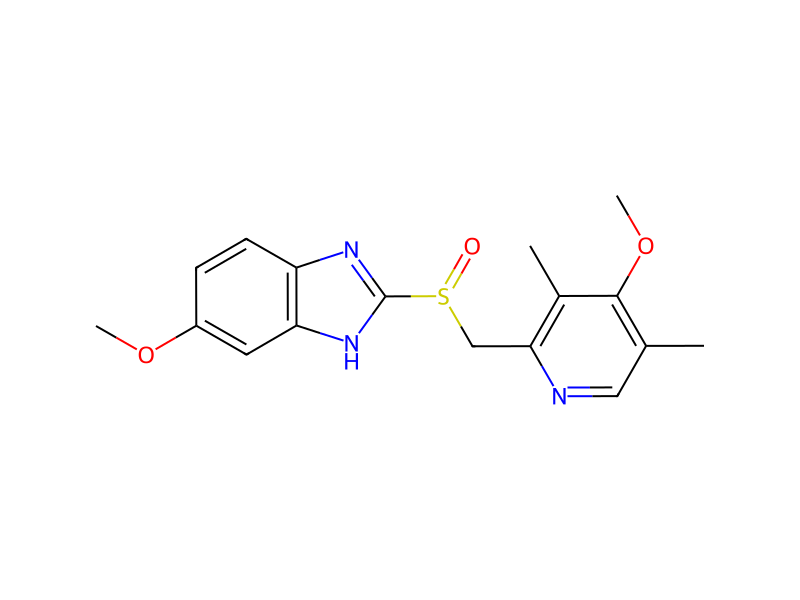
COc1ccc2nc(S(=O)Cc3ncc(C)c(OC)c3C)[nH]c2c1
InChIKey
SUBDBMMJDZJVOS-UHFFFAOYSA-N
분자식
C17H19N3O3S
평균 분자량
345.4 g/mol
단동위원소 질량
345.11471265

개요

6-methoxy-2-[(4-methoxy-3,5-dimethyl-2-pyridinyl)methylsulfinyl]-1H-benzimidazole is a sulfoxide and a member of benzimidazoles.

이름 및 식별자

우선 이름
Omeprazole
IUPAC
6-methoxy-2-[(4-methoxy-3,5-dimethyl-2-pyridinyl)methylsulfinyl]-1H-benzimidazole
영어명
OMEPRAZOLE-D3
분자식
C17H19N3O3S
분자량
345.42

이름 및 동의어

omeprazole73590-58-6LosecAntraOmepralOmeprazonAudazolOmaprenOmeprolSanamidolMopralOmizac
이름 더 보기
OMEPRAZOLE-D3Omeprazole-d6rac- EsoMeprazole-d3Esomeprazole Impurity 46-d66-(Methoxy-d3)-2-[[(4-Methoxy-3,5-diMethyl-2-pyridinyl)Methyl]sulfinyl]-1H-be nziMidazole-4,5,7-d3
ParizacRamezolZefxonZoltumUltopCeprandalDizprazolEmeproton

데이터베이스 식별자

CAS
668985-31-7、73590-58-6
PubChem CID
4594
ChEMBL
CHEMBL1503
ChEBI
CHEBI:91766
UNII
KG60484QX9
EC Number
695-602-9
Nikkaji
J33.884B

물성

구조 계산 물성보충 중

XLogP
2.2
극성 표면적
96.3 Ų
수소 결합 공여자 수
1
수소 결합 수용자 수
6
회전 가능 결합 수
5
무거운 원자 수
24
형식 전하
0
복잡도
453

실험 및 물리화학적 성질

Chemical ClassesPharmaceutical
Drugs · 3건

Pharmaceuticals -> Antiulcer Drugs

Pharmaceuticals

Pharmaceuticals -> Used in Switzerland

pHWeak base
LogP · 3건

log Kow = 2.23

2.23

2.38

Color/Form · 2건

Crystals from acetonitrile

White to off-white crystalline powder

Solubility · 4건

Freely soluble in ethanol and methanol, and slightly soluble in acetone and isopropanol and very slightly soluble in water.

In water, 82.3 mg/L at 25 °C /Estimated/

0.5 mg/mL

35.4 [ug/mL] (The mean of the results at pH 7.4)

Human Drugs · 4건

Breast Feeding; Lactation; Milk, Human; Anti-Ulcer Agents; Gastrointestinal Agents; Proton Pump Inhibitors

FDA approved drugs -> Active ingredient

FDA approved drugs -> Active ingredient

Antiulcer medicines

Animal Drugs · 3건

EMA approved medicines: Veterinary medicine

FDA approved animal drugs -> Active ingredient

안전 및 규제

안전 정보는 참고용이며, 공급업체의 물질안전보건자료(SDS), 관련 법규 및 전문가 평가를 대체하지 않습니다.

GHS 분류

GHS Classification · 6건

Warning

H302+H312+H332 (12.5%): Harmful if swallowed, in contact with skin or if inhaled [Warning Acute toxicity, oral; acute toxicity, dermal; acute toxicity, inhalation]

P261, P264, P264+P265, P270, P271, P272, P273, P280, P301+P317, P302+P352, P304+P340, P305+P351+P338, P317, P319, P321, P330, P332+P317, P333+P317, P337+P317, P362+P364, P403+P233, P405, and P501 (click each P-code to see the statement)

Aggregated GHS information provided per 224 reports by companies from 26 notifications to the ECHA C&L Inventory. Each notification may be associated with multiple companies.

Warning

H302 (100%): Harmful if swallowed [Warning Acute toxicity, oral]

유해성 정보

Regulatory Information · 2건

REACH registered substance: 6-methoxy-2-{[(4-methoxy-3,5-dimethylpyridin-2-yl)methyl]sulfinyl}-1H-benzimidazole (EC: 615-996-8)

Omeprazole: Does not have an individual approval but may be used as a component in a product covered by a group standard. It is not approved for use as a chemical in its own right.

FDA Requirements · 2건

The Approved Drug Products with Therapeutic Equivalence Evaluations List identifies currently marketed prescription drug products, incl omeprazole, approved on the basis of safety and effectiveness by FDA under sections 505 of the Federal Food, Drug, and Cosmetic Act.

Oral dosage form new animal drugs. Omeprazole. Indications for use: for treatment and prevention of recurrence of gastric ulcers in horses and foals 4 weeks of age and older.

Special Reports · 1건

Eriksson S et al; Omeprazole and H2-Receptor Antagonists in the Acute Treatment of Duodenal Ulcer, Gastric Ulcer and Reflux Esophagitis: A Meta-Analysis; Eur J Gastroenterol Hepatol 7 (5): 467-75 (1995). This paper is a meta-analysis of 30 published, double-blind clinical trails comparing omeprazole with ranitidine or cimetidine for the treatment of duodenal ulcer, gastric ulcer and reflux esophagitis.

화학 및 산업

약리 정보

ATC Code · 4건

A02BC01

A - Alimentary tract and metabolism

QA - Alimentary tract and metabolism

A02BC01

Protein BindingApproximately 95% bound to human plasma proteins.
Pharmacodynamics · 1건

**Effects on gastric acid secretion** This drug decreases gastric acid secretion. After oral administration, the onset of the antisecretory effect of omeprazole is usually achieved within one hour, with the maximum effect occurring by 2 hours after administration. The inhibitory effect of omeprazole on acid secretion increases with repeated once-daily dosing, reaching a plateau after four days. **Effects on serum gastrin** In studies of 200 or more patients, serum gastrin levels increased during the first 1-2 weeks of daily administration of therapeutic doses of omeprazole. This occurred in a parallel fashion with the inhibition of acid secretion. No further increase in serum gastrin occurred with continued omeprazole administration. Increased gastrin causes enterochromaffin-like cell hyperplasia and increased serum Chromogranin A (CgA) levels. The increased CgA levels may lead to false positive results in diagnostic studies for neuroendocrine tumors. **Enterochromaffin-like (ECL) cell effects** Human gastric biopsy samples have been obtained from more than 3000 pediatric and adult patients treated with omeprazole in long-term clinical studies. The incidence of enterochromaffin-like cell hyperplasia in these studies increased with time; however, no case of ECL cell carcinoids, dysplasia, or neoplasia have been identified in these patients. These studies, however, are of insufficient in power and duration to draw conclusions on the possible influence of long-term administration of omeprazole in the development of any premalignant or malignant conditions. **Other effects** Systemic effects of omeprazole in the central nervous system, cardiovascular and respiratory systems have not been found to date. Omeprazole, given in oral doses of 30 or 40 mg for 2-4 weeks, showed no effect on thyroid function, carbohydrate metabolism, or circulating levels of parathyroid hormone, cortisol, estradiol, testosterone, prolactin, cholecystokinin or secretin.

Mechanism of Action · 3건

Hydrochloric acid (HCl) secretion into the gastric lumen is a process regulated mainly by the H(+)/K(+)-ATPase of the proton pump, expressed in high quantities by the parietal cells of the stomach. ATPase is an enzyme on the parietal cell membrane that facilitates hydrogen and potassium exchange through the cell, which normally results in the extrusion of potassium and formation of HCl (gastric acid). Omeprazole is a member of a class of antisecretory compounds, the substituted _benzimidazoles_, that stop gastric acid secretion by selective inhibition of the _H+/K+ ATPase_ enzyme system. Proton-pump inhibitors such as omeprazole bind covalently to cysteine residues via disulfide bridges on the alpha subunit of the _H+/K+ ATPase_ pump, inhibiting gastric acid secretion for up to 36 hours. This antisecretory effect is dose-related and leads to the inhibition of both basal and stimulated acid secretion, regardless of the stimulus. **Mechanism of H. pylori eradication** Peptic ulcer disease (PUD) is frequently associated with _Helicobacter pylori_ bacterial infection (NSAIDs). The treatment of H. pylori infection may include the addition of omeprazole or other proton pump inhibitors as part of the treatment regimen,. _H. pylori_ replicates most effectively at a neutral pH. Acid inhibition in H. pylori eradication therapy, including proton-pump inhibitors such as omeprazole, raises gastric pH, discouraging the growth of H.pylori. It is generally believed that proton pump inhibitors inhibit the _urease_ enzyme, which increases the pathogenesis of H. pylori in gastric-acid related conditions.

관련 반응

84건
반응 기록 만들기
HRID 49237 반응식
HRID 49237생성물로uspto-grants-2004_03
HRID 49238 반응식
HRID 49238생성물로uspto-grants-2004_03
HRID 49239 반응식
HRID 49239반응물로uspto-grants-2004_03
HRID 49242 반응식
HRID 49242생성물로uspto-grants-2004_03
HRID 92460 반응식
HRID 92460반응물로Training data from https://doi.org/10.1039/C8SC04228D (2/10)
HRID 109240 반응식
HRID 109240생성물로Training data from https://doi.org/10.1039/C8SC04228D (2/10)
HRID 146101 반응식
HRID 146101생성물로Training data from https://doi.org/10.1039/C8SC04228D (9/10)
HRID 161415 반응식
HRID 161415생성물로Training data from https://doi.org/10.1039/C8SC04228D (9/10)
1 / 11 페이지

화합물 노트

불러오는 중…

이 페이지에서기본 정보개요이름 및 식별자물성안전 및 규제화학 및 산업관련 반응화합물 노트
더보기
새 노트새 반응견적 요청하기

Pharmaceuticals -> UK Veterinary Medicines Directorate List

Melting Point · 2건

156 °C

156 °C

Vapor Pressure9.2X10-13 mm Hg at 25 °C /Estimated/
Optical Rotation · 2건

Colorless syrup. Specific optical rotation = - 155 deg @ 20 °C/D ©= 0.5 in chloroform) /S-form/

MW: 713.13. White powder. Specific optical rotation = -128.2 deg @ 20 °C/D © = 1 in methanol) /S-form magnesium salt/

물리화학적 성질

저장 조건
-20 °C · -20°C Freezer

화학적 성질

White Crystalline Solid

Hazard Classes and Categories · 2건

Acute Tox. 4 (38.8%)

Acute Tox. 4 (100%)

안전 및 보호

Disposal Methods · 1건

SRP: The most favorable course of action is to use an alternative chemical product with less inherent propensity for occupational exposure or environmental contamination. Recycle any unused portion of the material for its approved use or return it to the manufacturer or supplier. Ultimate disposal of the chemical must consider: the material's impact on air quality; potential migration in soil or water; effects on animal, aquatic, and plant life; and conformance with environmental and public health regulations.

독성 정보

Interactions · 5건

Inhibition of the cytochrome p450 enzyme system by omeprazole, especially in high dose, may cause a decrease in the hepatic metabolism of /coumarin- or indandione-derivative anticoagulants, diazepam or phenytoin/ which may result in delayed elimination and increased blood concentrations, when these medications are used concurrently with omeprazole.

Omeprazole may increase gastrointestinal pH; concurrent use /of ampicillin esters, iron salts, or ketoconazole/ with omeprazole may result in a reduction in absorption of ampicillin esters, iron salts, or ketoconazole.

Concurrent use of omeprazole with /bone marrow depressants/ may increase the leukopenic and/or thrombocytopenic effects of both these medications; if concurrent use is required, close observation for toxic effects should be considered.

The effect of omeprazole on drug metabolism was studied using the model drugs antipyrine and (14)C-aminopyrine. Elimination of both model drugs was assessed before and after 15 days of therapy in male subjects. It was concluded that metabolic inhibition of the model drugs would not occur with normal clinical doses of omeprazole.

For more Interactions (Complete) data for OMEPRAZOLE (9 total), please visit the HSDB record page.

Health Effectsmay include bone rebuild interference and B12 vitamin reduction. [Wikipedia]
Hepatotoxicity · 1건

Despite their wide use, omeprazole and esomeprazole have only rarely been associated with hepatic injury. In large scale, long term trials , serum ALT elevations occurred in less than 1% of patients and at rates similar to those that occurred with placebo or comparator drugs. A small number of cases of clinically apparent liver disease due to omeprazole or esomeprazole have been published, the frequency of these cases probably being less than 1:100,000 users. A somewhat characteristic clinical phenotype has been described, with most cases arising during the first 1 to 4 weeks of therapy and being marked by an acute hepatocellular pattern of injury, with rapid recovery upon withdrawal. Rash, fever and eosinophilia were rare, as is autoantibody formation. Liver biopsy typically shows prominent centrolobular necrosis, suggestive of an acute, toxic hepatic injury (acute hepatic necrosis); however, recurrence upon rechallenge has been documented in several cases. In some instances, other organ involvement is prominent including rhabdomyolysis, lactic acidosis, renal insufficiency or Stevens Johnson syndrome. In large case series of drug induced liver injury, omeprazole and esomeprazole have accounted for few instances of symptomatic acute liver injury and rare instances of acute liver failure.

Adverse EffectsThe following adverse events may occur:
Exposure Routes · 1건

The delayed-release capsule are enteric-coated (as omeprazole is acid-labile) so the absorption of omprazole begins once the granules leave the stomach. Absorption is rapid. Peak plasma levels occur within 0.5 - 3.5 hours. The absolute bioavailability (compared with intravenous administration) of the delayed-release capsule is 30-40% at doses of 20 - 40 mg, due to presystemic metabolism. This value increases slightly when given repeatedly. Based on a relative bioavailability study, the AUC and Cmax of PRILOSEC (omeprazole magnesium) for Delayed-Release Oral Suspension were 87% and 88% of those for PRILOSEC Delayed-Release Capsules, respectively. Interestingly, when the 40 mg delayed release capsule is given with or without applesauce, it is bioequivalent. However, when the 20 mg delayed release capsule is given with the same conditions, it is not bioequivalent. When the same capsule is given to the elderly, bioavailability increases. Omeprazole was 76% bioavailable.

Milk Concentrations · 2건

Omeprazole is distributed into human milk; following oral administration of omeprazole 20 mg in one lactating women, concentrations of the drug were measured in breast milk.

The administration of oral omeprazole to a 41-year-old female during the third trimester of pregnancy, after ranitidine and cisapride failed to control her refractory gastroesophageal reflux, is reported. ... Peak omeprazole concentrations in breast milk (58 nM, 3 hr after ingestion) were less than 7% of the peak serum concentration (950 nM at 4 hr), indicating minimal secretion.

Toxicity Summary · 2건

Omeprazole overdose of up to 2400 mg (120 times higher than the recommended clinical dose) has been reported. The adverse reactions like confusion, drowsiness, tachycardia, blurred vision, headache, dry mouth, nausea, vomiting, diaphoresis, and flushing were seen with overdose. These symptoms were transient, and no serious clinical outcomes were observed with monotherapy. No specific antidote for omeprazole overdosage is known. Dialysis may not be helpful as omeprazole is extensively protein-bound. Symptomatic and supportive care is recommended with an overdose.

Omeprazole is a proton pump inhibitor that suppresses gastric acid secretion by specific inhibition of the H<sup>+</sup>/K<sup>+</sup>-ATPase in the gastric parietal cell. By acting specifically on the proton pump, omeprazole blocks the final step in acid production, thus reducing gastric acidity.

Signs and SymptomsSymptoms of overdose include confusion, drowsiness, blurred vision, tachycardia, nausea, diaphoresis, flushing, headache, and dry mouth.
Human Toxicity Excerpts · 2건

/SIGNS AND SYMPTOMS/ Clinical Effects of Overdose: The following effects have been selected on the basis of their potential clinical significance (not necessarily inclusive: Blurred vision; confusion; diaphoresis (increased sweating); drowsiness; dryness of mouth; flushing; headache; malaise (generally feeling of discomfort or illness); nausea; tachycardia (fast /heart beat/ or /arrhythmia/ irregular heartbeat).

/CASE REPORTS/ We observed a serious symptomatic hepatocellular liver injury in an 85-year-old man treated with omeprazole for many years. Peak values for AST, ALT and AP were 1542 U/L (normal range 14-50), 1236 U/L (11-60) and 154 U/L (30-125) respectively. Abdominal CT scan was normal and viral serologic testing was negative. Omeprazole was discontinued and liver enzymes normalized in 12 days. The patient was known to suffer from ischemic heart disease and had had a myocardial infarction 6 months previously. He was reexposed to omeprazole and the level of liver enzymes rose again and normalized after stopping omeprazole. Despite the improvement of his liver function, the patient died 5 days later due to chronic congestive heart failure. Five cases of omeprazole-induced liver injury have been reported to the Swiss Drug Regulatory Agency since 1990, among them two of cholestatic hepatitis and one of hepatic failure. The WHO Data Base has collected 13,630 ADRs related to omeprazole, with more than 80 cases of hepatitis, 60 of jaundice and about 40 of cholestatic hepatitis. Clinical studies reported minimal increase of liver enzymes only, in 1-5% of cases. This case with reexposure, together with those reported internationally, suggests that hepatitis is a possible but obviously rare complication of omeprazole treatment.

Carcinogen ClassificationNo indication of carcinogenicity to humans (not listed by IARC).
Drug Induced Liver Injury · 6건

Drug Induced Liver Injury Rank (DILIrank 2.0)

Omeprazole

vLess-DILI-concern

4

Adverse reactions

DOI:10.1016/j.drudis.2016.02.015

Non-Human Toxicity Excerpts · 5건

/LABORATORY ANIMALS: Chronic Exposure or Carcinogenicity/ In two 2 year studies in rats, omeprazole, given in doses corresponding to 4 to 352 times the human dose, caused end-life gastric carcinoid tumors and enterochromaffin-like cell hyperplasia in a dose-related manner in both male and female animals. These enterochromaffin-like cell changes have been shown to be caused by high levels of gastrin (or hypergastrinemia). Pronounced acid inhibition at extremely high doses of gastric acid pump inhibitors or H2-receptor antagonists results in the same feedback elevation of gastrin and subsequent enterochromaffin-like cell changes of the stomach.

/LABORATORY ANIMALS: Chronic Exposure or Carcinogenicity/ In rats of the same sex given azoxymethane as initiator of colon carcinogenesis the oral administration for 8 successive weeks of 10 mg/kg omeprazole on alternate days increased the response to azoxymethane, as indicated by the occurrence in colon mucosa of a modest but statistically significant increase in both the average number and size of aberrant crypt foci.

/LABORATORY ANIMALS: Developmental or Reproductive Toxicity/ Studies in pregnant rats did not show omeprazole to have any teratogenic potential at doses 345 times the human dose. Omeprazole produced dose-related increases in embryo-lethality, fetal resorptions, and pregnancy disruptions in rabbits receiving 17 to 172 times the human dose. In rats, dose-related embryo/fetal toxicity and postnatal development toxicity were observed in offspring resulting from parents treated with 35 to 345 times the human dose.

/GENOTOXICITY/ Omeprazole, was evaluated for its genotoxic effects in both rat and human cultured cells and in the intact rat. DNA repair synthesis, was detected in primary cultures of metabolically competent rat hepatocytes exposed to concentrations ranging from 10 to 100 mg/l, but the responses cannot be considered as clearly positive. Under the same experimental conditions any significant evidence of DNA repair was absent in primary hepatocytes from two human donors. At the same concentrations a modest but dose-related increase of micronucleated cells, that reached the level of statistical significance at 33 mg/l, was present in primary rat hepatocytes and in one of two human donors. In human lymphocytes exposed to subtoxic concentrations ranging from 0.78 to 12.5 mg/l a reproducible concentration dependent clastogenic effect was absent. In partially hepatectomized female rats treated with a single p.o. dose of 1000 mg/kg, the frequency of micronucleated cells was 5.2-fold higher than in controls in the liver, but only 2.0-fold higher in polychromatic erythrocytes of the bone marrow. In rats of the same sex given azoxymethane as initiator of colon carcinogenesis the oral administration for 8 successive weeks of 10 mg/kg omeprazole on alternate days increased the response to azoxymethane, as indicated by the occurrence in colon mucosa of a modest but statistically significant increase in both the average number and size of aberrant crypt foci.

규제 정보

FDA Requirements · 2건

The Approved Drug Products with Therapeutic Equivalence Evaluations List identifies currently marketed prescription drug products, incl omeprazole, approved on the basis of safety and effectiveness by FDA under sections 505 of the Federal Food, Drug, and Cosmetic Act.

Oral dosage form new animal drugs. Omeprazole. Indications for use: for treatment and prevention of recurrence of gastric ulcers in horses and foals 4 weeks of age and older.

Omeprazole is a selective and irreversible proton pump inhibitor. Omeprazole suppresses gastric acid secretion by specific inhibition of the hydrogen-potassium adenosinetriphosphatase (H+, K+-ATPase) enzyme system found at the secretory surface of parietal cells. It inhibits the final transport of hydrogen ions (via exchange with potassium ions) into the gastric lumen. Since the H+/K+ ATPase enzyme system is regarded as the acid (proton) pump of the gastric mucosa, omeprazole is known as a gastric acid pump inhibitor. Omeprazole inhibits both basal and stimulated acid secretion irrespective of the stimulus.

After oral administration, the onset of the antisecretory effect of omeprazole occurs within one hour, with the maximum effect occurring within two hours. Inhibition of secretion is about 50% of maximum at 24 hours and the duration of inhibition lasts up to 72 hours. The antisecretory effect thus lasts far longer than would be expected from the very short (less than one hour) plasma half-life, apparently due to prolonged binding to the parietal H + /K + ATPase enzyme. When the drug is discontinued, secretory activity returns gradually, over 3 to 5 days. The inhibitory effect of omeprazole on acid secretion increases with repeated once-daily dosing, reaching a plateau after four days.

Biological Half-Life · 2건

0.5-1 hour (healthy subjects, delayed-release capsule) Approximately 3 hours (hepatic impairment)

Plasma - Normal hepatic function - 30 minutes to 1 hour. Chronic hepatic disease - 3 hours.

Metabolism/Metabolites · 4건

Omeprazole is heavily metabolized in the liver by the cytochrome P450 (CYP) enzyme system. The main part of its metabolism depends on the polymorphically expressed CYP2C19, which is responsible for the formation of _hydroxyomeprazole_, the major metabolite found in plasma. The remaining part depends on CYP3A4, responsible for the formation of _omeprazole sulphone_.

The in vitro metabolism of omeprazole was studied in human liver microsomes in order to define the metabolic pathways and identify the cytochrome P450 (CYP) isoforms responsible for the formation of the major omeprazole metabolites. 2 The four major metabolites identified in vitro, in tentative order of importance, were hydroxyomeprazole, omeprazole sulphone, 5-O-desmethylomeprazole, and an unidentified compound termed metabolite X. Omeprazole pyridone was also detected but could not be quantitated. Incubation of hydroxyomeprazole and omeprazole sulphone with human microsomes resulted in both cases in formation of the hydroxysulphone. The kinetics of formation of the four primary metabolites studied were biphasic suggesting the involvement of multiple CYP isoforms in each case. Further studies used substrate concentrations at which the high affinity activities predominated. 3 Formation of the major metabolite, hydroxyomeprazole, was significantly correlated with S-mephenytoin hydroxylase and with benzo[a]pyrene metabolism and CYP3A content. Inhibition studies with isoform selective inhibitors also indicated a dominant role of S-mephenytoin hydroxylase with some CYP3A contribution in the formation of hydroxyomeprazole. Correlation and inhibition data for the sulphone and metabolite X were consistent with a predominant role of the CYP3A subfamily in formation of these metabolites. Formation of 5-O-desmethylomeprazole was inhibited by both R, S-mephenytoin and quinidine, indicating that both S-mephenytoin hydroxylase and CYP2D6 may mediate this reaction in human liver microsomes and in vivo. The Vmax/Km (indicator of intrinsic clearance in vivo) for hydroxyomeprazole was four times greater than that for omeprazole sulphone. Consistent with findings in vivo, the results predict that omeprazole clearance in vivo would be reduced in poor metabolisers of mephenytoin due to reduction in the dominant partial metabolic clearance to hydroxyomeprazole.

Omeprazole has known human metabolites that include 5'-O-Desmethyl omeprazole, 3-Hydroxyomeprazole, Omeprazole sulfone, and 5-Hydroxyomeprazole.

Hepatic. Omeprazole is extensively metabolized by the cytochrome P450 (CYP) enzyme system. The two primary CYP isozymes involved are CYP2C19 and CYP3A4. Metabolism is stereoselective in which the S-isomer is converted to 5'O-desmethylomeprazole via CYP2C19. CYP3A4 converts the S-isomer to 3-hydroxyomeprazole. The R-isomer is converted to 5-hydroxyomeprazole by CYP2C19. CYP3A4 converts the R-isomer to any four different metabolites: 5-hydroxyomeprazole (5-OH OME), omeprazole sulfone (OME sulfone), 5'-O-desmethylomeprazole (5'-desmethyl OME), and 3-hydroxyomeprazole (3-OH OME). Route of Elimination: Urinary excretion is a primary route of excretion of omeprazole metabolites. Little, if any unchanged drug was excreted in the urine. The majority of the dose (about 77%) was eliminated in urine as at least six metabolites. Two were identified as hydroxyomeprazole and the corresponding carboxylic acid. The remainder of the dose was recovered in the feces. Half Life: 0.5-1 hour (healthy subjects, delayed-release capsule); 3 hours (hepatic impairment)

FDA Pharmacological Classification · 6건

KG60484QX9

OMEPRAZOLE

Established Pharmacologic Class [EPC] - Proton Pump Inhibitor

Mechanisms of Action [MoA] - Proton Pump Inhibitors

Mechanisms of Action [MoA] - Cytochrome P450 2C19 Inhibitors

Omeprazole is a Proton Pump Inhibitor. The mechanism of action of omeprazole is as a Proton Pump Inhibitor and Cytochrome P450 2C19 Inhibitor.

MeSH Pharmacological Classification · 2건

Various agents with different action mechanisms used to treat or ameliorate PEPTIC ULCER or irritation of the gastrointestinal tract. This has included ANTIBIOTICS to treat HELICOBACTER INFECTIONS; HISTAMINE H2 ANTAGONISTS to reduce GASTRIC ACID secretion; and ANTACIDS for symptomatic relief.

Compounds that inhibit H(+)-K(+)-EXCHANGING ATPASE. They are used as ANTI-ULCER AGENTS and sometimes in place of HISTAMINE H2 ANTAGONISTS for GASTROESOPHAGEAL REFLUX.

Absorption, Distribution and Excretion · 6건

Omeprazole delayed-release capsules contain an enteric-coated granule formulation of omeprazole (because omeprazole is acid-labile), so that absorption of omeprazole begins only after the granules exit the stomach. Absorption of omeprazole occurs rapidly, with peak plasma concentrations of omeprazole achieved within 0.5-3.5 hours. Absolute bioavailability (compared with intravenous administration) is approximately 30-40% at doses of 20-40 mg, largely due to pre-systemic metabolism. The bioavailability of omeprazole increases slightly upon repeated administration of omeprazole delayed-release capsules.

After a single dose oral dose of a buffered solution of omeprazole, negligible (if any) amounts of unchanged drug were excreted in urine. Most of the dose (about 77%) was eliminated in urine as at least six different metabolites. Two metabolites were identified as _hydroxyomeprazole_ and the corresponding _carboxylic acid_. The remainder of the dose was found in the feces. This suggests significant biliary excretion of omeprazole metabolites. Three metabolites have been identified in the plasma, the _sulfide_ and _sulfone_ derivatives of omeprazole, and _hydroxyomeprazole_. These metabolites possess minimal or no antisecretory activity.

Approximately 0.3 L/kg, corresponding to the volume of extracellular water.

Healthy subject (delayed release capsule), total body clearance 500 - 600 mL/min Geriatric plasma clearance: 250 mL/min Hepatic impairment plasma clearance: 70 mL/min

Absorption: rapid. Distribution: Distributed in tissue, particularly gastric parietal cells.

Elimination: Renal 72 to 80%. Fecal 18 to 23%. In dialysis - Not readily dialyzable, because of extensive protein binding.

Cellular LocationsCytoplasm
Metabolite PathwaysOmeprazole Action Pathway

용도 및 제조

Uses · 6건

Antiulcer agent

Medication

Medication (Vet)

Use (kg; approx.) in Germany (2009): >1000

Use (kg; approx.) in Germany (2009): >25000

Omeprazole is indicated for the treatment of duodenal ulcers, benign gastric ulcers, gastroesophageal reflux disease (GERD), heartburn and other symptoms associated with GERD, erosive esophagitis, and long-term treatment of pathological hypersecretory conditions like Zollinger-Ellison syndrome, multiple endocrine adenomas, and systemic mastocytosis.

Formulations/Preparations · 3건

Oral: Capsules, delayed-release (containing enteric-coated granules): 10 mg Prilosec (AstraZeneca); 20 mg Prilosec (AstraZeneca); 40 mg Prilosec (AstraZeneca).

Trade names: Antra, Gastrogard, Gastroloc, Losec, Mepral, Mopral, Omepral, Omeprazen, Parizac, Pepticum, Prilosec, Zoltum.

Oral: Tablets, delayed-release: 20 mg (of omeprazole) Prilosec OTC (Procter & Gamble). /Omeprazole magnesium/

General Manufacturing Information · 2건

Pyridine N-oxides are important as synthetic intermediates in the manufacture of pharmaceuticals and agrochemicals. The antiulcer agent omeprazole is produced from 2,3,5-trimethylpyridine N-oxide.

Preparation: UK Junggren, SE Sjostrand, EP 5129; US 4255431 (1979, 1981 both to AB Hassle)

응용 분야

용도OMEPRAZOLE-D3 which binds covalently to proton pump, it inhibits gastric secretion,used as an anttiulcerative.

/GENOTOXICITY/ No evidence of mutagenicity was observed in vivo in the rat liver DNA damage assay or in some in vitro test systems, including the microbial (Ames test) and mammalian (mouse lymphoma) assays. Equivocal results were observed in a micronucleus test and in the chromosome aberration test in mice given omeprazole dosages up to 6250 times the usual human dosage. No evidence of mutagenicity was observed in another micronucleus test in mice given omeprazole dosages up to 2000 times the usual human dosage; however, this finding should be interpreted with caution because suboptimal sampling times were utilized in this study.