반응식

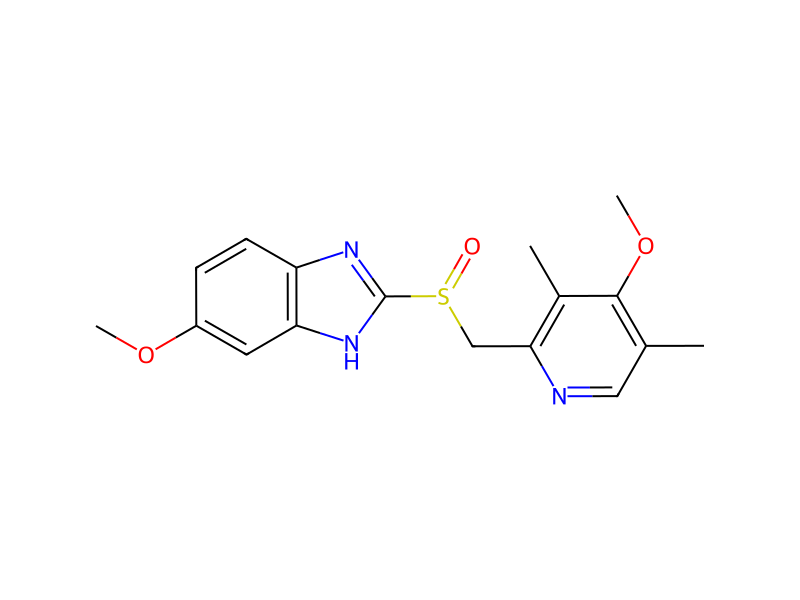
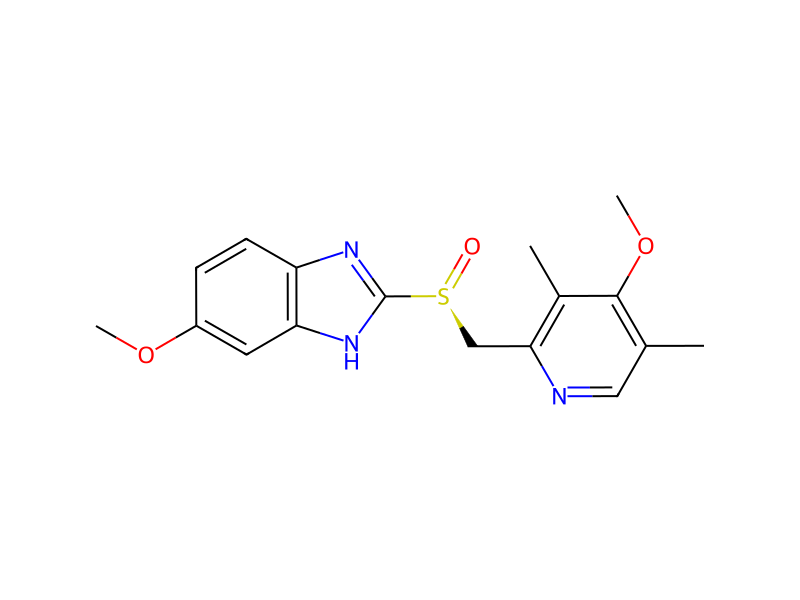
C(O)C.[CH3:4][O:5][C:6]1[CH:7]=[CH:8][C:9]2[N:13]=[C:12]([S:14]([CH2:16][C:17]3[C:22]([CH3:23])=[C:21]([O:24][CH3:25])[C:20]([CH3:26])=[CH:19][N:18]=3)=[O:15])[NH:11][C:10]=2[CH:27]=1>CN(C=O)C>[CH3:4][O:5][C:6]1[CH:7]=[CH:8][C:9]2[N:13]=[C:12]([S@:14]([CH2:16][C:17]3[C:22]([CH3:23])=[C:21]([O:24][CH3:25])[C:20]([CH3:26])=[CH:19][N:18]=3)=[O:15])[NH:11][C:10]=2[CH:27]=1참가 물질
4


실험 절차
The procedure set forth in Example 2 is repeated except that ethanol is employed as a solvent in place of DMF and the resulting structure is shown by various X-ray crystal diffraction and/or Raman spectroscopy to contain between about 82 and 85 percent (w/w) of 6-methoxy-2-[[(4-methoxy-3,5-dimethyl-2-pyridinyl)-methyl]sulfinyl]-1H-benzimidazole and between about 15 and 18 percent (w/w) of 5-methoxy 2-[[(4-methoxy-3,5-dimethyl-2-pyridinyl)-methyl]sulfinyl]-1H-benzimidazole.
출처 및 근거
- ORD 기록
- ord-d0cef4e0486c4bbdbeb13ef531fd5ee2
- 출처 데이터셋
- uspto-grants-2004_03
- 특허 번호
- US06706737B2
연결된 노트
불러오는 중…