
4-Phenylbutyric Acid
데이터를 보충하는 중입니다. 잠시 후 페이지를 새로 고치면 최신 내용을 볼 수 있습니다
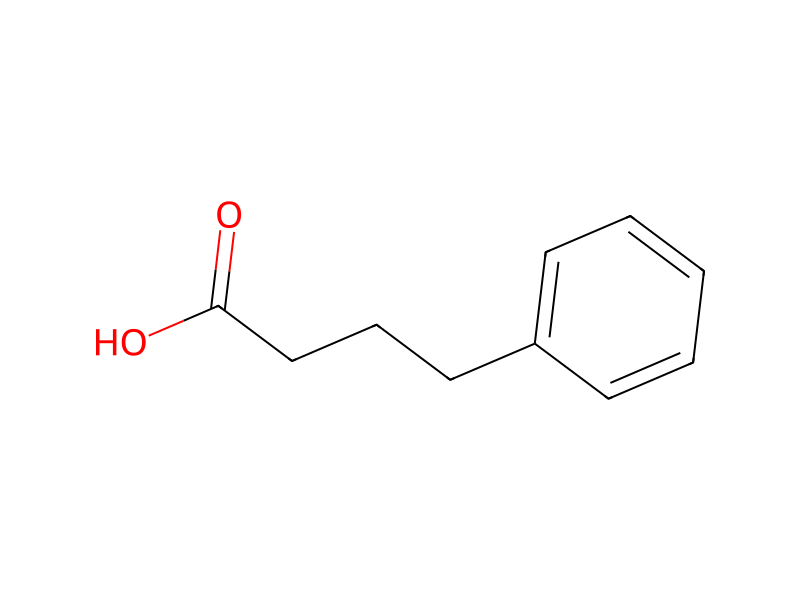
기본 정보
- CAS
1821-12-1- 표준 SMILES
O=C(O)CCCc1ccccc1- InChIKey
OBKXEAXTFZPCHS-UHFFFAOYSA-N- 분자식
- C10H12O2
- 평균 분자량
- 164.2 g/mol
- 단동위원소 질량
- 164.08372962
개요
4-phenylbutyric acid is a monocarboxylic acid the structure of which is that of butyric acid substituted with a phenyl group at C-4. It is a histone deacetylase inhibitor that displays anticancer activity. It inhibits cell proliferation, invasion and migration and induces apoptosis in glioma cells. It also inhibits protein isoprenylation, depletes plasma glutamine, increases production of foetal haemoglobin through transcriptional activation of the gamma-globin gene and affects hPPARgamma activation. It has a role as an antineoplastic agent, a prodrug, an EC 3.5.1.98 (histone deacetylase) inhibitor and an apoptosis inducer. It is functionally related to a butyric acid. It is a conjugate acid of a 4-phenylbutyrate.
이름 및 식별자
- 우선 이름
- 4-Phenylbutyric Acid
- IUPAC
- 4-phenylbutanoic acid
- 영어명
- 4-Phenylbutyric acid
- 분자식
- C10H12O2
- 분자량
- 164.2
이름 및 동의어
4-PHENYLBUTYRIC ACID4-Phenylbutanoic acid1821-12-1Benzenebutanoic acidBenzenebutyric acidPhenylbutyric acidgamma-Phenylbutyric acidomega-Phenylbutanoic acid4-Phenyl-n-butyric acidCHEBI:41500omega-phenylbutyric acidNSC-295
이름 더 보기
BuphenylPHENYLBUTYRIC-4 ACIDNSC 2954-benzene acidAKOS BBS-000037494-PHENYBUTYTIC ACID
gamma-Phenyl-n-butyric acid7WY7YBI87ENSC295DTXSID2037631RefChem:55852DTXCID0017631217-341-8Phenylbutyrate
데이터베이스 식별자
- CAS
1821-12-1- PubChem CID
- 4775
- DTXSID
DTXSID2037631- ChEMBL
CHEMBL1469- ChEBI
CHEBI:41500- UNII
- 7WY7YBI87E
- EC Number
- 217-341-8
- Nikkaji
물성
구조 계산 물성보충 중
- XLogP
- 2.4
- 극성 표면적
- 37.3 Ų
- 수소 결합 공여자 수
- 1
- 수소 결합 수용자 수
- 2
- 회전 가능 결합 수
- 4
- 무거운 원자 수
- 12
- 형식 전하
- 0
- 복잡도
- 137
실험 및 물리화학적 성질
Chemical Classes
Other Classes -> Organic Acids
Industrial compound
DrugsPharmaceuticals -> Listed in ZINC15
LogP
2.42
2.32
Solubility18 mg/mL
Boiling Point290.00 °C. @ 760.00 mm Hg
Melting Point47 - 49 °C
Vapor Pressure0.000664 [mmHg]
Physical Description
White or off-white powder; [Alfa Aesar MSDS]
Solid
물리화학적 성질
- 녹는점
- 49 · 49-51 °C(lit.)
- 끓는 점
- 165 °C10 · 165 °C10 mm Hg(lit.)
- 밀도
- 1.0326 · 1.0326 (rough estimate)
- 굴절률
- 1.5405 · 1.5405 (estimate)
안전 및 규제
안전 정보는 참고용이며, 공급업체의 물질안전보건자료(SDS), 관련 법규 및 전문가 평가를 대체하지 않습니다.
GHS 분류
GHS Classification
Warning
H315 (83.3%): Causes skin irritation [Warning Skin corrosion/irritation]
P261, P264, P264+P265, P271, P280, P302+P352, P304+P340, P305+P351+P338, P319, P321, P332+P317, P337+P317, P362+P364, P403+P233, P405, and P501 (click each P-code to see the statement)
Aggregated GHS information provided per 12 reports by companies from 7 notifications to the ECHA C&L Inventory. Each notification may be associated with multiple companies.
유해성 정보
Regulatory Information
Status: Active Update: 15-05-2018 https://echa.europa.eu/registration-dossier/-/registered-dossier/16079
Benzenebutanoic acid: Does not have an individual approval but may be used under an appropriate group standard
Hazards SummaryA skin and strong eye irritant; [Alfa Aesar MSDS] See Butyric acid.
Hazard Classes and CategoriesSkin Irrit. 2 (83.3%)
독성 정보
Hepatotoxicity
While the urea cycle disorders are caused by deficiencies of hepatic enzymes responsible for the elimination of nitrogen, patients generally present with hyperammonemia without other features or biochemical evidence of hepatic injury. Thus, serum aminotransferase, alkaline phosphatase and bilirubin levels are generally normal or only mildly elevated. Newborns presenting with hyperammonemia may have hepatomegaly but other, non-urea cycle, liver function is normal as is hepatic histology. Phenylbutyrate can help to lower ammonia levels acutely and manage to keep them in the normal or near normal range, but generally does not affect other liver functions. In open label studies, a small proportion of patients (particularly with ornithine transcarbamylase [OTC] deficiency) have had ALT or AST elevations, but these have generally been attributed to the underlying condition or its complications. Phenylbutyrate has not been linked to instances of clinically apparent liver injury with jaundice.
화학 및 산업
약리 정보
Protein BindingWhen co-administered with tauroursodeoxycholic acid as a combination product, the _in vitro_ plasma protein binding of phenylbutyric acid is 82%.
Pharmacodynamics
Phenylbutyric acid decreases elevated plasma ammonia glutamine levels in patients with urea cycle disorders. It increases waste nitrogen excretion in the form of phenylacetylglutamine. In the intestines, phenylbutyric acid was shown to reduce mucosal inflammation, regulate transepithelial fluid transport, and improve oxidative status. Some studies report antineoplastic properties of phenylbutyric acid, showing that phenylbutyric acid can promote growth arrest and apoptosis of cancer cells. It is suggested that phenylbutyric acid can act as an ammonia scavenger, chemical chaperone, and histone deacetylase inhibitor.
Mechanism of Action
Sodium phenylbutyrate is the most commonly used salt used in drug products of phenylbutyric acid. Sodium phenylbutyrate is a pro-drug that rapidly metabolizes to phenylacetate. Phenylacetate is conjugated with phenylacetyl-CoA, which in turn combines with glutamine via acetylation to form phenylacetylglutamine. Phenylacetylglutamine is then excreted by the kidneys, thus providing an alternate mechanism of waste nitrogen excretion to the urea cycle. Phenylacetylglutamine is comparable to urea, as each molecule contains two moles of nitrogen.
Biological Half-LifeFollowing oral administration of a single 5g dose of sodium phenylbutyrate, the elimination half-life of phenylbutyric acid ranged from 0.76 to 0.77 hours.
Metabolism/Metabolites
The major sites for metabolism of sodium phenylbutyrate are the liver and kidney. Phenylbutyric acid is rapidly metabolized to phenylacetate via beta-oxidation. Phenylacetate is conjugated with phenylacetyl-CoA, which in turn combines with glutamine via acetylation to form phenylacetylglutamine.
FDA Pharmacological Classification
7WY7YBI87E
PHENYLBUTYRIC ACID
Mechanisms of Action [MoA] - Ammonium Ion Binding Activity
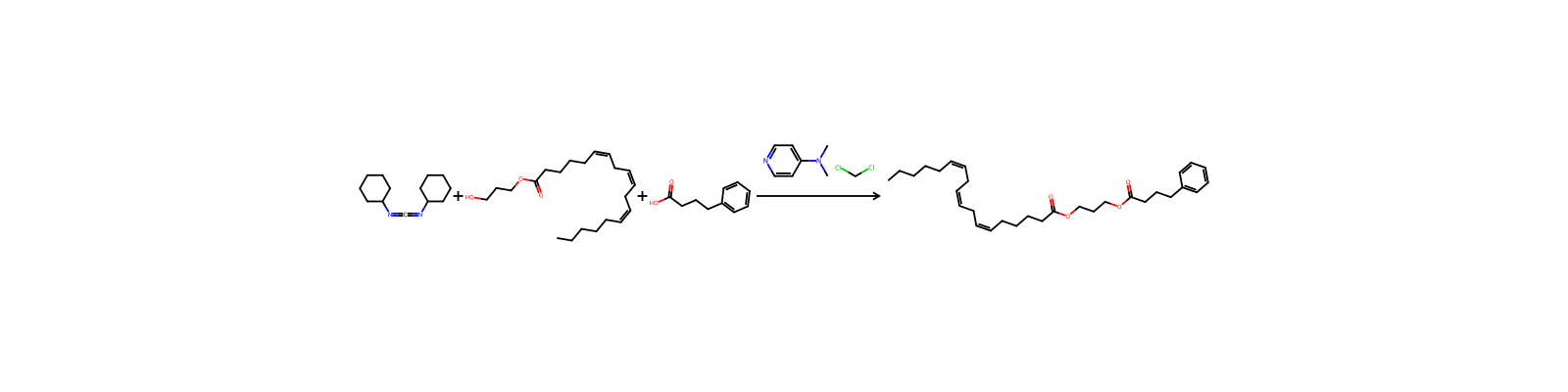
관련 반응
147건


화합물 노트
불러오는 중…