홈MCP워크벤치Skills
홈워크벤치알림마이페이지
llms.txt · MCP 가이드개인정보처리방침 · 이용약관 · 지원v1.8.1
  1. 홈
  2. /화합물

테마제팜

Temazepam

HCID 5391
새 반응
인쇄

데이터를 보충하는 중입니다. 잠시 후 페이지를 새로 고치면 최신 내용을 볼 수 있습니다

기본 정보개요이름 및 식별자물성안전 및 규제화학 및 산업관련 반응화합물 노트
부분 구조 검색유사 구조 찾기

기본 정보

CAS
846-50-4
표준 SMILES
CN1C(=O)C(O)N=C(c2ccccc2)c2cc(Cl)ccc21
InChIKey
SEQDDYPDSLOBDC-UHFFFAOYSA-N
분자식
C16H13ClN2O2
평균 분자량
300.74 g/mol
단동위원소 질량
300.0665554

개요

Temazepam can cause developmental toxicity according to state or federal government labeling requirements.

이름 및 식별자

우선 이름
Temazepam
IUPAC
7-chloro-3-hydroxy-1-methyl-5-phenyl-3H-1,4-benzodiazepin-2-one
현지명
테마제팜
영어명
TEMAZEPAM
분자식
C16H13ClN2O2
분자량
300.74

이름 및 동의어

temazepamRestorilHydroxydiazepamMethyloxazepamOxydiazepamNormison846-50-4N-Methyloxazepam3-HydroxydiazepamTemazNocturneTemtabs
이름 더 보기
테마제팜테마제팜(TEMAZEPAM)er115k3917wy3917wy2917PlanumER 115K-3917WY 2917Cerepax
Wy-3917Temazepamum(RS)-TemazepamRo 5-5345Temazepam civWY 3917DTXSID80213092H-1,4-Benzodiazepin-2-one, 7-chloro-1,3-dihydro-3-hydroxy-1-methyl-5-phenyl-

데이터베이스 식별자

CAS
846-50-4
PubChem CID
5391
DTXSID
DTXSID8021309
ChEMBL
CHEMBL967
ChEBI
CHEBI:9435
UNII
CHB1QD2QSS
EC Number
212-688-1
Nikkaji
J7.138B

물성

구조 계산 물성보충 중

XLogP
2.2
극성 표면적
52.9 Ų
수소 결합 공여자 수
1
수소 결합 수용자 수
3
회전 가능 결합 수
1
무거운 원자 수
21
형식 전하
0
복잡도
434

실험 및 물리화학적 성질

Chemical ClassesPharmaceutical
Drugs · 5건

DEA NFLIS-Drug Category -> Benzodiazepines

DEA Schedule IV Controlled Substance -> Depressants

Pharmaceuticals -> Hypnotic

Pharmaceuticals -> Synthetic Cannabinoids or Psychoactive Compounds

Pharmaceuticals

LogP · 2건

3

2.04

Solubility5.34e-02 g/L
Human Drugs · 4건

Breast Feeding; Lactation; Milk, Human; Hypnotics and Sedatives; Anti-Anxiety Agents; Benzodiazepines

FDA approved drugs -> Active ingredient

FDA approved drugs -> Active ingredient

Pharmaceuticals

Melting Point · 2건

119-121 °C

119 - 121 °C

Physical DescriptionSolid
Collision Cross Section166.1 Ų [M+H]+ [CCS Type: TW; Method: Major Mix IMS/Tof Calibration Kit (Waters)]

물리화학적 성질

안전 및 규제

안전 정보는 참고용이며, 공급업체의 물질안전보건자료(SDS), 관련 법규 및 전문가 평가를 대체하지 않습니다.

GHS 분류

GHS Classification · 4건

Warning

H302 (100%): Harmful if swallowed [Warning Acute toxicity, oral]

P264, P270, P301+P317, P330, and P501 (click each P-code to see the statement)

Aggregated GHS information provided per 52 reports by companies from 7 notifications to the ECHA C&L Inventory.

유해성 정보

Regulatory Information · 3건

Hazard Traits - Developmental Toxicity

DEA schedule IV controlled substance

Temazepam: Does not have an individual approval but may be used under an appropriate group standard

Other Safety InformationIMAP assessments - 2H-1,4-Benzodiazepin-2-one, 7-chloro-1,3-dihydro-3-hydroxy-1-methyl-5-phenyl-: Environment tier I assessment
Hazard Classes and CategoriesAcute Tox. 4 (100%)

독성 정보

Treatment · 1건

If the patient is conscious, vomiting should be induced mechanically or with emetics. Gastric lavage should be employed utilizing concurrently a cuffed endotracheal tube if the patient is unconscious to prevent aspiration and pulmonary complications. Maintenance of adequate pulmonary ventilation is essential. The use of pressor agents intravenously may be necessary to combat hypotension. Fluids should be administered intravenously to encourage diuresis. (L1712)

Health EffectsThey cause slurred speech, disorientation and "drunken" behavior. They are physically and psychologically addictive.
Hepatotoxicity · 1건

Temazepam, like other benzodiazepines, is rarely associated with serum ALT elevations, and clinically apparent liver injury from temazepam is extremely rare, if it occurs at all. There have been no case reports of symptomatic, acute liver injury from temazepam. Isolated single cases of clinically apparent liver injury have been reported with other benzodiazepines including alprazolam, chlordiazepoxide, clonazepam, diazepam, flurazepam, lorazepam, and triazolam. The clinical pattern of acute liver injury from benzodiazepines is typically cholestatic and mild-to-moderate in severity with a latency of 1 to 6 months and rapid resolution with discontinuation. Fever and rash are uncommon as is autoantibody formation.

화학 및 산업

약리 정보

ATC Code · 2건

N - Nervous system

QN - Nervous system

Protein BindingIt has been recorded that about 96% of unchanged temazepam is bound to plasma proteins.
Pharmacodynamics · 1건

Temazepam is a benzodiazepine used as a hypnotic agent in the management of insomnia. Temazepam produces CNS depression at limbic, thalamic, and hypothalamic levels of the CNS. Temazepam increases the affinity of the neurotransmitter gamma-aminobutyric acid (GABA) for GABA receptors by binding to benzodiazepine receptors. Results are sedation, hypnosis, skeletal muscle relaxation, anticonvulsant activity, and anxiolytic action. In sleep laboratory studies, the effect of temazepam was compared to placebo during a two week period. The studies demonstrated a linear dose-response improvement in total sleep time and sleep latency with substantial drug-placebo differences apparent for total sleep time and for sleep latency at higher doses of temazepam. Regardless, REM sleep was ultimately unchanged but slow wave sleep was decreased. Moreover, a transient syndrome, known as "rebound insomnia", wherein the symptoms that led to treatment with temazepam in the first place recur in an enhanced form, may happen on withdrawal of temazepam treatment. The possibility of this occurrence is in part why long term use of temazepam is not recommended due to worries over tolerance and dependence wherein patients' bodies become physiologically accustomed to the regular presence and pharmacological effect of higher and higher doses of the benzodiazepine used. The duration of hypnotic effect and the profile of unwanted adverse effects may be influenced by the distribution and elimination half-lives of the administered temazepam and any active metabolites that may be formed. When such half-lives are long, the drug or its metabolite(s) may accumulate during periods of nightly administration and be associated with impairments of cognitive and motor performance during waking hours. Conversely, if half-lives are short, the drug and metabolites would be cleared before the next dose is ingested, and carry-over effects related to sedation or CNS depression should be minimal or not present at all. However, during nightly use and for an extended period, pharmacodynamic tolerance or adaptation to some effects of benzodiazepine hypnotics may develop - which may also contribute to the possibility of 'rebound insomnia'. Consequently, if the drug has a very short elimination half-life, it is possible that a relative deficiency (for example, in relation to benzodiazepine GABA(a) receptor sites) may occur at some point in the interval between each night's use. This sequence of events may account for certain clinical findings reported happening after several weeks of nightly use of rapidly eliminated benzodiazepine hypnotics, including increased wakefulness during the last third of the night and the appearance of increased daytime anxiety.

관련 반응

5건
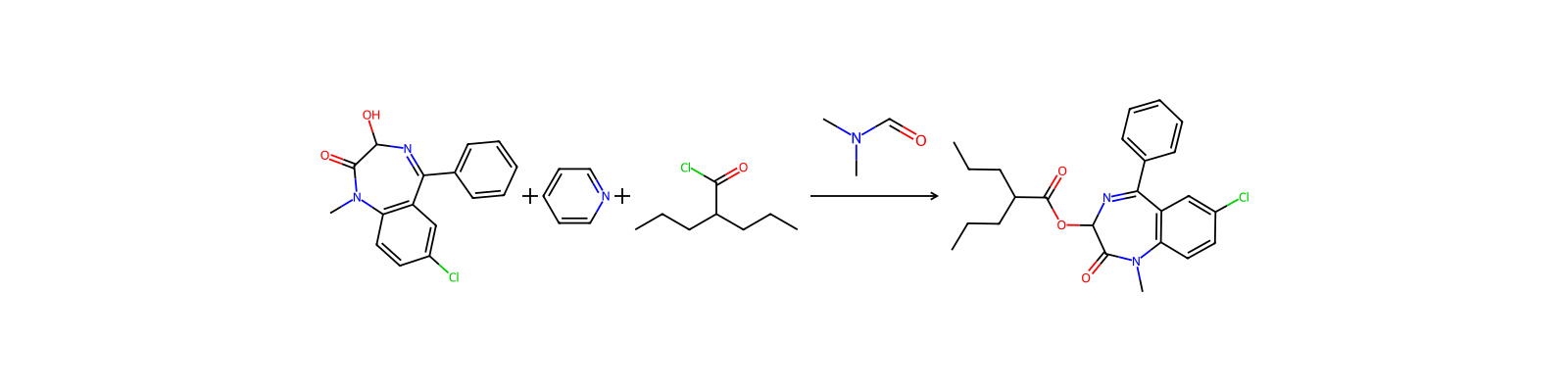
반응 기록 만들기
HRID 298654 반응식
HRID 298654반응물로Training data from https://doi.org/10.1039/C8SC04228D (8/10)
HRID 443793 반응식
HRID 443793반응물로uspto-grants-1981_04
HRID 1112092 반응식
HRID 1112092반응물로uspto-grants-1978_10
HRID 1389808 반응식
HRID 1389808반응물로uspto-grants-1981_01
HRID 1648727 반응식
HRID 1648727생성물로uspto-grants-1983_11

화합물 노트

이 페이지에서기본 정보개요이름 및 식별자물성안전 및 규제화학 및 산업관련 반응화합물 노트
녹는점
119 · 119-121°C
끓는 점
211 °C · 211°C (rough estimate)
밀도
1.2682 · 1.2682 (rough estimate)
굴절률
1.52 · 1.5200 (estimate)
인화점
11 °C · 11 °C
저장 조건
2 · 2-8°C
용해도
물에는 거의 녹지 않으며, 염화메틸렌에는 잘 녹고, 에탄올에는 거의 녹지 않습니다(96%).
산도 계수 (pKa)
1.6 · pKa 1.6 (Uncertain)
BCS Class
2 · 2
EPA
Temazepam (846-50-4)

화학적 성질

Crystalline Solid

Adverse EffectsAdverse Drug Reactions
Exposure RoutesOral, well absorbed, minimal first-pass metabolism.
Toxicity Summary · 2건

Signs and Symptoms of Overdose

Benzodiazepines bind nonspecifically to benzodiazepine receptors, which affects muscle relaxation, anticonvulsant activity, motor coordination, and memory. As benzodiazepine receptors are thought to be coupled to gamma-aminobutyric acid-A (GABA<sub>A</sub>) receptors, this enhances the effects of GABA by increasing GABA affinity for the GABA receptor. Binding of the inhibitory neurotransmitter GABA to the site opens the chloride channel, resulting in a hyperpolarized cell membrane that prevents further excitation of the cell.

Carcinogen Classification · 6건

Temazepam

Group 3: Not classifiable as to its carcinogenicity to humans

Volume 66: (1996) Some Pharmaceutical Drugs

1996

1996

3, not classifiable as to its carcinogenicity to humans. (L135)

Drug Induced Liver Injury · 6건

Drug Induced Liver Injury Rank (DILIrank 2.0)

Temazepam

Ambiguous-DILI-concern

3

Warnings & precautions

DOI:10.1016/j.drudis.2016.02.015

Effects During Pregnancy and Lactation · 2건

◉ Summary of Use during Lactation

◈ What is temazepam?

Toxicity DataLD50: 1963 mg/kg (oral, mice) (L1338) LD50: 1833 mg/kg (oral, rat) (L1338) LD50: >2400 mg/kg (oral, rabbit) (L1338)
USGS Health-Based Screening Levels for Evaluating Water-Quality · 3건

Temazepam

Pharmaceutical

Smith, C.D. and Nowell, L.H., 2024. Health-Based Screening Levels for evaluating water-quality data (3rd ed.). DOI:10.5066/F71C1TWP

EPA Human Health Benchmarks for Pharmaceuticals · 6건

Temazepam

0.2

0.7

While the recommended usual adult dose is 15 mg before retiring, 7.5 mg may be sufficient for some patients, and others may need 30 mg.

Data used to generate the benchmarks include the following: Lowest Daily Dose (LDD): 7.5 mg/day, Lowest Therapeutic Dose (LTD): 0.1 mg/kg-day, and Screening Dose: 0.00003 mg/kg-day.

19-Apr-12

안전 데이터

wgk
3
rtecs
DF1225000
ridadr
UN 1230 3/PG 2
독성
LD50 oral in rat: 2gm/kg
HS 번호
2933910000
risk_code
22-39/23/24/25-23/24/25-11
hazard_code
Xn,T,F
safety_code
16-36/37-45-7
Mechanism of Action · 1건

Gamma-Aminobutyric acid (GABA) is considered the principal inhibitory neurotransmitter in the human body. When GABA binds to GABA(a) receptors found in neuron synapses, chloride ions are conducted across neuron cell membranes via an ion channel in the receptors. With enough chloride ions conducted, the local, associated neuron membrane potentials are hyperpolarized - making it more difficult or less likely for action potentials to fire, ultimately resulting in less excitation of the neurons. Subsequently, benzodiazepines like temazepam can bind to benzodiazepine receptors that are components of various varieties of GABA(a) receptors. This binding acts to enhance the effects of GABA by increasing GABA affinity for the GABA(a) receptor, which ultimately enhances GABA ligand binding at the receptors. This enhanced ligand binding of the inhibitory neurotransmitter GABA to the receptors increases the aforementioned chloride ion conduction (perhaps reportedly via an increase in the frequency of the chloride channel opening), resulting in a hyperpolarized cell membrane that prevents further excitation of the associated neuron cells. Combined with the notion that such benzodiazepine receptor associated GABA(a) receptors exist both peripherally and in the CNS, this activity consequently facilitates various effects like sedation, hypnosis, skeletal muscle relaxation, anticonvulsant activity, and anxiolytic action.

Biological Half-LifeThe terminal half-life determined for temazepam is recorded as being between 3.5-18 hours, with a mean of 9 hours.
Metabolism/Metabolites · 3건

First-pass metabolism of temazepam is minimal at approximately 5-8% of an administered dose. Nevertheless, temazepam is principally metabolized in the liver where most of the unchanged drug is directly conjugated to glucuronide and excreted in the urine. In particular, the primary metabolite present in the blood is the O-conjugate of temazepam. Less than 5% of the drug is demethylated to oxazepam and subsequently eliminated as the glucuronide. Regardless, the glucuronides of temazepam have no demonstrable CNS activity and it is believed that no active metabolites are formed in general. Since temazepam mainly undergoes Phase II conjugation reactions, it is proposed that it is devoid of CYP450 interactions.

Temazepam is a known human metabolite of diazepam.

Hepatic. Temazepam is completely metabolized through conjugation prior to excretion. The major metabolite is the O-conjugate of temazepam (90%). Route of Elimination: Temazepam was completely metabolized through conjugation prior to excretion; 80% to 90% of the dose appeared in the urine. Half Life: 10-20 hours

FDA Pharmacological Classification · 6건

CHB1QD2QSS

TEMAZEPAM

Established Pharmacologic Class [EPC] - Benzodiazepine

Chemical Structure [CS] - Benzodiazepines

Temazepam is a Benzodiazepine.

TEMAZEPAM

MeSH Pharmacological Classification · 3건

Drugs used to induce drowsiness or sleep or to reduce psychological excitement or anxiety.

Agents that alleviate ANXIETY, tension, and ANXIETY DISORDERS, promote sedation, and have a calming effect without affecting clarity of consciousness or neurologic conditions. ADRENERGIC BETA-ANTAGONISTS are commonly used in the symptomatic treatment of anxiety but are not included here.

Substances that do not act as agonists or antagonists but do affect the GAMMA-AMINOBUTYRIC ACID receptor-ionophore complex. GABA-A receptors (RECEPTORS, GABA-A) appear to have at least three allosteric sites at which modulators act: a site at which BENZODIAZEPINES act by increasing the opening frequency of GAMMA-AMINOBUTYRIC ACID-activated chloride channels; a site at which BARBITURATES act to prolong the duration of channel opening; and a site at which some steroids may act. GENERAL ANESTHETICS probably act at least partly by potentiating GABAergic responses, but they are not included here.

Absorption, Distribution and Excretion · 4건

Studies demonstrate that between 90 to 100% of an orally administered temazepam dose is absorbed, making the medication very well absorbed. The oral administration of 15 to 45 mg temazepam resulted in rapid absorption with significant blood levels achieved in 30 minutes and peak levels at 2-3 hours. In particular, direct studies following the oral ingestion of 30 mg of temazepam revealed measurable plasma concentrations were obtained 10-20 minutes after dosing with peak plasma levels ranging between 666-982 ng/mL (with a mean of 865 ng/mL) presenting approximately 1.2-1.6 hours (with a mean of 1.5 hours) after the dosing. Finally, a dose-proportional relationship was established for the area under the plasma concentration/time curve over the 15 to 30 mg dose range.

Following a single dose, 80-90% of the dose appears in the urine, predominantly as the O-conjugate metabolite, and 3-13% of the dose appears in the faeces. Less than 2% of the dose is excreted unchanged or as N-desmethyltemazepam in the urine.

The volume of distribution documented for temazepam is 1.3-1.5 L/kg body weight - and in particular, 43-68 L/kg for the unbound fraction.

Studies regarding the clearance of temazepam have recorded the values of 1.03 ml/min/kg and 31 ml/min/kg for the clearance of total temazepam and the clearance of unbound temazepam, respectively.

Tissue LocationsKidney
Cellular LocationsCytoplasm

용도 및 제조

Uses · 2건

Use (kg; approx.) in Germany (2009): >250

Officially indicated for severe insomnia and other severe or disabling sleep disorders. For the short-term treatment of insomnia (generally 7-10 days).

Use ClassificationPharmaceuticals
응용 분야 · 2건

용도Temazepam, is pharmacologically active metabolite of Diazepam (D416855). It is Sedative, and hypnotic. Controlled substance (depressant).

일반 설명Temazepam, 7-chloro-1,3-dihydro-3-hydroxy-1-methyl-5-phenyl -2H-1,4-benzodiazepine-2-one(Restoril), also occurs as a minor metabolite of diazepam.It can be visualized as N-methyl oxazepam, and indeed, asmall amount of N-demethylation occurs slowly. However,metabolism proceeds mainly through glucuronidationof the 3-hydroxyl group, thus, it is intermediate acting andmarketed as a hypnotic said to have little or no residualeffect.

상·하류 제품 정보

상류 원료

수산화나트륨