홈MCP워크벤치Skills
홈워크벤치알림마이페이지
llms.txt · MCP 가이드개인정보처리방침 · 이용약관 · 지원v1.8.0
  1. 홈
  2. /화합물

수산화 테트라메틸 암모늄

Tetramethylammonium hydroxide

HCID 60966
새 노트새 반응견적 요청하기
인쇄 미리보기

데이터를 보충하는 중입니다. 잠시 후 페이지를 새로 고치면 최신 내용을 볼 수 있습니다
기본 정보개요이름 및 식별자물성안전 및 규제화학 및 산업관련 반응화합물 노트
부분 구조 검색유사 구조 찾기

기본 정보

CAS
75-59-2
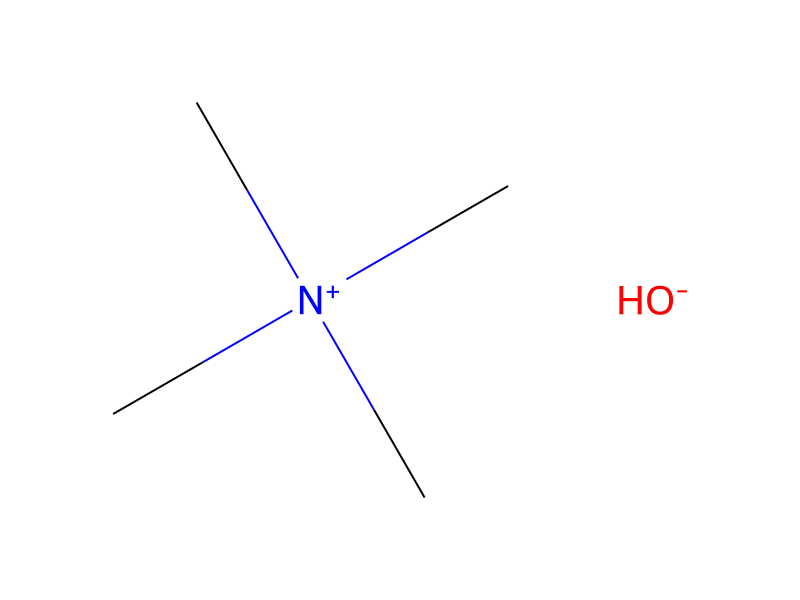
표준 SMILES
C[N+](C)(C)C.[OH-]
InChIKey
WGTYBPLFGIVFAS-UHFFFAOYSA-M
분자식
C4H12N.HO
평균 분자량
91.15 g/mol
단동위원소 질량
91.09971404

개요

Tetramethylammonium hydroxide is a solid in the hydrated form or a colorless liquid with a strong ammonia-like odor. It is soluble in water. It is corrosive to metals and tissue.

이름 및 식별자

우선 이름
Tetramethylammonium hydroxide
IUPAC
tetramethylazanium hydroxide
현지명
수산화 테트라메틸 암모늄
영어명
Tetramethylammonium hydroxide
분자식
C4H13NO
분자량
91.15

이름 및 동의어

TETRAMETHYLAMMONIUM HYDROXIDE75-59-2TMAHNMW-WHydroxyde de tetramethylammoniumAmmonium, tetramethyl-, hydroxideNMD 3Tetramethyl ammonium hydroxideDTXSID3029108Methanaminium, N,N,N-trimethyl-, hydroxide5GKP7317Q2DTXCID309108
이름 더 보기
수산화테트라메틸암모늄20%수산화테트라메틸암모니윰수산화테트라메틸암모니윰테트라메틸암모늄 하이드록시드N,N,N-트라이메틸메탄아미늄 수산화물수산화 N,N,N-트라이메틸메탄아미늄수산화 테트라메틸아자늄수산화 테트라메틸암모늄수산화 테트라메틸암모니윰암모늄, 테트라메틸-, 하이드록사이드테트라메틸암모늄 수산화물수산화 테트라메틸 암모늄TetramethyLDeveloperTetramethylammonium hydroxide, 10% in waterTMNOHN,N,N-TRIMETHYLMETHANAMINIUM HYDROXIDETetramethylammonium hydroxide, 25% w/w in methanolTETRAMETHYLAMMONIUM HYDROXIDE SOL., 6% IN PROPYLENEGLYCOLnmd3
Methanaminium, N,N,N-trimethyl-, hydroxide (1:1)RefChem:6296200-882-9TMAOHtetramethylazanium;hydroxideMFCD00008280C4H13NOTetramethylammonium hydroxide solution

데이터베이스 식별자

CAS
75-59-2
PubChem CID
60966
DTXSID
DTXSID3029108
ChEMBL
CHEMBL3187523
UNII
5GKP7317Q2
EC Number
200-882-9

물성

구조 계산 물성보충 중

극성 표면적
1 Ų
수소 결합 공여자 수
1
수소 결합 수용자 수
1
회전 가능 결합 수
0
무거운 원자 수
6
형식 전하
0
복잡도
19.1

실험 및 물리화학적 성질

Chemical Classes · 2건

Other Classes -> Bases

Corrosives

OdorStrong ammonia-like
Density · 2건

Specific gravity of solution approximately 1.00 at 24 °C/4 °C

1 @25 °C

Color/Form · 2건

The free base is known only in solution or as a solid pentahydrate, forming colorless, deliquescent needles

Liquid

CorrosivityCorrosive
DecompositionWhen heated to decomposition it emits toxic fumes of /nitrogen oxides and ammonia/.
Melting Point63 °C
Physical Description · 3건

Tetramethylammonium hydroxide is a solid in the hydrated form or a colorless liquid with a strong ammonia-like odor. It is soluble in water. It is corrosive to metals and tissue.

Liquid; Dry Powder; Liquid; Dry Powder

Colorless liquid with an ammonia-like odor; [CAMEO]

Stability/Shelf LifeStable under recommended storage conditions. /Tetramethylammonium hydroxide pentahydrate/

안전 및 규제

안전 정보는 참고용이며, 공급업체의 물질안전보건자료(SDS), 관련 법규 및 전문가 평가를 대체하지 않습니다.

GHS 분류

GHS Classification · 6건

Danger

H300+H310 (36%): Fatal if swallowed or in contact with skin [Danger Acute toxicity, oral; acute toxicity, dermal]

P260, P262, P264, P264+P265, P270, P273, P280, P301+P316, P301+P330+P331, P302+P352, P302+P361+P354, P304+P340, P305+P354+P338, P308+P316, P316, P317, P319, P321, P330, P361+P364, P363, P391, P405, and P501 (click each P-code to see the statement)

Aggregated GHS information provided per 559 reports by companies from 44 notifications to the ECHA C&L Inventory. Each notification may be associated with multiple companies.

Danger

H300: Fatal if swallowed [Danger Acute toxicity, oral]

유해성 정보

Regulatory Information · 5건

Chemical: Methanaminium, N,N,N-trimethyl-, hydroxide

Methanaminium, N,N,N-trimethyl-, hydroxide (1:1) is listed on the EPA's Chemical Data Reporting (CDR) system. Manufacturers and importers of Methanaminium, N,N,N-trimethyl-, hydroxide (1:1) are required to report information about their production and use of this chemical to the EPA under the Toxic Substances Control Act (TSCA). (40 eCFR Part 711)

Status: Active Update: 17-05-2023 https://echa.europa.eu/registration-dossier/-/registered-dossier/14295

Tetramethylammonium hydroxide: Does not have an individual approval but may be used under an appropriate group standard

The New Jersey Worker and Community Right to Know Act requires public and private employers to provide information about hazardous substances at their workplaces. (N.J.S.A. 34:5A-1 et. seq.)

Other Safety InformationIMAP assessments - Tetramethylammonium hydroxide and its pentahydrate: Human health tier II assessment
DOT LabelCorrosive
Fire Hazards · 3건

Excerpt from ERG Guide 153 [Substances - Toxic and/or Corrosive (Combustible)]:

· Combustible material: may burn but does not ignite readily.

화학 및 산업

약리 정보

MeSH Pharmacological Classification · 1건

Agents that mimic neural transmission by stimulation of the nicotinic receptors on postganglionic autonomic neurons. Drugs that indirectly augment ganglionic transmission by increasing the release or slowing the breakdown of acetylcholine or by non-nicotinic effects on postganglionic neurons are not included here nor are the nonspecific cholinergic agonists.

용도 및 제조

Uses · 6건

In semiconductor manufacturing, TMAH is used to develop the pattern in the photoresists; [CHS, p. 44]

Semiconductor Manufacturing [Category: Industry]

Buffer; titrant; ion pair reagent; anisotropic etchant for silicon; in digestion of biological samples.

In electronics - surfactant/buffering agent in a developing solution for producing printed circuit boards ... surface active agent in formulation for polishing semiconductor wafers.

Chemical analysis basic medium

In lithography for development

U.S. Production · 5건

2023: 50,000,000 - <100,000,000 lb

Methanaminium, N,N,N-trimethyl-, hydroxide is listed as a High Production Volume (HPV) chemical (65FR81686). Chemicals listed as HPV were produced in or imported into the U.S. in >1 million pounds in 1990 and/or 1994. The HPV list is based on the 1990 Inventory Update Rule. (IUR) (40 CFR part 710 subpart B; 51FR21438).

Production volumes for non-confidential chemicals reported under the Inventory Update Rule.[Table#8127]

Production volume for non-confidential chemicals reported under the 2006 Inventory Update Rule. Chemical: Methanaminium, N,N,N-trimethyl-, hydroxide. Aggregated National Production Volume: 10 to < 50 million pounds.

Non-confidential 2012 Chemical Data Reporting (CDR) information on the production and use of chemicals manufactured or imported into the United States. Chemical: Methanaminium, N,N,N-trimethyl-, hydroxide. National Production Volume: Withheld.

Consumer UsesAdhesion/cohesion promoter
Industry Uses

관련 반응

116건
반응 기록 만들기
HRID 215663 반응식
HRID 215663반응물로uspto-grants-2012_06
HRID 230603 반응식
HRID 230603반응물로uspto-grants-2009_07
HRID 263163 반응식
HRID 263163반응물로uspto-grants-1979_05
HRID 263164 반응식
HRID 263164반응물로uspto-grants-1979_05
HRID 326508 반응식
HRID 326508생성물로uspto-grants-1993_12
HRID 326951 반응식
HRID 326951생성물로uspto-grants-1993_12
HRID 340427 반응식
HRID 340427반응물로uspto-grants-2014_11
HRID 358097 반응식
HRID 358097반응물로uspto-grants-1984_08
1 / 15 페이지

화합물 노트

불러오는 중…

이 페이지에서기본 정보개요이름 및 식별자물성안전 및 규제화학 및 산업관련 반응화합물 노트
더보기
새 노트새 반응견적 요청하기
Other Experimental Properties · 4건

Decomposes to trimethylamine and methanol upon distillation

Readily absorbs CO2 from the air

When heated to decomposition it emits toxic fumes of NOx and NH3.

Concn: 25 wt% in water. VP: 17.5 mm Hg at 20 °C; Index of refraction: 1/3806 at 20 °C/D; density: 1.106 g/mL at 25 °C /Tetramethylammonium hydroxide solution/

물리화학적 성질

녹는점
°C
끓는 점
110 °C · 110 °C
밀도
0.866 g/mL · 0.866 g/mL at 25 °C
증기압
17.5 mm · 17.5 mm Hg ( 20 °C)
굴절률
20 · n20/D 1.384
인화점
80 °F · 80 °F
저장 조건
30 °C · Store below +30°C.
용해도
메탄올(약간 용해됨), 물(약간 용해됨)
물리적 상태
액체
색상
10 · APHA: ≤10
냄새
암모니아 같은 강한 냄새
수소이온지수(pH)
13 · >13 (H2O, 20°C)
수용성
물에 용해됩니다.
Merck
14 · 14,9224
BRN
3558708 · 3558708
Henry's Law Constant
2.3 · 2.3×1010 mol/(m3Pa) at 25℃, HSDB (2015)
안정성
안정적인. 가연성. 강한 산화제, 강산과 호환되지 않습니다.
InChI
1S/C4H12N.H2O/c1-5(2,3)4;/h1-4H3;1H2/q+1;/p-1
InChIKey
WGTYBPLFGIVFAS-UHFFFAOYSA-M
SMILES
[OH-].C[N+](C)(C)C
EPA
Tetramethylammonium hydroxide (75-59-2)

화학적 성질

colourless to yellow liquid

· Combustible material: may burn but does not ignite readily.

Fire PotentialNot flammable or combustible. /Tetramethylammonium hydroxide pentahydrate/
Health Hazards · 3건

Excerpt from ERG Guide 153 [Substances - Toxic and/or Corrosive (Combustible)]:

· TOXIC and/or CORROSIVE; inhalation, ingestion or skin contact with material may cause severe injury or death.

· TOXIC and/or CORROSIVE; inhalation, ingestion or skin contact with material may cause severe injury or death.

Hazards Summary · 1건

May cause burns and eye damage; At high concentrations, may cause cough, wheezing, and fluid in the lungs; [CSH, p. 405] A very strong base that forms corrosive alkaline solutions; [CHEMINFO-MSDS] A corrosive substance that can cause injury to the skin, eyes, and respiratory tract; [CAMEO]

DOT ID and Guide · 2건

1835 153

3423 153

Reactive GroupBases, Strong
Reactivity Profile · 1건

TETRAMETHYLAMMONIUM HYDROXIDE acts like a base. Bases are chemically similar to sodium hydroxide (NaOH) or sodium oxide (Na2O). They neutralize acids exothermically to form salts plus water. When soluble in water they give solutions having a pH greater than 7.0. Mixing these materials with water can generate troublesome amounts of heat as the base is dissolved or diluted. Bases react with certain metals (such as aluminum and zinc) to form oxides or hydroxides of the metal and generate gaseous hydrogen. Bases may initiate polymerization reactions in polymerizable organic compounds, especially epoxides). They may generate flammable and/or toxic gases with ammonium salts, nitrides, halogenated organics, various metals, peroxides, and hydroperoxides. Materials of this group often serve as catalysts.

History and Incidents · 2건

... The purpose of this study was to examine the cause of an accidental death from acute poisoning resulting from exposure to a cleaner containing tetramethylammonium hydroxide (TMAH) and to consider measures to prevent future cases. ... The authors examined the details and the reason for the accidental death from acute poisoning based on the autopsy report. ... The victim was a 39-year-old male researcher with 7 years of work experience employed by a surfactant production company. The accident occurred when he was conducting a field test of a newly developed cleaner, containing 8.75% TMAH solution. The researcher spilled the cleaner on his work clothes in the area of both the hands/arms and legs. He was unconscious when discovered. An autopsy found no damage or injury that could have resulted in death other than burns to 12% of his body, and the cause of death was found to be acute poisoning by TMAH. ... TMAH is widely used in the electronics industry as a developer or cleaner. It is a dangerous material, causing neurotoxicity leading to respiratory failure by ganglion block that occurs through skin absorption, and no antidote has been developed yet. For this reason, it is best to completely prevent exposure by wearing proper personal protective equipment. Despite this fatal toxicity of TMAH, it is not classified in Korea as a "chemical requiring legal control". For this reason, it is urgent to raise awareness of the toxic properties of TMAH to prevent additional cases of TMAH poisoning.

Tetramethylammonium hydroxide (TMAH) is widely used as a developer or etchant in semiconductor and photoelectric industries. In addition to alkalinity-related chemical burn, dermal exposure to TMAH may also result in respiratory failure and/or sudden death. The latter toxic effect has been of great concern in Taiwan after the occurrence of three fatalities in recent years. To better understand the toxicity following dermal exposure to TMAH, we analyzed all cases with TMAH exposure reported to the Taiwan Poison Control Center (PCC-Taiwan). ... In total, there were 13 cases of such exposure, including three patients who died after being exposed to 25% TMAH. A worker also developed severe effects manifesting muscle weakness, dyspnea, hyperglycemia, and chemical burn (28% of total body surface area) shortly after an accidental exposure to 2.38% TMAH. He received endotracheal intubation with assisted ventilation for 2 days and survived. ... Skin corrosive injury related to the alkalinity of TMAH and the ganglionic toxicity of tetramethylammonium ion might contribute to the clinical manifestations that occurred after dermal TMAH exposure. Thorough skin decontamination followed by prompt respiratory support should be the mainstay in the management of dermal TMAH exposure. Preventive strategies are warranted as well to decrease future occupational TMAH exposures.

DOT Emergency Guidelines · 5건

/GUIDE 153: SUBSTANCES - TOXIC AND/OR CORROSIVE (COMBUSTIBLE)/ Health: TOXIC; inhalation, ingestion, or skin contact with material may cause severe injury or death. Contact with molten substance may cause severe burns to skin and eyes. Avoid any skin contact. Effects of contact or inhalation may be delayed. Fire may produce irritating, corrosive and/or toxic gases. Runoff from fire control or dilution water may be corrosive and/or toxic and cause pollution. /Tetramethylammonium hydroxide; Tetramethylammonium hydroxide, solid; Tetramethylammonium hydroxide, solution/

/GUIDE 153: SUBSTANCES - TOXIC AND/OR CORROSIVE (COMBUSTIBLE)/ Fire or Explosion: Combustible material: may burn but does not ignite readily. When heated, vapors may form explosive mixtures with air: indoors, outdoors, and sewers explosion hazards. Those substances designated with a "P" may polymerize explosively when heated or involved in a fire. Contact with metals may evolve flammable hydrogen gas. Containers may explode when heated. Runoff may pollute waterways. Substance may be transported in a molten form. /Tetramethylammonium hydroxide; Tetramethylammonium hydroxide, solid; Tetramethylammonium hydroxide, solution/

/GUIDE 153: SUBSTANCES - TOXIC AND/OR CORROSIVE (COMBUSTIBLE)/ Public Safety: CALL Emergency Response Telephone Number ... As an immediate precautionary measure, isolate spill or leak area in all directions for at least 50 meters (150 feet) for liquids and at least 25 meters (75 feet) for solids. Keep unauthorized personnel away. Stay upwind. Keep out of low areas. Ventilate enclosed areas. /Tetramethylammonium hydroxide; Tetramethylammonium hydroxide, solid; Tetramethylammonium hydroxide, solution/

/GUIDE 153: SUBSTANCES - TOXIC AND/OR CORROSIVE (COMBUSTIBLE)/ Protective Clothing: Wear positive pressure self-contained breathing apparatus (SCBA). Wear chemical protective clothing that is specifically recommended by the manufacturer. It may provide little or no thermal protection. Structural firefighters' protective clothing provides limited protection in fire situations ONLY; it is not effective in spill situations where direct contact with the substance is possible. /Tetramethylammonium hydroxide; Tetramethylammonium hydroxide, solid; Tetramethylammonium hydroxide, solution/

For more DOT Emergency Guidelines (Complete) data for Tetramethylammonium hydroxide (8 total), please visit the HSDB record page.

안전 및 보호

Fire FightingExcerpt from ERG Guide 153 [Substances - Toxic and/or Corrosive (Combustible)]:
Accidental Release Measures · 4건

· CALL 911. Then call emergency response telephone number on shipping paper. If shipping paper not available or no answer, refer to appropriate telephone number listed on the inside back cover.

· ELIMINATE all ignition sources (no smoking, flares, sparks or flames) from immediate area.

· CALL 911. Then call emergency response telephone number on shipping paper. If shipping paper not available or no answer, refer to appropriate telephone number listed on the inside back cover.

· ELIMINATE all ignition sources (no smoking, flares, sparks or flames) from immediate area.

First Aid · 3건

Excerpt from ERG Guide 153 [Substances - Toxic and/or Corrosive (Combustible)]:

General First Aid:

General First Aid:

Exposure Control and Personal Protection · 2건

· Wear positive pressure self-contained breathing apparatus (SCBA).

· Wear positive pressure self-contained breathing apparatus (SCBA).

Fire Fighting Procedures · 3건

If material on fire or involved in fire: Do not extinguish fire unless flow can be stopped. Use water in flodding quantities as fog. Cool all affected containers with flooding quantities of water. Applyy water from as far a distance as possible. Solid streams of water may be ineffective. Use "alcohol" foam, dry chemical or carbon dioxide.

Personnel protection: ... Wear positive pressure self-contained breathing apparatus when fighting fires involving this material.

Suitable extinguishing media: Use water spray, alcohol-resistant foam, dry chemical or carbon dioxide. Special protective equipment for firefighters; Wear self contained breathing apparatus for fire fighting if necessary. /Tetramethylammonium hydroxide pentahydrate/

Storage ConditionsKeep container tightly closed in a dry and well-ventilated place. Store under inert gas. Air sensitive. hygroscopic. /Tetramethylammonium hydroxide pentahydrate/
Cleanup Methods · 1건

Personal precautions: Wear respiratory protection. Avoid dust formation. Avoid breathing vapours, mist or gas. Ensure adequate ventilation. Evacuate personnel to safe areas. Avoid breathing dust. Environmental precautions: Prevent further leakage or spillage if safe to do so. Do not let product enter drains. Methods and materials for containment and cleaning up: Pick up and arrange disposal without creating dust. Sweep up and shovel. Keep in suitable, closed containers for disposal. /Tetramethylammonium hydroxide pentahydrate/

Nonfire Spill ResponseExcerpt from ERG Guide 153 [Substances - Toxic and/or Corrosive (Combustible)]:
Disposal Methods · 2건

SRP: The most favorable course of action is to use an alternative chemical product with less inherent propensity for occupational harm/injury/toxicity or environmental contamination. Recycle any unused portion of the material for its approved use or return it to the manufacturer or supplier. Ultimate disposal of the chemical must consider: the material's impact on air quality; potential migration in soil or water; effects on animal and plant life; and conformance with environmental and public health regulations.

Product: Offer surplus and non-recyclable solutions to a licensed disposal company. Contact a licensed professional waste disposal service to dispose of this material. Dissolve or mix the material with a combustible solvent and burn in a chemical incinerator equipped with an afterburner and scrubber. Contaminated packaging: Dispose of as unused product. /Tetramethylammonium hydroxide pentahydrate/

Preventive Measures · 5건

If material not on fire and not involved in fire: Keep material out of water sources and sewers. Build dikes to contain flow as necessary.

Personal protection: Avoid breathing vapors. Keep upwind. Avoid bodily contact with the material. ... Do not handle broken packages unless wearing appropriate personal protective equipment. Wash away any material which may have contacted the body with copious amounts of water or soap and water. ... If contact with the material is anticipated, wear appropriate chemical protective clothing.

Avoid contact with skin and eyes. Avoid formation of dust and aerosols. Provide appropriate exhaust ventilation at places where dust is formed. /Tetramethylammonium hydroxide pentahydrate/

Avoid contact with skin, eyes and clothing. Wash hands before breaks and immediately after handling the product. /Tetramethylammonium hydroxide pentahydrate/

For more Preventive Measures (Complete) data for Tetramethylammonium hydroxide (7 total), please visit the HSDB record page.

Isolation and Evacuation · 3건

Excerpt from ERG Guide 153 [Substances - Toxic and/or Corrosive (Combustible)]:

Immediate precautionary measure

Immediate precautionary measure

Protective Action Criteria (PAC) · 3건

0.0086 [mg/m3]

0.095 [mg/m3]

0.57 [mg/m3]

독성 정보

Environmental Fate · 3건

TERRESTRIAL FATE: Based on a classification scheme(1), an estimated Koc value of 8(SRC), determined from a structure estimation method(2), indicates that tetramethylammonium hydroxide is expected to have very high mobility in soil(SRC). Volatilization of tetramethylammonium hydroxide from moist soil surfaces is not expected to be an important fate process(SRC) given an estimated Henry's Law constant of 4.6X10⁻¹⁶ atm-cu m/mole(SRC), using a fragment constant estimation method(3). Tetramethylammonium hydroxide is not expected to volatilize from dry soil surfaces(SRC) based upon an estimated vapor pressure of 1.2X10⁻⁶ mm Hg at 25 °C(SRC), determined from a fragment constant method(2). A 96% of theoretical BOD using activated sludge in the Japanese MITI test(4) suggests that biodegradation is an important environmental fate process in soil(SRC).

AQUATIC FATE: Based on a classification scheme(1), an estimated Koc value of 8(SRC), determined from a structure estimation method(2), indicates that tetramethylammonium hydroxide is not expected to adsorb to suspended solids and sediment(SRC). Volatilization from water surfaces is not expected(3) based upon an estimated Henry's Law constant of 4.6X10⁻¹⁶ atm-cu m/mole(SRC), developed using a fragment constant estimation method(4). According to a classification scheme(5), an estimated BCF of 3(SRC), from an estimated log Kow of -2.47(2) and a regression-derived equation(2), suggests the potential for bioconcentration in aquatic organisms is low(SRC). A 96% of theoretical BOD using activated sludge in the Japanese MITI test(6) suggests that biodegradation is an important environmental fate process in water(SRC).

ATMOSPHERIC FATE: According to a model of gas/particle partitioning of semivolatile organic compounds in the atmosphere(1), tetramethylammonium hydroxide, which has an estimated vapor pressure of 1.2X10⁻⁶ mm Hg at 25 °C(SRC), determined from a fragment constant method(2), will exist in both the vapor and particulate phases in the ambient atmosphere. Vapor-phase tetramethylammonium hydroxide is degraded in the atmosphere by reaction with photochemically-produced hydroxyl radicals(SRC); the half-life for this reaction in air is estimated to be 2 days(SRC), calculated from its rate constant of 5.1X10⁻¹² cu cm/molecule-sec at 25 °C(SRC) that was derived using a structure estimation method(3). Particulate-phase tetramethylammonium hydroxide may be removed from the air by wet and dry deposition(SRC). Tetramethylammonium hydroxide does not contains chromophores that absorb at wavelengths >290 nm(4) and, therefore, is not expected to be susceptible to direct photolysis by sunlight(SRC).

Adverse EffectsDermatotoxin - Skin burns.
Soil Adsorption/Mobility · 1건

Using a structure estimation method based on molecular connectivity indices(1), the Koc of tetramethylammonium hydroxide can be estimated to be 8(SRC). According to a classification scheme(2), this estimated Koc value suggests that tetramethylammonium hydroxide is expected to have very high mobility in soil.

Human Toxicity Excerpts · 4건

/SIGNS AND SYMPTOMS/ Extremely destructive to tissue of the mucous membranes and upper respiratory tract, eyes, and skin. Inhalation may be fatal as a result of spasm, inflammation and edema of the larynx and bronchi, chemical pneumonitis, and pulmonary edema.

/CASE REPORTS/ Tetramethylammonium hydroxide (TMAH) is widely used as a developer or etchant in semiconductor and photoelectric industries. In addition to alkalinity-related chemical burn, dermal exposure to TMAH may also result in respiratory failure and/or sudden death. The latter toxic effect has been of great concern in Taiwan after the occurrence of three fatalities in recent years. To better understand the toxicity following dermal exposure to TMAH, we analyzed all cases with TMAH exposure reported to the Taiwan Poison Control Center (PCC-Taiwan). In total, there were 13 cases of such exposure, including three patients who died after being exposed to 25% TMAH. A worker also developed severe effects manifesting muscle weakness, dyspnea, hyperglycemia, and chemical burn (28% of total body surface area) shortly after an accidental exposure to 2.38% TMAH. He received endotracheal intubation with assisted ventilation for 2 days and survived. Skin corrosive injury related to the alkalinity of TMAH and the ganglionic toxicity of tetramethylammonium ion might contribute to the clinical manifestations that occurred after dermal TMAH exposure. Thorough skin decontamination followed by prompt respiratory support should be the mainstay in the management of dermal TMAH exposure. Preventive strategies are warranted as well to decrease future occupational TMAH exposures.

/CASE REPORTS/ The purpose of this study was to examine the cause of an accidental death from acute poisoning resulting from exposure to a cleaner containing tetramethylammonium hydroxide (TMAH) and to consider measures to prevent future cases. ... The victim was a 39-year-old male researcher with 7 years of work experience employed by a surfactant production company. The accident occurred when he was conducting a field test of a newly developed cleaner, containing 8.75% TMAH solution. The researcher spilled the cleaner on his work clothes in the area of both the hands/arms and legs. He was unconscious when discovered. An autopsy found no damage or injury that could have resulted in death other than burns to 12% of his body, and the cause of death was found to be acute poisoning by TMAH. TMAH is widely used in the electronics industry as a developer or cleaner. It is a dangerous material, causing neurotoxicity leading to respiratory failure by ganglion block that occurs through skin absorption, and no antidote has been developed yet. For this reason, it is best to completely prevent exposure by wearing proper personal protective equipment. Despite this fatal toxicity of TMAH, it is not classified in Korea as a "chemical requiring legal control". For this reason, it is urgent to raise awareness of the toxic properties of TMAH to prevent additional cases of TMAH poisoning.

Artificial Pollution Sources · 1건

Tetramethylammonium hydroxide's production and use as an etchant in circuit board production(1) and as a buffering agent, titrant, chemical reagent, and in digestion of biological samples(2) may result in its release to the environment through various waste streams(SRC).

Environmental BiodegradationAEROBIC: Tetramethylammonium hydroxide, present at 100 mg/L, reached 96% of its theoretical BOD in 2 weeks using an activated sludge inoculum at 30 mg/L in the Japanese MITI test(1).
Environmental Bioconcentration · 1건

An estimated BCF of 3 was calculated in fish for tetramethylammonium hydroxide(SRC), using an estimated log Kow of -2.47(1) and a regression-derived equation(1). According to a classification scheme(2), this BCF suggests the potential for bioconcentration in aquatic organisms is low(SRC).

Volatilization from Water/Soil · 1건

The Henry's Law constant for tetramethylammonium hydroxide is estimated as 4.36X10⁻¹⁶ atm-cu m/mole(SRC) using a fragment constant estimation method(1). This Henry's Law constant indicates that tetramethylammonium hydroxide is expected to be essentially nonvolatile from water surfaces(2). Tetramethylammonium hydroxide is not expected to volatilize from dry soil surfaces(SRC) based upon an estimated vapor pressure of 1.2X10⁻⁶ mm Hg(SRC), determined from a fragment constant method(3).

Non-Human Toxicity Excerpts · 2건

/LABORATORY ANIMALS: Acute Exposure/ /The purpose of this study was/ to establish a rat model to investigate the effects of dermal exposure to TMAH. ... The 4-hour lethal dose (LD50) of tetramethylammonium hydroxide (TMAH) was determined by applying solutions mimicking the two most common industrially used concentrations (2.38% and 25%) of TMAH to the skin of Sprague-Dawley rats. Exposure of the rat's skin to 2.38% or 25% TMAH generated LD50 values of 85.9 mg/kg and 28.7 mg/kg, respectively. Application of either concentration of TMAH to the skin produced a rapid, significant increase in the rate of respiration. The serum concentrations of tetramethylammonium (TMA) also changed significantly with time of exposure to both concentrations of TMAH. The level of blood urea nitrogen decreased significantly in rats exposed to the 2.38% TMAH, and rats exposed to the 25% solution had a significant decrease in the serum concentration of sodium. Injection of atropine after 5 minutes of exposure did not significantly overcome any of the toxic effects observed with either solution of TMAH. The preliminary results in the rat model indicated that the lethality of TMAH cannot be fully explained by the severity of the patients' chemical burns, and the physiologic effects on respiratory and kidney functions were probably involved.

/OTHER TOXICITY INFORMATION/ To evaluate the role of the chemical burns caused by hydroxide ion in the fatal effects of tetramethylammonium ion (TMA) in dermal exposure to tetramethylammonium hydroxide (TMAH), /the researchers/ conducted a rat study consisting of two-step treatments with dermal exposure to NaOH and tetramethylammonium chloride (TMACl). In the first step, NaOH or saline was administered in the gauze on the shaved skin for 5 min, and in the second step, TMAH, TMACl, or saline was administered in the same way. The mean blood pressure (MBP), heart rate (HR), and survival in rats were compared among seven groups. Dermal exposure to saline and then 2.75 M TMACl introduced limited and temporary non-fatal effects. Exposure to 2.75 M NaOH and then saline had almost no effects and caused no deaths. Treatments with more concentrated NaOH or TMACl resulted in suppressions of MBP and HR, and deaths were observed after the dosing of TMACl. The toxicity of dermal exposure to TMA alone is limited, but fatal effects can be introduced by pre-treatment with hydroxide ion. Therefore, the chemical burn caused by hydroxide ion plays an essential role in the toxicity, implicating that effective neutralizing may help decreasing the fatality rate.

Environmental Abiotic Degradation · 1건

The rate constant for the vapor-phase reaction of tetramethylammonium hydroxide with photochemically-produced hydroxyl radicals has been estimated as 5.1X10⁻¹² cu cm/molecule-sec at 25 °C(SRC) using a structure estimation method(1). This corresponds to an atmospheric half-life of about 2 days at an atmospheric concentration of 5X10+5 hydroxyl radicals per cu cm(1). Tetramethylammonium hydroxide is not expected to undergo hydrolysis in the environment due to the lack of functional groups that hydrolyze under environmental conditions(2). Tetramethylammonium hydroxide does not contain chromophores that absorb at wavelengths >290 nm(2) and, therefore, is not expected to be susceptible to direct photolysis by sunlight(SRC).

Probable Routes of Human Exposure · 2건

According to the 2006 TSCA Inventory Update Reporting data, the number of persons reasonably likely to be exposed in the industrial manufacturing, processing, and use of tetramethylammonium hydroxide is 1000 or greater; the data may be greatly underestimated(1).

NIOSH (NOES Survey 1981-1983) has statistically estimated that 6,413 workers (1,446 of these were female) were potentially exposed to tetramethylammonium hydroxide in the US(1). Occupational exposure to tetramethylammonium hydroxide may occur through inhalation and dermal contact with this compound at workplaces where tetramethylammonium hydroxide is produced or used. General population exposure should be low or non-existent since tetramethylammonium hydroxide is not present in consumer end-use products(SRC).

Environmental Fate/Exposure Summary · 1건

Tetramethylammonium hydroxide's production and use as an etchant in circuit board production and as a buffering agent, titrant, chemical reagent, and in digestion of biological samples may result in its release to the environment through various waste streams. If released to air, an estimated vapor pressure of 1.2X10⁻⁶ mm Hg at 25 °C indicates tetramethylammonium hydroxide will exist in both the vapor and particulate phases in the atmosphere. Vapor-phase tetramethylammonium hydroxide will be degraded in the atmosphere by reaction with photochemically-produced hydroxyl radicals; the half-life for this reaction in air is estimated to be 2 days. Particulate-phase tetramethylammonium hydroxide will be removed from the atmosphere by wet and dry deposition. Tetramethylammonium hydroxide does not contain chromophores that absorb at wavelengths >290 nm and, therefore, is not expected to be susceptible to direct photolysis by sunlight. If released to soil, tetramethylammonium hydroxide is expected to have very high mobility based upon an estimated Koc of 8. Volatilization from moist soil surfaces is not expected to be an important fate process based upon an estimated Henry's Law constant of 4.6X10⁻¹⁶ atm-cu m/mole. Tetramethylammonium hydroxide is not expected to volatilize from dry soil surfaces based upon its vapor pressure. Utilizing the Japanese MITI test, 96% of the Theoretical BOD was reached in 2 weeks indicating that biodegradation is an important environmental fate process in soil and water. If released into water, tetramethylammonium hydroxide is not expected to adsorb to suspended solids and sediment based upon the estimated Koc. Volatilization from water surfaces is not expected to be an important fate process based upon this compound's estimated Henry's Law constant. An estimated BCF of 3 suggests the potential for bioconcentration in aquatic organisms is low. Hydrolysis is not expected to be an important environmental fate process since this compound lacks functional groups that hydrolyze under environmental conditions (pH 5 to 9). Occupational exposure to tetramethylammonium hydroxide may occur through inhalation and dermal contact with this compound at workplaces where tetramethylammonium hydroxide is produced or used. General population exposure should be low or non-existent since tetramethylammonium hydroxide is not present in consumer end-use products. (SRC)

안전 데이터

wgk
1
tsca
TSCA listed
rtecs
PA0875000
ridadr
UN 3423 6.1/PG I (TETRAMETHYLAMMONIUM HYDROXIDE, SOLID)
HS 번호
29239000
risk_code
24/25-34-20/21/22-39/23/24/25-23/24/25-10-21/22-25-21-11-67-36-52-48/24-27/28-23-35-36/38
hazard_code
C,T,F,T+,Xn
safety_code
45-36/37/39-26-16-36/37-28
포장분류
II
위험 등급
3
기존화학 물질
KE-33550
F 고인화성물질
4.4-10-34
Hazard Classifications
Acute Tox. 2 DermalAcute Tox. 2 OralAcute Tox. 3 InhalationAquatic Chronic 3Eye Dam. 1Flam. Liq. 3Skin Corr. 1BSTOT RE 1 DermalSTOT SE 1
스토리지 클래스
3 - Flammable liquids
유해 물질 데이터
75-59-2(Hazardous Substances Data)
함량 및 규제정보
물질구분: 유독물질; 혼합물(제품)함량정보: 수산화 테트라메틸암모니윰 및 이를 25% 이상 함유한 혼합물
유해화학물질 필터링
2002-1-529
Laboratory chemicals
Formulations/PreparationsAvailable in 10% solution.
General Manufacturing Information · 4건

Plastics Material and Resin Manufacturing

Methanaminium, N,N,N-trimethyl-, hydroxide (1:1): ACTIVE

A strong base available in 10% solution

Commercial product sold as a 25% solution in water or methanol

응용 분야 · 3건

개요Tetramethylammonium hydroxide is a solid in the hydrated form or a colorless liquid with a strong ammonia-like odor. It is soluble in water, and corrosive to metals and tissue.

용도Tetramethylammonium hydroxide is used to produce tetramethyl-ammonium azide. It is used as an anisotropic etchant of silicon, basic solvent in the development of acidic photoresist in photolithography process, as surfactant in the synthesis of ferrofluid and as a polarographic reagent. It finds application in the production of organic silicon, where it is used for computer silicon wafer surface brightener and cleaning agent. It is also involved in the purification of some metallic elements.Tetramethylammonium hydroxide solution (25 wt.% solution in water) may be used as a base for pH adjustment to obtain hexagonal mesoporous aluminophosphate (TAP).

일반 설명Tetramethylammonium hydroxide is a quaternary ammonium salt generally used as an anisotropic etchant for silicon due to its high silicon etching rate.

상·하류 제품 정보

하류 제품

디메티콘다이메틸폴리실록산Silicone rubber,methyl RTV 107Tetramethylammonium acetate

/CASE REPORTS/ A 22 year old male engineer was accidentally drenched with concentrated tetramethylammonium hydroxide solution (TMAH) (25%, pH13.5) while conducting routine examination of the pipe system in a plant manufacturing thin film transistor liquid crystal displays (TFT0LCDs). He was wearing a clean room suit with plastic goggles, but not a mask. As TMAH sprayed over his head, he closed the valve and took a shower at the nearby emergency shower facility immediately for decontamination. When he was found by a co-worker about 15 minutes later, he suffered from general weakness and moderate salivation but was still conscious enough to describe the accident. the paramedical team arrived about 30 minutes after the accident and found the patient losing his consciousness with a Glasgow coma scale of 6 (E1V2M3). His pulse was weak and noted as 8-10 times per minute, and miosis was also noted. he lost vital signs about half an hour later on the way to the hospital. He was diagnosed as dead on arrival at the hospital, as neither pulse nor breath was found; no electroactivity was shown by the electrocardiogram, and miosis without reaction to light was noted. Multiple glossy and erythematous erosive wounds were noted over his perineum, all four limbs, and face except for the nares and mouth. After cardiopulmonary resuscitation with 2 mg epinephrine bolus injection and 500 mL normal saline challenge intravenously, his heart beats and blood pressure were restored, but he still needed invasive mechanical ventilation. Laboratory tests on the day of the accident revealed leukocytosis, hyperglycemia, and metabolic acidosis, but levels of aspartate aminotransferase (AS), alanine aminotransferase (ALT), blood urea nitrogen (BUN), creatinine, and electrolytes were all within normal limits. The results of chest X-ray examinations on admission and during follow-up excluded the diagnoses of inflammation airway and aspiration pneumonia. According to his family, he did not have any systemic diseases before this accident. Because he had second-degree chemical burns on 24% of the total body surface area (TBSA) and third-degree burns on 5% of the TBSA, he was admitted to the burn center for further management. He never regained consciousness and suffered from hypothermia, seizure, and electrolyte imbalance. He passed away eight days later.