

기본 정보
- 표준 SMILES
C=C[CH2-].C=C[CH2-].[Cl][Pd+].[Cl][Pd+]- InChIKey
PENAXHPKEVTBLF-UHFFFAOYSA-L- 분자식
- C6H10Cl2Pd2
- 평균 분자량
- 365.9 g/mol
개요
Allyl palladium(II) chloride dimer is a organopalladium compound. It is an important catalyst used in organic synthesis. Palladium is a chemical element with the chemical symbol Pd and an atomic number of 46. It is found as a free metal alloyed with gold and other platinum group metals and in the rare minerals cooperite and polarite. (L794, A27)
이름 및 식별자
- 우선 이름
- Palladium, di-mu-chlorobis(eta3-2-propenyl)di-
- IUPAC
- bis(chloropalladium(1+));bis(prop-1-ene)
- 영어명
- Allylpalladium(II) Chloride Dimer
- 분자식
- C6H10Cl2Pd2
- 분자량
- 365.89
이름 및 동의어
Palladium, di-mu-chlorobis(eta3-2-propenyl)di-RefChem:858349Palladium, di-.mu.-chlorobis(.eta.3-2-propenyl)di-Palladium, di-mu-chlorobis(eta3-2-propenyl)di-(9CI)Allyl palladium (II) chloride dimer12012-95-2Allylpalladium chloride dimerAllylpalladium(II) chloride dimerallylpalladium(II) chloridePalladium allyl chloride dimer[Pd(allyl)Cl]2Bis(allyl(mu-chloro)palladium)
이름 더 보기
[PdCl(C3H5)]2[PdCl(allyl)]2allylpaladiumAllylpalladium chlorideDi-μ-chlorobis(η3-2-propenyl)dipalladiumDiallyldichlorodipalladiumAllylpalladium(Ⅱ) chloride dimer
Bis(eta3-allyl)dichlorodipalladiumBis((eta3-allyl)(chloro)palladium)Bis((mu-chloro)(2-propenyl)palladium)Di-mu-chloro-bis(eta-allyl)palladiumbis(chloro(prop-2-en-1-yl)palladium)Bis(allyl)dichlorodipalladiumDiallydichlorodipalladiumpi-Allyl palladium chloride
데이터베이스 식별자
- CAS
12012-95-2- PubChem CID
- 61538
- EC Number
- 234-579-8
물성
구조 계산 물성
- 극성 표면적
- 0 Ų
- 수소 결합 공여자 수
- 0
- 수소 결합 수용자 수
- 2
- 회전 가능 결합 수
- 0
- 무거운 원자 수
- 10
- 형식 전하
- 0
- 복잡도
- 14.4
물리화학적 성질
- 녹는점
- 120 °C · 120°C (dec.)
- 저장 조건
- 2 · 2-8°C
- 물리적 상태
- 결정 또는 결정성 분말
- 색상
- 노란색에서 녹색-노란색
- 수용성
- 물에서 분해되다
- BRN
- 4124623 · 4124623
- InChI
- InChI=1S/2C3H2.2ClH.2Pd/c2*1-3-2;;;;/h2*1-2H;2*1H;;/q2*-1;;;2*+2/p-2
- InChIKey
- GSVMTGORPBRYQY-UHFFFAOYSA-L
- SMILES
- [Pd+2]123(C=C1[CH-]2)[Cl-][Pd+2]12(C=C1[CH-]2)[Cl-]3
- NIST
- [Pd(Cl)(C3H5)]2(12012-95-2)
화학적 성질
Allylpalladium(II) chloride dimer is a yellow powder with the formula [(η3-C3H5)PdCl]2. This compound is an important catalyst used in organic synthesis. It is one of the most widely used transition metal allyl complexes.
안전 및 규제
GHS 분류
GHS Classification
Danger
H228 (21.2%): Flammable solid [Danger Flammable solids]
P210, P240, P241, P261, P264, P264+P265, P270, P271, P273, P280, P301+P317, P302+P352, P304+P340, P305+P351+P338, P305+P354+P338, P317, P319, P321, P330, P332+P317, P337+P317, P362+P364, P370+P378, P391, P403+P233, P405, and P501 (click each P-code to see the statement)
Aggregated GHS information provided per 104 reports by companies from 12 notifications to the ECHA C&L Inventory. Each notification may be associated with multiple companies.
유해성 정보
Regulatory Information
Chemical: Palladium, di-.mu.-chlorobis(.eta.3-2-propenyl)di-
Allyl palladium (II) chloride dimer: Does not have an individual approval but may be used under an appropriate group standard
Other Safety InformationIMAP assessments - Palladium, di-.mu.-chlorobis(.eta.3-2-propenyl)di-: Environment tier I assessment
Hazard Classes and CategoriesFlam. Sol. 1 (21.2%)
독성 정보
Health EffectsContact with palladium may cause palladium sensitivity and allergy. Animal studies have shown that palladium may damage the liver and kidney. (L798)
Exposure RoutesOral (A21) ; inhalation (A21) ; dermal (A21)
Toxicity Summary
Due to their ability to form strong complexes with both inorganic and organic ligands, palladium ions can disturb cellular equilibria, replace other essential ions, and interact with functional groups of macromolecules, such as proteins or DNA. Palladium complexes binding to DNA and RNA leads to strand breakage. Palladium ions are able to inhibit most major cellular functions, including DNA and RNA synthesis. Palladium compounds have been shown to bind to and inhibit various enzymes, including creatine kinase and prolyl hydroxylase. (L798)
Signs and SymptomsSkin contact with palladium may cause contact dermatitis, erythema, and oedema. (L798)
Carcinogen ClassificationNo indication of carcinogenicity to humans (not listed by IARC).
안전 데이터
- wgk
- 3
- tsca
- No
- rtecs
- RT3510000
- HS 번호
- 28439090
- risk_code
- 36/37/38-40
- hazard_code
- Xi,Xn
- safety_code
- 26-36-36/37
- F 고인화성물질
- 1-10
- Hazard Classifications
- Skin Irrit. 2
- 스토리지 클래스
- 11 - Combustible Solids
화학 및 산업
약리 정보
Metabolism/Metabolites
Palladium may be absorbed through oral, dermal, and inhalation exposure. Once in the body it distributes to the kidney, liver, spleen, lymph nodes, adrenal gland, lung and bone. Palladium's ability to form complexes allows it the bind to amino acids, proteins, DNA, and other macromolecules. Palladium and its metabolites are excreted in the urine and faeces. (A21)
용도 및 제조
UsesAllylpalladium(II) chloride dimer is an important catalyst used in organic synthesis. (A27)
응용 분야
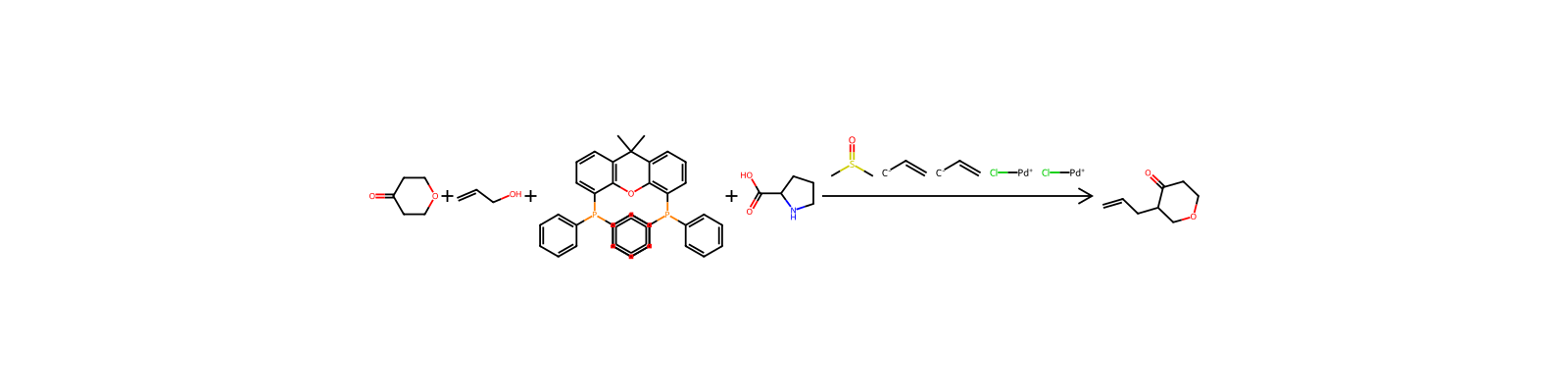
용도Allylpalladium(II) chloride dimer is used as an important catalyst in Heck reaction. It reacts with cyclopentadienyl anion to give cyclopentadienyl allyl palladium. It acts as a precatalyst for asymmetric and cross-coupling catalysis. Further, it is used in the preparation of 1,4-diallyl-1,2-dihydroisoquinolines. It is also employed as a catalyst for greener Buchwald-Hartwig coupling reaction and involved in the synthesis of cationic palladium catalysts. In addition, it takes part in preparation of -heterocyclic carbene-palladium-eta3-allyl chloride complex, which is an efficient catalyst for the Suzuki-Miyaura cross-coupling reactions in synthetic chemistry.
일반 설명Allylpalladium(II) chloride dimer is employed as catalyst in Heck reaction. It also participates as catalyst in the tandem nucleophilic allylation-alkoxyallylation reaction of the alkynylaldehydes with allyl chloride and allyltributylstannane.
공급사50 곳
国药集团化学试剂有限公司86-21-63210123 · [email protected]
北京华美互利生物化工010-56205725 · [email protected]
梯希爱(上海)化成工业发展有限公司021-67121386 · [email protected]
上海阿拉丁生化科技股份有限公司400-6206333 13167063860 · [email protected]
爱斯特(成都)生物制药股份有限公司+86-28-85122536 85324413 · [email protected]
Baoji Guokang Healthchem co.,ltd+8615604608665 15604608665 · [email protected]
Dayang Chem (Hangzhou) Co.,Ltd.+86-0571-88938639 17705817739 · [email protected]
科瑞迪化学400-821-5857 021-64326257 · [email protected]
上海迈瑞尔生化科技有限公司4006356688 18621169109 · [email protected]
宇瑞(上海)化学有限公司02150456736 18602143071 · [email protected]
阿法埃莎(中国)化学有限公司400-6106006 · [email protected]
上海德默医药科技有限公司400-021-7337 2355568890 · [email protected]
安耐吉化学&3A(安徽泽升科技股份有限公司)400-0056266 · [email protected]
武汉凯威斯科技有限公司86-027-67849912 · [email protected]
上海柏卡化学技术有限公司400-026-1533/(021) 6478-0600 · [email protected]
上海瀚鸿科技股份有限公司021-54306202 13764082696 · [email protected]
上海钰康生物科技有限公司+86-18930848214 +86-021-56762820 · [email protected]
江苏欣诺科催化剂股份有限公司0512-67216630 67216634 · [email protected]
陕西瑞科新材料股份有限公司0917-8888777 18691786767
四川库利南科技有限公司400-1166-196 18981987031 · [email protected]
南京辛西亚生物科技有限公司0550-5618439 15951861180 · [email protected]
艾科试剂4008-755-333 18080918076 · [email protected]
上海琅迪信息科技中心13816752554
上海思域化工科技有限公司86-21-34053660 · [email protected]
赛默飞世尔科技(中国)有限公司800-810-5118 · [email protected]
北京伊诺凯科技有限公司400-810-7969 010-59572699 · [email protected]
江苏艾康生物医药研发有限公司025-66113011 13913916777 · [email protected]
上海健超生物科技有限公司150-2103-5486 18017383231 · [email protected]
上海茵凯化学科技有限公司021-57603038 13601791340;13818007232 · [email protected]
TCI AMERICA800-4238616 · [email protected]
TOKYO CHEMICAL INDUSTRY CO., LTD.03-36680489 · [email protected]
TCI Europe320-37350700 · [email protected]
上海贤鼎生物科技有限公司4009209199 · [email protected]
上海睿升化工科技有限公司+86-021-50935922
南京拉瑞创新科技有限公司025-83726959 15851816062
北京格林凯默科技有限公司131-21959385 18804271668 · [email protected]
HBCChem, Inc.+1-510-219-6317 · [email protected]
Labnetwork lnc.+86-27-50766799 +86-18062016861 · [email protected]
上海石洋化工有限公司021-56795766 · [email protected]
雷丁试剂0510-85629785 18013409632 · [email protected]
上海御略医药科技有限公司021-60345187 13671753212 · [email protected]
上海麦克林生化科技股份有限公司15221275939 15221275939 · [email protected]
杭州杰恒化工有限公司0571-87396432 · [email protected]
上海兴鲁化工科技有限公司02120970332 · [email protected]
Sigma-Aldrich西格玛奥德里奇(上海)贸易有限公司021-61415566 800-8193336 · [email protected]
桦特昇生物科技(武汉)有限公司027-59207879 1972026995 18140587686 · [email protected]
Alfa Chemistry1-516-6625404 · [email protected]
西安美川生物科技有限公司029-89275612 +8618991951683 · [email protected]
厦门志信化学有限公司+86-5922680277 +86-13806087780 · [email protected]
Alfa Chemistry+1-5166625404 · [email protected]
관련 반응
2,033건




연결된 노트
불러오는 중…