
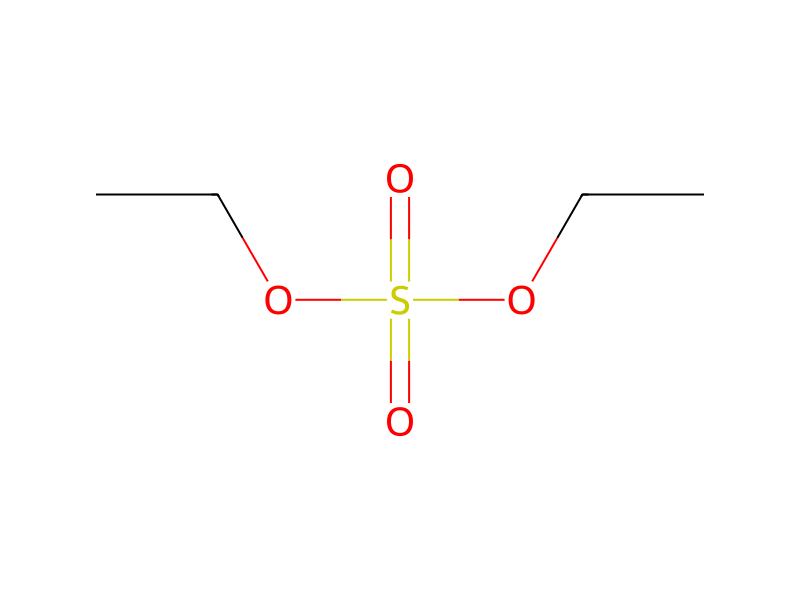
기본 정보
- 표준 SMILES
CCOS(=O)(=O)OCC- InChIKey
DENRZWYUOJLTMF-UHFFFAOYSA-N- 분자식
- C4H10O4S
- 평균 분자량
- 154.19 g/mol
- 단동위원소 질량
- 154.0299798
개요
Diethyl Sulfate can cause cancer according to an independent committee of scientific and health experts.
이름 및 식별자
- 우선 이름
- Diethyl Sulfate
- IUPAC
- diethyl sulfate
- 현지명
- 다이에틸설페이트
- 영어명
- Diethyl sulfate
- 분자식
- C4H10O4S
- 분자량
- 154.18
이름 및 동의어
Diethyl sulfate64-67-5Diethyl sulphateSulfuric acid, diethyl esterDIETHYLSULFATEDiaethylsulfatSulfuric acid diethyl esterDiethyl tetraoxosulfateDiethylester kyseliny siroveK0FO4VFA7INSC-56380CHEBI:34699
이름 더 보기
다이에틸설페이트디에틸설페이트디에틸황산염디에틸황산황산디에틸황산디에틸,디에틸황산디에틸황산염황산,디에틸에스테르에틸황산디에틸테트라옥소황산염황산디에틸다이에틸 황산염디에틸 모노황산염디에틸 테트라옥소황산염보통 에틸 황산염에틸 황산염황산 디에틸황산, 디에틸 에스터DSETHYL SULFATEDHYSMIG13EthylsulpateDiethylsulfat
NSC56380RefChem:133445Sufuric Acid Diethyl Ester200-589-6Montelukast Impurity 15MFCD00009099NSC 56380DTXSID1024045
데이터베이스 식별자
- CAS
64-67-5- PubChem CID
- 6163
- DTXSID
DTXSID1024045- ChEMBL
CHEMBL163100- ChEBI
CHEBI:34699- UNII
- K0FO4VFA7I
- EC Number
- 200-589-6
- Nikkaji
- J2.811H
물성
구조 계산 물성
- XLogP
- 1.1
- 극성 표면적
- 61 Ų
- 수소 결합 공여자 수
- 0
- 수소 결합 수용자 수
- 4
- 회전 가능 결합 수
- 4
- 무거운 원자 수
- 9
- 형식 전하
- 0
- 복잡도
- 130
실험 및 물리화학적 성질
Chemical Classes
Hazardous Air Pollutants (HAPs)
Toxic Gases & Vapors -> Other Toxic Gases & Vapors
Carcinogens
SpringerMaterials PropertiesBoiling point
PesticidesPesticide -> EPA IRIS
LogP
log Kow= 1.14
1.14
1.14
Odor
Peppermint odor
Faint ethereal odor
Density
1.1803 at 68 °F (USCG, 1999) - Denser than water; will sink
1.172 g/cu cm @ 25 °C
Relative density (water = 1): 1.2
1.172 @25 °C
Viscosity1.79 centipoises @ 20 °C
Color/FormColorless, oily liquid ... darkens with age
Solubility
Miscible in alcohol and ether.
In water, 7,000 mg/l @ 20 °C
Solubility in water: reaction
CorrosivityNoncorrosive
Flash Point
220 °F (USCG, 1999)
104 °C
220 °F (CLOSED CUP)
104 °C c.c.
Boiling Point
409 °F at 760 mmHg (USCG, 1999)
209.5 °C with decomposition
208 °C @760 [mm Hg]
물리화학적 성질
- 녹는점
- -24 °C · -24 °C (lit.)
- 끓는 점
- 208 °C · 208 °C (lit.)
- 밀도
- 1.177 g/mL · 1.177 g/mL at 25 °C (lit.)
- 증기 밀도
- 5.3 · 5.3 (vs air)
- 증기압
- 0.01 mm · <0.01 mm Hg ( 20 °C)
- 굴절률
- 20 · n20/D 1.399(lit.)
- 인화점
- 173 °F · 173 °F
- 저장 조건
- Refrigerator (+4°C)
- 용해도
- soluble in Ether,Alcohol
- 물리적 상태
- 액체
- 색상
- 투명한
- 냄새
- 숯. 희미한 에테르 냄새, 자극적인 후유증
- 수용성
- 5 g/L · 5g/L(20℃)
- Merck
- 14 · 14,3130
- BRN
- 1209714 · 1209714
- Henry's Law Constant
- 1.6 · 1.6×100 mol/(m3Pa) at 25℃, Ebert et al. (2023)
- Dielectric constant
- 29 · 29.0(20℃)
- 안정성
- 수분에 민감합니다. 산화제와 격렬하게 반응할 수 있음.
- InChI
- 1S/C4H10O4S/c1-3-7-9(5,6)8-4-2/h3-4H2,1-2H3
- InChIKey
- DENRZWYUOJLTMF-UHFFFAOYSA-N
- SMILES
- CCOS(=O)(=O)OCC
- NIST
- Sulfuric acid, diethyl ester(64-67-5)
- EPA
- Diethyl sulfate (64-67-5)
화학적 성질
Diethyl sulfate is a colorless, oily liquid with a faint peppermint- like odor, which darkens with age (Budavari, 1996). It is miscible with alcohol and ether (O'Neil, 2006). At higher temperatures, DES rapidly decomposes into monoethyl sulfate and alcohol (NTP, 2011).
안전 및 규제
GHS 분류
GHS Classification
Danger
H302: Harmful if swallowed [Warning Acute toxicity, oral]
P203, P260, P261, P264, P270, P271, P280, P301+P317, P301+P330+P331, P302+P352, P302+P361+P354, P304+P340, P305+P354+P338, P316, P317, P318, P321, P330, P362+P364, P363, P405, and P501 (click each P-code to see the statement)
Danger
H302 (99.8%): Harmful if swallowed [Warning Acute toxicity, oral]
P203, P260, P261, P262, P264, P264+P265, P270, P271, P273, P280, P301+P317, P301+P330+P331, P302+P352, P302+P361+P354, P304+P340, P305+P354+P338, P316, P317, P318, P321, P330, P361+P364, P362+P364, P363, P403+P233, P405, and P501 (click each P-code to see the statement)
유해성 정보
Regulatory Information
Chemical: Sulfuric acid, diethyl ester
Hazard Traits - Carcinogenicity; Genotoxicity
Sulfuric acid, diethyl ester is listed on the EPA's Chemical Data Reporting (CDR) system. Manufacturers and importers of Sulfuric acid, diethyl ester are required to report information about their production and use of this chemical to the EPA under the Toxic Substances Control Act (TSCA). (40 eCFR Part 711)
Status: Active Update: 26-04-2018 https://echa.europa.eu/registration-dossier/-/registered-dossier/24081
Substance: Diethyl sulphate
Diethyl sulphate: HSNO Approval: HSR002968 Approved with controls
Other Safety InformationIMAP assessments - Sulfuric acid, diethyl ester: Human health tier II assessment
DOT LabelPoison
Fire Hazards
Special Hazards of Combustion Products: Highly toxic fumes contaning sulfur oxides may be generated along with thermal decomposition products such as ethyl ether and ethylene. Sulfuric acid may be produced in the presence of moisture.
· Combustible material: may burn but does not ignite readily.
Combustible. Gives off irritating or toxic fumes (or gases) in a fire.
Fire PotentialCombustible when exposed to heat or flame... .
Health Hazards
May be fatal if inhaled, swallowed or absorbed through skin. Inhalation causes nausea and vomiting. Causes burns to skin and eyes. Ingestion may cause nausea, vomiting abdominal pain and collapse. (USCG, 1999)
· Highly toxic, may be fatal if inhaled, ingested or absorbed through skin.
Hazards Summary
Diethyl sulfate is used as an ethylating agent and as a chemical intermediate. No information is available on the acute (short-term), chronic (long-term), reproductive, or developmental effects of diethyl sulfate in humans. In an epidemiological study, an excess mortality rate from laryngeal cancer was associated with occupational exposure to high concentrations of diethyl sulfate. In one study, rats orally exposed to diethyl sulfate developed tumors in the forestomach. EPA has not classified diethyl sulfate with respect to potential carcinogenicity. The International Agency for Research on Cancer (IARC) has classified diethyl sulfate as a Group 2A, probable human carcinogen.
A skin, eye, and respiratory tract irritant; May cause pulmonary edema; [ICSC] May cause severe burns to eyes and skin; [HSDB] May be fatal by ingestion, inhalation, and skin absorption; [CAMEO] Germ cell mutagens that have shown to increase the mutant frequency in the progeny of exposed mammals. [MAK] Decomposes in water and releases sulfuric acid; A corrosive substance that can cause injury to the skin, eyes, and respiratory tract; Inhalation may cause chemical pneumonitis; May be absorbed through skin; [MSDSonline]
DOT ID and Guide1594 152
Reactive GroupEsters, Sulfate Esters, Phosphate Esters, Thiophosphate Esters, and Borate Esters
EC ClassificationSymbol: T; R: 45-46-20/21/22-34; S: 53-45; Note: E
UN ClassificationUN Hazard Class: 6.1; UN Pack Group: II
Special Reports
National Toxicology Program. Eleventh Report on Carcinogens (2005). The Report on Carcinogens is an informational scientific and public health document that identifies and discusses substances (including agents, mixtures, or exposure circumstances) that may pose a carcinogenic hazard to human health. Diethyl sulfate (64-67-5) is listed as reasonably anticipated to be a human carcinogen.[Available from, as of July 31, 2009: http://ntp.niehs.nih.gov/ntp/roc/eleventh/profiles/s070diet.pdf]
안전 및 보호
Fire Fighting
Excerpt from ERG Guide 152 [Substances - Toxic (Combustible)]:
Use water spray, powder, foam, carbon dioxide.
First Aid Measures
Fresh air, rest. Half-upright position. Refer immediately for medical attention.
Remove contaminated clothes. Rinse skin with plenty of water or shower for at least 15 minutes. Refer immediately for medical attention.
First rinse with plenty of water for several minutes (remove contact lenses if easily possible), then refer for medical attention.
Rinse mouth. Do NOT induce vomiting. Give nothing to drink. Refer immediately for medical attention.
Accidental Release Measures
· CALL 911. Then call emergency response telephone number on shipping paper. If shipping paper not available or no answer, refer to appropriate telephone number listed on the inside back cover.
· ELIMINATE all ignition sources (no smoking, flares, sparks or flames) from immediate area.
First Aid
INHHALATION: Remove to fresh air. If not breathing, give artificial respiration. If breathing is difficult, give oxygen.
General First Aid:
Safe StorageSeparated from food and feedstuffs. Dry. Well closed. Keep in a well-ventilated room. Store in an area without drain or sewer access.
Exposure Control and Personal Protection· Wear positive pressure self-contained breathing apparatus (SCBA).
Fire Fighting ProceduresUse dry chemical, foam, carbon dioxide, or water spray. Use water spray to keep fire-exposed containers cool. Approach fire from upwind to avoid hazardous vapors and toxic decomposition products.
Storage Conditions
PRECAUTIONS FOR "CARCINOGENS": Storage site should be as close as practical to lab in which carcinogens are to be used, so that only small quantities required for ... expt need to be carried. Carcinogens should be kept in only one section of cupboard, an explosion-proof refrigerator or freezer (depending on chemicophysical properties ...) that bears appropriate label. An inventory ... should be kept, showing quantity of carcinogen & date it was acquired ... Facilities for dispensing ... should be contiguous to storage area. /Chemical Carcinogens/
Store in a cool, dry, well-ventilated location. Separate from bases, oxidizing materials, water and air.
Cleanup Methods
PRECAUTIONS FOR "CARCINOGENS": A high-efficiency particulate arrestor (HEPA) or charcoal filters can be used to minimize amt of carcinogen in exhausted air ventilated safety cabinets, lab hoods, glove boxes or animal rooms ... Filter housing that is designed so that used filters can be transferred into plastic bag without contaminating maintenance staff is avail commercially. Filters should be placed in plastic bags immediately after removal ... The plastic bag should be sealed immediately ... The sealed bag should be labelled properly ... Waste liquids ... should be placed or collected in proper containers for disposal. The lid should be secured & the bottles properly labelled. Once filled, bottles should be placed in plastic bag, so that outer surface ... is not contaminated ... The plastic bag should also be sealed & labelled. ... Broken glassware ... should be decontaminated by solvent extraction, by chemical destruction, or in specially designed incinerators. /Chemical Carcinogens/
Stop or control the leak, if this can be done without undue risk. Use water spray to cool & disperse vapors, & protect personnel. Approach release from upwind. Absorb in noncombustible material for proper disposal. Prompt cleanup and removal are necessary.
Nonfire Spill ResponseExcerpt from ERG Guide 152 [Substances - Toxic (Combustible)]:
Disposal Methods
SRP: At the time of review, criteria for land treatment or burial (sanitary landfill) disposal practices are subject to significant revision. Prior to implementing land disposal of waste residue (including waste sludge), consult with environmental regulatory agencies for guidance on acceptable disposal practices.
PRECAUTIONS FOR "CARCINOGENS": There is no universal method of disposal that has been proved satisfactory for all carcinogenic compounds & specific methods of chem destruction ... published have not been tested on all kinds of carcinogen-containing waste. ... summary of avail methods & recommendations ... /given/ must be treated as guide only. /Chemical Carcinogens/
PRECAUTIONS FOR "CARCINOGENS": ... Incineration may be only feasible method for disposal of contaminated laboratory waste from biological expt. However, not all incinerators are suitable for this purpose. The most efficient type ... is probably the gas-fired type, in which a first-stage combustion with a less than stoichiometric air:fuel ratio is followed by a second stage with excess air. Some ... are designed to accept ... aqueous & organic-solvent solutions, otherwise it is necessary ... to absorb soln onto suitable combustible material, such as sawdust. Alternatively, chem destruction may be used, esp when small quantities ... are to be destroyed in laboratory. /Chemical Carcinogens/
PRECAUTIONS FOR "CARCINOGENS": HEPA (high-efficiency particulate arrestor) filters ... can be disposed of by incineration. For spent charcoal filters, the adsorbed material can be stripped off at high temp & carcinogenic wastes generated by this treatment conducted to & burned in an incinerator. ... LIQUID WASTE: ... Disposal should be carried out by incineration at temp that ... ensure complete combustion. SOLID WASTE: Carcasses of lab animals, cage litter & misc solid wastes ... should be disposed of by incineration at temp high enough to ensure destruction of chem carcinogens or their metabolites. /Chemical Carcinogens/
For more Disposal Methods (Complete) data for DIETHYLSULFATE (6 total), please visit the HSDB record page.
Spillage Disposal
Personal protection: complete protective clothing including self-contained breathing apparatus. Do NOT let this chemical enter the environment. Collect leaking and spilled liquid in sealable containers as far as possible. Absorb remaining liquid in sand or inert absorbent. Then store and dispose of according to local regulations.
독성 정보
Environmental Fate
TERRESTRIAL FATE: Based upon the hydrolysis of diethylsulfate in aqueous environments(1), diethylsulfate is expected to hydrolyze in moist soils(SRC). Volatilization from soil surfaces and adsorption to soil are not expected to be important processes because of hydrolysis(SRC).
AQUATIC FATE: If released to water, diethylsulfate is expected to hydrolyze rapidly(SRC). A hydrolysis rate constant of 1.15X10⁻⁴/sec at 25 °C(1) translates to a half-life of 1.7 hours at pH 7(SRC). The rate of hydrolysis will increase in both acidic and basic waters as the reaction is catalyzed under these conditions(2). Volatilization from water surfaces, adsorption to suspended solids and sediments, biodegradation, and bioconcentration are not expected to be important fate processes in aquatic systems because of hydrolysis(SRC).
ATMOSPHERIC FATE: According to a model of gas/particle partitioning of semivolatile organic compounds in the atmosphere(1), diethylsulfate, which has a vapor pressure of 0.212 mm Hg at 25 °C(2), is expected to exist solely as a vapor in the ambient atmosphere. Vapor-phase diethylsulfate is degraded in the atmosphere by reaction with photochemically-produced hydroxyl radicals(SRC); the half-lives for this reaction in air is estimated to be about 9 days(SRC), calculated from its rate constant of 1.8X10⁻¹² cu cm/molecule-sec at 25 °C(3). Diethylsulfate also reacts rapidly with water in the atmosphere, with an estimated half-life of <1 day(3).
Adverse Effects
Reproductive Toxin - A chemical that is toxic to the reproductive system, including defects in the progeny and injury to male or female reproductive function. Reproductive toxicity includes developmental effects. See Guidelines for Reproductive Toxicity Risk Assessment.
Exposure RoutesThe substance can be absorbed into the body by inhalation, by ingestion and through the skin.
Ecotoxicity Excerpts
/PLANTS/ Diethyl sulfate induced unscheduled DNA synthesis in pollen of petunia hybrida. It induced chromosomal aberrations in meiotic cells and chlorophyll mutations in rice, ring chromosomes in Allium sativum root tips and anaphase and telophase aberrations in Papaver somniferum root meristemic cells.
Signs and Symptoms
Cough. Sore throat. Laboured breathing. Shortness of breath. Symptoms may be delayed.
Redness. Pain. Serious skin burns.
Redness. Pain. Severe burns.
Burns in mouth and throat. Burning sensation behind the breastbone. Abdominal pain. Shock or collapse.
Effluent ConcentrationsIn 1989, total land releases of diethylsulfate in the US were estimated at approximately 114 kg and total air emissions were estimated as approximately 4 tons from 28 locations(1).
ICSC Environmental DataThe substance is harmful to aquatic organisms.
EPA IRIS InformationDiethyl sulfate
Medical Surveillance
PRECAUTIONS FOR "CARCINOGENS": Whenever medical surveillance is indicated, in particular when exposure to a carcinogen has occurred, ad hoc decisions should be taken concerning ... /cytogenetic and/or other/ tests that might become useful or mandatory. /Chemical Carcinogens/
Soil Adsorption/MobilityBased upon the rapid hydrolysis of diethylsulfate in aqueous environments(1), adsorption to soil and leaching are not expected to be important fate processes(SRC).
TSCA Test Submissions
The dermal carcinogenicity of diethyl sulfate was evaluated in a group of 40 C3H/HeJ male mice painted 3 times/week for their lifespan on the skin of the back, with undiluted diethyl sulfate at an average dose of 0.0074 g/mouse/application. A negative control group of 40 animals was exposed to 0.0126 g acetone/mouse/application in the same manner as the treated group. All the treated mice were dead after 23 months of the study, 11 after 18 months, and 27 after one year. The first skin neoplasm was observed after 12 months of treatment, with a total of 21 animals developing malignant skin neoplasms. The total cancer incidence was 87.5% and the median latent periods for appearance of neoplasms and cancer were 15.7 and 16.2 months, respectively. No skin tumors were observed in the control group.
The mutagenicity of diethyl sulfate was evaluated in the Chinese Hamster Ovary (CHO) Mutation test, both in the presence and absence of added metabolic activation by Aroclor-induced rat liver S9 fraction. Based on the results of preliminary toxicity determinations, diethyl sulfate, diluted with DMSO, was tested for mutagenicity at ranges of concentrations of 2.5-40x10(-3)% and 5-80x10(-3)% (v/v in DMSO) in the presence and absence of activation, respectively. All concentrations of diethyl sulfate tested caused a positive response in the tests both with and without activation.
The ability of diethyl sulfate to induce sister chromatid exchanges (SCE) in Chinese hamster ovary (CHO) cells was evaluated in the absence of added metabolic activation. Based on preliminary toxicity tests, diethyl sulfate, diluted with DMSO, was tested at concentrations of 0, 0.00125, 0.0025, 0.0050, 0.010 or 0.020 % (v/v). A total of 15 cells/dose level were examined in all but the highest dose level tested since this dose level was toxic to the cells. There were statistically significant increases observed in the numbers of SCE/cell and SCE/chromosome relative to negative controls at concentrations of 0.0050 and 0.010% (p < 0.001, Student's t-test). A positive dose-response relationship was observed.
The ability of diethyl sulfate to cause an increase in unscheduled DNA synthesis in rat liver cells was evaluated. Based on preliminary toxicity tests, diethyl sulfate, diluted in DMSO, was tested at concentrations of 0, 0.0001, 0.001, 0.003, 0.010, 0.030 or 0.100% (v/v). Cells were treated with test article for 2 hrs. Statistically significant increases in DNA synthesis relative to negative controls were observed at all tested concentrations using both values for radioactivity incorporation into either nuclei or DNA (p < 0.05 for concentrations of 0.001 and 0.100% and p < 0.001 for the remaining concentrations). A linear dose-response pattern was not observed although the cumulative responses observed over a wide range of concentrations suggested a significant biological effect.
Atmospheric ConcentrationsURBAN/SUBURBAN: Diethylsulfate was qualitatively detected in the atmosphere of the Netherlands(1). In 1989, total air emissions of diethylsulfate in the U.S. were estimated at approximately 4 tons from 28 locations(2).
규제 정보
Atmospheric Standards
This action promulgates standards of performance for equipment leaks of Volatile Organic Compounds (VOC) in the Synthetic Organic Chemical Manufacturing Industry (SOCMI). The intended effect of these standards is to require all newly constructed, modified, and reconstructed SOCMI process units to use the best demonstrated system of continuous emission reduction for equipment leaks of VOC, considering costs, non air quality health and environmental impact and energy requirements. Diethyl sulfate is produced, as an intermediate or a final product, by process units covered under this subpart.
Listed as a hazardous air pollutant (HAP) generally known or suspected to cause serious health problems. The Clean Air Act, as amended in 1990, directs EPA to set standards requiring major sources to sharply reduce routine emissions of toxic pollutants. EPA is required to establish and phase in specific performance based standards for all air emission sources that emit one or more of the listed pollutants. Diethyl sulfate is included on this list.
CERCLA Reportable Quantities
Persons in charge of vessels or facilities are required to notify the National Response Center (NRC) immediately, when there is a release of this designated hazardous substance, in an amount equal to or greater than its reportable quantity of 10 lb or 4.54 kg. The toll free number of the NRC is (800) 424-8802; In the Washington D.C. metropolitan area (202) 426-2675. The rule for determining when notification is required is stated in 40 CFR 302.4 (section IV. D.3.b).
안전 데이터
- wgk
- 3
- tsca
- TSCA listed
- rtecs
- WS7875000
- ridadr
- UN 1594
- 독성
- LD50 orally in rats: 0.88 g/kg (Smyth)
- HS 번호
- 29209090
- risk_code
- 45-46-20/21/22-34
- hazard_code
- T
- safety_code
- 53-45
- 포장분류
- II
- 위험 등급
- 6.1
- 기존화학 물질
- KE-32592
- Hazard Classifications
- Acute Tox. 4 DermalAcute Tox. 4 InhalationAcute Tox. 4 OralCarc. 1BEye Dam. 1Muta. 1BSkin Corr. 1B
- 스토리지 클래스
- 6.1A - Combustible acute toxic Cat. 1 and 2very toxic hazardous materials
- 유해 물질 데이터
- 64-67-5(Hazardous Substances Data)
- 함량 및 규제정보
- 물질구분: 유독물질; 혼합물(제품)함량정보: 황산 디에틸 및 이를 0.1% 이상 함유한 혼합물
- 유해화학물질 필터링
- 97-1-407
- 중점관리물질 필터링
- 별표1-8
화학 및 산업
약리 정보
Metabolism/Metabolites
ETHYLMERCAPTURIC ACID WAS IDENTIFIED AS A URINARY METABOLITE OF SC, IP, OR ORAL DIETHYL SULFATE, ALSO ISOLATED FROM URINE WAS THE DICYCLOHEXYLAMMONIUM SALT IN 2.4% YIELD.
After male CFE albino rats were administered 1 ml of a 5% (v/v) solution of diethyl sulfate in arachis oil by gavage or by intraperitoneal or subcutaneous injection, ethylmercapturic acid and a sulfoxide were identified as metabolites.
MeSH Pharmacological Classification
Highly reactive chemicals that introduce alkyl radicals into biologically active molecules and thereby prevent their proper functioning. Many are used as antineoplastic agents, but most are very toxic, with carcinogenic, mutagenic, teratogenic, and immunosuppressant actions. They have also been used as components in poison gases.
Chemical agents that increase the rate of genetic mutation by interfering with the function of nucleic acids. A clastogen is a specific mutagen that causes breaks in chromosomes.
용도 및 제조
Uses
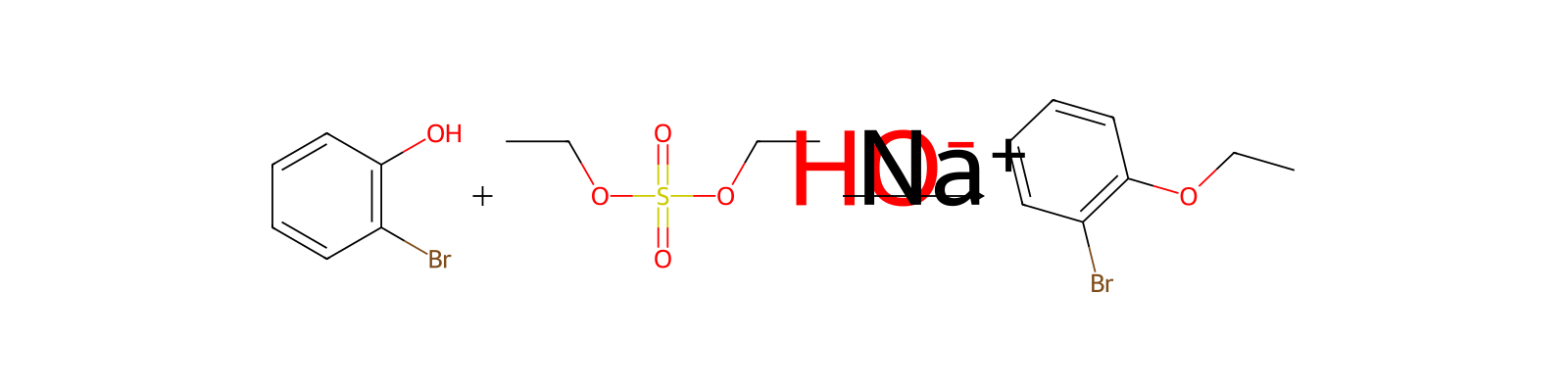
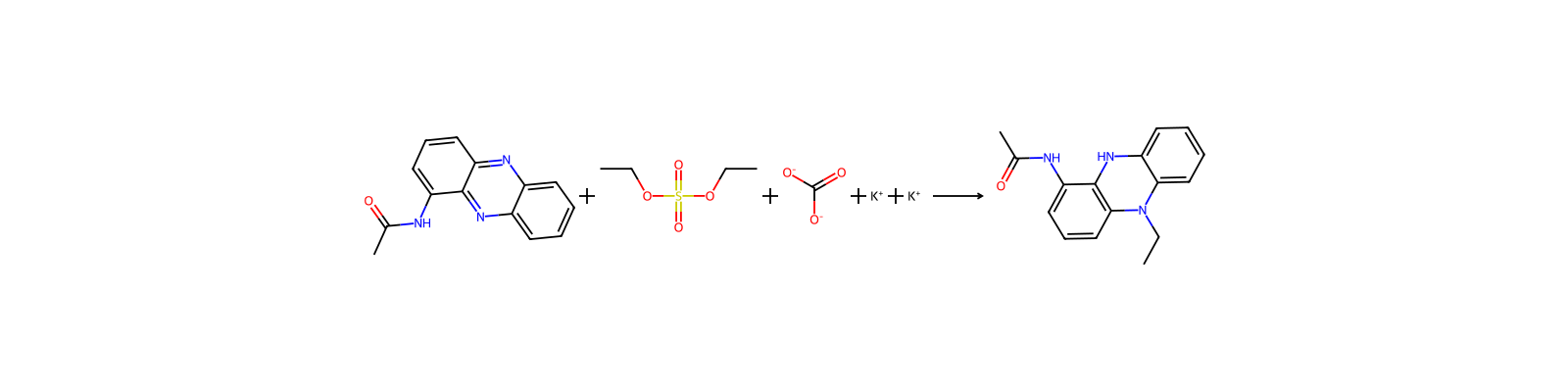
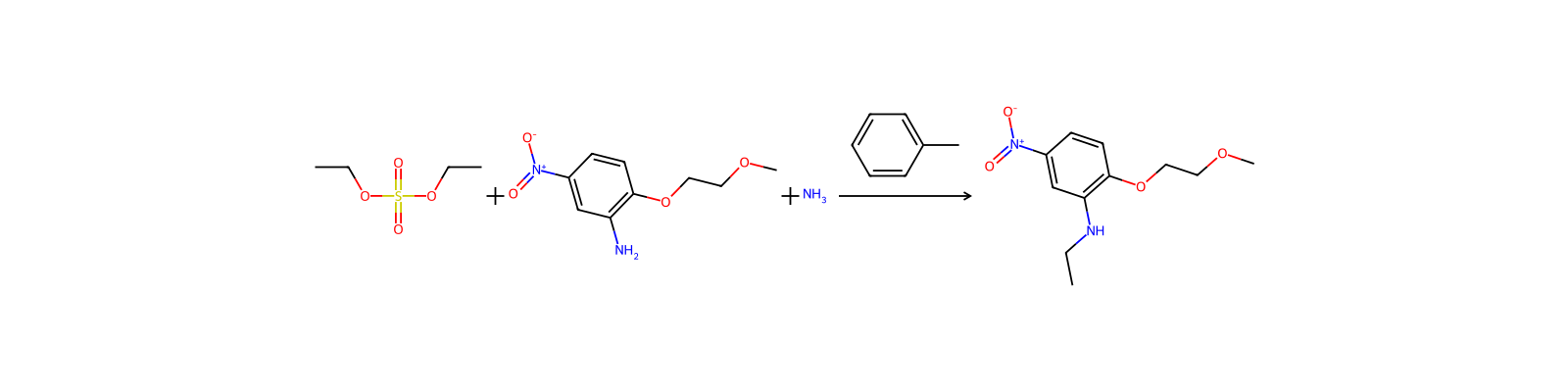
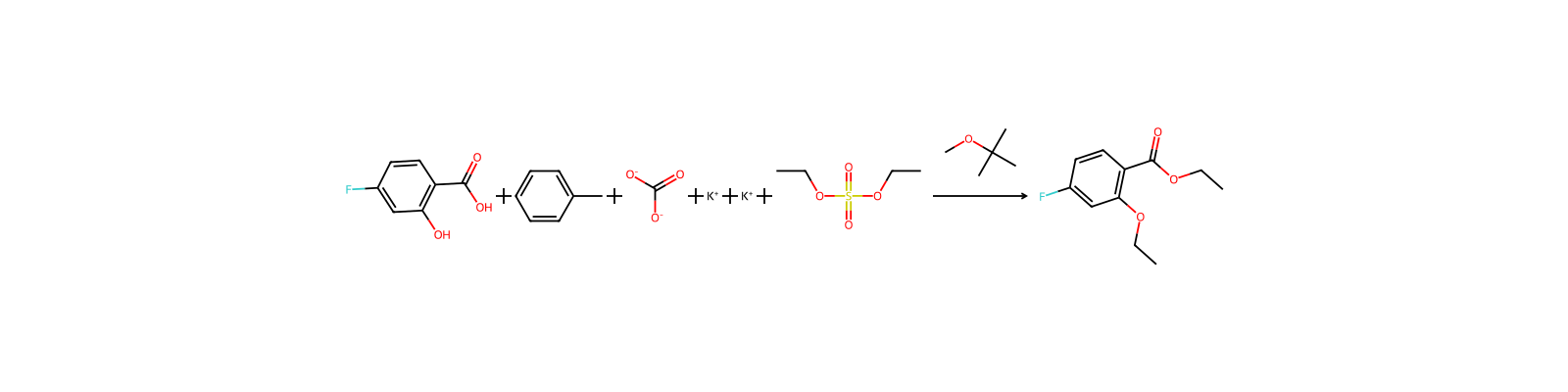
Diethyl sulfate is primarily used as an ethylating agent, and also as an accelerator in the sulfation of ethylene and in some sulfonations. Diethyl sulfate is also a chemical intermediate for ethyl derivatives of phenols, amines, and thiols, and as an alkylating agent.
Used mainly to make dyes; Also used as an ethylating agent (pigment production), a finishing agent (textile manufacturing), a dye-set agent (carbonless paper), and an accelerator (sulfation of ethylene); Also used in agricultural chemicals, household products, pharmaceuticals, and cosmetics; [HSDB]
Pulp and Paper Processing [Category: Industry]
Chiefly as an ethylating agent; as an accelerator in the sulfation of ethylene; in some sulfonations.
Chemical intermediate for ethyl derivatives of phenols, amines, and thiols and as an alkylating agent.
The principal uses are as an intermediate in dye manufacture, as an ethylating agent in pigment production, as a finishing agent in textile manufacture and as a dye-set agent in carbonless paper. Smaller applications are in agricultural chemicals, in household products, in the pharmaceutical and cosmetic industries, as a laboratory reagent, as an accelerator in the sulfation of ethylene and in some sulfonation processes.
U.S. Production
2023: 2,500,000 - <4,000,000 lb
(1972) PROBABLY GREATER THAN 4.5X10+5 GRAMS
(1975) PROBABLY GREATER THAN 4.54X10+5 GRAMS
Consumer UsesNot Known or Reasonably Ascertainable
Industry UsesPigment
Methods of ManufacturingPrepared from ethanol + sulfuric acid; by absorption of ethylene in sulfuric acid; from diethyl ether and fuming sulfuric acid.
Formulations/Preparations
GRADES: TECHNICAL
Diethyl sulfate is available as a technical grade product that contains 99.5% active ingredient or as a laboratory chemical with a purity of 95% to >98%.
General Manufacturing Information
Not Known or Reasonably Ascertainable
Sulfuric acid, diethyl ester: ACTIVE
Method of purification: rectification in vacuo.
...Could be used as a mutagenic agent to produce a new variety of barley called Luther; however, no evidence was found that it is presently being used commercially for this purpose.
응용 분야
용도The primary use of diethyl sulfate is as a chemical intermediate (ethylating agent) in synthesis of ethyl derivatives of phenols, amines, and thiols; as an accelerator in the sulfation of ethylene; and in some sulfonation processes. It is used to manufacture dyes, pigments, carbonless paper, and textiles. It is an intermediate in the indirect hydration (strong acid) process for the preparation of synthetic ethanol from ethylene. Smaller quantities are used in household products, cosmetics, agricultural chemicals, pharmaceuticals, and laboratory reagents (IARC 1992, 1999, HSDB 2009). In 1966, it was used as a mutagen to create the Luther variety of barley (IARC 1974).
일반 설명Diethyl sulfate appears as a clear colorless liquid with a peppermint odor. Burns, though may be difficult to ignite. Corrosive to metals and tissue. It is a potent alkylating agent.
제조 방법
Diethyl sulfate is produced from ethanol and sulfuric acid, from ethylene and sulfuric acid, or from diethyl ether and fuming sulfuric acid (Budavari, 1996).
상·하류 제품 정보
상류 원료
하류 제품
공급사50 곳
国药集团化学试剂有限公司86-21-63210123 · [email protected]
梯希爱(上海)化成工业发展有限公司021-67121386 · [email protected]
山东旭晨化工科技有限公司0533-15715337262 15715337262 · [email protected]
上海阿拉丁生化科技股份有限公司400-6206333 13167063860 · [email protected]
南通润丰石油化工有限公司66017690 19952660367 · [email protected]
湖北宥澄新材料科技有限公司17764017698 13163370568 · [email protected]
武汉欣扬瑞和化学科技有限公司13720274133 · [email protected]
武汉欣扬瑞和化学科技有限公司153-07155313 15307155313 · [email protected]
上海泰矶林实业有限公司02150630626 17717886015 · [email protected]
常州市紫东联化进出口有限公司0519-85560282 13656141470 · [email protected]
爱斯特(成都)生物制药股份有限公司+86-28-85122536 85324413 · [email protected]
山东前元高分子材料有限公司18678041314 18765609661 · [email protected]
Dayang Chem (Hangzhou) Co.,Ltd.+86-0571-88938639 17705817739 · [email protected]
广州隽唐科技有限公司020-36607679 13502246435 · [email protected]
Syntechem Co.,Ltd[email protected]
Ark Pharm, Inc.847-367-3680 · [email protected]
上海迈瑞尔生化科技有限公司4006356688 18621169109 · [email protected]
上海晶抗生物工程有限公司021-54721350 13524668266 · [email protected]
阿法埃莎(中国)化学有限公司400-6106006 · [email protected]
安耐吉化学&3A(安徽泽升科技股份有限公司)400-0056266 · [email protected]
武汉卡诺斯科技有限公司027-83238443 15327105076 · [email protected]
上海瀚鸿科技股份有限公司021-54306202 13764082696 · [email protected]
上海柯维化学技术有限公司021-64609169 18901607656 · [email protected]
山东洛克化工有限公司17653113209 13065062079 · [email protected]
南通合润生物科技有限公司18362409333 · [email protected]
济南世纪通达化工有限公司15605418165
上海忆嵘生物科技有限公司18049974220 · [email protected]
山东西亚化学有限公司13355009207 13355009207 · [email protected]
玛雅试剂+86 (573) 82222445 (0)18006601000 452520369 · [email protected]
四川库利南科技有限公司400-1166-196 18981987031 · [email protected]
天津希恩思生化科技有限公司400 638 7771 · [email protected]
南京维奥化工有限公司Please Send Email 18652950785 · [email protected]
艾科试剂4008-755-333 18080918076 · [email protected]
上海思域化工科技有限公司86-21-34053660 · [email protected]
赛默飞世尔科技(中国)有限公司800-810-5118 · [email protected]
TCI AMERICA800-4238616 · [email protected]
TOKYO CHEMICAL INDUSTRY CO., LTD.03-36680489 · [email protected]
TCI Europe320-37350700 · [email protected]
上海将来实业股份有限公司021-61552785 · [email protected]
成都迈斯克医药科技有限公司028-84552636 18084815636 · [email protected]
上海御略医药科技有限公司021-60345187 13671753212 · [email protected]
上海麦克林生化科技股份有限公司15221275939 15221275939 · [email protected]
杭州杰恒化工有限公司0571-87396432 · [email protected]
成都润泽本土化工有限公司13096311329 028-88469284 616445927 · [email protected]
池州凯隆进出口贸易有限公司[email protected]
Sigma-Aldrich西格玛奥德里奇(上海)贸易有限公司021-61415566 800-8193336 · [email protected]
大连易得瑞化工有限公司15141125520 15141125520 · [email protected]
九鼎化学(上海)科技有限公司4009209199 · [email protected]
山东智尚新材料有限公司+8617653113209 · [email protected]
Standardpharm Co. Ltd.86-714-3992388 · [email protected]
추가 설명
정의ChEBI: Diethyl sulfate is the diethyl ester of sulfuric acid. It has a role as a carcinogenic agent, an apoptosis inducer, an alkylating agent and a mutagen.
관련 반응
344건



연결된 노트
불러오는 중…