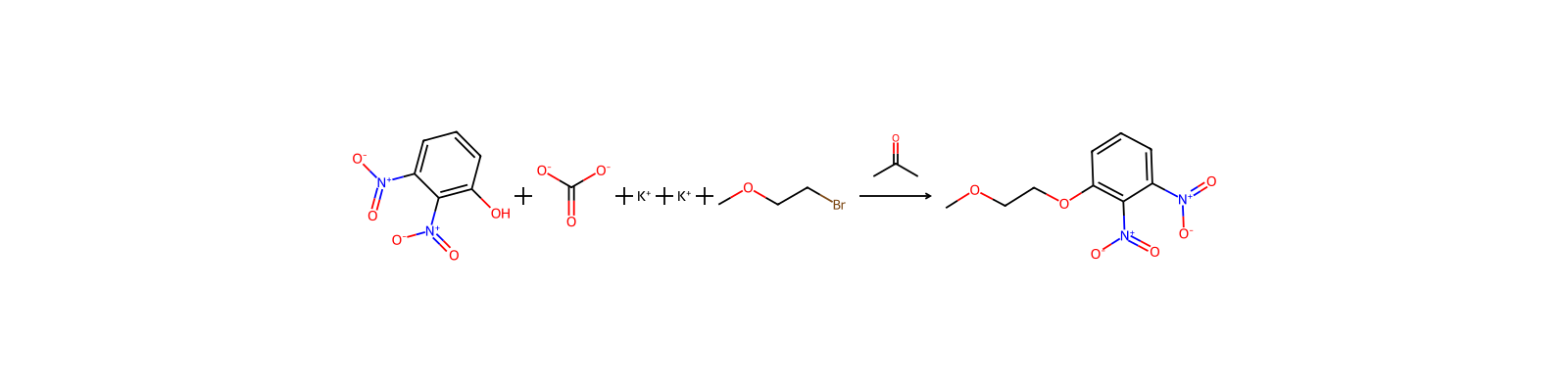

기본 정보
- 표준 SMILES
O=[N+]([O-])c1cccc(O)c1[N+](=O)[O-]- InChIKey
MHKBMNACOMRIAW-UHFFFAOYSA-N- 분자식
- C6H4N2O5
- 평균 분자량
- 184.11 g/mol
- 단동위원소 질량
- 184.01202123
이름 및 식별자
- 우선 이름
- 2,3-Dinitrophenol
- IUPAC
- 2,3-dinitrophenol
- 현지명
- 2,3-디니트로 페놀
- 영어명
- 2,3-DINITROPHENOL
- 분자식
- C6H4N2O5
- 분자량
- 184.11
이름 및 동의어
2,3-DINITROPHENOL66-56-8Phenol, 2,3-dinitro-2,3-DNPDTXSID2075261NSC-156083735M30625HCHEBI:39354RefChem:81872DTXCID7044685200-628-725550-58-7
이름 더 보기
디니트로페놀2,3-디니트로페놀2,3-dinitro-phenoDinitrophenol, 2,3-2,3-dinitrophenolmoistenedwithwater(h2o~20%)2,3-Dinitrophenol moistened with water, >=98.0% (HPLC)
2,3-Dinitrofenol [Czech]2,3-DinitrofenolCCRIS 3101EINECS 200-628-7NSC 156083BRN 2213580Phenol,3-dinitro-NSC156083
데이터베이스 식별자
- CAS
66-56-8- PubChem CID
- 6191
- DTXSID
DTXSID2075261- ChEMBL
CHEMBL3347393- ChEBI
CHEBI:39354- UNII
- 735M30625H
- EC Number
- 200-628-7
- Nikkaji
- J53.754C
물성
구조 계산 물성
- XLogP
- 1.9
- 극성 표면적
- 112 Ų
- 수소 결합 공여자 수
- 1
- 수소 결합 수용자 수
- 5
- 회전 가능 결합 수
- 0
- 무거운 원자 수
- 13
- 형식 전하
- 0
- 복잡도
- 220
실험 및 물리화학적 성질
Density1.681 @ 20°C
Melting Point144.5 °C
Vapor Pressure0.000012 [mmHg]
Physical DescriptionYellow needles or crystals
물리화학적 성질
- 녹는점
- 141 · 141-145 °C
- 끓는 점
- 329 ℃ · 329℃
- 밀도
- 1.65 · 1.650
- 굴절률
- 1.4738 · 1.4738 (estimate)
- 인화점
- 151 ℃ · 151℃
- 용해도
- 용해도 물에 거의 용해되지 않음; 에탄올, 에테르에 용해됨
- 산도 계수 (pKa)
- 4.86 · 4.86, 4.96(at 25℃)
- 색상
- 노란 바늘 결정
- BRN
- 2213580 · 2213580
- 주요 응용
- 바이오센서 설계, 약물 전달
- InChI
- 1S/C6H4N2O5/c9-5-3-1-2-4(7(10)11)6(5)8(12)13/h1-3,9H
- InChIKey
- MHKBMNACOMRIAW-UHFFFAOYSA-N
- SMILES
- Oc1cccc(c1[N+]([O-])=O)[N+]([O-])=O
- EPA
- 2 · Phenol, 2,3-dinitro- (66-56-8)
화학적 성질
Yellow monoclinic prisms, flammable. Soluble in ether, benzene, and ethanol; slightly soluble in water.
안전 및 규제
GHS 분류
GHS Classification
Danger
H301: Toxic if swallowed [Danger Acute toxicity, oral];H311: Toxic in contact with skin [Danger Acute toxicity, dermal];H331: Toxic if inhaled [Danger Acute toxicity, inhalation];H373 **: May causes damage to organs through prolonged or repeated exposure [Warning Specific target organ toxicity, repeated exposure];H411: Toxic to aquatic life with long lasting effects [Hazardous to the aquatic environment, long-term hazard]
P260, P261, P262, P264, P270, P271, P273, P280, P301+P316, P302+P352, P304+P340, P316, P319, P321, P330, P361+P364, P391, P403+P233, P405, and P501 (click each P-code to see the statement)
Danger
유해성 정보
Hazards SummaryMay cause irritation, disruption of oxidative phosphorylation, liver injury, and dermatitis; Highly toxic by inhalation; Toxic by ingestion and skin absorption; [Aldrich MSDS]
See Dinitrophenol.
Hazard Classes and Categories
Acute Tox. 3 (100%);Acute Tox. 3 (100%);Acute Tox. 3 (100%);STOT RE 2 (100%);Aquatic Chronic 2 (100%)
Acute toxicity - category 3;Acute toxicity - category 3;Acute toxicity - category 3;Specific target organ toxicity (repeated exposure) - category 2;Hazardous to the aquatic environment (chronic) - category 2
Acute Tox. 3 *;Acute Tox. 3 *;Acute Tox. 3 *;STOT RE 2 *;Aquatic Chronic 2
안전 및 보호
Protective Action Criteria (PAC)
1.5 [mg/m3]
13 [mg/m3]
75 [mg/m3]
독성 정보
Adverse Effects
Occupational hepatotoxin - Secondary hepatotoxins: the potential for toxic effect in the occupational setting is based on cases of poisoning by human ingestion or animal experimentation.;Methemoglobinemia - The presence of increased methemoglobin in the blood; the compound is classified as secondary toxic effect;Other Poison - Uncoupler
안전 데이터
- wgk
- 3
- rtecs
- SL2700000
- ridadr
- UN 1320 4.1/PG 1
- risk_code
- 23/24/25-33-51/53
- hazard_code
- T,N
- safety_code
- 28-37-45-61
- 포장분류
- I
- 위험 등급
- 4.1
- Hazard Classifications
- Acute Tox. 3 DermalAcute Tox. 3 InhalationAcute Tox. 3 OralAquatic Chronic 2Expl. 1.1STOT RE 2
- 스토리지 클래스
- 4.1B - Flammable solid hazardous materials
화학 및 산업
용도 및 제조
UsesA minor constituent of commercial dinitrophenol mixtures, which are used to make dyes, wood preservatives, photographic developers, explosives, insecticides, and other chemicals; [ATSDR ToxProfiles]
응용 분야
용도2,3-Dinitrophenol may be employed as nitrogen supplement for the bacterial culture medium.
일반 설명2,3-Dinitrophenol is a nitroaromatic compound. It has been reported to exhibit high acute toxicity to Scenedesmus obliquus, with EC50 value of 2.5±0.8.
상·하류 제품 정보
하류 제품
공급사20 곳
Dayang Chem (Hangzhou) Co.,Ltd.+86-0571-88938639 17705817739 · [email protected]
安耐吉化学&3A(安徽泽升科技股份有限公司)400-0056266 · [email protected]
上海景颜化工科技有限公司13817811078 · [email protected]
大赛璐药物手性技术(上海)有限公司021-50460086-9 15921403865 · [email protected]
南京精瑞久安生物技术有限公司025-58196018 800028039 · [email protected]
深圳振强药物研发有限公司0755-66853366 13670046396 · [email protected]
PT CHEM GROUP LIMITED+86-85511178; +86-85511178 · [email protected]
陕西缔都医药化工有限公司+86-29-87569262 +86-15003564040 · [email protected]
盖米科技(青岛)有限公司19524370118 · [email protected]
Sigma-Aldrich西格玛奥德里奇(上海)贸易有限公司021-61415566 800-8193336 · [email protected]
上海阿拉丁生化科技股份有限公司6206333 13167063860 · [email protected]
陕西缔都医药化工有限公司029-029-81120477 17792793610 · [email protected]
上海岚克医药科技发展有限公司0086-21-58956006
上海源叶生物科技有限公司13636370518 · [email protected]
上海康满林生物医药有限公司68080707 15021879576 · [email protected]
杭州洁汉化工有限公司+86-571-86217390; +8618058761490 · [email protected]
Aladdin Scientific[email protected]
重庆卡兰医药有限公司[email protected]
上海相辉医药科技有限公司13611835272 13611835272 · [email protected]
淄博航宇生物科技发展有限公司+86-0533-2185556 +86-15965530500 · [email protected]
관련 반응
18건


연결된 노트
불러오는 중…